April 23, 2026 |
We are living increasingly online, getting entertained by whatever the algorithm feeds us. This often means the artists who break through are palatable, graphic and easily understood. But an artwork that truly moves us is often experienced alone, when it quietly, stirringly, brings up an emotion or feeling you didn’t even know was there. The following four artists make you look at something you thought you understood – and suddenly the world looks a little different. They engage you in spiritual realms you can’t comprehend and sometimes offer a little bit of magic. Most importantly, to experience their work, you have to see it to believe it. Each of them asks you to make sense of their sculptures, paintings and performances. They don’t give it all away, which feels appropriate in a world that is increasingly complex and incomprehensible.
Justin Guthrie
Justin Guthrie’s work is a challenge to describe. It sits in a liminal space and he calls it “a kind of pop cultural anthropology”. His most recent body of work, Psychic States, consists of plexiglass boxes filled with soil, plants, rocks and fragments from locations across Los Angeles, where moments happened, both real and imagined. There are 12 locations in total, including that of cult leader Jim Jones’s People’s Temple at 1366 South Alvarado Street; the site where James Dean died in a car crash; and the fictional Winkie’s Diner from the Trash Man scene in David Lynch’s Mulholland Dr., at 1016 West El Segundo Boulevard. Guthrie told me, “I think it’s been this weird obsession with trying to find the mystic and the mythic in everything.” He grew up in a mixed-heritage household in New Mexico. His mother is Navajo, with her culture’s spirituality and ceremonies interwoven into daily life, and he has Scottish and Cherokee heritage on his dad’s side. His work has a magic distilled in it, as he sees it where others might not. “James Dean is a mythic figure of youth. Where he died there are flowers and memorials. People treat him almost as a neo pagan god of youth,” he says. Since high school he has been concerned with how to straddle two worlds: the American pop cultural contemporary and ancient Indigenous philosophies and rituals. With his book New World Rites (2021), he made a series of photographs that wrestled totems and signs from the spiritual world into American suburban landscapes and backdrops. Today, especially in the US, there is so much that has been erased and forgotten, replaced with a metropolitan cosmopolitanism, but all cultures were once imbued with folkloric and ritualistic tradition. Guthrie’s work reminds us of that. After speaking with him I notice that I look at signs and symbols a little differently, curious about what their deeper meanings could be.
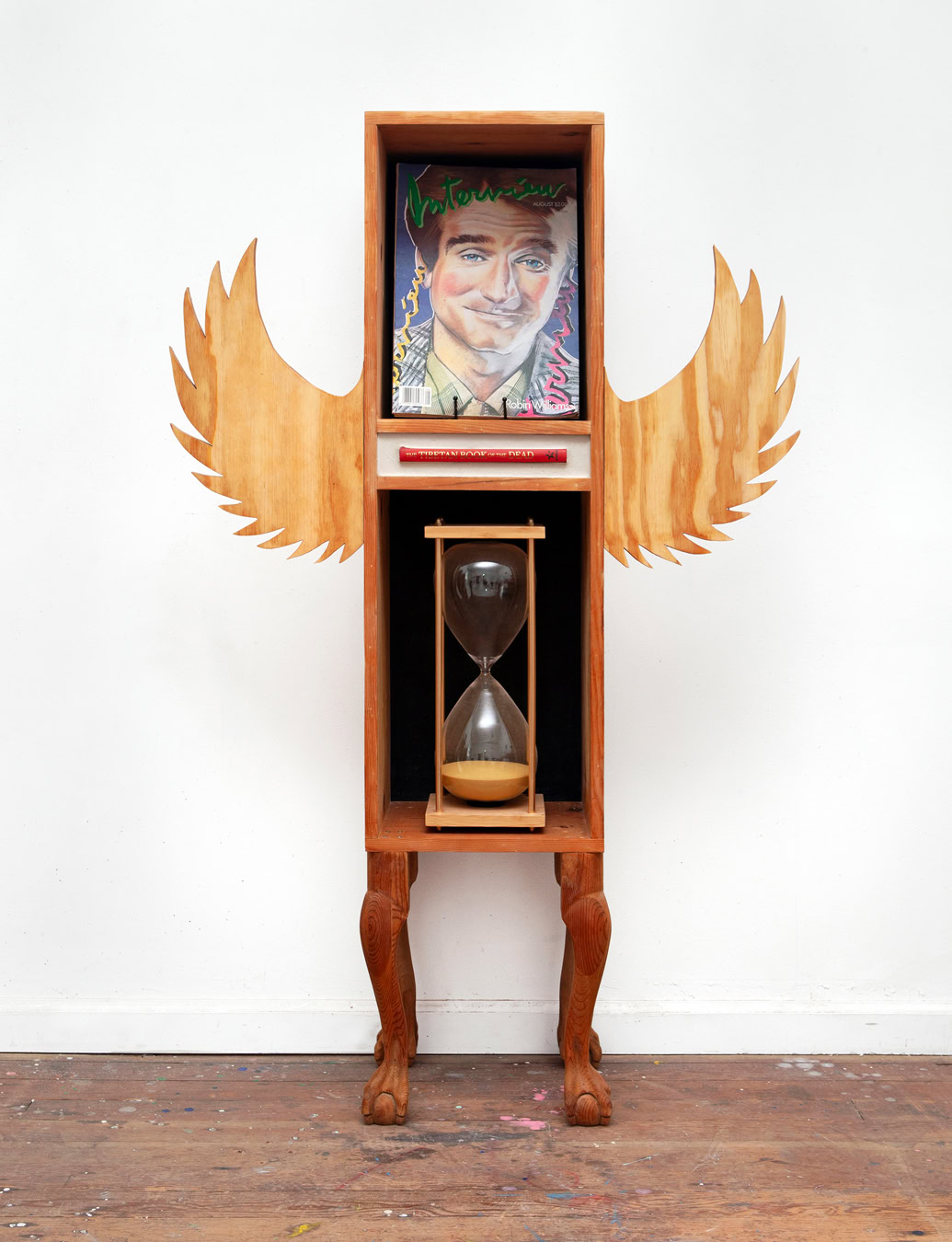
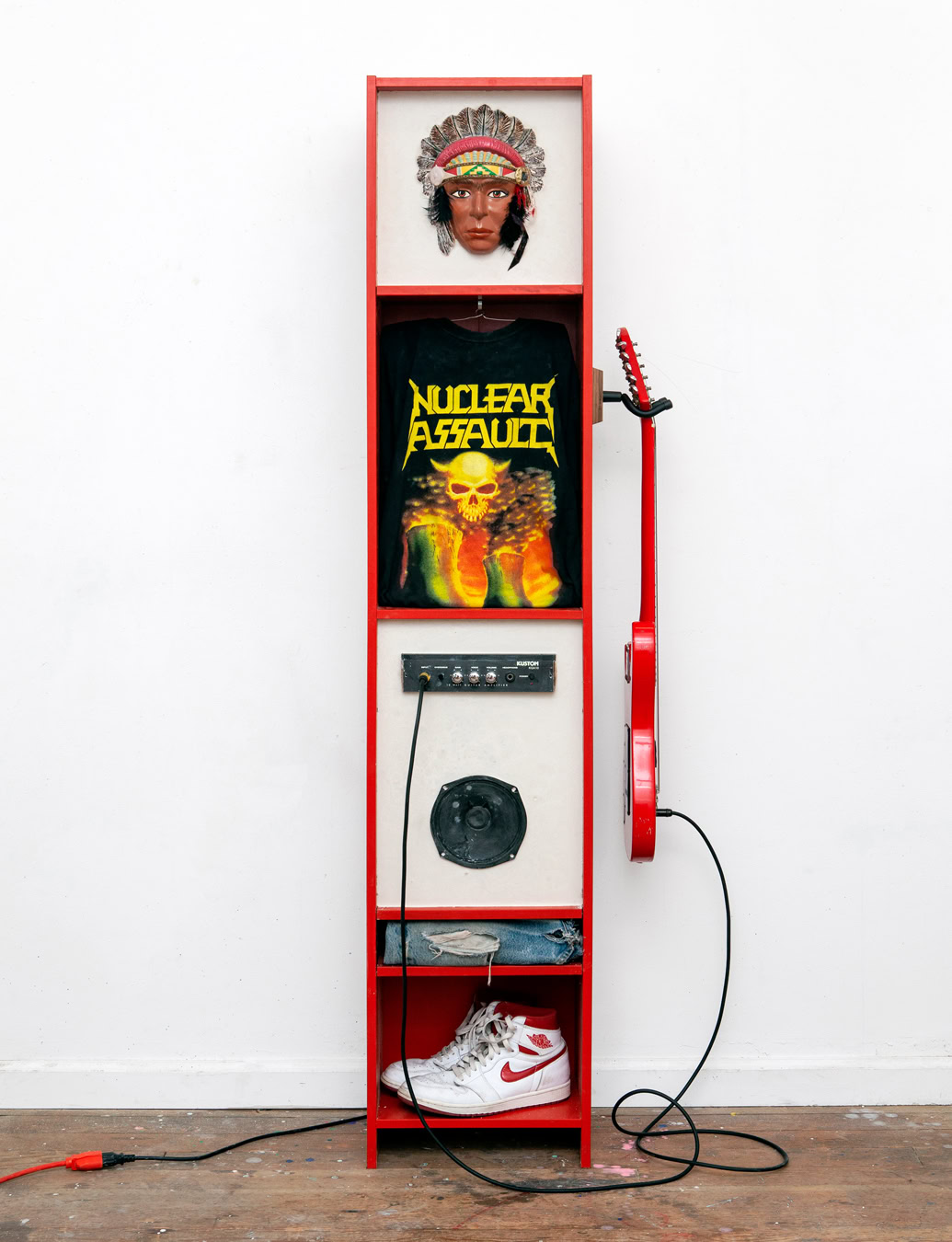
from left: Justin Guthrie’s ‘Purgatory’ cabinet, 2025 and Guthrie’s ‘Rez Metal Spirit’ cabinet, 2025
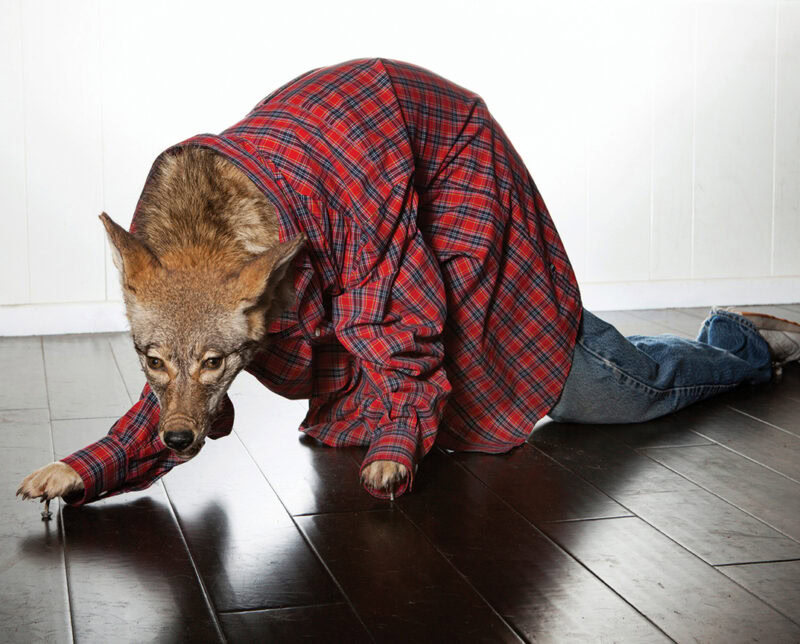
‘Shapeshifter’, 2020
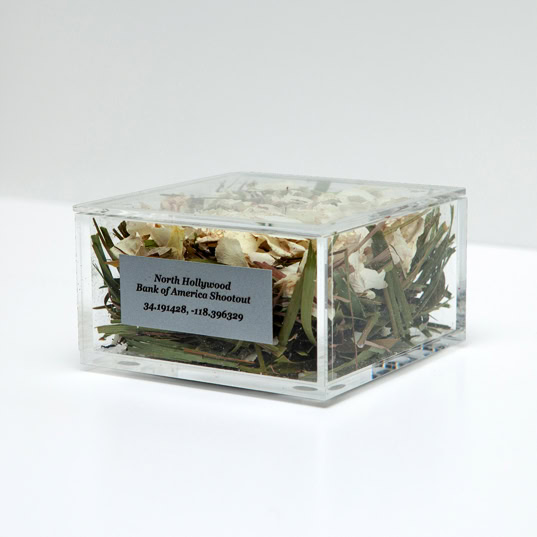
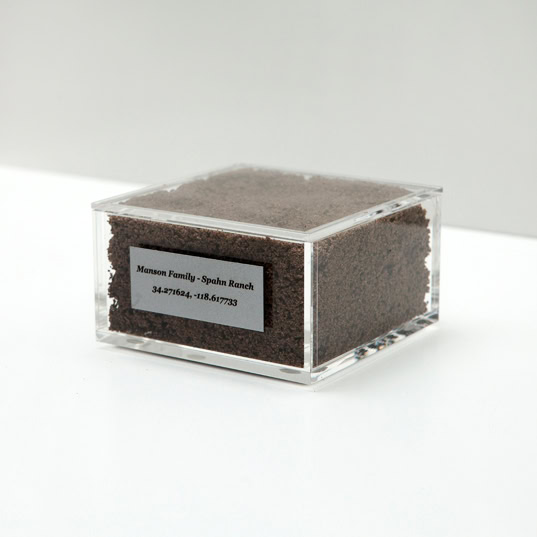
from left: ‘North Hollywood Bank of America Shootout, 2025 and ‘Manson Family – Spahn Ranch’, 2025
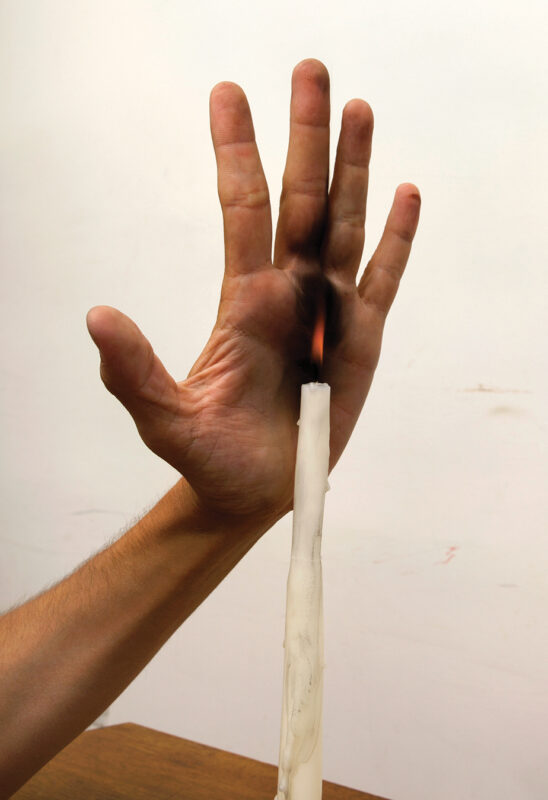
‘Patience Burning’, 2021
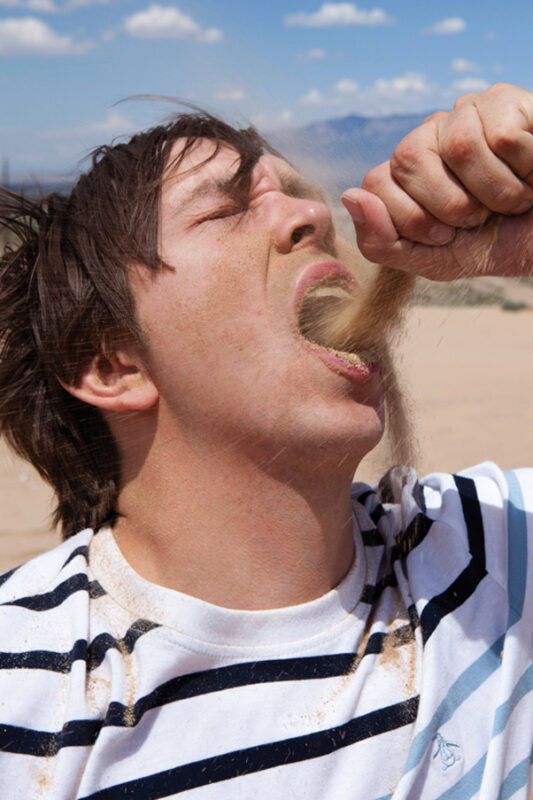
Justin Guthrie, taken from the book ‘New World Rites’
Kira Freije
For Kira Freije’s solo show at The Hepworth Wakefield, Unspeak the Chorus (running to May 4), her emotionally potent sculptures trace the outline of human forms. She begins by casting her own hands and feet in aluminium, building from the ground upwards using stainless strips. They grow limbs almost as if a sketched outline, while the faces are cast of people close to her, as with closed eyes they become introspective. “I quite like the idea that people might embody them when they’re around them,” Freije tells me. “They’re not really confronting, though they’re not weak, they’re quite internal. I think they allow you to get sucked in and because so often you fill in…” Even when talking, her statements tail off, as if leaving space for you to do the work to complete her thought. The figures come together to form a community or a world, interacting with each other as if an example of a society at work. To me they raise ideas about morality and participation, the roles we play living among others. “At The Hepworth, to have this incredible situation to form a community, you can actually feel it,” Freije says. “They are quite individual, but they do form a whole.” Her work asks you to subtly explore ideas so pertinent to today, giving you space to think about the times we are living in and perhaps moving you to question your role on an emotional and internal level.
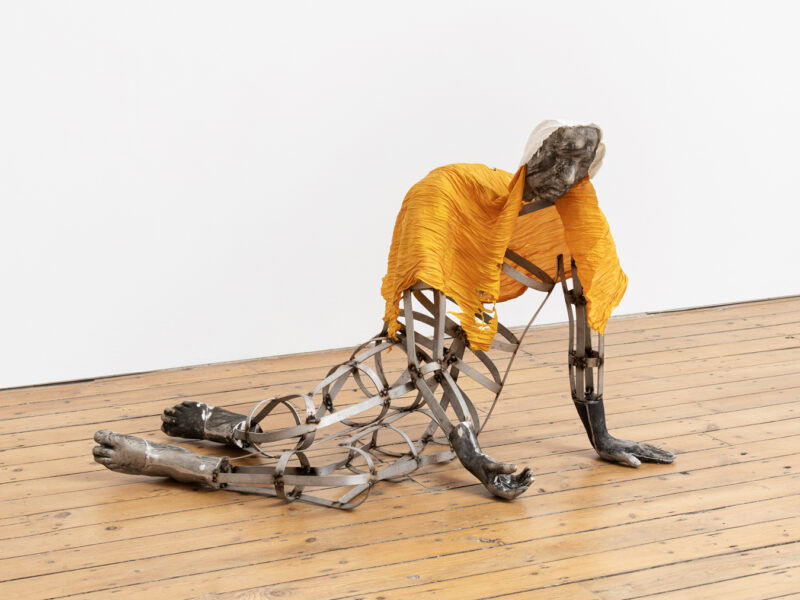
‘Dipping Voices, On the Side of the Sun’, 2022
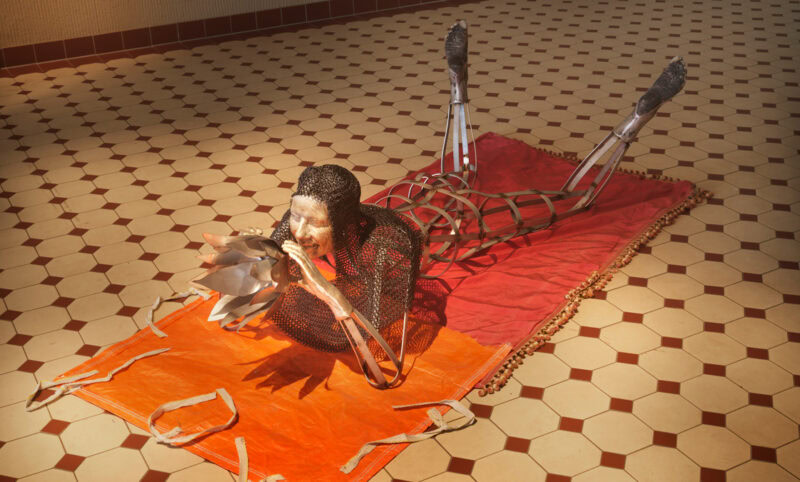
‘Between Sunlight’, 2023
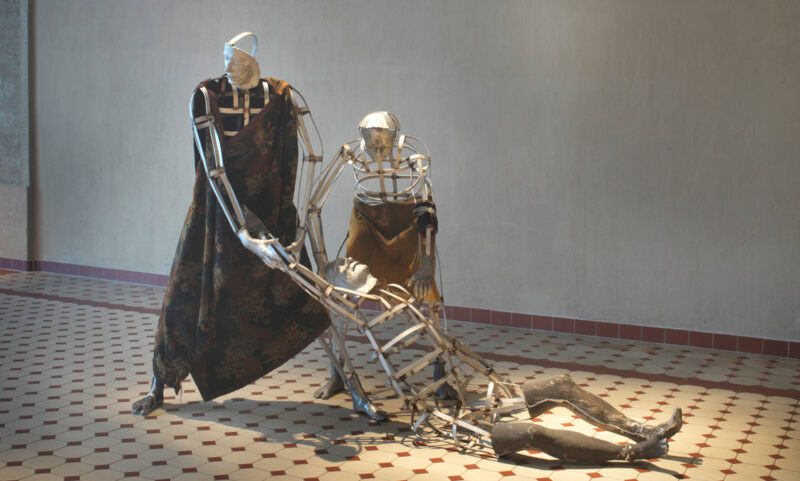
‘Trudging the Sodden Prelude’, 2023
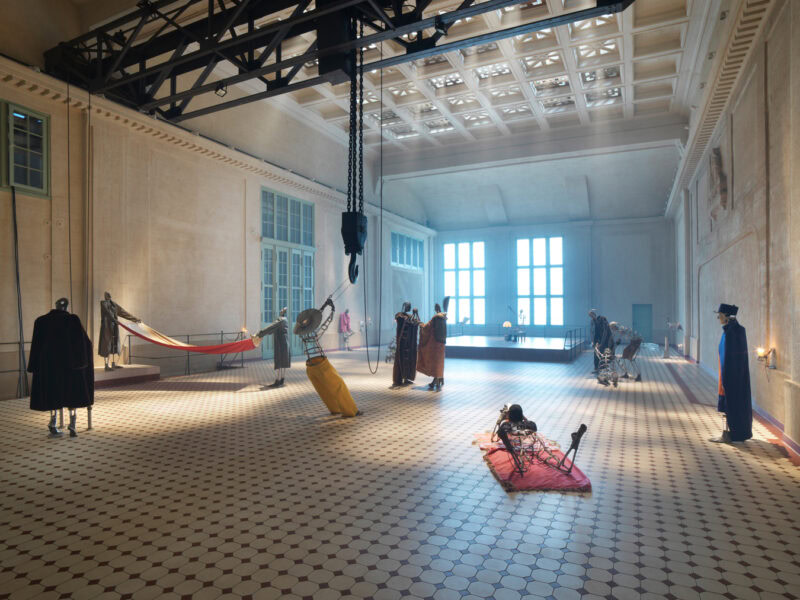
‘The Throat is a Threaded Melody’ installation at E-WERK Luckenwalde, 2023
chukwumaa
“I make sculptures that usually have a sound element, usually a found element, and I often have to activate through some sort of action,” chukwumaa says. “They take one form, I perform with them, then they take another.” For a work they performed at the Studio Museum in Harlem in 2020, chukwumaa swept the floor from one end of the space to the other, gathering all the debris and detritus as they went, a sculpture that resembled the palm frond brooms used in Nigeria where they grew up. The phenomenological element moved a member of the audience, who remembered their grandmother doing the same. The best work always brings you somewhere emotionally unknown. In another work performed in Union Square, they mapped out the points where the Bluetooth signal from a nearby phone dropped out. “Sound is quite literally a physical and material thing, so it’s something you can sculpt and think about spatially,” they tell me. They describe their work as soft sculptures about liminal characters, Nigerian Igbo trickster myths and non-linear narratives. Tricksters like Anansi from Ghanaian culture and Ekwensu from Igbo culture permeate the work. “Ekwensu was not an arch deity; he is part of the pantheon of many deities and was not anything you could compare to the devil. The devil was objectively trying to make bad things happen whereas Ekwensu presents moments of destabilisation,” they say. I begin to think about chukwumaa as a modern-day trickster, their work presenting these moments of destabilisation for us to think about and reconsider the world around us. I put this to them, but they laugh it off, saying that, “instability is really important to the work I make”.
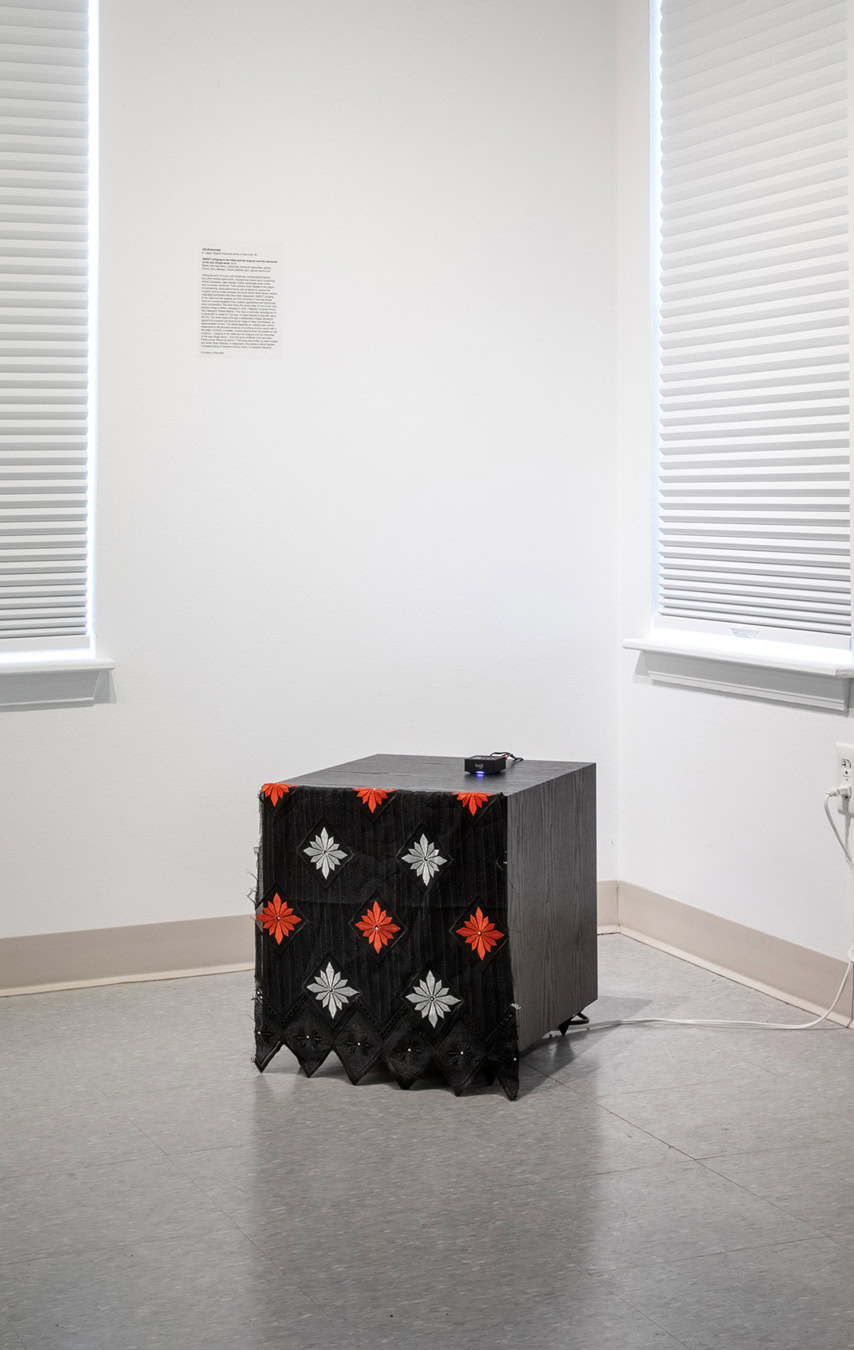
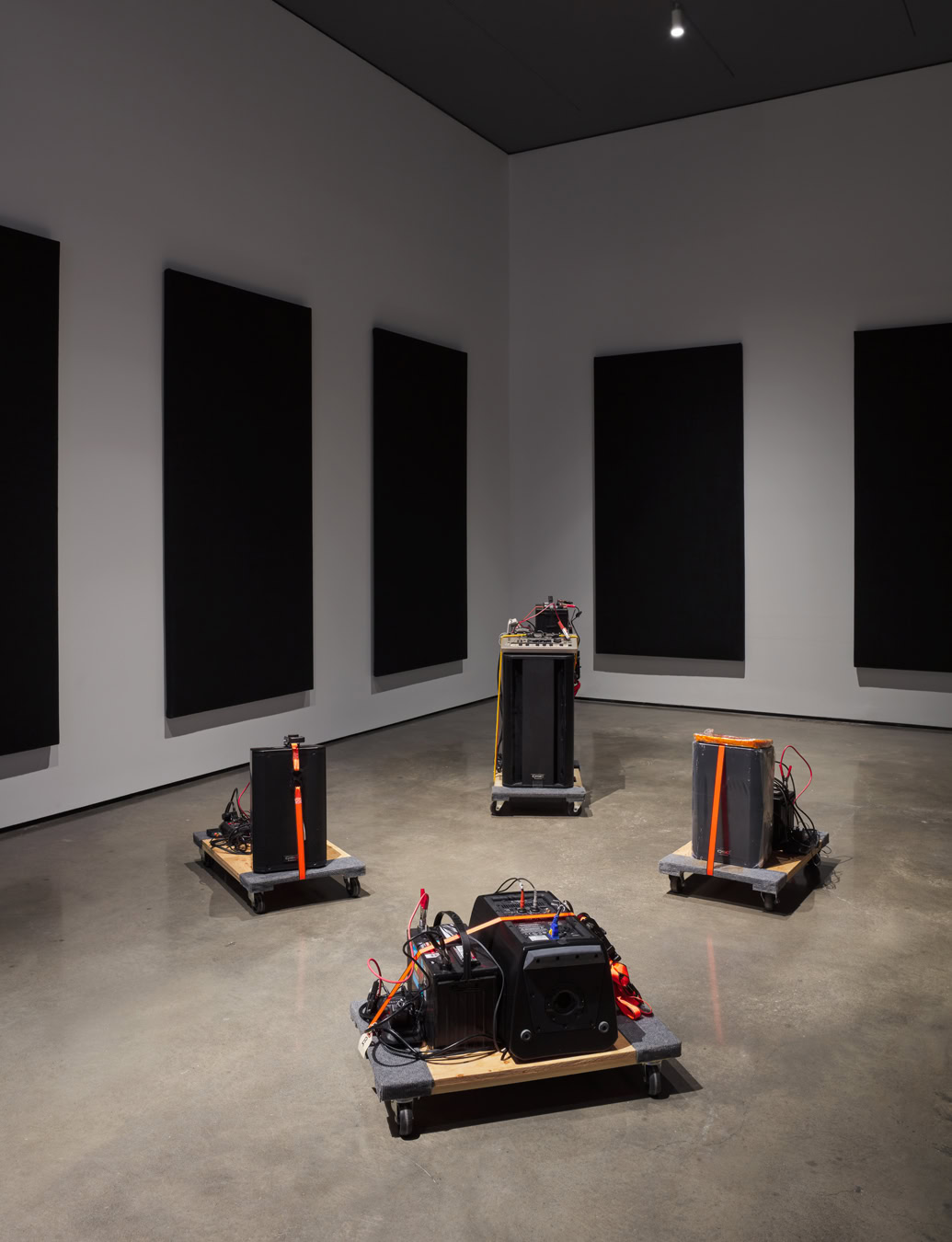
from left: ‘Code Switch: Distributing Blackness, Reprogramming Internet Art’ installation at the Museum of Contemporary Art Detroit, 2025 and ‘Back to Back’ installation at Hessel Museum of Art, Center for Curatorial Studies, Bard College, Annandale-on-Hudson, 2022
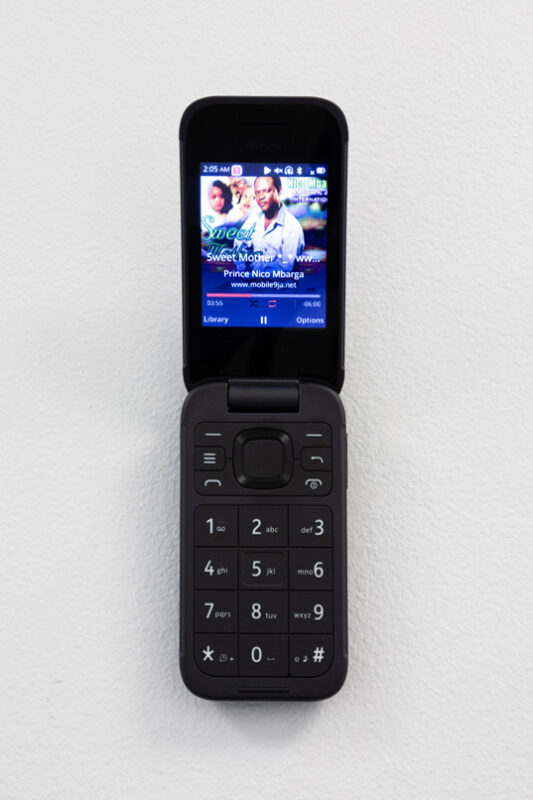
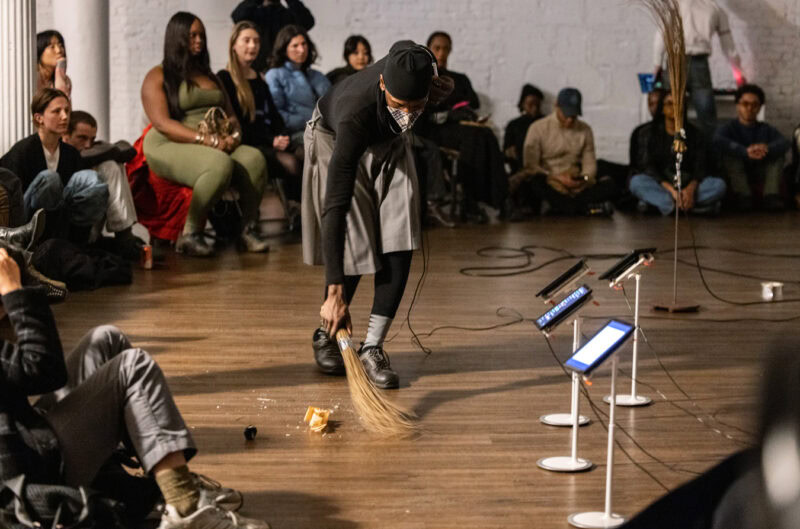
talk and performance alongside Dozie Kanu, Matt Hilvers and Fiona Duncan that took place at the Performa Hub in New York as a part of the Performa Biennial
Craig Boagey
A fluffy white cat alongside hands grasping to pick it up is painted meticulously. With the words ‘Pain Lord’ written across the top and ‘In the end, pain is only pain’ at the bottom, it takes on an almost sinister presence. A woman in a G-string with a tattoo at the base of her spine reads a book, as a bald figure, an Iain Banks novel, a severed head and a CD are strewn around her. A black-and-white image of a woman and a muscly Pooh bear in a tank top frame the scene with a mythical kingdom in the distance. ‘Bloodflow’ is written in gold across the bottom. Craig Boagey’s intricate large-scale paintings are like fever dreams. When I asked him if they are intended to unnerve he said, “The paintings operate more as a visual bombardment – [they have] dense, layered fields of information. They may have the ability to unnerve, but that isn’t my primary goal.” Using imagery he finds online, it is uncanny to see the deluge we doomscroll through painted with such skill and craftsmanship. With his work, he says, he hopes to develop “a visual language that mirrors the cognitive conditions we operate under on a daily basis. We live in a state of continuous sensory influx and our perceptual systems are constantly filtering, discarding and reorganising vast amounts of information in order to maintain a sense of coherence.” This is what interests him and, using painting as a medium, he describes it as a “more concentrated form of attention” that invites a more engaged level of scrutiny. He adds, “Rendering [the work] with a somewhat high technical sufficiency, I like to think it removes any sense of disposability associated with such content.” The result is unsettling, as you begin to think deeply and uneasily about what we are consuming and the impact it might be having on us.
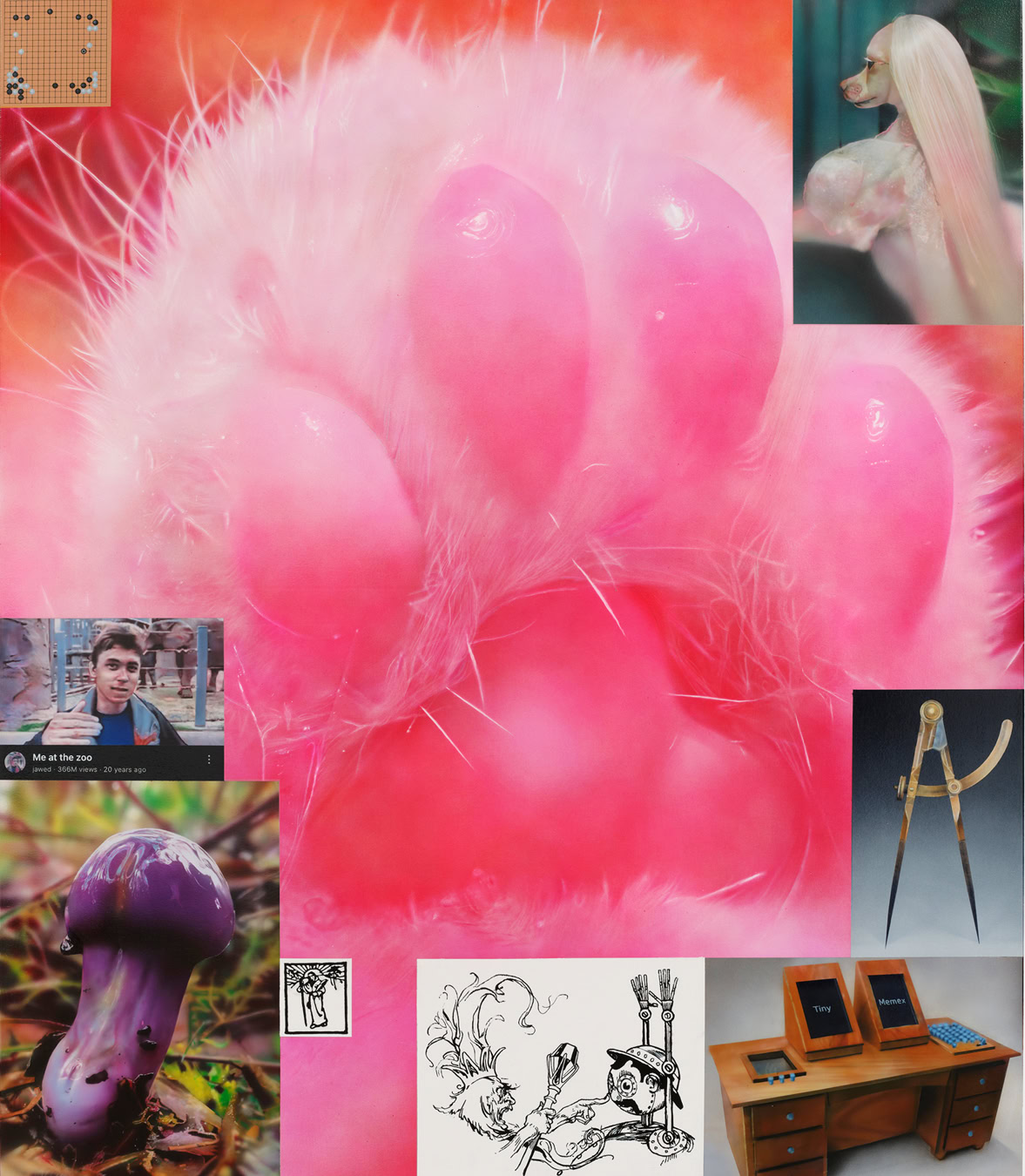
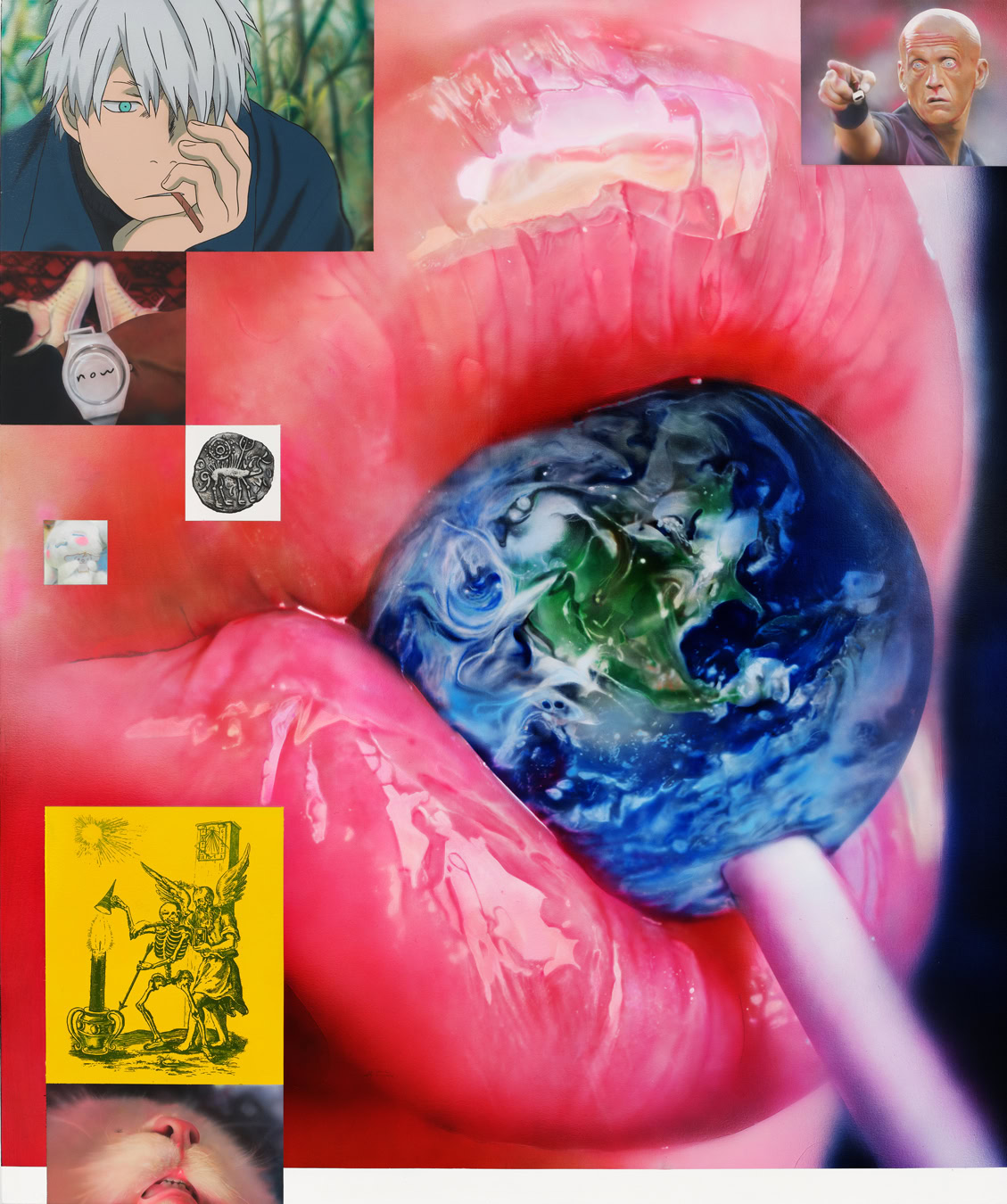
from left: ‘The All Thing’, 2025 and ‘New Earth’, 2025
Taken from 10 Magazine Issue 76 – CREATIVITY, CHANGE, FREEDOM – out NOW. Order your copy here.