May 14, 2026 |
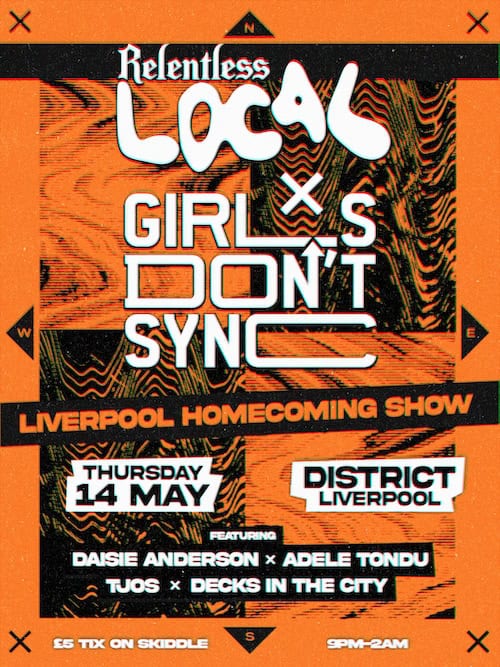
Girls Don’t Sync aren’t just dab hands behind the decks, this quartet of powerhouse selectors know what’s really important. For the second edition of their Local initiative, launching today, Relentless Energy have tapped the UKG and house DJ collective – which comprises Gaia Ahuja, Matty Chiabi, Hannah Lynch and Sophia Violet – to spearhead the search for four music collectives to win a share of a £20,000 nationwide grant. The initiative also includes a series of events designed to celebrate local scenes, starting with a Girls Don’t Sync show tonight at Liverpool-based club District – the first venue the DJs ever played.
Launched last year with Guernsey-born, Grammy-winning producer Mura Masa, which saw the artist embark on a three-stop tour of Stockton-on-Tees, Blackpool and Bradford, Local is a part of Relentless’ Freeform platform, established to uplift subcultural scenes and creative freedom. The project is designed to provide emerging artists across the UK’s regional areas a platform to celebrate and enrich their local scenes and the communities at their foundation. Girls Don’t Sync will handpick the winning applicants of the Local grant scheme, who will then be supported by Relentless to throw an event of their own, complete with a bespoke sound system rental, promotional support and a share of the £20,000 fund in micro-grants. “We’re actually contributing to something concrete,” says Chiabi. “I think it’s really easy to have these conversations about supporting local collectives and more representation… but the fact that four collectives are actually going to get a share of £20,000, and they’re going to be able to put something on, I think that’s so important.”
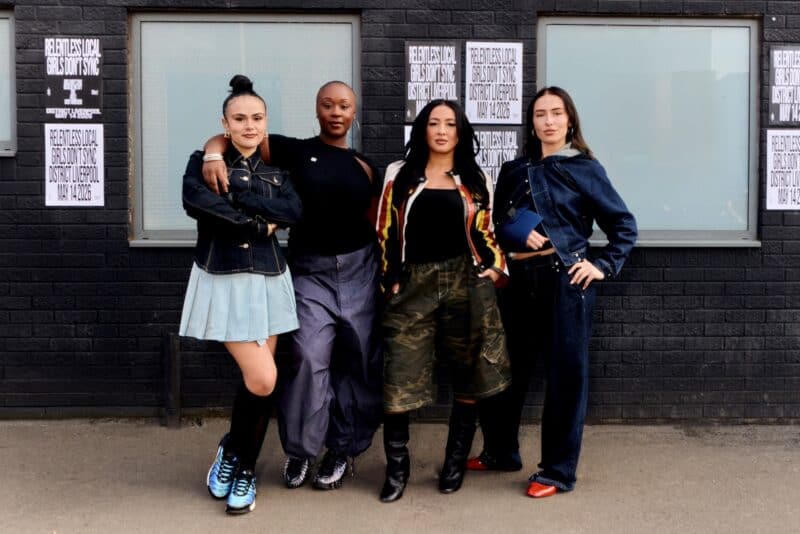
“It leads back into that kind of original ethos and energy of Girls Don’t Sync, which has always been about platforming homegrown talent,” says Ahuja. “We created a lineup five years ago in District with upcoming female DJs in Liverpool,” she continues. “For some of them, it was their first time ever playing out – for us as well! It was our first event where we realised that we’ve got something special, but also we’ve got a community here in Liverpool that has really backed us and supported us.” In turn, the collective have specially curated an offering of Liverpool-grown talent to join them for the District event, including house DJ and producer Daisie Anderson, music collective Decks in the City, UKG and speed garage producer TJOS and multi-genre selector Adele Tondu. “We have seen these people put the graft in and that shows us how passionate they are about what they do,” says Lynch. “They’re putting on their own events, contributing to radio stations and honing in on that full package of what it means to be a DJ,” says Ahuja.
Although, it’s important to emphasise how Local is not about merely finding “the next big thing” but providing the grassroots ecosystems that drive music forwards with meaningful support against dramatic cuts to UK arts funding, the unrelenting closure of independent venues and an algorithm-driven culture that traps audiences within the mainstream. “It’s about recognising the talent and allowing them to be celebrated,” says Ahuja. “I think being able to have opportunities where you get to play out at crowds and especially our crowds who have become renowned for just being really open, really happy, really freeing. People dance!”
With an industry that oftentimes overlooks creative communities outside of the UK’s major cities, like London and Manchester, initiatives like this are as important as ever, especially when each regional area has communities that set it apart in its own right. “I think it’s just a general atmosphere of looking out for each other, putting each other on and just positive vibes,” says Violet of her love for the scene in the north west of the country. There’s potentially no better example of resistance to this idea than Girls Don’t Sync themselves, who have gone from performing in 275-capacity venues to playing on some of the world’s biggest stages and inspiring a new generation of electronic music fans.
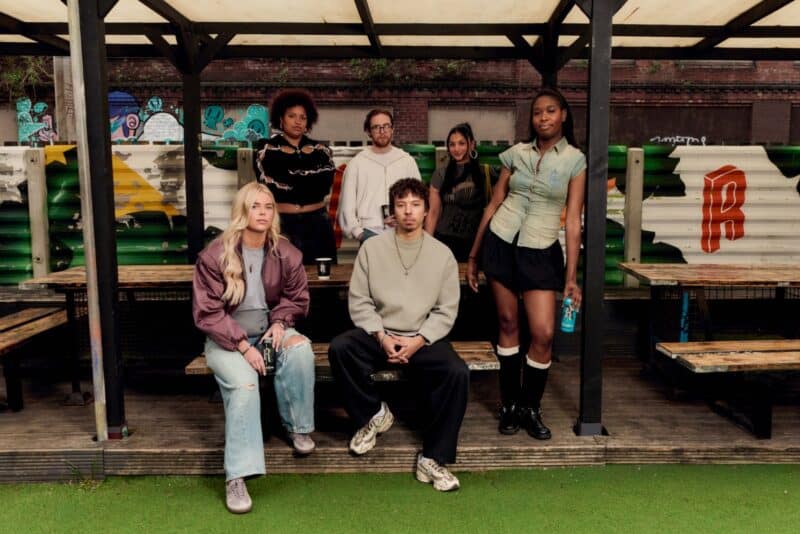
Clockwise from back left: Madeleine Jemine, Joel Gardner & Sharan Deep of Decks in the City, Adele Tondu, TJOS and Daisie Anderson
Without diversity, creativity gets stale, which is why schemes like Local are so vital to protecting cultural ingenuity. “Relentless doing this can help people represent where they’re from and still create something amazing in that local town, have a strong sense of identity and not all just merge into one big thing in London,” says Lynch. In Local, Girls Don’t Sync and Relentless are embarking on a mission to put the heart back into dance floors everywhere.
To apply to Relentless Local X Girls Don’t Sync, click here. Photography courtesy of Relentless.