May 12, 2026 |
Anthropocene + apocalypse + epoch = APOC; it’s a name that folds planetary anxiety and historical urgency into a single word, signalling a refusal to separate fashion from the reality of the world it exists in. And inside APOC Store’s first permanent space in Hackney, that sensibility translates quietly.
Natural light moves across the unit’s concrete floors and white brick walls, softening the edges of Regent Studios and giving the brick-and-mortar shop a feel that’s closer to a flat than a conventional retail interior. Purposefully positioned away from the high street, the space reflects APOC’s enduring stance of operating outside of the dominant fashion system, not comfortably in it.
Founded in 2020 by British-born Chinese entrepreneur Ying Suen and Dutch creative Jules Volleberg, APOC emerged at a time when designers were questioning the structures they were expected to operate within. From the outset, the platform rejected wholesale conventions. That meant no minimum orders, no seasonal buying windows and no requirement for designers to hold stock. Instead, they shipped directly from their studios, often producing made-to-order work using deadstock materials. The model prioritised independence over efficiency and care over scale.
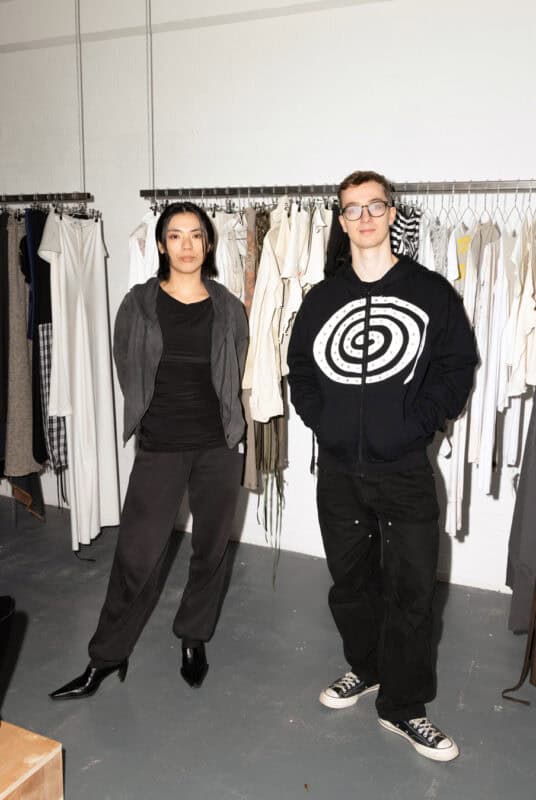
Ying Suen and Jules Volleberg founded APOC at a time when designers were questioning the structures they were expected to operate within
“The name APOC has always been a reminder of the particular moment of time we were and are in: as in, a time where we urgently need to rethink systems,” says Suen. That tenacity shapes their ethos. “Our curation still reflects this; we work with designers who are making it work outside of traditional systems or doing it on their own.”
Five years on and APOC Store supports more than 300 designers online, many of whom work in small-scale, deliberate production. Though expansion comes with its own challenges. “Growing the platform means dealing with unpredictable demand for certain designers or products, which can spike or disappear overnight,” says Volleberg. “When a piece suddenly becomes popular, it’s usually handmade or dependent on deadstock materials, so replenishing best-sellers becomes a constant dance.” Still, it’s precisely this intensity that keeps APOC’s model dynamic, giving the team a chance to rethink how they can curate and support each designer.
Central to APOC’s identity is the otherworldly eclecticism of its roster. In its London store and online marketplace, names suggest more than clothes – they propose alternate aesthetics and wearable worlds. Pedro Trindade explores gender as performance; Fey Fey Worldwide, based in New York, blends rebellion and softness through unconventional silhouettes; Leo Prothmann crafts sculptural leatherwork, evoking equestrian themes with industrial gravitas. Egnarts, from Seoul, twists traditional forms into garments that demand a second look, while SansPeng brings humour and hybrid forms to bags and shoes.
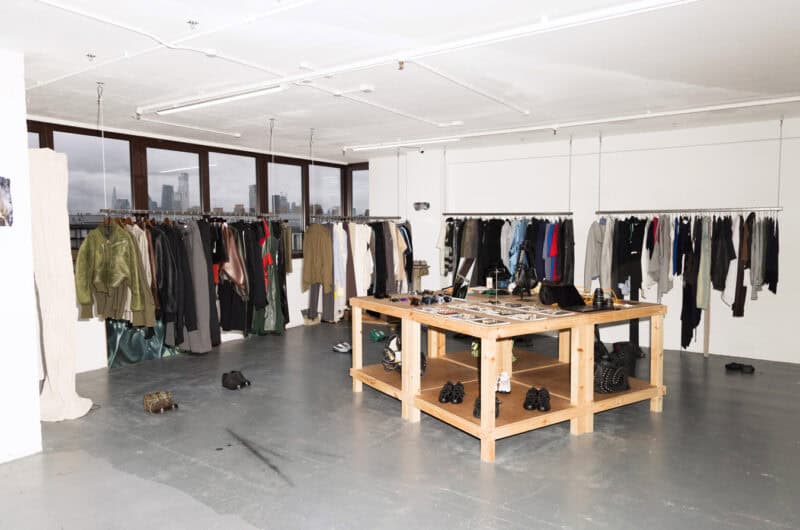
their new permanent space in Hackney offers a curated edit of the website’s 300 designers
It’s not fashion designed for ubiquity. Often it’s performance and experiment disguised as wearable forms: shirts with collared hoods, trousers caged in organza, accessories that feel more like objects than ornaments. Pieces are tactile, structural, peculiar and poetic, rewarding attention and resisting the thumb-scroll culture of mass commerce. Those designers who embrace made-to-order or one-off production allow ideas to persist without dilution – by design,not accident – and embody APOC’s belief that fashion shouldn’t be stripped of its narrative for speed.
The opening of APOC’s East London store in September marked an evolution, not a departure from its ethos, and was shaped by lessons learned from online platforms. “What our online world taught us was to prioritise openness and discovery,” says Suen. Translating that into a physical space required restraint.
“Every object in the store needs to earn its space.” That said, with hundreds of designers online, the edit is necessarily selective. “It has been impossible to show the same breadth, and it is something we are still figuring out,” she says.
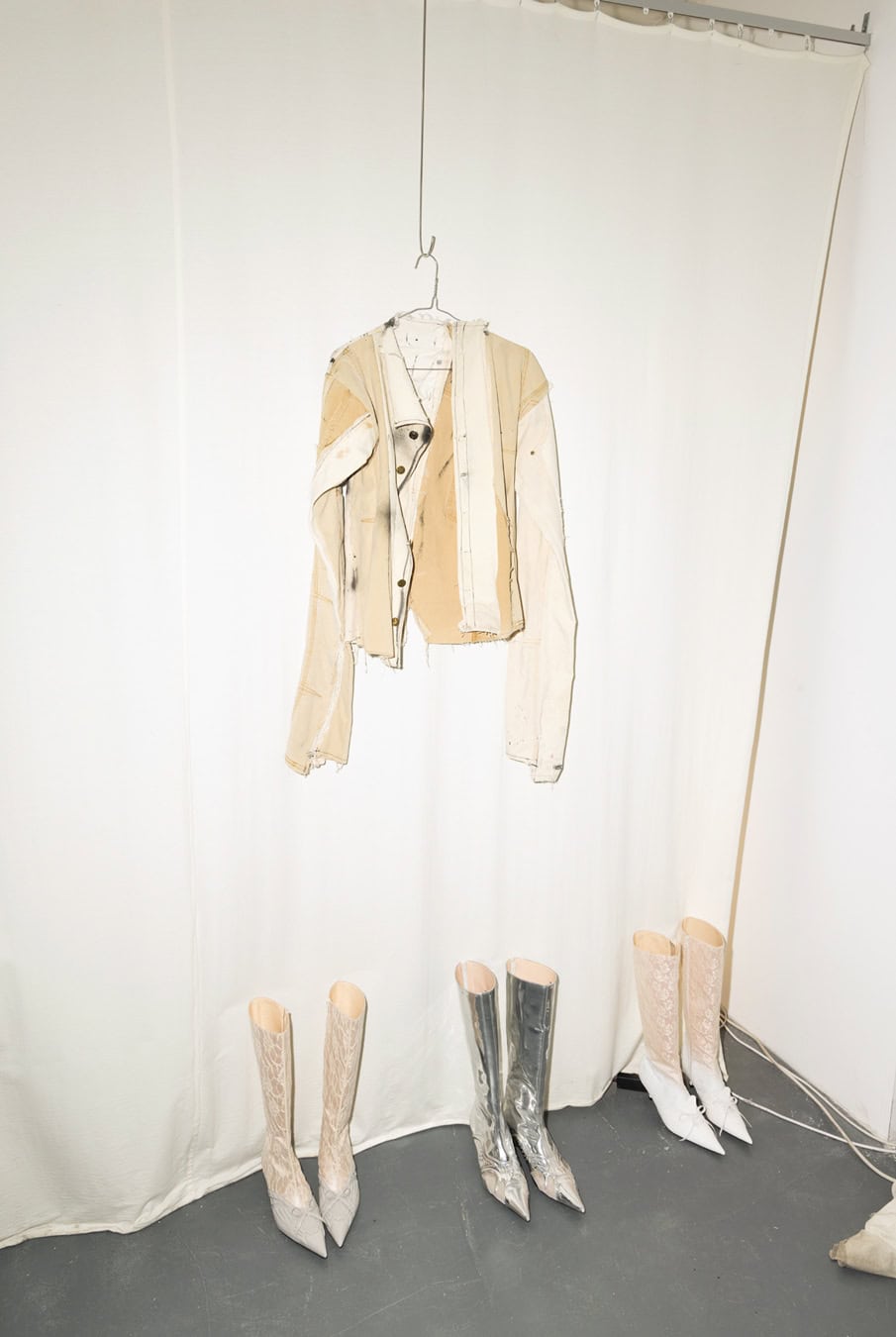
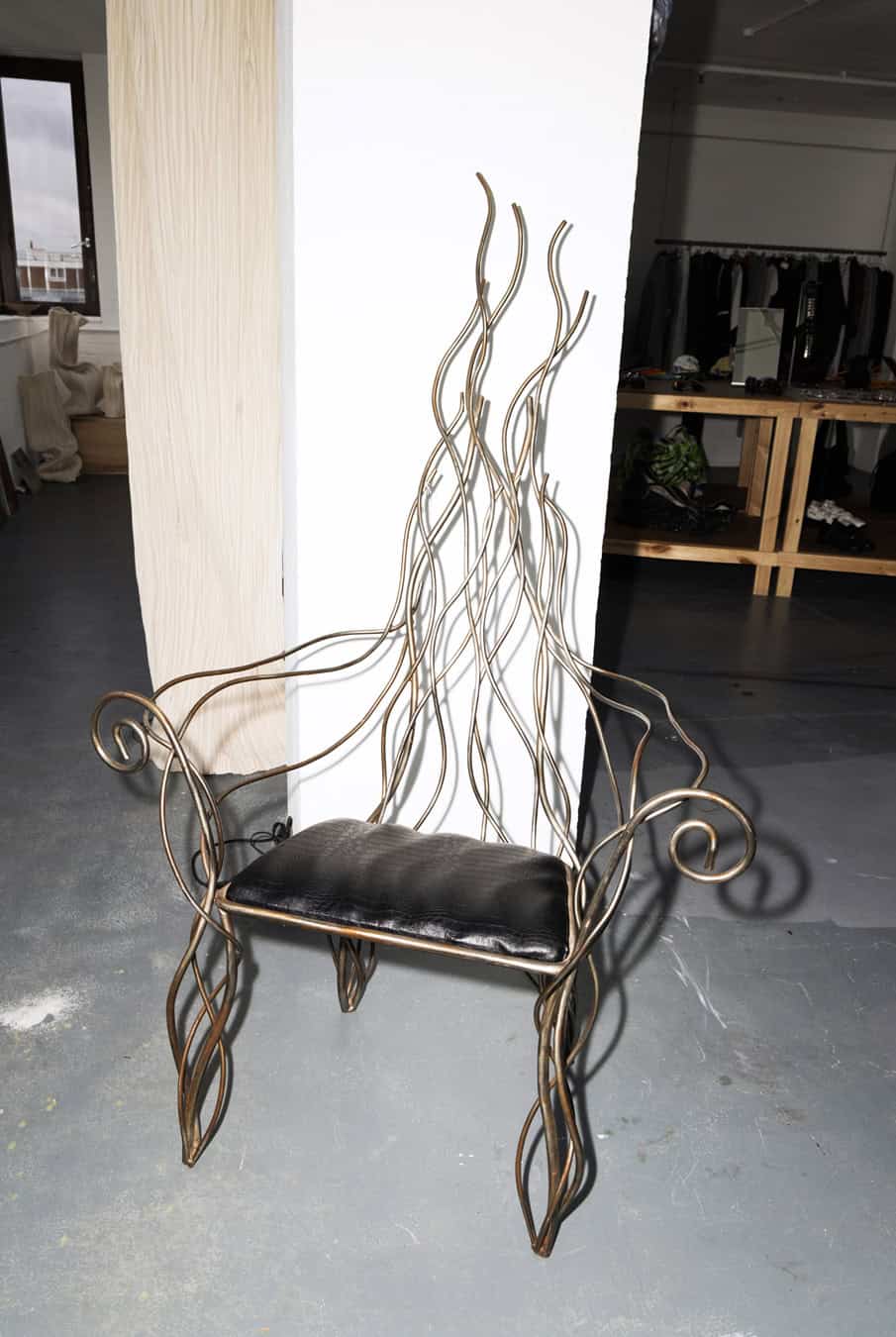
from left: jacket by CD1974 and shoes by Invasive Modification and chair by Myakin
APOC’s designers tend to work slowly, balancing commercial retail with sustainability and requiring flexibility rather than pressure, which is something Volleberg says is “key”. He adds, “We support designers by sharing insights on what’s selling and what isn’t, but always in a way that respects their rhythm and process.” The goal? “To grow together without forcing anyone into a pace that doesn’t fit their practice.”
Designer selection is intuitive (“against all the advice we’ve been given,” he says) and coherence matters. According to Suen, “Good product is never enough these days – every aspect of a brand matters. Customers want to feel aligned with what they’re buying. You can have the best product, but if the imagery or the brand universe doesn’t speak to them, they won’t make the purchase.”
Trust extends to how designers sell through the platform. “It really varies by designer,” says Volleberg. Some collections are co-developed; others are left entirely to the designer’s discretion. “With others, we’re so invested in their vision that we love being surprised and give them full control,” he adds. Those surprises sometimes outperform expectations. “Often, they send a new shipment to our London store every month and occasionally send pieces that I would have never selected, but sometimes those products will sell the most quickly.”
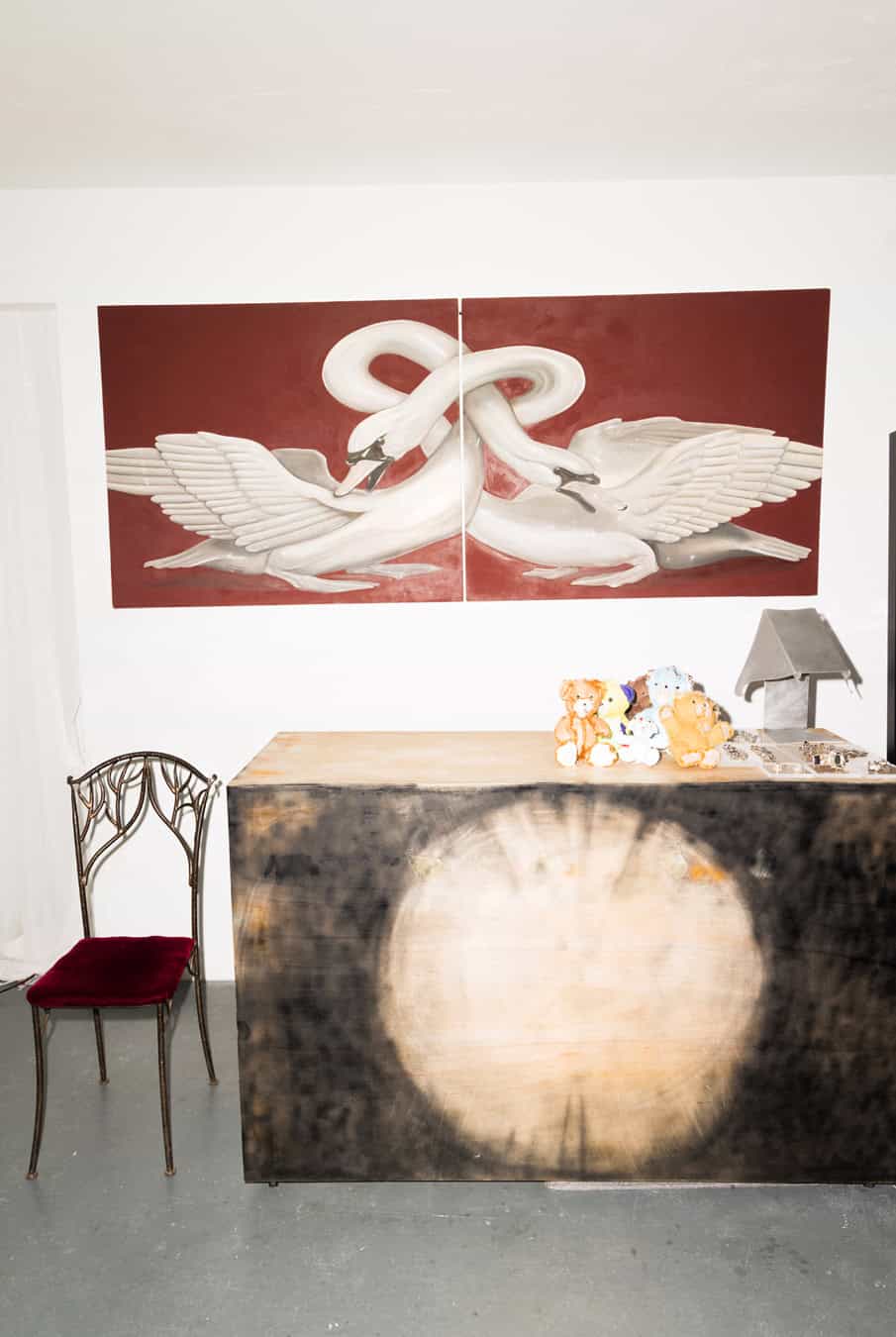
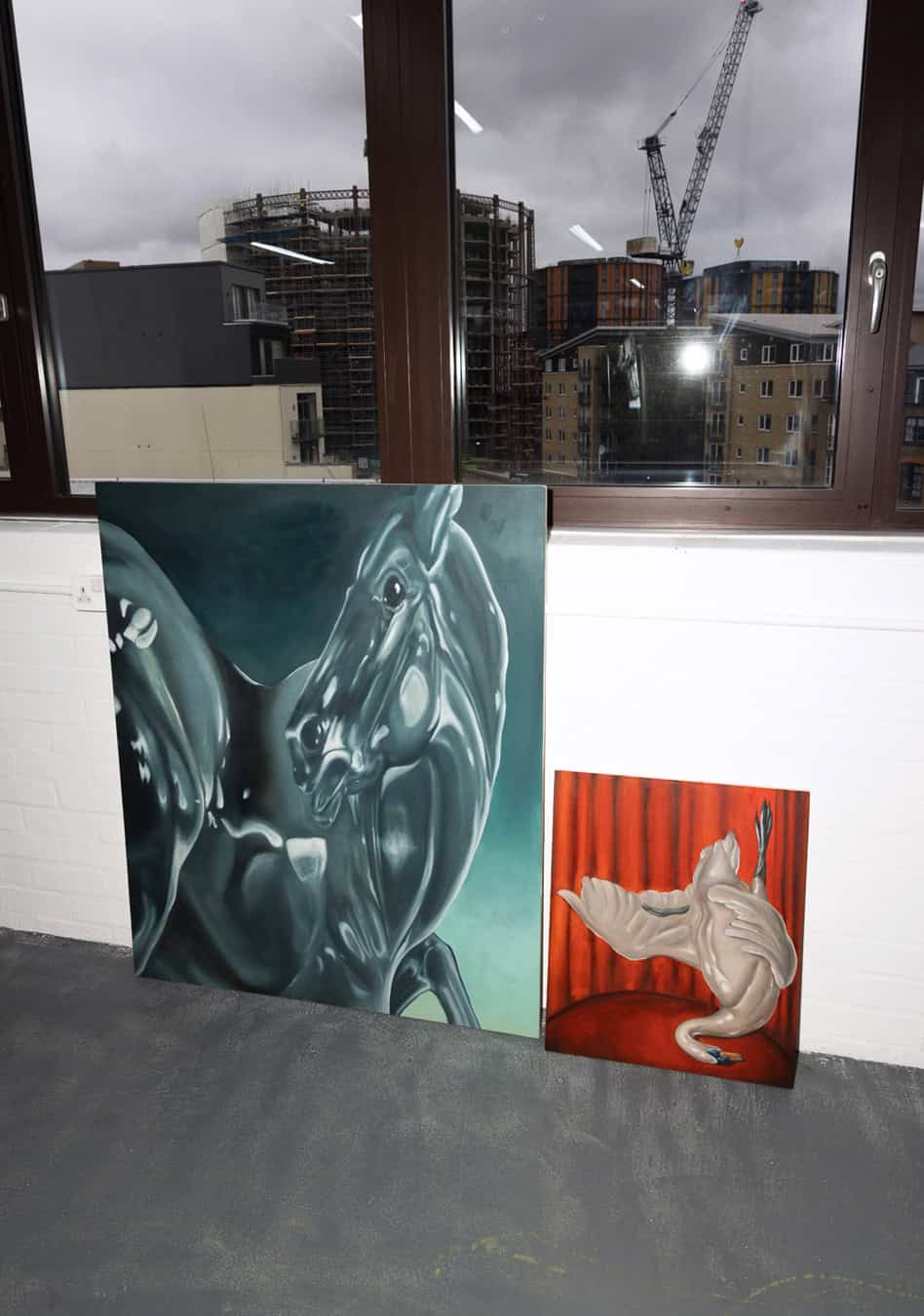
from left: Eloise Knight painting, Myakin chair and Puer Parasitus teddies and Eloise Knight paintings
The store itself continues to evolve. “We have decided to lean more into the gallery aspect,” says Suen. “It’s only been a few months and I’m already bored of the store!” Enter: future programming. “We want this same energy, so in 2026, we will be working with one artist at a time, giving them full presence within our space.” Fashion will remain central, but the environment will shift with each installation.
Opening in Hackney was both intuitive and data-led. An analysis of orders revealed the E8 postcode as APOC’s strongest base; an appointment-only pop-up last year confirmed demand. After months of searching, the founders returned to the first space they viewed, aided by Suen’s refusal to compromise on that blissful, natural light.
Internally, the business has no rigid divisions. Suen and Volleberg describe themselves as opposites with overlapping responsibilities, involved across departments out of shared investment rather than efficiency. “It might not be the most efficient setup,” says Volleberg, “but it helps us keep APOC special and it’s something we’re genuinely proud of.”
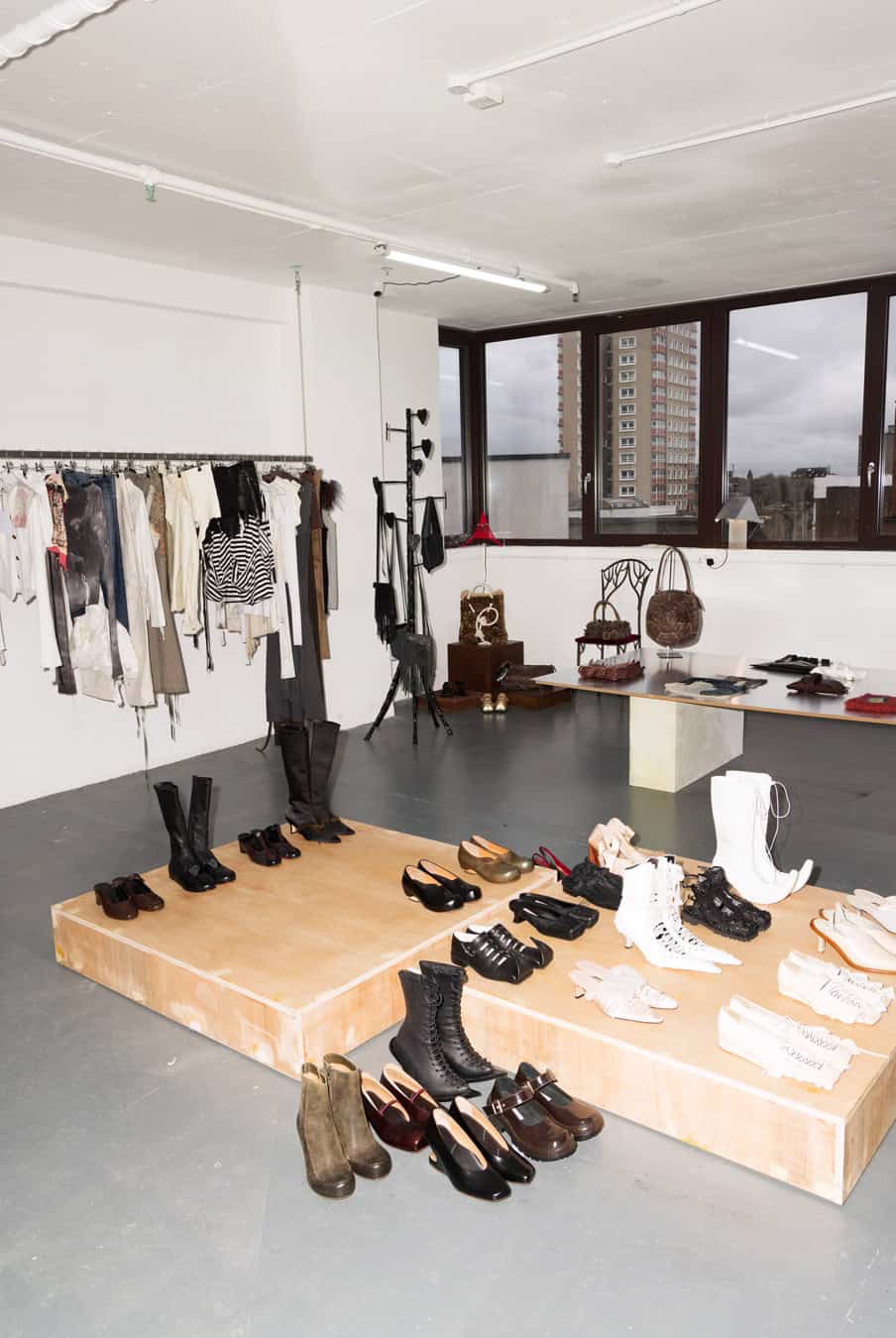
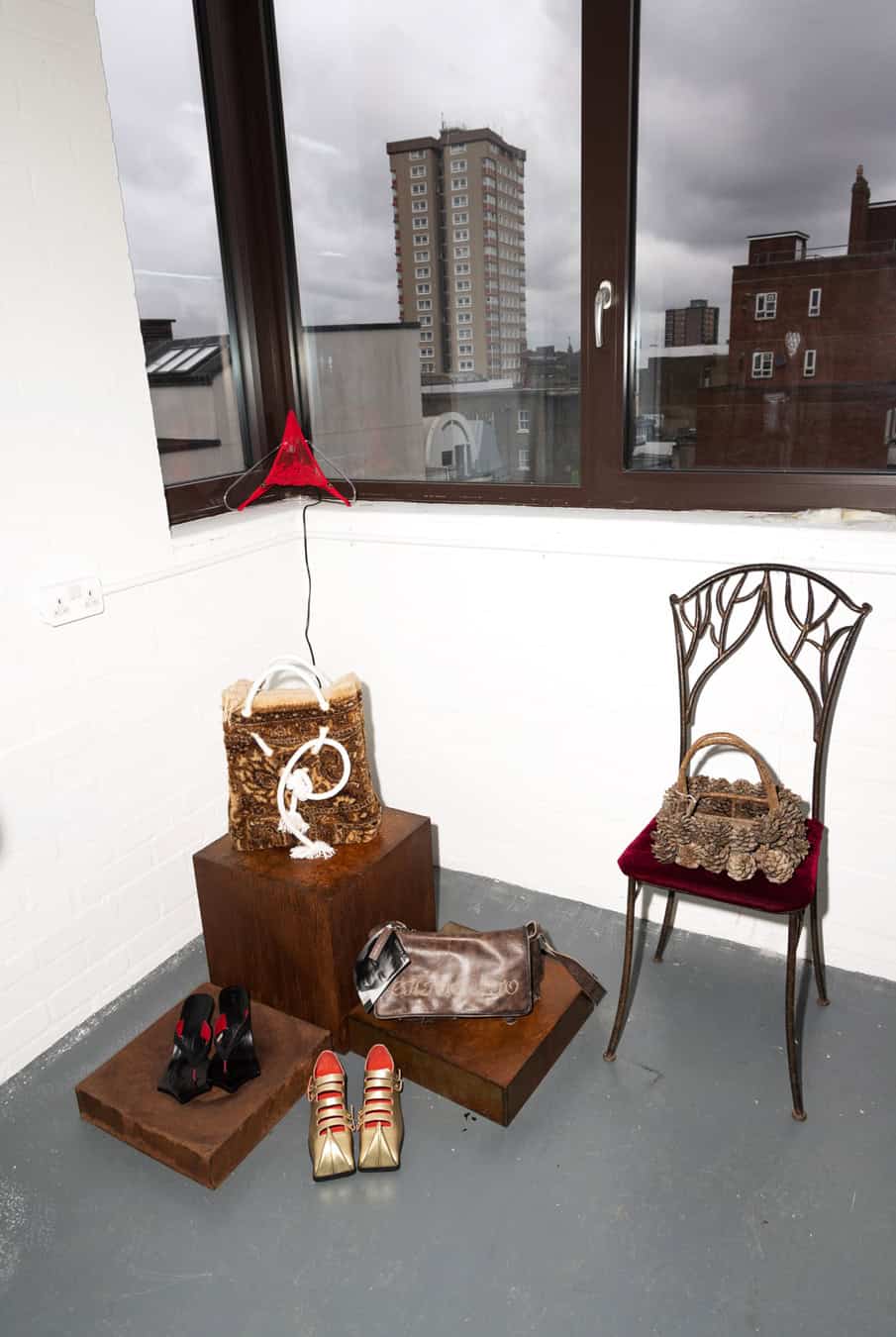
from left: a selection of footwear by Doys, Gyouree Kim and Cruda and Sudor lamp, Eden Tan bag, and shoes by Bhive and Fey Fey Worldwide
Looking ahead, the store’s focus remains on depth rather than expansion for its own sake. “We want to deepen our commitment to the support of creativity and designers that we began with five years ago,” says Suen. Growth may come in many forms, but the intention remains clear. She adds, “First and foremost, we want APOC to remain a place of curiosity and care, no matter how much we grow.”
In a fashion landscape increasingly shaped by speed, sameness and spectacle, APOC operates at a different frequency. It asks for attention rather than impulse, for presence rather than scale. What APOC ultimately offers is not a solution, but a space – one where designers are trusted, where ideas are allowed to unfold slowly and where fashion can still feel like an act of intimacy between the maker and the wearer.
Photography by Elliott Morgan. Taken from 10 Magazine Issue 76 – CREATIVITY, CHANGE, FREEDOM – out NOW. Order your copy here.
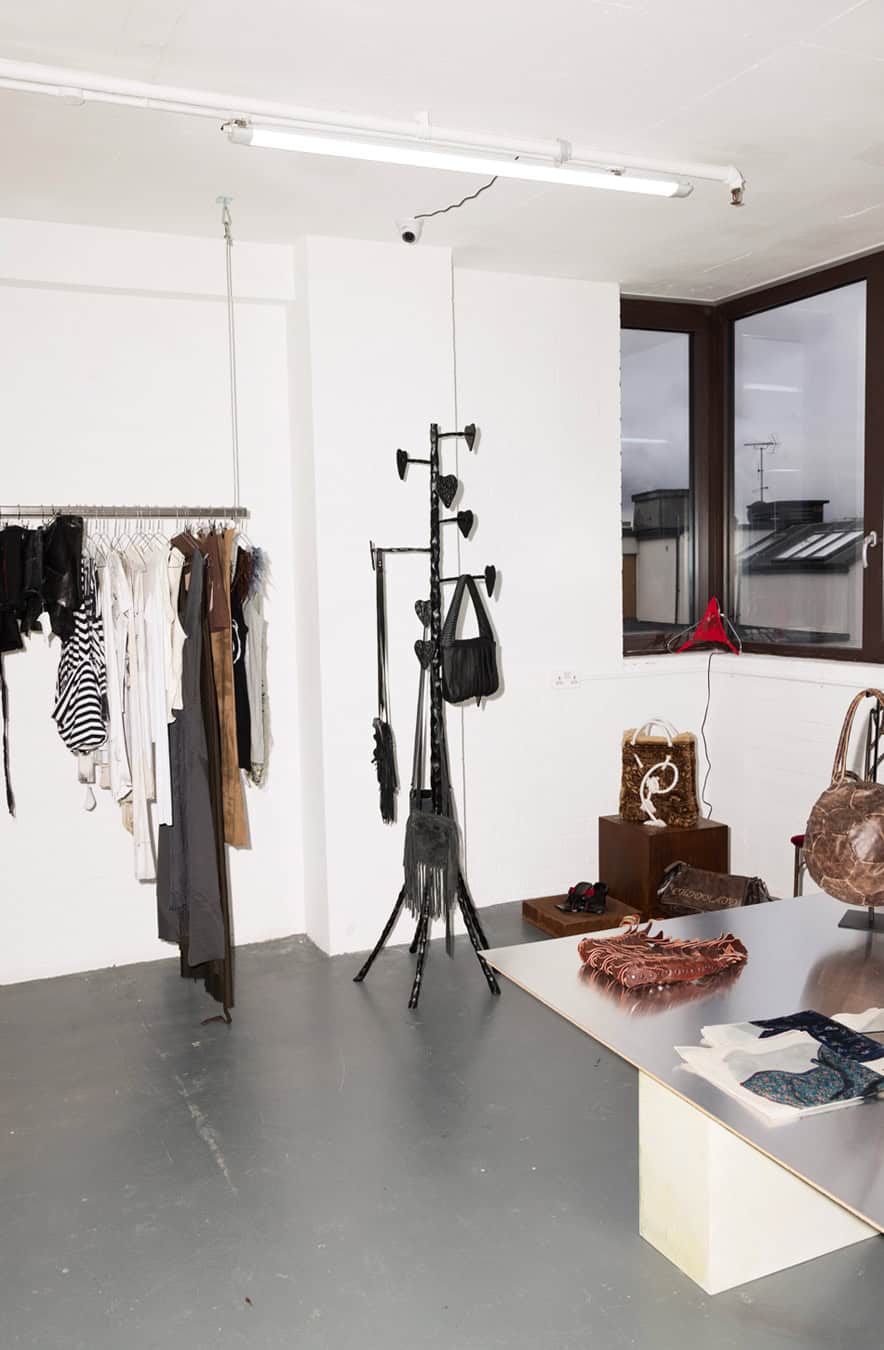
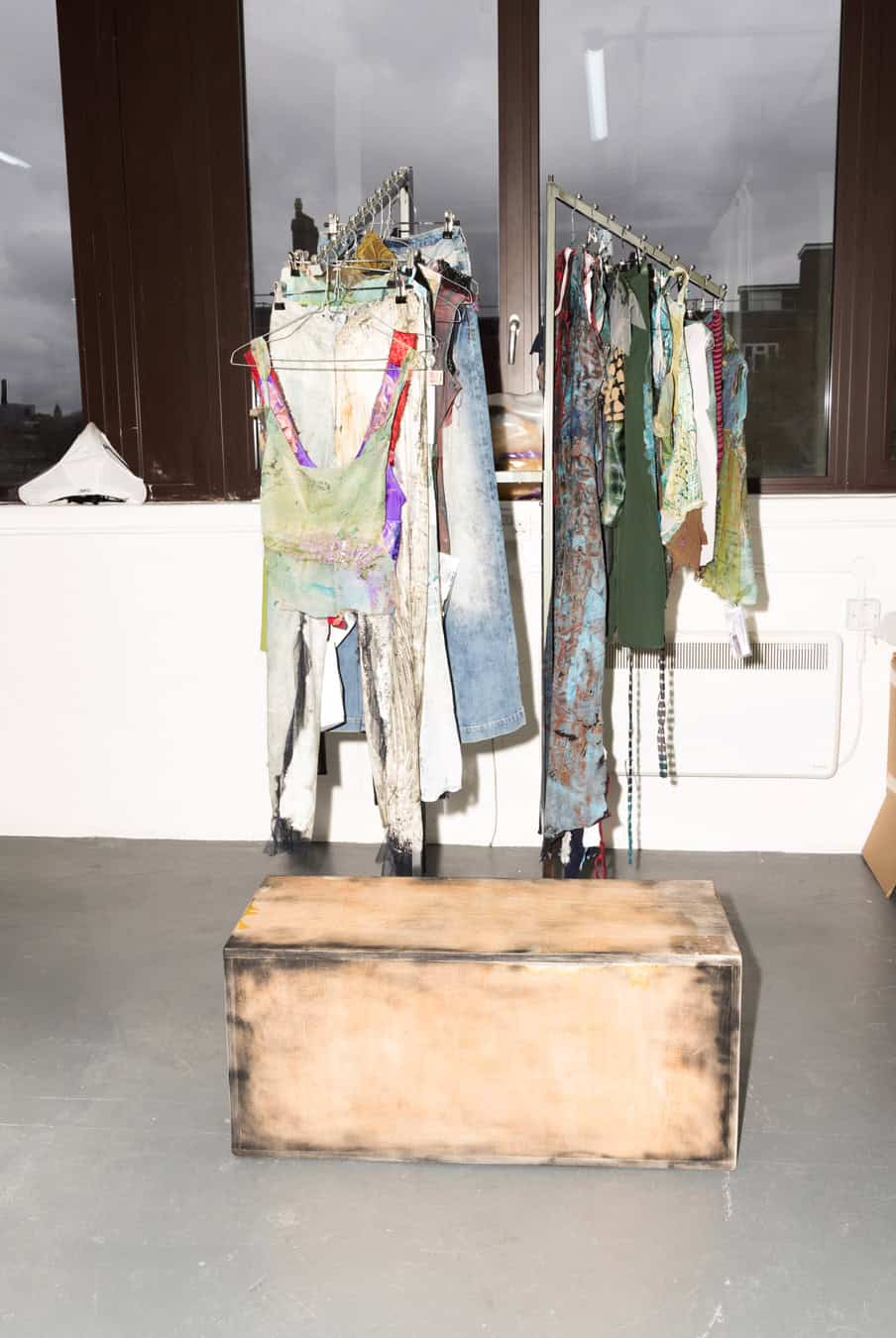
from left: love hook hanger by Apr/May and the colourful designs of Sos Skyn