June 23, 2026 |
Potential and purpose are powerful forces. Give them a platform and they become a portal into the future of creative industries. That is precisely the magic the Graduate Fashion Foundation brought to life with the 35th edition of London Graduate Fashion Week. Over the course of its duration, GFW 2026 delivered an extensive programme of catwalk shows, exhibitions, talks and industry programming, welcoming interdisciplinary talent across more than 30 UK and 40 international universities. While tools, technologies and trends have evolved over the years, the Foundation’s mission has remained unchanged: to champion emerging creatives while guiding their first steps into the fashion world. As we reflect on the lasting impact of this year’s showcase, we’re revisiting some of the highlights from the week.
Anyone walking past The Truman Brewery this past week would have caught a glimpse of the relentless buzz unfolding inside. Yet while the packed schedule kept the venue in constant motion from morning to night, it also made room for quieter moments of reflection and exchange. Guests in the GFW Live! talk space brought a wide range of hot topics to the table: creative resilience, the impact of AI, cultural stories, digital identities and more. “Talent alone is not enough”, argued Dalbir Bains, founder of Red De Moda, during the first round of the Careers Talk series, “the people who succeed are rarely the most gifted – they’re the most consistent”.
Joining Bains in highlighting the relevance of purpose amid the vastness of the fashion industry was Samuel Ross MBE, GFW’s opening keynote speaker. “You have to be so obsessed with your practice,” Ross told the young crowd. “My career has been a consequence of that obsession: wanting to create and treating every stepping stone as an opportunity to bring my work into the world.” Yet while encouraging graduates to embrace the opportunities ahead of them, Ross also emphasised the importance of remaining connected to their roots and identity, of keeping the genuine infatuation with their practice alive. Reflecting on his own journey, he spoke about safeguarding the “intellectual property” of his mind, drawing inspiration from his family history and nurturing the curiosity that first led him to create and build his enterprises.


from left: Dani Tabios and Ellise Sissons
Celebrations of heritage were not confined to the talk stage. The Graduate Fashion Foundation partnered with Liberty Fabrics to celebrate 150 years of Liberty London and their Spring Summer ‘26 Floral Rebellion collection. Final-year students from member universities were given the opportunity to design a series of garments using the new collection, with 40 short-listed designs brought to life and showcased during the closing catwalk show on Tuesday. Wrapping up the Wednesday schedule, Northumbria University transported audiences through its 70 years of archives, with graduate looks from 2006 sharing the runway with pieces dating back to 1984 and beyond. As the retrospective drew to a close, the runway was handed over to the creativity and technical skill of the Class of ’26.
If the Liberty and Northumbria showcases sent us travelling through time, the Graduate Fashion Week International Collective Catwalk carried us across continents, showcasing the striking student work from GFW’s global partner universities, from the Beijing Institute of Fashion Technology to the Sri Lankan Academy of Design. Pearl-embellished gas masks, finely knitted pink cloaks, furry heels and intricately beaded warrior dresses populated the runway, their distinct visual languages proving that talent is rarely lost in translation. Hungry for more, I slipped backstage after the show to meet some of the international talent behind the collections. First up was Uruguayan designer Alfonsina González of Integra Escuela Pablo Giménez. Drawing inspiration from Uruguayan literature, González explored the tension between containment and liberation through a striking interplay of rigid structures and airy, lightweight materials. Japanese designer Keishin Fukunaga, from Vantan Design Institute, was similarly interested in tensions, yet in his case the one between aesthetics and time. From dark, flowing lace skirts to sculptural latex dresses, his collection, The Beauty of Decay, unfolded as an irreverent ode to Japanese craftsmanship.
Day after day, I found myself speaking to students still buzzing from the adrenaline of having just presented their final collections. Interspersed among the rows of judges, buyers and industry professionals were emotional friends and family members, watching months – and in many cases years — of dedication proudly making their global debut. A first glimpse for many of the young designers into the routine they are now hoping to transform into a lifelong practice. That energy extended backstage, too. Danny Dunn, one of the models walking at GFW, described an atmosphere of excitement as collections were rushed from rail to runway and graduates watched their work finally come to life. “The looks were cool — it was clear that a lot of effort had gone into them,” he said. His personal favourite? A dark, striking piece by Sheffield Hallam graduate Nawal Ali, whom we interviewed earlier in the week, before she went on to receive recognition for her collection at the Closing Gala. Drawing on memories of her father’s work as a taxi driver, Ali translated elements such as car seat belts into recurring details throughout the looks, transforming a deeply personal narrative into something both innovative and resonant.
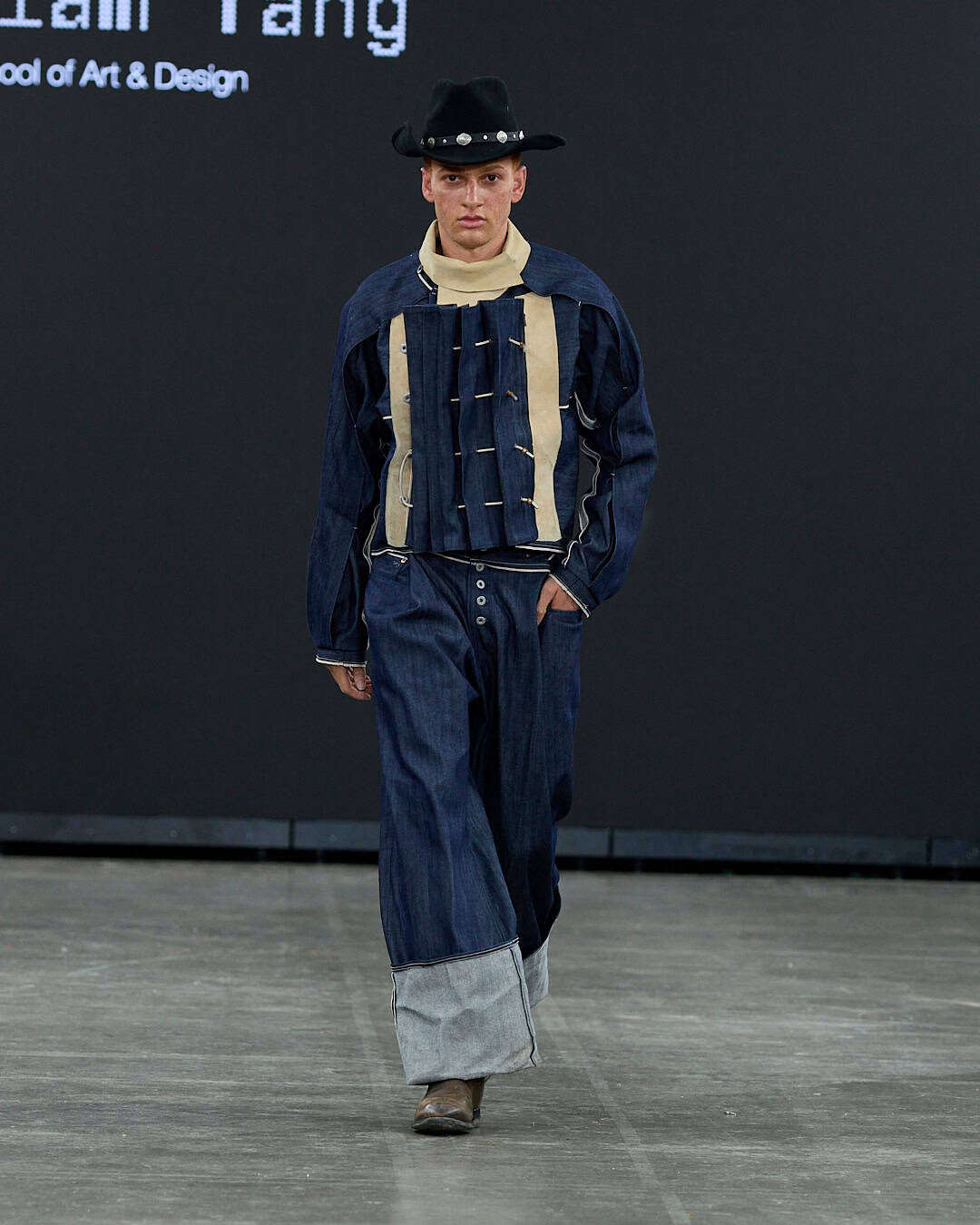
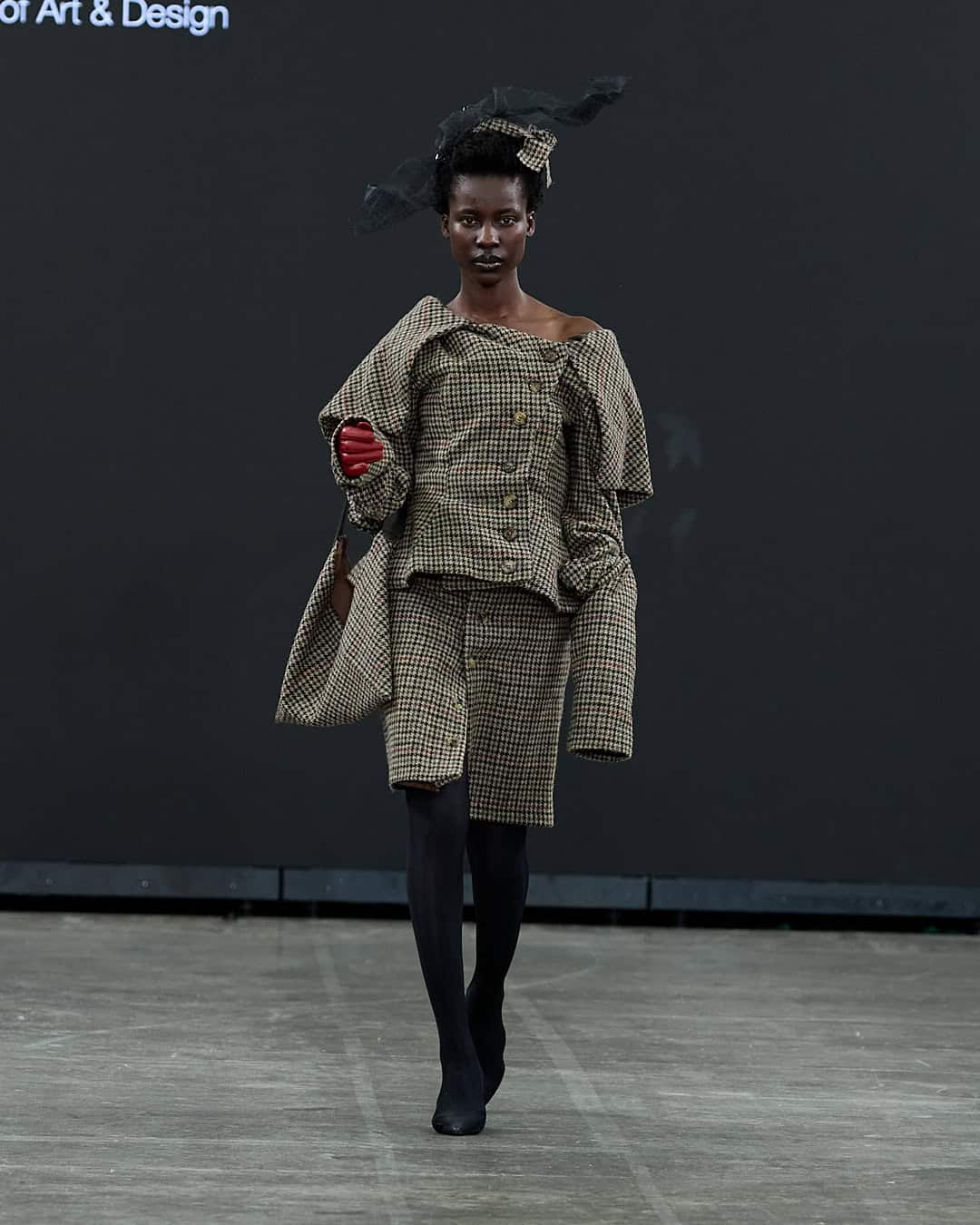
from left: William Yang and Amelie Liana Hall
The conversation between roots and creativity on the catwalk continued inside The Innovators of Tomorrow showroom. Brought together by the Graduate Fashion Foundation and supported by the PVH Foundation, the Fashion Accelerator Programme offers selected GFF alumni mentorship, seminars and industry-led panels, culminating in a week-long showcase at GFW. Designed to support emerging talent at an early stage of their careers, the programme spans disciplines including fashion design, styling, photography, journalism and creative direction, with a particular focus on creatives from underrepresented backgrounds.
This year’s cohort featured stylist Brandon Bolland; designers Callie Therese Holden, Janey Cribbin, Kemi Danielle Gbadebo, Layal Balubaid, Miao Jiang and Tarika Kinney; fashion journalist Mia Mazzocchi; and photographer Safa Basharat. Drawn in by their enthusiasm, skill and collaborative spirit, I found myself returning to the showroom throughout the week, spending time with the creatives, listening to their stories and immersing myself in their work. The immersion became quite literal, as I attended GFW dressed each day by a different designer from the cohort – an opportunity for me to experience their craft first-hand, while also earning me more compliments from industry professionals around the venue than I could possibly keep track of.
From Gbadebo’s self-described “unoriginal” drippy silhouettes, rooted in sustainability and an effortless femininity, to Jiang’s delicate designs informed by Taoist philosophy and material consciousness, Holden’s irreverent celebration of Northern creativity through cheeky prints and ragged-edged dresses, to Kinney’s ethereal interpretations of Irish folklore, the breadth of talent on display was simply remarkable.
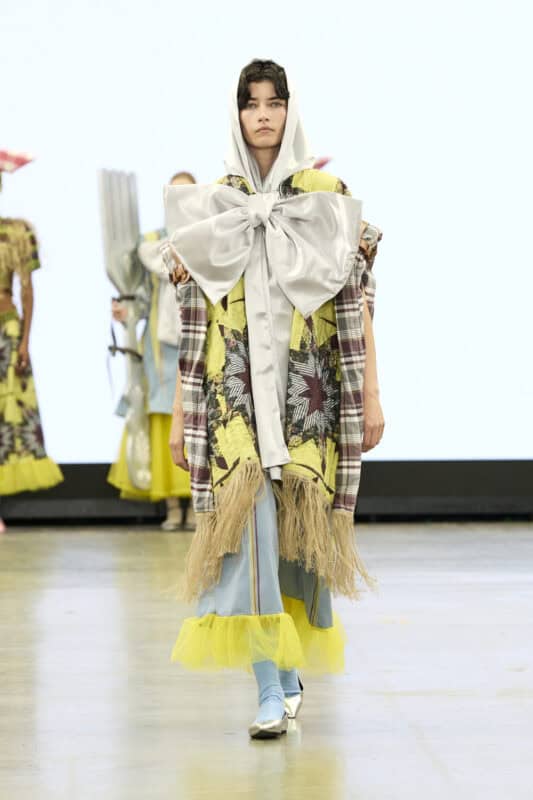
Day after day, the showroom became a magnet for graduates past, present and future, as well as curious industry insiders. Drawn in by the eye-catching looks, visitors ended up staying for the conversations unfolding around them, which moved seamlessly between social commentary and aesthetic appreciation. Before heading to the GFW Gala, I had the chance to sit down with the cohort for a collective reflection on creativity, collaboration and the future of the industry. What emerged from the conversation was an inspiring sense of dedication and ambition, coupled with a shared determination to create space for a new generation of voices to be heard in solidarity with one another. “Since graduating, I have really realised how important community is”, said Mazzocchi, a sentiment echoed by Jiang: “We grow together, we support each other, and I can’t wait to see our next steps”.
Beyond the catwalks, talks and awards, that felt like the defining spirit of Graduate Fashion Week 2026: a celebration not only of talent, but of the curiosity, determination and – crucially – artistic synergy required to build a creative life. Every look, installation and creative vision carried traces of something larger: mutual inspiration among students, family legacies reinvented through visionary perspectives, supportive teachers looking as excited as their pupils and the fertile dialogue between open-minded corporations and young artists eager to learn.
Leaving the Gala after a whirlwind week of fashion, I realised I was surprisingly walking away with more energy than I had arrived with. Exhausted, certainly, but also wonderfully optimistic. If this is what the future of the industry looks like, I thought, then it is in exceptionally talented hands.
Top image: Reanne Lowry. Photography courtesy of Graduate Fashion Foundation.
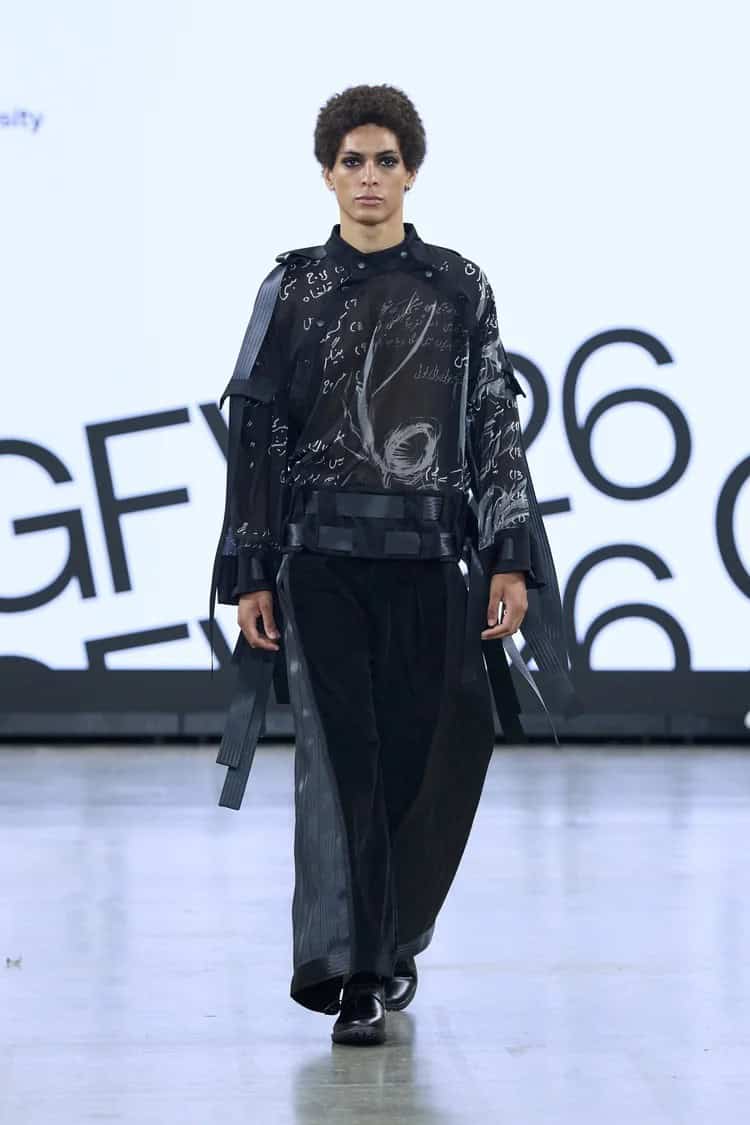
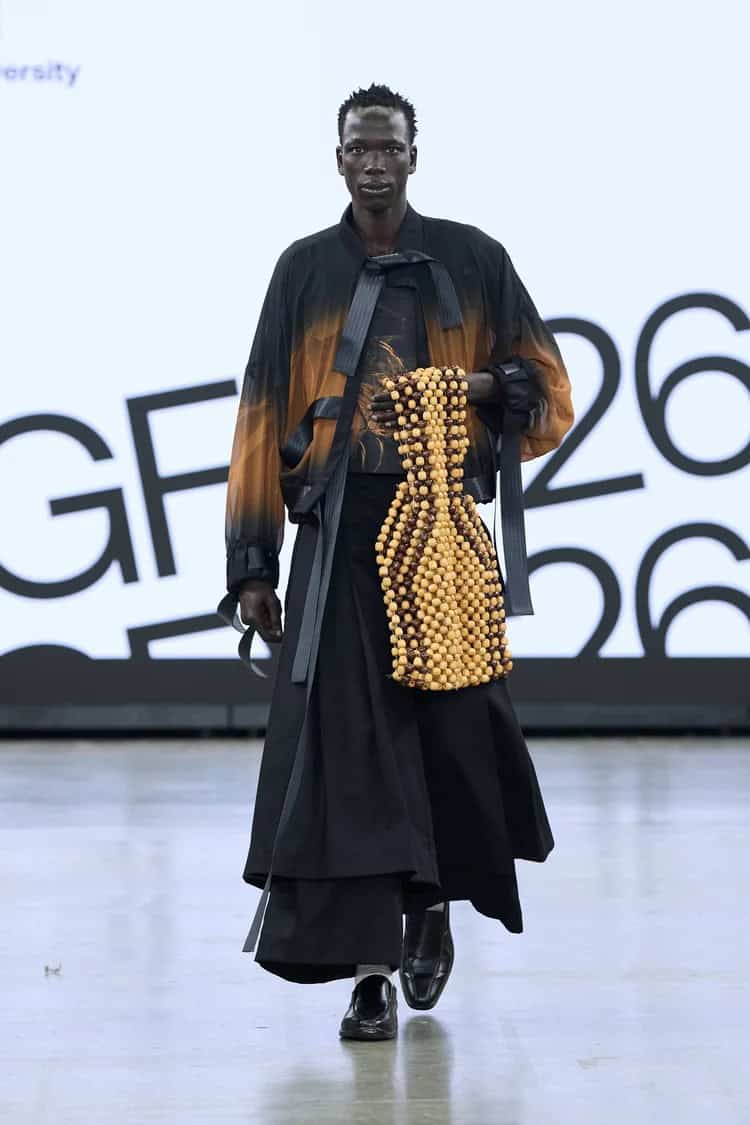
model Danny Dunn (left) walks Nawal Ali’s graduate show