May 18, 2026 |
The UK capital is bursting with raw fashion design talent. From the engineered sensuality of Knwls to Steve O Smith’s drawn-by-hand expressions, the future heirlooms of Talia Byre and Tolu Coker’s memory-made clothes, London’s designers are reshaping the face of fashion.
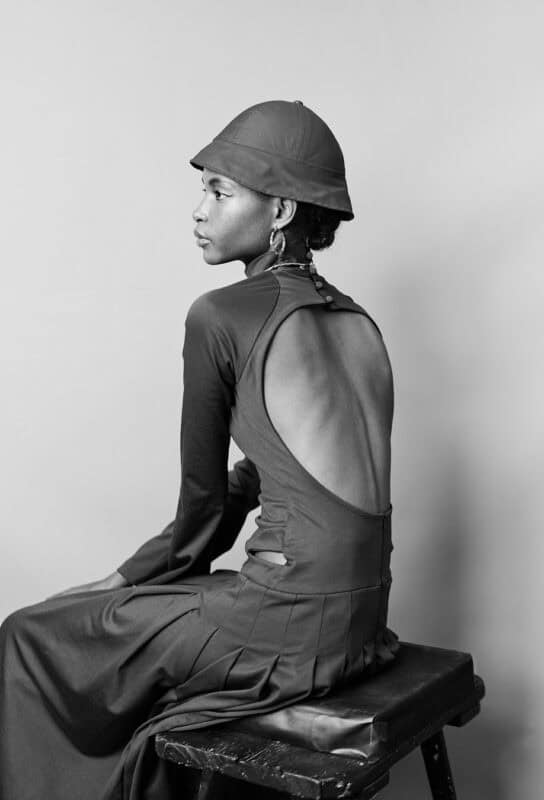
Christie wears dress by TOLU COKER
Tolu Coker
Tolu Coker’s fashion practice is rooted less in trend than in testimony. Based in London, where she was born and raised, her brand operates as an extension of lived experience rather than a conventional label. Clothes, for Coker, are not just worn, they’re documentary objects.
Her relationship to dress is inseparable from her heritage. With Yoruba parents, she grew up understanding clothing as a cultural language. “In Yoruba culture, fabrics literally denote where you’re from… there are mourning fabrics and celebratory fabrics [too].” That understanding of garments as carriers of meaning runs throughout her work, which consistently explores migration, spirituality, labour and memory. “When I create, I create with things that I’ve inherited,” she says.
Coker is acutely aware of fashion’s historical authority. “As a designer, you have a certain authority for your expression,” she notes, adding that clothes can later be read as artefacts. That awareness drives her insistence on visibility. “I think about all the stories of people who’ve gone before me… where they weren’t even documented at all.” Textiles like Adire – cloth dyed indigo that’s specific to Yoruba culture – appear not as decoration but lineage. “My understanding and iteration probably come from denim,” she says, tracing how heritage shifts through geography and time.
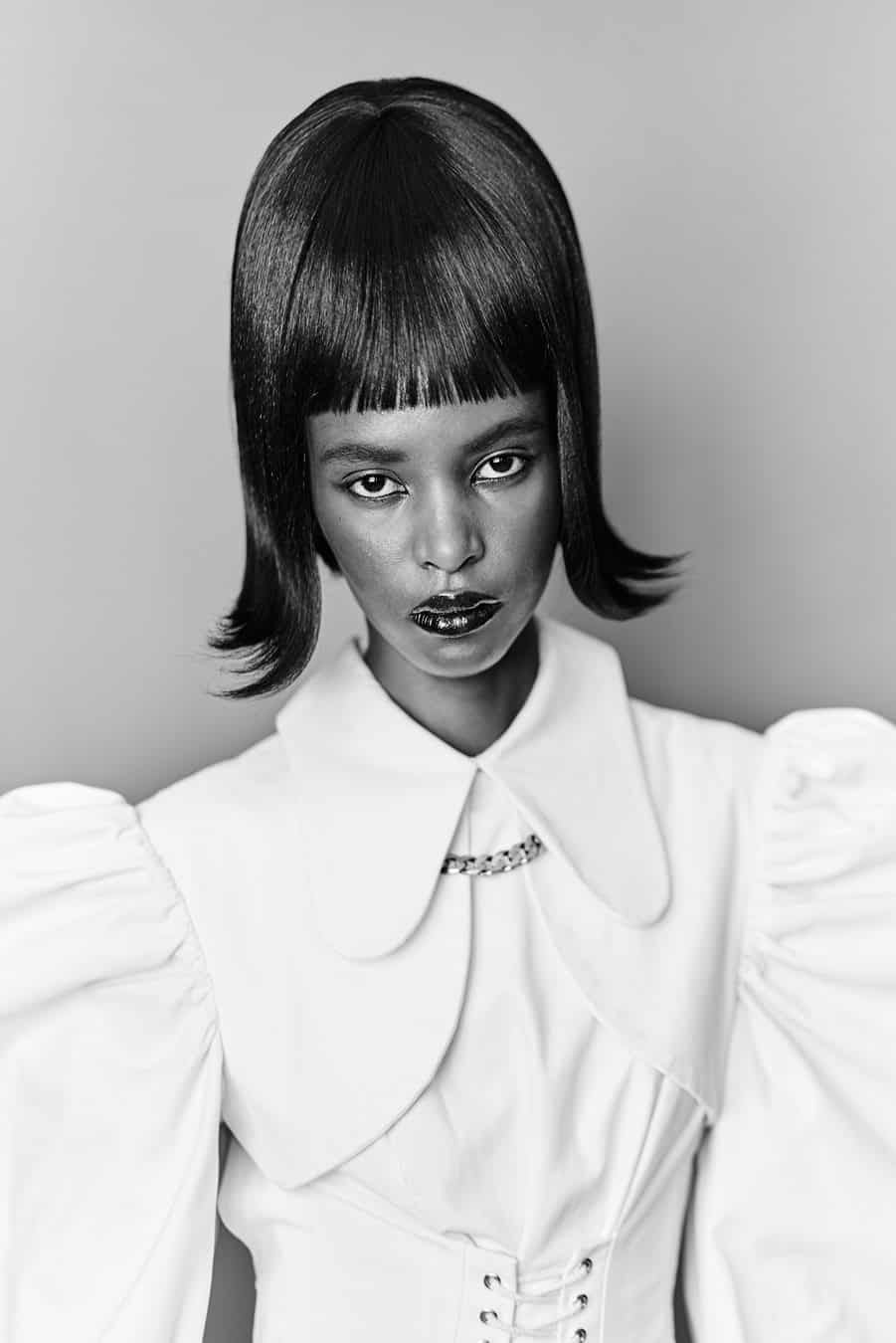
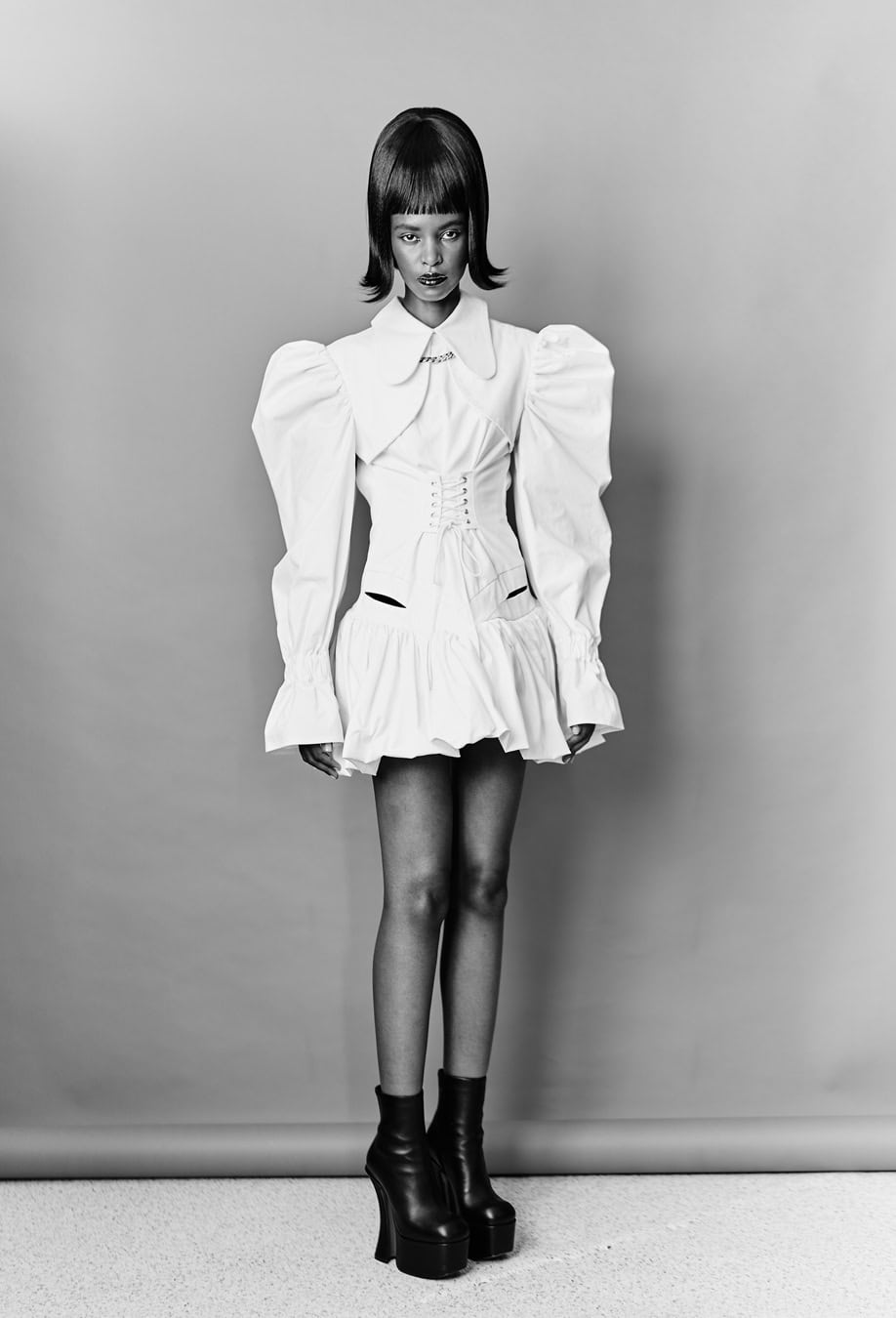
from left: Christie wears dress by TOLU COKER and Christie wears dress by TOLU COKER, shoes by CHRISTIAN LOUBOUTIN
Her Britishness is equally formative. Raised in a deeply religious family, ceremony and dress were inseparable. “Sunday’s best is a consistent theme in my work,” she says, recalling childhood memories of church and communal presentation. That formality is balanced by what she calls a distinctly London sensibility: “There’s a certain ease, [but] there isn’t really a set identity of a Londoner. We’re all transplants.” Her work reflects that hybridity, designing not for archetypes but for what she describes as “the human experience of being in this space”.
Fashion was not the original plan. “I wanted to be a lawyer,” she says, citing Legally Blonde as a pivotal reference. Clothing, she realised, could hold difficult conversations without confrontation. “The one thing about clothes is that, in a way, it’s an equaliser.” Once worn, its ownership shifts. “My clothes are my art. And when it’s out in the world, it’s no longer mine anymore.”
Her process mirrors that openness. “It’s like organised chaos,” she says. Collections might begin with journalling, sound, film or a single emotional state. Music is central, and often developed alongside garments. “Does this look like what it sounds like to you?” she asks collaborators, building worlds rather than looks.
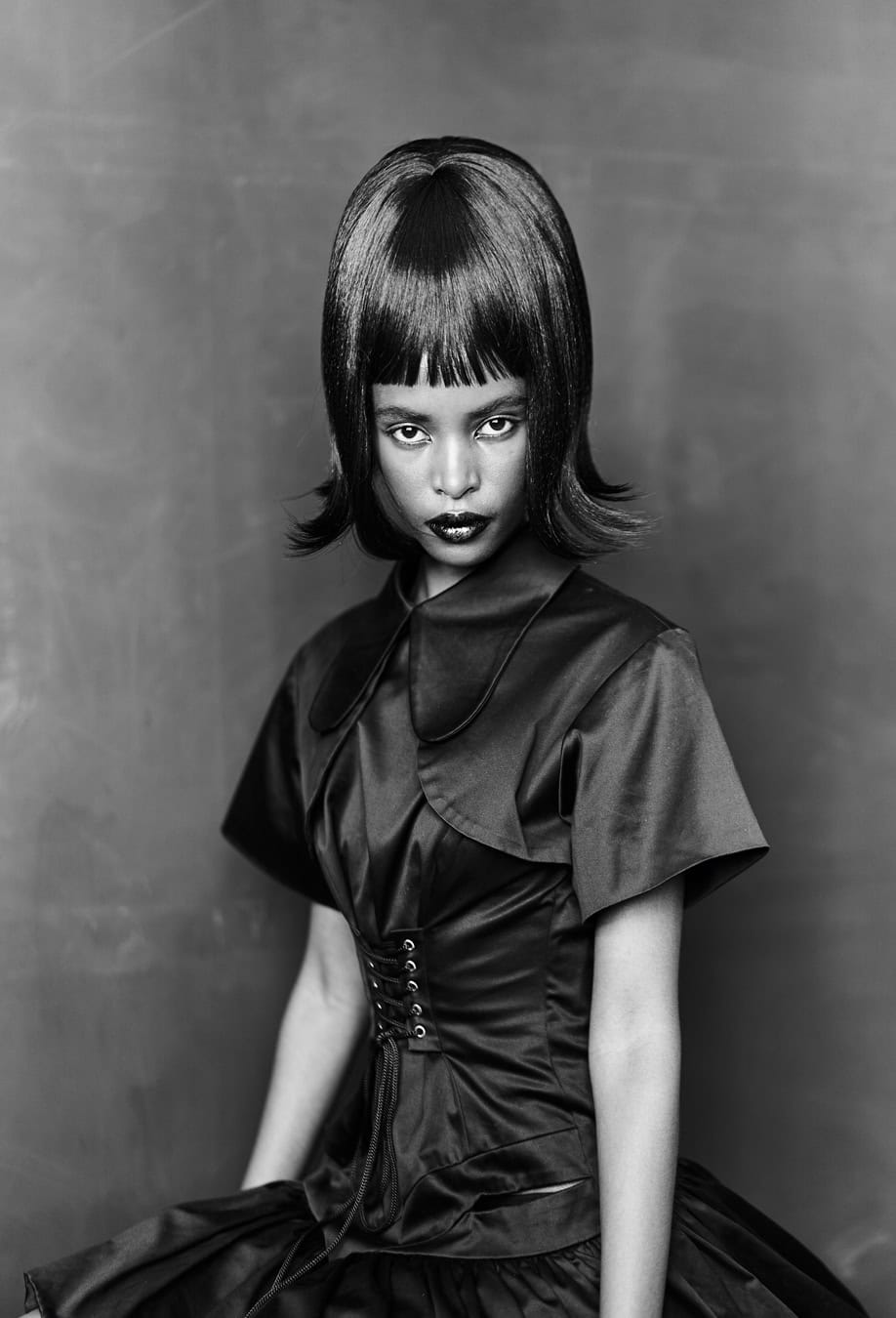
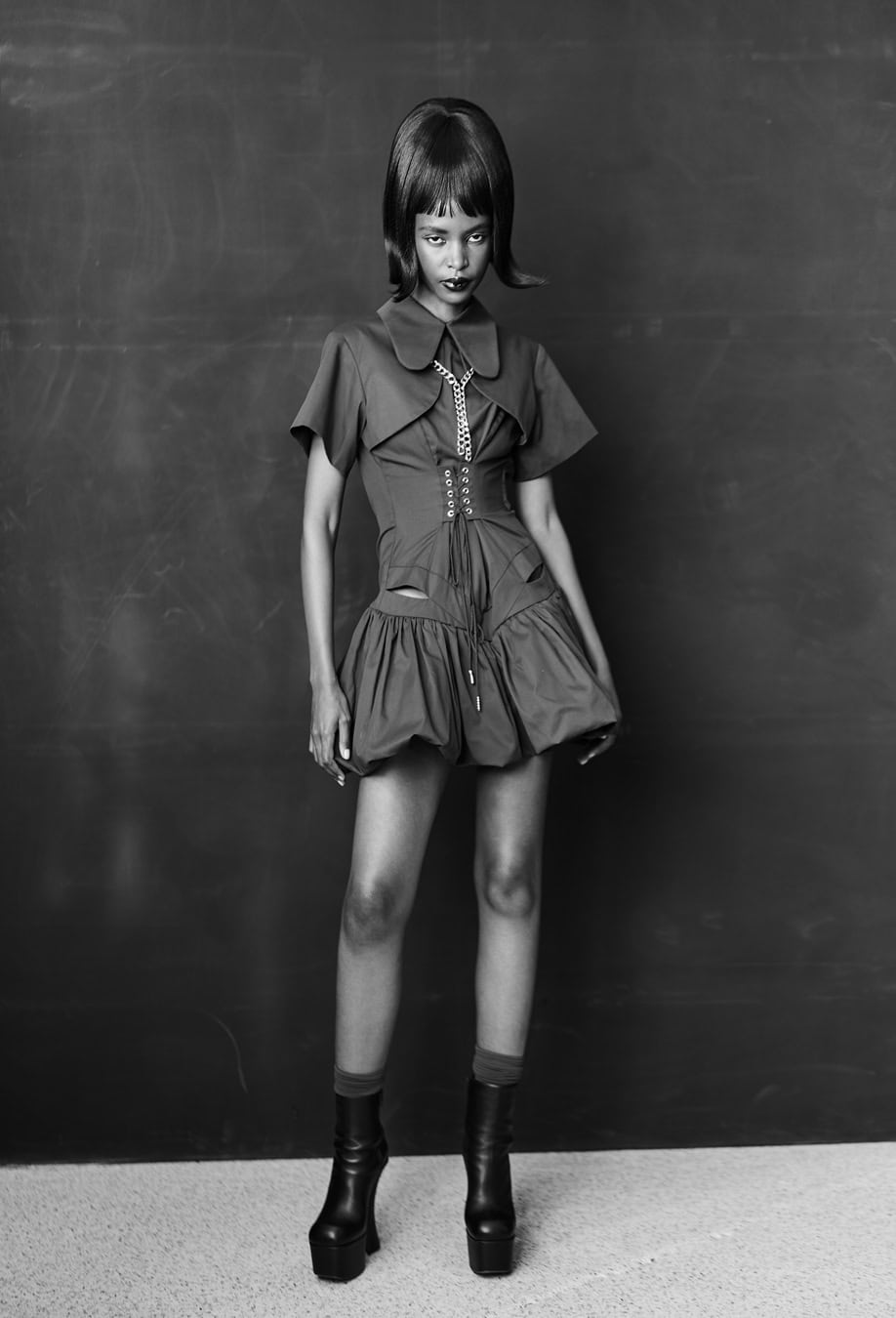
from left: Christie wears dress by TOLU COKER, shoes by CHRISTIAN LOUBOUTIN and Christie wears dress by TOLU COKER
That world-building was especially evident in SS26’s Unfinished Business, a pared-back collection that offered a tender meditation on heritage, grief, womanhood and diasporic inheritance. Developed with her brother, Ade, and presented through a film starring Naomi Campbell, it rejected spectacle in favour of intimacy. “We didn’t want to do a runway at that moment,” she says. The clothes reflected that restraint: neutral palettes, adaptable silhouettes, pieces designed to move with changing bodies. “I was curious about creating a garment that also sees women through those different changes.”
Coker’s idea of “reformative luxury” is rooted in access and recognition. “How do you aspire to something you don’t see yourself in?” she asks. Luxury, for her, is not exclusion but connection that’s built through craft, collaboration and visibility. Growth, like everything else, is intentional. “It’s really about steady growth,” she says. The ambition is long-term. “It shouldn’t be attached to me. Laying the foundation steadily is really important.”
Taken from 10 Magazine Issue 76 – CREATIVITY, CHANGE, FREEDOM – out NOW. Order your copy here.
LONDON MADE
Photographer THOMAS HAUSER
Fashion Editor TARA ST HILL
Text EMILY PHILLIPS
Model CHRISTIE MUNEZERO at Clay Management
Hair ATTILA KENYERES
Make-up PEGGY KURKA at Uschi Rabe using GUCCI Beauty
Photographer’s assistant JOHANNA KIRSCH
Fashion assistant TOMMY DOWLING
Casting WHITE CASTING
Production SONYA MAZURYK
Production assistant MARISSA LEITMAN