April 8, 2026 |
If there’s one style of men’s clothing that warrants the adjective ‘timeless’, it’s prep. Rugby shirts, polos, tweed blazers, you name it. These garments are almost defined by a lack of edge, shining instead for their quality and ease. Like its close and now-bastardised cousin quiet luxury, prep proffers a whispered elegance, the kind that doesn’t lend itself to trends, but instead heritage and other bywords for class or status.
It’s perhaps surprising, then, that one of the throughlines in menswear of late has been prep, or at least a variation of the look. Jonathan Anderson’s Dior debut in June was a case in point, purveying the same kind of garb you’d find at Oxford University in the late 2000s. Think: avo-green chinos with high tops, blue and white-striped shirts with sleeves undone, school ties and some very privately educated styling. French tucks and popped collars? Tick. Cable-knit sweaters hung over shoulders? Tick. We even spotted Dior’s own copy of the Canterbury trackpants, favoured by touring rugby boys. (Fitting, as Anderson’s father, Willie, was captain of the Irish national team.) Otherwise, it was proto-prep. Here, tailcoats, tweed Bar jackets and white bow ties proved that – with the right crop or a flash of skin – staid can be subversive. But Anderson’s horn-ification of the Jack Wills seasonaire – quite Saltburn – was not without precedence. Elsewhere, brands such as S.S. Daley and Stefan Cooke have toyed with prep, twisting it to new aims. For the former, it was the uniforms at Harrow that first inspired the label. The designer Steven Stokey-Daley had studied at Westminster University’s Harrow campus, a 10-minute walk from the historic public school. Later, he expanded his plummy reference pool towards gay-leaning society films like 1984’s Another Country and Evelyn Waugh’s 1945 novel Brideshead Revisited, both renowned for their respective Etonian and aristocratic costumes.
With Stefan Cooke, however, preppiness has been a subplot, albeit an enduring one. Take SS26, when the designers, Cooke and partner Jake Burt, presented cut-out cricket sweater necklines on bare flesh, ballet-pump loafers with sweatpants and a smattering of collegiate stripes. Explicit or not, the upper echelons of British schooling were present and, again, queered.
Geordie Campbell, an emerging designer raised in Oxfordshire, itself an epicentre of preppies, has built his brand with prep as an integral part. Polo collars are layered atop one another, a corduroy suit comes with a rosette and a dress shirt is fastened with a white ribbon akin to those worn at matriculation ceremonies. Campbell even entitled his AW25 collection Michaelmas after the academic September-to-Christmas term. “I find school uniform really amusing – kids dressed as adults in blazers and ties,” he says. “I like playing with that idea but in reverse. It’s mutton dressed as lamb. Grown men in little boy shorts. It seems so wrong, but it just looks so fab.” Certainly, there’s some wilful appropriation at play. In SS26, conventionally boyish designs were, once more, approached with a wistful, soft gaze, incorporating, for example, a damask curtain fabric and a double placket. “I think when you grow up queer, you often grow up a lot faster,” he says. “So this preppiness comes from a certain craving for nostalgia, to relive your innocence and youth.”
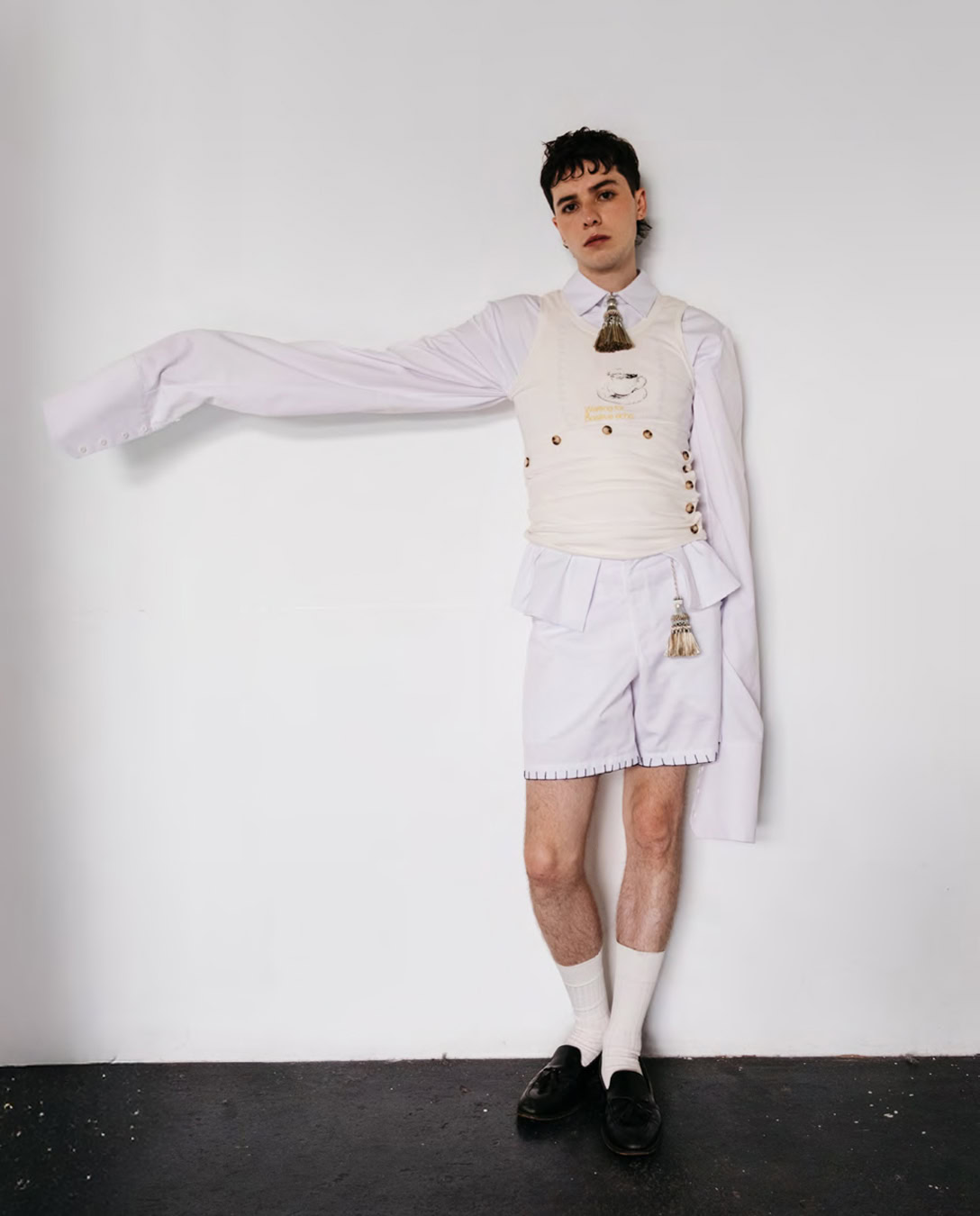
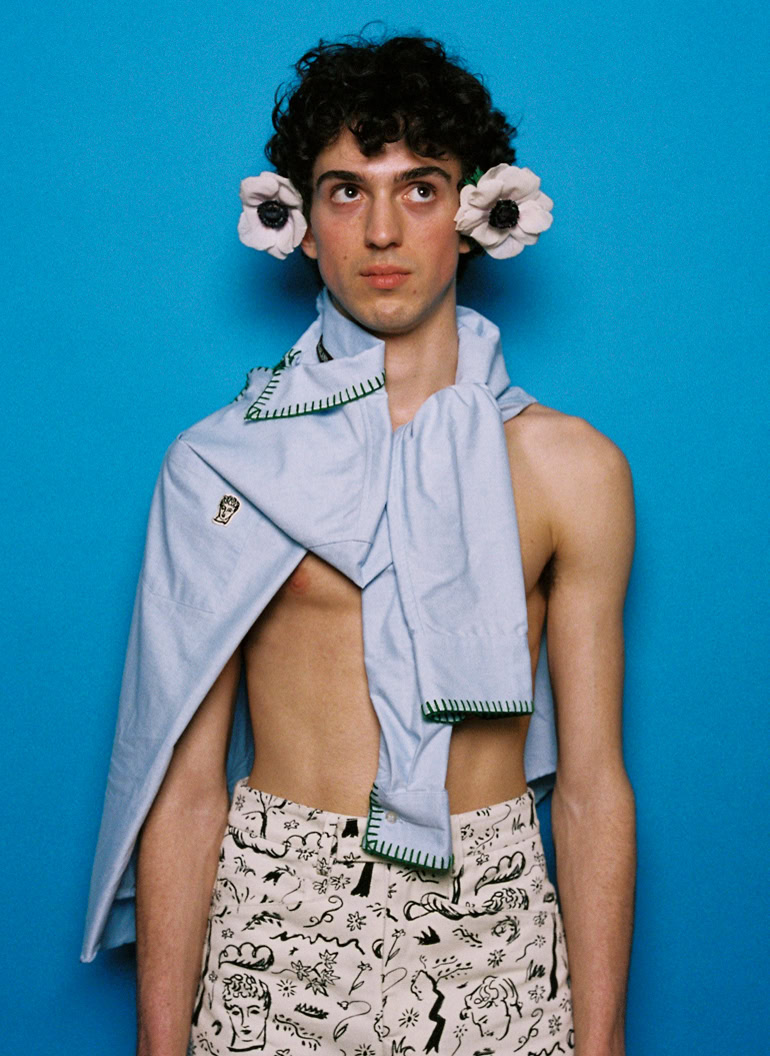
from left: preppy codes reimagined by Geordie Campbell and Chateau Orlando
In a similar vein, designer and artist Luke Edward Hall has constructed a whole world – interior design, illustration, fashion – around queering old English classics. Taking cues from the likes of David Hockney and the countryside, he camps up traditional shapes and materials through choice accessories. A glittery shirt, an “outrageous tie” or a handmade ceramic brooch teamed with a tweed blazer is one such example he gives from his own personal style. Hall channels this sensibility into his label, Chateau Orlando. The SS25 collection – titled Blossom at the Mention of Your Name after Fiona Cooper’s 1995 gay love story – offered deckchair-striped linen shirts and blanket-stitched shorts, ideal for a picnic in the Cotswolds, where Hall resides. “Prep can be eccentric and unique. One just has to make it their own,” he says. “I have to have fun, and there has to be tension in my style. For me, this tension is created when unusual colours and references are thrown together.”
Though ostensibly preppy to the untrained eye, Hall doesn’t consider his work or self as proper preppy, noting the look’s origins in 1950s America. He’s right. Although today prep has become a catch-all for anything stripy, ‘posh’, countrified or gentlemanly, it actually came from an American subculture of WASPs (white, Anglo-Saxon Protestants) on Ivy League campuses. There was crossover with the dress of the British elites – whether that’s Oxford University’s all-male Bullingdon Club or, more radically, the artists and authors in the Bloomsbury Group – but it’s important to acknowledge the Stateside origins.
Why? Because such technical nerdery is the lifeblood of contemporary menswear obsessives, not least the ‘city boy’ style tribe popular in Japan. Characterised by a unique composition of simplicity and one-of-a-kind details, city boys read fashion and lifestyle magazines like Brutus and Popeye, and their wardrobes are stacked with vintage Americana – Oxford-cloth button-down shirts, blazers and loafers especially. They are the most contemporary iteration of a once-demonised, later-celebrated subculture born in ’60s Tokyo, miyuki zoku, which based its look on an imagining of Ivy League students: regimental ties, wingtip shoes, high-water trousers and three-button madras jackets. Today, like their forebears, city boys continue to fixate on the lining of a collar or the inclusion of locker loop (the hook of fabric on the yoke of a shirt), using prep as a tight but fruitful template to style themselves anew.
Hallowed Japanese brand Beams Plus is, by design, rooted in this Ivy lore, along with other core categories. “I think prep is more of a philosophy than a fashion style,” says Hideki Mizobata, the director of Beams. “When you think of uniforms, you may associate them with seriousness or rules. But for me, prep allows you to ease the rules and gives you freedom to express yourself.” To his point, the Beams Plus SS26 collection has pushed prep beyond its otherwise ‘clean’ feel, incorporating specially processed garments and experimental fabric developments. Mizobata adds, “Prep grants [you] some leeway and play. Personally, it’s like a secret sauce.”
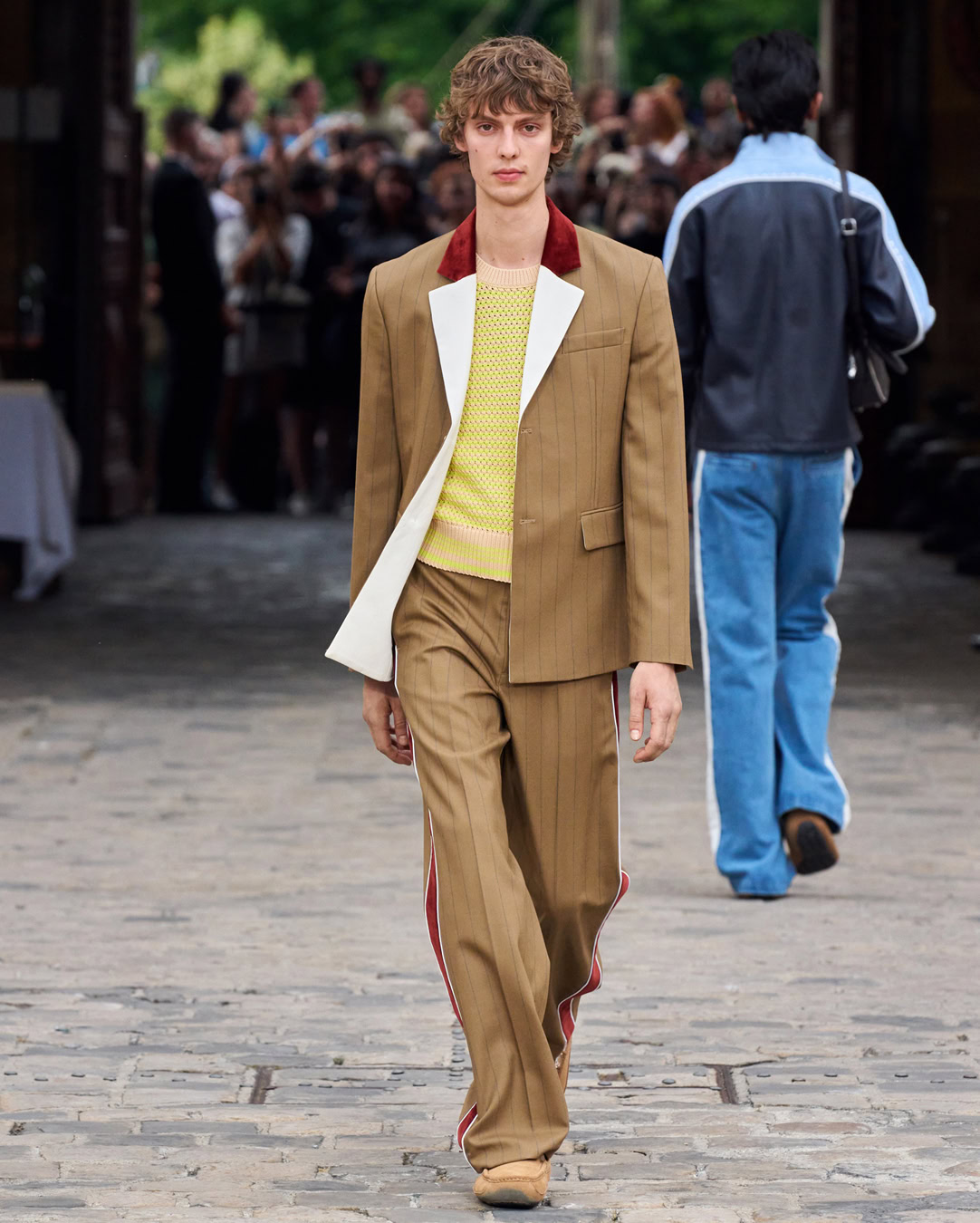
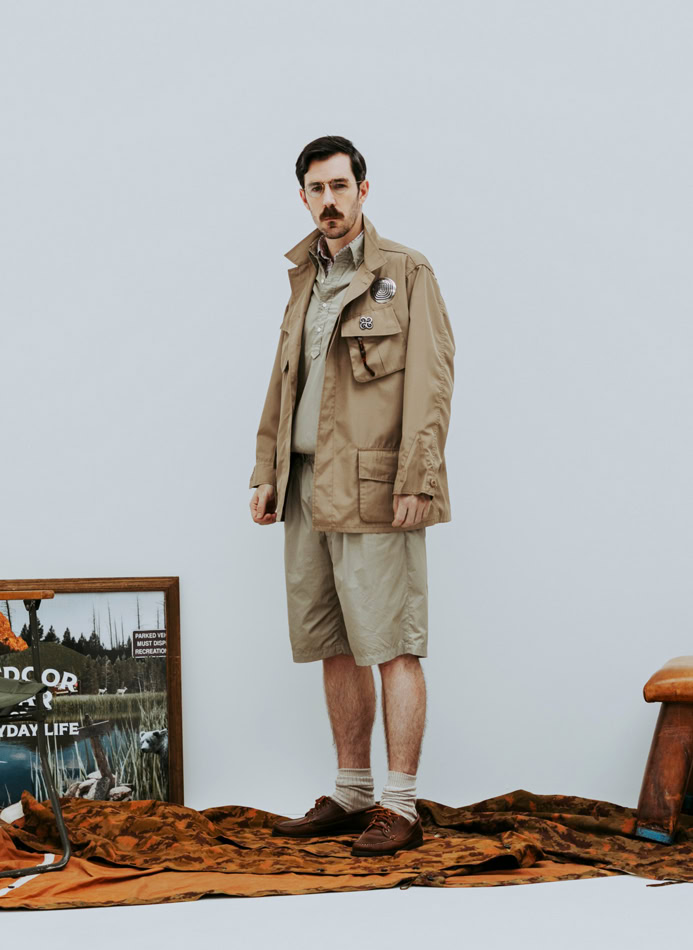
from left: preppy codes reimagined by Wales Bonner and Beams Plus
Often, Beams Plus is where young adults turn after graduating from their streetwear era. It’s obvious why. Labels like Supreme, Noah and even Palace have, from the start, relied on rugby shirts, chinos and Oxford shirts as core product categories. Tellingly, one of prep’s original outfitters, J.Crew, was formerly helmed by Brendon Babenzien, who co-founded Noah and was previously the long-serving design director for Supreme. Babenzien has already overseen a Beams Plus collab and, true to prep principles, designs without trends front of mind, but instead focuses on exceptional quality. Yes, he did introduce some substantially wider chinos when starting his post at J.Crew in 2021, but otherwise, the resurgence of hype around the brand was more to do with people re-embracing prep. Perhaps, at a time when streetwear (shouty and logoed) is unanimous, prep is radical. “Prep as a trend rises in popularity from time to time, but I attribute that to it being generally just good taste. It’s both practical and good-looking,” he says. “It’s hard to argue against the idea that prep is simply good style.”
Good style it might be, but its history of elitism is exactly why something so ostensibly prosaic can be disruptive. Nowhere was this clearer than in the phenomenon of Black Ivy, a style that grew and evolved in conjunction with the US Civil Rights movement. It could be seen in a striped sport coat worn by John Coltrane or Miles Davis’s penchant for Brooks Brothers Oxford shirts and suits. In crude terms, African-American men were wearing the clothes of wealthy, white conservatives. And this lineage continues right to the present day, argues Jason Jules, the author of Black Ivy: A Revolt in Style (2021). He cites Tyler, the Creator, a man who re-popularised sweater vests, shorts (and socks) and loafers, plus green ties and chinos. “To me, Tyler’s style is very much his own. It’s not limited to any preconceived ideas of how an artist should dress and is totally reflective of his own taste and interests,” says Jules. “In that respect, it also fully encapsulates the modern Black Ivy ethos.”
In its evolution, Black Ivy has been succeeded by offshoots. Following on from the original Ivy League style’s momentum, many designers – Ralph Lauren and Tommy Hilfiger especially – capitalised on the look, bringing it to runways and later the masses with diffusion lines. Items from Ralph Lauren Polo, in particular, were often stolen (or ‘boosted’, as it was known in New York) from department stores by ’90s hip-hop kids in a rebellious act of dressing up. Fast forward to now and brands like those two have a direct line to these subcultures. As such, subversion requires a more nuanced approach.
Calculated tinkering of staple pieces, much like that seen in Comme des Garçons Shirt’s endless iterations on striped baby-blue shirting and blazers, is today’s avant-garde for prepsters. Tight, researched references, such as Wales Bonner’s SS24 ode to the sartorial codes of the historically Black Howard University, is the new bar, positioning prep less as a vague mood and more an intelligent and critical study in design.
The shift’s most recent watershed moment was marked in 2023 when Miu Miu’s SS24 collection revived ‘mall prep’ styling, i.e. inspired by the collections of Abercrombie & Fitch, Hollister, American Eagle et al. Now, menswear with a capital M is following suit. For the veteran preppies wreaking havoc on the category for years – cough, cough, Thom Browne – this is good news. With his micro-blazers and school socks, Browne will be laughing all the way to the bank.
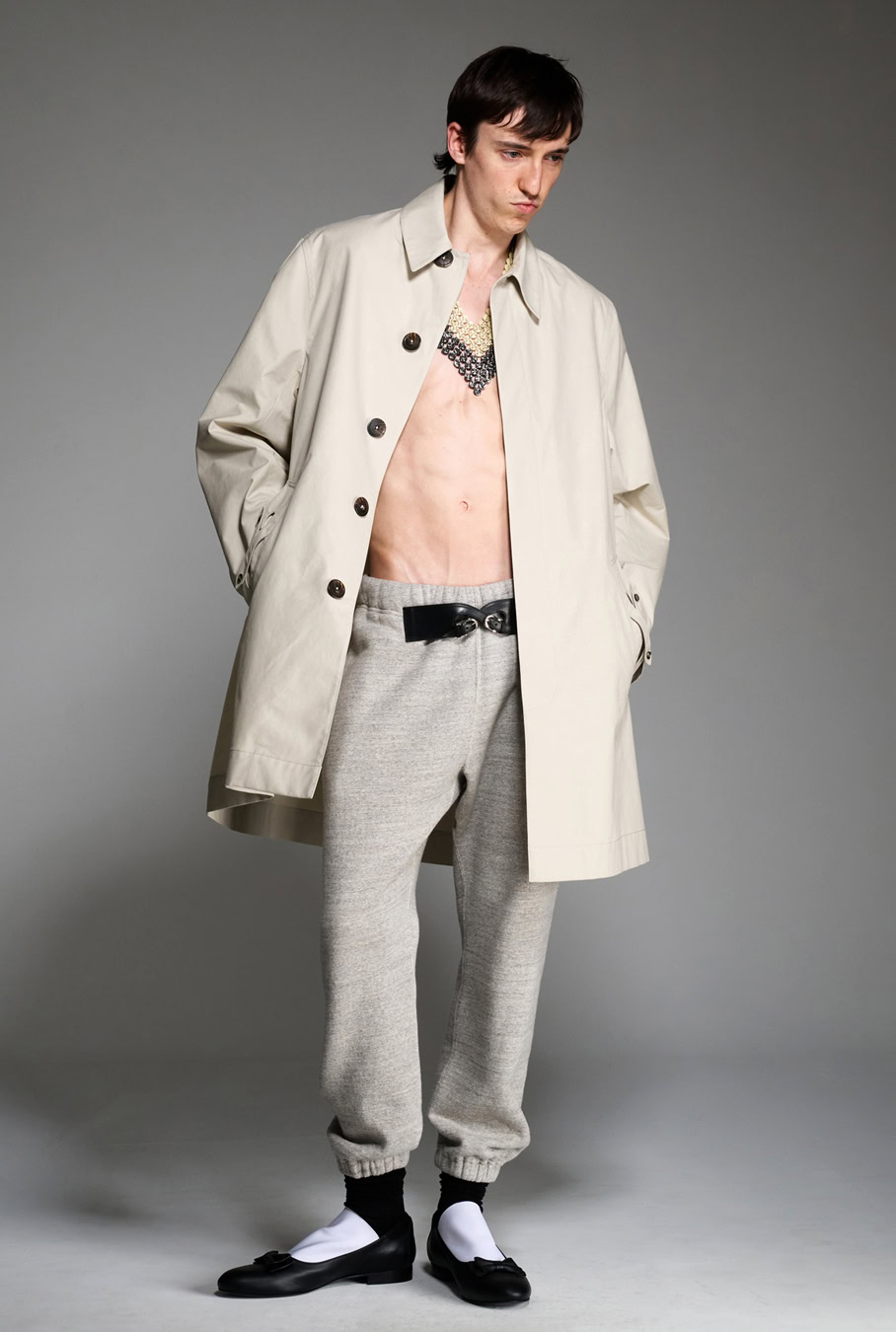
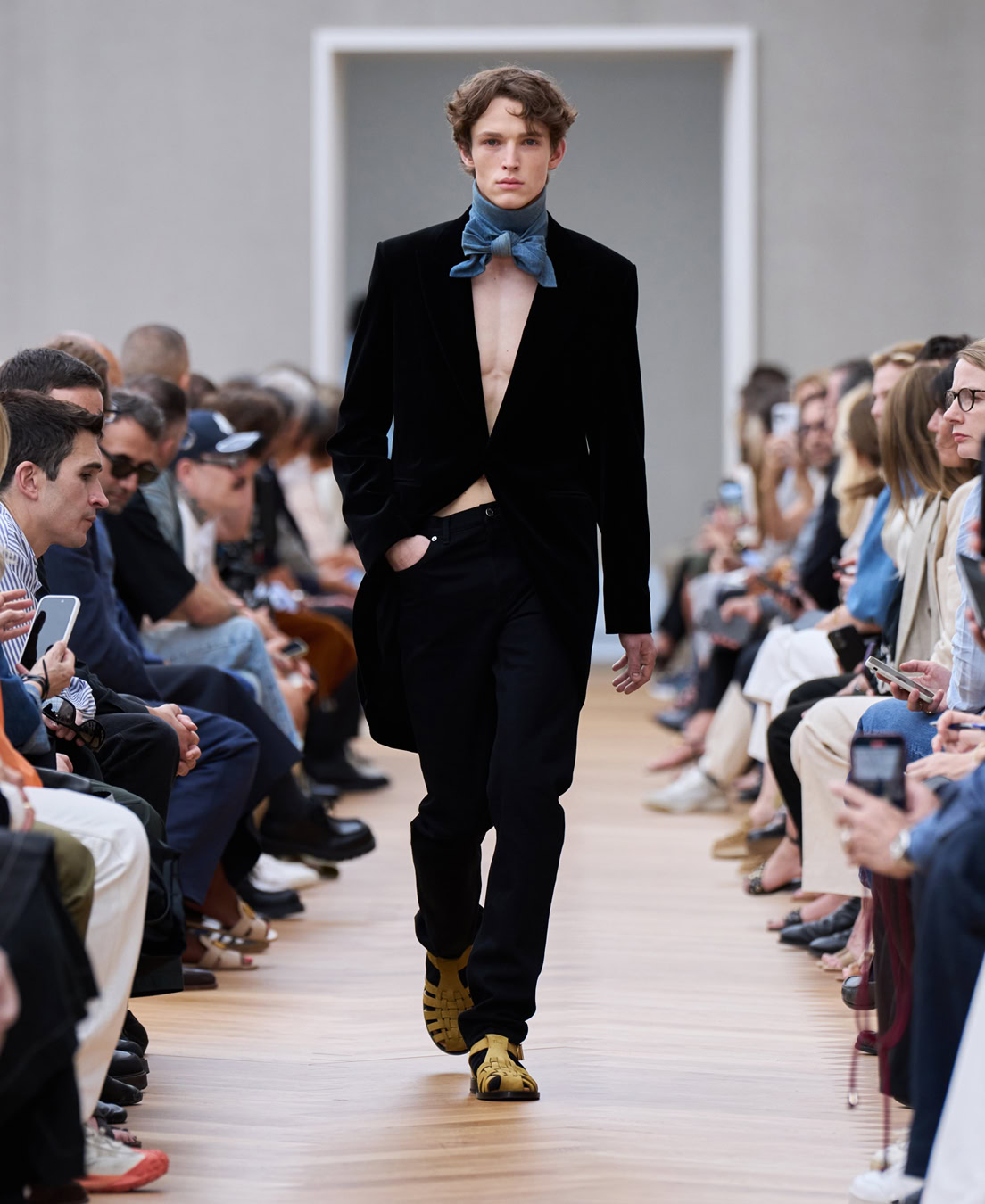
from left: preppy codes reimagined by Stefan Cooke and Dior
Indeed, even buyers are latching on. “Preppy really is prominent right now,” says Reece Crisp, the buying and creative director at LN-CC. “It’s infiltrating higher-end brands in an unusual way, taking hues from the stalwarts but doing it in a contemporary style with colour being the most distinctive element.” That last part is key. If you’re considering salmon chinos, the colour and design details of the top you team them with counts. Get it right (a candy floss knit) and you’ll look like a Dior boy. Get it wrong (a conventional navy gilet) and it’s giving closet Tory. If all else fails, just stick to the Ivy League staples.
Taken from 10 Men Issue 63 – Classic, Craft, Nostalgia – out NOW. Order your copy here.