March 18, 2026 |
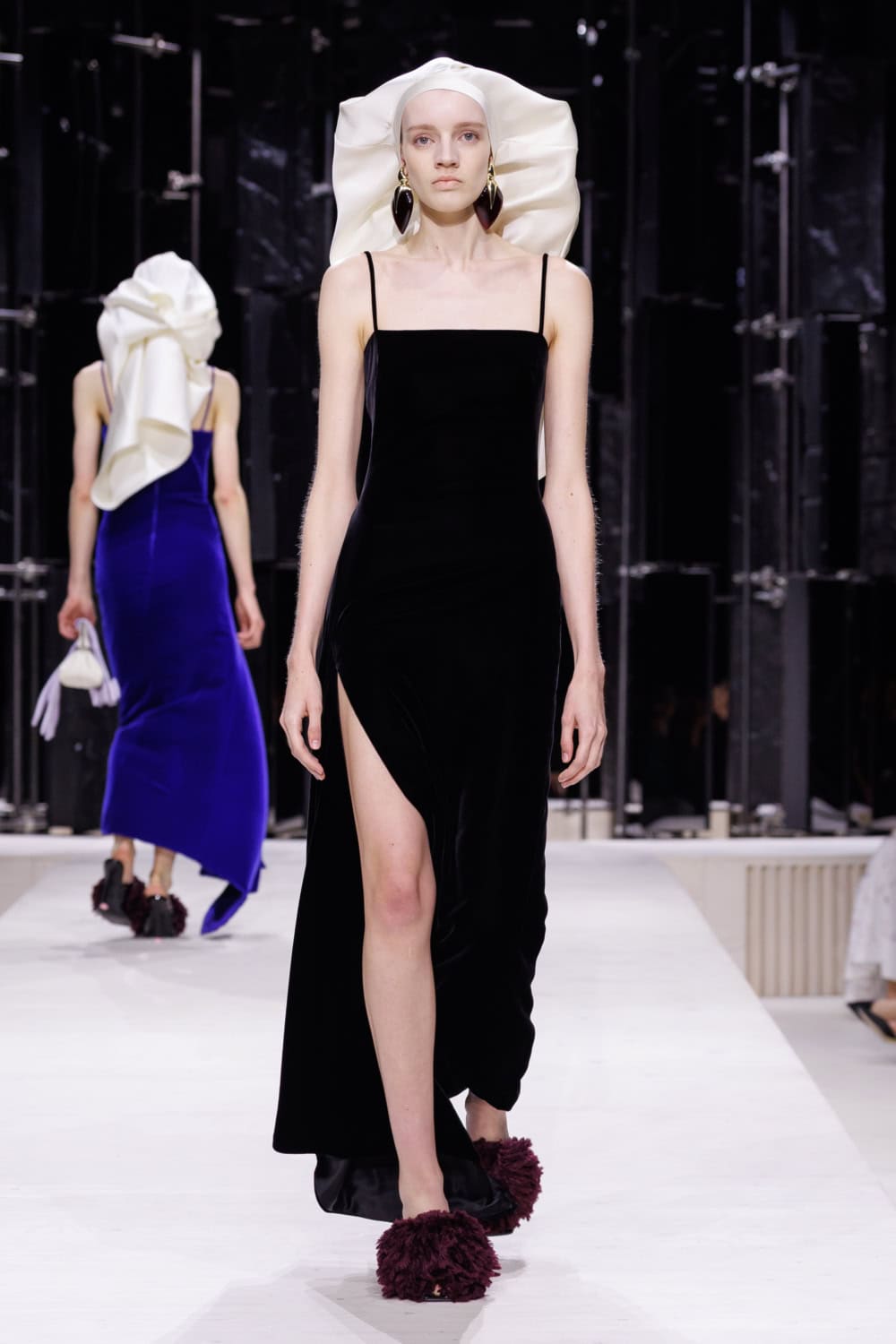
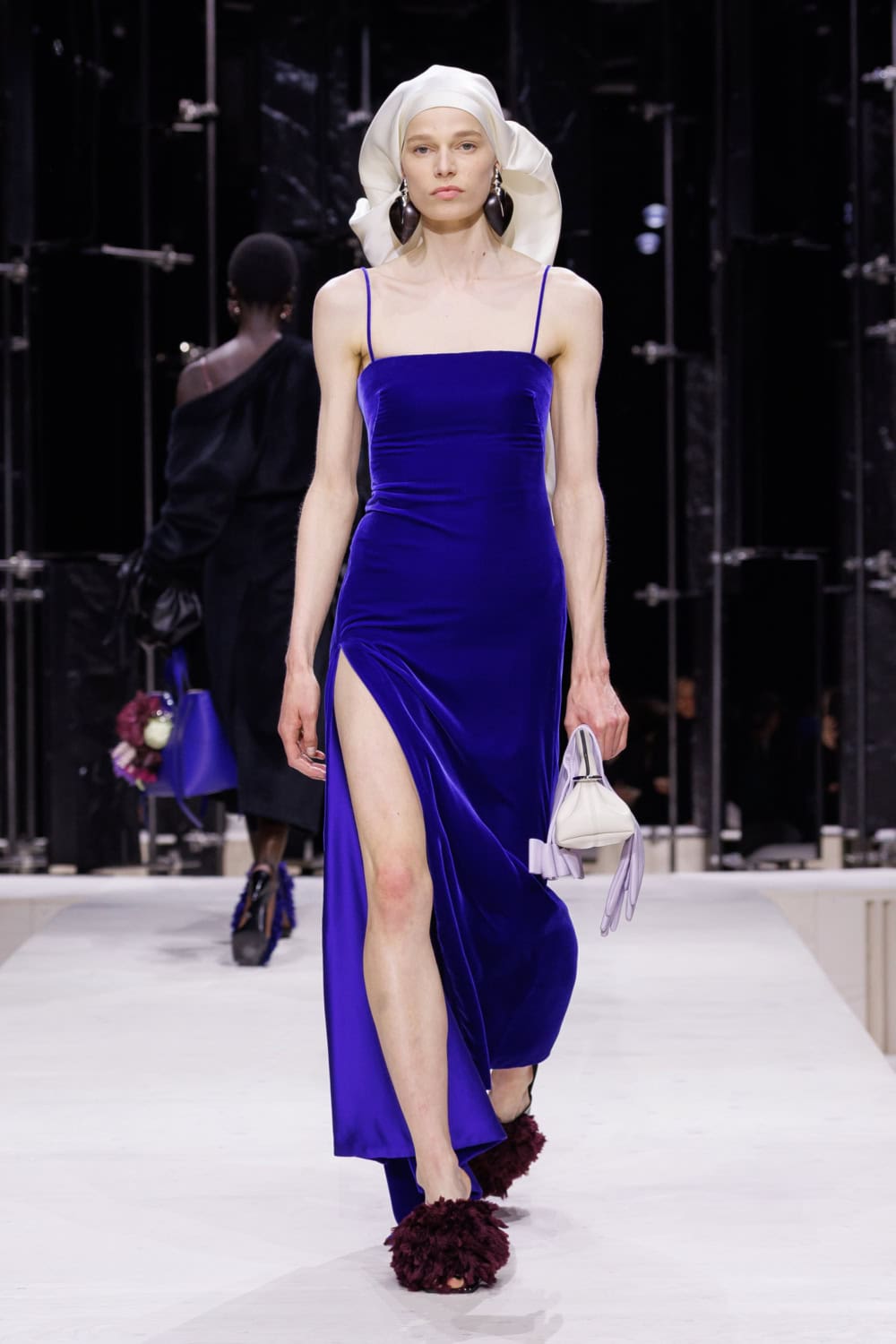
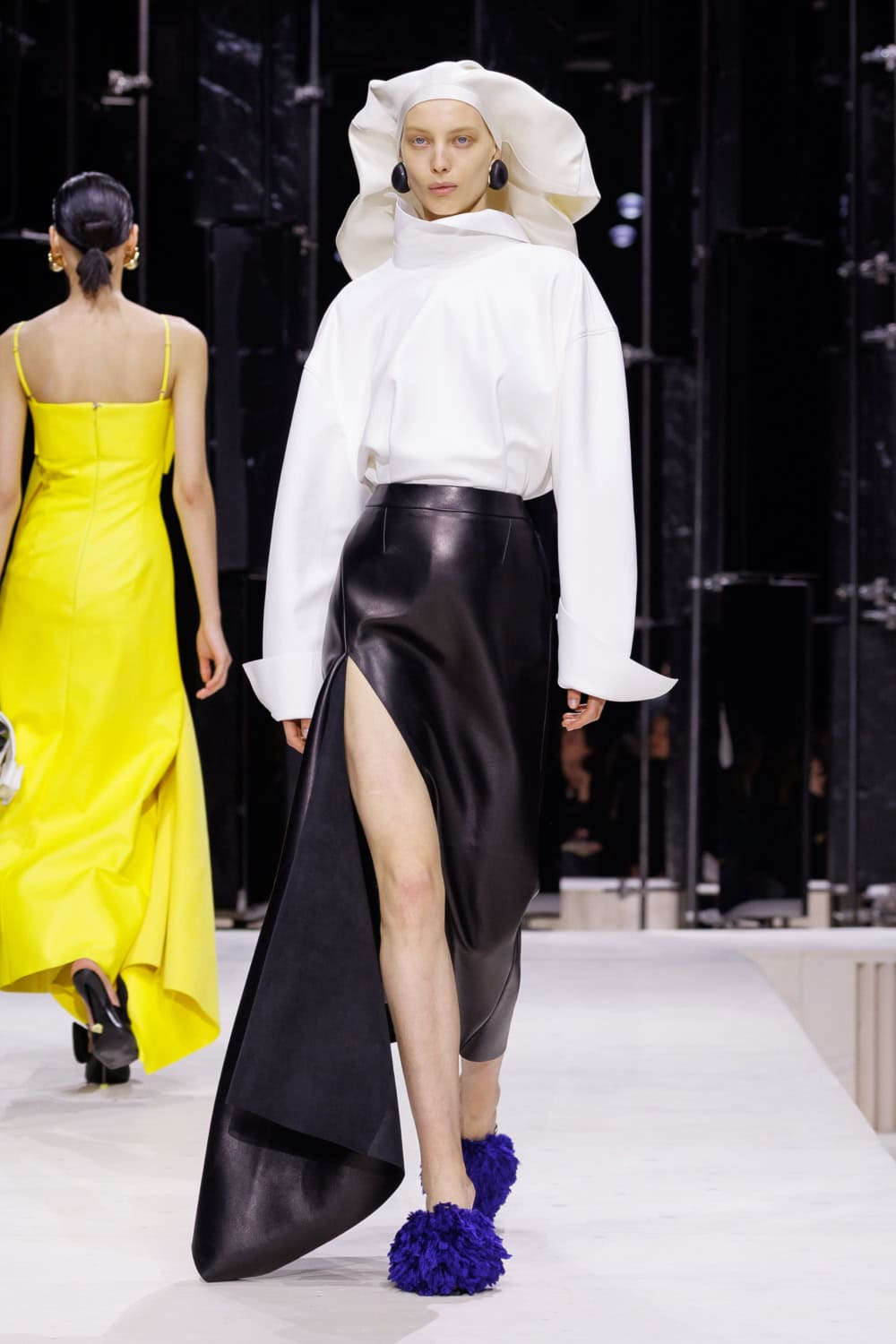
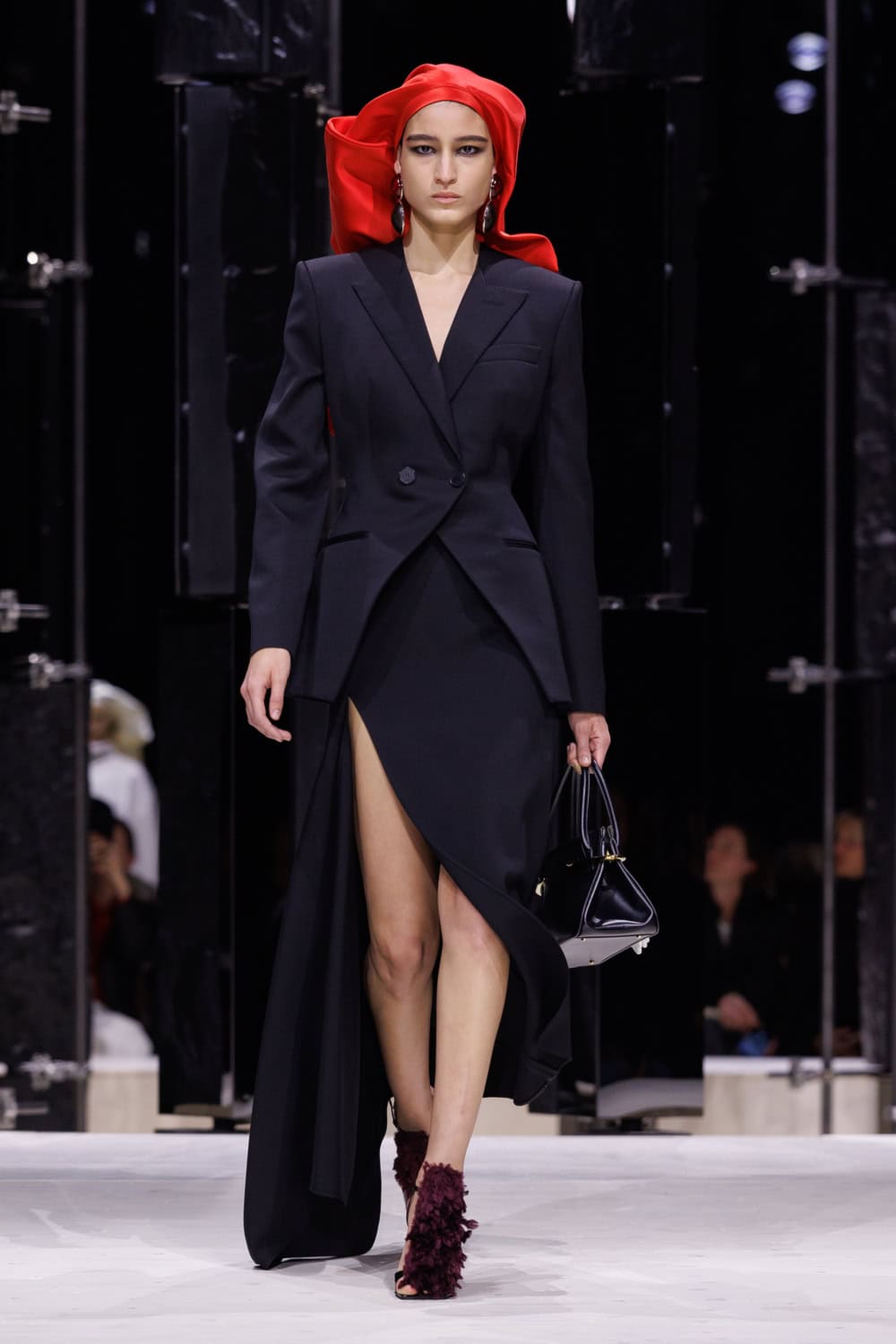
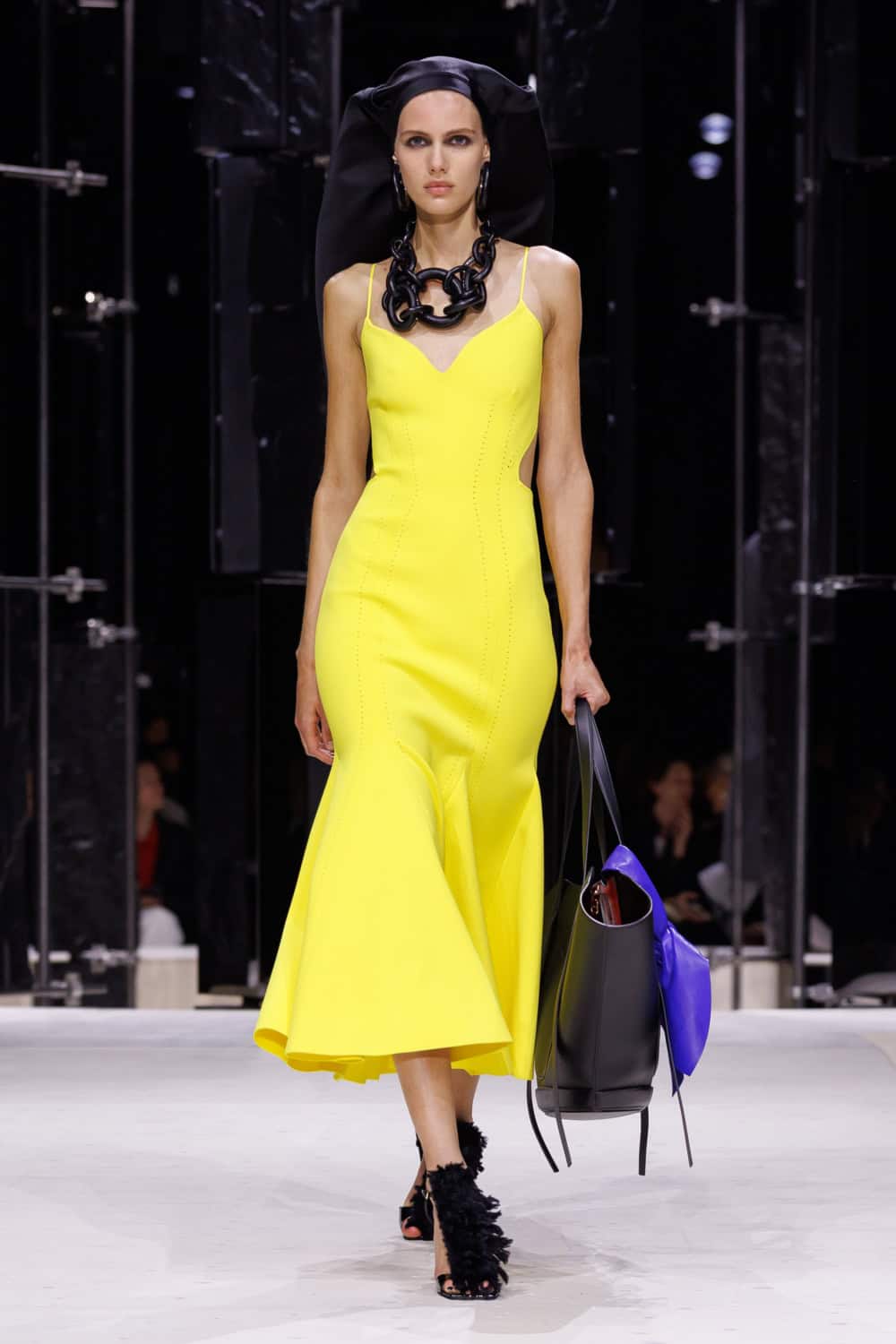
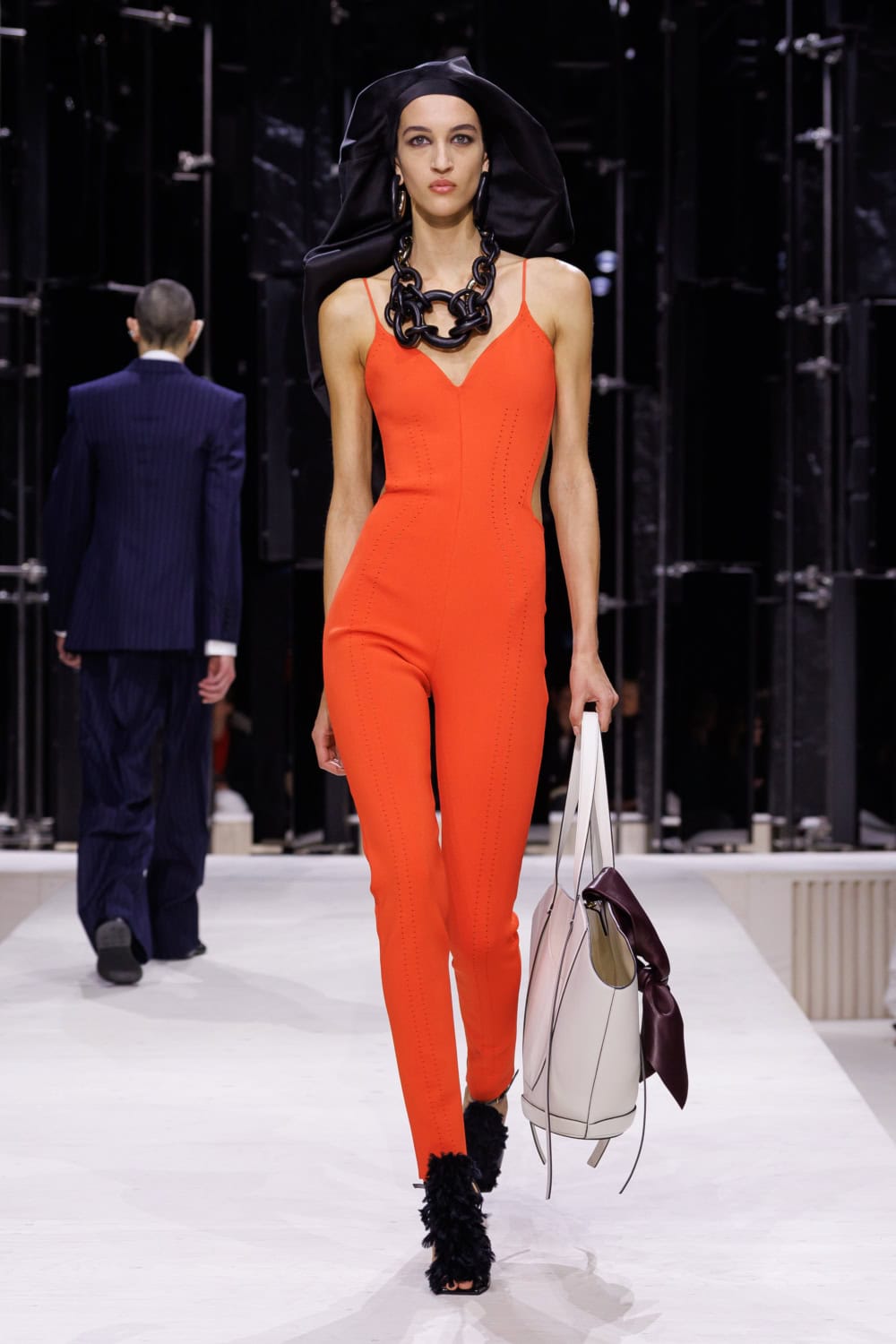
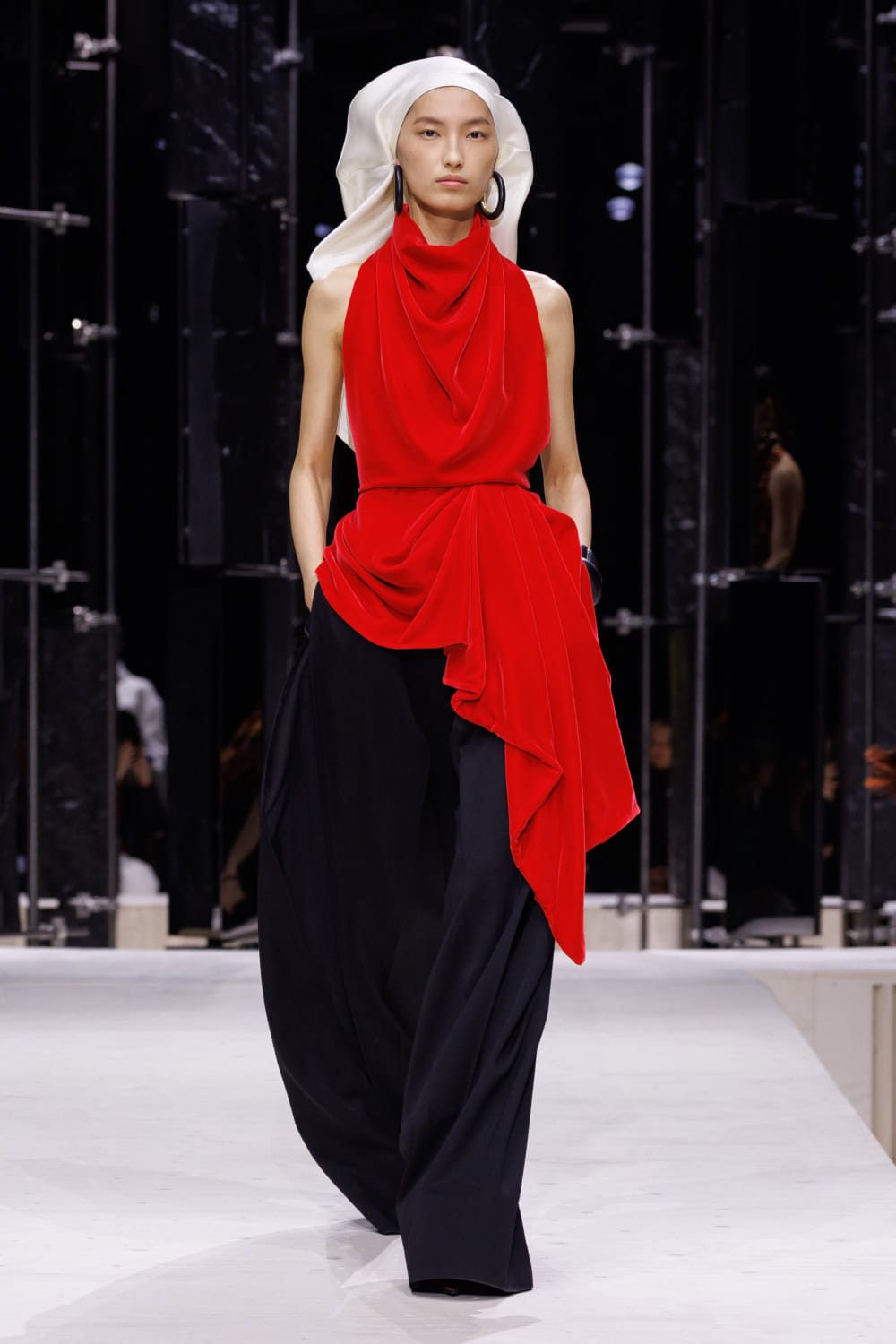
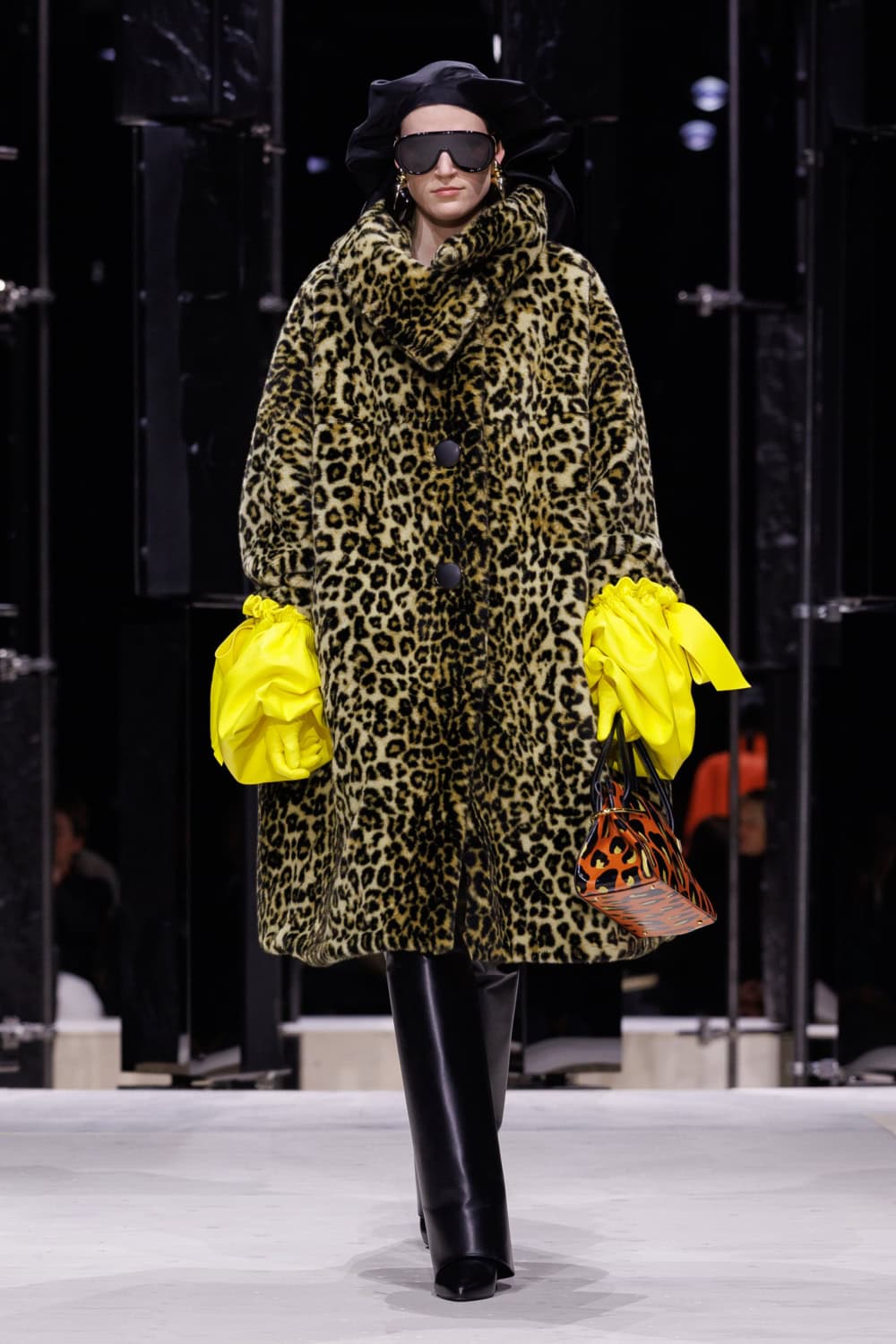
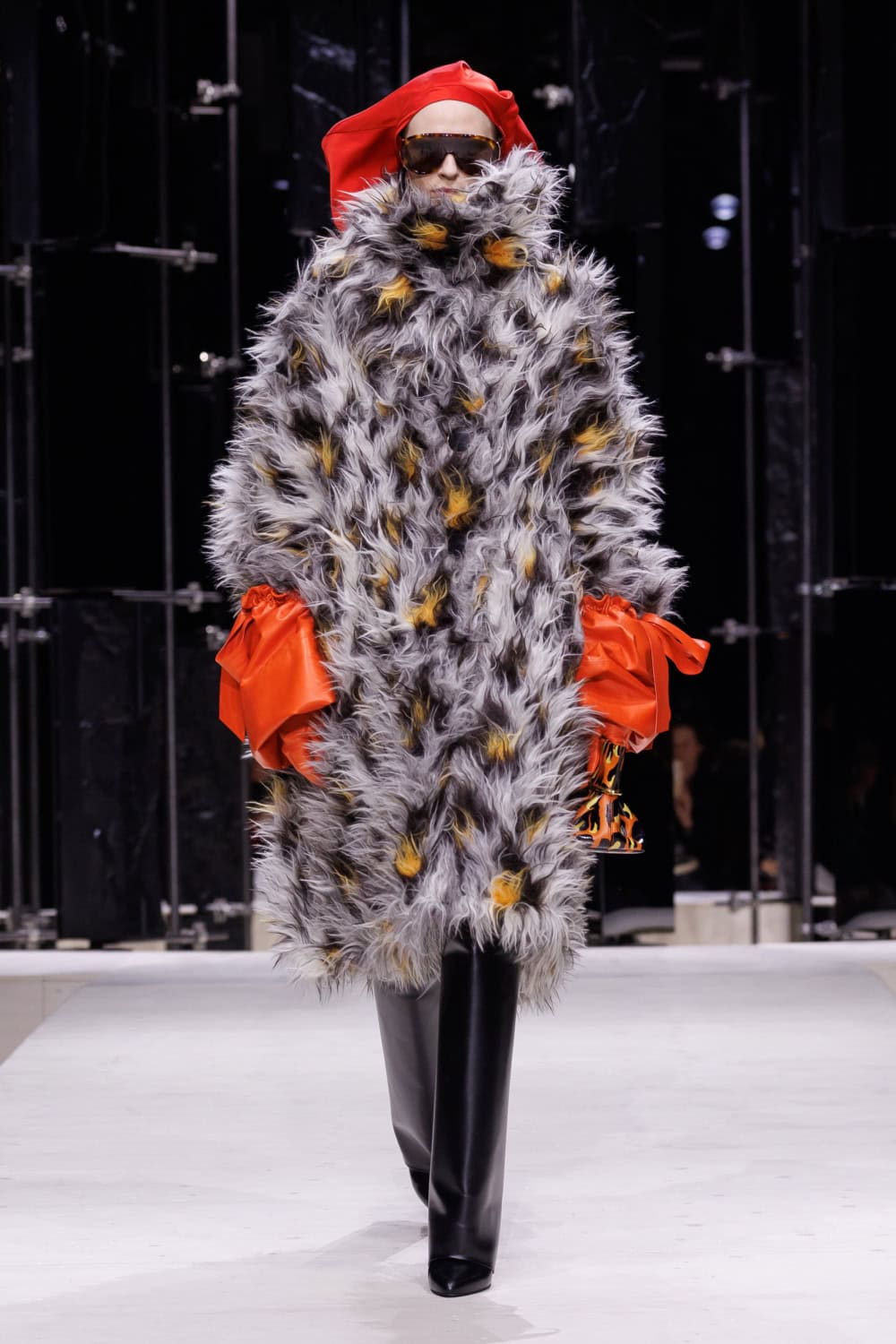
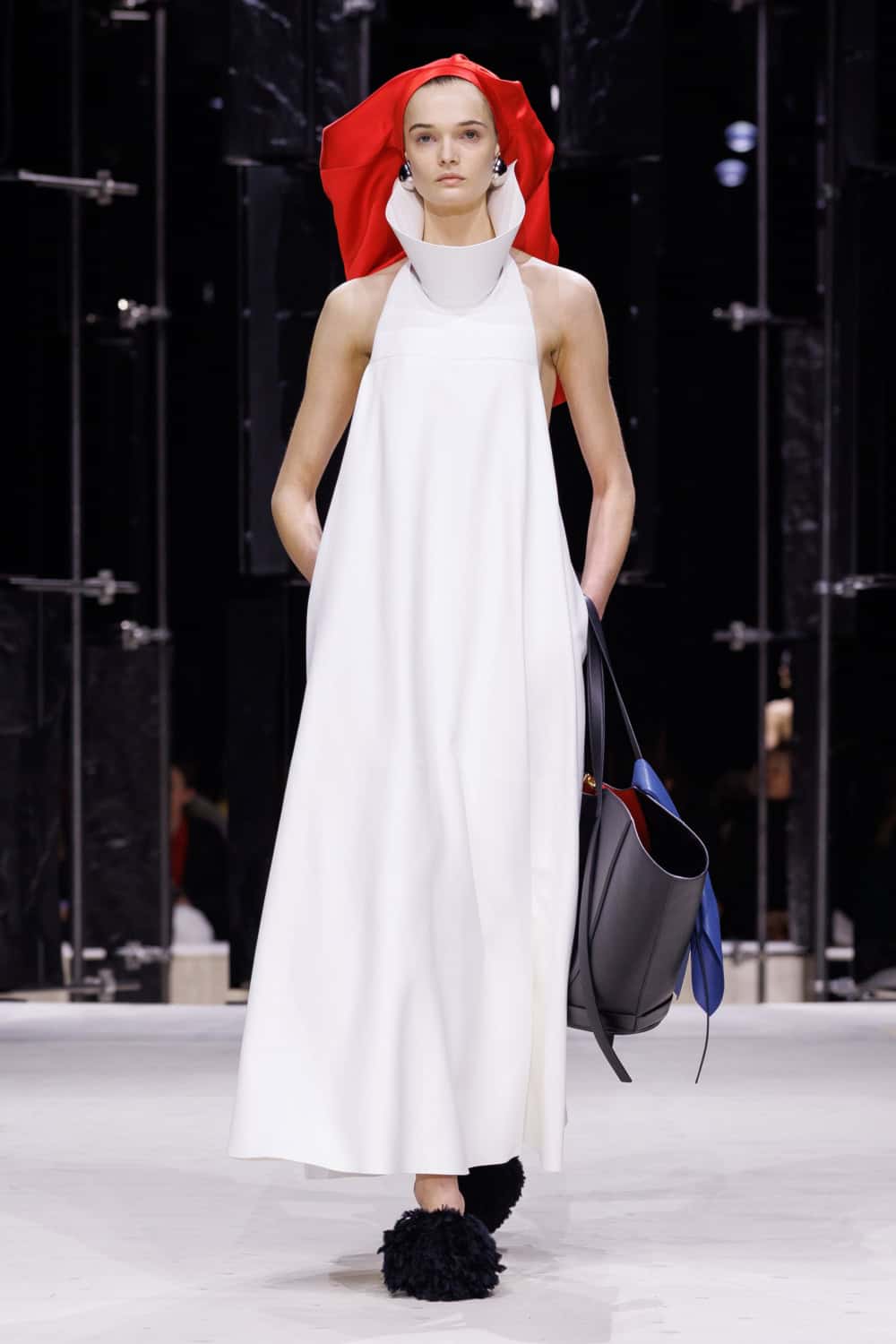
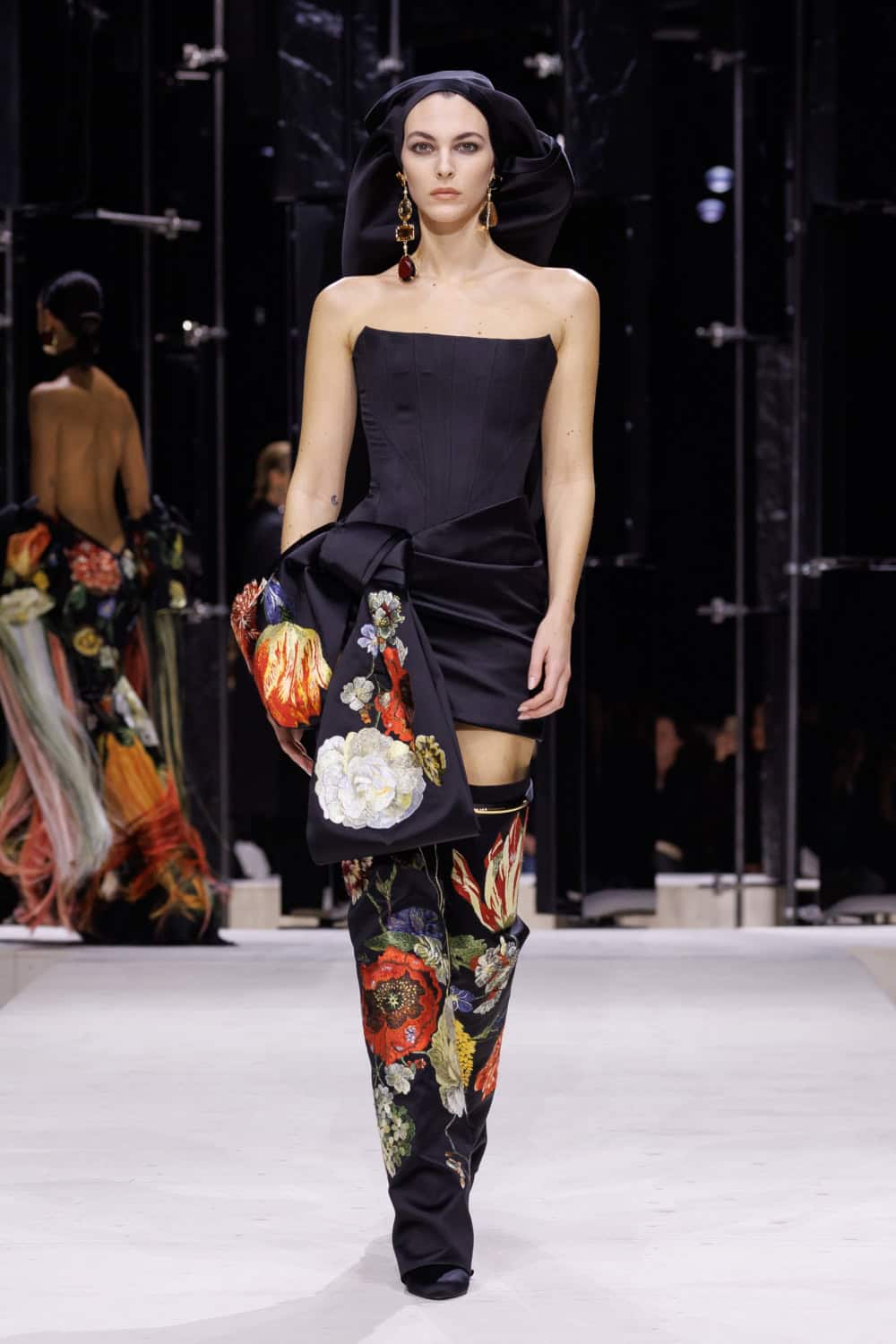
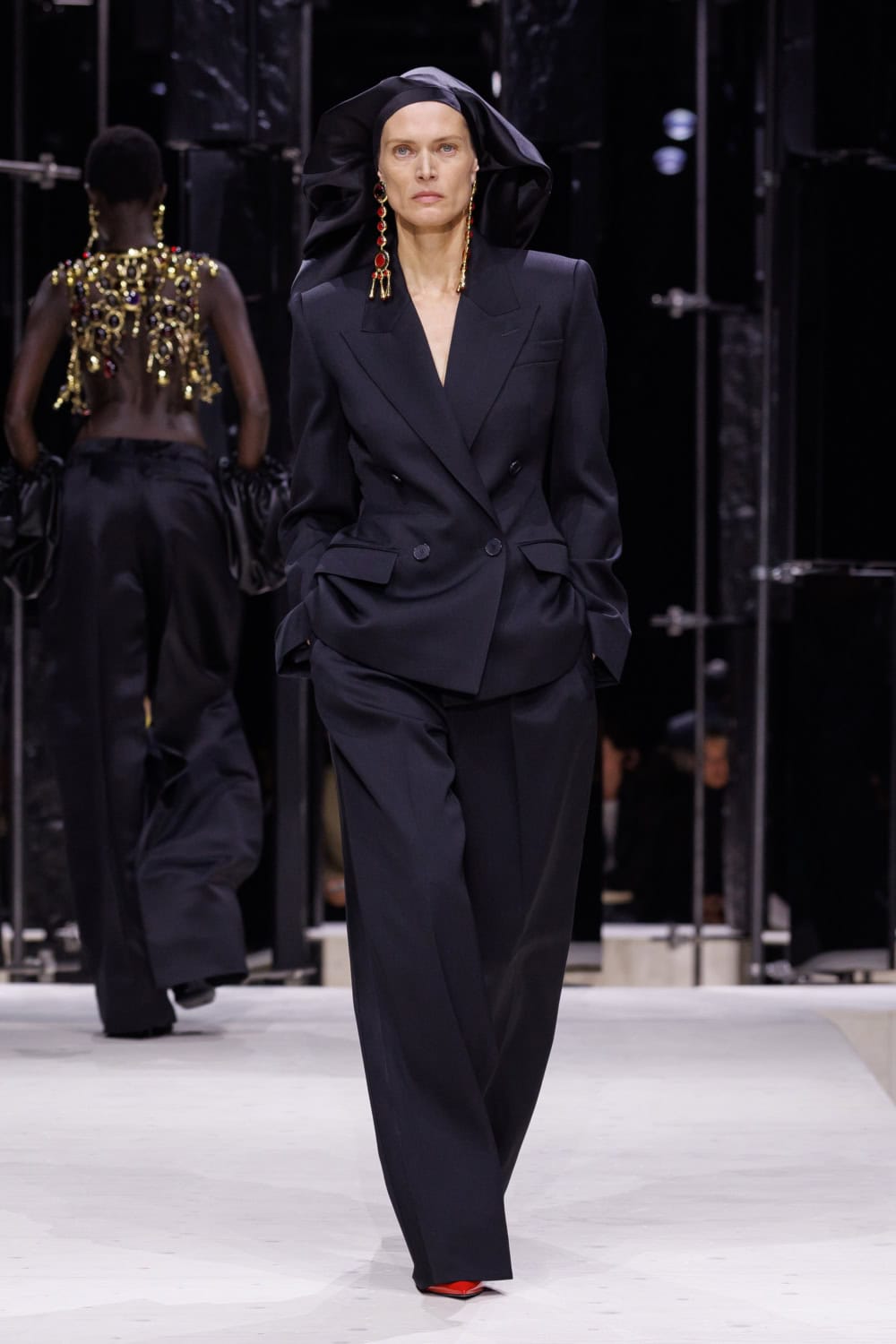
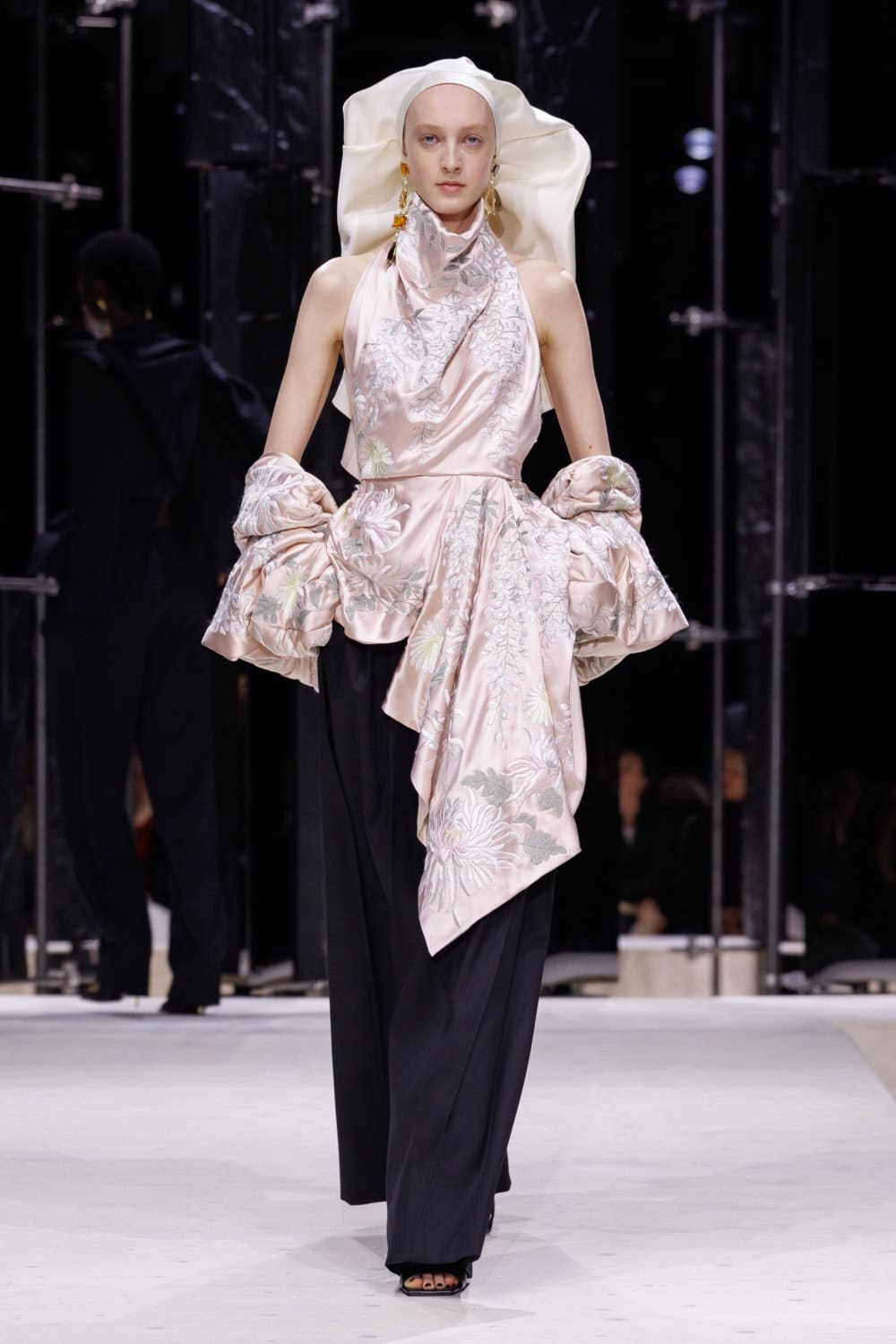
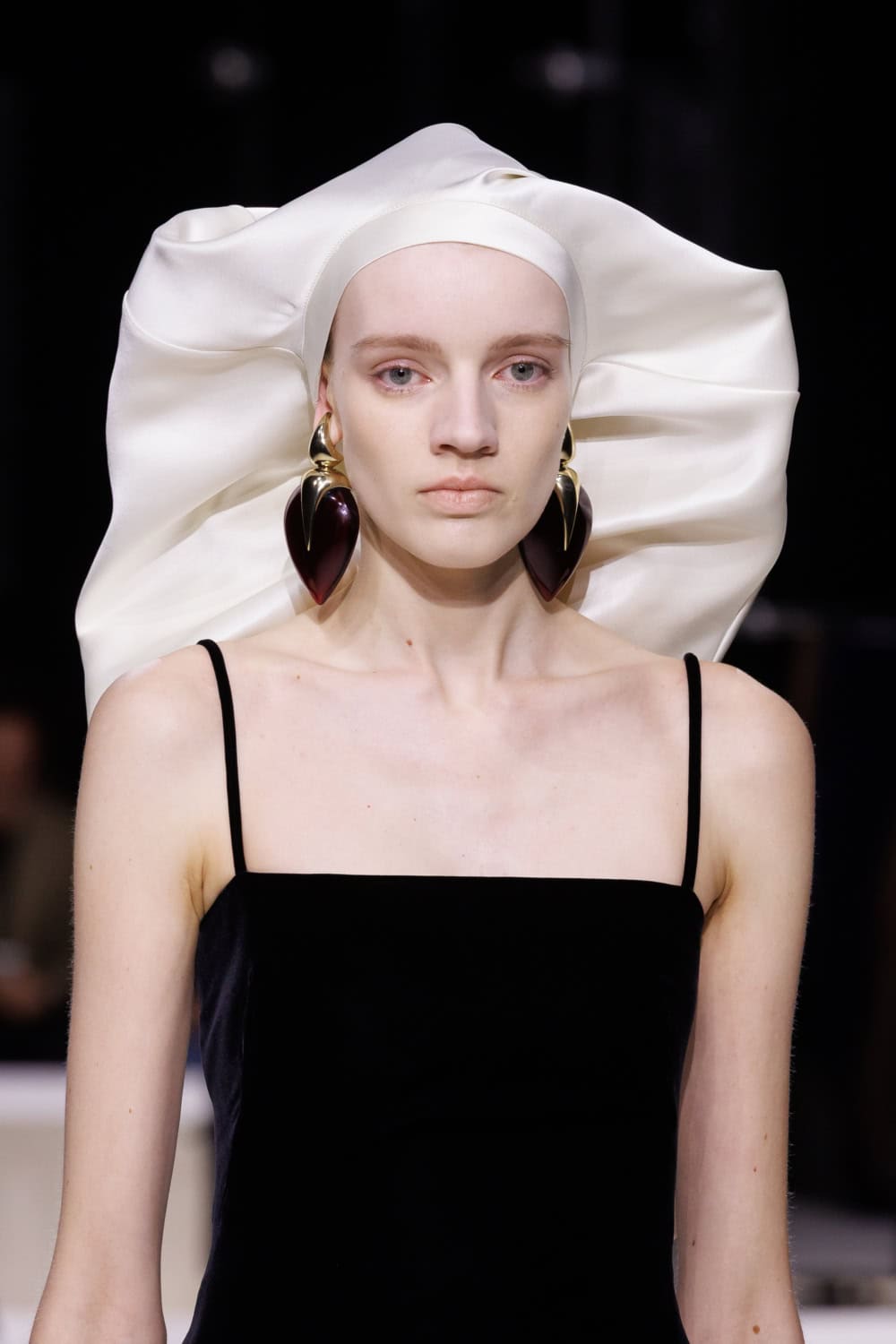
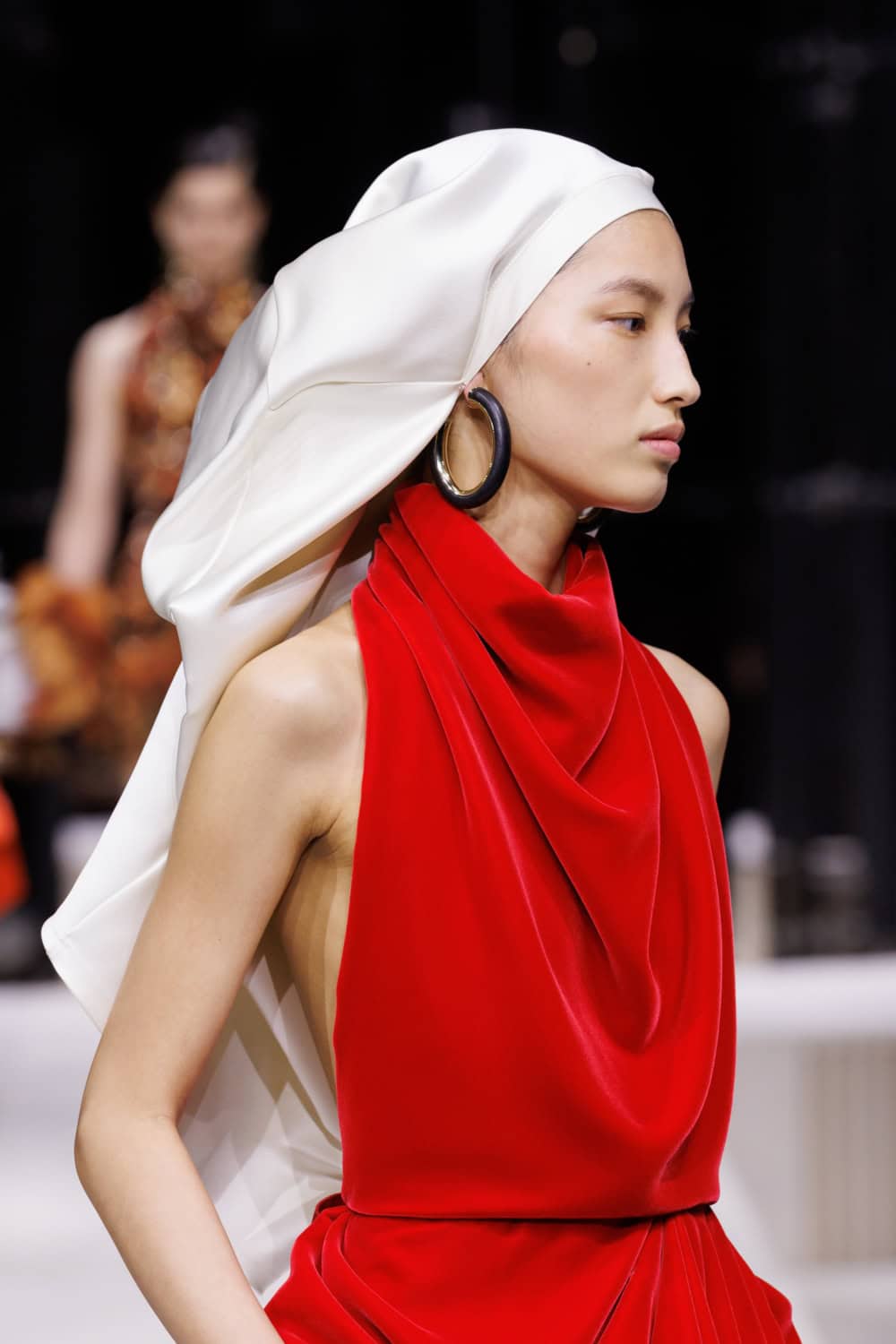
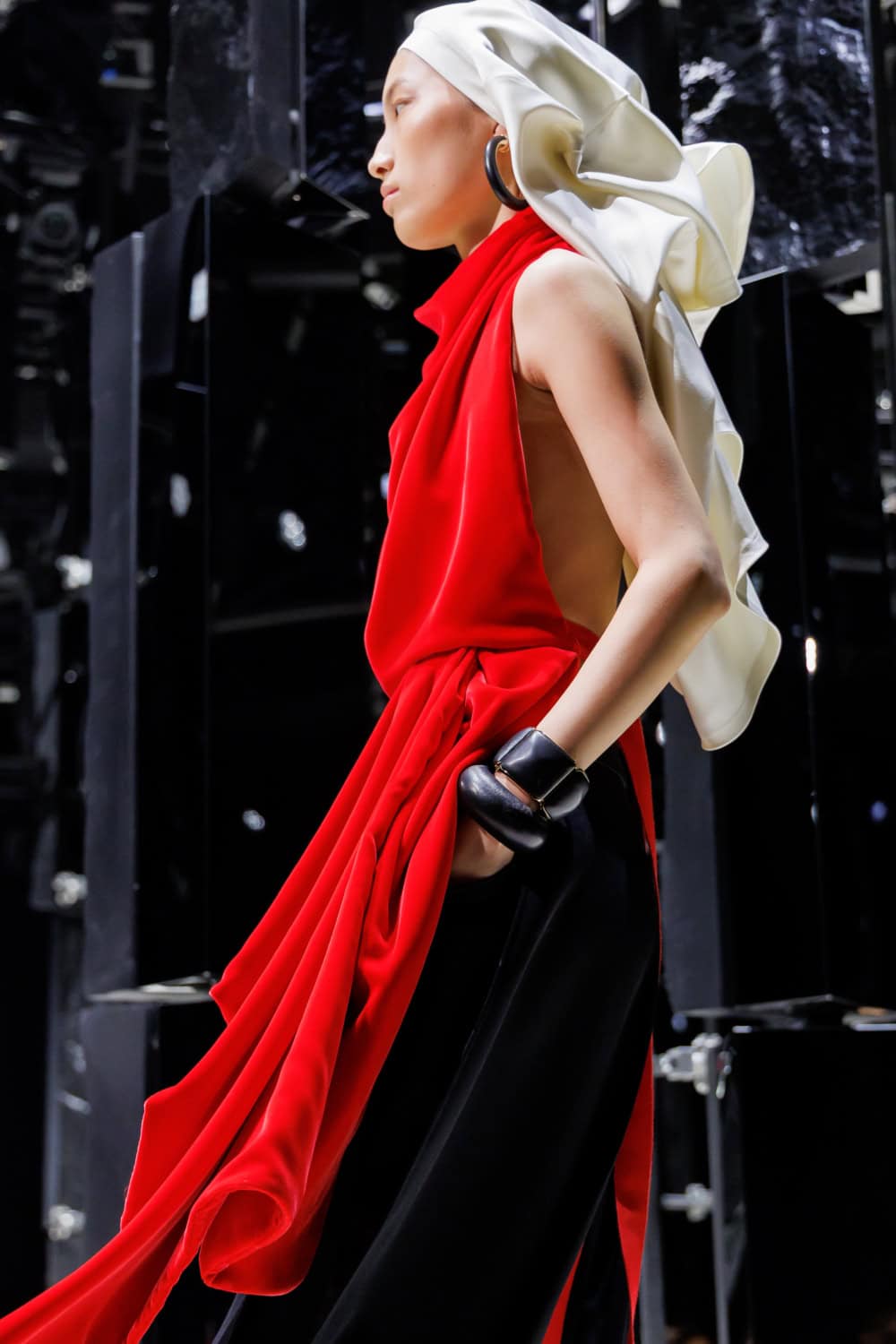
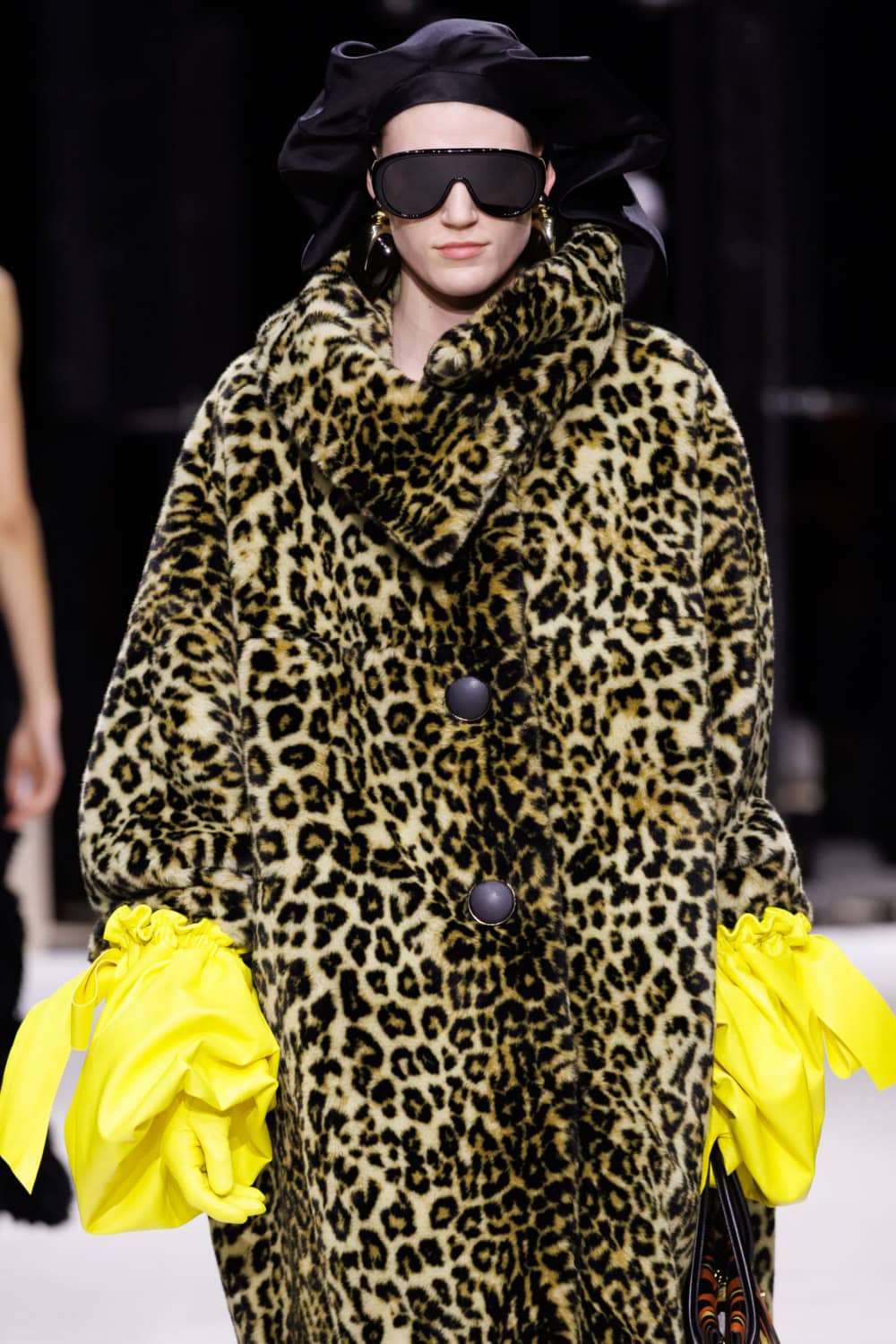
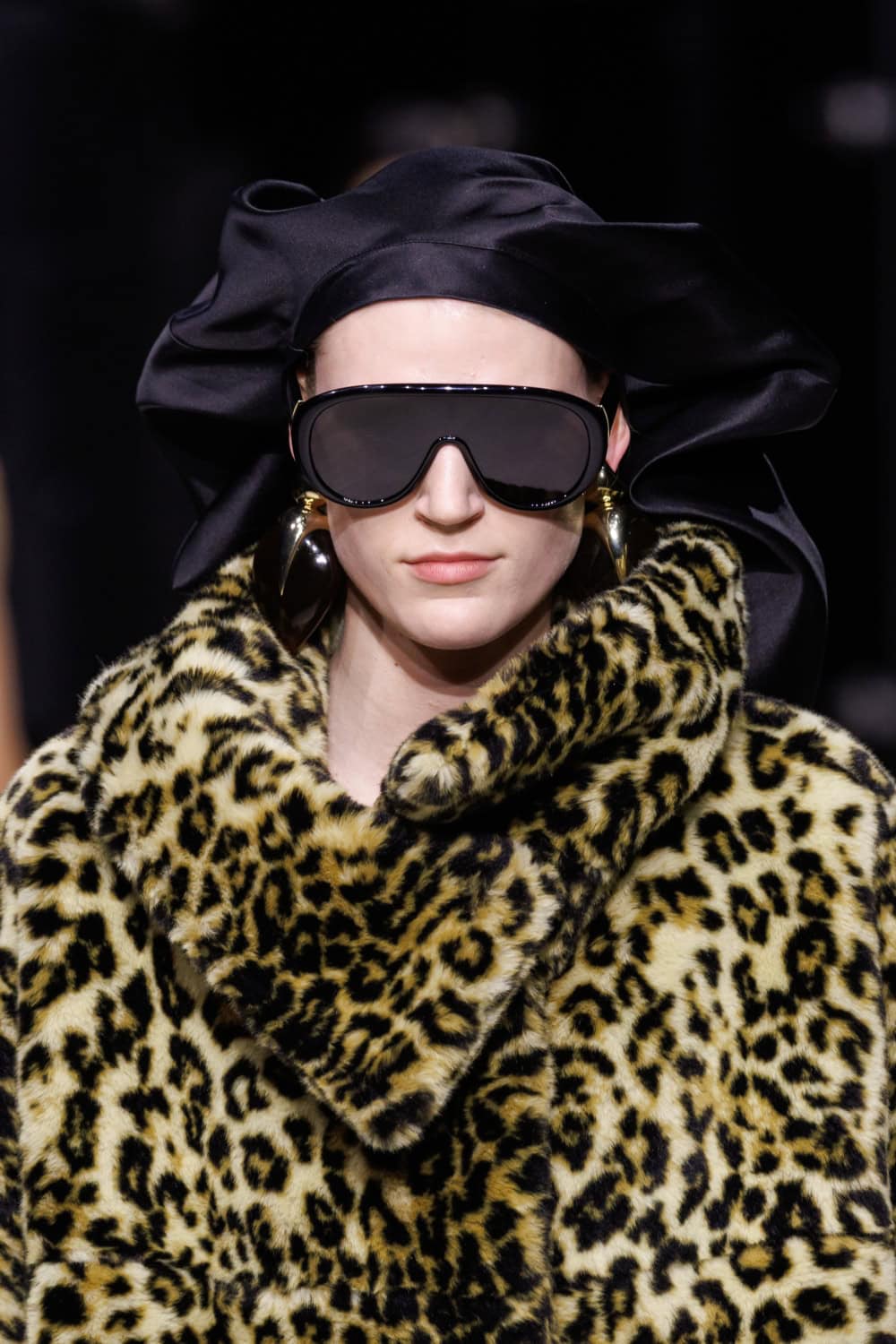
There’s something slightly disarming about a hat that looks like it’s been pulled on in a hurry. At Givenchy this season, that was exactly the point – silk satin twisted and draped to mimic the fleeting gesture of getting dressed, as if a T-shirt had been caught mid-motion and fixed there. It’s an idea that feels instinctive, almost throwaway, until you realise how precisely it’s been handled.
For milliner extraordinaire Stephen Jones, that balance between spontaneity and control was the entire exercise. “I didn’t really have an idea,” he says of his starting point with Sarah Burton. After three decades away from the house, his return wasn’t about legacy or nostalgia. “I wanted to try and forget all of that and take it fresh, really, because it was opening a new book, let alone a new chapter.”
Jones insists the headpieces weren’t designed in isolation, but built through dialogue. “The hats are the result of that communication,” he says. Burton had suggested “some volume of fabric on the head” – a prompt that, in millinery terms, could go anywhere. “Either you can mould something so it’s formed around your head… or you can take something which is a 2D object, like a piece of material, and wrap it around your head.” Here, it was all about wrapping – taking something flat and letting it find shape directly on the body.
But nothing about that gesture is neutral. “Art is not a culturally neutral thing,” Jones says. “Everything we put on has a meaning.” A piece of fabric tied around the head inevitably carries associations, some of them heavy. His instinct was to strip that back. “Somehow we need to knock it down a bit and make it look less grand… make it look more understandable.”
The reference point, unexpectedly, was mundane. “I know people put T-shirts on their heads as like, a quick summer hat… I just thought that would be a genius idea.” There’s a certain bluntness to it – the most ordinary garment, reworked. But Burton pushed the contrast further, insisting on couture-level fabrication. “We should try and do out of the simplest fabric, but the most luxurious fabric too,” Jones says. The result: sculptural forms in stiff silk satin, holding their shape with a quiet authority.
Despite how effortless they appear, each piece was built in the moment. Jones worked directly on the models, adjusting and pinning until the proportions felt right. “It was really the lines in the girl’s face,” he explains. “How is her jaw line? Did it need to be exaggerated? Did it need to be minimised?” A shift in fold could change the entire read – sharper, softer, more open, more concealed.
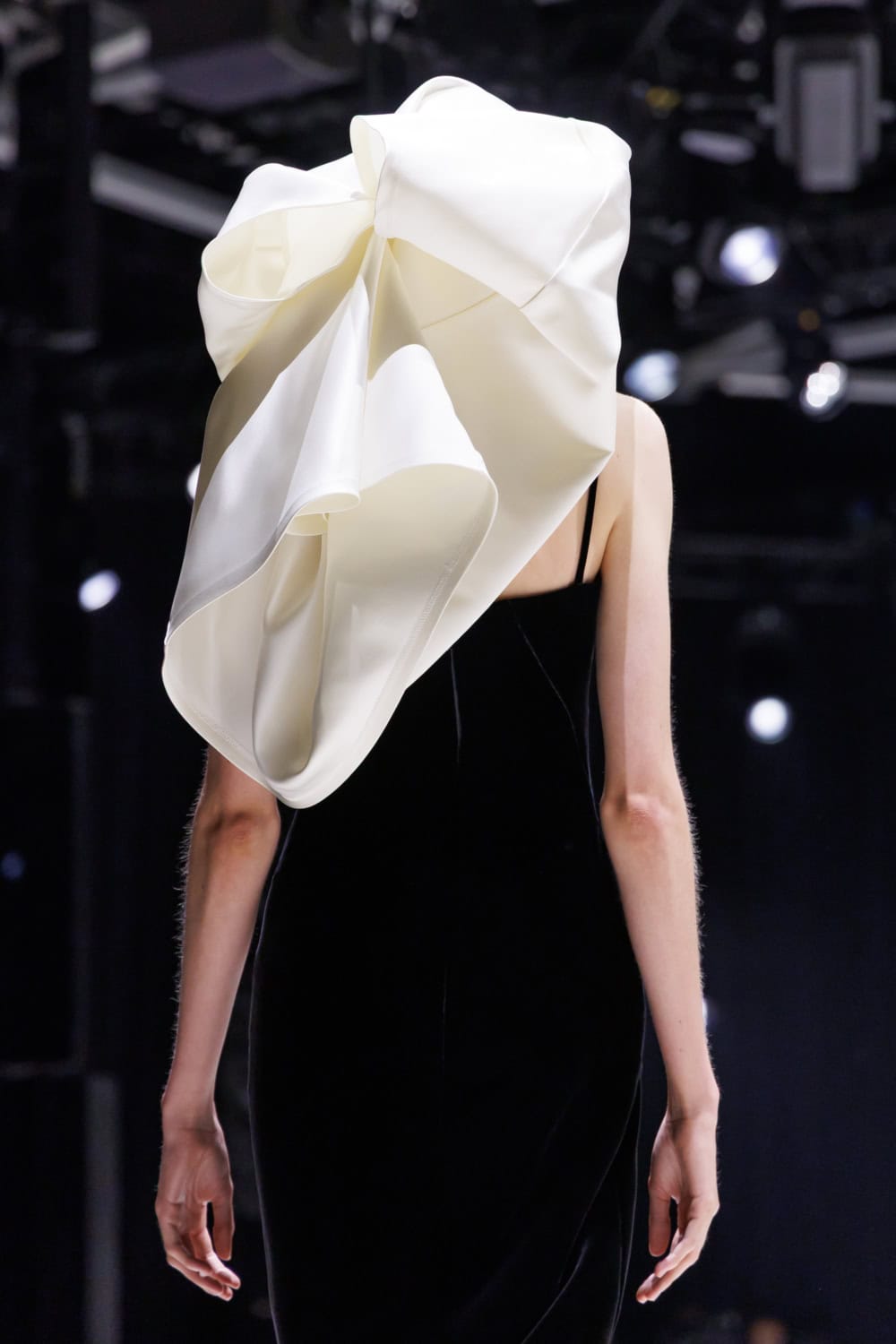
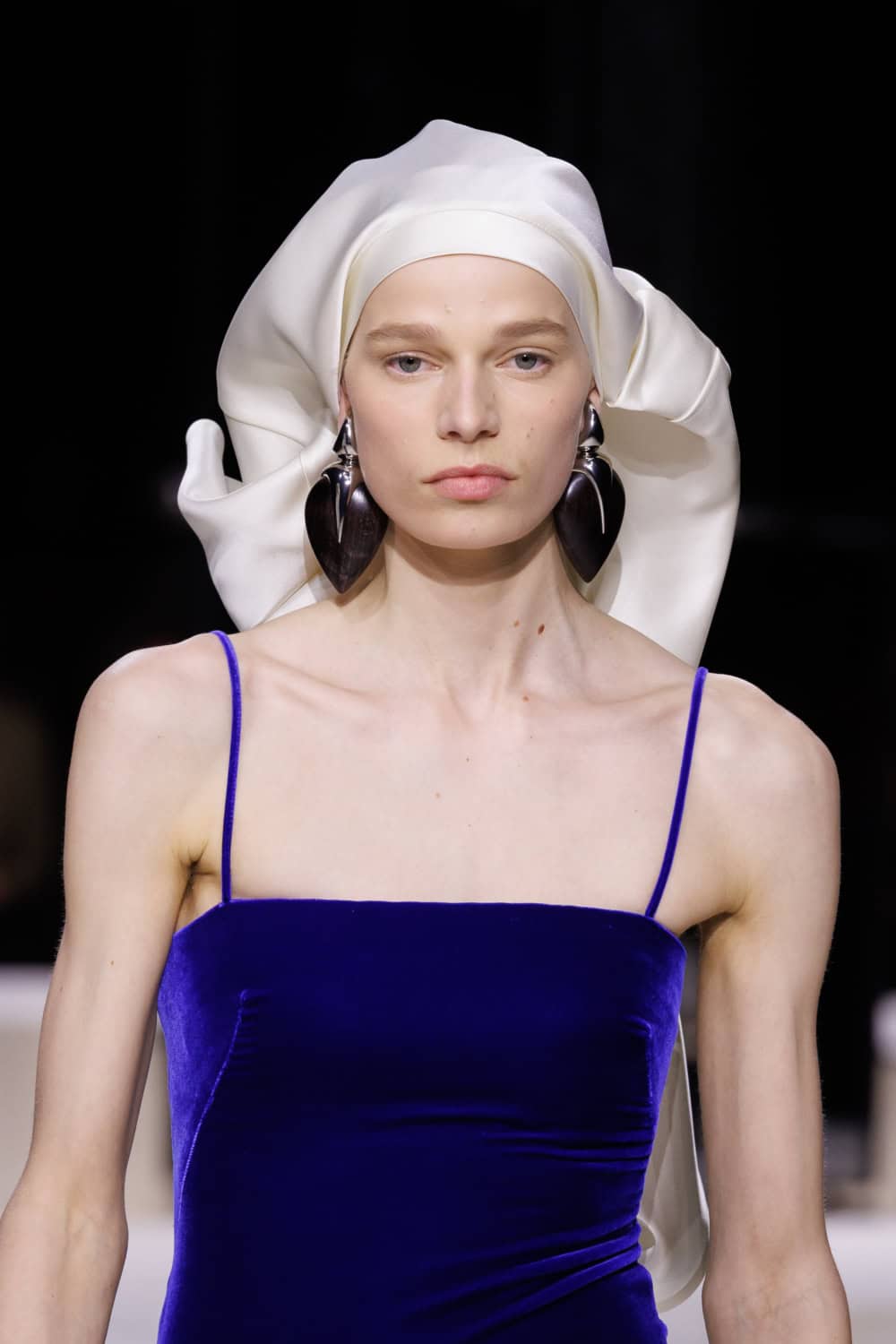
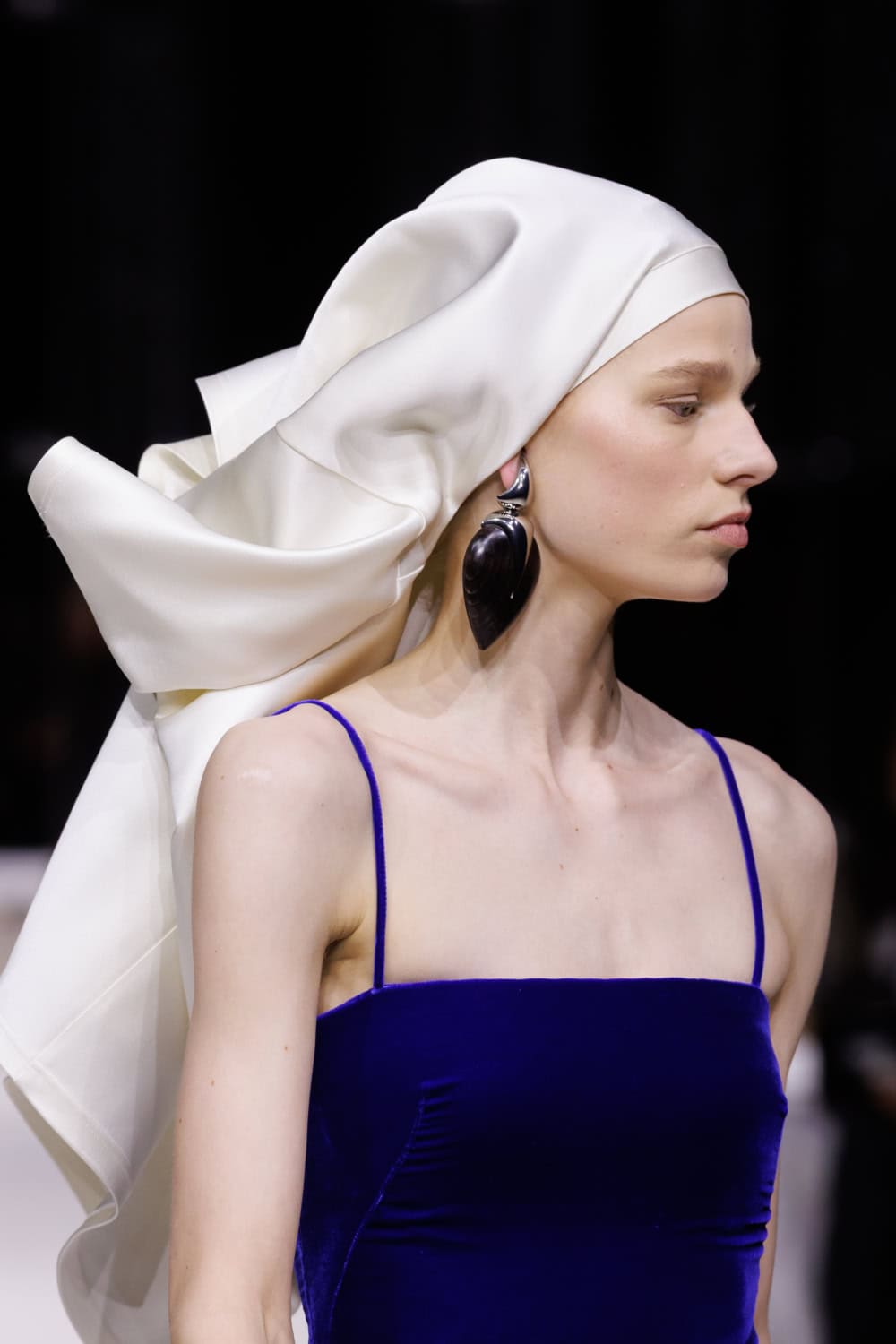
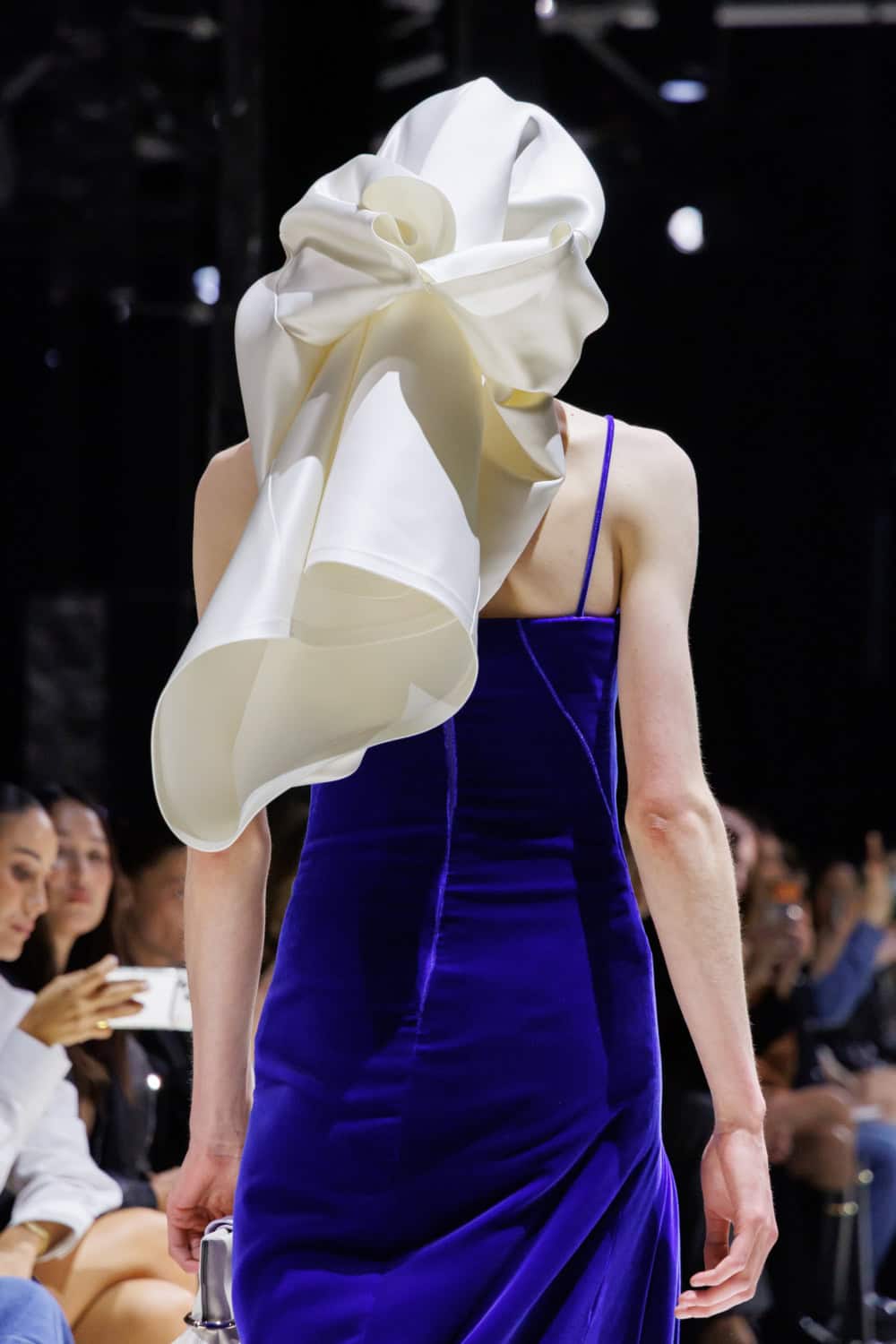
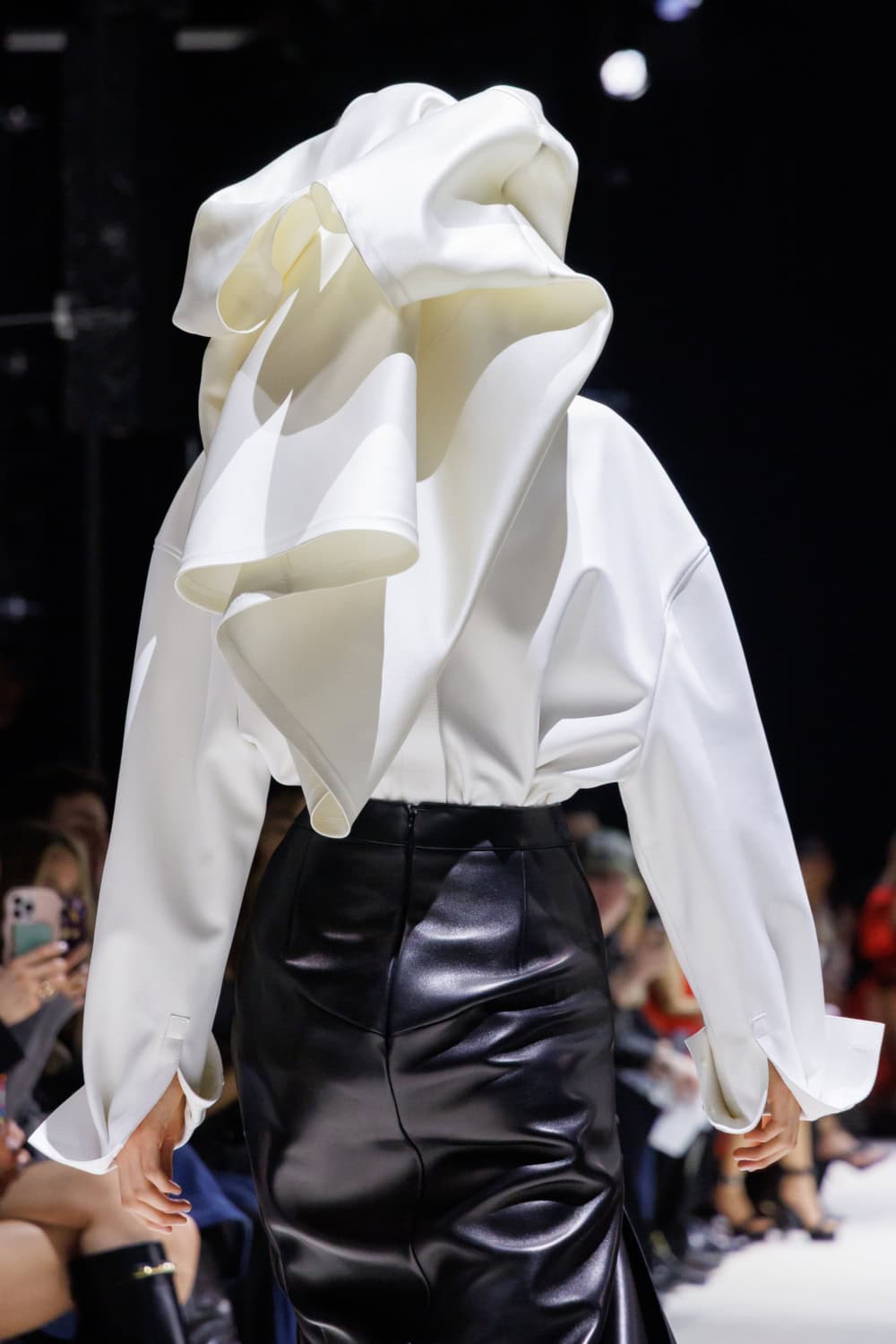
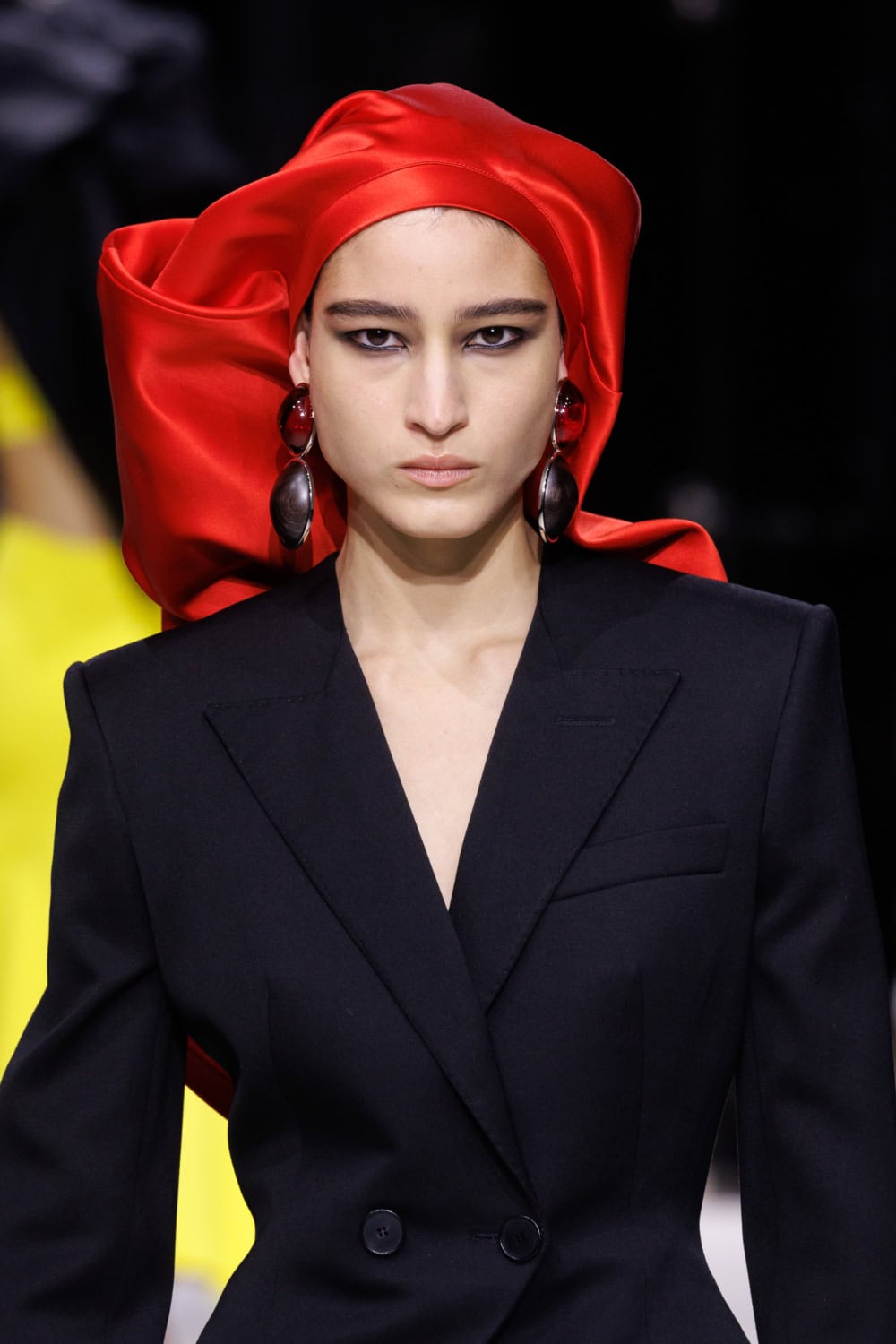
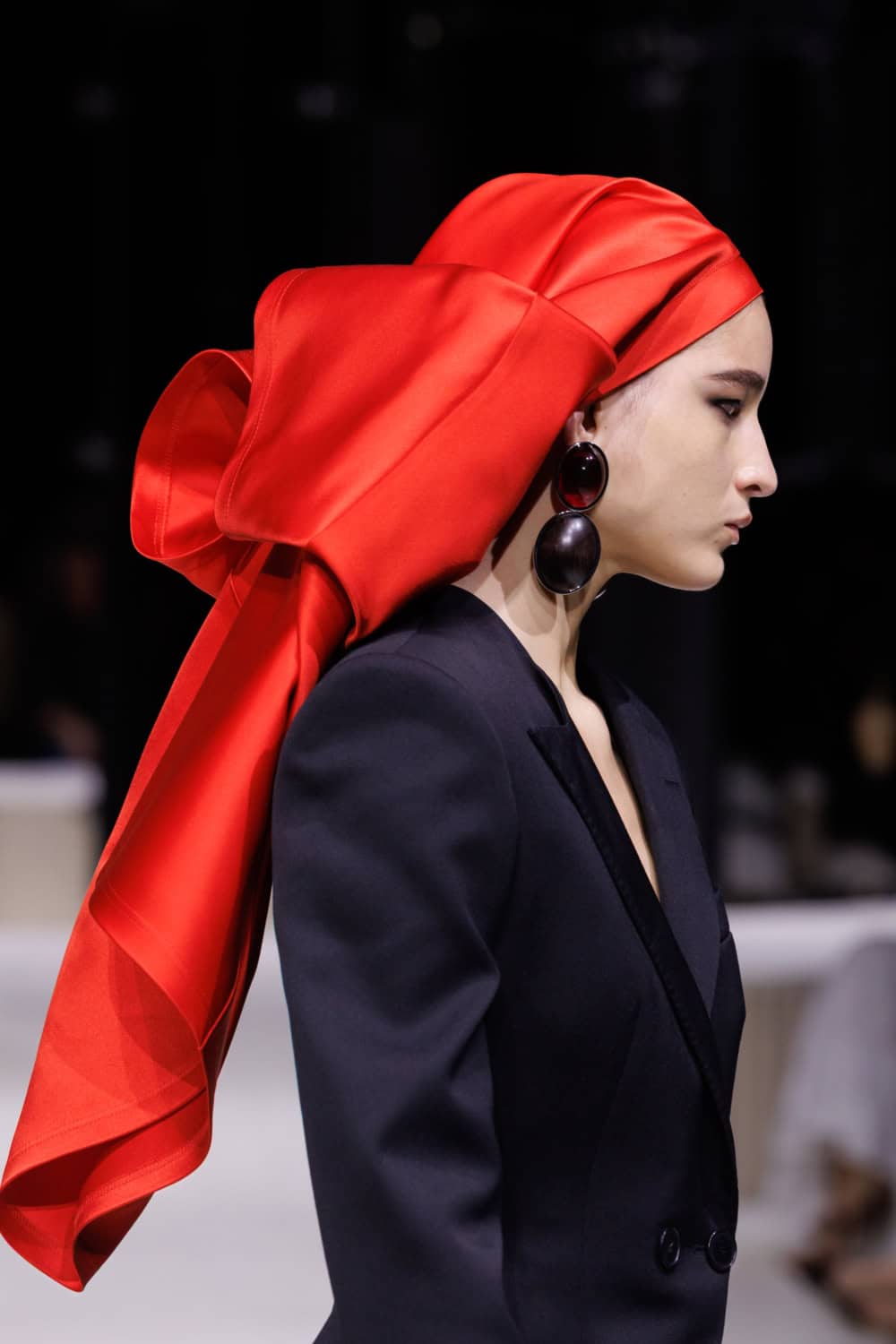
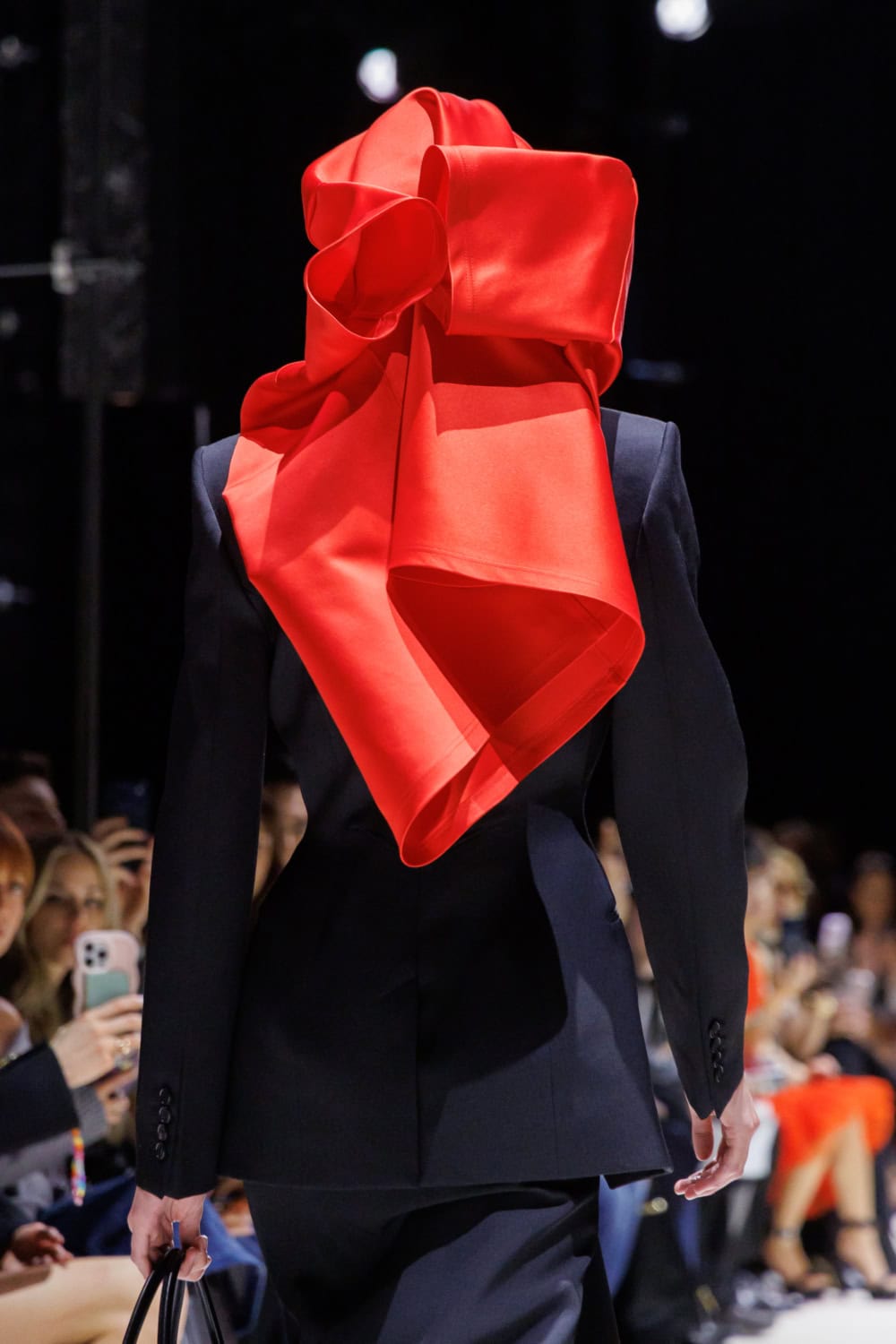
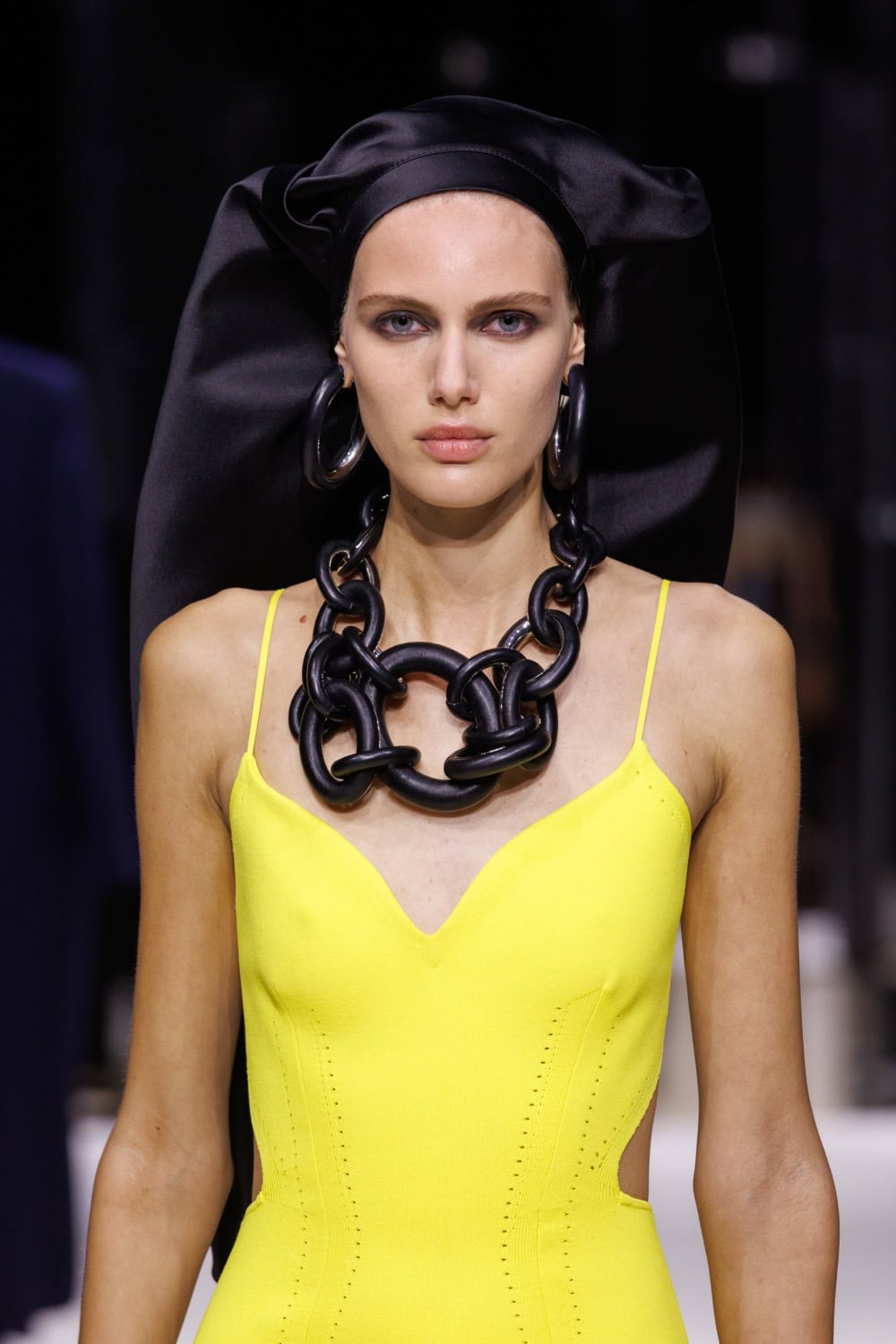
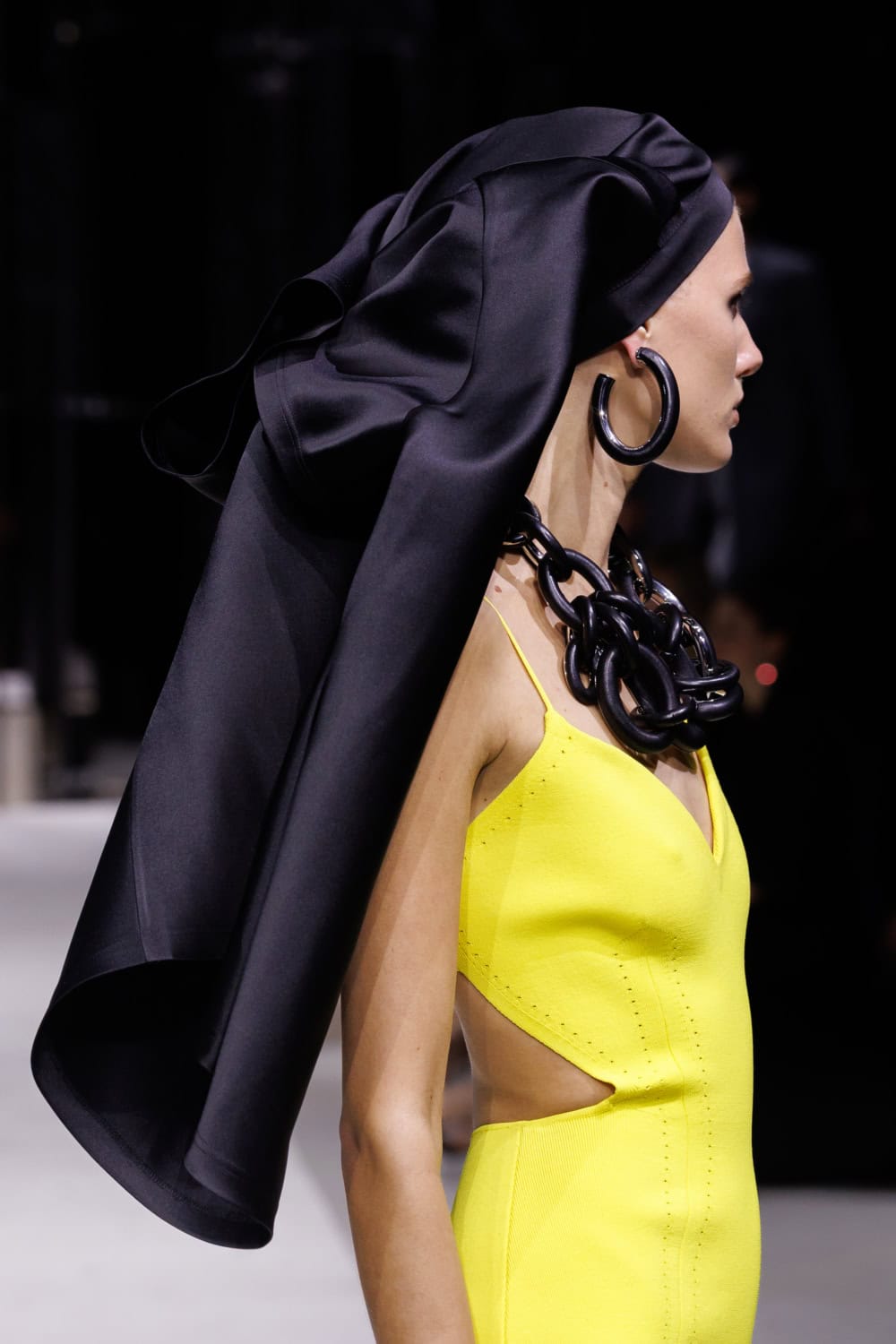
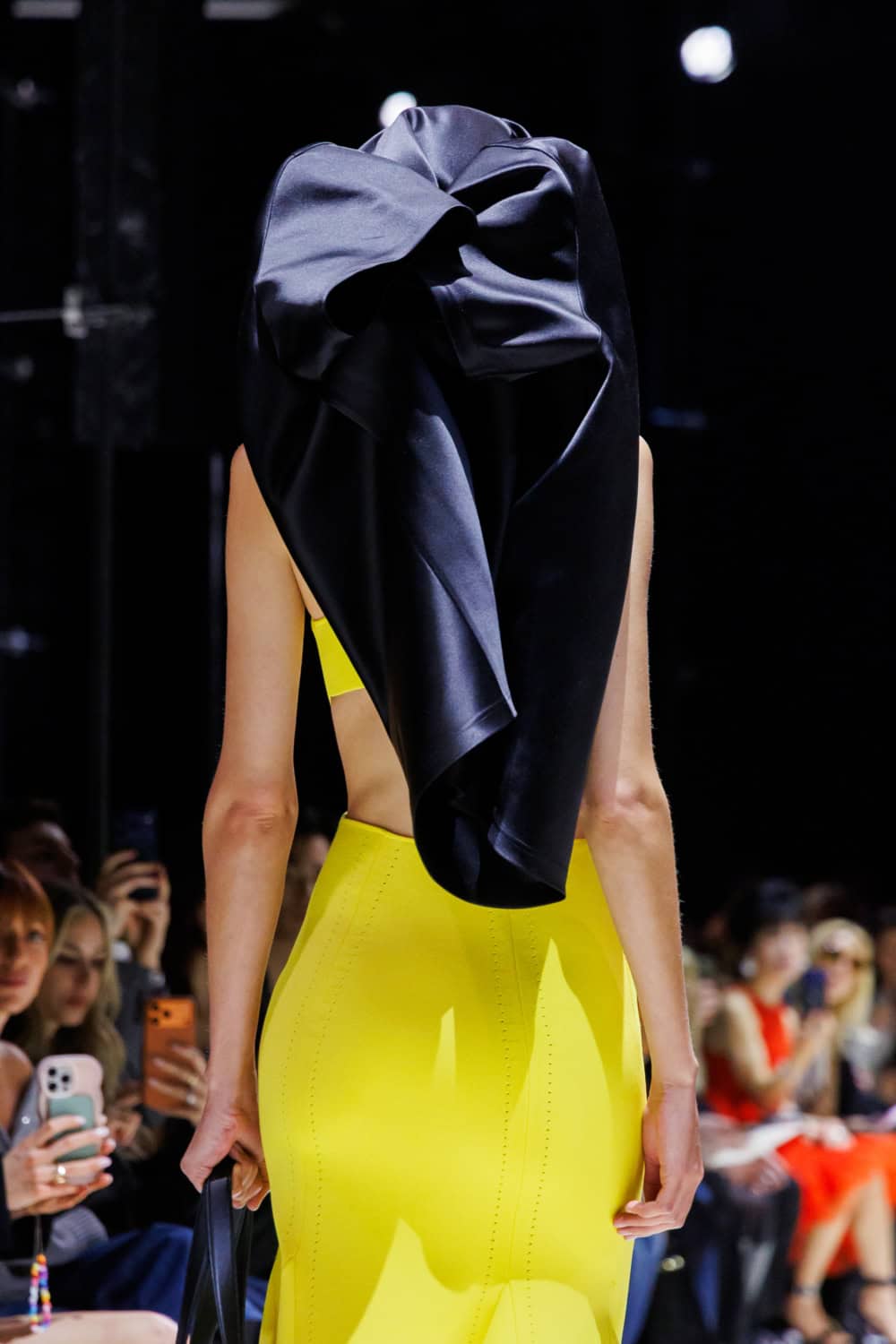
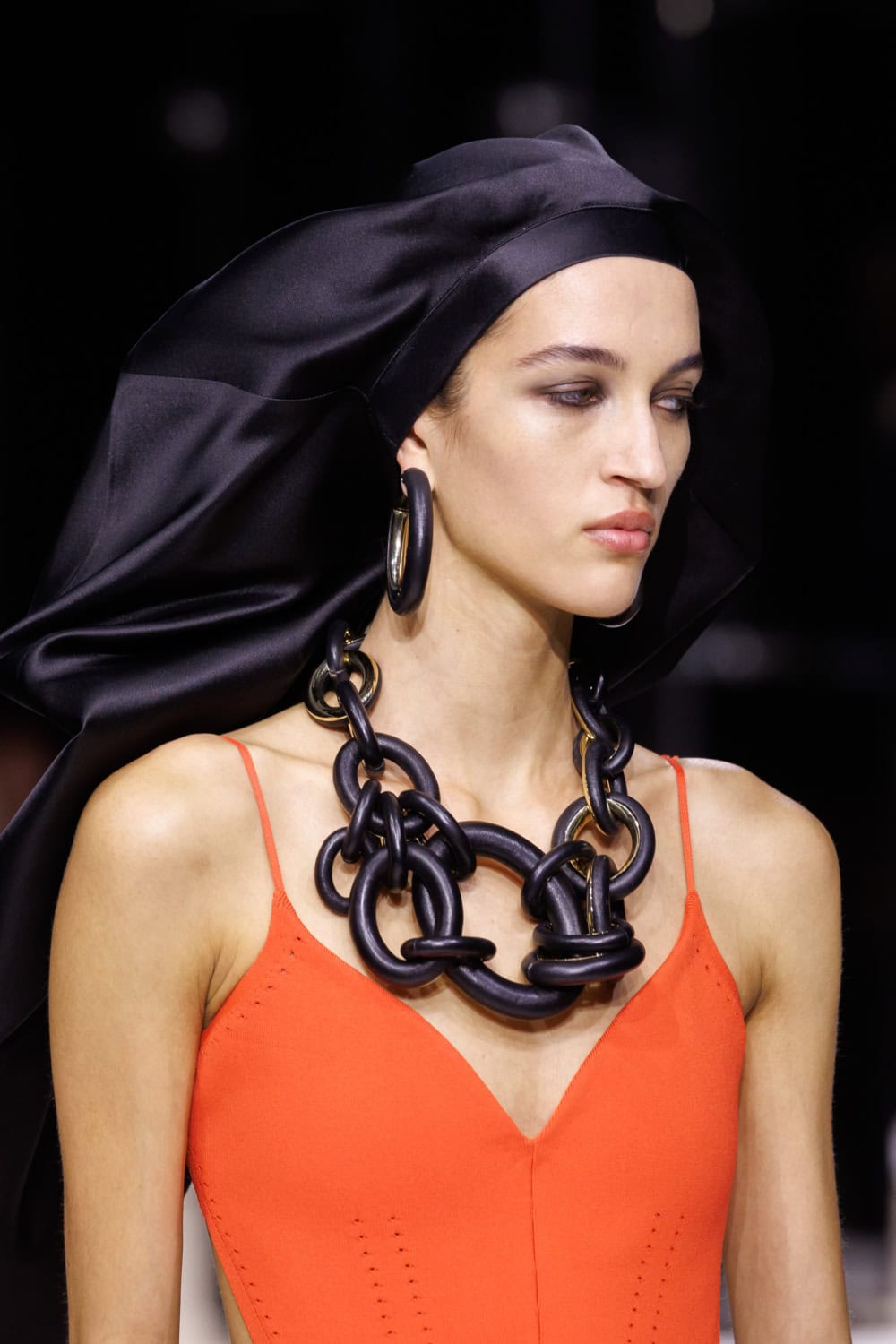
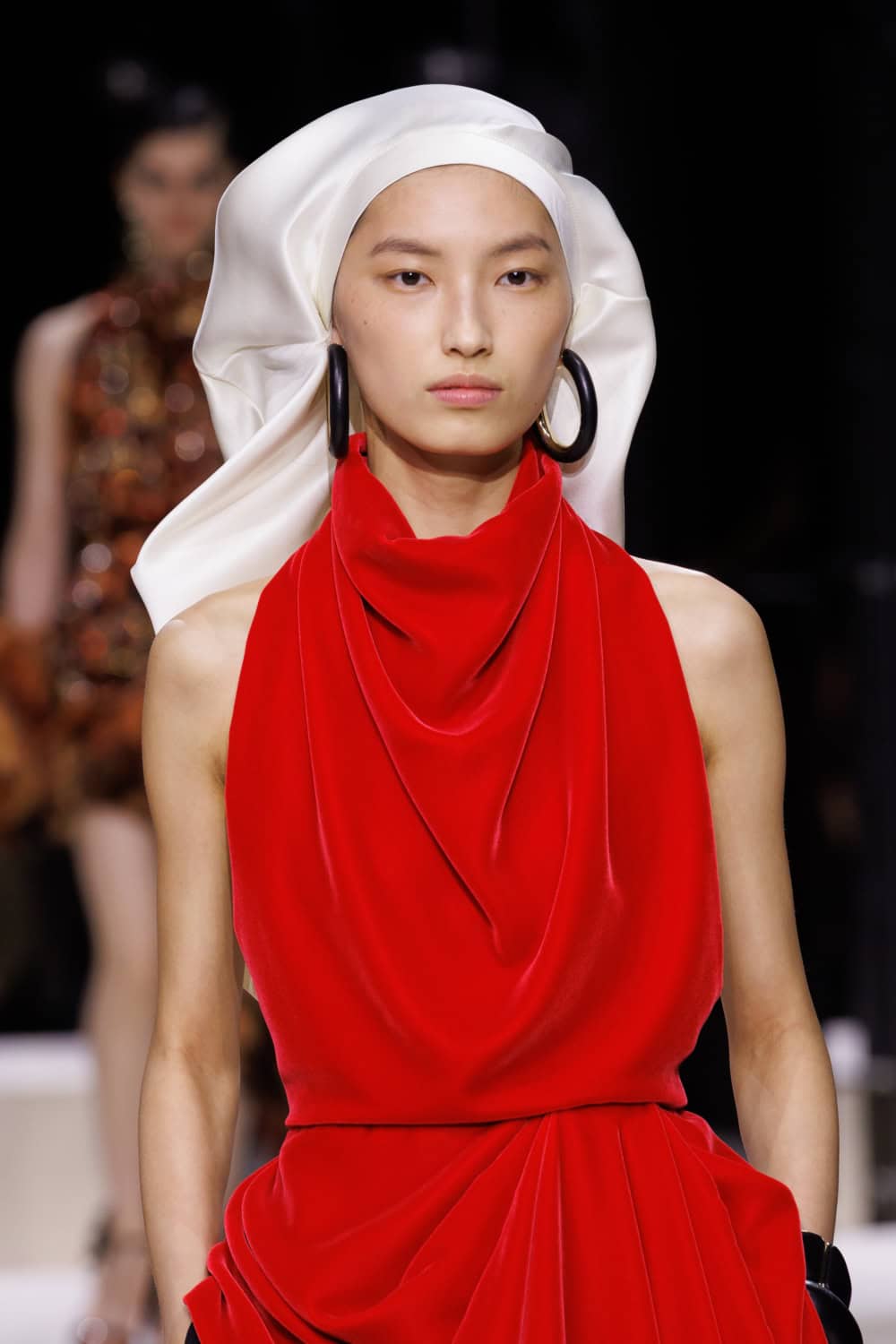
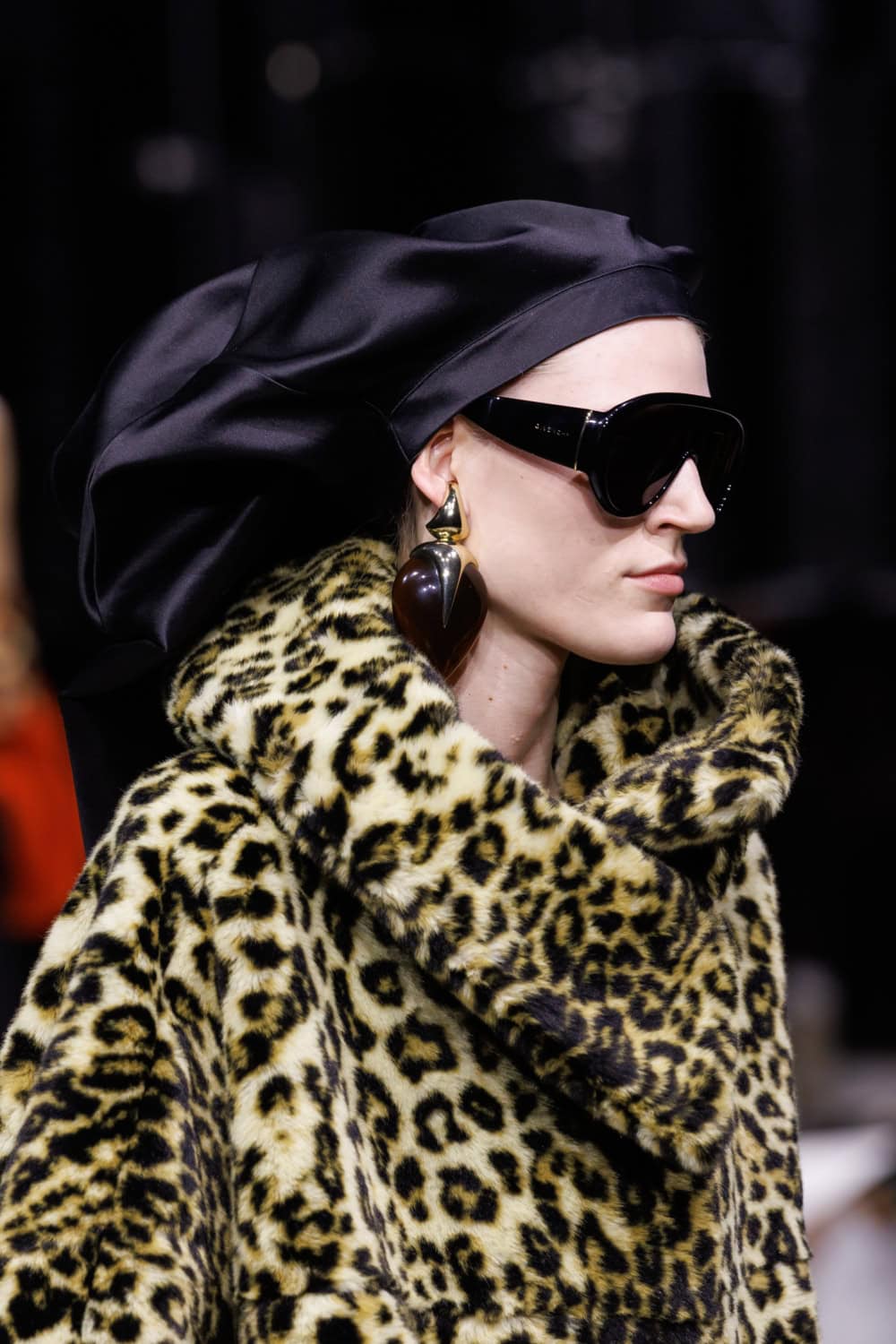
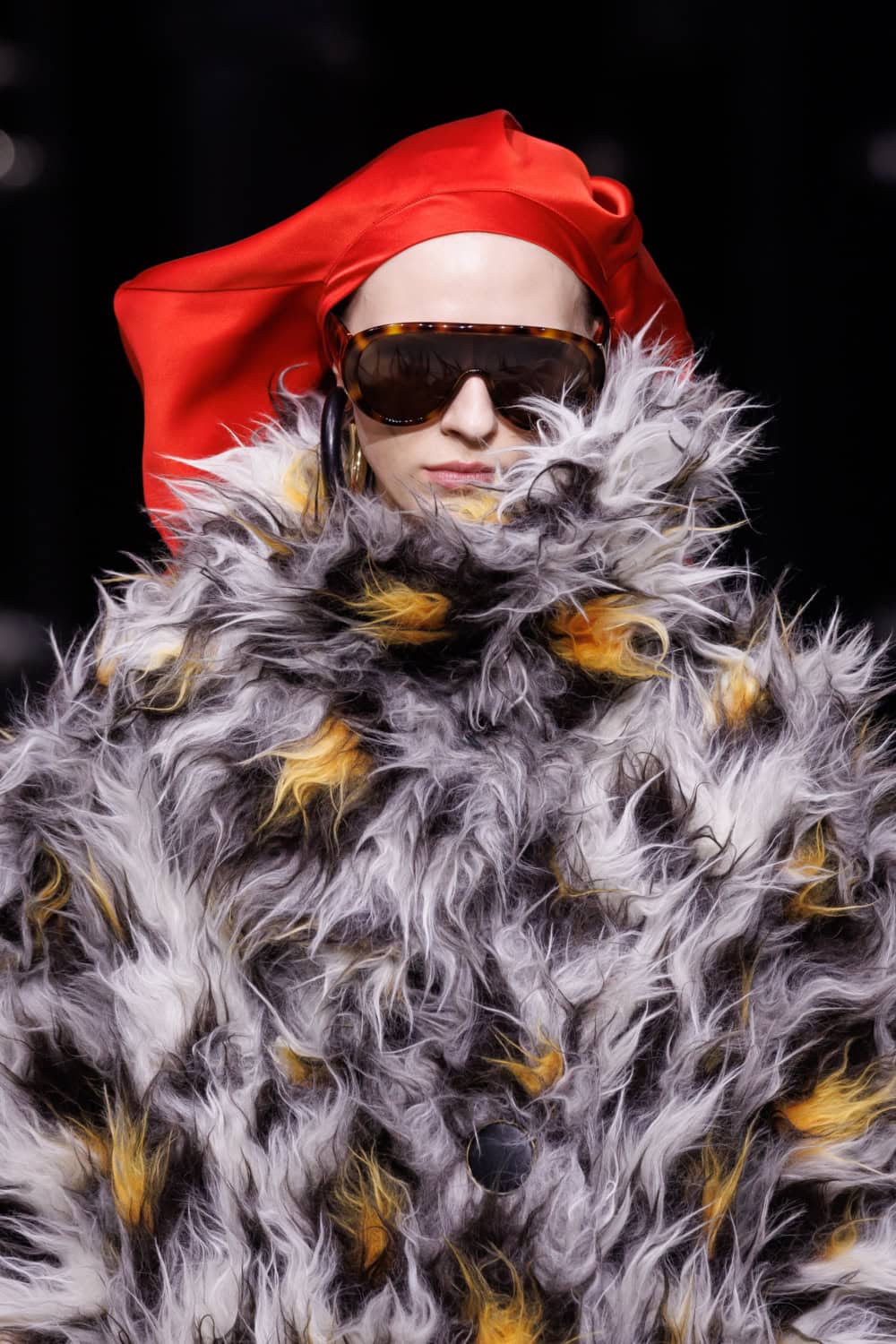
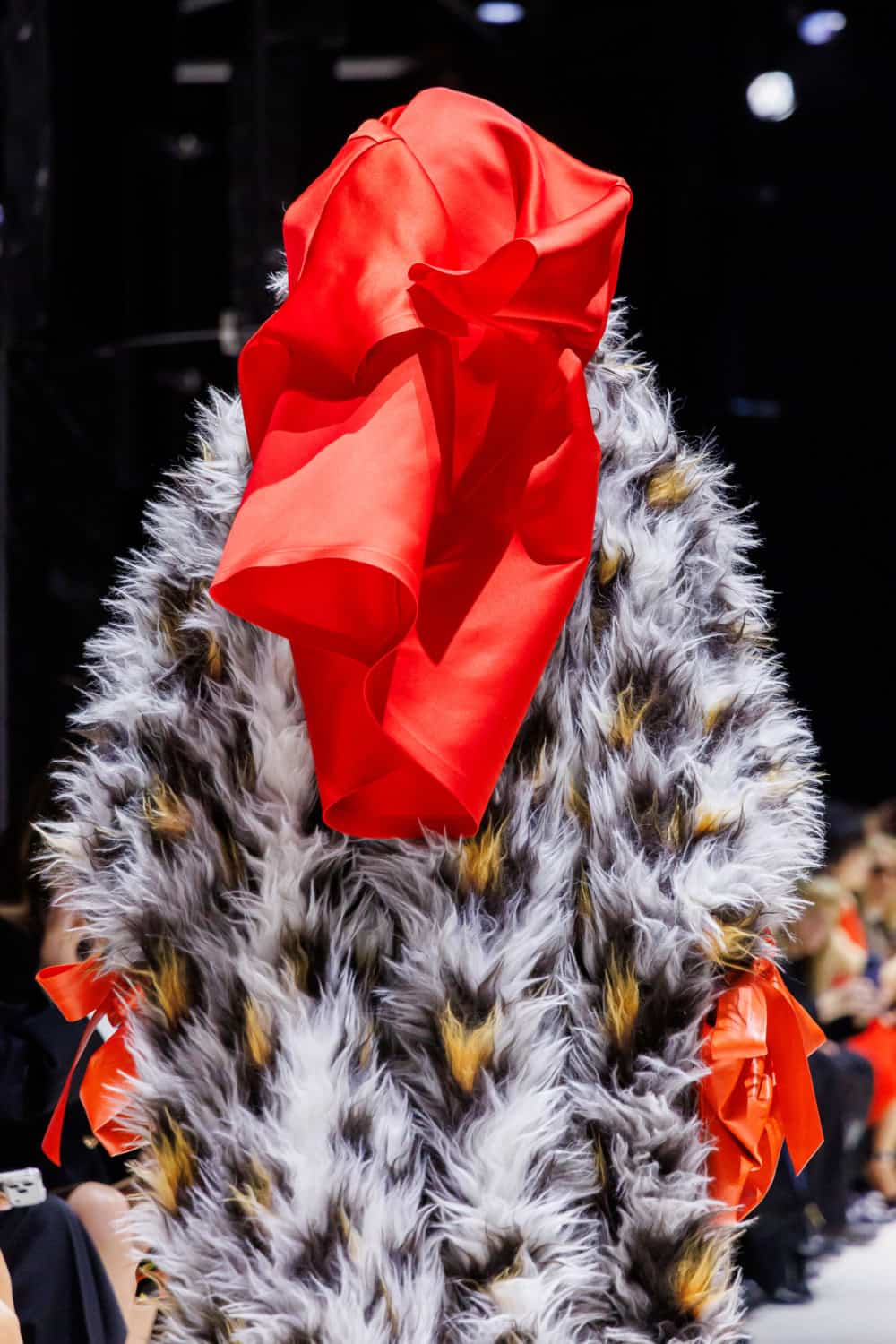
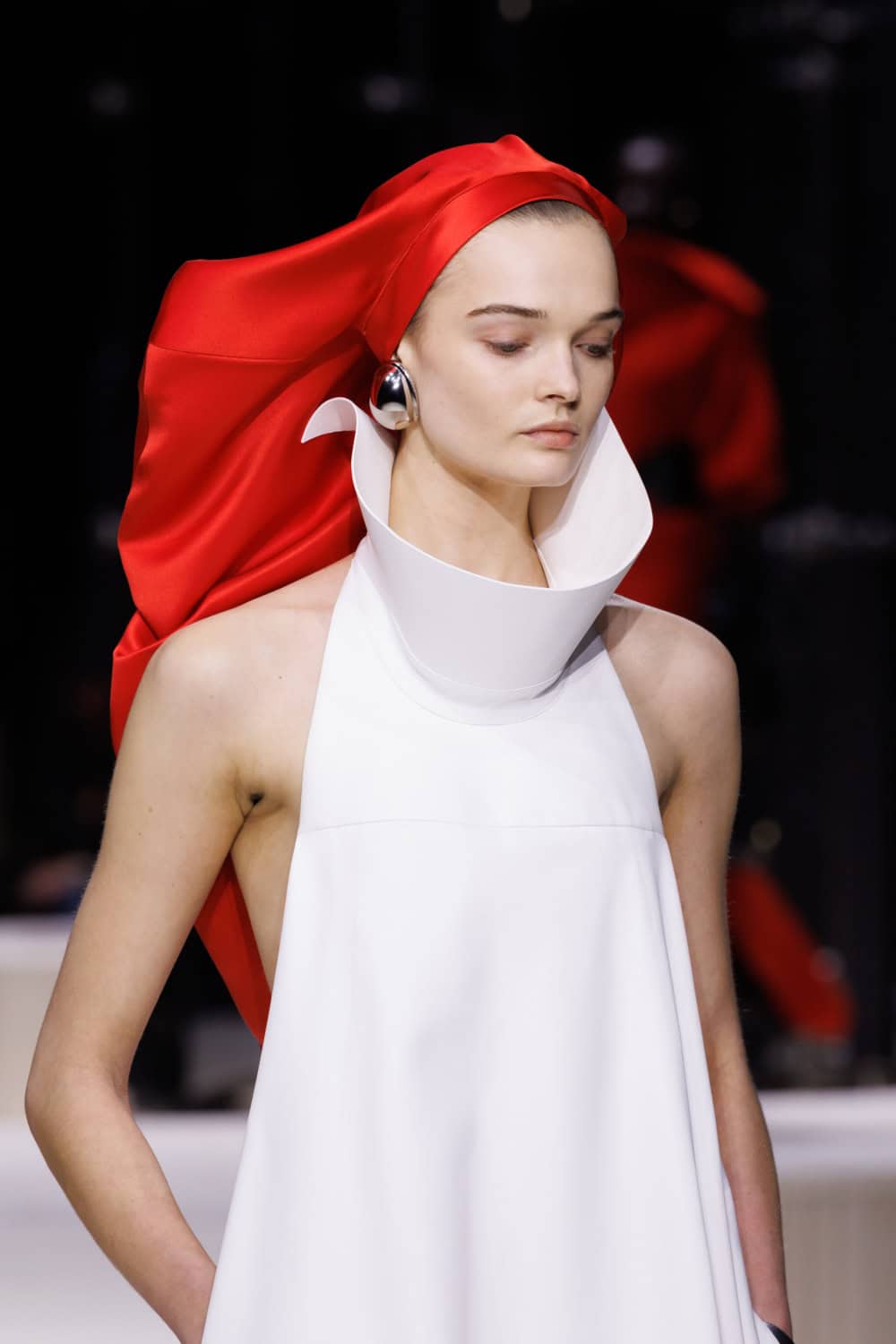
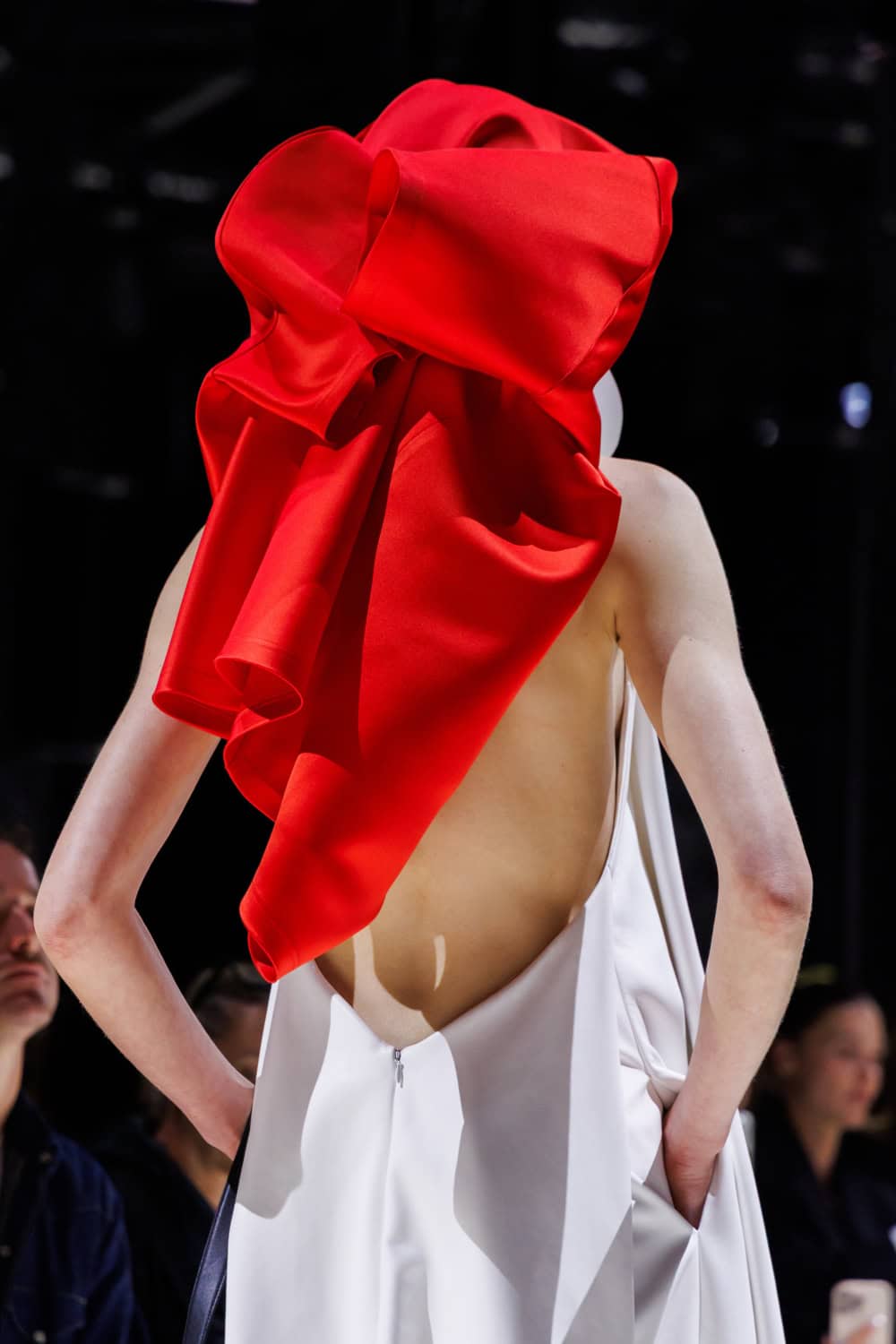
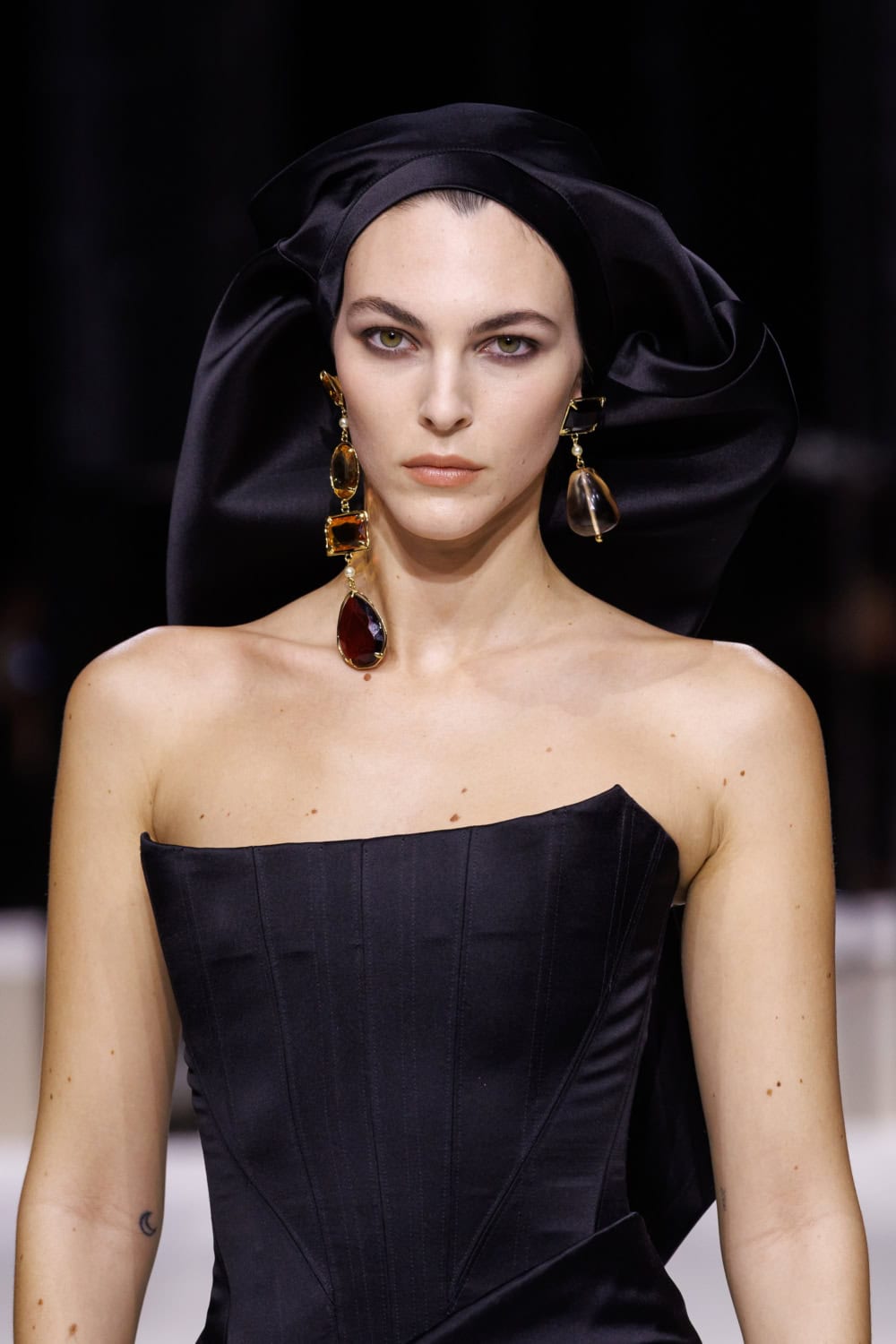
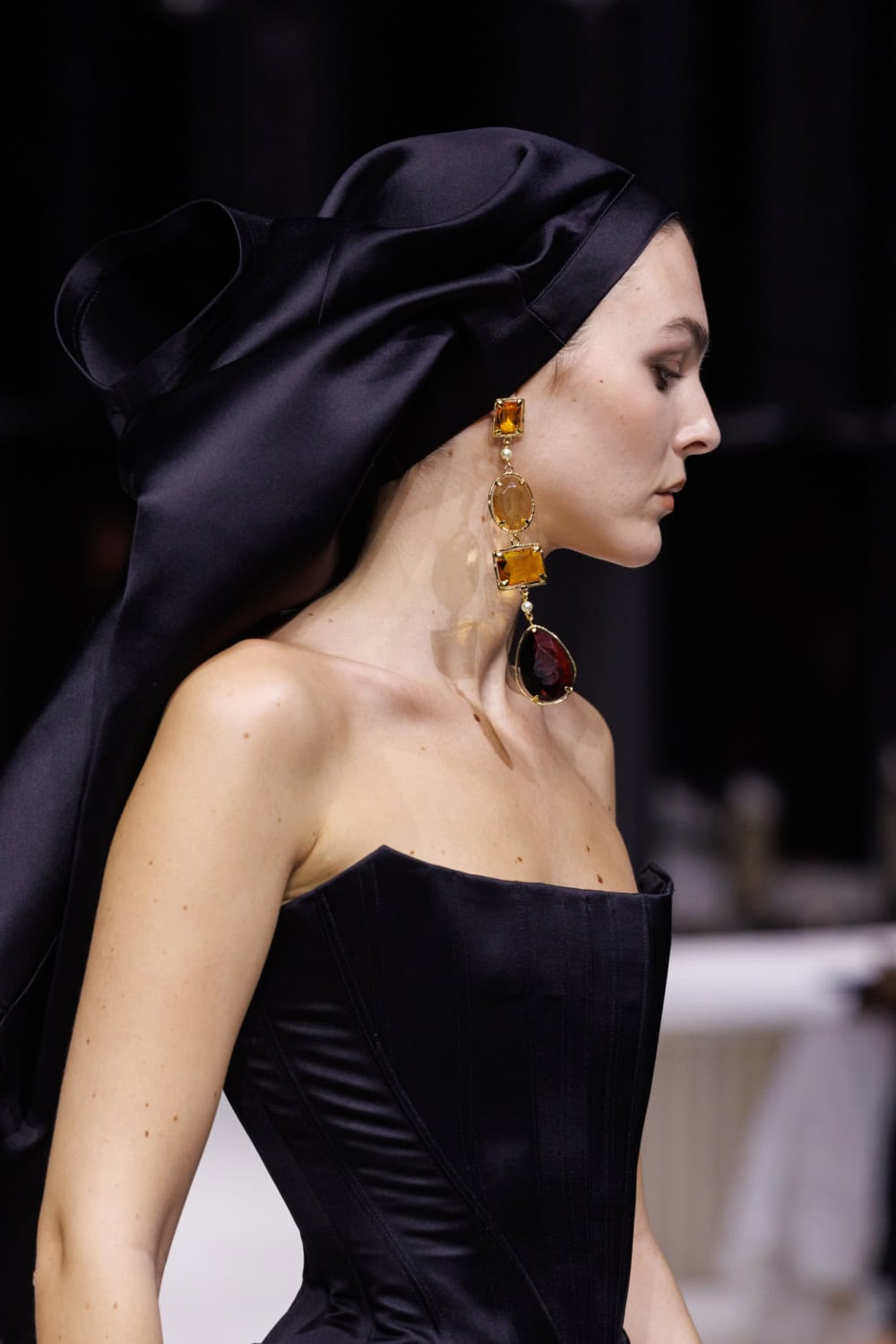
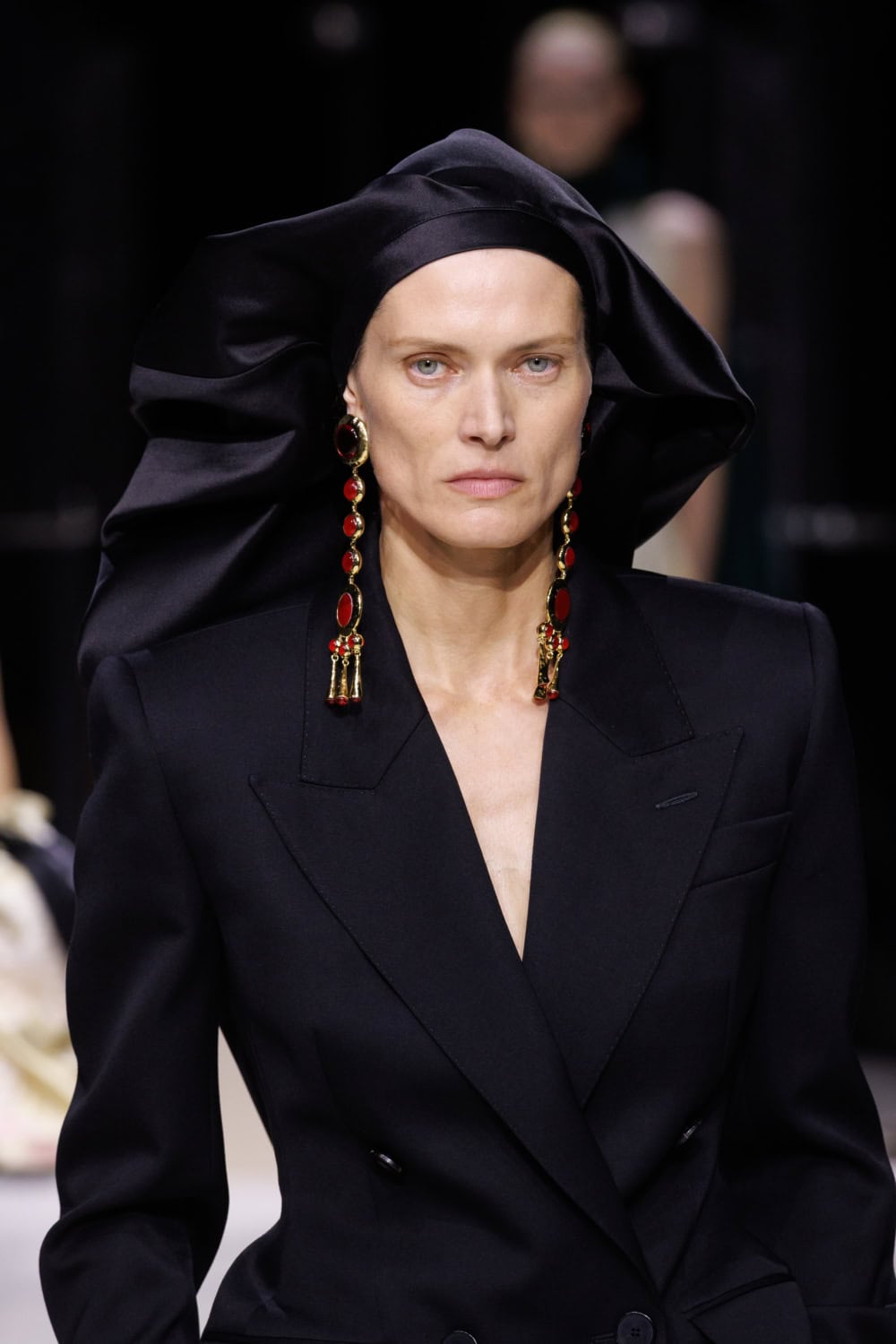
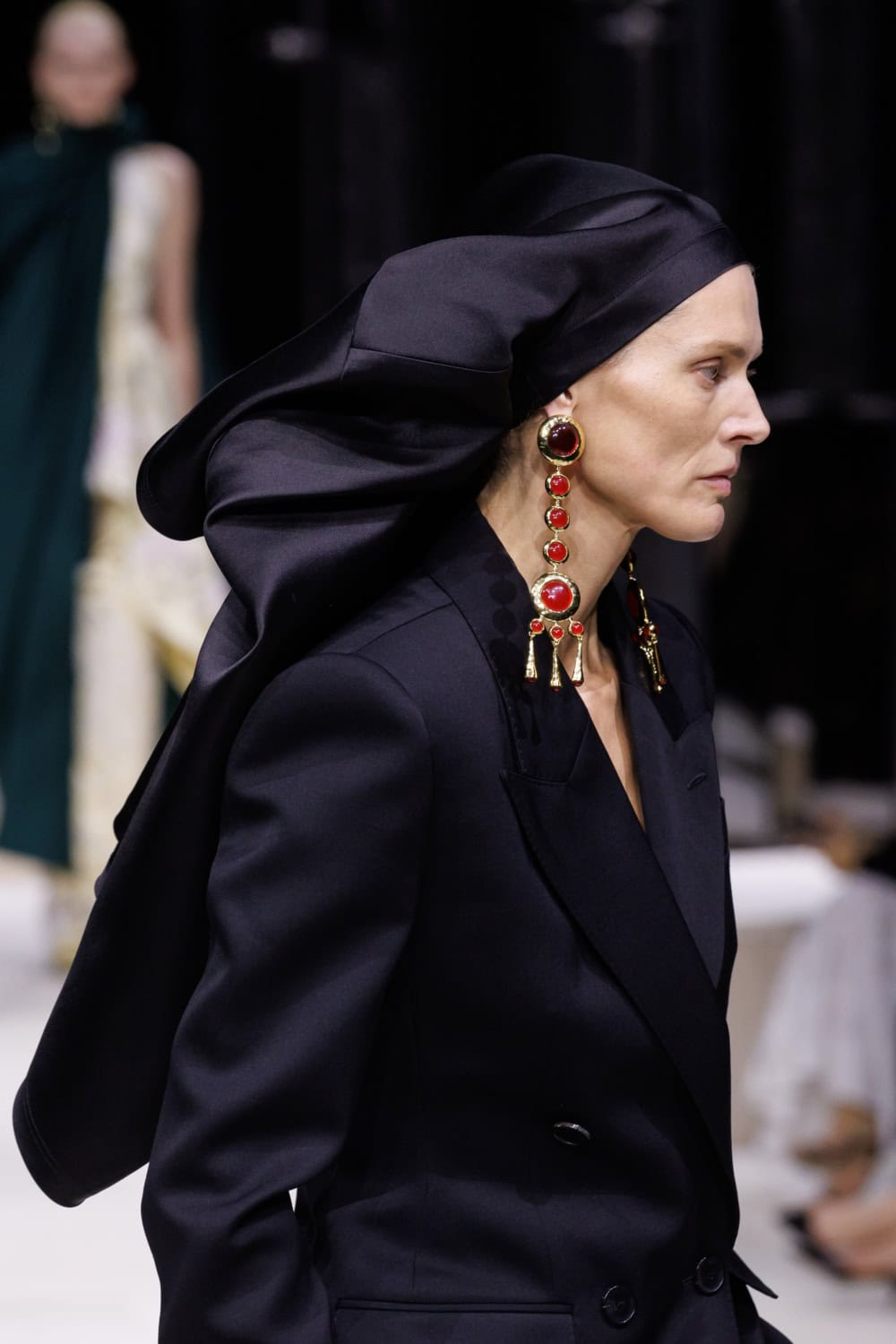
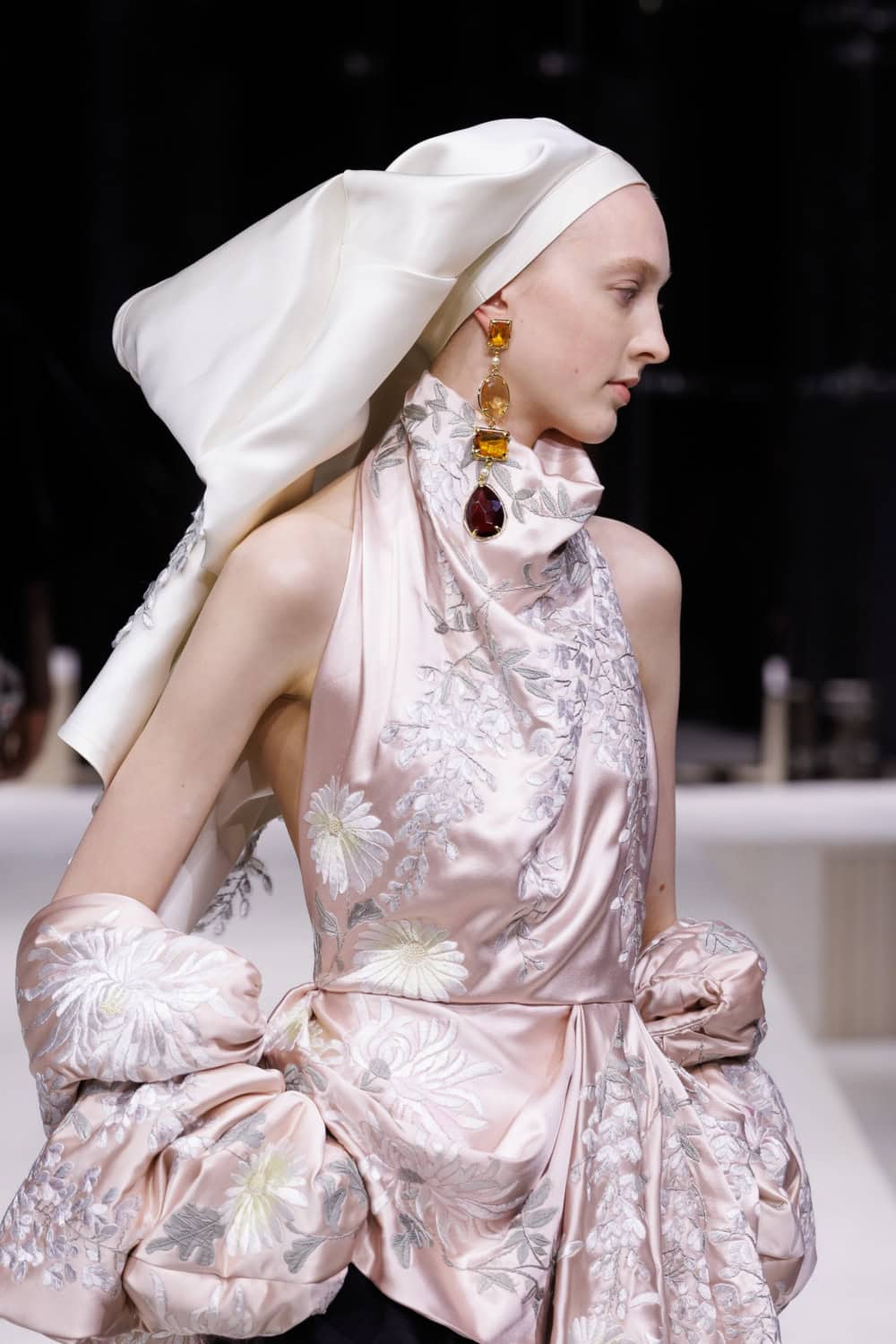
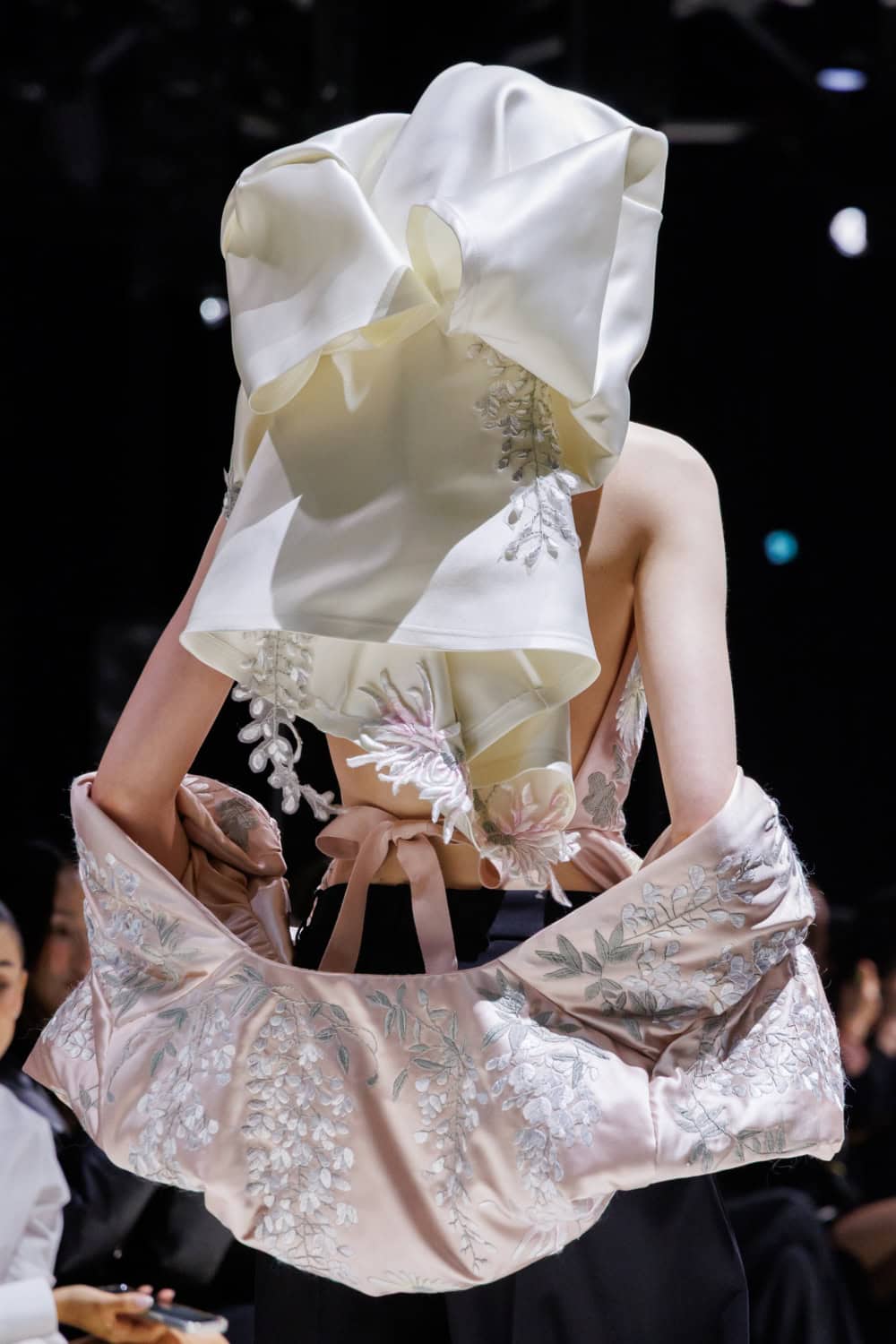
That process continued right up to the show. Even after being stitched, nothing was fixed. “Backstage, you push back on and it looks completely different again,” he says. It’s a reminder that these pieces aren’t static objects but responsive ones, constantly recalibrated.
What sets Jones apart, though, is where he places the focus. “I always take the girl in front of the mirror and say, ‘How do you feel?’” he says. “People never ask the girl, how do they feel?” It’s a simple question, but in the churn of a show, an unusual one. For him, it’s essential – particularly when the models themselves are often so new to the experience. “It must be crazy, terrifying,” he says of walking on their first runways.
There’s a kind of intimacy in that exchange, one that sits at odds with the scale of a Paris show. “It’s actually very intimate and personal moments when you’re putting a hat on somebody,” he says. The headpiece becomes less about spectacle and more about connection – a quiet adjustment, a shared understanding in front of a mirror.
Interpretation, though, is left open. Wrapped fabric will always suggest something beyond itself, whether that’s purity, ritual or restraint. Jones doesn’t resist that. “We make something, and they carry it along with them… once we’ve shown it, they own it. We don’t own it anymore.” If it brushes up against religious or cultural references, it’s something to be handled with awareness, but not overdetermined. “Hopefully… it should be understood. It’s something of [a] celebration [of] beauty.”
For all the couture polish, the idea remains deliberately accessible. “I hope people are going to make their own versions,” he says. “Make their own with a really nice T-shirt from Uniqlo.” It’s half joke, half manifesto – fashion as something to be tried, not just observed.
When pushed to define the spirit of the headpieces, he pauses before landing on a single word. “Transformative,” he says. “Because anybody can do that… and it will transform anybody in the simplest way.”
In the end, that’s where their power sits – not in the construction, however exacting, but in the familiarity of the gesture. A T-shirt, a twist of fabric, a moment caught and elevated.
Photography courtesy of Givenchy.