June 1, 2026 |
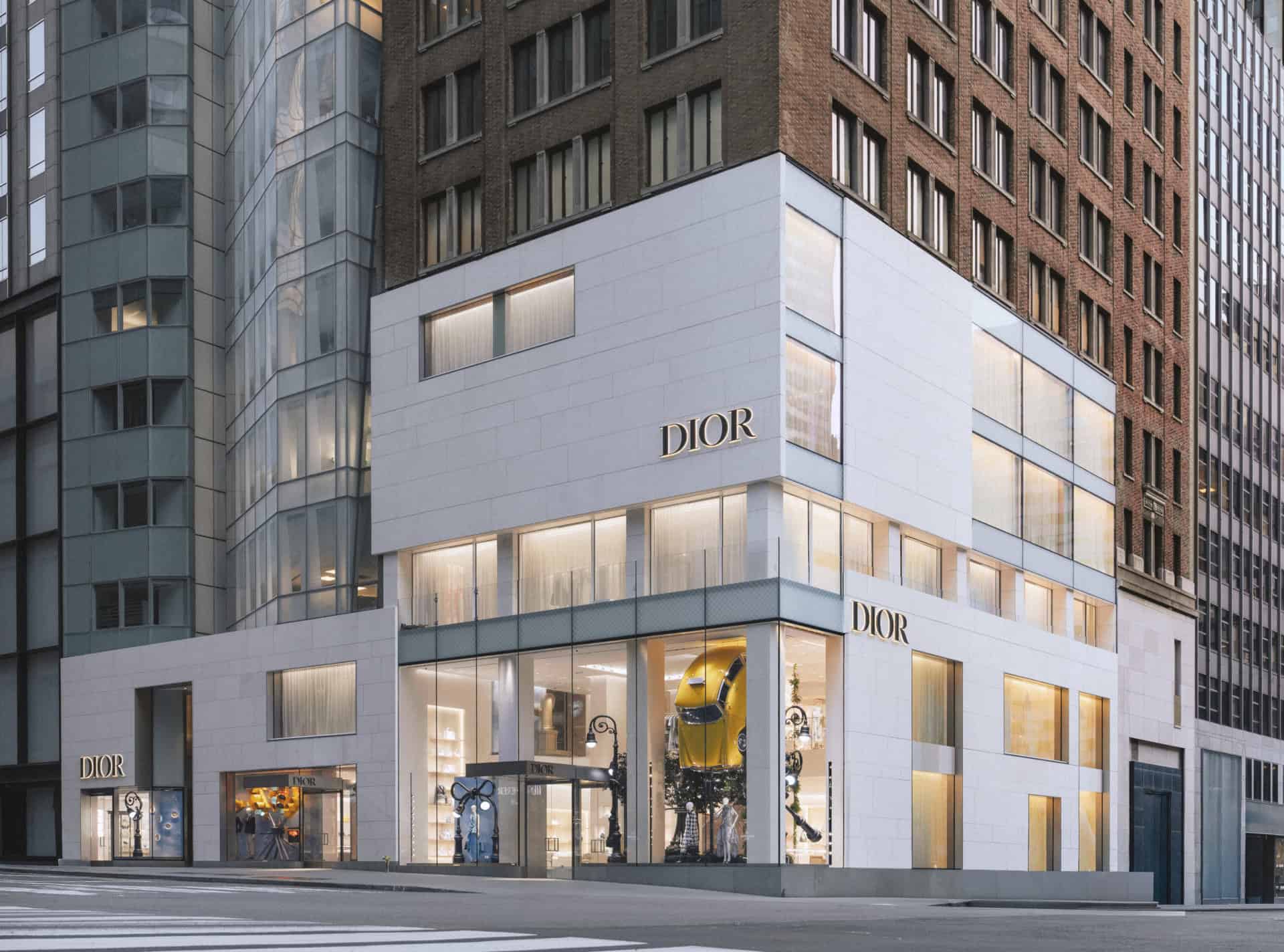
To mark the first anniversary of House of Dior New York and House of Dior Beverly Hills, Dior has turned to British artist Alex Chinneck – the sculptor renowned for bending the rules of architecture, engineering and public space – to create a series of extraordinary window installations that transform familiar urban objects into something altogether more unexpected.
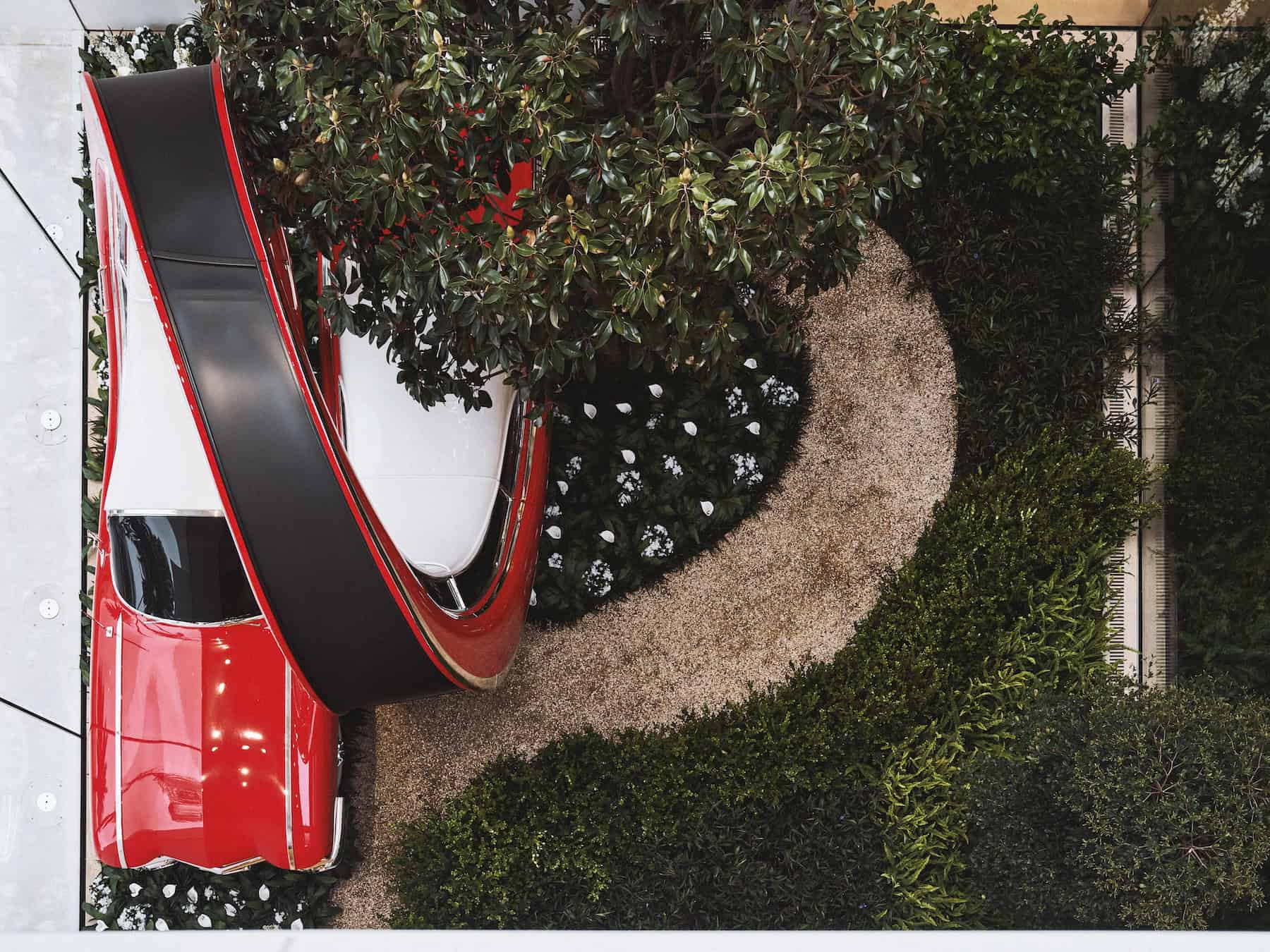
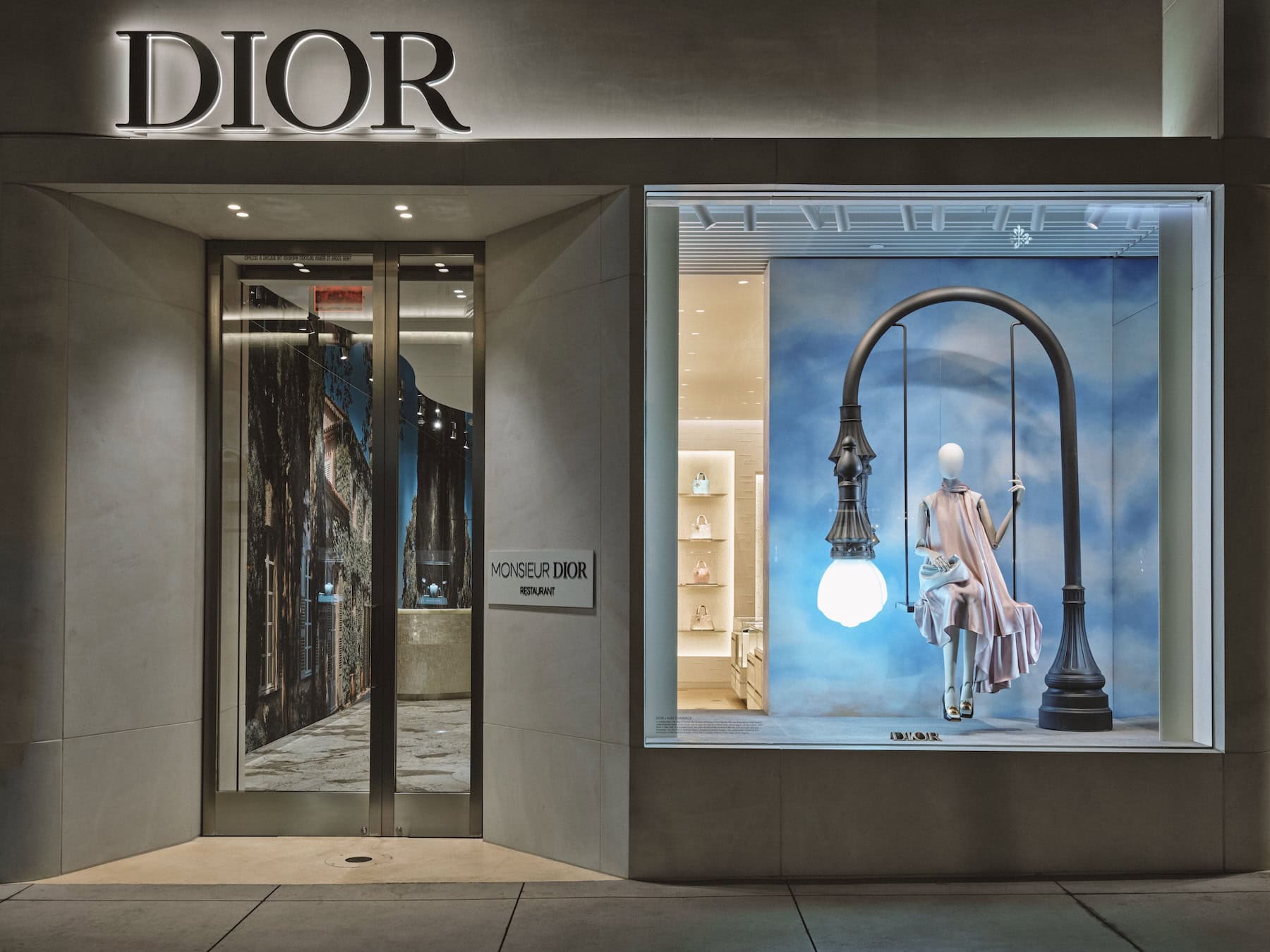
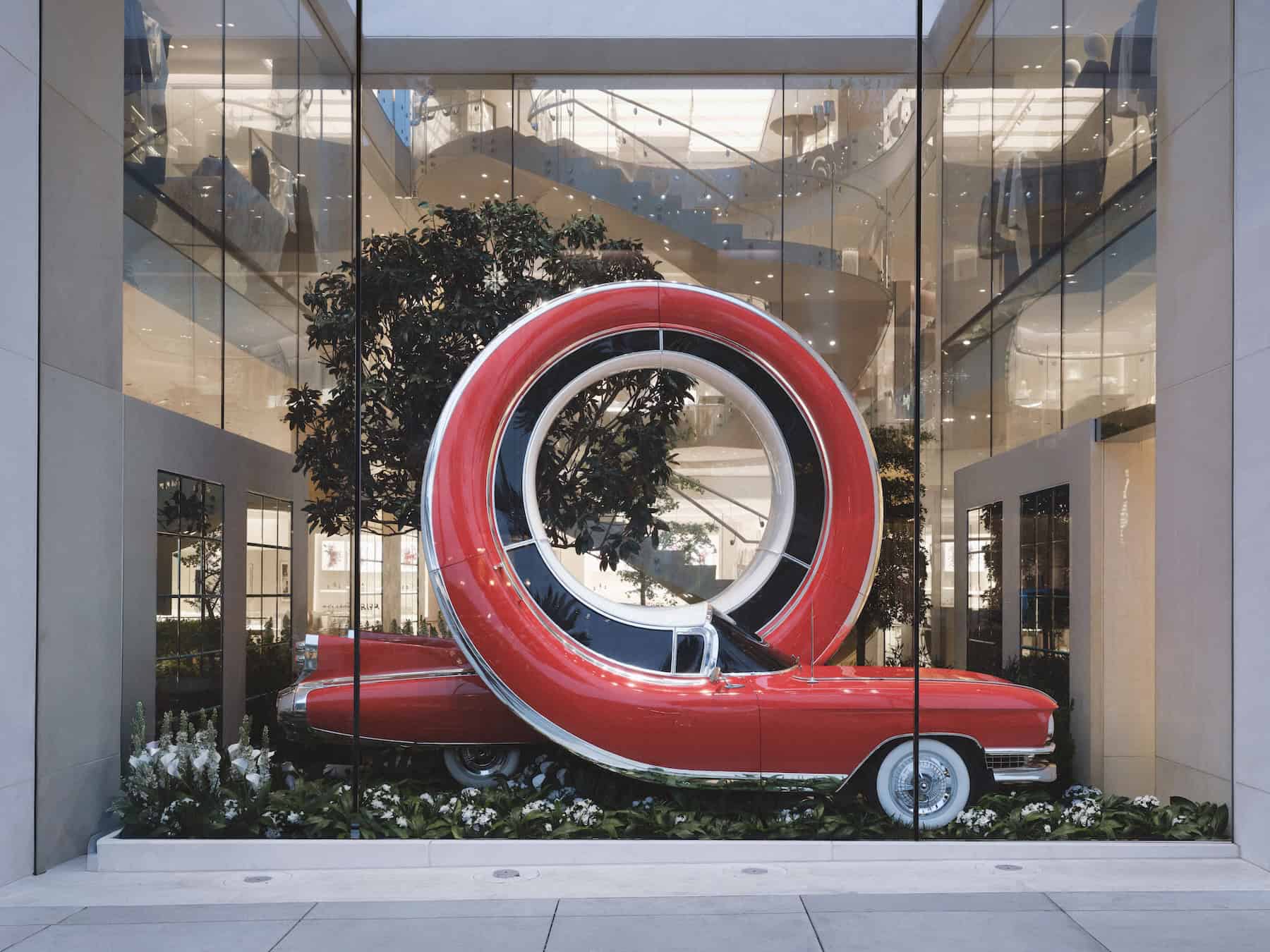
Installed across the façades of Dior’s flagship concept stores in New York and Los Angeles, the project comprises 14 large-scale sculptures that draw directly from the visual language of each city. In Manhattan, yellow taxis, traffic lights and street clocks twist, tangle and gather into surreal compositions that reflect the layered energy of the city. On Rodeo Drive, meanwhile, Chinneck’s interventions take on a more cinematic quality, reworking cars and ornamental street lamps into looping forms and oversized bows inspired by Dior’s couture heritage.
Known for creating optical illusions at architectural scale, Chinneck has built an international reputation through works that appear to unzip buildings, melt brick façades or suspend houses in mid-air. For Dior, however, the challenge was not simply to create spectacle, but to establish a dialogue between the house’s visual codes and the identity of two distinctly American cities. Throughout the installations, references to Dior’s history emerge through cast-metal street lamps tied into ribbon-like bows, while clustered lanterns subtly evoke the lily of the valley, Monsieur Christian Dior’s favourite flower and enduring emblem of the maison.
The result is a playful yet meticulously crafted series of works that sit somewhere between public sculpture, stage set and couture fantasy – inviting passers-by to pause, look twice and experience the familiar through a different lens.
Here, we chat to Chinneck about his connection to the house of Dior, his thinking behind the windows and how he hopes the wonky windows will be received.
1. When did you first become interested with the house of Dior?
I’ve long been familiar with the story of Dior, but I reconnected with the house through Kim Jones’s menswear collections and his collaborations with contemporary artists, such as Kaws and Daniel Arsham.
2. What do you like/admire about the brand?
What excites me most is the house’s commitment to uncompromising quality, its continual reinvention of craft through a contemporary lens and the sheer ambition with which it operates. Luxury naturally carries an inherent desirability, but what I find most compelling is the way it is fused with genuine creative dynamism. Jonathan Anderson, in particular, approaches quality without pretension – a creative philosophy that deeply resonates with me.
3. Tell me a little bit about how the window displays first came about?
I was first approached by Dior over a year ago to create an installation for House of Dior New York, followed shortly after by a second commission for House of Dior Beverly Hills. Our shared ambition was to transform the visual language of each city’s streetscape into something theatrical and deeply sculptural – where familiarity meets fantasy. Naturally, I was delighted to collaborate with a house where ambition is intrinsic and quality is non-negotiable.
4. What is the thinking behind the windows?
We approached each House of Dior in direct response to its surroundings, drawing from the distinct visual language of Manhattan and Beverly Hills to create interventions unique to each city. Over the course of fifteen months, the designs evolved in close dialogue with the architecture of the spaces, the integration of dressed mannequins, and the wider identity and codes of Dior. It was an intensely collaborative and unified process with the Dior team throughout.
House of Dior New York features nine sculptures, each with its own strong personality. That felt true to my experience of Manhattan – a city defined by the coexistence of bold, ambitious characters within a single extraordinary environment. New York thrives through the energy of layered and intersecting elements, and the sculptures aim to reflect that same spirit: a curated yet dynamic entanglement of objects, references and ideas that resonate with both the city and the House of Dior.
For House of Dior Beverly Hills, our focus shifted toward Rodeo Drive and the nostalgia embedded within its visual culture. The sculptures there are calmer, more refined, and perhaps more fluid in their forms. Inevitably, responding to Los Angeles introduced a cinematic quality to the work, and I loved how naturally this connected with the cars and lamps featured in the Dior cruise collection show.
Dior possesses a rich vocabulary of visual motifs that became an important source of inspiration. The bow, for example, is synonymous with the House and with the ribboned silhouette of the Miss Dior bottle. In response, both House of Dior New York and House of Dior Beverly Hills feature cast-metal street lanterns tied into oversized bows, arching elegantly over Dior dresses.
Another enduring motif is the lily of the valley – Christian Dior’s favourite flower and personal lucky charm – which appears throughout the Dior archive. Our five-metre-tall bouquet of cast-metal street lanterns, gathered together with a street sign, echoes the clustered and gently drooping form of the flower.
5. What are some of your favourite displays/features?
They each play an important role. I’m drawn to the dialogue between the Dior archives and the bouquet-like arrangements of lanterns and bows; the looping car is compelling in its sculptural fluidity and polished sleekness; and the interaction between the traffic light bouquet and the architecture of House of Dior New York feels especially space-specific. My favourite, however, is the swing sculpture at House of Dior Beverly Hills. There’s an elegance and cinematic romance to it that is brought beautifully to life through the presence of the Dior dress.
6. How do you hope people receive the displays?
My view is that if you’re going to interrupt someone’s day, it should be in an uplifting way. I hope the installations encourage passersby to pause, engage with the sculptures and enjoy their dialogue with Dior’s collections. Surrealism, to me, is a playful and optimistic rejection of limitation – a way of reimagining the familiar through a more dynamic, curious and theatrical lens. In those moments, the world can feel slightly more magical.
Photography courtesy by Guillaume Barry.