June 3, 2026 |
There are certain objects that instantly transport you back to childhood. Not in the broad, rose-tinted sense, but with startling specificity. A smell, a texture, a sound. The scratch of velcro trainers on a primary school playground. The snap of a butterfly hair clip. The faint squeak of a jelly shoe against a corner shop floor.
As summer edges into view once again, fashion seems to be chasing that same feeling. The desire for nostalgia isn’t exactly new, but this season it feels particularly potent. Perhaps because the world has spent the last few years moving at breakneck speed, perhaps because adulthood is expensive and exhausting, or perhaps because we’re all simply craving a little more joy. Whatever the reason, one of the most unexpected symbols of childhood wonder is back on our feet.
Jelly shoes have officially snuck back into style – outstaying the early 2020’s Y2K renaissance with fresh, contemporary styles redesigned for the now. At first it was subtle. A few reissues from heritage brands, the occasional sighting on Instagram, a fashion editor pairing them with something knowingly ironic. Then suddenly they were everywhere. Not just the classic glitter sandals either, but ballet flats, kitten heels, flip flops and sculptural runway versions that looked worlds away from the pairs many of us wore to the beach as children.
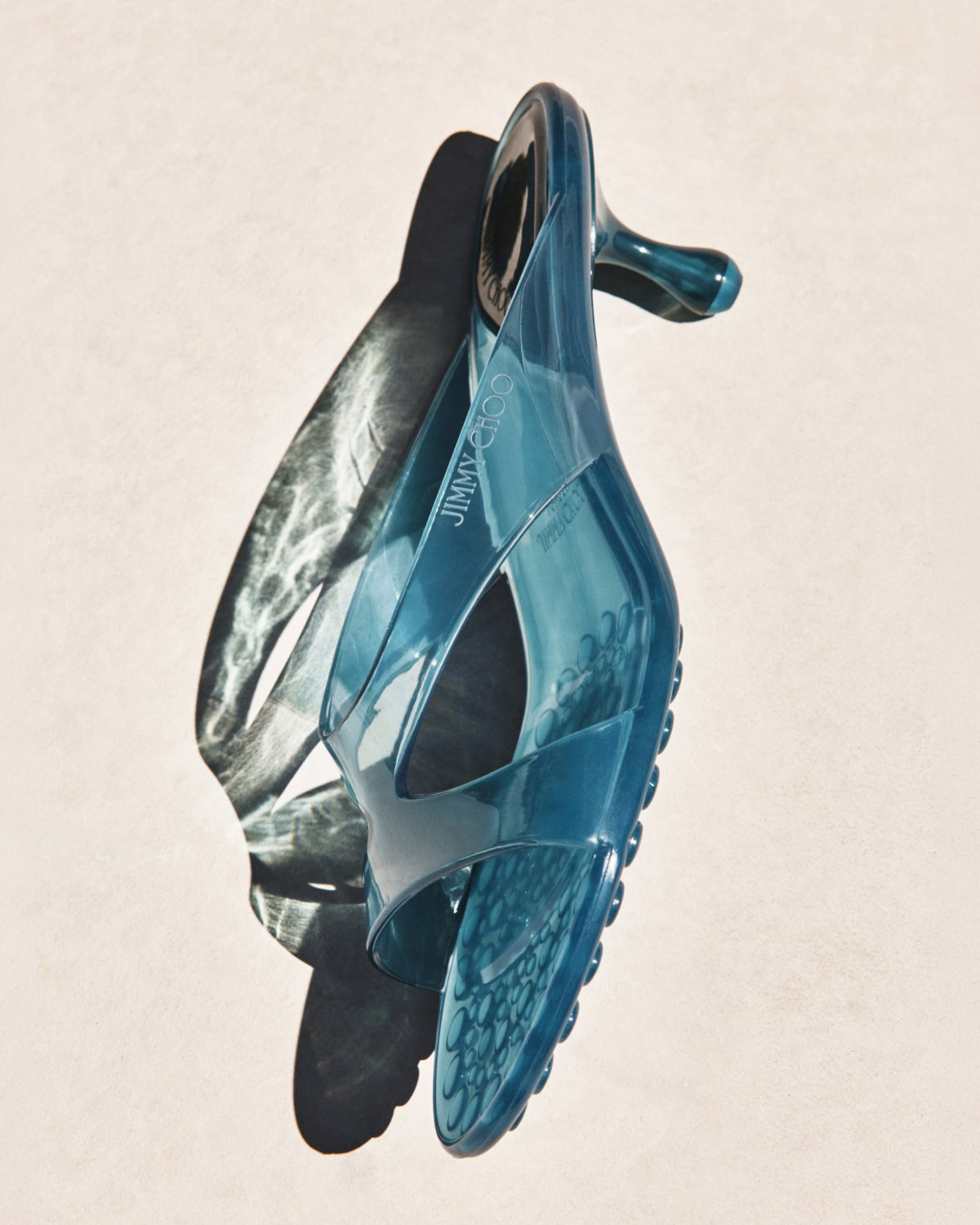
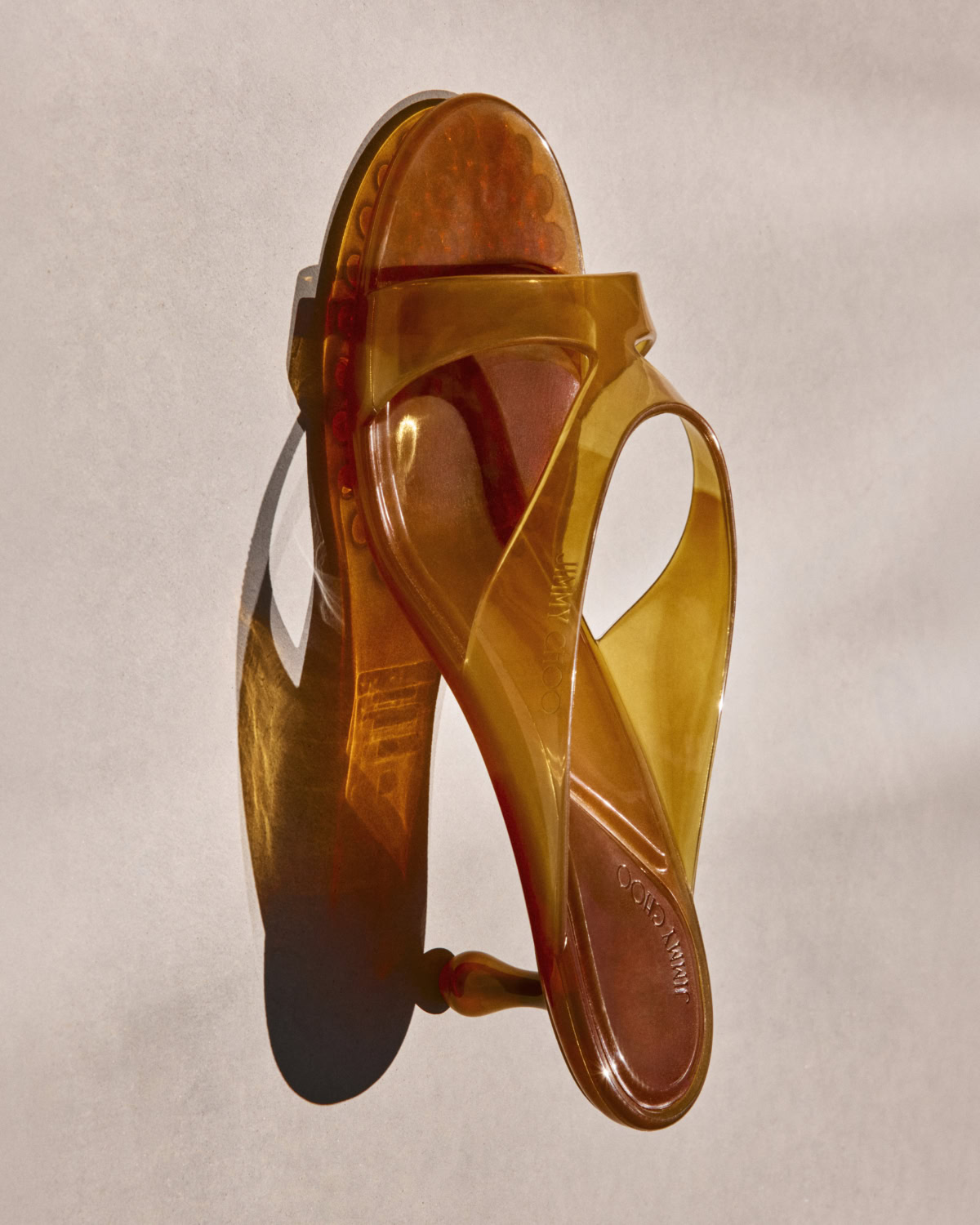
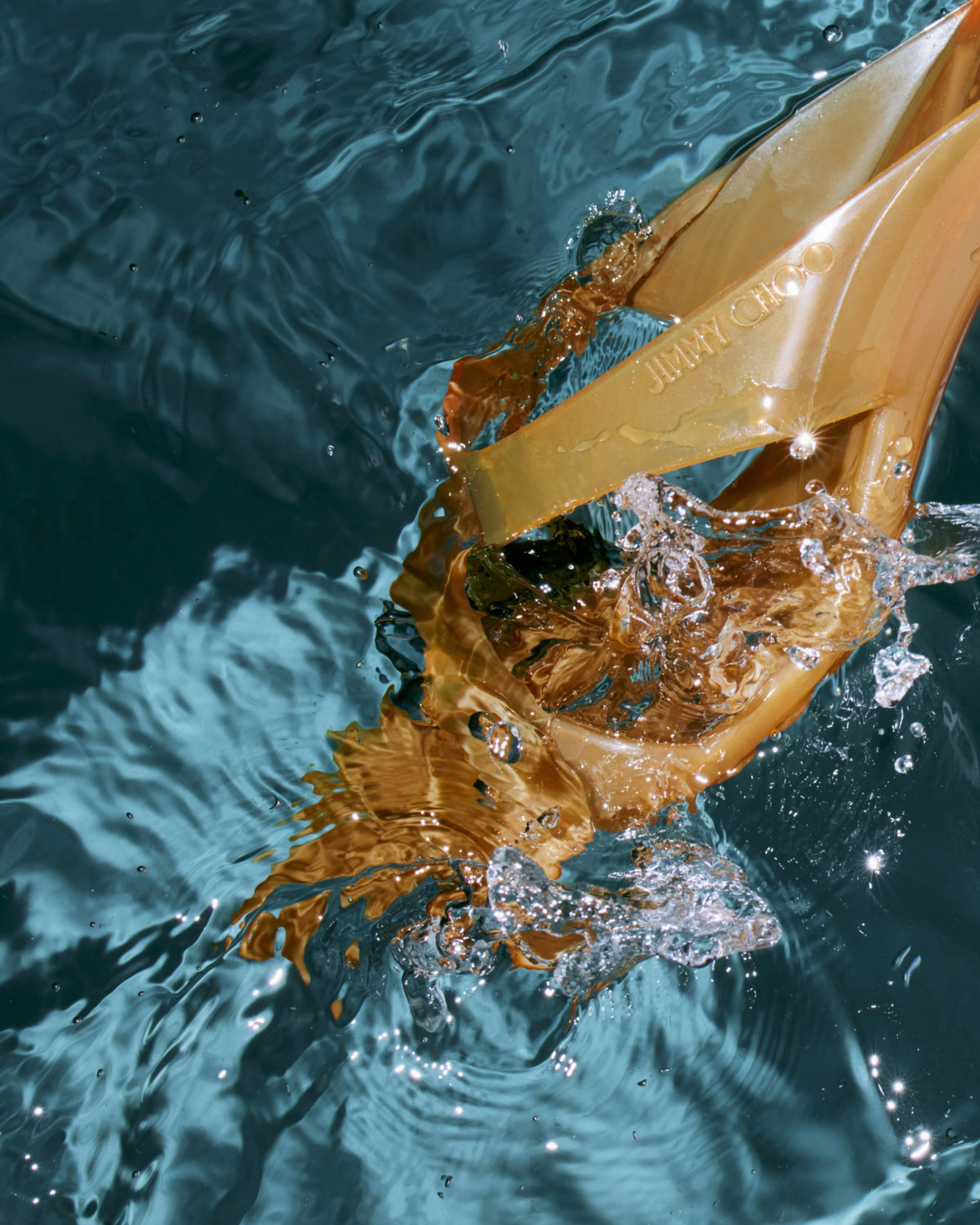
Jimmy Choo
For me, the story starts much earlier. As a little girl, my mum bought me a princess dress-up box kit from Costco, no less, which contained not only a dozen dazzling dresses, all glitter tulle, velvet and sequins, but a dozen pairs of matching shoes all made out of jelly. No not the jelly you’re served with a sore throat, but the kind most likely made of polyvinyl chloride, a slick, rubbery material. At the time, those shoes felt impossibly glamorous. I didn’t know what PVC was. I certainly didn’t know anything about fashion trends. I only knew that they sparkled when they caught the light and transformed me into whatever character I wanted to be that afternoon. One minute I was a princess, the next a fairy, then some entirely made-up hybrid of both. The shoes always stayed on.
One of my favourite pictures of me as an awkward kid shows me standing in my family’s back garden at night in a purple Tinkerbell pyjama set. I must have been about eight years old, my hair was tied back in frizzy, months-old box braids and on my tiny toes was a pair of classic pink glitter jelly shoes. Looking at the photo now, I’m struck by how completely unselfconscious it is. The pyjamas don’t match the shoes. The hair is doing its own thing. The styling would make absolutely no sense today. Yet I look entirely convinced by the whole ensemble. There’s another one where I’m sitting in the grass putting on another pair of pink fisherman jelly shoes, where I seem so entranced by their strangely satisfying texture as I put them on my feet. That’s the magic of jelly shoes. They belong to a period of life before getting dressed became a performance.
Of course, their story started long before my Costco princess era. Although many people associate jelly shoes with the 1990s and early 2000s, their modern history began in Europe in 1980 when French entrepreneurs Tony Alano and Nicolas Guillon launched the brand Jelly Shoes in Paris. Inspired by plastic fisherman sandals, they transformed them into brightly coloured fashion footwear, often scented and infused with glitter. By the early 1980s, Brazilian manufacturer Melissa had entered the picture, helping turn the style into a global phenomenon.
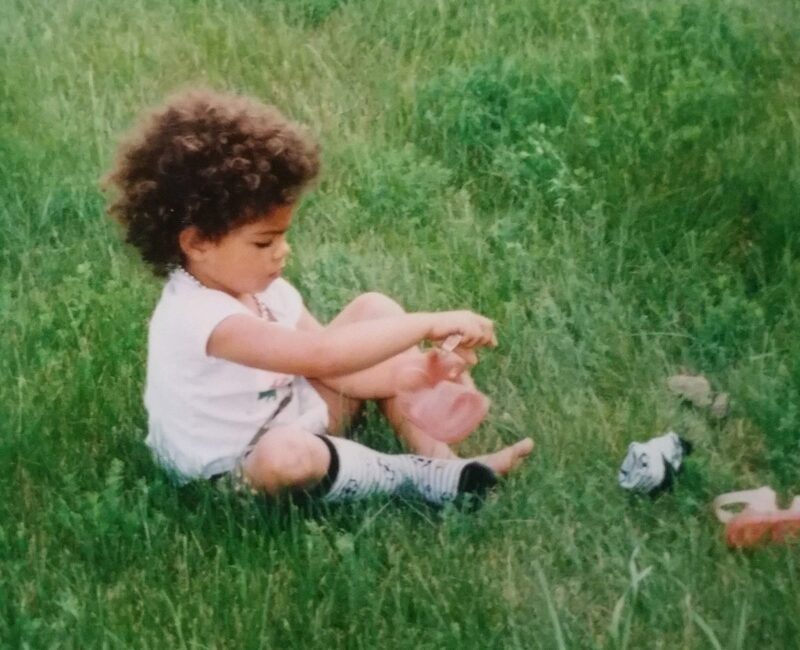
Me (Emily Phillips) putting on my jelly shoes circa 2003
The craze quickly reached Britain. By the mid-1980s, jelly shoes had become a staple of the British summer. They appeared everywhere from seaside resorts and school fêtes to high-street shoe shops and department stores. In 1986, Northampton-based JuJu Footwear began producing injection-moulded (a plastic manufacturing process) plastic sandals that would become synonymous with British childhood. For an entire generation, jelly shoes meant beach holidays in Cornwall, ice creams dripping down your wrist, scraped knees, paddling pools and six weeks of freedom stretching ahead.
They were cheap, colourful, waterproof and seemingly indestructible. They were also, admittedly, not particularly comfortable. They’re not the most sweat friendly, and often bring about blisters, but at the same time… fashion, naturally, has decided those minor details are worth overlooking.
This summer, designers are embracing jelly shoes with renewed enthusiasm. Melissa continues to lead the charge, most recently through its new collaboration with Ganni, which reimagines a classic flip-flip silhouette through the Copenhagen brand’s playful lens. Think leopard-print flip flops, bright primary colours and kitten heels designed for cycling through the city before heading to the water.
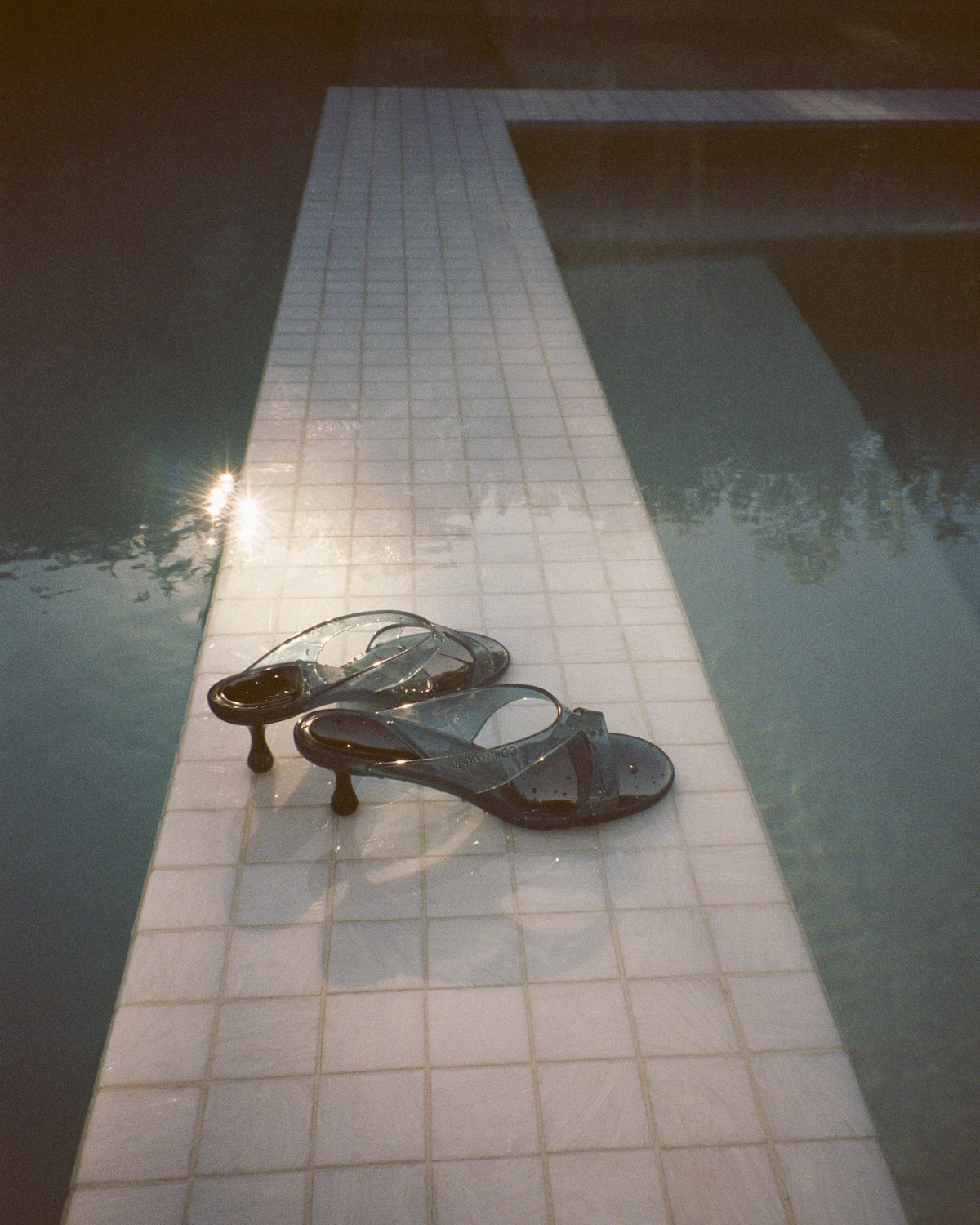
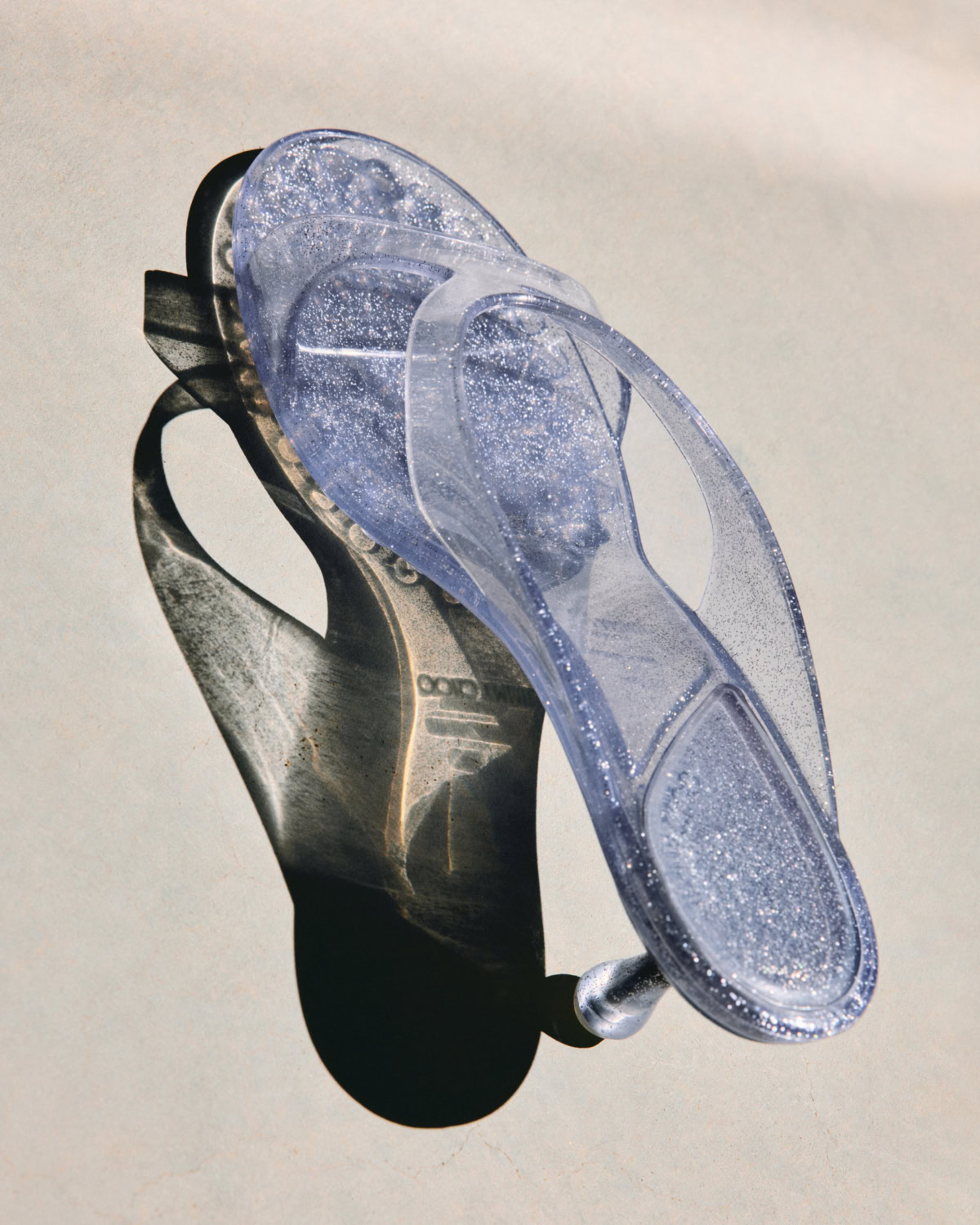
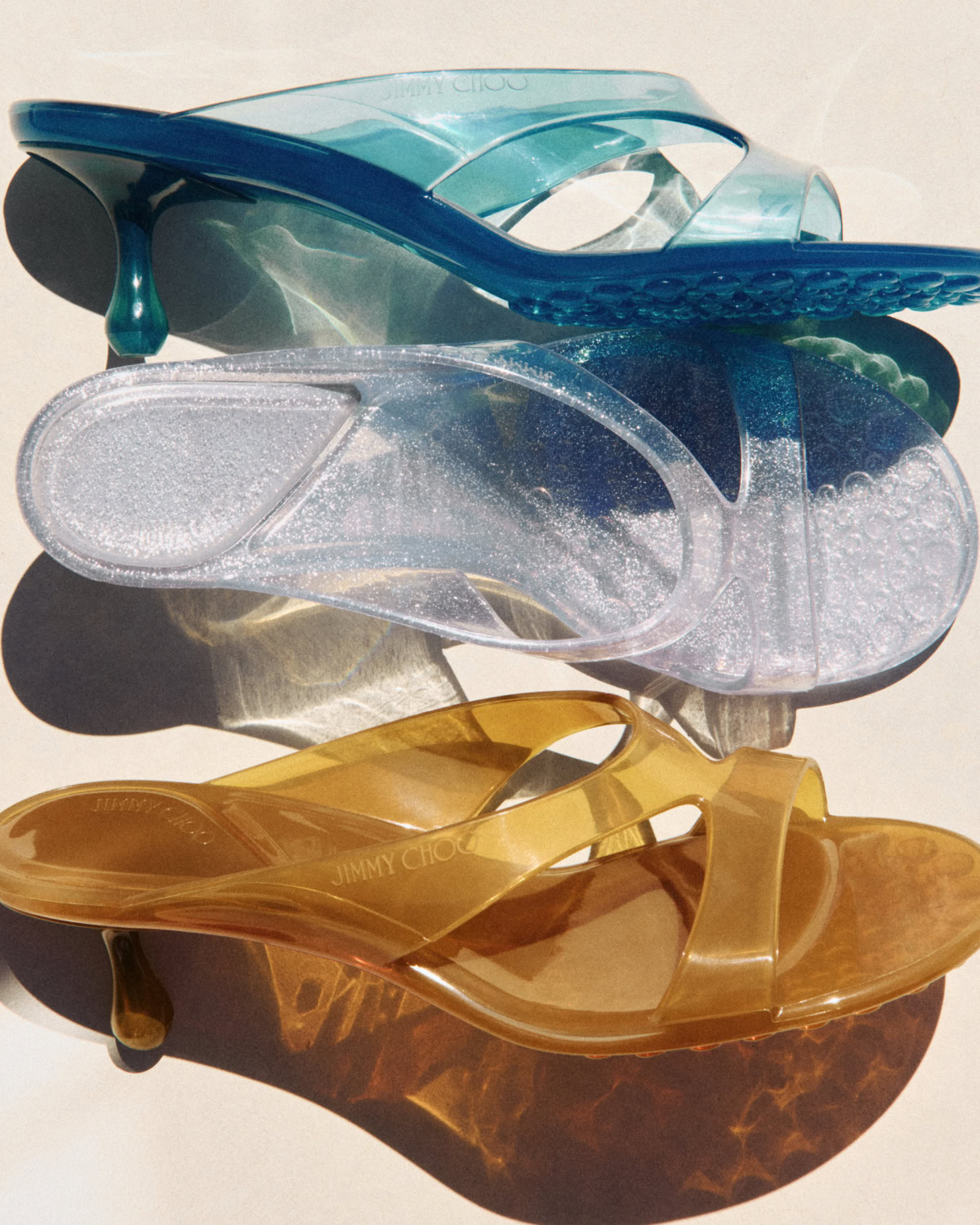
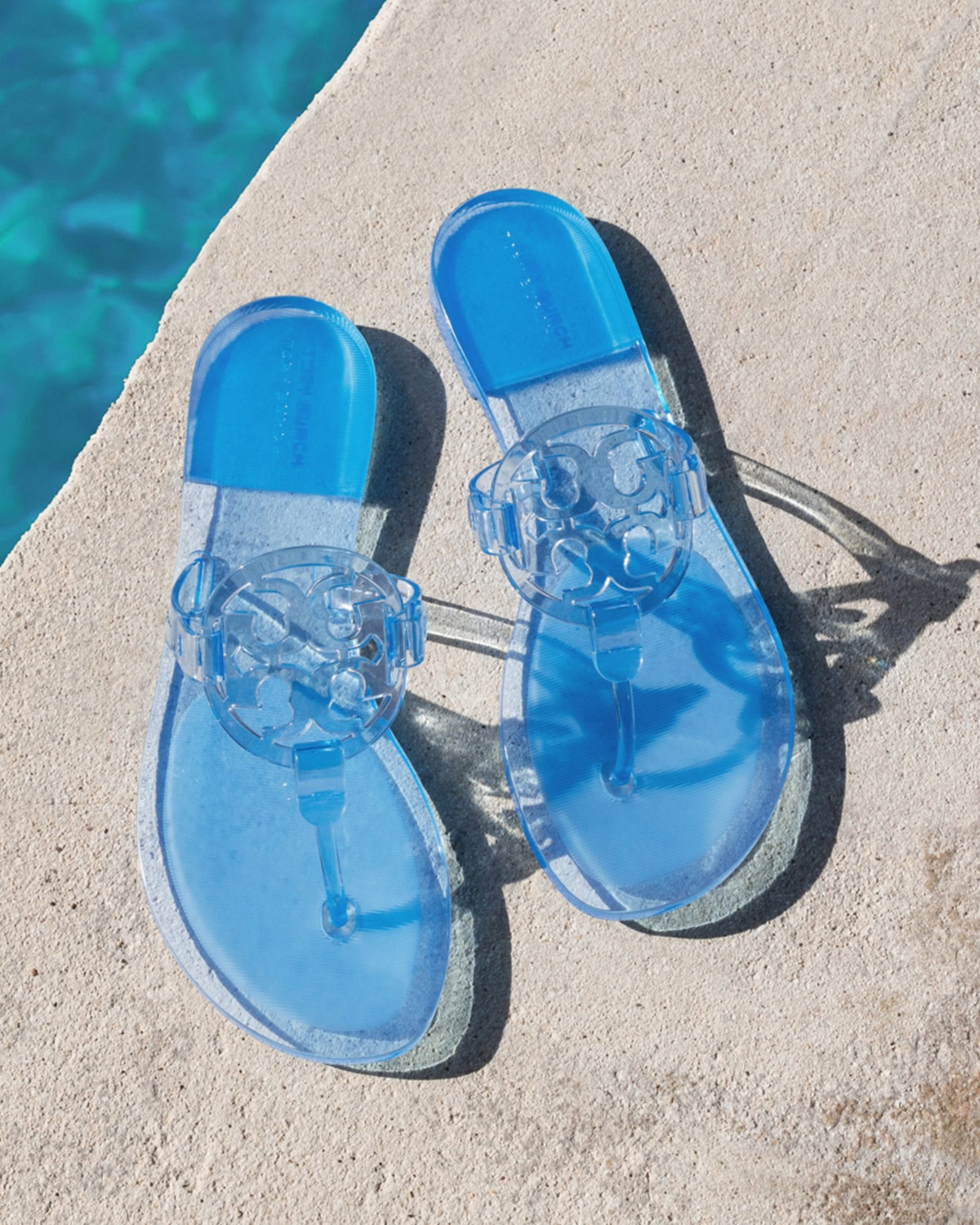
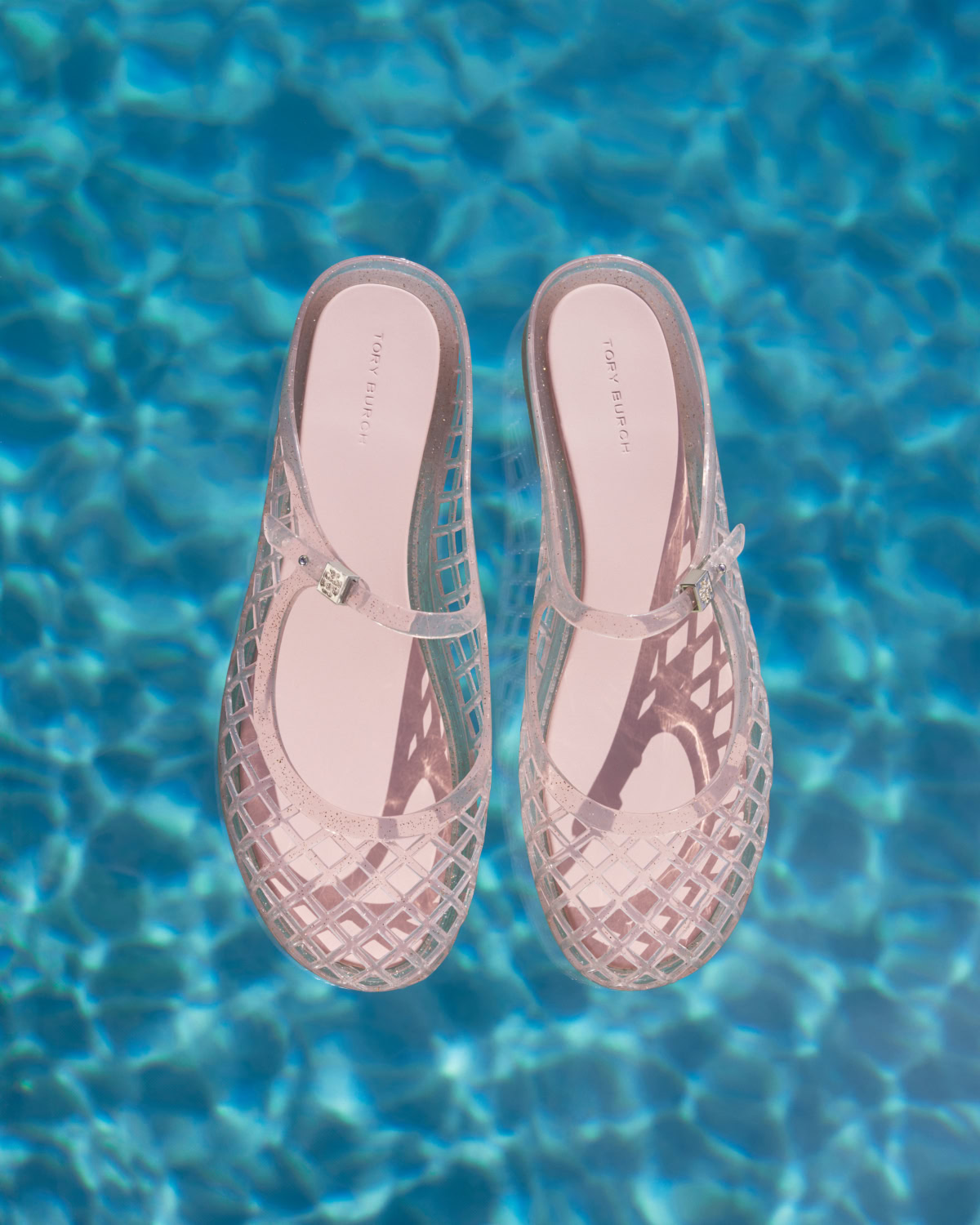
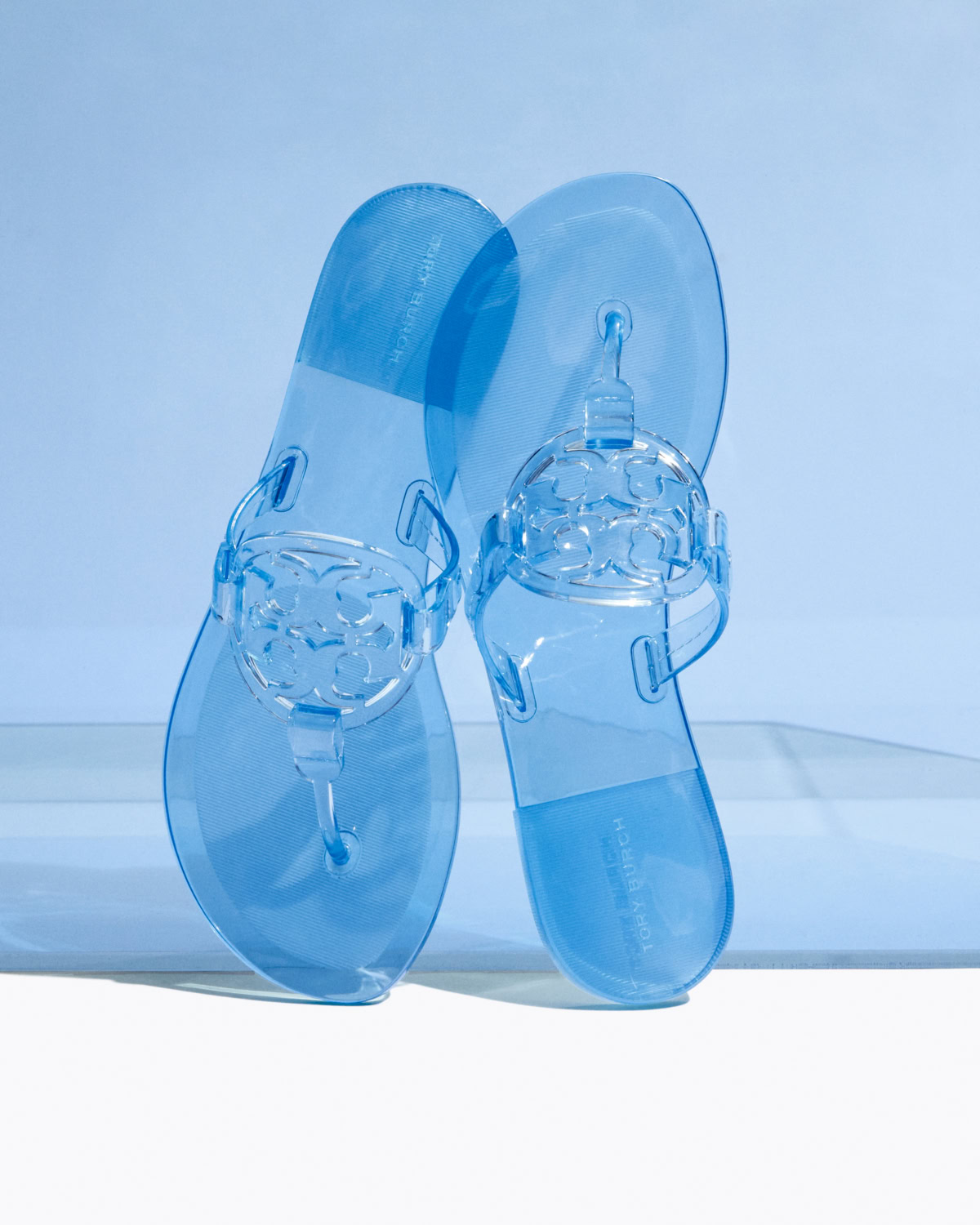
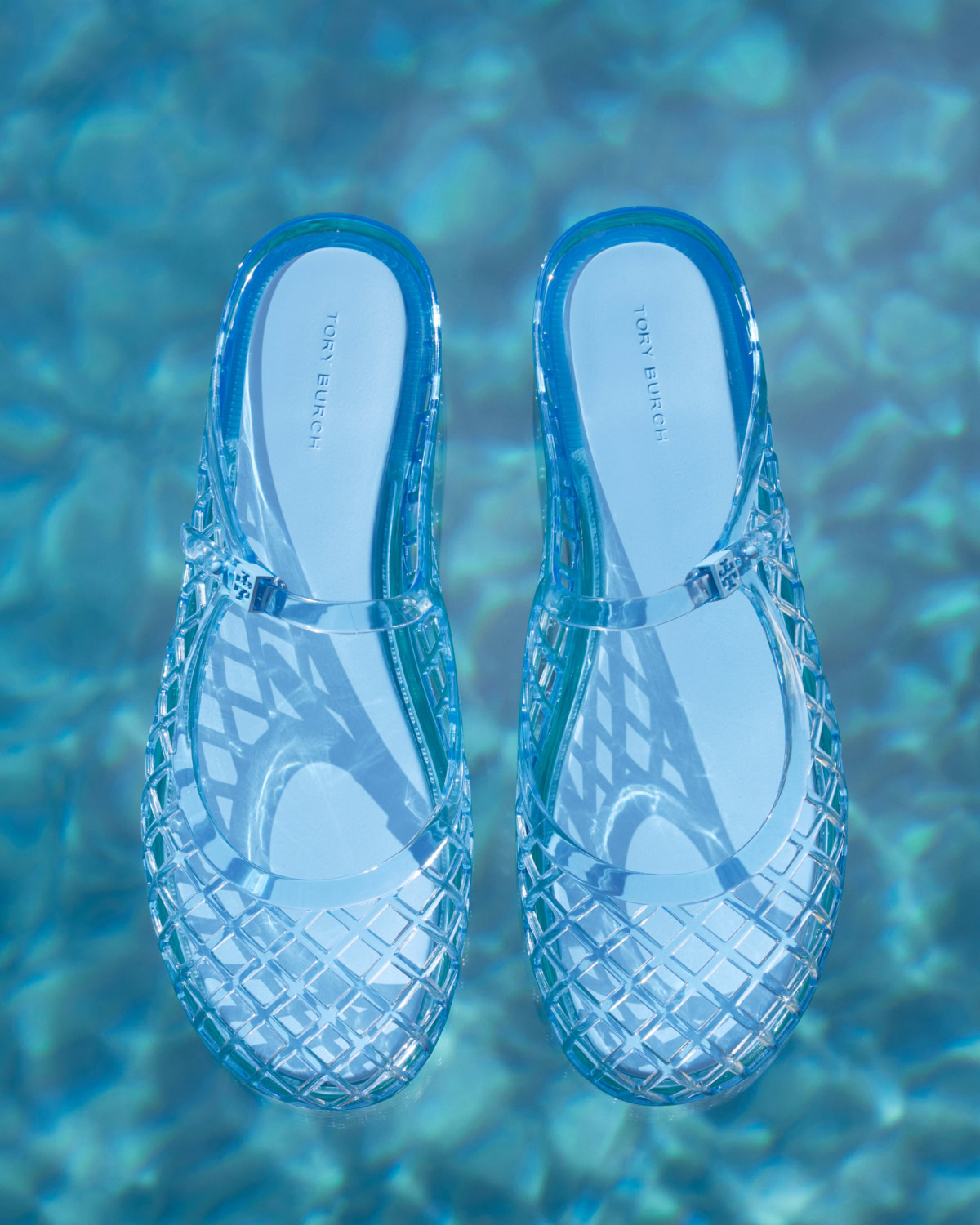
Elsewhere, Jimmy Choo has introduced the Jelly Drop, a sculptural reworking of its signature heel that a pregnant Barbara Palvin recently wore during Cannes. Tory Burch has given its cult Miller sandal a glossy jelly makeover (with jelly bags up for grabs too), while Chloé sent translucent pink jelly sandals down the runway for SS26, proving the style can look surprisingly elegant.
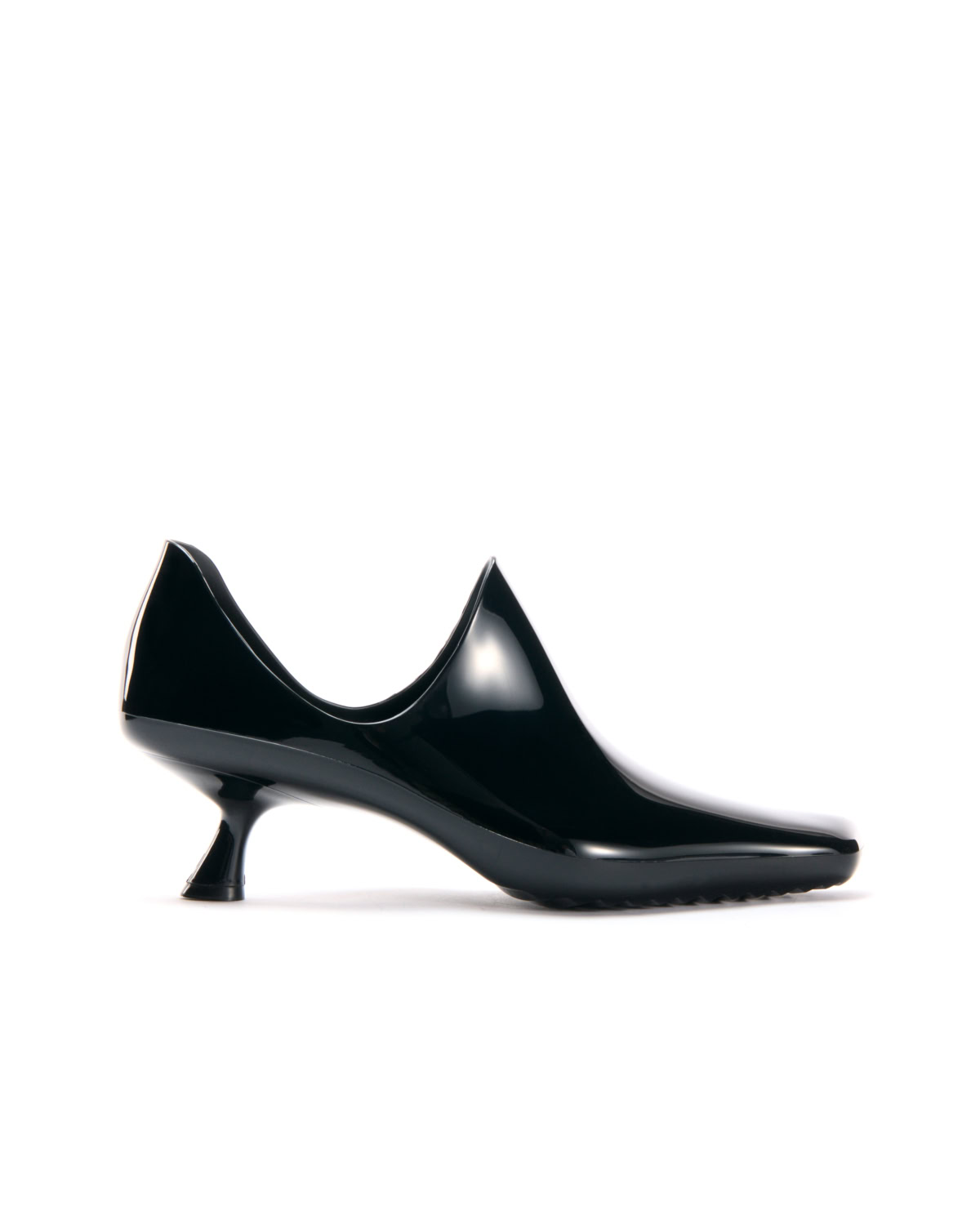
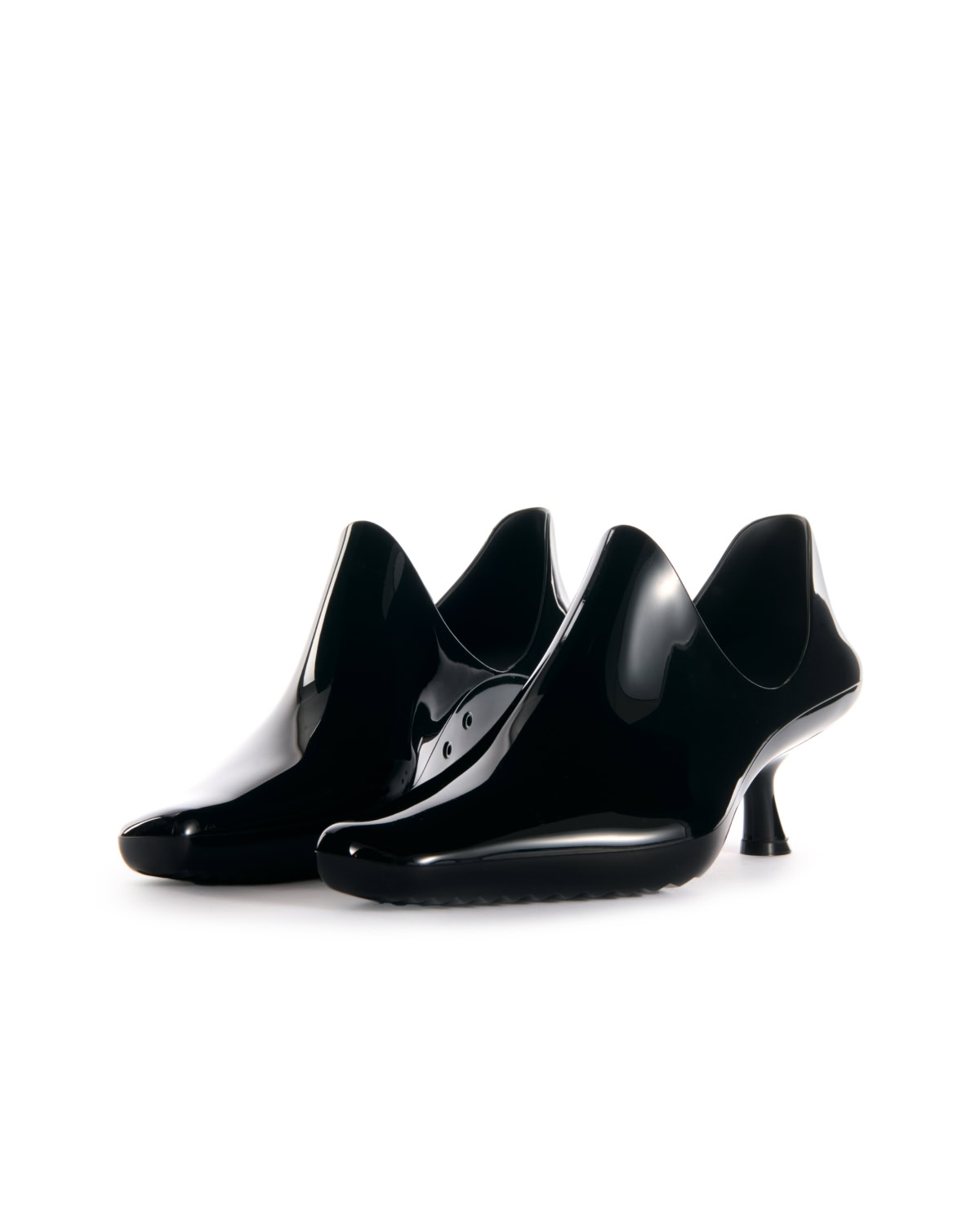
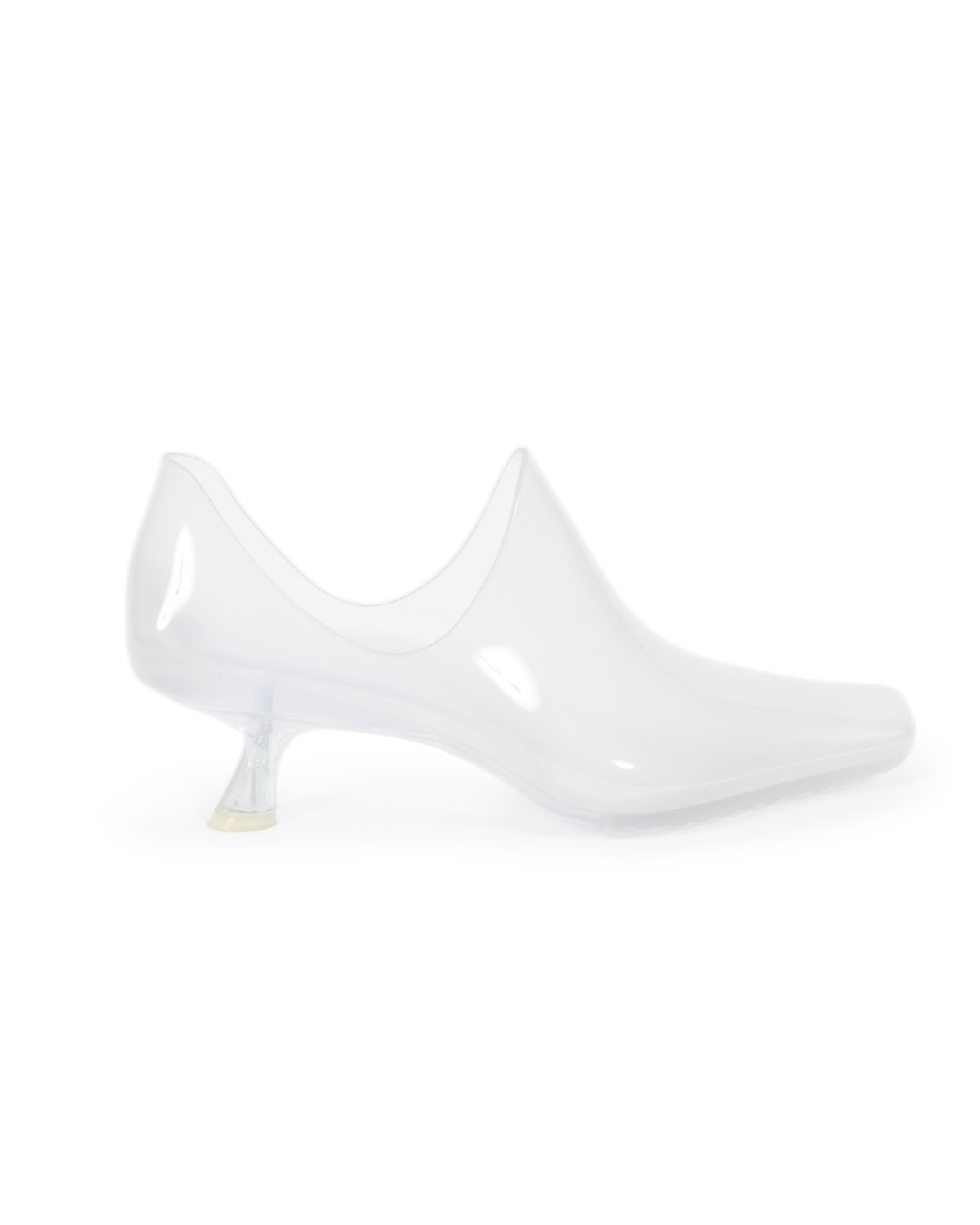
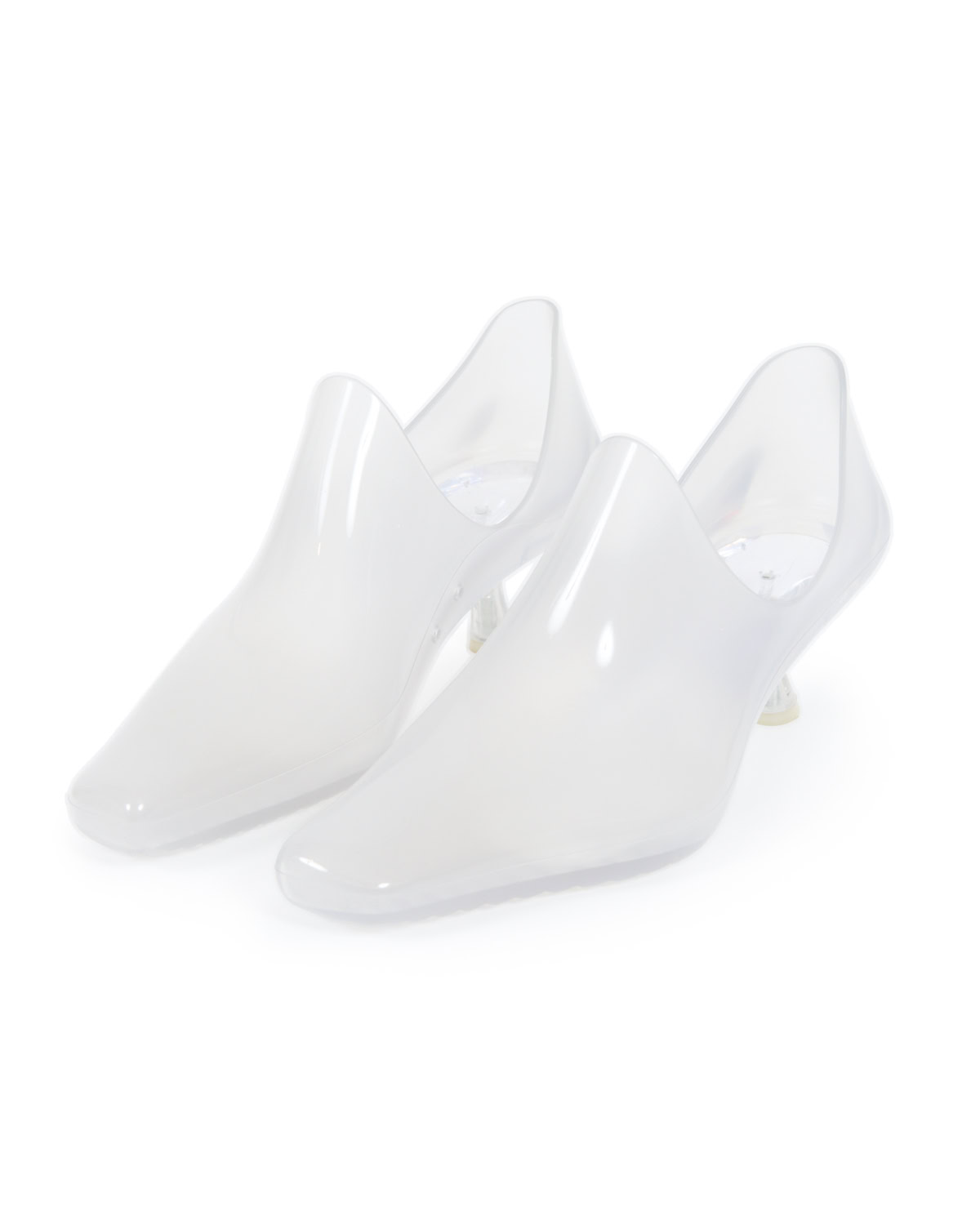
Loewe
Melissa has linked up with Scholl for summer 2026 too, with Jello-hued versions of the traditional fisherman style, and Ancient Greek Sandals has released a jelly line marrying wooden clog soles with squishy PVC uppers.
Then there are the designers pushing the concept further. Loewe has created transparent PVC heeled clogs complete with colourful socks, while Alaïa offers futuristic versions with transparent soles and sharp architectural lines. Even traditionally classic brands are embracing the look, a sign that jelly shoes have firmly graduated from novelty to legitimate fashion category.
My personal favourite, however, remains my pair of Susan Fang x Melissa Luna Bloom Sporty Ballerinas in pink. These ones are surprisingly comfortable with a fabric-lined inner sole. Covered in delicate floral embellishments, they feel like the grown-up version of those princess dress-up shoes I loved so much as a child. Perhaps that’s why the trend resonates now, though.
Back in 2021 I went to my first ever car boot sale in Pimlico and, buzzing with the excitement of a kid on christmas (I love second-hand clothes and homeware and random nickknacks and the smell of old books), I came across a pair of perfect condition classic black sandal jellies in my exact size for just £1 (I think they were Melissa). So I snapped them up immediately and wore them for the rest of the summer. I still have them somewhere, and it seems 2026 is the perfect time to break them back out.
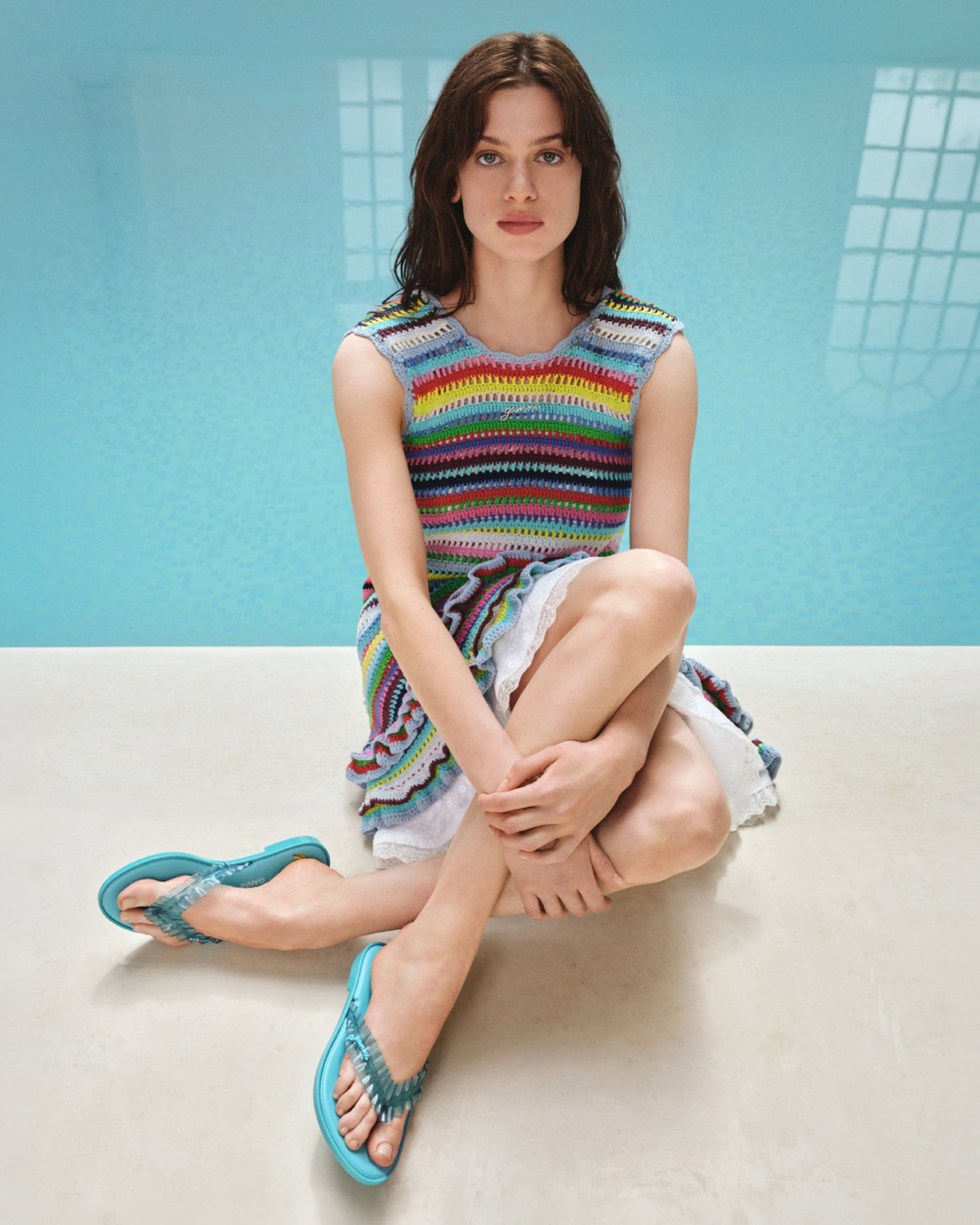
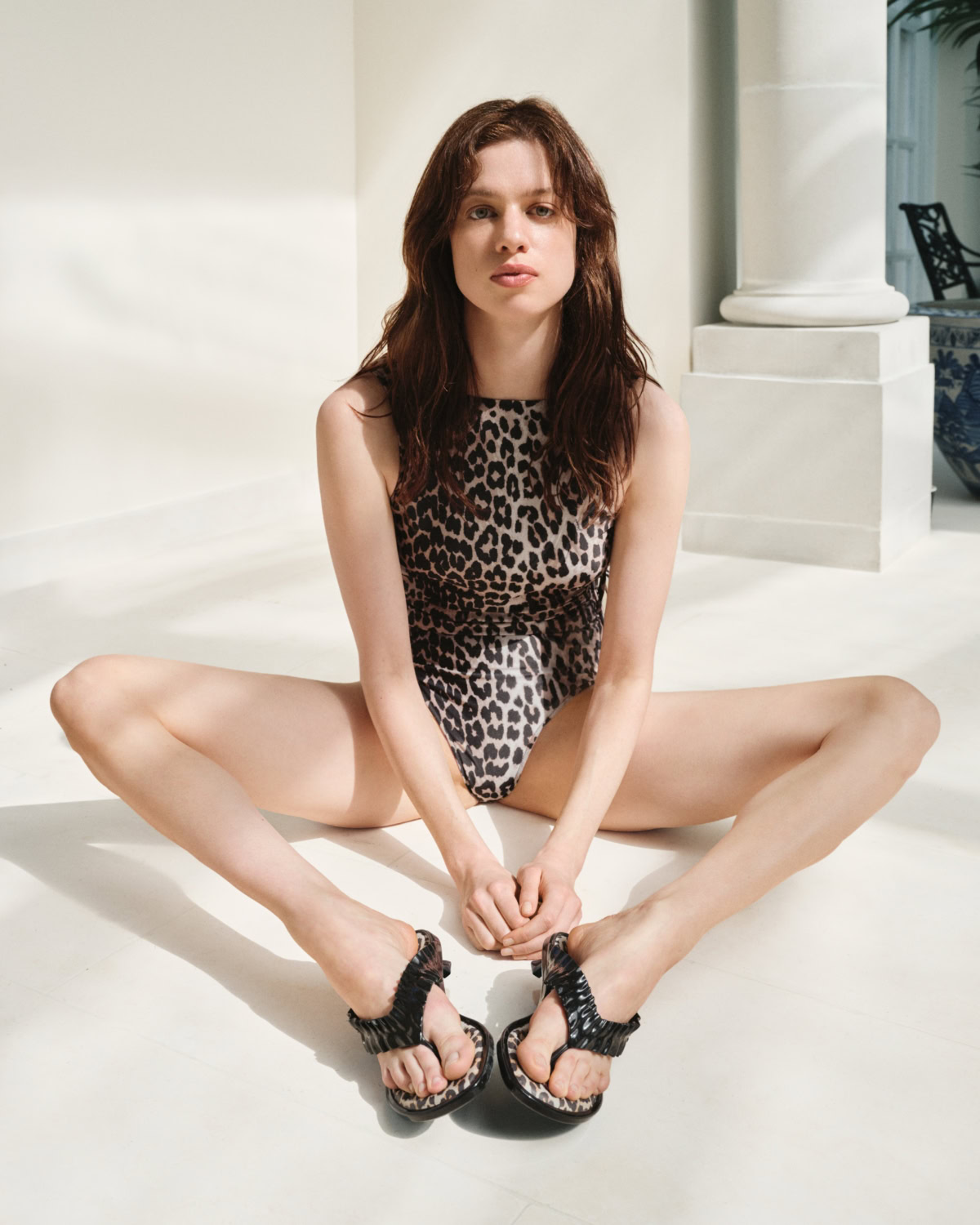
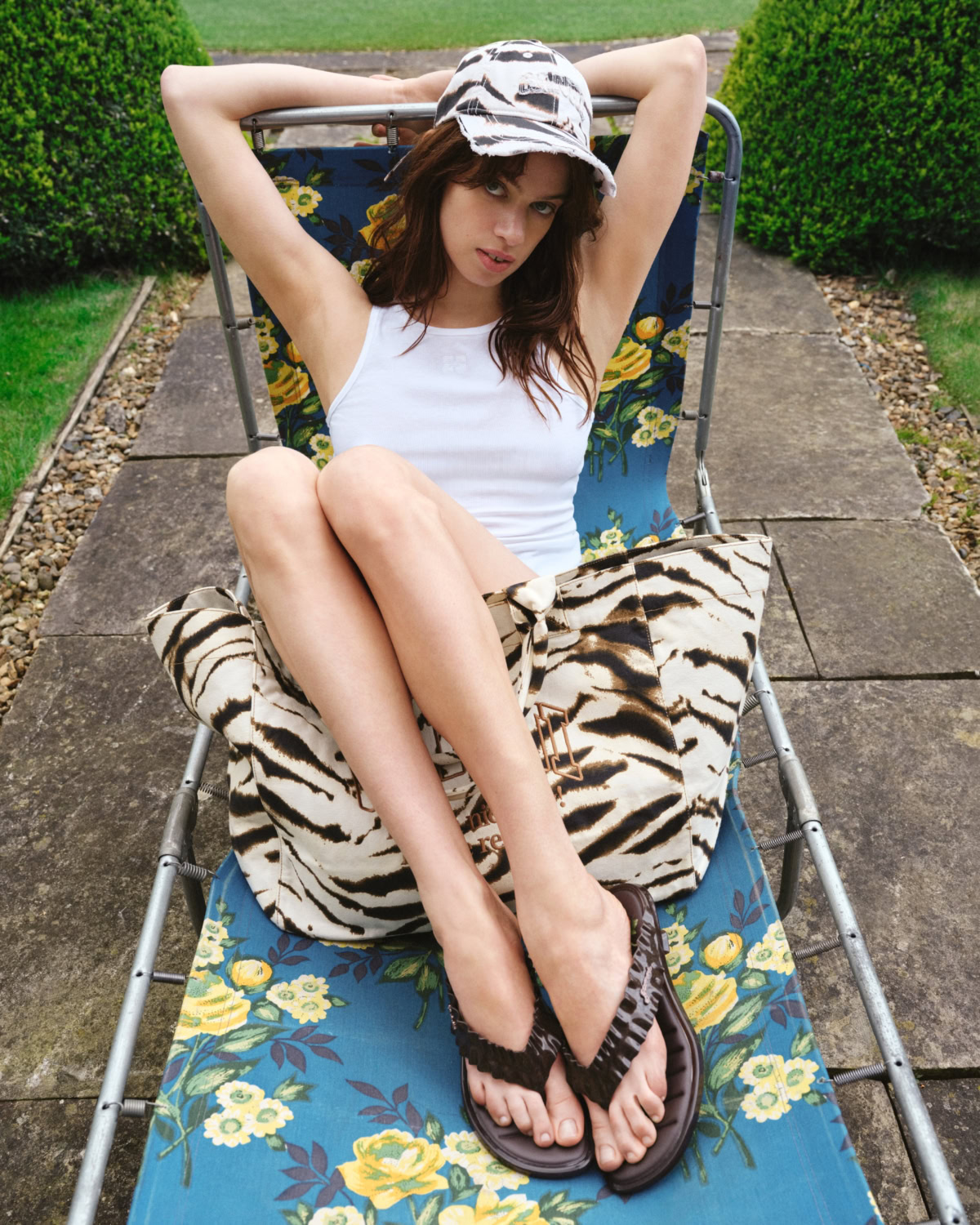
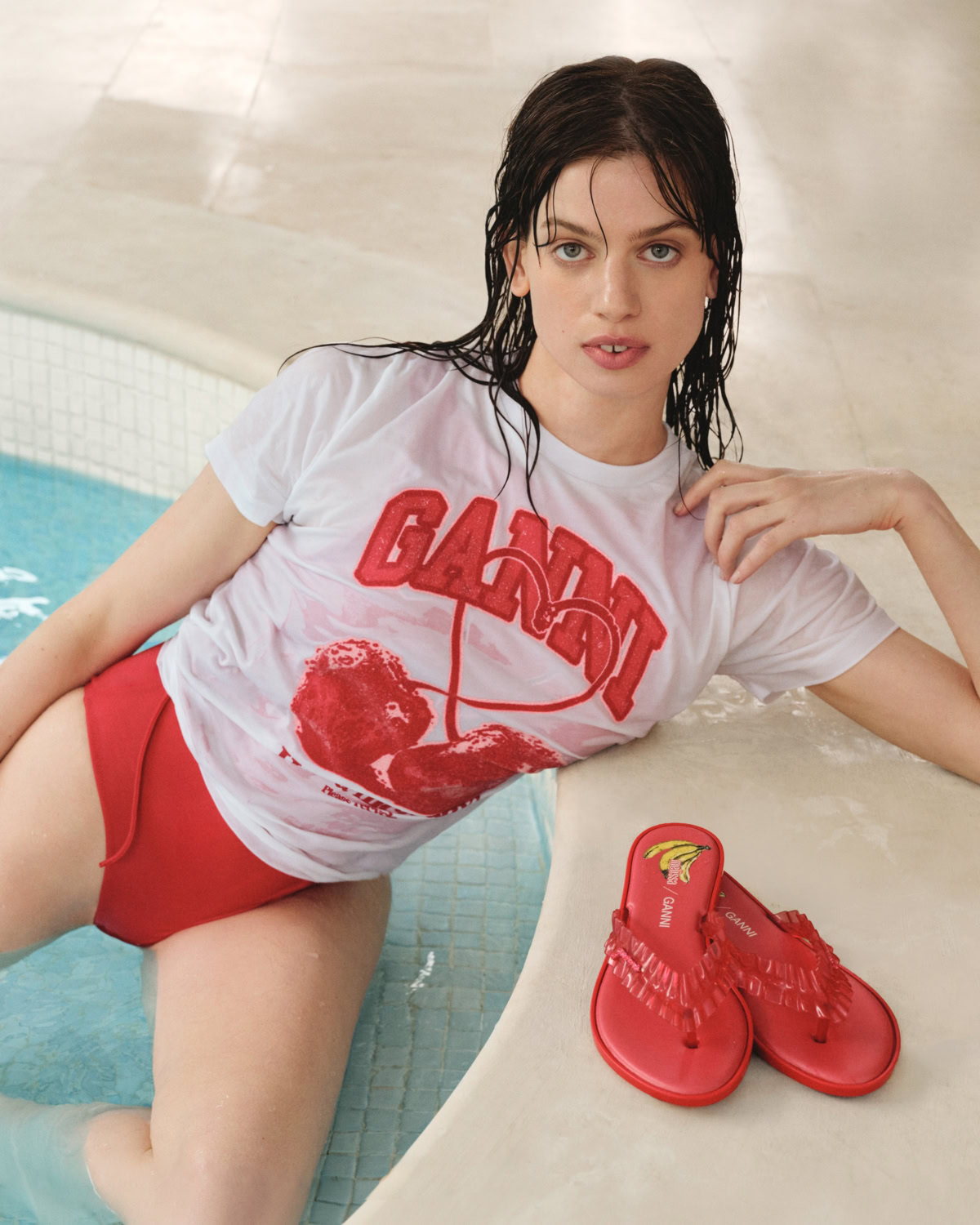
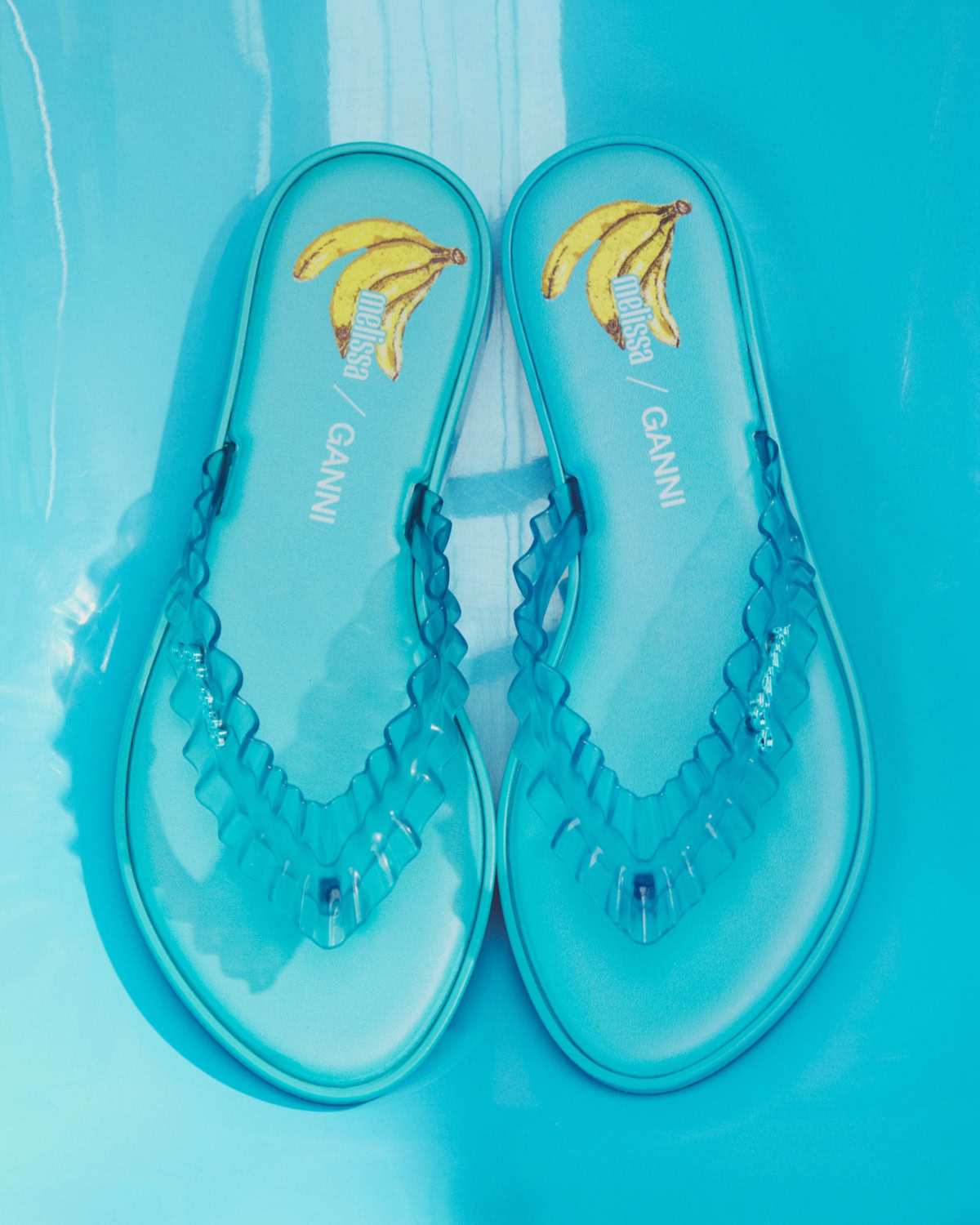
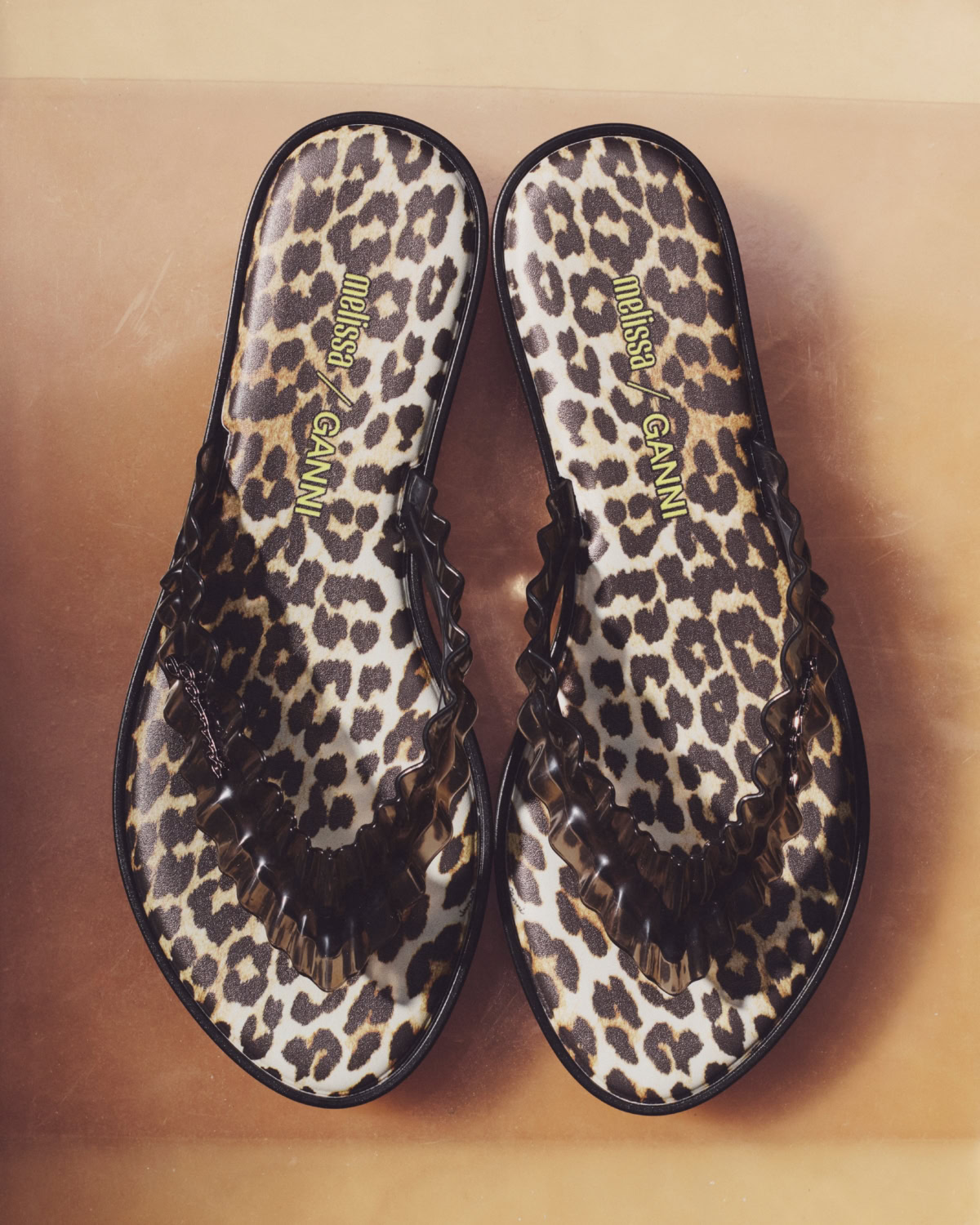
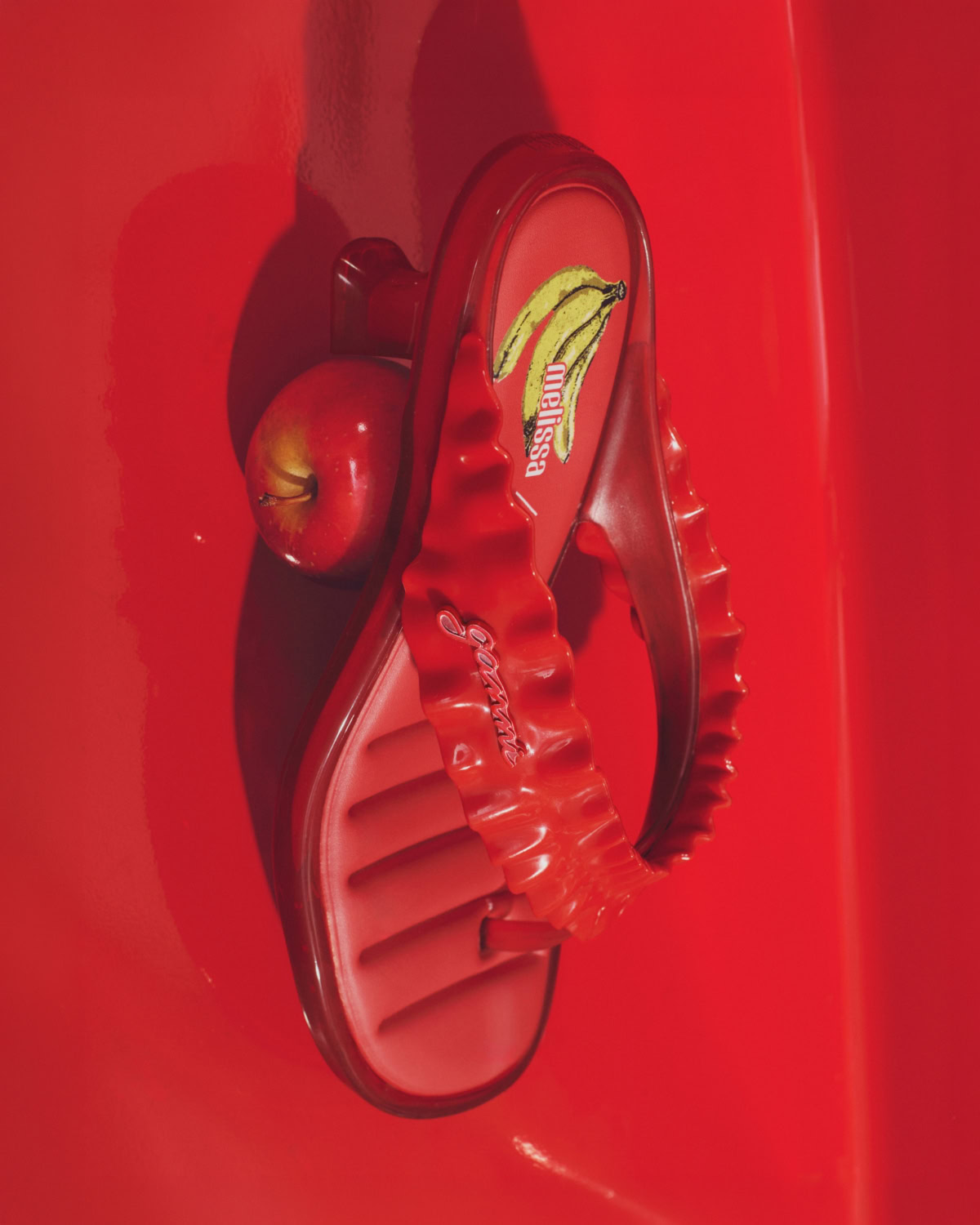
Ganni x Melissa
After all, jelly shoes have been around for more than 50 years. They’re smooth, durable and water-resistant. They’re endlessly recyclable as a fashion idea. If you’re not ready to splurge on a designer version, there are plenty of affordable options cropping up across the high street, from COS and M&S to Free People, not to mention charity shops and car boot sales where forgotten pairs are almost certainly waiting for a second life. Because beneath all the runway endorsements and luxury rebrands, the appeal remains surprisingly simple.
There’s something satisfying about the feeling when the sweat build up between your skin and the PVC, and yes I know how that sounds, like a recipe for a fungal infection, but there’s a nostalgia to it that transforms any notion of hypochondria into something altogether more sweet. It’s the feeling of being eight years old, standing in the garden after sunset, convinced a pair of glittery plastic shoes can make you into someone magical.
And honestly, for summer 2026, that’s a fantasy worth stepping back into.
Top image: photography courtesy of Jimmy Choo.
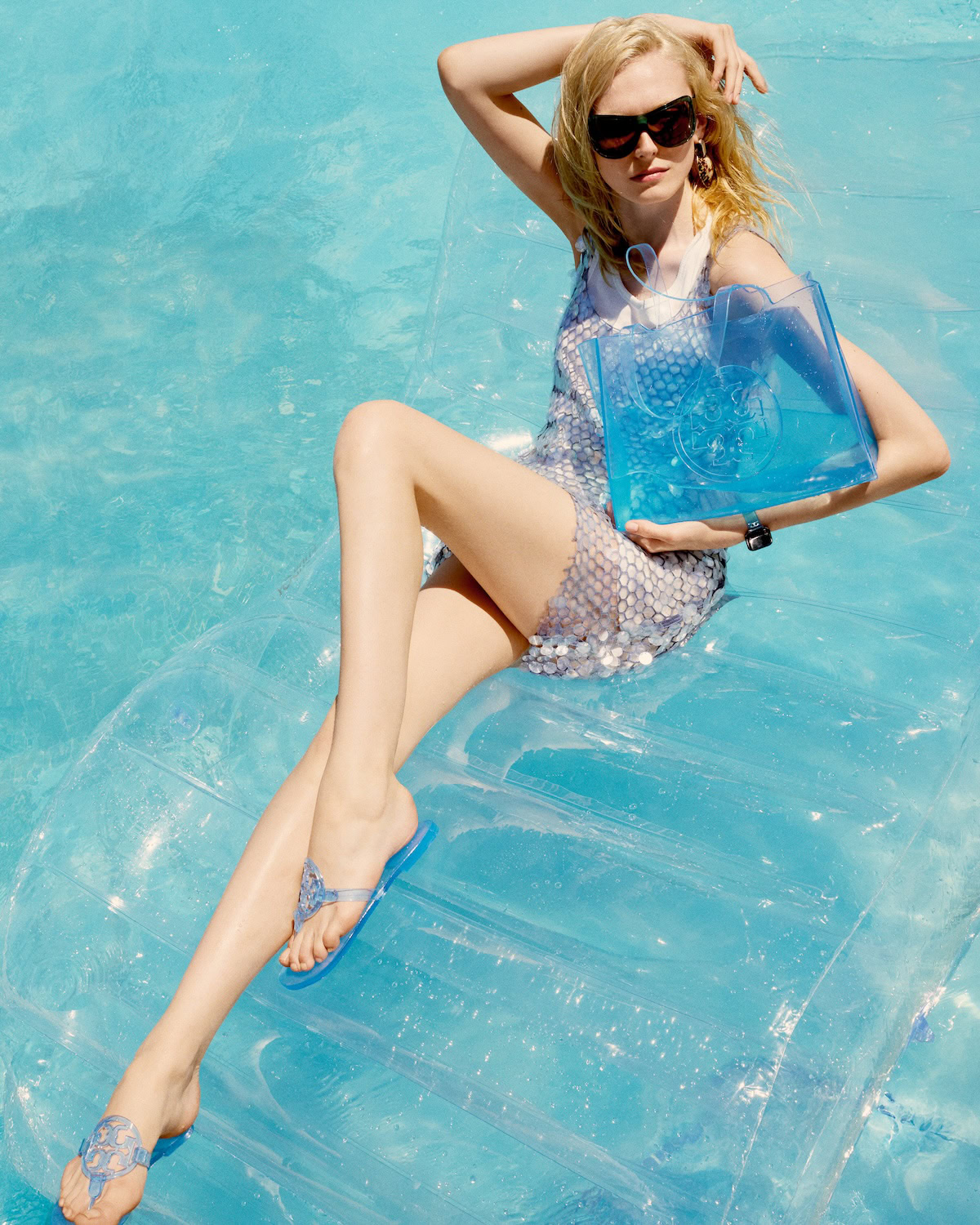
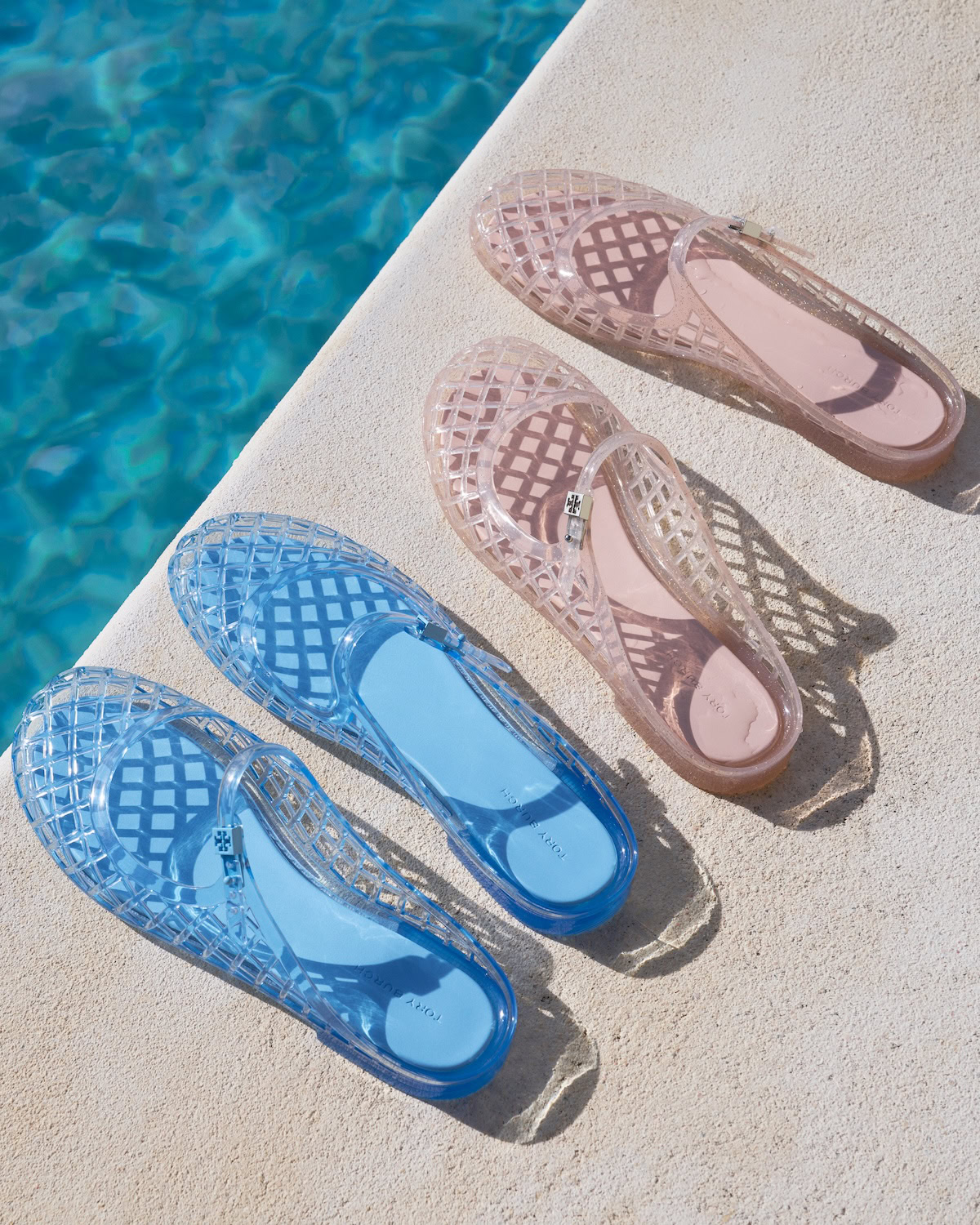
Tory Burch