July 16, 2026 |
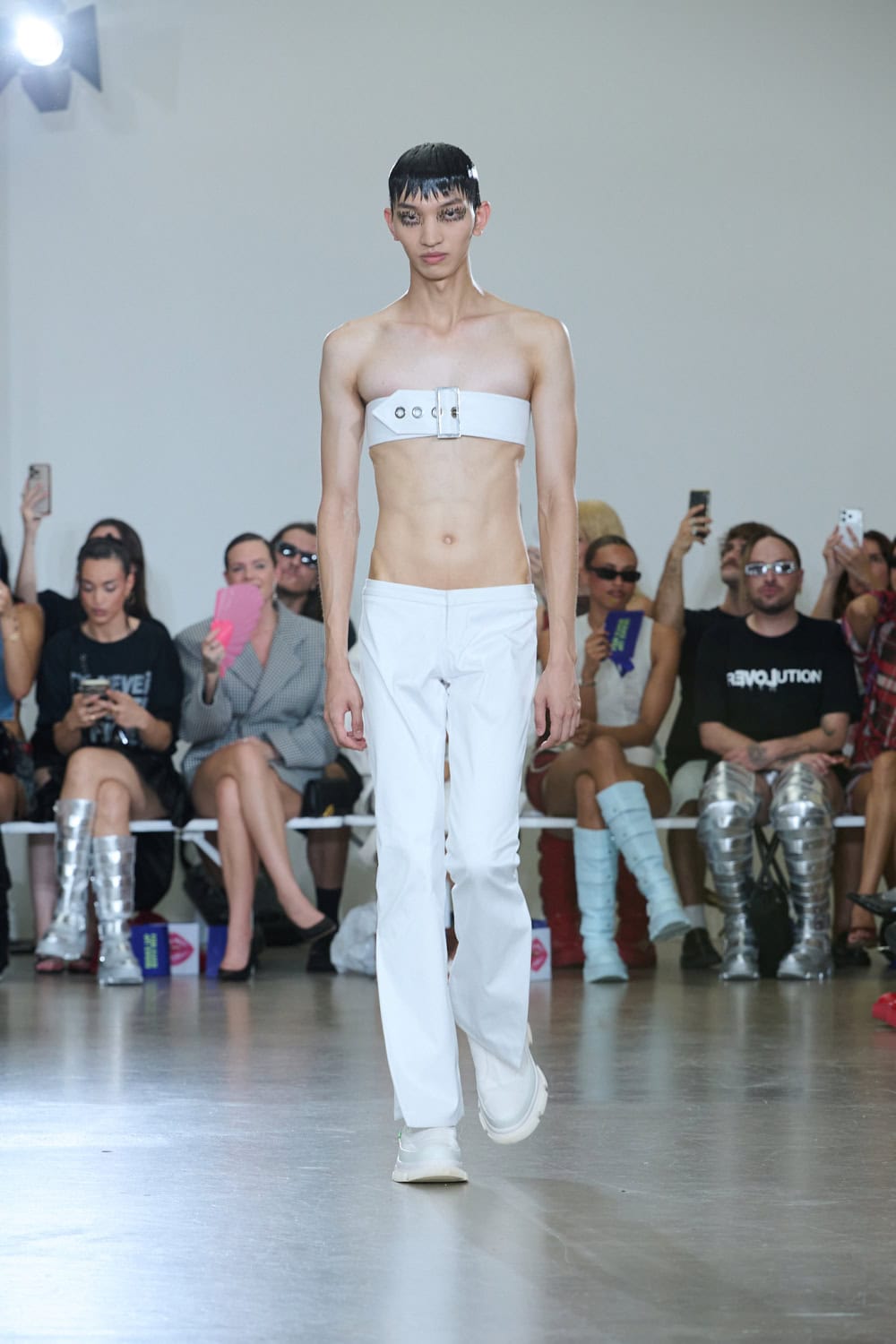
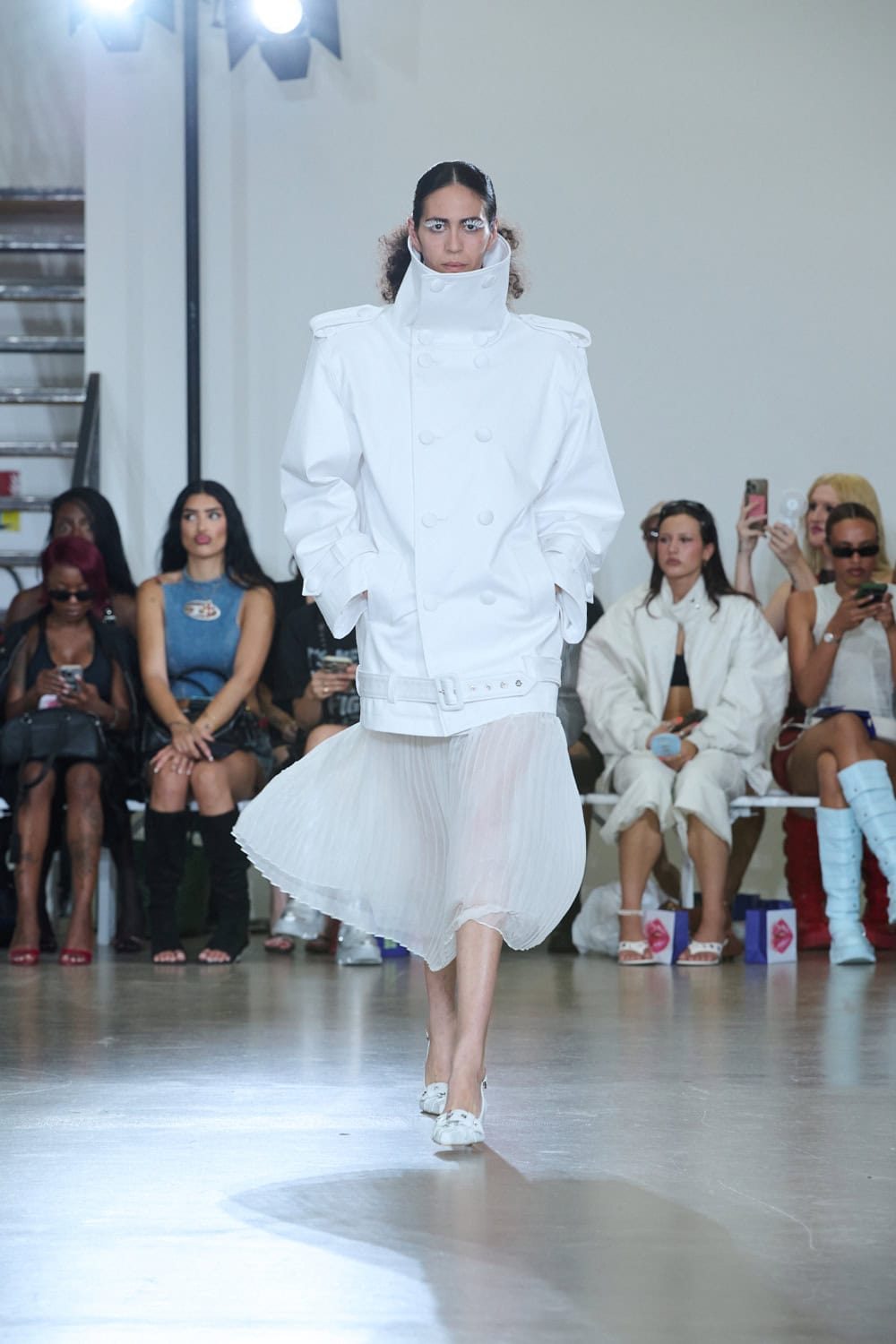
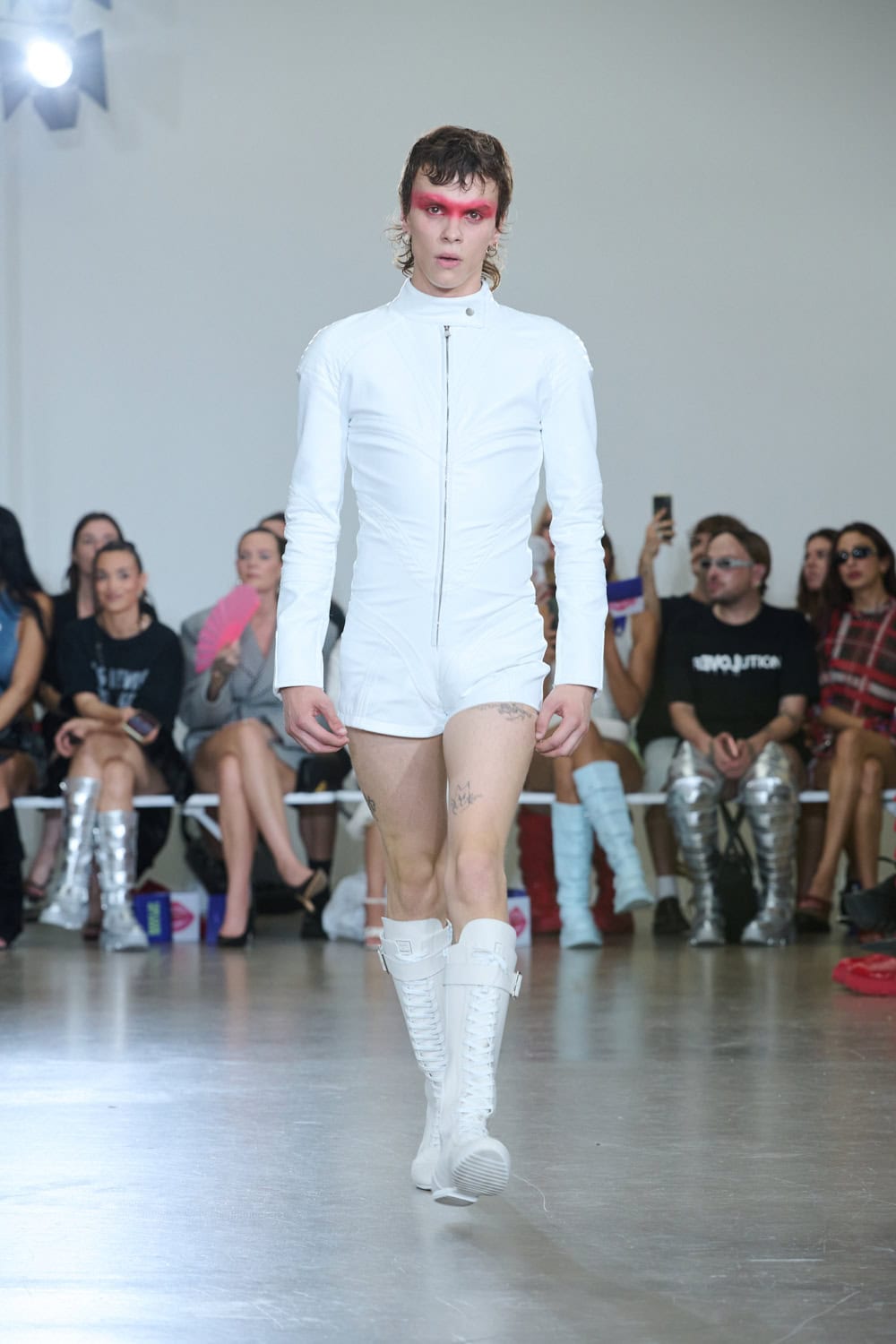
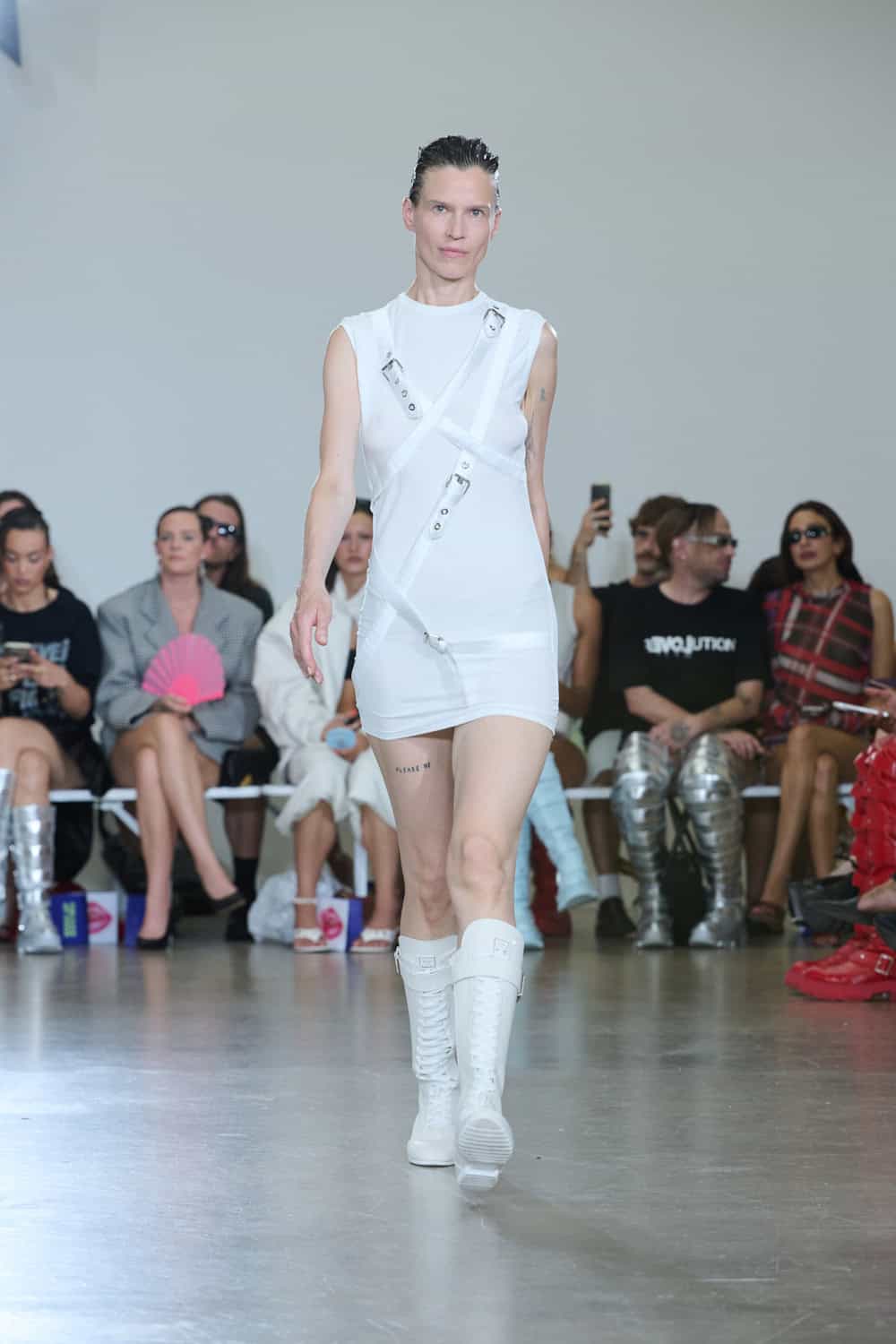
In June, mid-Pride Month, Jeanne Friot showed Hysteria at the Palais de Tokyo: her ninth collection, her second on the official Paris Fashion Week calendar and the clearest statement yet of what her label exists to do. With the name referencing a diagnosis once used to institutionalise women, this became Friot’s design brief. “For me, it’s a look at the political world we live in right now,” says the Parisian designer. “It’s a way of turning the insult of ‘hysterical’, which has long been applied to women, into a compliment and a positive way of thinking. This collection is a way to liberate women and men who have been confined or excluded from society for too long.”
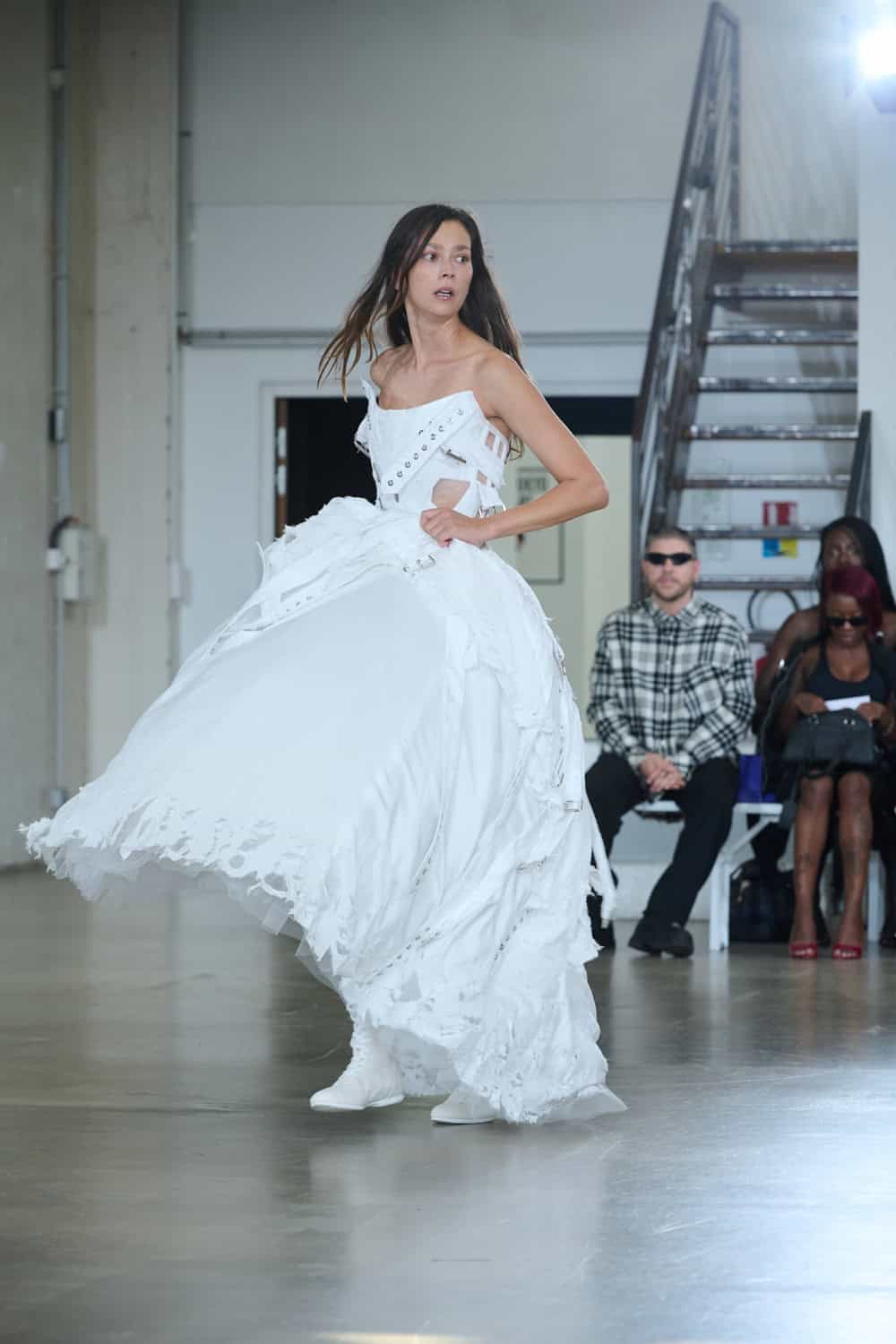
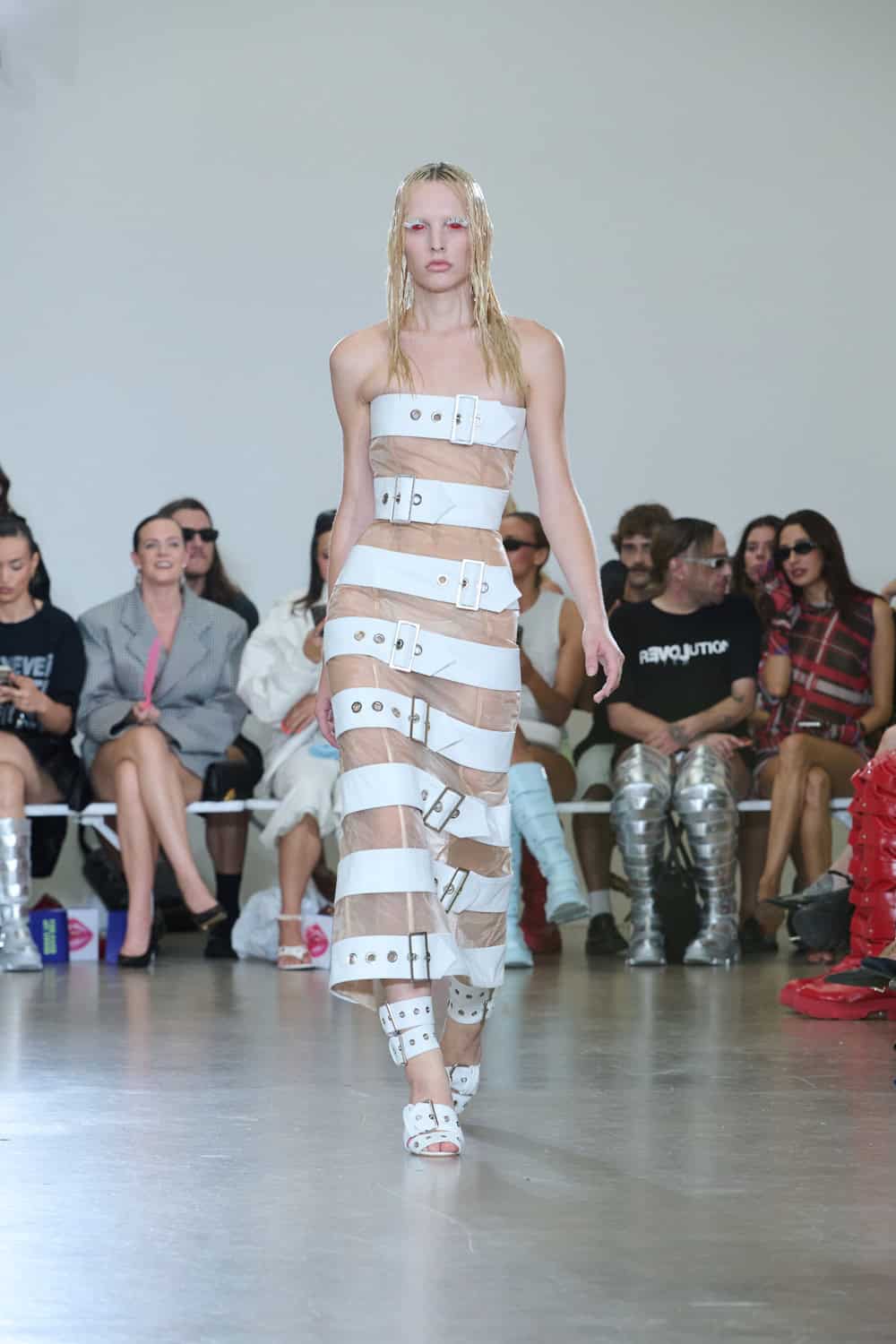
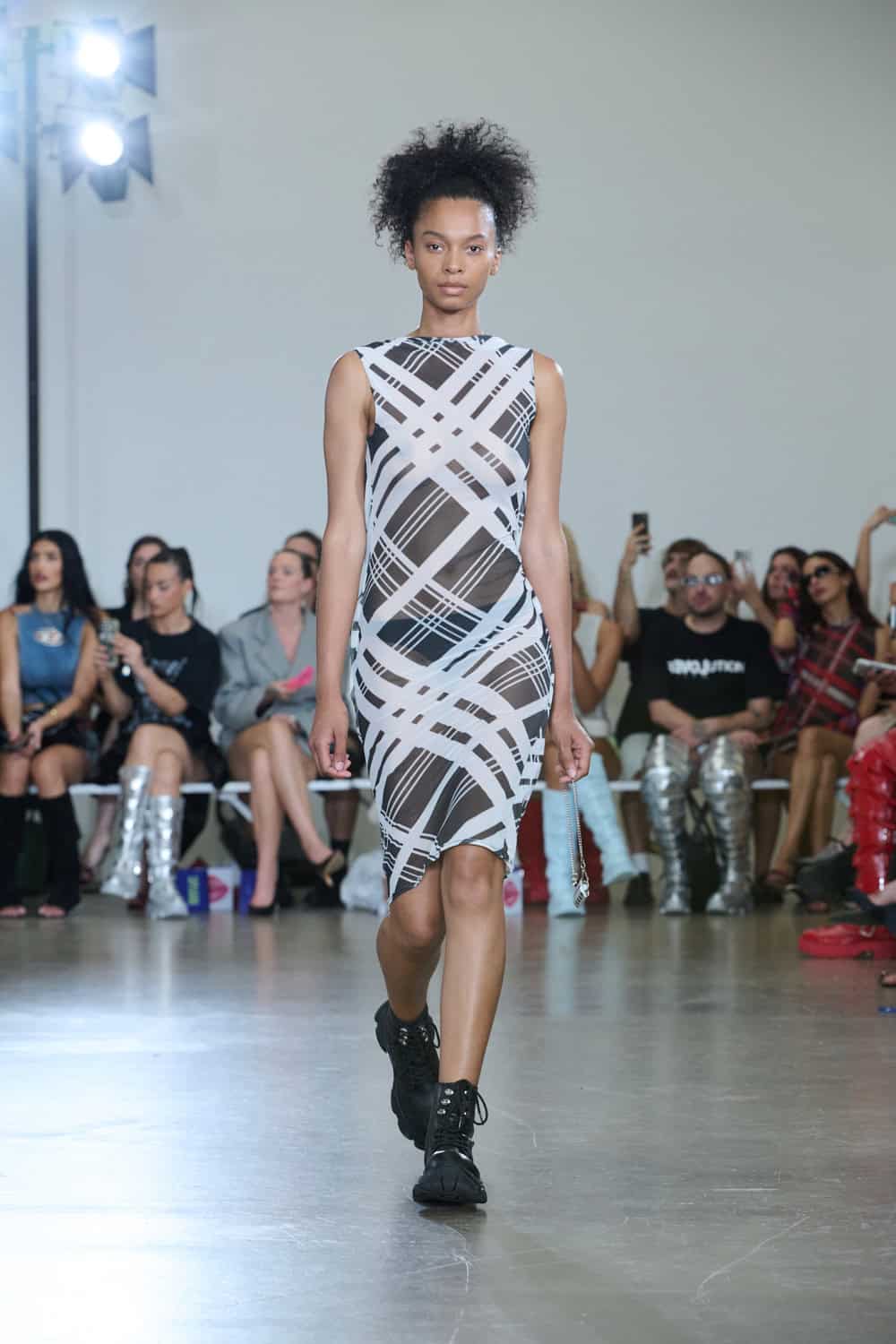
The SS27 show made the argument in two halves. Seventeen looks in clinical white opened proceedings – the first among them was a bridal figure (a silhouette that traditionally closes a show), but instead of slinking down the runway as part of the finale, Friot’s bride was bolting at speed, straps streaming loose from her bodice, with buckles and belting that recalled restraints. Then, black took over and the silhouettes hardened into something battle-ready. Her established codes held it together. “Tartan, pleats, certain cuts or volumes,” she says, listing the ones she leaned into for the offering. “The cuts and details are increasingly elaborate. I’m working exclusively with white and black this season, so naturally these colours highlight the garment’s cut and structure. I’m really interested in bringing the codes and creating new ones every season.”
That instinct – to take a term of constraint and rework it into something protective – runs through Friot’s entire creative practice. The armour is literal as often as not. In July 2024, at the opening ceremony of the Paris Olympics, a rider evoking Joan of Arc crossed the Seine on a mechanical silver horse, wearing upcycled leather armour Friot created with master leatherworker Robert Mercier – watched by an estimated 1.5 billion people. “It was a unique and amazing experience,” she says. “I didn’t really realise in the whole designing process how important this would be. Thomas Jolly and Daphné Bürki [the artistic directors of the ceremony] really trusted me and let me freely design what I wanted, so it was a pure joyful moment at every step of the way.”
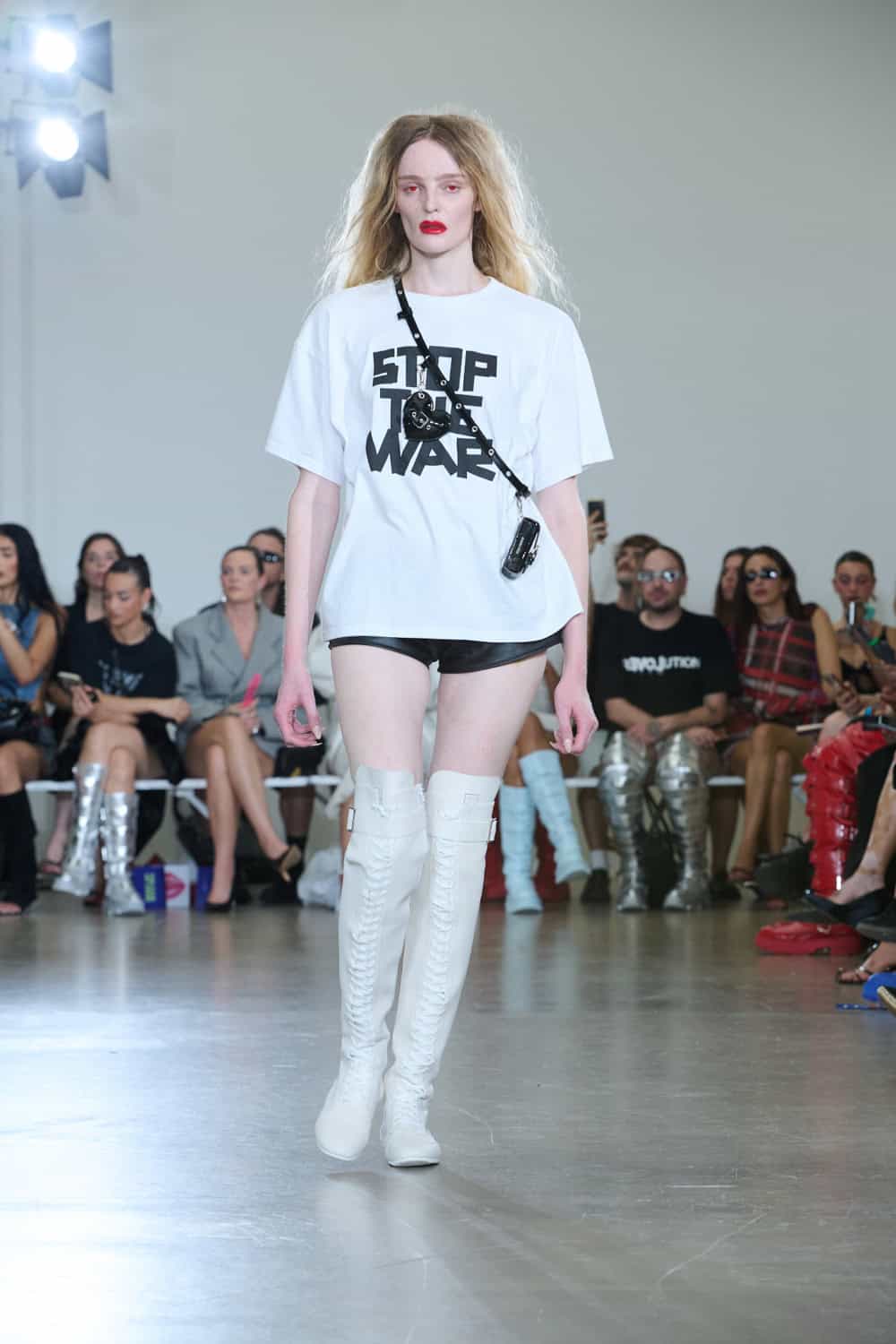
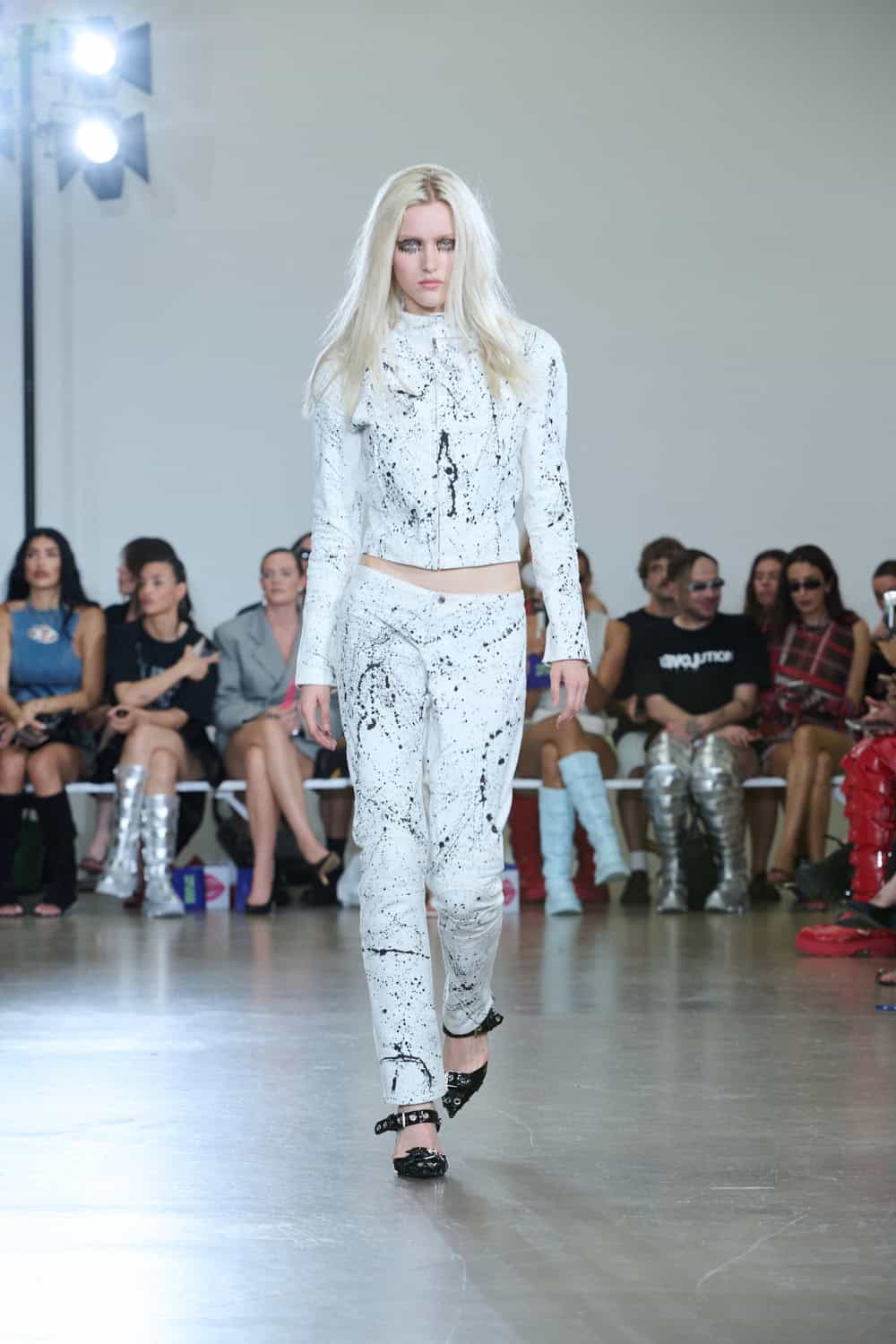
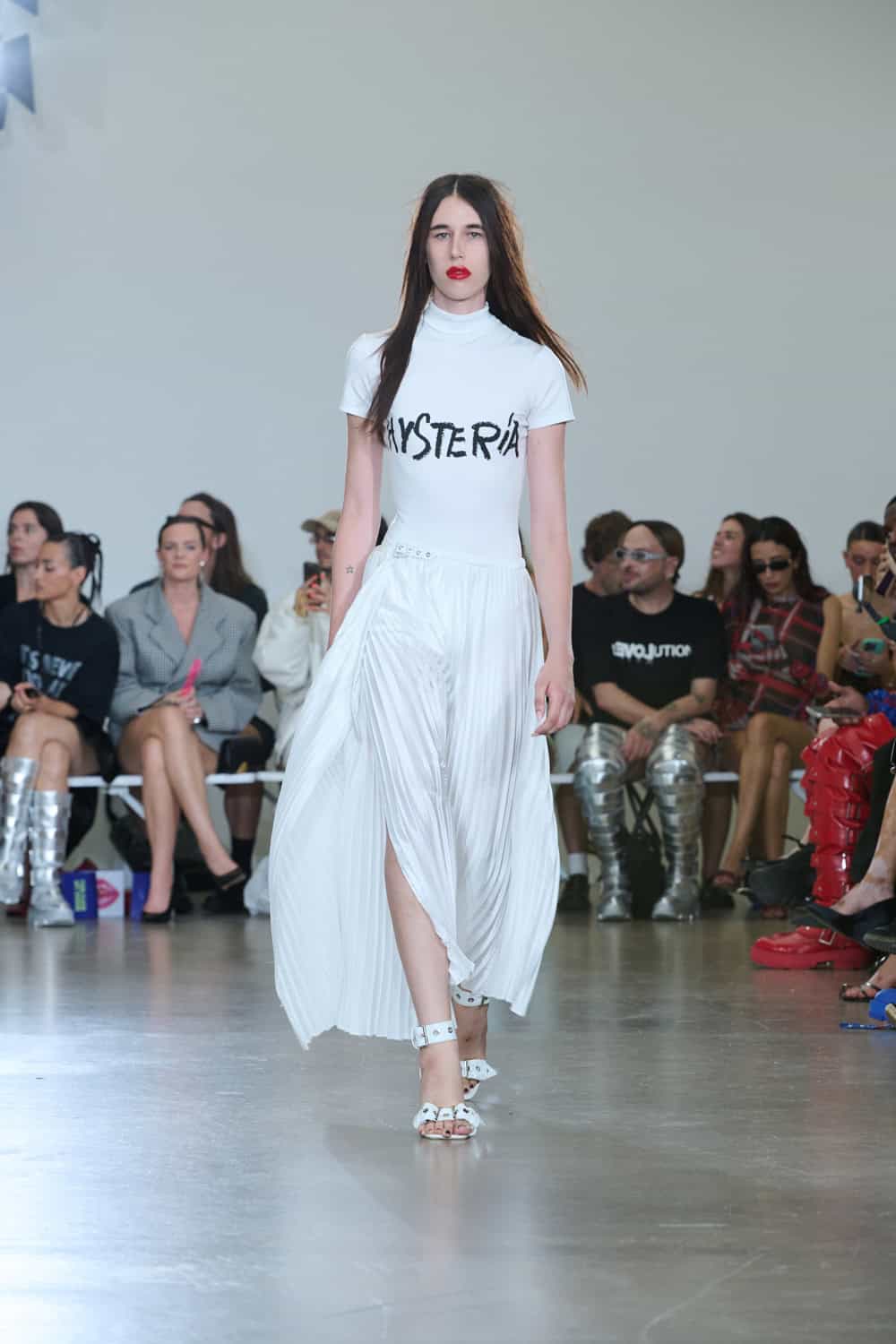
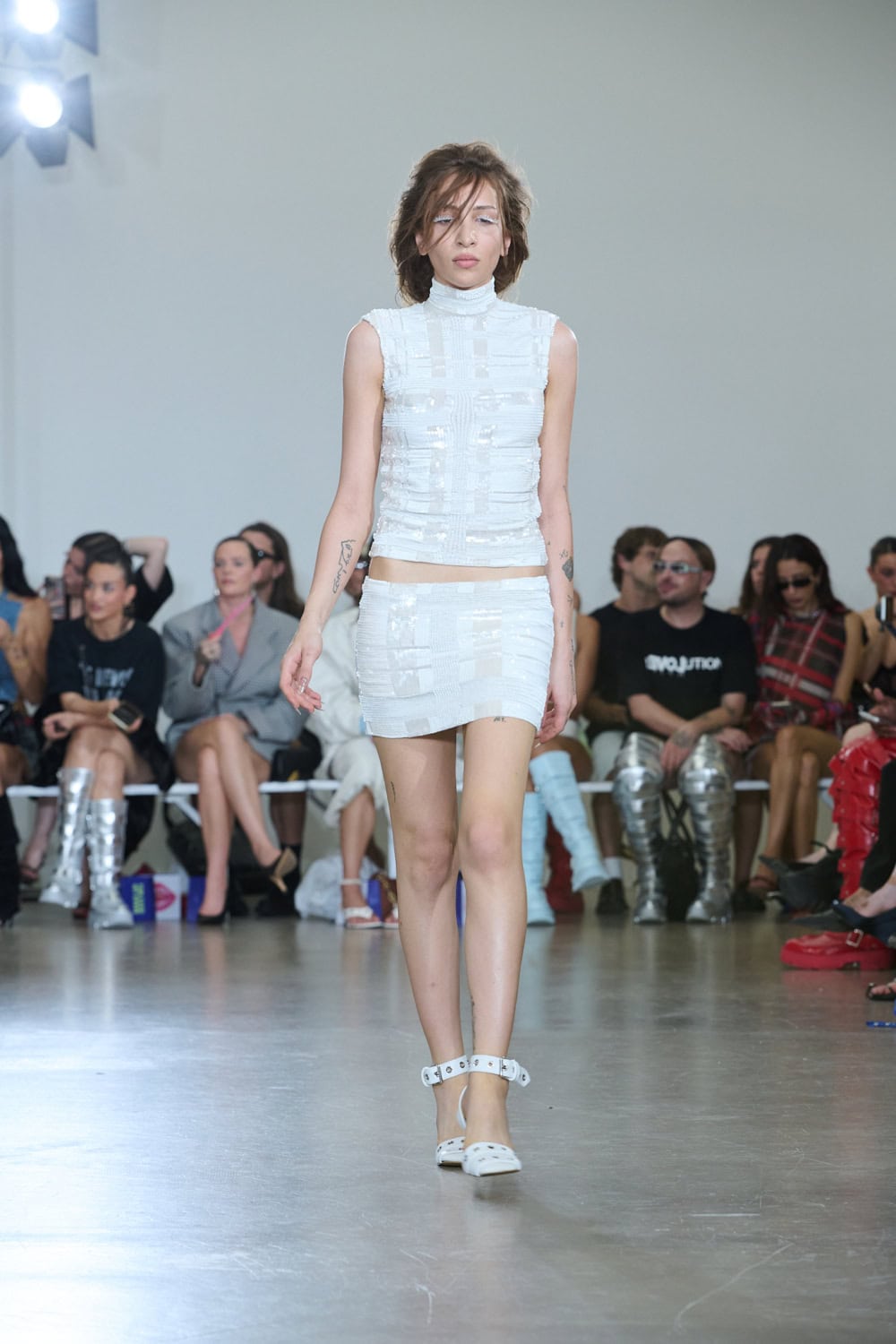
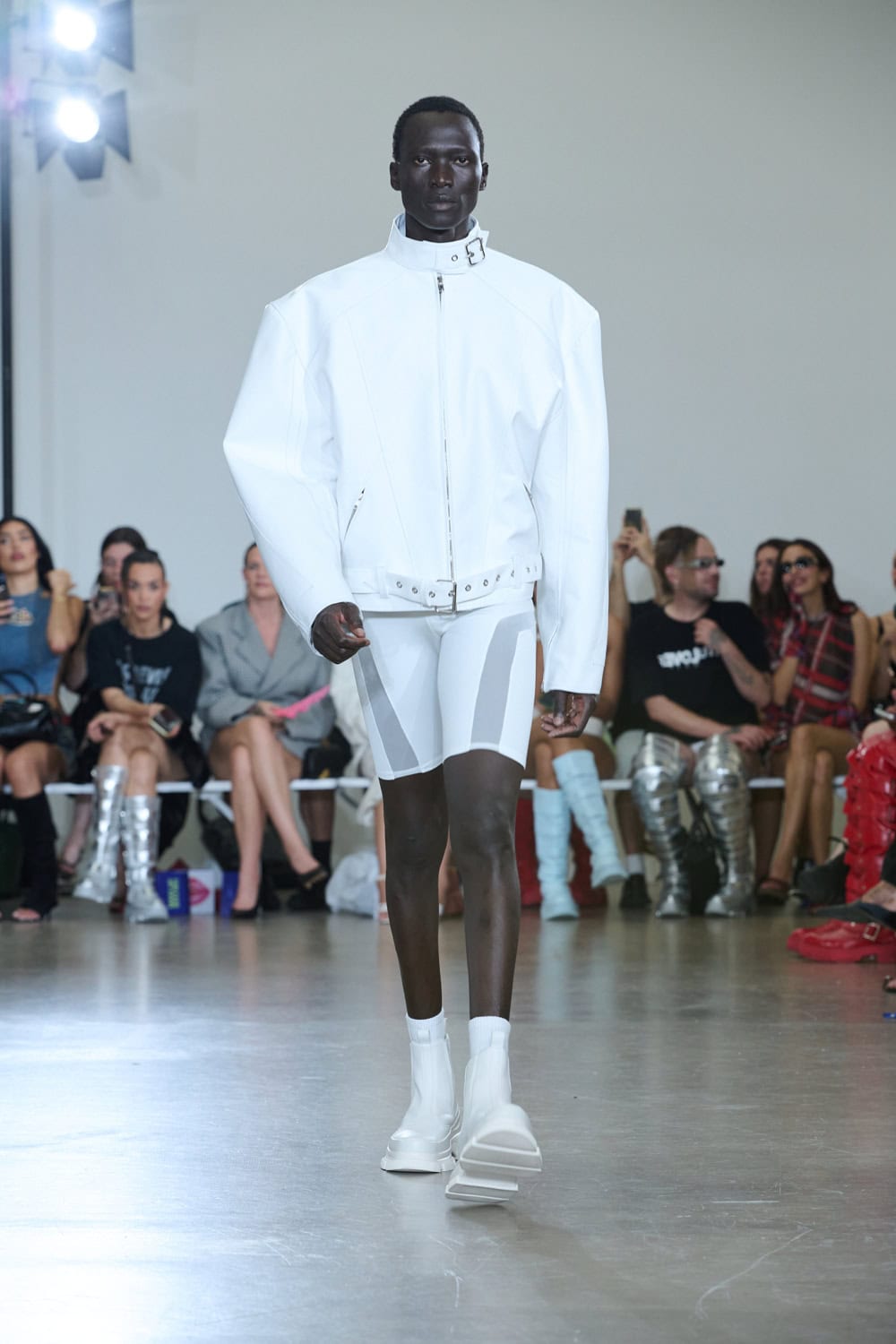
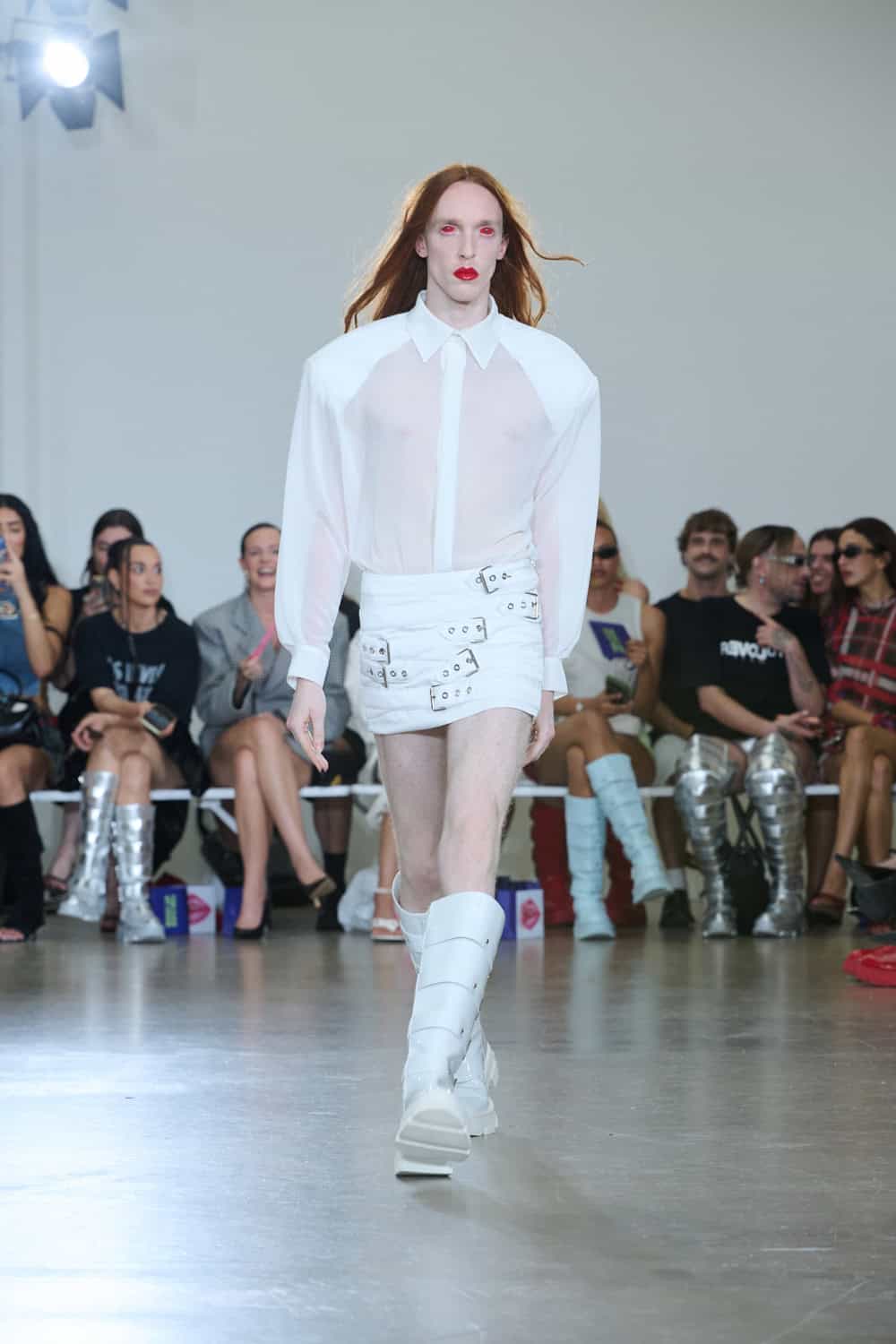
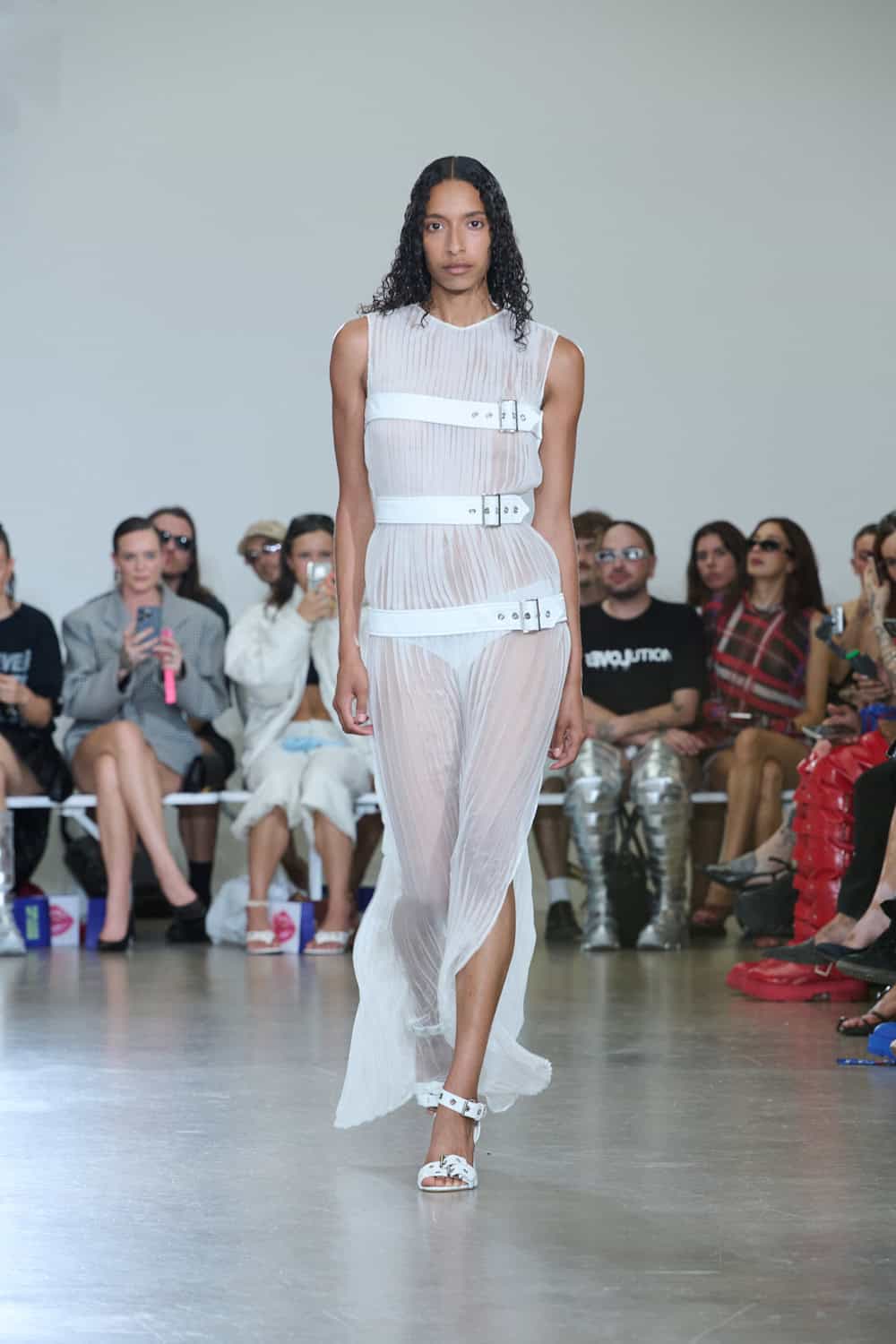
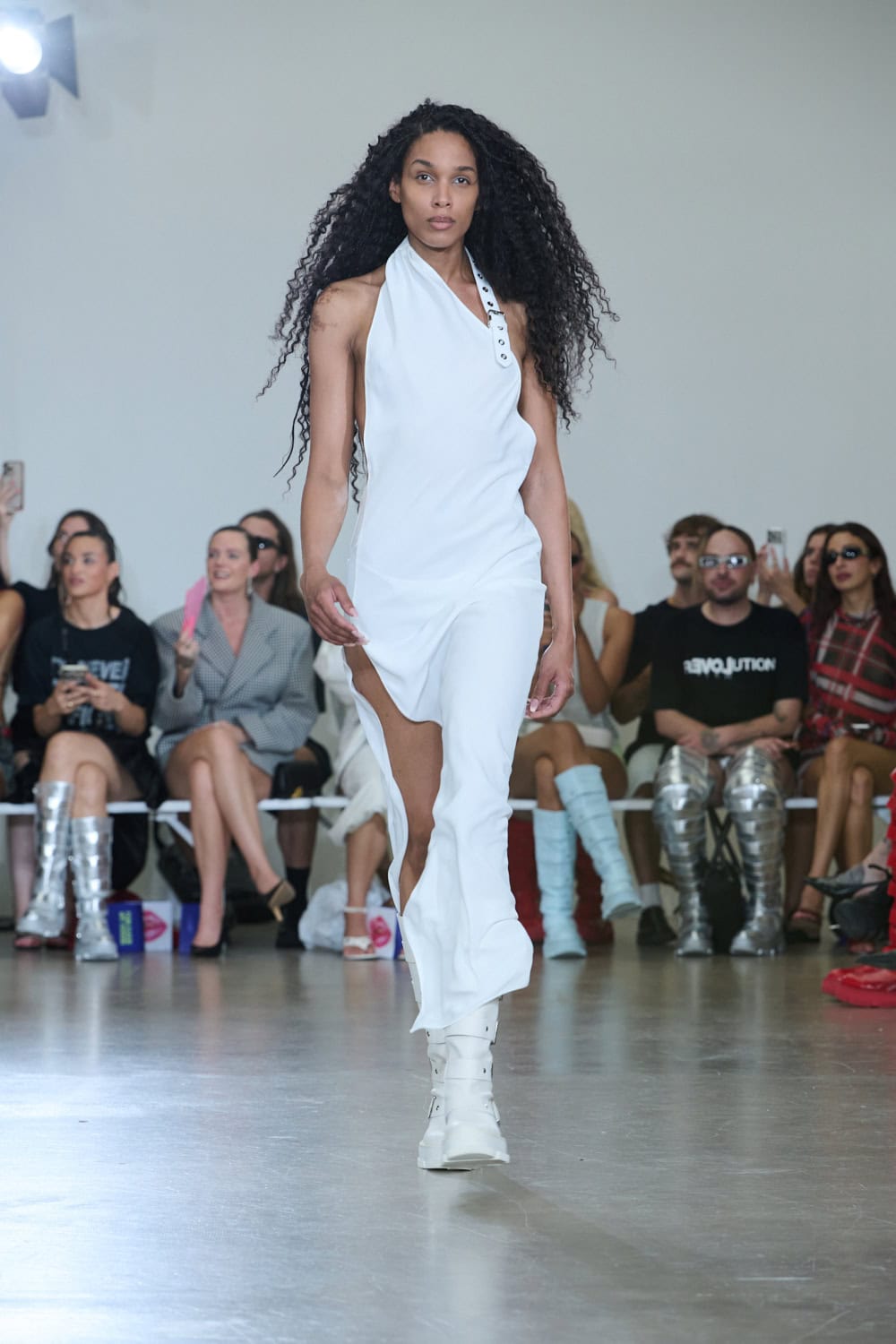
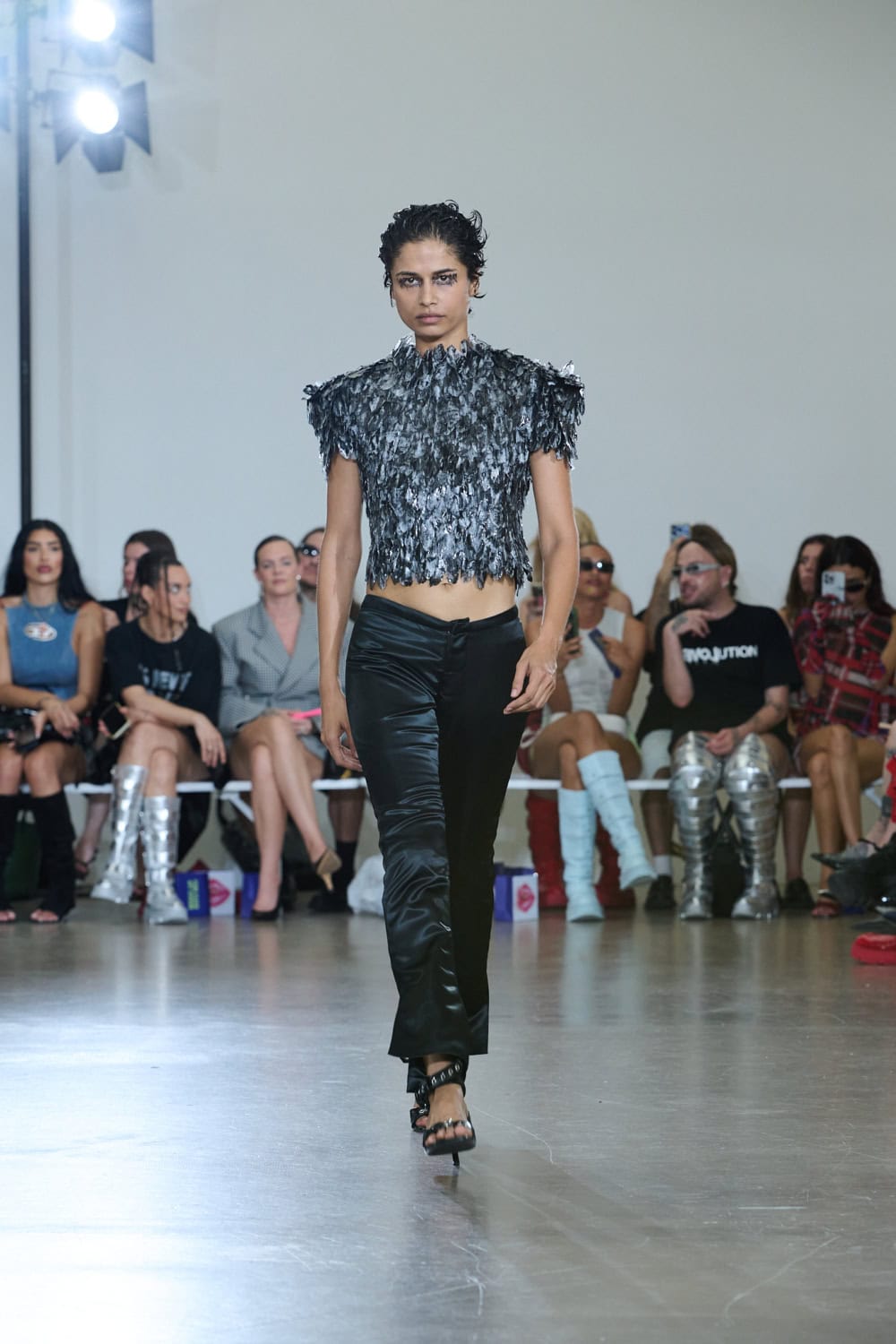
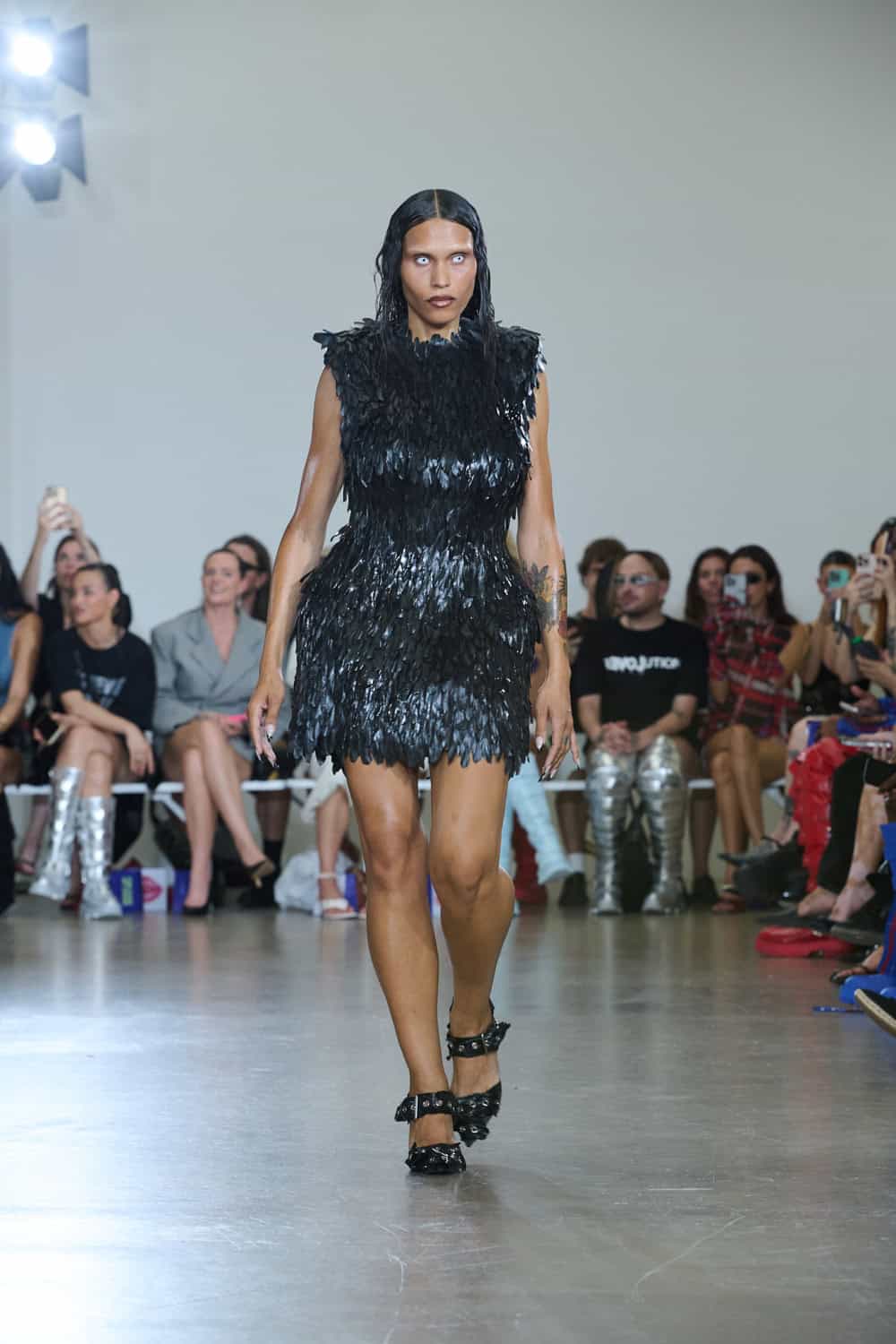
Friot’s connection to fashion is years-long and gentle. “My grandmother was really into clothes, loving luxury clothes but also showing me how the clothes are made – looking at the inside and the fabrics and every aspect of what it is to love clothes and fashion and what it means.” The inside of things has preoccupied Friot ever since: through the Duperré school and the Institut Français de la Mode, then as an intern at the Balenciaga studio under Demna, which left a permanent mark. “I remember clearly the creative process, which is kind of the same I have now in the development of the collection. I also remember a certain radicality in the shapes that I still have with me.”
Liberation is threaded through every aspect of her work. Friot, 30, founded her label in 2020, mid-pandemic, on a motto that doubles as a manifesto – no gender, no carbon, no hatred – with every piece made in France from upcycled and deadstock fabric. The first of these came from reading rather than the runway. “Growing up I started to read a lot of feminist literature, especially about gender issues, and that really opened my mind. Understanding that gender is a social construction, I wanted to do in fashion what gender studies did in that space – thinking about clothes regardless of gender.” For Friot, “it’s really important to speak about fashion without that spectrum.”
Six years on, her customer base is broad. “There are customers from my community, from the queer community. There are customers that love the fact that we’re doing fully sustainable, made-in-France pieces and understand the uniqueness of our products. And there are customers that don’t know anything about all my engagements and just love the pieces.” Yet the intention remains consistent across all of them: “I want people to feel empowered, protected and fearless.”
What comes next moves off the runway. Friot is the associated artist of the Centre Chorégraphique National (CCN) – Ballet de Lorraine, and her costumes for choreographer Maud Le Pladec‘s new work Ad Vitam Aeternam – part of the concerto danzante programme with Les Arts Florissants – arrive at La Seine Musicale in December, with cinema on her mind after that. “I really enjoy working with dancers and the ballet,” she says. For a designer who opened her season with a woman running, it follows that the work keeps moving. “I hope the best is to come.”
Photography courtesy of Jeanne Friot.