May 7, 2026 |
The UK capital is bursting with raw fashion design talent. From the engineered sensuality of Knwls to Steve O Smith’s drawn-by-hand expressions, the future heirlooms of Talia Byre and Tolu Coker’s memory-made clothes, London’s designers are reshaping the face of fashion.


Talia Byre
Talia Byre is a brand built on inheritance, both real and imagined. Founded five years ago by Talia Lipkin-Connor, it takes its name from the Liverpool boutique Lucinda Byre, which was run by the designer’s great uncle, but shuttered before she was born. “Everything’s developed in that spirit of community with your customer and heritage, tradition and rituals,” she says. What remains are stories, codes and a way of dressing that prioritises longevity over output.
Based in East London, the brand operates quietly but deliberately. After years of organic growth, Lipkin-Connor staged her first full London Fashion Week show last season following a series of salon-style presentations and lookbooks; it was a natural extension rather than a pivot. The clothes retained the same clarity they’ve always had: they’re wearable, thoughtful and rooted in real lives, especially those of the women around the designer.
Lipkin-Connor’s path to fashion was shaped early. Encouraged by older generations deeply involved in retail, she moved to London at 17 to study at Central Saint Martins, completing a foundation, BA and her MA, with stints at Alexander McQueen and Paul Smith in between. “I always had something creative in the way of making and creating,” she says. Launching her own label came during lockdown, after graduating during the pandemic and returning to her parents’ home in Warrington. That moment was both reflective and urgent. “We lost a lot of family members who were involved in the original store. It felt like it was very important to keep things moving and growing, and not let the name and all that history fade away.”
Inspiration comes from her proximity to other women. “It’s evolved over time, who that woman is,” she says – sometimes it’s the studio team, sometimes a specific customer. The starting point is always tangible: colour, fabric, print. “It’s very much based in reality and what we want to wear all the time.” The process begins with vintage sourcing and travel, pulling references into the studio for fittings before silhouettes are fixed. “It’s really about curating who this woman is, and her identity of the season.”
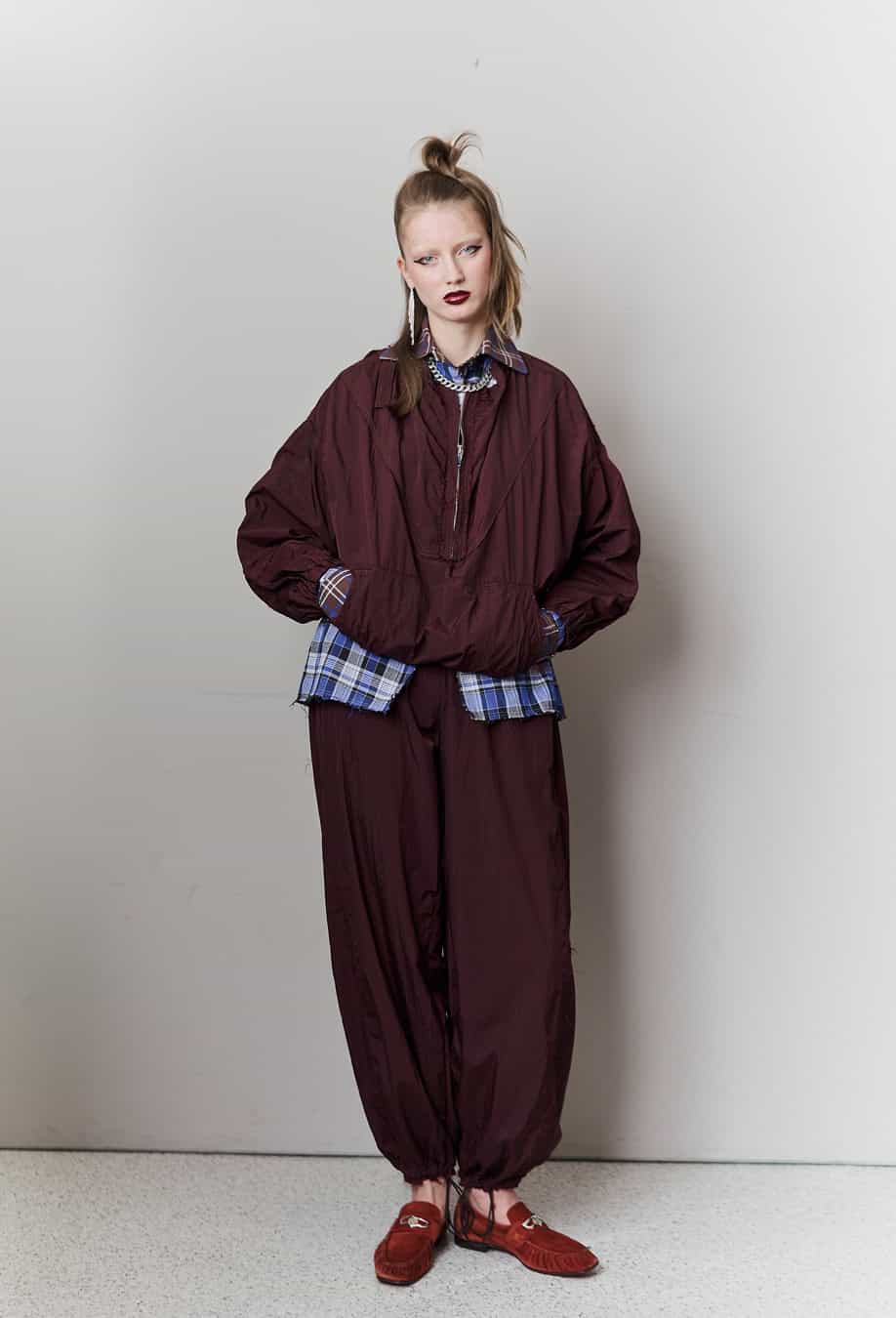
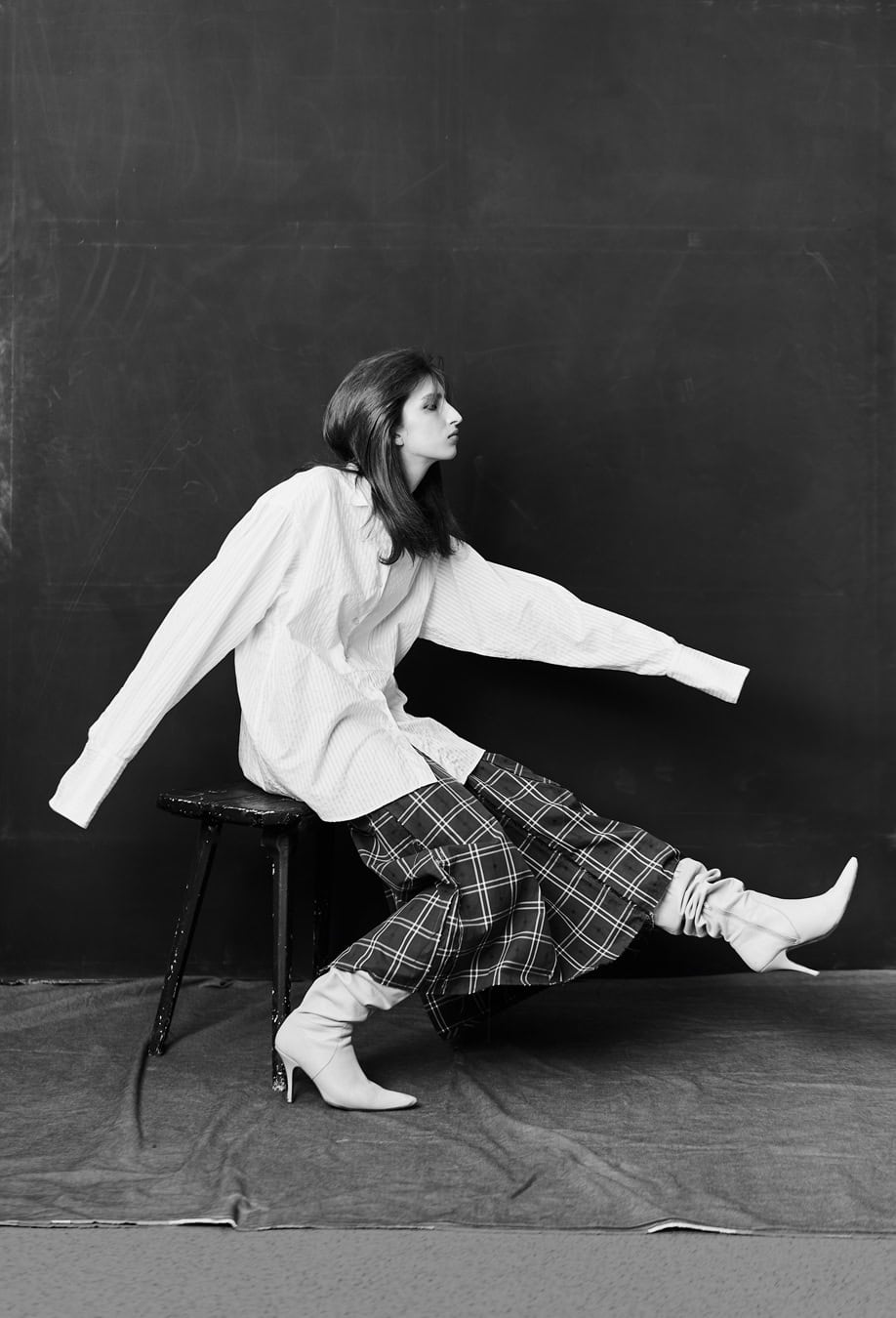
For SS26, that woman was shaped by escape and accumulation. Inspired by a summer trip to the Greek island of Hydra and Deborah Levy’s Real Estate, a book about possessions as legacy, the collection explored clothing and ownership. “It was all about this idea of your clothing being your property, your estate basically.” The clothes felt lightly preppy, deliberately without preciousness, and were designed, as Lipkin-Connor puts it, “as if you’ve kind of shoved everything in a bag and just landed somewhere”.
Key pieces reflected that ease: pinch-waist shirts with collars “flipped up and tied”, striped trousers in orange and green, V-neck knitwear, caps with veils trailing down the back. A standout jersey tracksuit with a knit net overlay to give something functional an unexpected softness. The recurring detail – a twisted collar – felt instinctive rather than styled.
Fabric choice is rigorous. Vintage references are pinned up alongside sourced materials from Italian mills and Paris fairs. Production is intentionally restrained. “We don’t over produce,” says Lipkin-Connor. Drops are limited and curated, encouraging customers to buy slowly. “Our customers buy one piece a season and kind of collect as they go.” Clothing is treated as something to live in, not cycle through.
That philosophy feeds into her idea of the “future heirloom”. Hand-me-downs from her grandmother – unlabelled, everyday garments from the original shop – set the tone. “They hold such a story, the life of someone living.” That’s the ambition now: pieces worn daily or for singular moments, accumulating memory. “That’s all we aspire to create – heirlooms like that,” she says.
Looking ahead, growth remains intimate. Lipkin-Connor imagines a studio-showroom hybrid in East London, closer to where her customers live. “Meeting people is what keeps everything going,” she says. It’s a vision that mirrors the brand itself: built on presence, continuity and clothes that are meant to stay.
Taken from 10 Magazine Issue 76 – CREATIVITY, CHANGE, FREEDOM – out NOW. Order your copy here.
LONDON MADE
Photographer THOMAS HAUSER
Fashion Editor TARA ST HILL
Text EMILY PHILLIPS
Model VIVIAN HASSE at Girls Club Management
Hair ATTILA KENYERES
Make-up PEGGY KURKA at Uschi Rabe using GUCCI Beauty
Photographer’s assistant JOHANNA KIRSCH
Fashion assistant TOMMY DOWLING
Casting WHITE CASTING
Production SONYA MAZURYK
Production assistant MARISSA LEITMAN