March 26, 2026 |
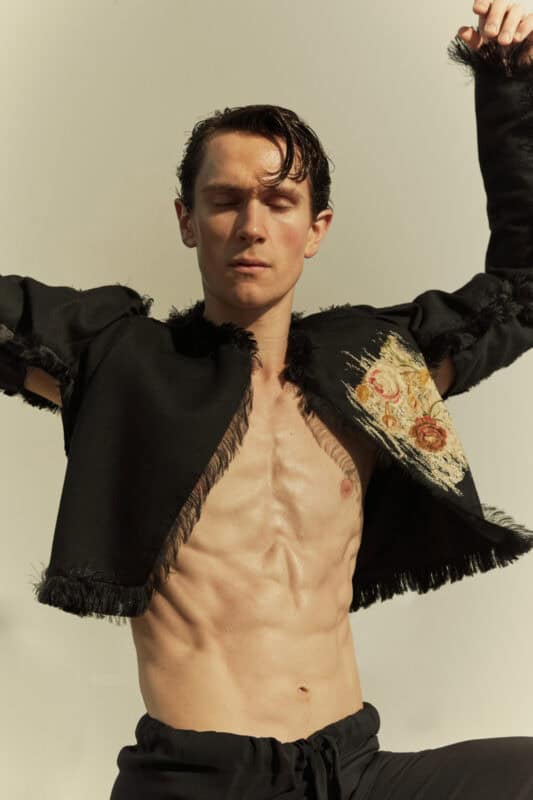
Alexander Yetman doesn’t deal in noise. His work arrives measured, deliberate and quietly self-assured – a proposition that feels increasingly rare within a fashion landscape addicted to speed and spectacle. With Coats for Winter, the British designer refines his position further, presenting a tightly considered study of outerwear that resists theatrics in favour of something more enduring: form, craft and the relationship between garment and wearer.
That sensibility is rooted in a childhood shaped by an early fascination with making and material. “I have been interested in fashion for so long. I had always liked to dress up and wear smart clothes, I loved tailoring from a young age, I first went into a tailor’s when I was probably about nine or 10 and he gave me a piece of chalk [that] I still have. I don’t remember when exactly all the different pieces slotted together or in what order but in my early teens, I found that I was quite good at making clothes and I fell in love with couture via a book of historic Chanel I found at home.”
That instinct was sharpened through formative experience. “I learned a huge amount in that workshop in Sligo [the designer began his journey in the industry as a teenager working with Joseph Martin Tailors], my great love of hand sewing started there. My favourite times there were the hours I spent watching Joseph at work, cutting suits or finishing collars were my favourite things to watch him do. I watched the skills he has in his hands, his movements, his eye, and remember thinking ‘I want that’. I still get the same feeling of admiration whenever I see a craftsperson at work, the cleverness in their hands amazes me and drives me to learn new skills.”
Even Yetman’s route into professional practice feels characteristically unforced. “I was working a secretarial job in I think 2016, for the designer/[antiques] dealer James McWhirter. James, knowing my love for making clothes, invited me to bring sewing in to occupy quiet spots in the afternoons. I did, and found my first clients there. My first proper commission with a label in and everything was a rather dramatic green/kaki wool coat I designed and made for a wonderful American lady who I met through James. It was such a joy to have commissions, and I carried on from there with my first little exhibition in Shepherds Market in 2018.”
If there is a through-line, it is an unwavering belief in craft as the foundation of design. “The craft and process of making clothes by hand feels like an innate part of me, I grew up with it as a founding principle of my work, that for a great design to be truly beautiful it must be made beautifully. The way I think about craft and process has evolved and I’m less dogmatic about it now, but it still informs every decision I make as a designer.”
That philosophy finds a particularly distilled expression in Coats for Winter. As Yetman explains: “The latest collection came about as I was making a very classic men’s overcoat. It was a lovely piece, a bit of a return to my roots in classic tailoring, and it started me thinking about the elements that made it what it was. I’m very interested in the context of elements of clothing. In the past I’ve explored recontextualising fabric types, silhouettes, details, embellishments as a way of playing with gender in fashion. Here I wanted to have some fun with the vocabulary of the coat, and so arrived at three designs that I hope have a sense of familiarity but also freshness and perhaps a little whimsy.”
The project begins, fittingly, with a single commission. A deep blue cavalry twill overcoat, developed in collaboration with legendary British actor Bill Nighy, sets the tone. It is not treated as a standalone piece, but as a starting point – a framework through which Yetman interrogates the coat as both object and idea. “Bill came to us through a friend. It was a pleasure to work with him, like any client he was very closely involved in the shaping of the coat in colour, cloth and detail.”
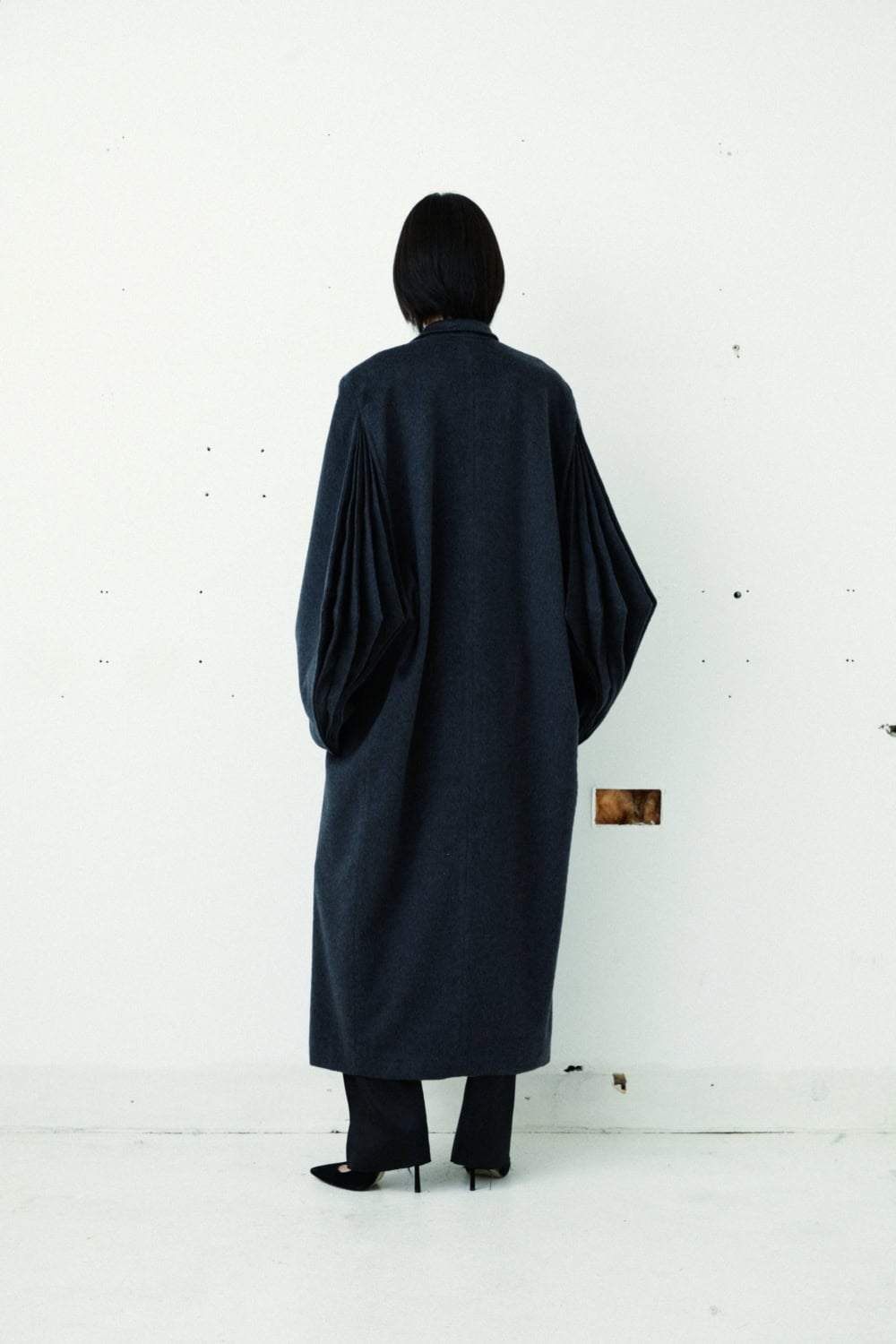
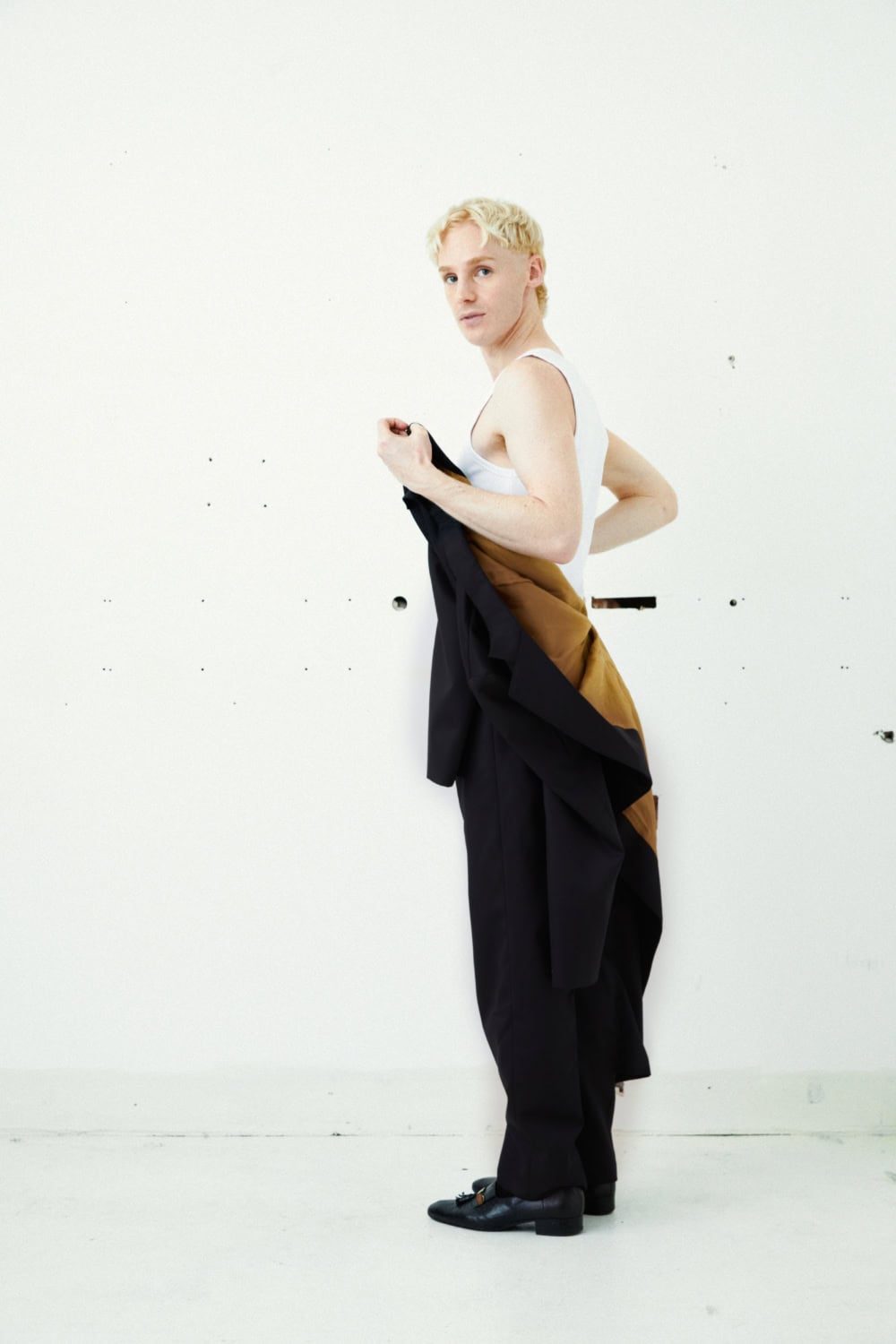
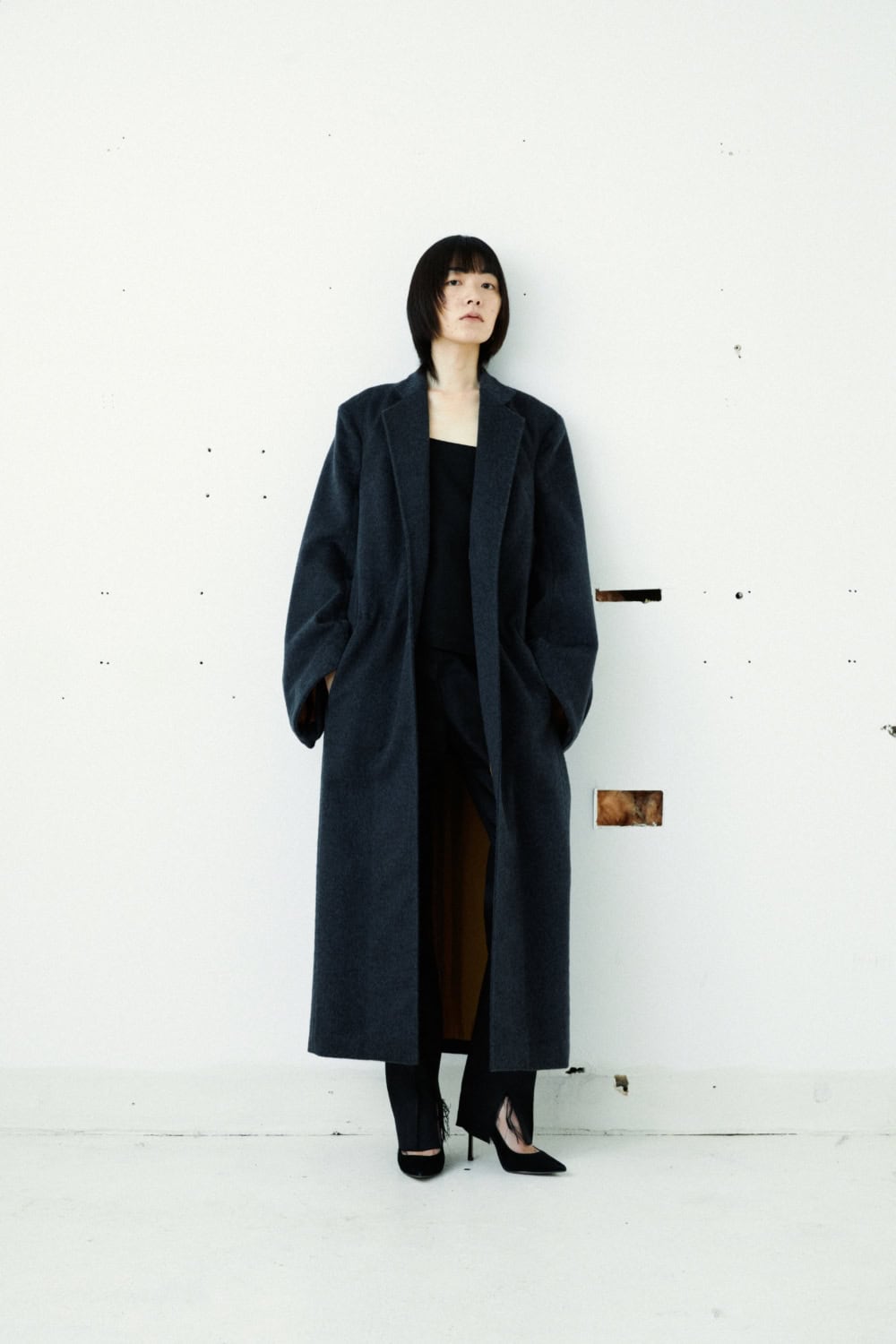
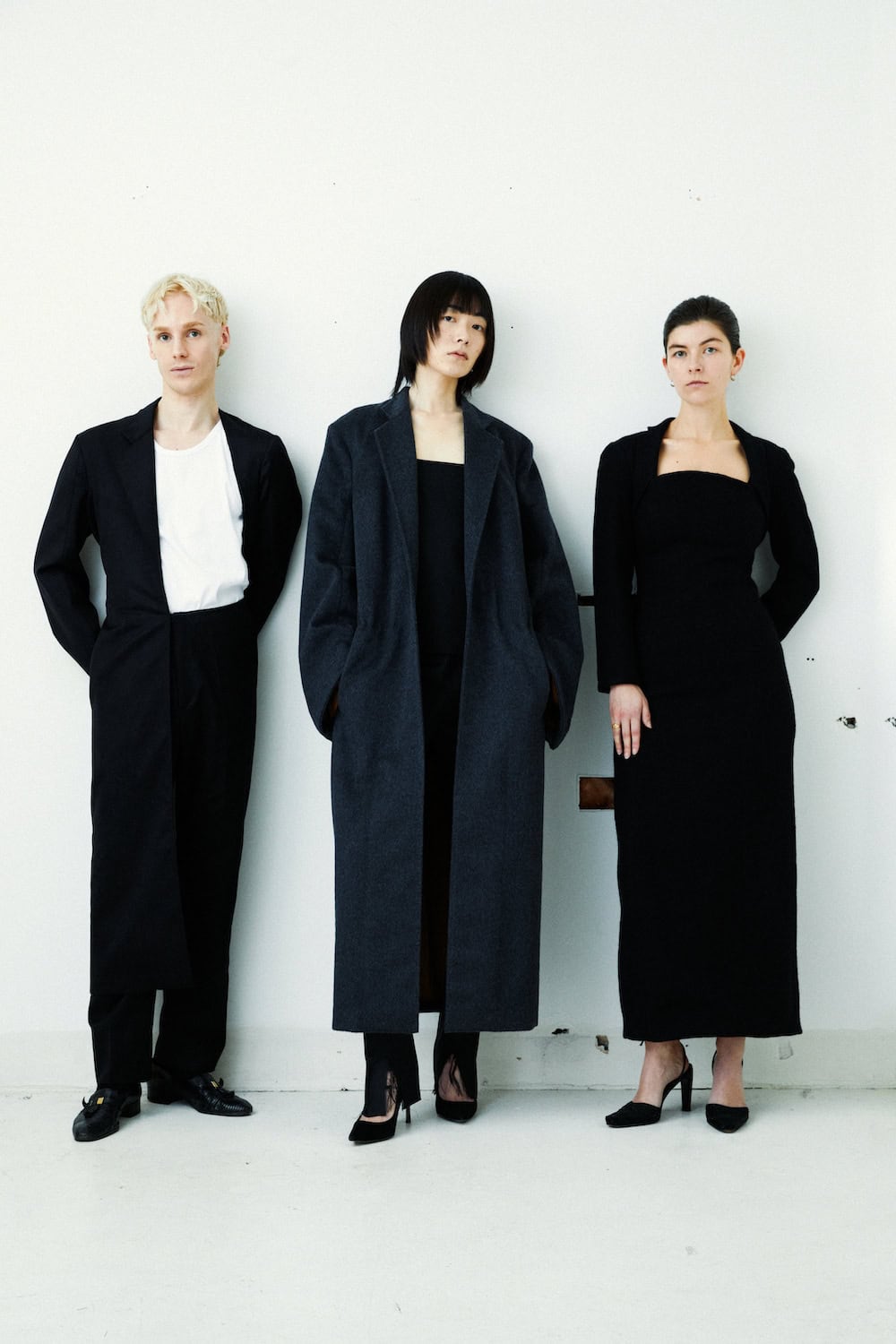
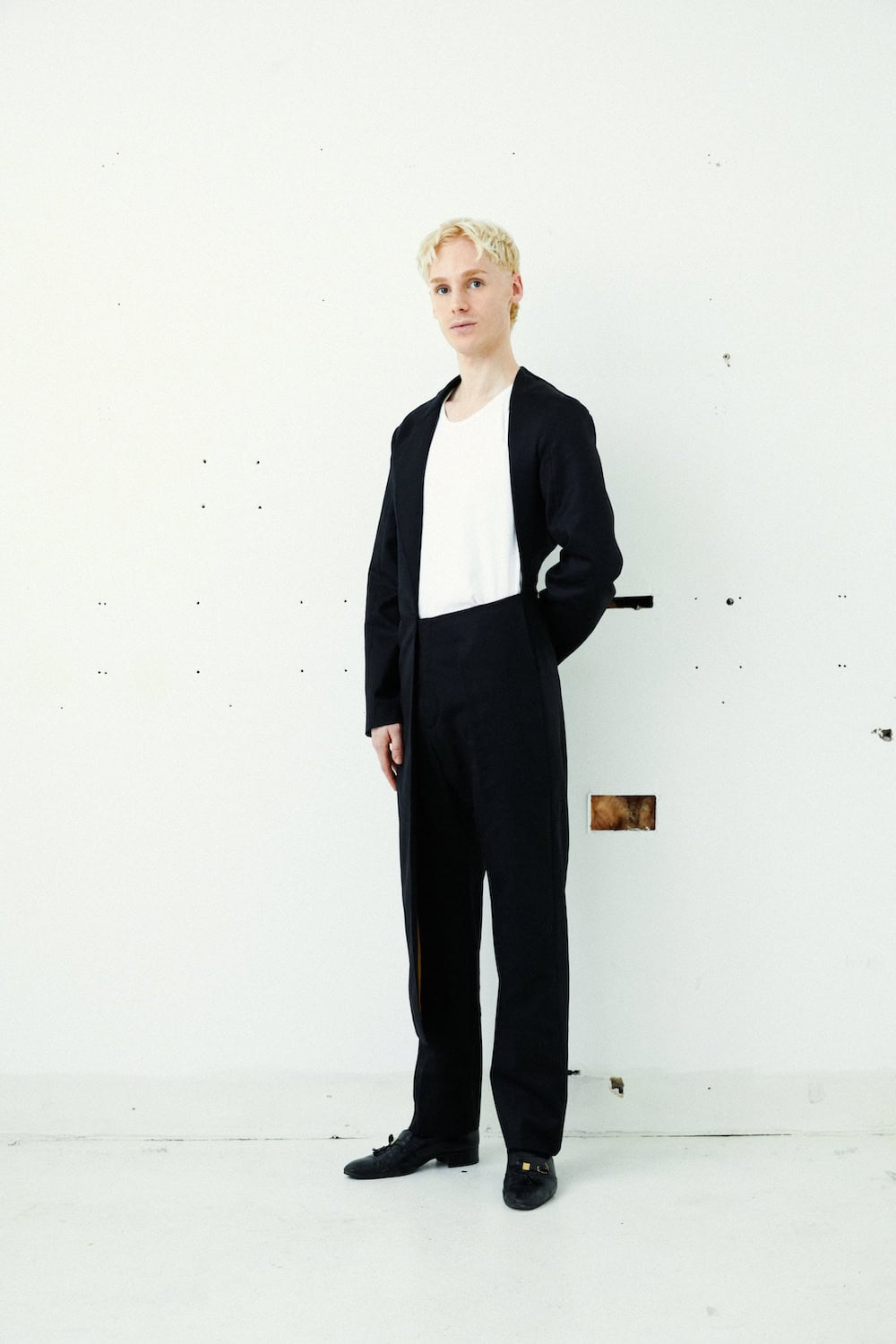
The custom coat is calibrated with restraint: a hemline that drops just beyond expectation, shoulders drawn in with a lightness that avoids rigidity, and a back cut to introduce movement – a controlled swish that activates the garment in motion. It is tailoring that listens closely, responding to the nuances of its wearer rather than imposing itself.
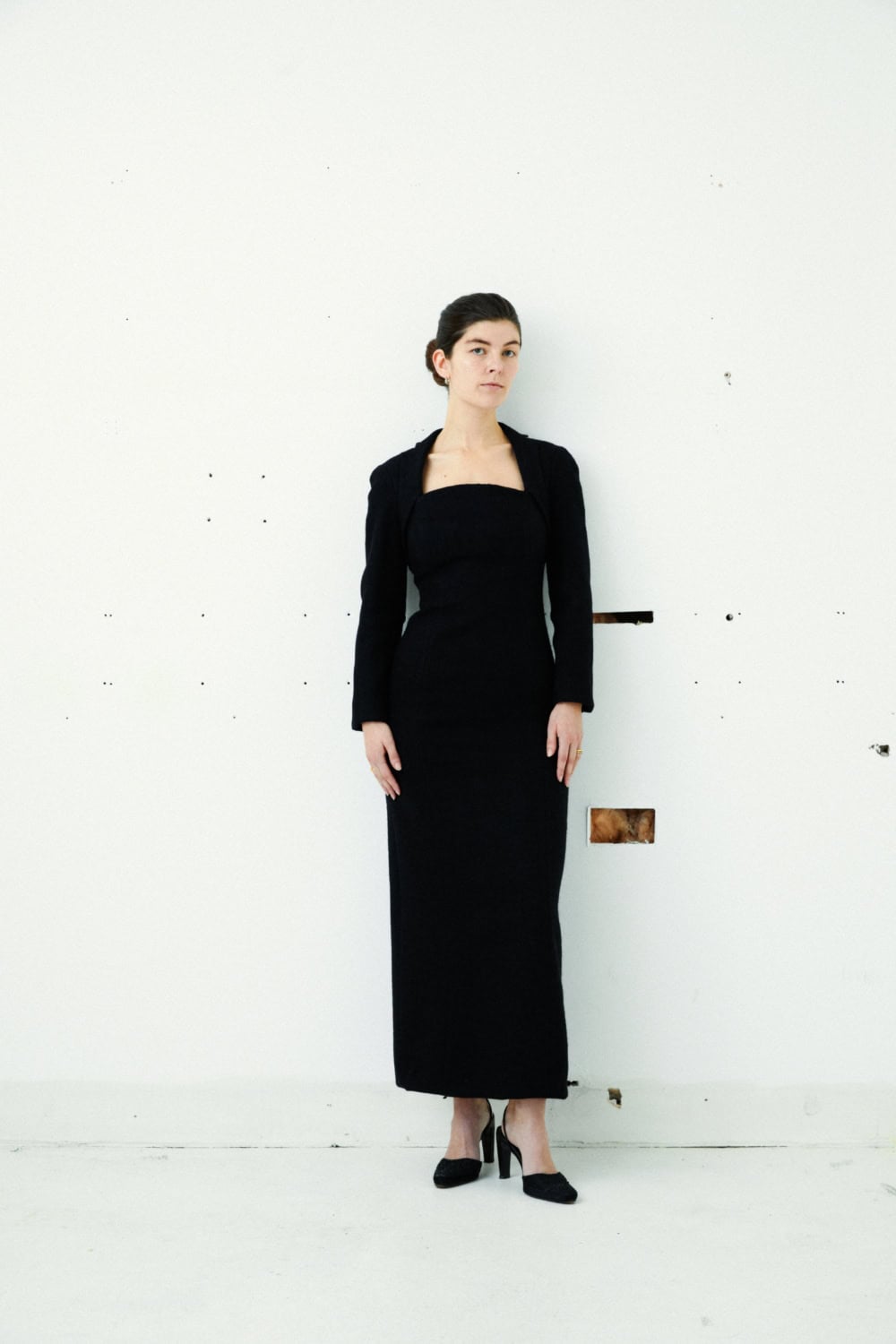
The wider collection extends this dialogue. The Evening Coat shifts the vocabulary of menswear into a different register entirely, reimagined as a dress. Cut in dense black Harris tweed, it holds both weight and fluidity, framing the décolletage with a softened tailoring language. The Quarter Coat, more radical still, collapses distinctions between garment categories altogether, conceived as a jumpsuit that brings the outer layer into intimate contact with the body. Meanwhile, the Concertina Coat appears classic at first glance, only revealing its architectural sleeve construction in motion.
Yetman’s process behind such pieces resists over-definition. “I don’t really think about it much, I wouldn’t say I have a process that is consistent, I just work it out as I go.”
What does remain consistent, however, is his interest in clothing as a dialogue – not just between past and present, but between garment and wearer. “Working as a bespoke maker I have really gained a feeling for how much the client informs the work. Both in very direct ways through colour preference say, but much more so, in a piece’s character and message. Clothes are to a large extent, part of the way we communicate. The influence of a client is therefore often most impactful in the way a garment comes across, not just looks. Therefore, I find it quite hard to imagine just one client, each garment has a different voice suited to a different person or type of person. The relationship of person to garment is so nuanced, so differing, it’s endlessly fascinating and I’m still constantly learning as I work with more people.”
That sensitivity begins from the very first meeting. “Clients come with vastly differing ideas of what they want/need from a commission. Once I’ve worked through the simple things like use, season, likes and dislikes, the process becomes about working out what will make the client feel beautiful and comfortable. I think it’s a matter of reconciling perspectives. Put simply I think we have three perspectives of ourselves, the way we see ourselves, the way we would like to be seen and the way we think people see us. A lot of the time for a lot of people these things are quite disparate. The holy grail is to create a piece of clothing that unites these perspectives.”
It is perhaps no surprise that this thinking is shaped by place. Yetman’s studio in Shoreditch situates him within a long lineage of East London making. “I came to Shoreditch for its constantly moving sense of energy. I love to work where it is busy and a little chaotic. I knew a little of its history as a fashion district, the Huguenot silk weavers who came here in the 18th century, the history of Jewish tailoring and cloth trade in the 19th, but as I’ve lived and worked here I’ve learned more and more about the extent of the industry that for a good 200 years or more defined the area… every level of clothing was made here and the more I learn about it, the more at home I feel.”
More broadly, London itself offers a kind of creative permission. “I was born here and have spent most of my life here. I feel very connected to it as a place, in part I think, because it is a city with about a thousand different identities and is therefore a place where I feel very free to be and work in whatever way suits me… it’s a place that, if you are curious, forces you to think by confronting you with a seemingly limitless cast of characters.”
At its core, Coats for Winter is not about reinvention for its own sake. It is about refinement – the slow, meticulous adjustment of form through attention and care. Even Yetman’s idea of a “classic” resists rigid definition: “For myself it’s a matter of those pieces that make me feel best, we all have favourite pieces in our wardrobes, I don’t know if they’re ‘classic’ but I wear them till they fall apart.”
Looking ahead, that same balance of tradition and personal expression is set to expand into new territory. “In recent years I’ve started working on more bridal commissions and have loved them. They’re just the most fun pieces to work on, joyful and extravagant and deeply personal. I think that there’s huge scope in bridal to do work that is elegant and beautiful but interesting and characterful as well so the next project on the horizon is a presentation of a small number of bridal designs later in the year to really set out my stall in this area.”
In a moment when fashion often feels defined by urgency, Yetman’s work offers something quieter but more lasting: a practice built on observation, intimacy and the enduring power of craft.
Photography courtesy of Alexander Yetman.