April 30, 2026 |
There’s no shortage of creative talent spilling out of fashion studios around the world. Most of it comes from a handful of fashion schools whose professors and practitioners are responsible for hand-picking and nurturing the graduates who will help to shape an industry equipped for an increasingly uncertain future. It’s challenging. The professors we talked to for this feature – from Antwerp to Johannesburg – share similar concerns, such as fashion degrees not being sufficiently funded or taken seriously, despite the industry’s importance both culturally and economically. They worry about students losing the ability to touch, in a literal sense, having information overload and not having spaces to express their creativity after they graduate. And there is also the issue of finance.
A master’s in London costs between £30-40,000 per year once you factor in the fees, living costs and materials. That’s why the Royal College of Art introduced a one-year master’s course in 2023. Some academic institutions in Europe are more accessible. The University of Vienna, the Royal Academy of Fine Arts Antwerp and the Berlin University of Applied Sciences, aka HTW (Hochschule für Technik und Wirtschaft), are all free or you’ll pay minimal fees to attend, with extraordinary educators and practitioners at the helm. Imagine! At HTW, you could be taught by Professor Hussein Chalayan. At the University of Vienna, Prof Craig Green will be guiding you through your fashion design tutorials.
“My area of specialty is innovation, sustainability and cultural identity,” says Chalayan, who has been at HTW Berlin since 2019 teaching across its BA and MA courses. “Right now, there are great state universities in Europe,” he says. “Lots of students who don’t have money deserve a place but can’t afford to study. The best art, music and fashion never came from money.” In London, the course leader for MA Fashion at Central Saint Martins, Fabio Piras, says: “The struggle is part of artistic practice.” But he questions why the industry isn’t more supportive of the education of the talent it ultimately benefits from. CSM’s MA course currently has just five scholarships, down from 12 pre-Covid.
As an academic myself, responsible for the BA Fashion Communication Journalism pathway at Central Saint Martins, I can vouch for the fact that working in creative education is an education in itself. Despite the 16 years that Liliana Sanguino, of the Parsons School of Design, has spent at the forefront of fashion education, she is still learning. As a Colombian who has built a career in London and now New York, and who collaborates with Indigenous trans communities in Colombia, she says she needs “a definition of fashion that is wide enough to hold all these worlds. I encourage students to do the same: to question, to expand and to define fashion through their own perspective, culture and lived experience. Without that, creative education risks producing designers who can replicate existing systems but not imagine new ones.” Here, Green, who’s an educator on fashion’s creative front line, has his say.
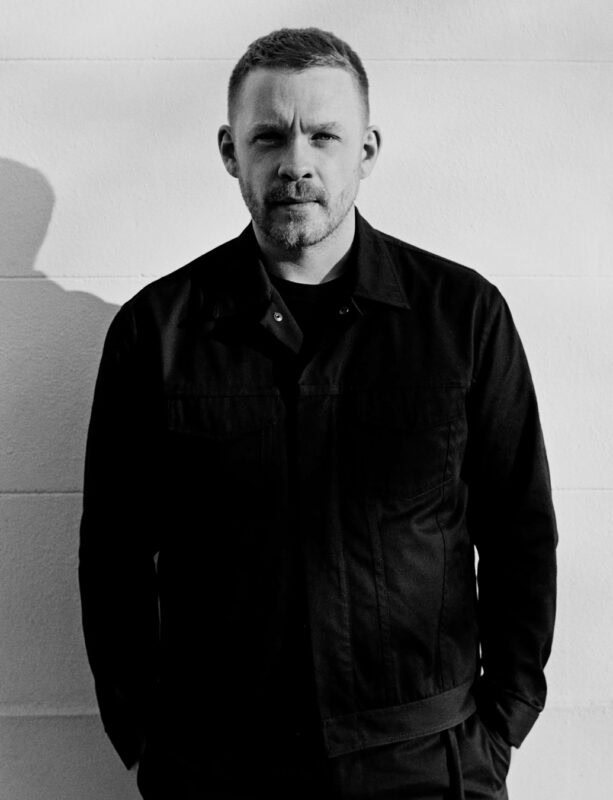
“I look for curiosity, and a willingness to persevere when the creative process feels uncomfortable and outcomes aren’t yet clear.” – Craig Green
Craig Green, professor of fashion design and head of the fashion department, University of Applied Arts Vienna
Craig Green graduated from CSM with a master’s under Louise Wilson in 2012 and has become a leading force in menswear. His first solo show at London Fashion Week for SS15 was hailed by critic Tim Blanks as “a fashion moment”. He was awarded British Menswear Designer of the Year at the Fashion Awards from 2016 to 2018 and his work has been featured at the Metropolitan Museum of Art and the V&A. He took up the rolling four-year professorship in Vienna in October 2023.
What is the aim of your course?
It focuses on an experimental, concept-driven approach to design. It also encourages students to develop their own voices by questioning norms, exploring material processes and understanding fashion as both a form of discourse and of self-expression.
How many students on average are in a cohort?
Around 40 students across four years.
What are the qualities/skills you look for in your students?
Curiosity, and a willingness to persevere when the creative process feels uncomfortable and outcomes aren’t yet clear. I’m drawn to students who are reflective and able to articulate why something matters to them.
What are the key challenges facing creative education?
Funding is always a challenge, both for students and institutions, which does make it harder to give them the support and freedom they need to experiment and take risks.
What are your hopes for your students as they graduate?
I hope they leave with confidence in their own perspective and the courage to protect it, and that we manage to empower them to find ways of working that are sustainable for them as creative individuals.
Photography by Jack Davison and production by Sonya Mazuryk. Taken from 10 Magazine Issue 76 – CREATIVITY, CHANGE, FREEDOM – out NOW. Order your copy here.