April 14, 2026 |
Martine Rose’s work has never existed in a vacuum. Since stepping out with her debut collection in 2007, the British menswear designer has made community her lifeblood. She has cast friends, family and local faces in her shows and staged collections in spaces embedded in her own everyday life. She’s also quietly but insistently redrawn the codes of British menswear, bending tailoring, sportswear and subcultural dress into something unmistakably her own. Rose has built a practice rooted in closeness that understands fashion as something lived, shared and continuously shaped by the people around it.
In January 2020, she presented a collection at her daughter’s Kentish Town primary school, transforming plastic, stackable chairs and a scuffed assembly hall into a runway, peppering it with hi-vis flashes, oversized tailoring and playground swagger and cementing her brand as a defiant, deeply local vision of London style. With her SS26 collection, she expanded that ethos into a fully realised public moment, hosting a bustling, open-door market that blurred the lines between fashion presentation and community fair. Set up as a working marketplace, it invited 22 independent makers, traders, designers and musicians to tout their merch and take up space within a fashion system that rarely centres them.
Rose has similarly shown in a North London cul-de-sac (SS19) and a community centre (SS24), as well as a makeshift club (she transformed the shuttered gay sauna Chariots Spa in Vauxhall into a leather-clad, darkroom environment for her SS23 show), celebrating diasporic identity, everyday dress and the beauty of the unpolished along the way. Her work, shaped by the streets she grew up on and the multitude of voices, bodies and backgrounds that move through the capital, reads like a love letter to London, its margins and the people on them. “Martine means London,” says Alva Claire, the London-born Jamaican model and friend of Rose. “She means, in the real sense, community.”
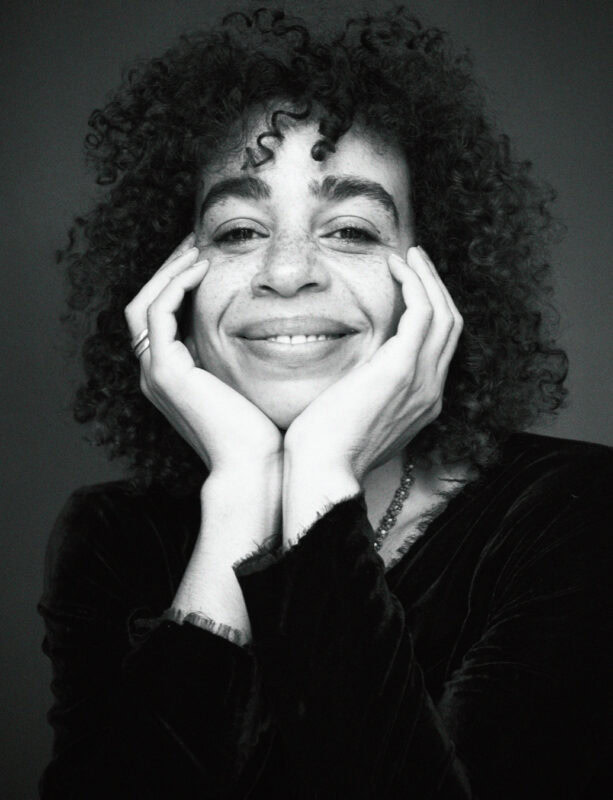
Martine Rose
But what makes Rose’s sense of community matter is that it produces tangible effects. Young designers see alternative ways of working. Local spaces are reactivated rather than bypassed. People outside fashion’s usual centre feel reflected rather than mined. In an industry that often prioritises scale and speed, Rose’s slower, relational approach offers something more durable.
Everything around Rose feels connected, because it is. The clothes, the shows, the parties and the causes all point back to the same principle: that fashion works best when it is accountable to the people who sustain it. Community, in her world, isn’t a backdrop. It’s the infrastructure.
One such gathering came on a cold, rainy Wednesday evening at the end of November, when Rose once again put that infrastructure to work. Down at The Scotch of St James – a Polly Pocket-sized venue in the heart of central London that was once frequented by The Beatles and Stones (and later, the fashion kids who wished they’d been there the first time around) – Rose had gathered a bubbly cohort of friends, family and fashionable lifers. An evening equal parts fundraiser, fashion family reunion and slightly unhinged DIY disco, the event was in support of the hurricane relief efforts in Jamaica.
On Tuesday October 28, Hurricane Melissa, a category five storm, made landfall, spreading its vicious wings across the Caribbean country and devastating homesteads, cities and the lives of locals. “My grandparents are out there… so it is very close to home. It is home,” says London-based DJ Shy One, a much-loved mainstay of the city’s underground music ecosystem, who attended the event in support. The emotional gravity, tucked neatly beneath the good vibes, was palpable.
And indeed, that energy permeated every molecule of oxygen in the air that night. The Scotch itself felt newly alive, buzzing with the same fashion-meets-music electricity that has defined it since it opened in 1965. Virgil Abloh DJ’d there in 2017, and fashion kids, musicians and misfits would regularly pack it wall to wall, spilling out onto the pavement at 3am. It was the place where John Lennon hung out with Yoko Ono on the night of their first meeting at Indica Gallery next door and where Jimi Hendrix played his first UK gig, to myth-making effect. Creative Tyler Deniro painted a picture, saying, “It’s a moment being back here in Scotch, drinking Havana Club; it reminds me of my 16-year-old self sneaking out to party when I shouldn’t have been.” His partner, creative director and brand strategist Calum Knight, adds, “[It’s] nostalgic being back for sure. When we started dating, we realised we both used to come to this club when we were underage. We definitely would have been here on the same night with the same people, but we never met. It’s our first time here together, although it feels like it was 10 years too late.”
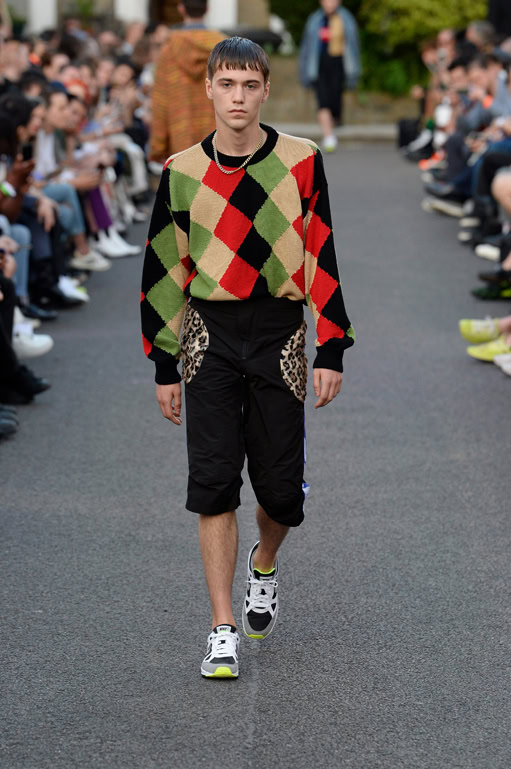
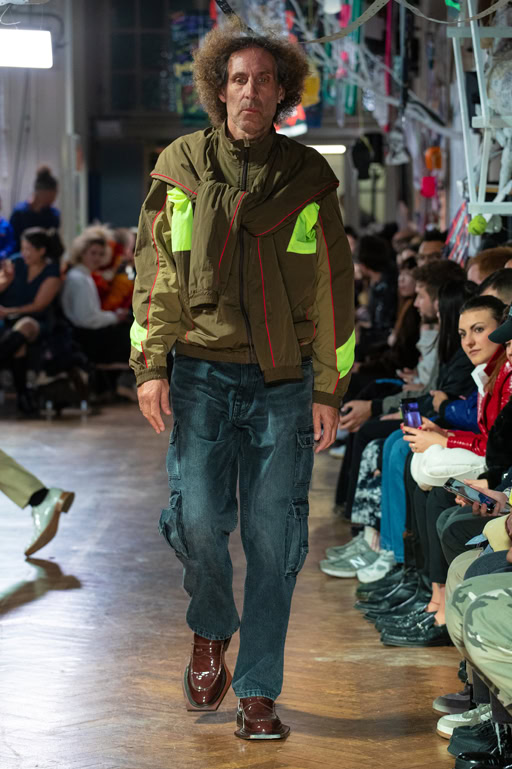
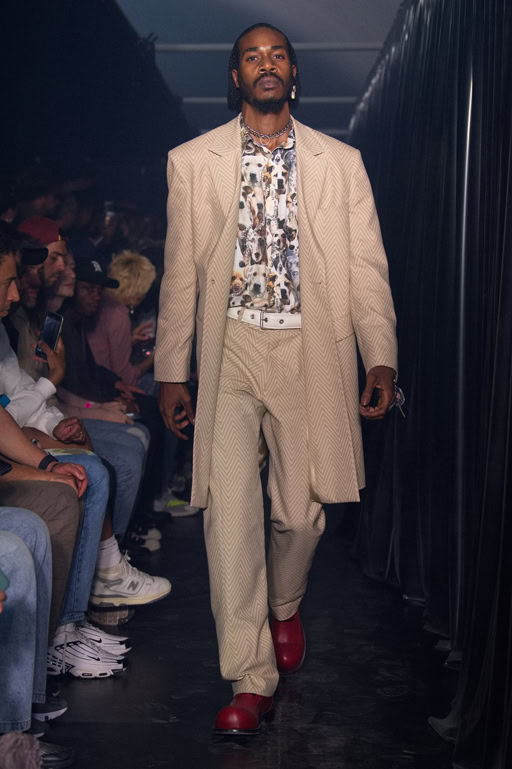
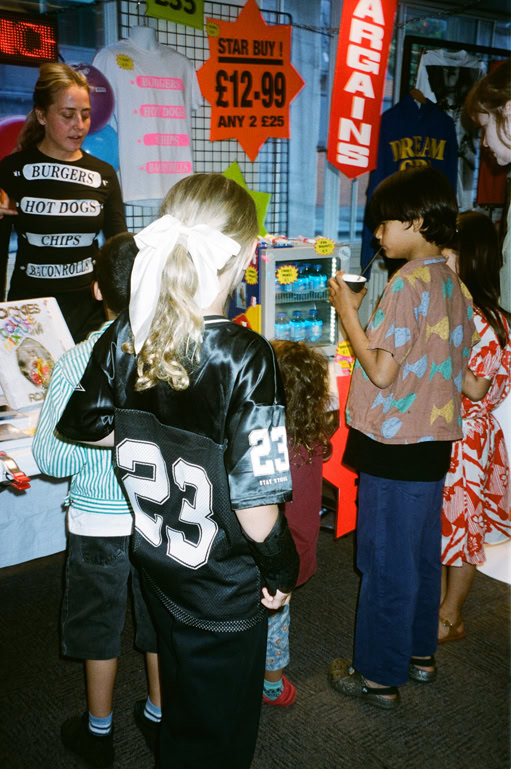
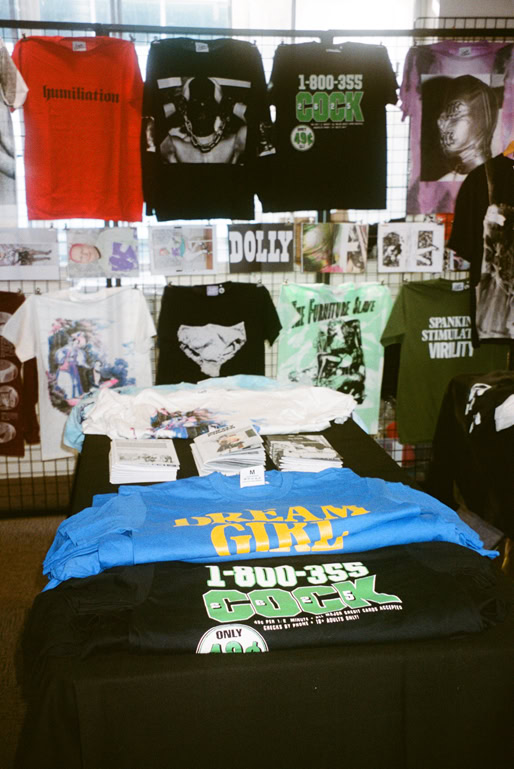
From left: Martine Rose has staged fashion shows in a North London cul-de-sac (SS19), at her daughter’s primary school (AW20) and in a now-defunct gay sauna (SS23), and hosted a marketplace at her SS26 show
The evening also celebrated the launch of Rose’s limited-edition Havana Club Añejo 7 Años bottle, but this only underscored the altruism. The room was chock-full of food and fashion, with flavours of Central America and the Caribbean: think mac and cheese bites, avocado-topped plantain tostones, rum punch and golden mojitos. On the decks, Sasa Crnobrnja, Judah and Martelo delivered a run of selections that made standing still feel socially unacceptable, weaving dancehall, dub, house and deep cuts into something joyous and loose-limbed. “Community, joy and togetherness are central to both of our worlds,” said Rose after the night, speaking on the shared ethos behind the link-up. “And this event is about celebrating our heritage while raising meaningful funds and awareness for those rebuilding after the devastation of Hurricane Melissa.” Jamaica was the reason we gathered, but London was the language through which it all happened.
Naturally, I participated in the raffle, which offered one ticket with four numbers on it for £10 and two tickets – eight numbers total – for £15. The draw itself, part theatre, part absolute pandemonium, all cackles and infectious energy, was supercharged by the riotous presence of East London drag queen A Man to Pet.
Decked out in a cheetah-print catsuit with big, pastel-pink hair to boot, she made the most of every moment, called for the “Drum roll, please!”, had her similarly suited assistant spin the tombola drum and bam! out came a number and from the crowd emerged a winner. There were 10 or so prizes total, ranging from T-shirts to Havana Club gifts sets – cups, shakers and alcohol included – and the créme de la créme, a one-of-a-kind gold Havana Club x Martine Rose gift bag. If luck wasn’t on your side, ‘For Jamaica’ tees, printed with parrots and palm trees, were available to buy outright and quickly became the unofficial uniform of the night.
By the time I’d finished my interviews and checked into full OOO mode for the rest of the evening, I had settled in with a lovely group of young industry Brits to sip on rum punch, eat some jerk chicken and yap away, chittering about everything from Rose’s cultural impact to the politics of the smoking area. It was yet another testament to the sense of community she fosters. I arrived knowing no one, save for the PRs at the door, but left with new connections and that warm, fizzing feeling you only get from the right room. Others echoed the sentiment. “I’ve met some lovely people who I’ve been following [online] for a while. They followed me [too] so I bumped into them and we had great conversations about life, fashion and everything,” said fashion content creator and former professional footballer Jean-Claude Mpassy. Martelo, who’s a DJ and old friend of Rose’s, said that many of the people at the party were good friends, the kind “I talk to on the phone, which in 2025 is a small group of people”.

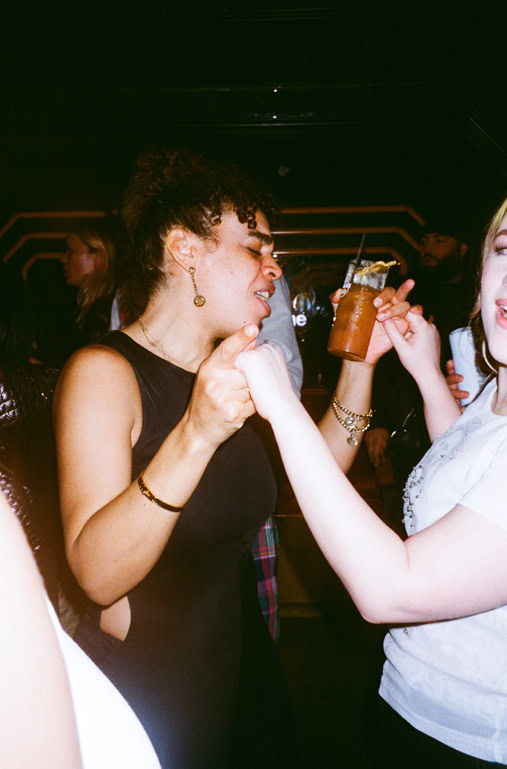
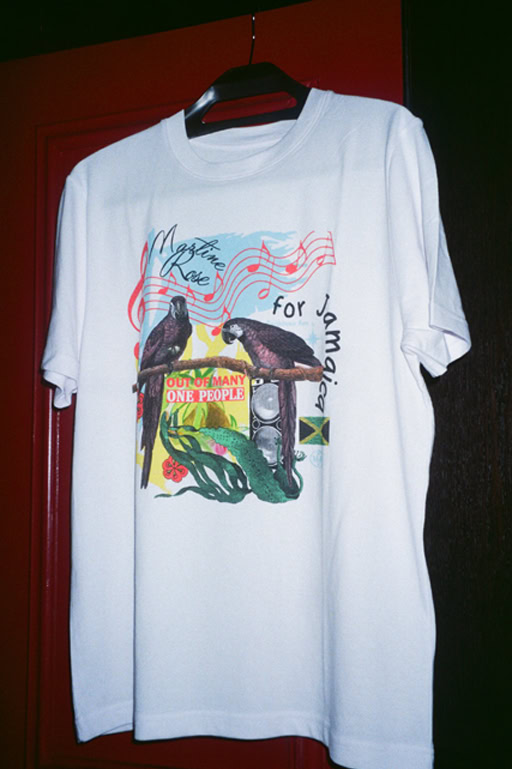
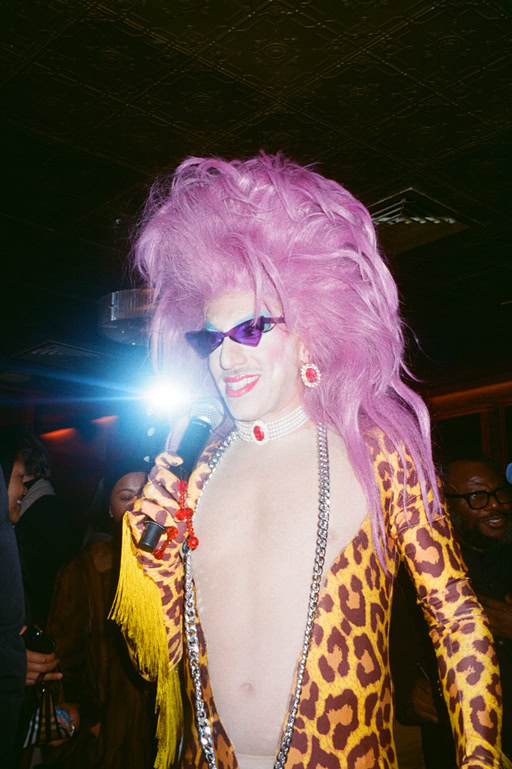
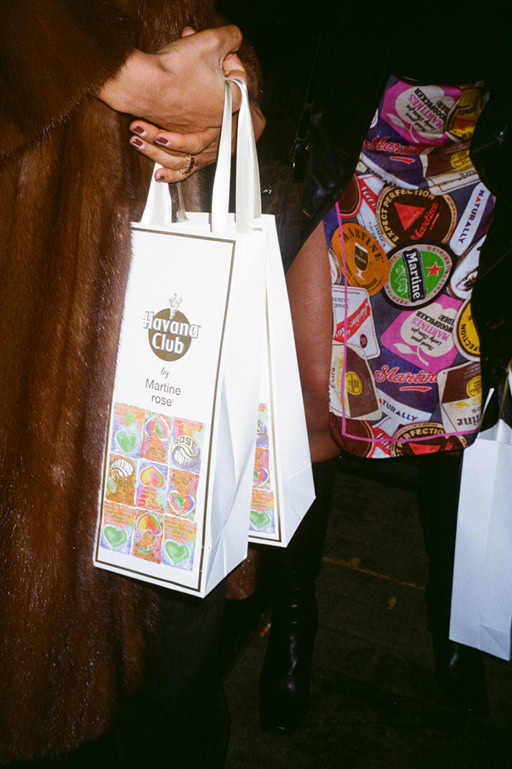
In November 2025, Rose hosted a fundraiser in support of the Hurricane Melissa Relief Donation Fund, photography by Roxy Lee
With all of the proceeds, which reportedly exceeded expectations, going toward the Hurricane Melissa Relief Donation Fund, the event landed exactly as it should have: joyful, purposeful and unmistakably real.
And that, really, was the point.
As Martelo put it: “Everything Martine does feels super, super real… this isn’t just ‘go and buy some shit’. No… it’s actually doing something.”
“It’s about the community, and right now one of our communities is suffering and they need our help,” says Deniro. “We’re here, we’re supporting and we’re giving back.” Knight adds, “It’s important that in London we’re raising awareness, making some noise and also celebrating – the right way – by bringing people together. So we’ll be here eating, drinking, having some fun and, most importantly, raising some money.”
It was Rose in her sweet spot. She has always understood that community isn’t something you announce, it’s something you build slowly, show up for consistently and protect fiercely. You could see it in the way people greeted one another, in the ease with which strangers fell into conversation, in the fact that nobody seemed to be ‘working the room’ because the room itself was doing the work.
I left lighter than when I arrived, phone fuller, heart oddly buoyed. Not because the problems at hand were solved – far from it – but because for one night, a community showed up, opened its arms and did something tangible, Martine Rose-style.
Photography by Andreas Larsson. Taken from 10 Magazine Issue 76 – CREATIVITY, CHANGE, FREEDOM – out NOW. Order your copy here.