October 20, 2026 |
Once upon a time, fashion was so focused on looking forward that even the most historic houses rarely kept anything from their pasts. History was baggage. Today, the story is different. Heritage is a house’s most valuable asset. Archives are no longer considered to be dusty storage facilities. They have become the beating heart of many brands, allowing them to safeguard heritage, inspire creative teams and capitalise on their origin stories. We go inside five of fashion’s finest.
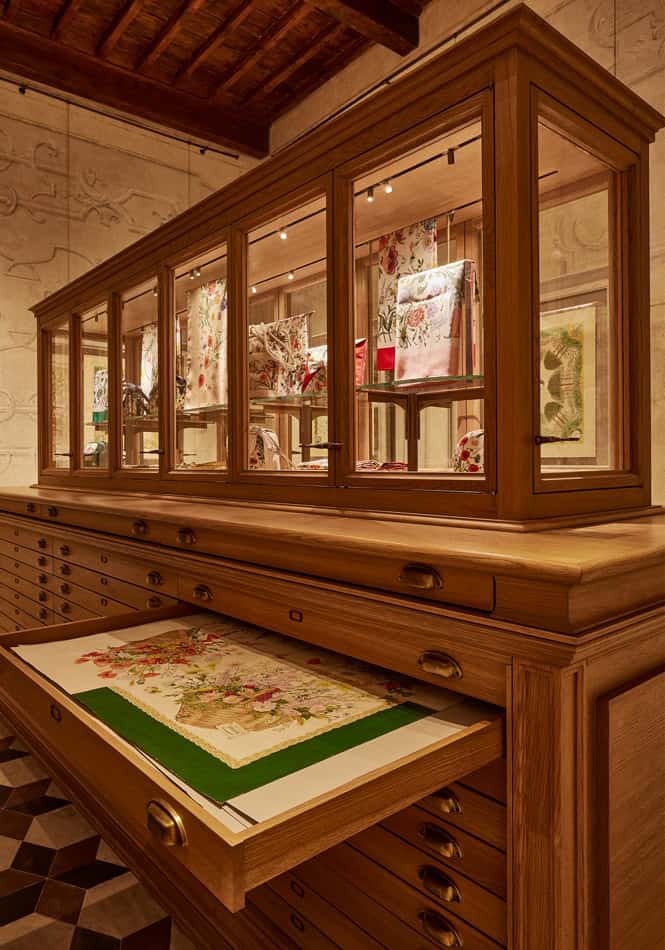
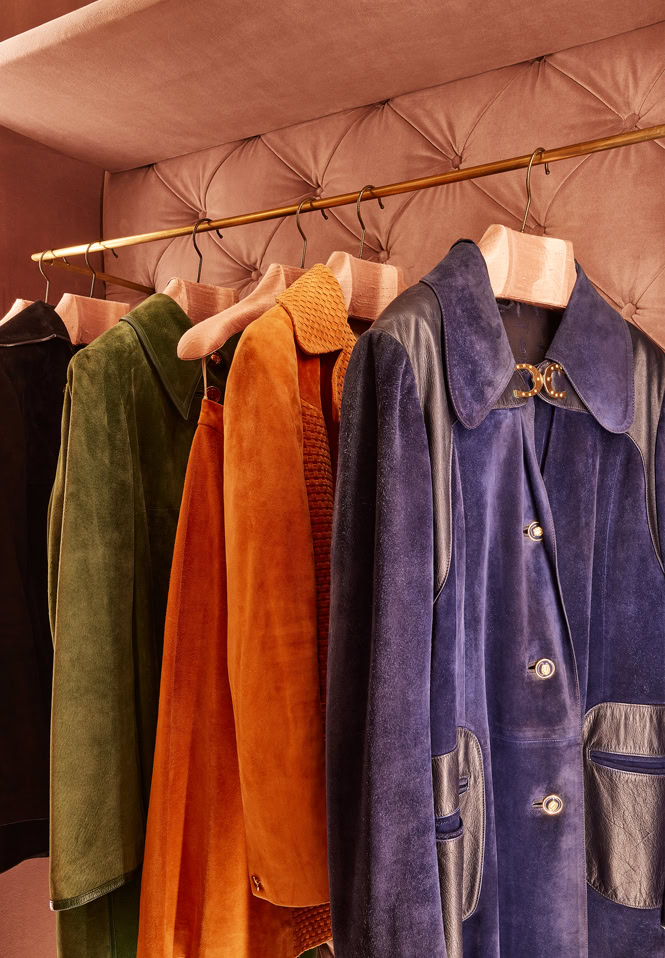
From left; silk scarf designs; colourful suede ready-to-wear from the1960s and ’70s;
GUCCI
The heart and soul of Gucci lies in a quiet Florentine street – a world away from the brand’s flagship Palazzo boutique, which occupies a majestic 14th-century building that once housed the city’s all-powerful merchant’s guild, now surrounded by throngs of tourists, on the Piazza della Signoria. In an unmarked building on the other side of the River Arno, is the Gucci archive. And the only clue to the treasures held inside is the security airlock you must pass through to gain entry.
The Palazzo Settimanni, named after the aristocratic family who once owned it, started life in the early renaissance as a workshop dedicated, like many along the same street, to fabric-dying. This was the artisan quarter of the city, and all around were workshops specialising in different crafts, from wood, leather and metal work to painting. It later became a grand house, lived in by generations of aristocratic families, before Gucci acquired it in 1953. For the next two decades, it functioned as a design laboratory and workshop, before the brand moved production to its current factory facility on the outskirts of Florence and the building was turned into a showroom for the Gucci sales team. Former creative director Frida Giannini was also interested in Gucci’s history, creating the museum space at the Piazza della Signoria flagship in 2011, but it wasn’t until 2018, under the direction of Alessandro Michele (then creative director) and Marco Bizzarri (then CEO), that Palazzo Settimanni underwent a full renovation and was transformed into the Gucci archive. Michele, who supercharged Gucci with his maximalist, remixed-vintage aesthetic, was passionate about Gucci’s past treasures and put the archive at the heart of his Gucci project, gathering items from various sites across Florence at the Palazzo.
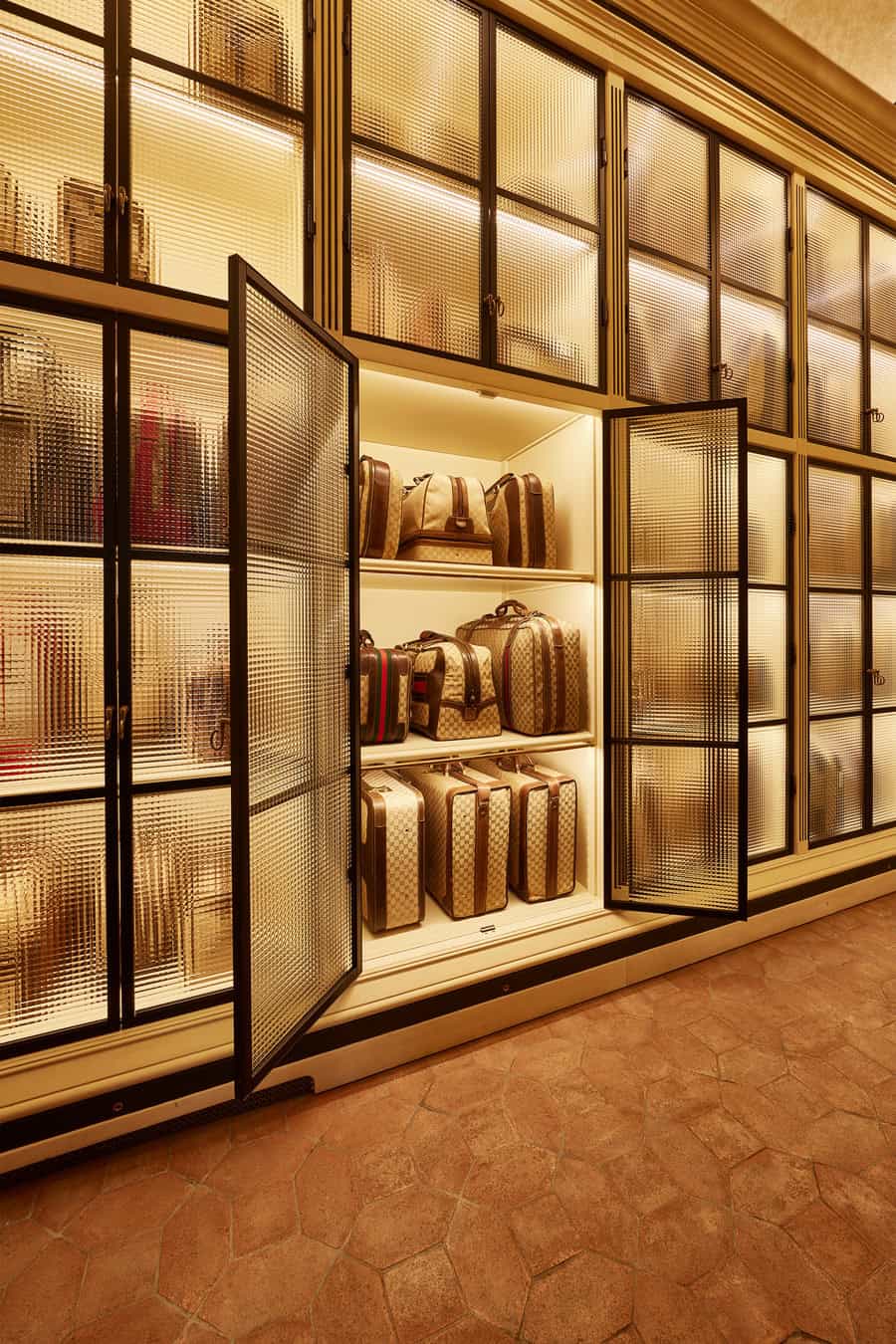
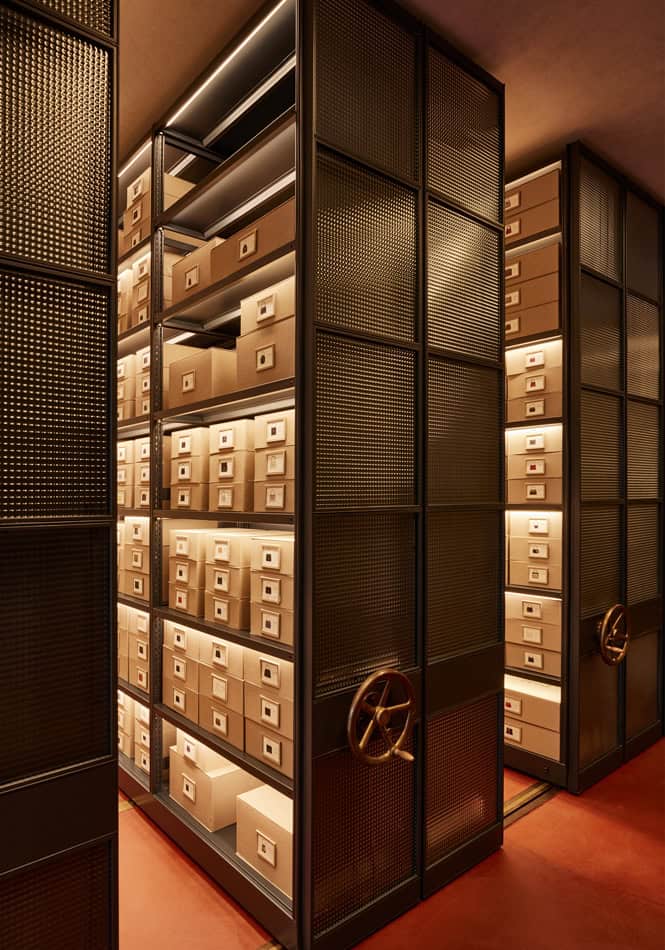
From left; vintage Gucci luggage charts the evolution of the Diamante canvas pattern and signature webbing; bags, catalogued and stored in bespoke boxes
Michele departed the brand in 2022, but left his mark on Palazzo Settimanni, which has the suggestion of a boutique from a bygone era. Part museum (each item on display has an exhibit label), part working archive, its central, glass-covered courtyard and the high-ceilinged rooms that radiate off it are lined with tall, glass-fronted vitrines. Each is filled, from top to bottom, with prize pieces of Gucci history displayed alongside bespoke archive boxes, stamped with a vintage Gucci font from the 1950s.
Around 45,000 items reside at the Palazzo, including, on the top floor, the brand’s entire Tom Ford for Gucci archive. These prized pieces, from his era-defining tenure (1994-2004), are the source code from which Gucci is building its future, with current designer Demna. Ford’s relationship to heritage was in stark contrast to the reverence it’s held in today. His project was to revive Gucci’s fashion relevance for his era. To do that, he had to forget the brand’s recent past in order to redefine its immediate future. Ford was ultra-selective when it came to Gucci’s icons. He liked the Jackie bag but not the Bamboo. He preferred the elegant, long-toed Gucci loafer to the brand’s classic moccasin, which he felt was too closely associated with finance bros. Ford might not have suffered with nostalgia, but under him, the brand did begin to archive its catwalk collections for posterity.
Limited space at Palazzo Settimanni means that the rest of the Gucci fashion archive, including Gianniniand Michele’s works, resides in a special archive facility outside the city. Demna’s collections, however, will live here alongside Ford’s – an indication of the esteem in which he’s held at the brand.
The archive is overseen by Gucci’s heritage director, Gabriele Giorgini, who has been a key figure at the house for decades, having previously served as global communications director. He and his team take care of the archive, conduct research and make acquisitions(which can come from an international network of vintage dealers, flea markets, eBay, Vestiaire and private sellers), as well as liaise with creative and retail teams, and host archive tours for VICs.
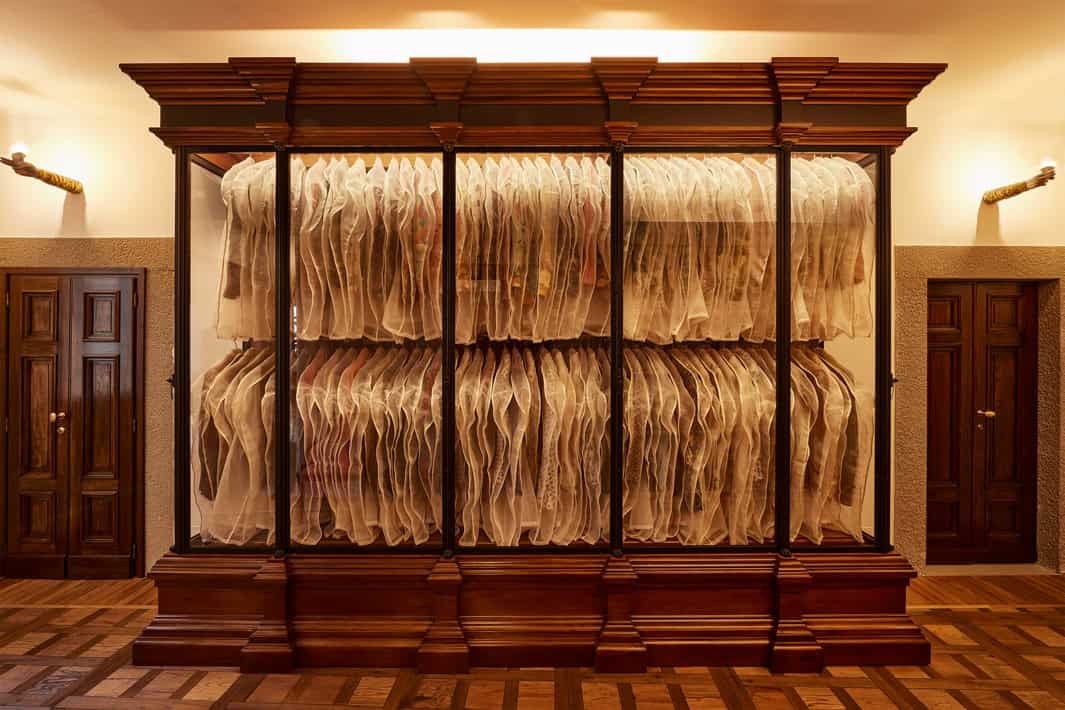
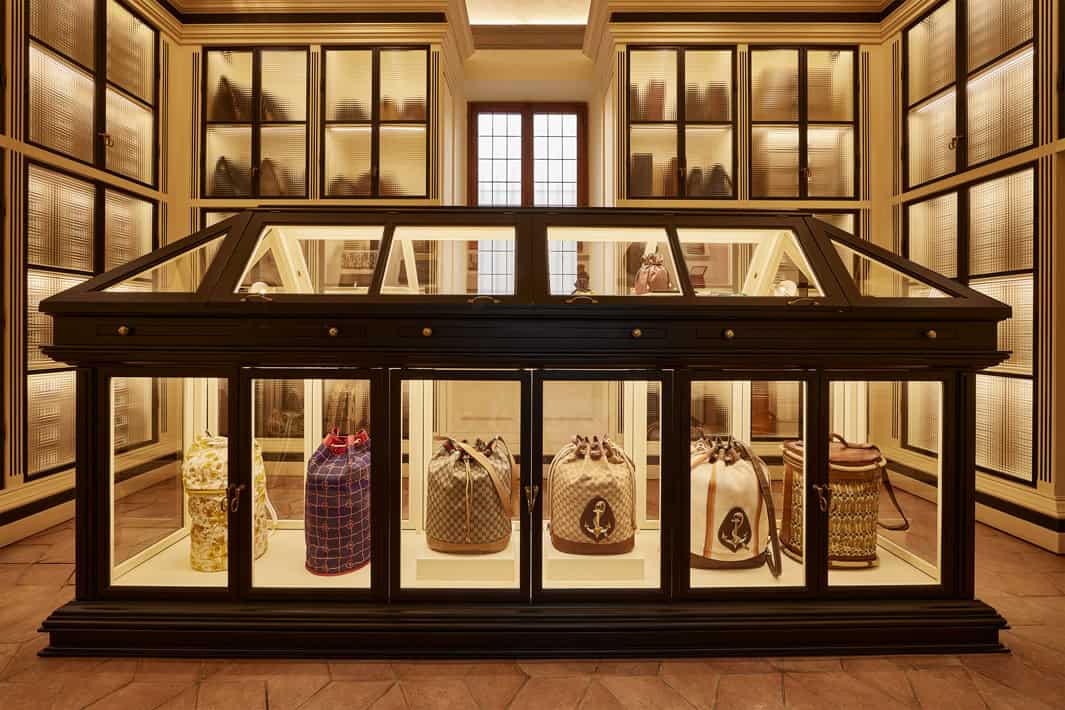
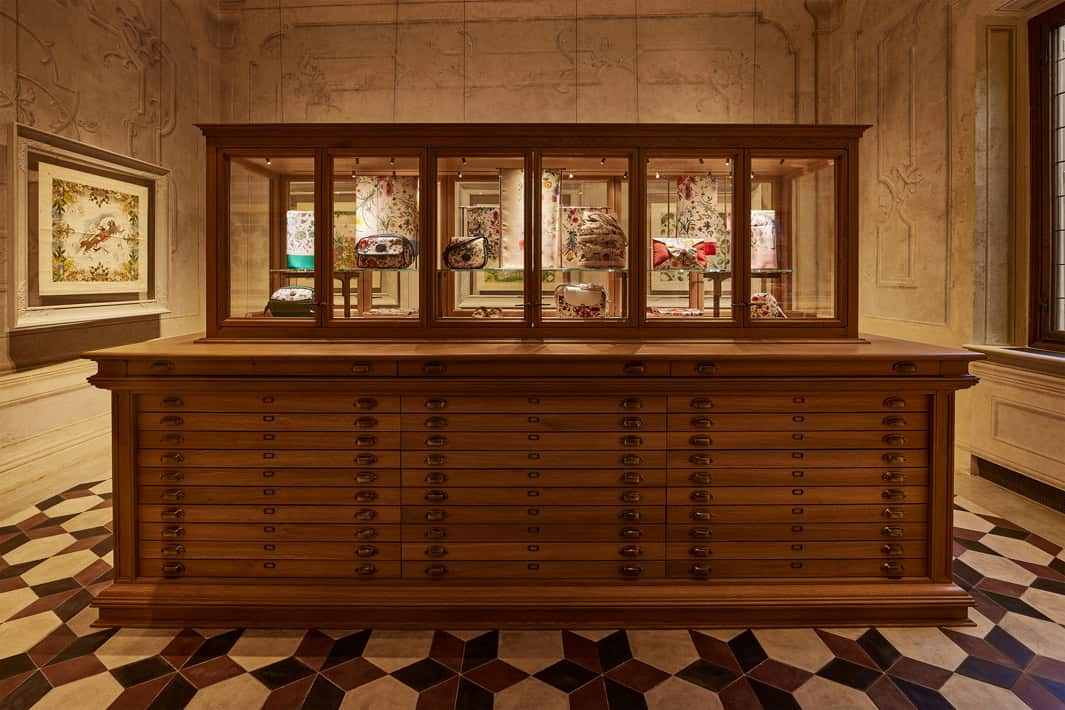
From left; Tom Ford’s Gucci collections reside here, as will Demna’s; duffel bags in a basement room; the scarf room
Giorgini guided me through three floors, each room dedicated to a particular product or aspect of Gucci’s history. There are shelves of Horse bit loafers and Jackie bags, drawers containing original artwork for silk scarf designs by Vittorio Accornero de Testa (the artist who created the Flora print), cupboards heaving with monogrammed luggage, and a lifestyle room crammed with Gucci cocktail sets, tennis gear, executive desk toys, china lamps, pet accessories and more.
One vitrine is dedicated to Bamboo bags from every era. Giorgini points to the earliest example in the collection. It’s hardwear made from polished saddle leather in the early 1940s, when more luxurious leathers were difficult to source in wartime Italy and brands like Gucci had to improvise. Remarkably, he bought it online and originally thought it was fake because, even in the 1940s, Gucci was one of the most copied brands. He sent it for testing at the brand’s in-house laboratory, who matched the leather, colour and glue used and declared it genuine.
A wall of Jackies tells the story of the bag’s evolution.It began as a soft hobo-style, carried by Jackie Kennedy, went out of fashion in the 1980s (although Gucci continued to make it) and was revived by Ford (he also bought the rights to the Jackie name). He gave it more structure and experimented with black hardware and square piston fasteners. The latest Jackie has just entered the archive. Created by Demna in ultra-soft, but deliberately scratched, black leather, it brings the collection bang up to date.
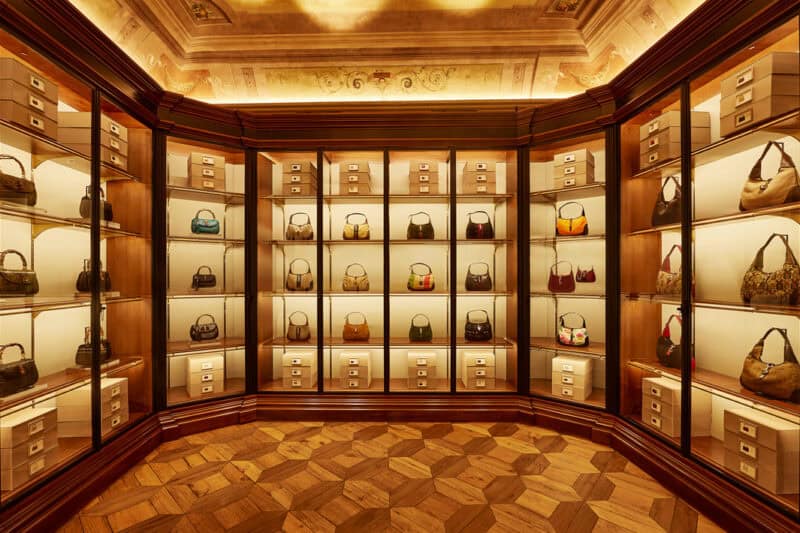
early Bamboo and Jackie styles on display in the bag room at the Gucci archive
We linger over a cabinet holding an early pair of Gucci Horse bit loafers. They were introduced by Aldo Gucci (son of founder Guccio Gucci) in 1953, the same year that Gucci opened its first international store in New York. The brand had never made shoes before, and Aldo’s focus on the loafer was surprising. Trainers wouldn’t become ubiquitous until the late 1970s, and in the 1950s, loafers were considered a comfortable, everyday, low-status shoe. They were not luxury items until Aldo decided to make them to the highest level of Gucci craftsmanship, changing the perception of the shoe entirely. As his new American clients eagerly embraced the idea, Gucci loafers became a status symbol and powered the international growth of the brand in the 1950s and ’60s.
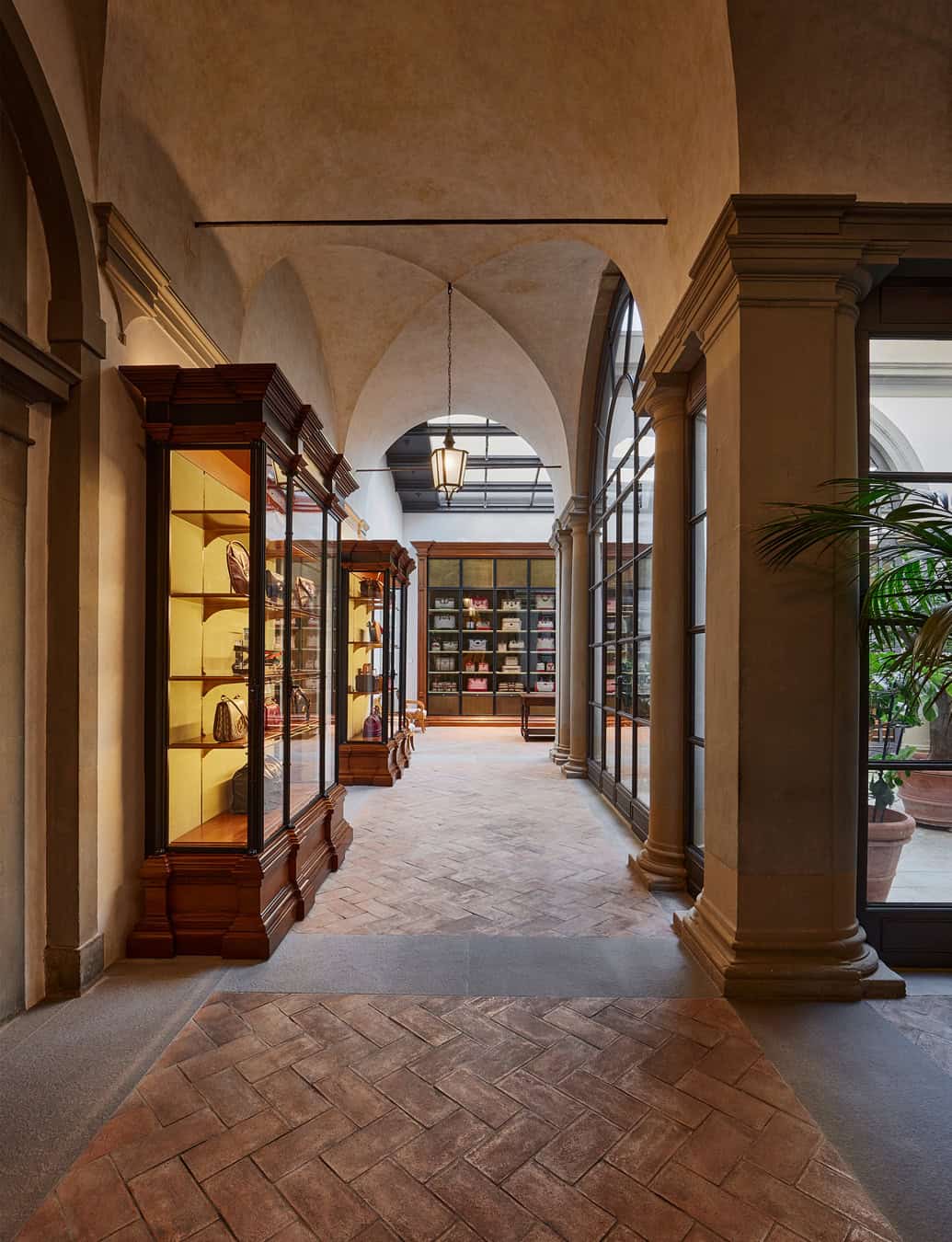
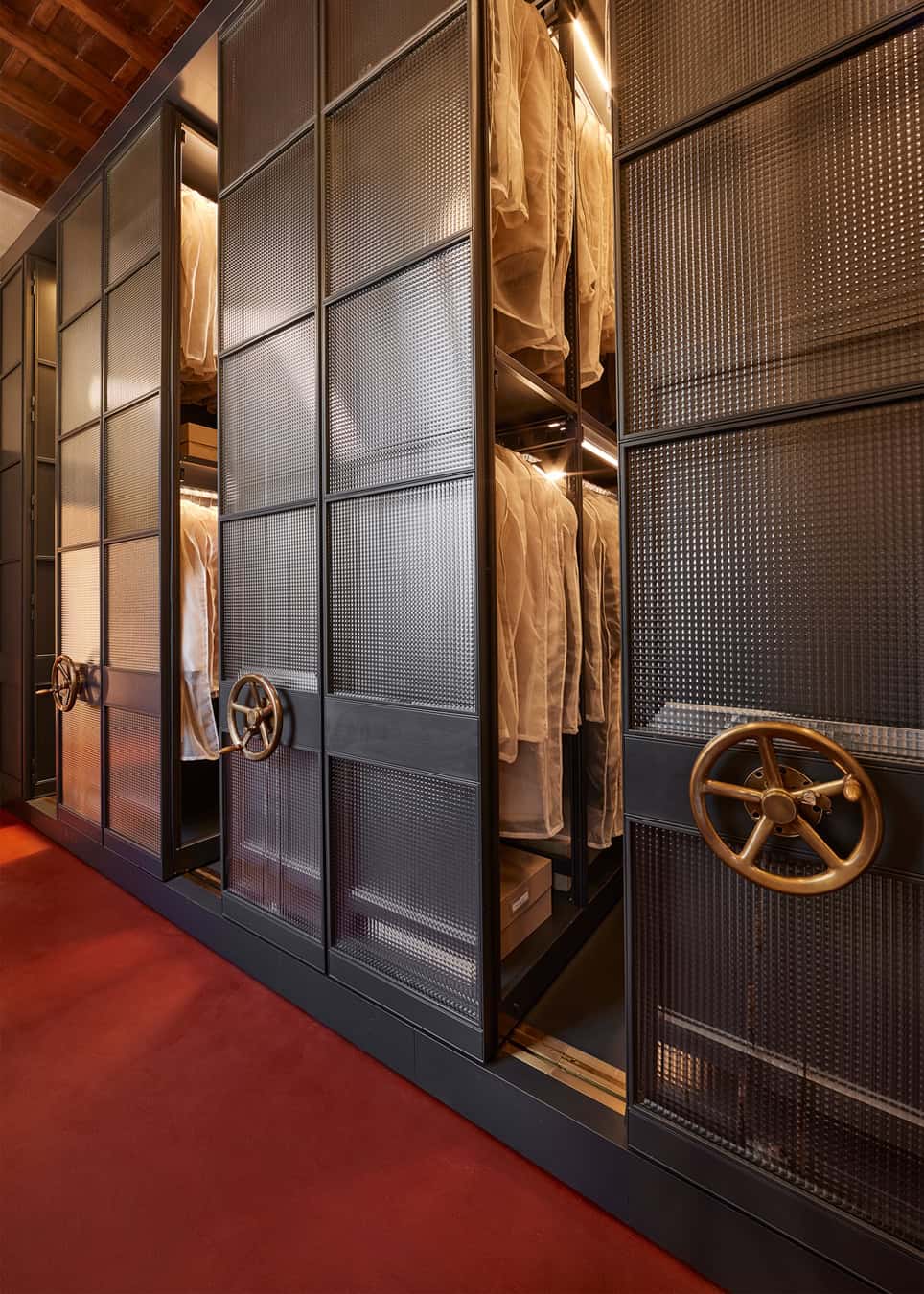
From left; the central courtyard at Palazzo Settimanni, which was transformed into Gucci’s archive by former creative director Alessandro Michele; the vaults inside the archive
That high/low casual but crafted aspect of Gucci is something that clearly appeals to Demna, who toured the archive when he started the job and continues to use it as a regular touchstone. When he was planning his cruise show in New York, the heritage department told him of Gucci Galleria, the private clubhouse-cum-shopping suite for VIP clients that once sat above the Fifth Avenue flagship in New York and was accessed by a golden lift key.
With a brand as old as Gucci, there are gaps in the collection. Although they staged runway shows in the’60s and ’70s (in American department stores, never in Italy), little is known of Gucci’s fashion output before Tom Ford. Giorgini hopes one day to find an original piece of luggage from 1921, the year the brand was founded in Florence. The oldest example they have currently is from the late 1920s. The heritage department never rests.
Issue 77 of 10 Magazine – FUTURE, LEGACY, HERITAGE – is on newsstands now. Order your copy here.
Photography courtesy of Gucci.