April 22, 2026 |
On a quiet stretch of industrial North London – where former factories double as studios – Nicola Woollon and James West built the foundation of Fevvers (born in 2025) long before it had a name. “We met living next door to each other in an industrial area of North London where big warehouses got turned into artists’ live-work spaces,” Woollon says. Their early collaborations leaned towards the improbable – “quite bonkers, large-scale projects,” including wrapping a building in patchwork – but the dynamic stuck: Woollon pushing ideas forward, West grounding them. “Anything that has been a bit crazy, I’ve taken to James, and he’s put some reality to the scenario.”
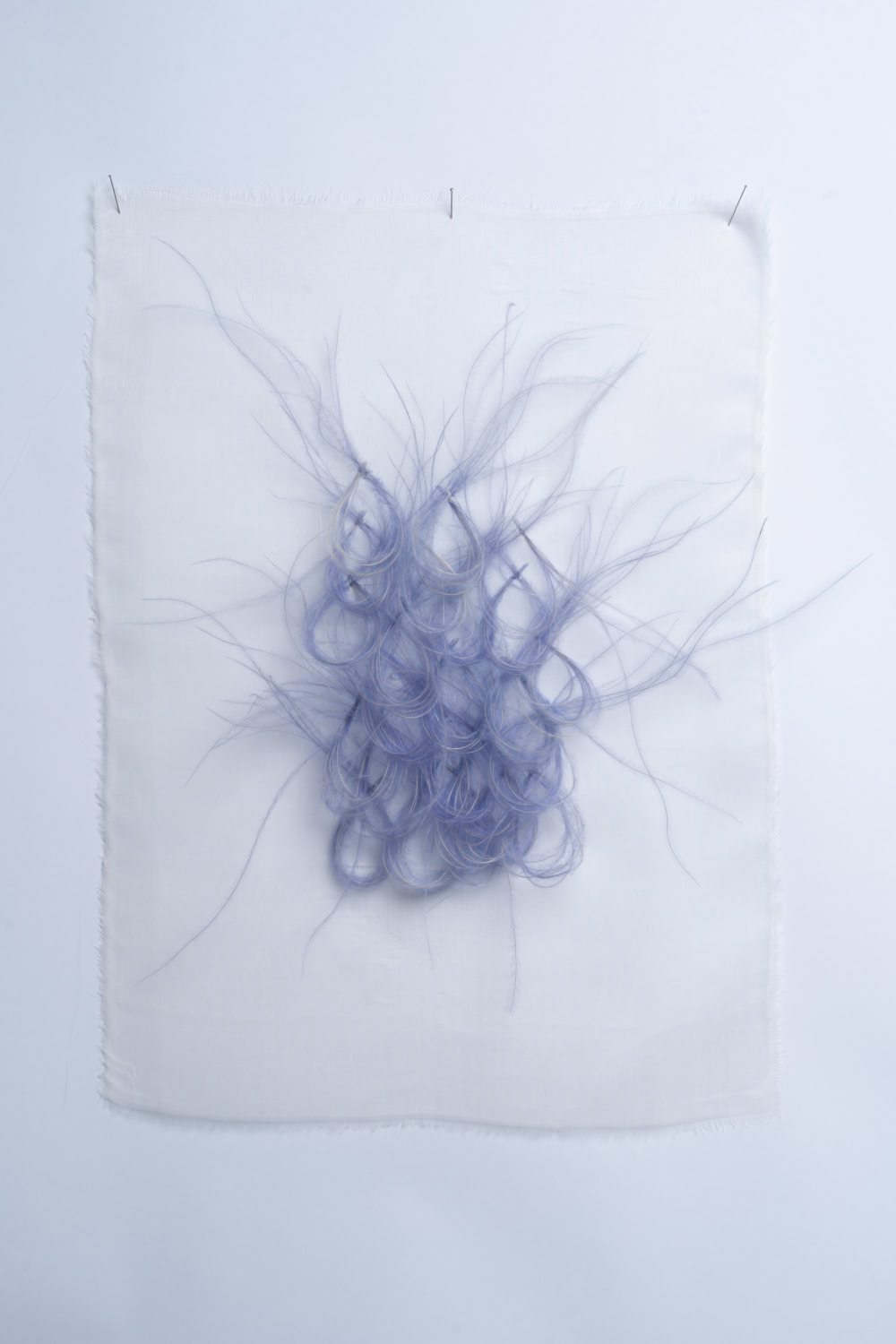
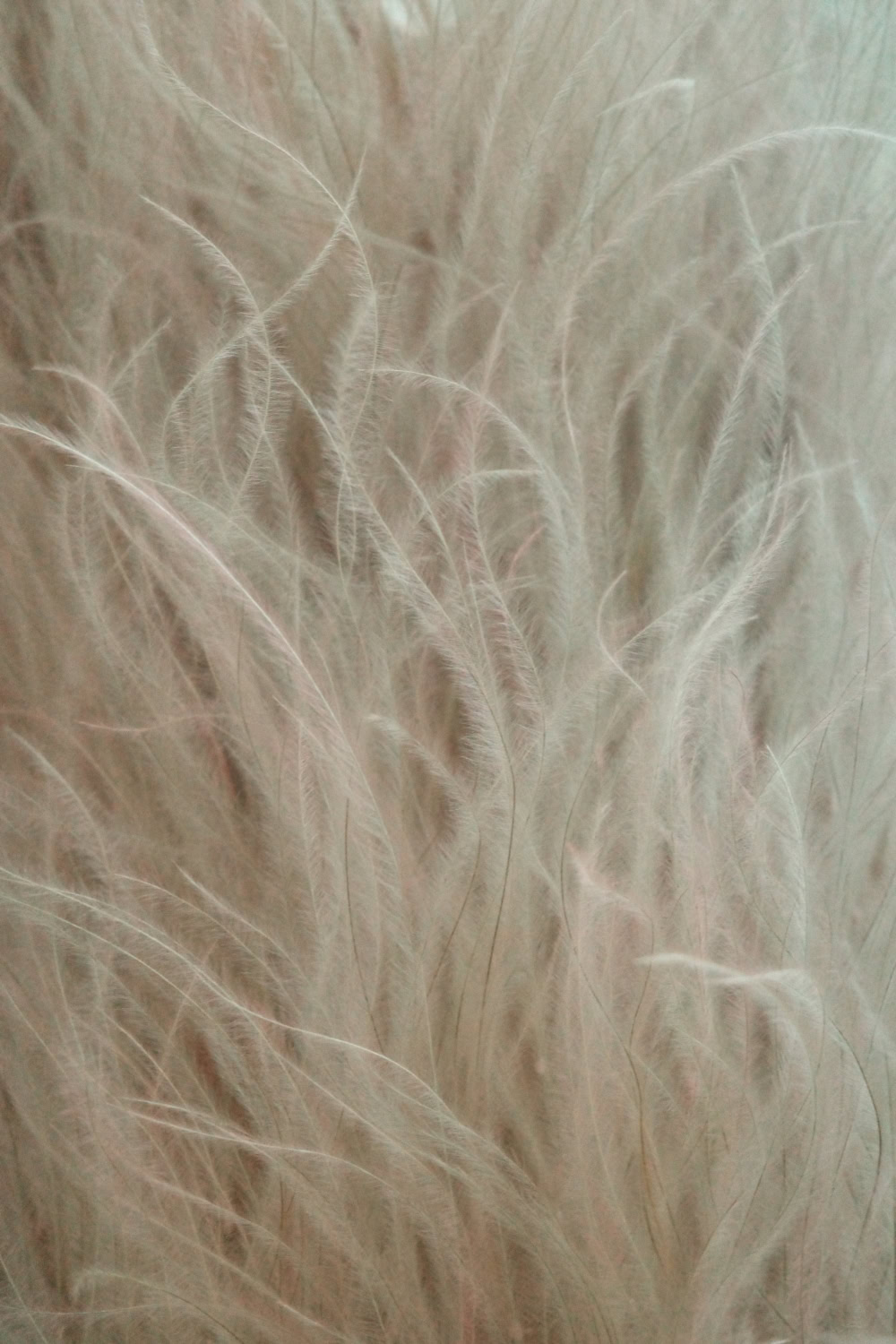
That balance now underpins a material the fashion industry has spent years trying, and largely failing, to develop. Fevvers’ patent-pending plant-based feather alternative sits in a category of its own – neither synthetic nor animal-derived, and crucially, not plastic. [So far] closely resembling ostrich feathers – all the idiosyncrasies and nuances – these fine, filament-like strands are soft, layered and fluid, with a natural irregularity that catches the light and shifts with movement, mimicking the airy lift and subtle sway of the real thing rather than sitting flat or overly uniform.
Woollon’s starting point was practical. Having worked across embroidery studios in the UK, Europe and India, she had seen repeated attempts to replace feathers fall short. “There’s been a search… for an alternative to feathers,” she explains, listing past experiments with printed silks and frayed chiffons. “They’ve been quite cool, but nothing has ever really been as natural looking as a real feather… until we developed Fevvers.”
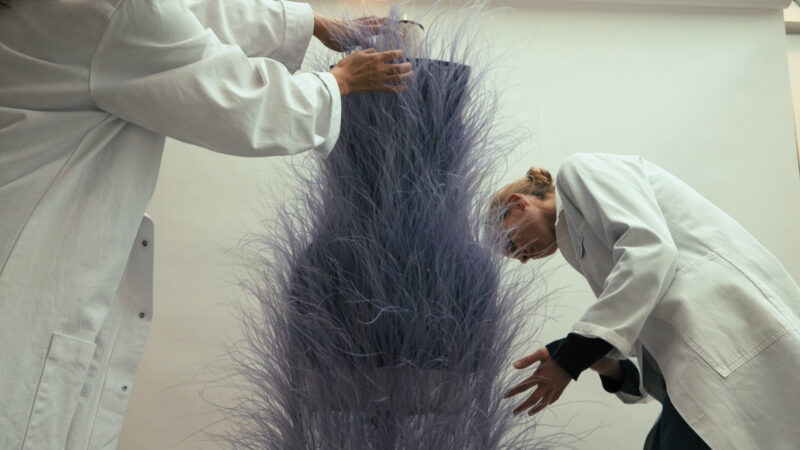
The difficulty lies in specifics: the irregularity, the movement, the lightness associated with ostrich plumes. “Each one is quite unique,” Woollon notes. Reproducing that variability – rather than a flat approximation – became the focus.
Complicating matters further is a market that obscures as much as it reveals. “You put ‘faux feathers’ into Google and they’re all brightly coloured and it says fake vegan feathers,” West says. “But when you dig into it, they’re actually real feathers.” Beyond that, alternatives tend to sit in the craft space, not luxury. Fevvers bridges that gap with something visually convincing enough to stand up in high fashion. “To the eye, you go, ‘Wow, I can’t believe that’s not an ostrich feather.’”
Despite assumptions, the process doesn’t hinge on advanced biotech or anything of the like. “We’ve brought our strengths to the party of textile engineering,” West explains. Early interactions with scientific researchers felt out of reach – “language that we just couldn’t even wrap our head around” – but the breakthrough came through applying craft knowledge differently, particularly Woollon’s understanding of how materials behave on garments.
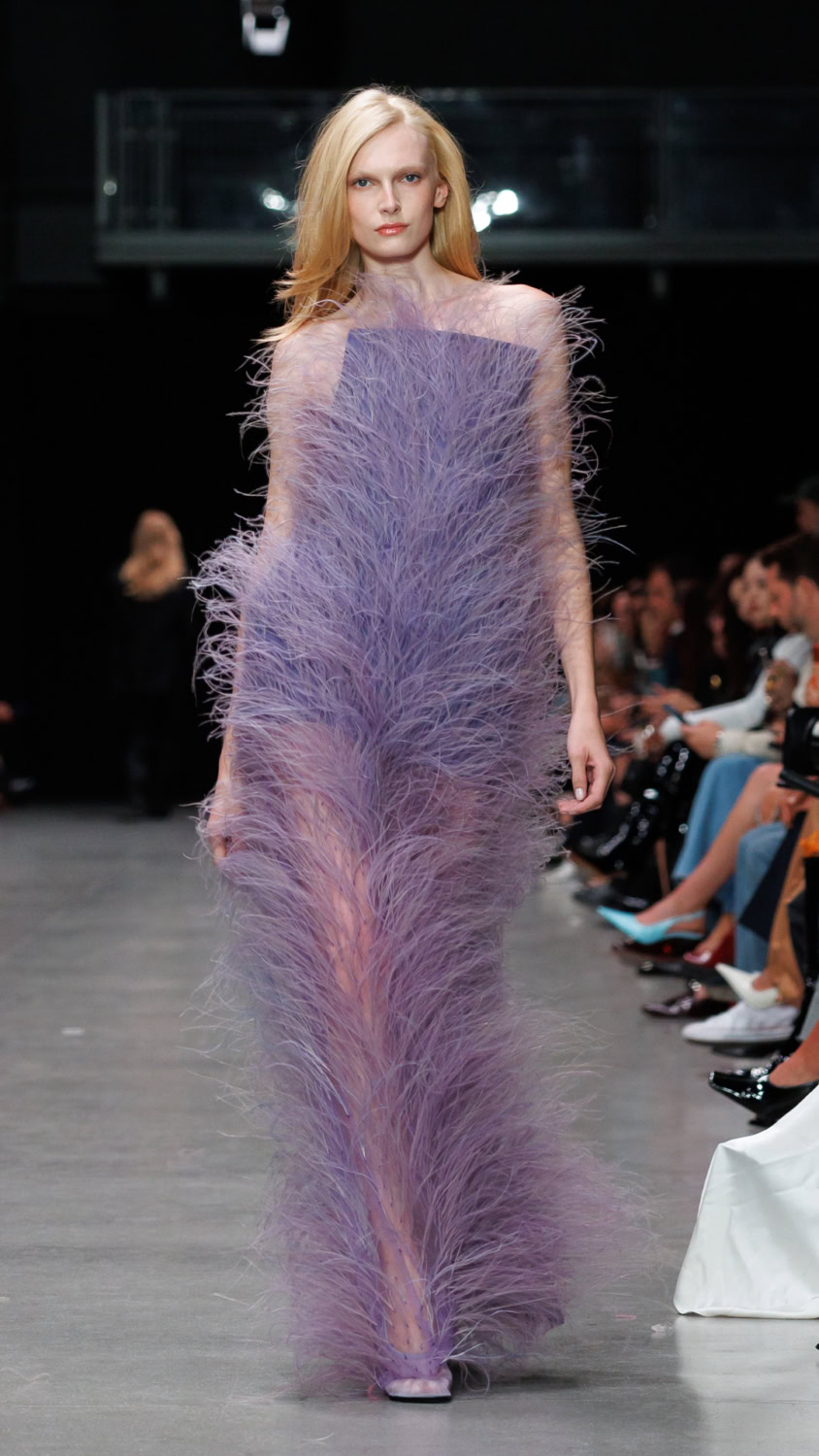
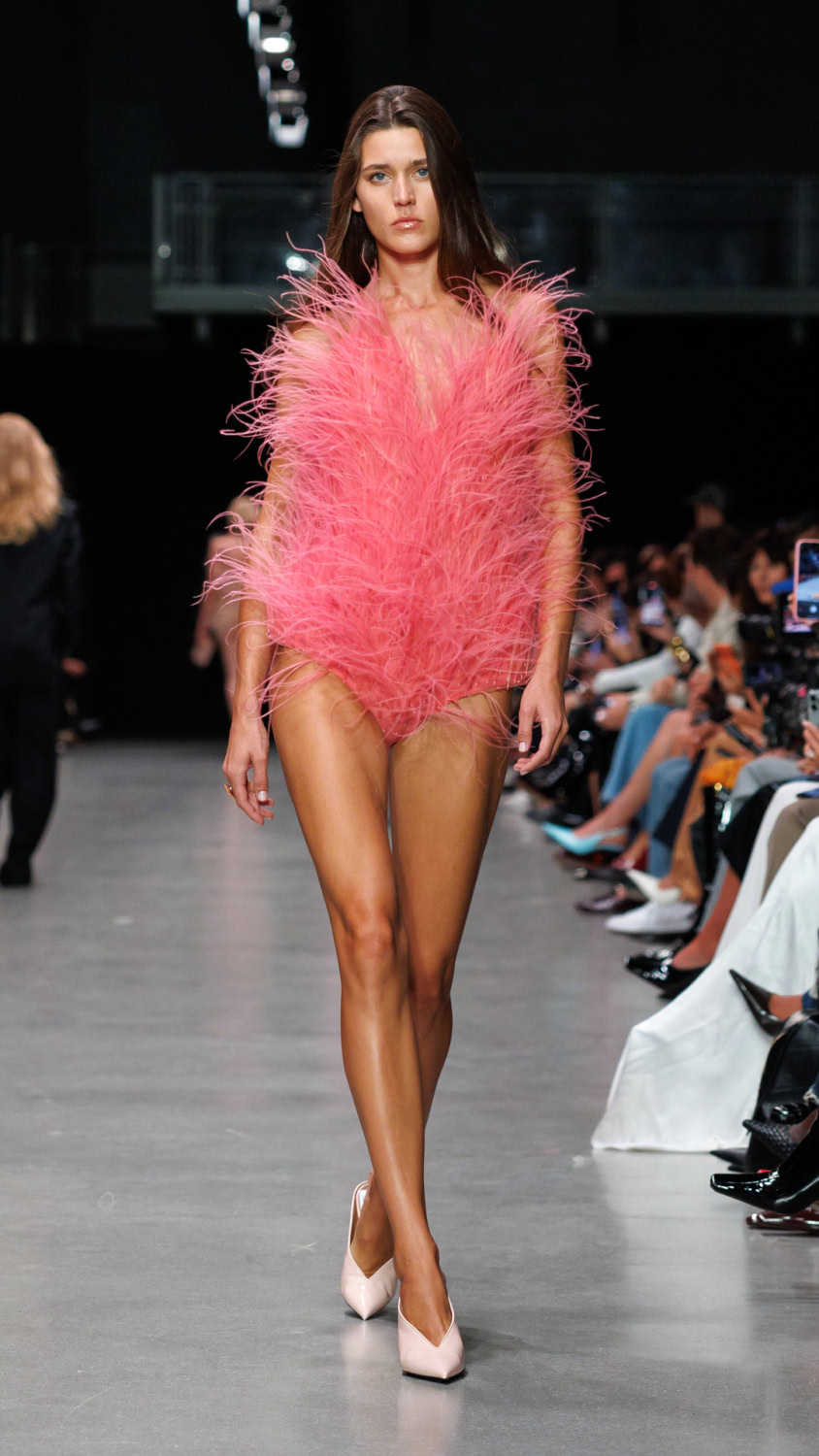
Fevvers at Stella McCartney SS26
That awareness proved critical when British designer Stella McCartney encountered the material. What might typically unfold over seasons condensed into months. “We saw her in June… we thought that maybe we’d be talking for a few months,” Woollon says. “But she was very much, ‘Let’s use it immediately. This is amazing. Wow.’”
The collaboration culminated in Fevvers’ runway debut at McCartney’s SS26 show in Paris, where soft pastel iterations moved through corseted gowns and structured bodices. It marked a shift from development to application under real pressure. “We really had to sort of put our foot on the pedal and go, go, go.”
For McCartney, the appeal is aligned with long-standing principles. In her words: “It’s not only the world’s first plant-based feather alternative, but it’s also proof that brands who continue to use feathers are choosing cruelty over creativity.” For Fevvers, the experience clarified how quickly innovation needs to translate once it reaches the right platform.
Production remains deliberately contained. The company operates from a UK micro-unit while refining durability and finish, with expansion tied to collaboration rather than scale for its own sake. “It can go anywhere a feather can go or has gone, or maybe beyond,” West says, pointing to fashion, interiors and performance context, though the positioning stays firmly premium. “It’s still luxury… just using the material bumps up the price.”
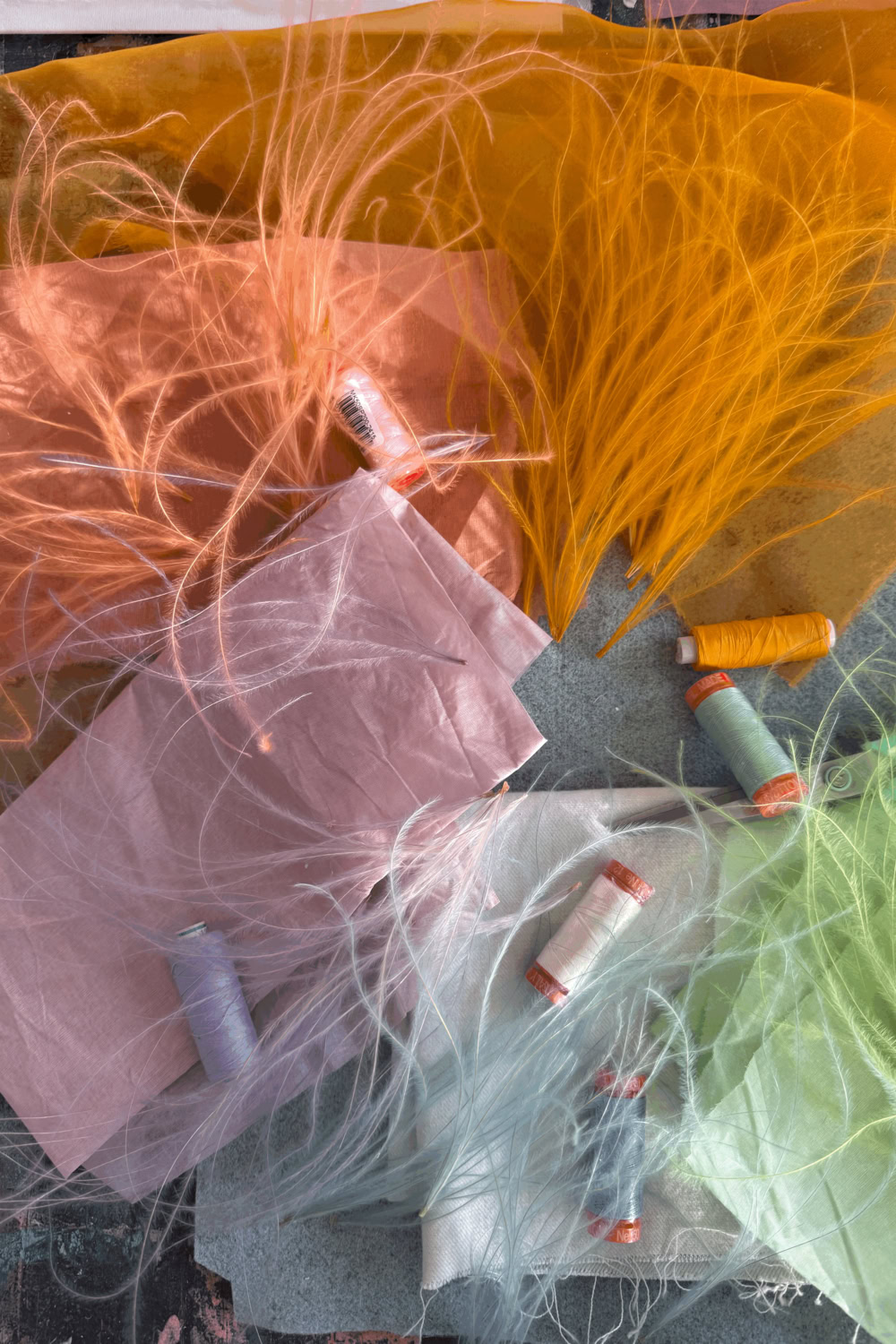
That framing is part of a broader shift. Traditional feather production carries a heavy ethical and environmental footprint, from resource use to animal welfare concerns. “They’re all prematurely slaughtered… any livestock farming is incredibly intensive,” West notes. Fevvers offers a different baseline, even as the company works towards more precise impact data.
For now, the focus is clear. “It’s the hero product,” Woollon says. Future materials aren’t ruled out, but they aren’t the immediate priority either. What matters is the approach: identifying a problem and working through it from first principles. As West puts it, “a willingness to be playful… and invent.”
Fevvers doesn’t position itself as a replacement so much as a reset – a material that meets fashion on its own terms while quietly changing what those terms can be.
Photography courtesy of Fevvers.
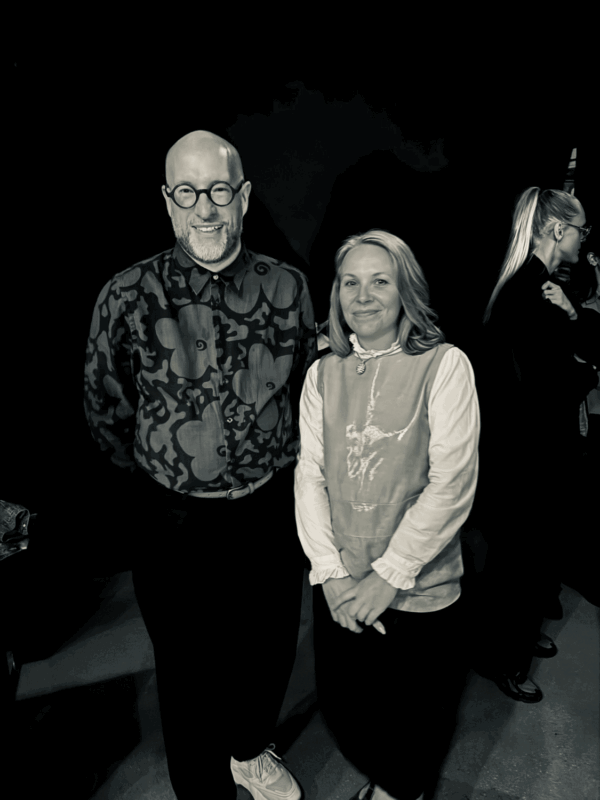
from left: Fevvers co-founders James West and Nicola Woollon