April 14, 2026 |
The hotel world has often run on a familiar formula: grand families or big corporations with a set of fixed rules, plus a strong resistance to change. But a new kind of industry player is rewriting that script. They may not be rejecting tradition outright, but they are all following their own paths. Here are eight hoteliers who span continents and aesthetics, from Lake Como to Marrakesh, Upstate New York to Malta, yet share common instincts: to build places that feel personal and grounded in their culture, and are sharply aware of how people actually want to travel now.
Avi Brosh, Palisociety, USA
Avi Brosh opened his first hotel, Palihouse West Hollywood, in 2008. Since then, his company has filled an increasingly rare space in hospitality: a growing hotel group that still feels personal and at home in its neighbourhoods. While the group now spans multiple cities, including openings last year in Napa Valley’s St Helena and Laguna Beach, it has avoided the flattening effect that often comes with expansion. “I’ve never been interested in scale for scale’s sake,” Brosh says. “Growth only makes sense if each hotel still feels like it could only exist in that place, at that moment.” The connective throughline across Palisociety is about warmth, comfort and the kind of guest rooms that feel like you’re staying at the home of your worldly, fun, slightly bohemian aunt and uncle’s house, which is full of quirky oil paintings and patterned, colourful fabrics and wallpaper. “The goal is for each hotel to feel like it’s run by people who genuinely care about that specific and individual place and the community around it. We go through painstaking measures to make sure things do not come across as rinse and repeat.” From Seattle and San Francisco to Santa Monica, it’s a radical idea in an era of relentless growth, and one that keeps its loyal fanbase returning. “I would like for Palisociety to be a legacy brand people seek out because it feels unique, trustworthy and great value,” he says.
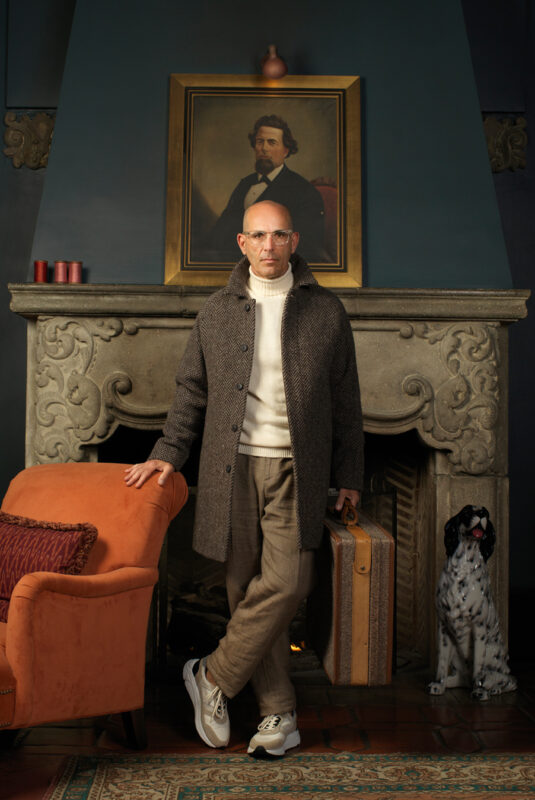
Avi Brosh; photography courtesy of Palisociety
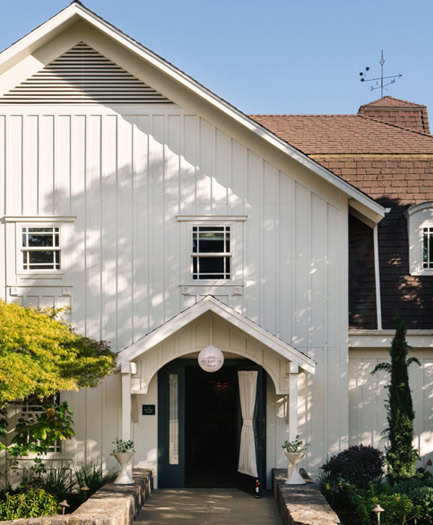
Le Petit Pali in St Helena, California; photography courtesy of Palisociety
Christopher and Suzanne Sharp, Casa Bonavita, Malta
London-based husband-and-wife team Christopher and Suzanne Sharp, founders of The Rug Company, will open Casa Bonavita this May. And not only will they be debuting their first hotel, but they’ll be reframing how Malta enters the travel conversation. Long overshadowed by regional tourism mainstays like Italy, Greece and the South of France, the 122-square-mile island hasn’t typically been a default Mediterranean choice for travellers. Casa Bonavita just might change that. The 17-room property occupies an 18th-century family home in Attard, about a 20-minute drive west of the capital, Valletta, and has been restored over five years. It’s surrounded by gardens the Sharps have been nurturing for more than a decade, and their approach feels decidedly residential: suites with verdant outdoor spaces, a renovated house kitchen that now serves as a gathering point for coffee and pastries, and interiors layered with inherited furniture, collected art, Sicilian marble and Murano glass. Suzanne was born on the island, and her design background and history with the locale are evident, though subtle. “It’s not about presenting a polished fantasy of the Mediterranean, but allowing Malta’s character to emerge naturally,” she says. That sense of letting place, history and daily life do the work may be Casa Bonavita’s most persuasive argument, positioning the island nation not as an alternative, but as a destination with its own emotional pull. “If Casa Bonavita can encourage travellers to look beyond familiar routes and engage more thoughtfully with Malta, that would feel extremely rewarding,” she says.

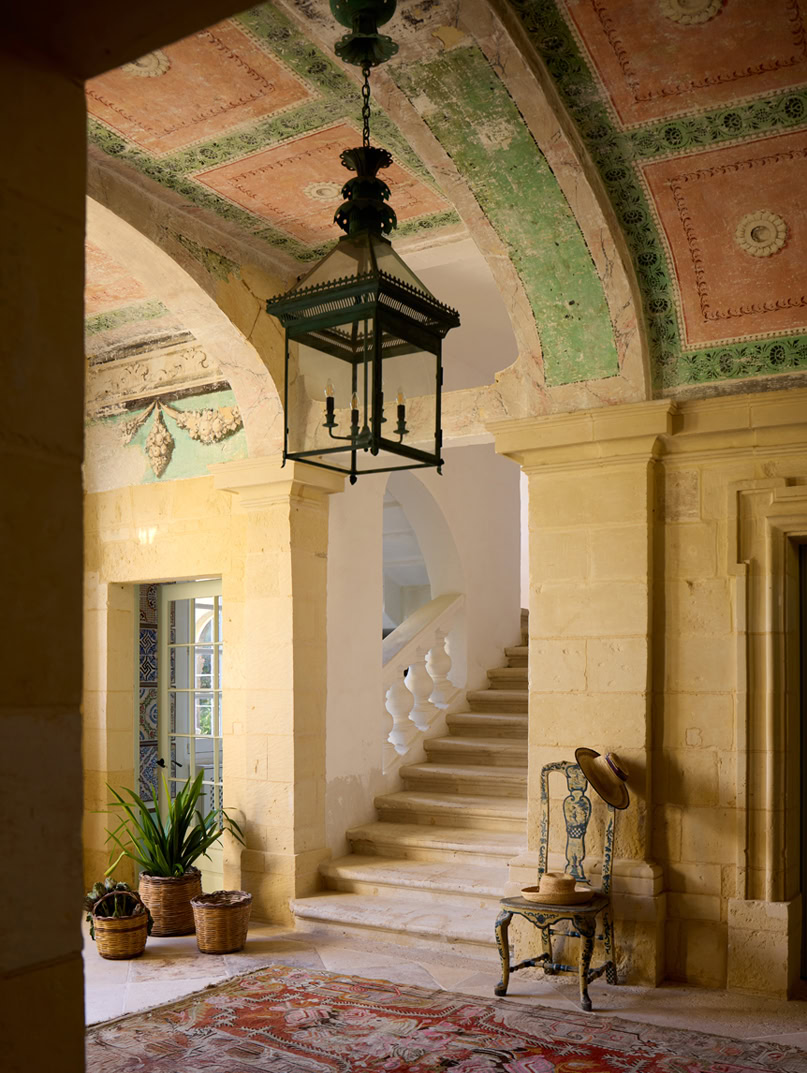
Christopher and Suzanne Sharp and Casa Bonavita, on the island of Malta, which occupies a restored 18th-century villa; photography courtesy of Casa Bonavita
Sterrekopje Farm, Franschhoek, South Africa
Partners Fleur Huijskens and Nicole Boekhoorn created Sterrekopje Farm, about an hour’s drive east of Cape Town in Franschhoek, as an almost “anti-wellness” wellness retreat. Instead of a conventional health-focused resort, what they developed instead is something far more special: a place that feels guided by the land and seasonal rhythms rather than the prescriptive, hyper-scheduled protocols found at so many other high-end wellness properties. Both women had travelled widely through Europe, Asia, India and Africa, encountering luxury resorts that felt overly clinical and programmed. “Witnessing the people around me, what I realised was that we are all just looking for a bit more love,” Boekhoorn says, describing what she feels is at the heart of guests’ true desires. “I could not find a place offering that, so decided I had to create this place myself.” The rural,123-acre property comprises 11 suites scattered across restored Cape Dutch heritage buildings dating back to 1694, surrounded by gardens that feel free and slightly wild. “Everything starts with the earth, the soil,” she explains. Fragrant herb gardens, harvest rounds, hikes and sunset games allow guests to move slowly and connect with the magical surrounding landscape. “Sterrekopje is a labour of love coming from a deep conviction about how to live life well, fully, joyfully and regeneratively.”
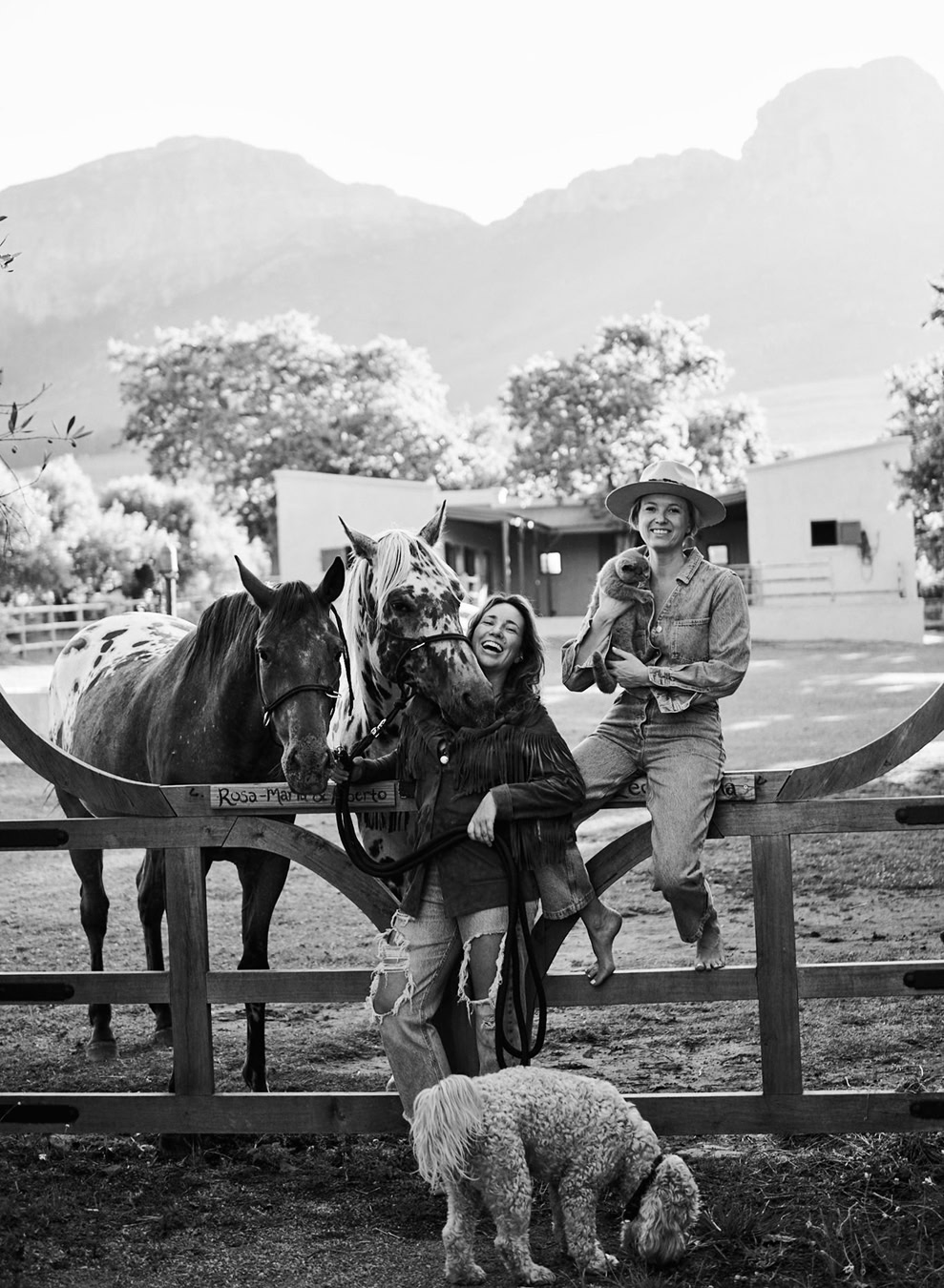
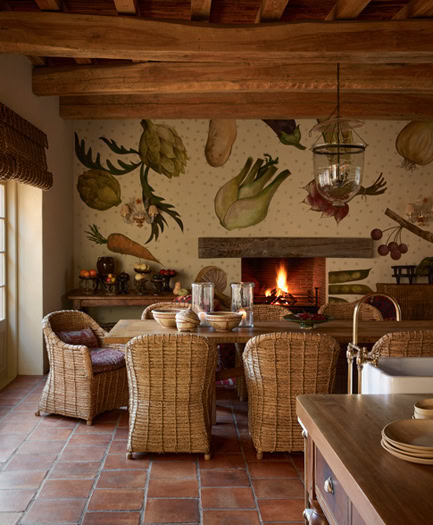
Fleur Huijskens and Nicole Boekhoorn and Sterrekopje Farm in Franschhoek, South Africa; photography courtesy of Sterrekopje Farm
Taavo Somer, Inness, Accord, New York
When Taavo Somer opened Inness, the idyllic, 220-acre hospitality compound in Accord, Upstate New York, the ripple effects were immediate, even if that was never the point. Over the past few years, places like Inness, with its cosy-yet-gorgeously minimalist aesthetic, have helped make Ulster County (and the surrounding counties including Sullivan and Dutchess) feel newly legible to New Yorkers: close enough for a weekend, relaxed enough to feel like a true getaway, and increasingly framed as an antidote to the Hamptons’ rigid, frantic social scene. Somer insists the origin story was far simpler. “The idea for Inness started for completely selfish reasons,” he says, recalling a perfect summer Sunday in 2016 spent swimming, grilling and lingering on a grassy lawn in Accord. When the last guests drove back to the city, he asked himself: “What if there was a place Upstate that had the pool, the food, the drinks, the lawn and did all the clean-up?” Inness grew from that impulse to recreate that same feeling. The informal, generous sensibility and pitch-perfect design has made it one of the most sought-after retreats for stressed out New Yorkers since it opened in 2021. Somer is now extending that point of view beyond the property with Little Goat, a neighbourhood bakery, café and restaurant that opened in nearby Rhinebeck last summer. Asked what he thinks about the increased popularity and new hotels popping up in the region, Somer says he’s excited by it. “I want to see more cool places open, more groovy neighbours move in, old buildings restored, and landscapes preserved. Whether something is trendy or of the moment, or lasts for decades, matters less to me than the intention behind it. What matters more is when people are genuinely invested when they move here, start businesses, restore homes and care about becoming part of a place rather than just passing through.”
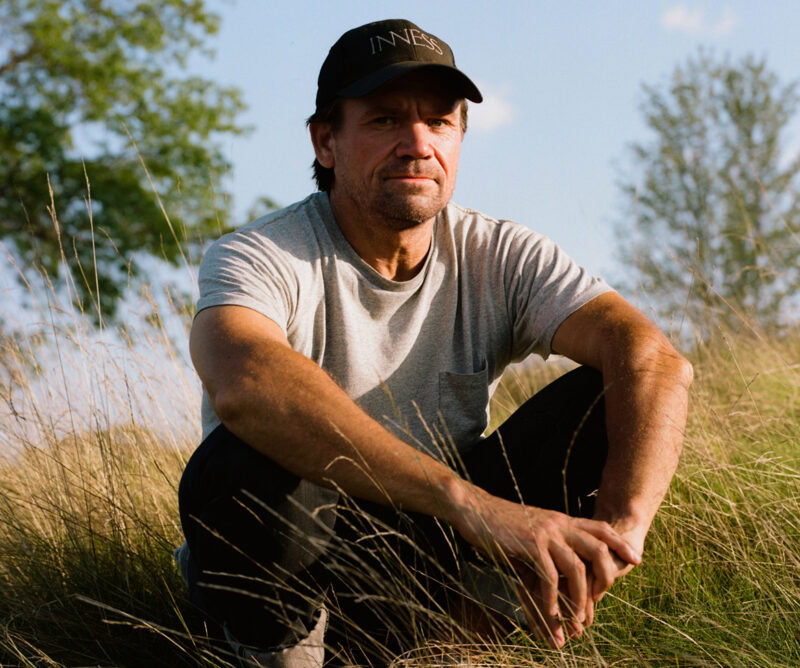
Taavo Somer; photography courtesy of Mark Sommerfeld.
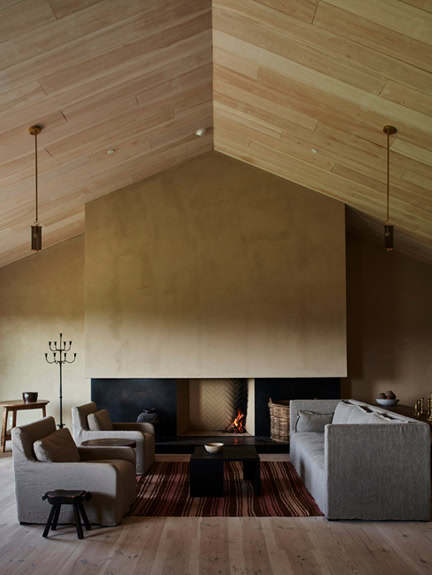
The lounge at Inness in Accord, New York; photography courtesy of Adrian Gaut
Meryanne Loum-Martin, Jnane Tamsna and Jnane Karwan, Marrakesh, Morocco
Meryanne Loum-Martin opened her 24-room hotel, Jnane Tamsna, more than two decades ago, and looking back, it’s clear that she reset expectations for what a hotel in Marrakesh could be. As the city’s first Black hotelier, Loum-Martin brought a perspective shaped by movement between cultures, continents and visual traditions, and applied it to a place long defined by more formal ideas of “Moroccan style”. What she created was a hotel that resisted uniformity at every turn. “Designing in Marrakesh is absolute freedom,” says Côte d’Ivoire-born Loum-Martin. “Here, you can weave together French art deco with the many cultures shaped by different expressions of Moorish influence, from the Sahelian worlds of Senegal and Mali to Morocco, as well as Spain, Portugal, Turkey, Northern India.” At Jnane Tamsna, that freedom translated into interiors that entrance visitors with Loum-Martin’s own taste. “I designed most of the furniture myself,” she notes. “Everything is personal and everything carries a story.” That philosophy now extends to Jnane Karwan, her newly opened, more experimental project, which introduces tented accommodations and an expanded platform for African artists. For Loum-Martin, it’s a continuation of her unconformity. “What a joy it is to own a hotel and design it from A-to-Z, being utterly incapable of making two rooms alike! Life is too short to be boring.”
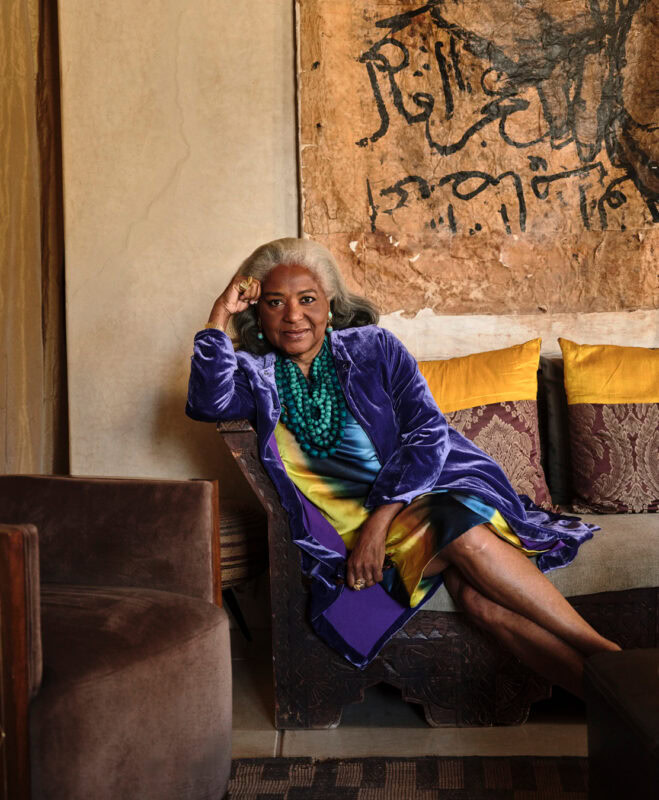
Meryanne Loum-Martin; photography courtesy of Jnane Karwan
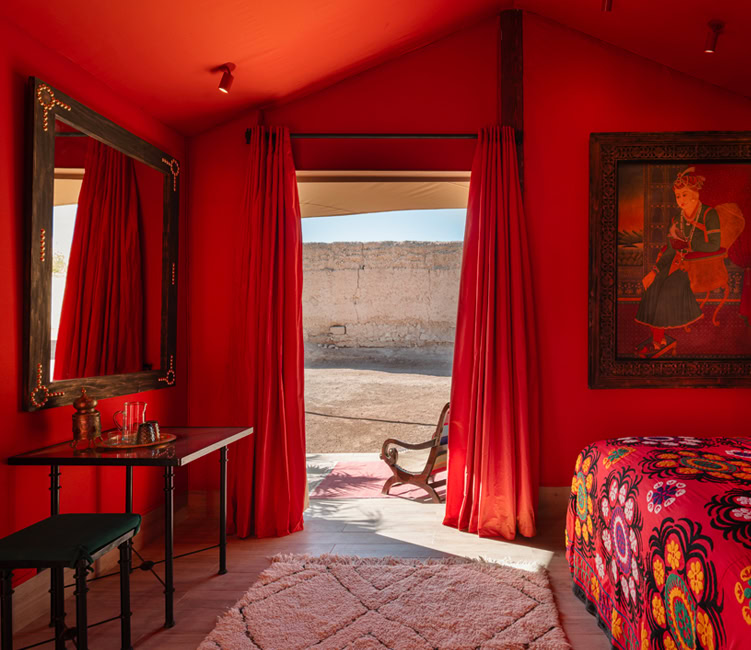
The Punjab Room at Jnane Karwan in Marrakech; photography courtesy of Jnane Karwan
Valentina De Santis, Grand Hotel Tremezzo and Passalacqua, Lake Como, Italy
When Valentina De Santis stepped into the CEO role of her family’s hotel business in Lake Como, she inherited more than a legendary name. Grand Hotel Tremezzo, now 115 years old, belongs to a lineage of grand Italian properties that’s typically resisted change. But De Santis represents a new generation of hoteliers with an old-school soul: custodians who understand what must evolve, but also what must not. “Inheriting Tremezzo felt like inheriting a story that was full of elegance and lakeside dreams,” she says. Her task, as De Santis explains, was not to revolutionise the property, but to ensure it still resonates for younger travellers, whose parents might have visited decades ago. While the surroundings might look formal, the staff and approach to guest relations are not. It also meant adding a second property to the family enterprise, with the opening of Passalacqua in 2022, a short boat ride across the lake. Guests often shuttle between the two for meals, or even split their vacation time in order to experience both. While Tremezzo remains a grand stage for travellers looking for a total Lake Como experience, Passalacqua (which is set on the grounds of a former private villa) offers something more intimate, with just 24 guest rooms. As Lake Como’s hotel scene grows more visible and in-demand every year, her focus remains on qualities that can’t be copied: “What makes our hospitality irreplaceable isn’t marble floors or delicious food, although we love those too! It’s a mindset, a way of life,” she says. “That’s something you simply can’t replicate everywhere.”
Top image: The Punjab Room at Jnane Karwan in Marrakech. Photography courtesy of Palisociety, Le Petit Pali, Casa Bonavita, Inness, Jnane Karwan, Grand Hotel Tremezzo, and Passalacqua and Sterrekopje Farm. Taken from 10 Men Issue 63 – CLASSIC, CRAFT, NOSTALGIA – out NOW. Order your copy here.
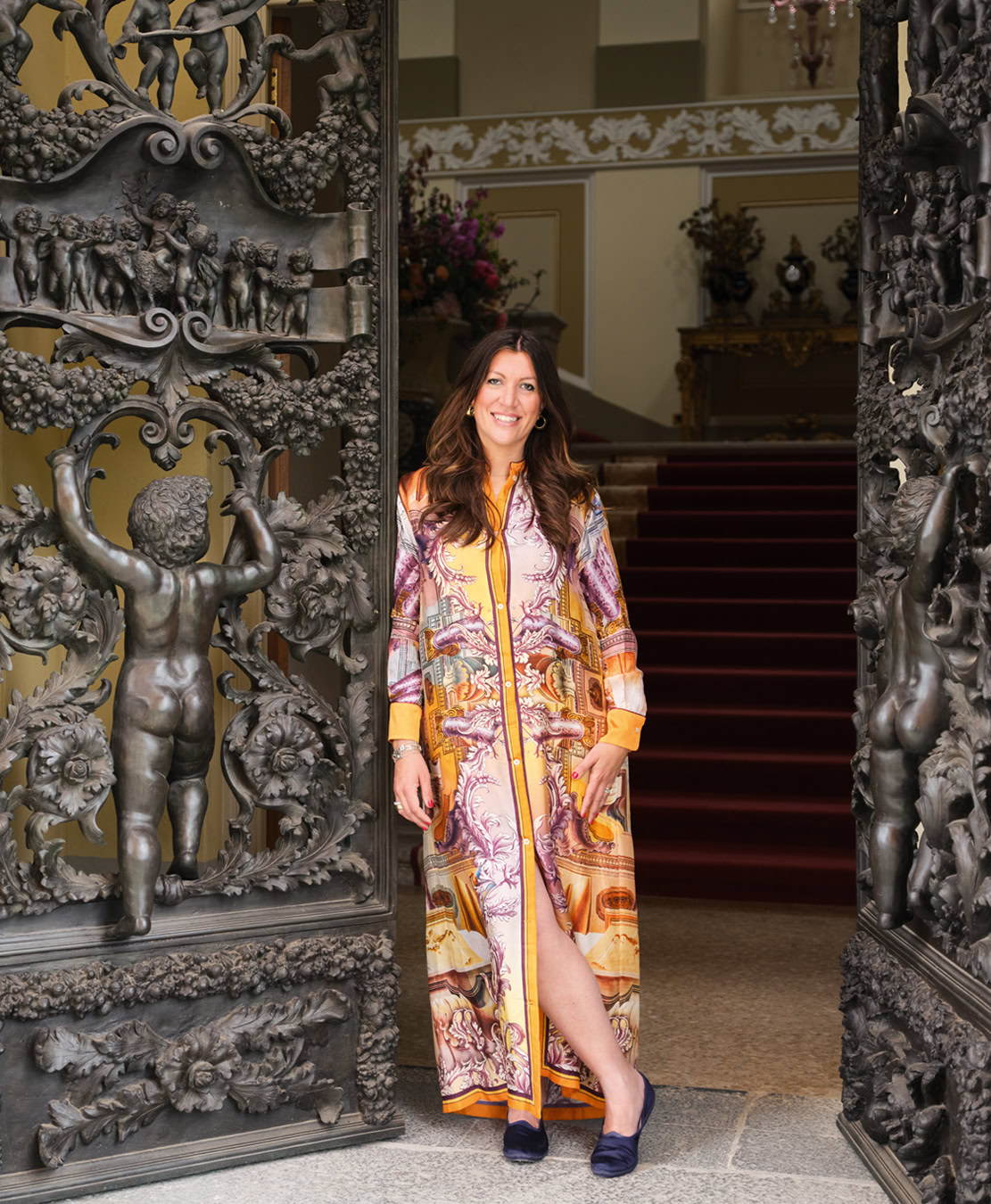
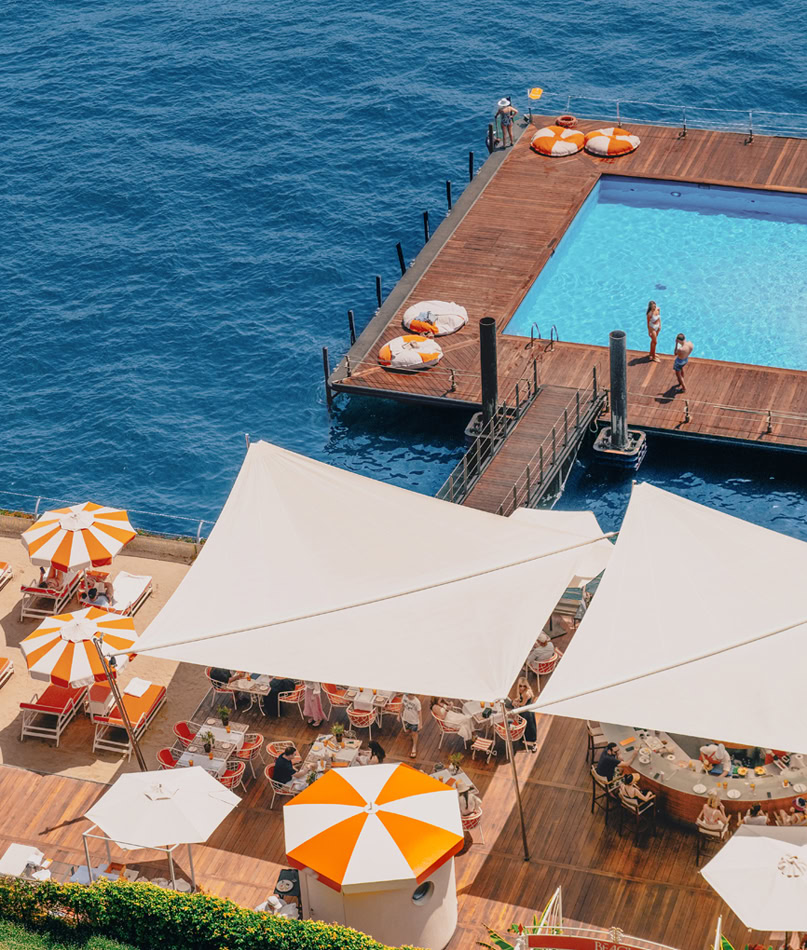
Valentina De Santi and Grand Hotel Tremezzo’s pool which sits directly on Lake Como; photography courtesy of Grand Hotel Tremezzo and Passalacqua