April 14, 2026 |
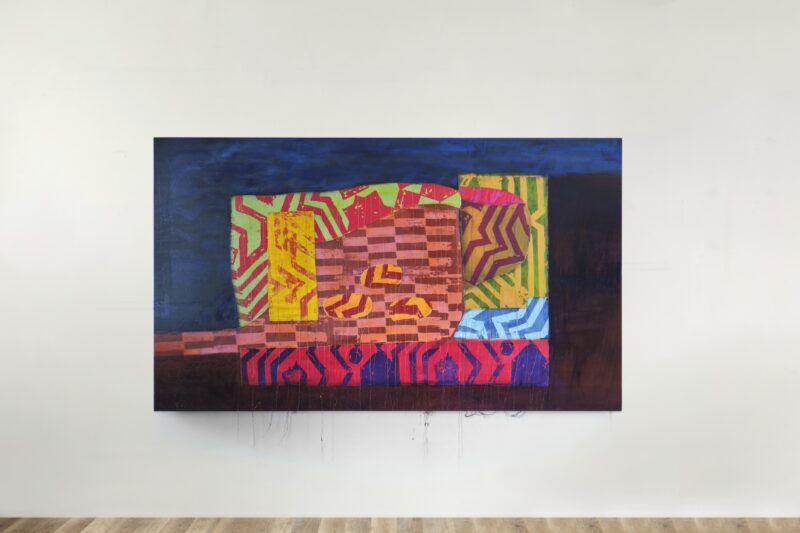
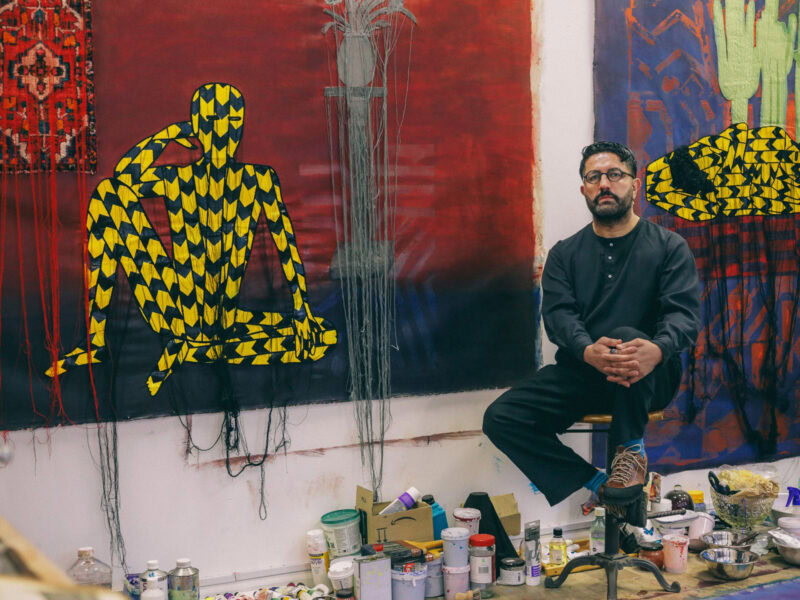
Home is where the heart is, or so the saying goes. But the heart is neither static nor passive, it moves with bodies and narratives, shaping how we experience life and the world. And, in turn, so do our homes. A Home That Will Not Behave, the latest show from interdisciplinary artist and writer Osman Yousefzada hosted by Bolanle Contemporary at Frieze’s No. 9 Cork Street space in Mayfair from now until April 25, takes this idea and runs with it. This new body of work, formed across a variety of media including oil and acrylic pigment, fibre, collage, screen printing, embroidery and hand painting, seeks to recontextualise the home as the living, breathing organism it is; “a charged and unstable site shaped by intimacy, memory and bodily presence.”
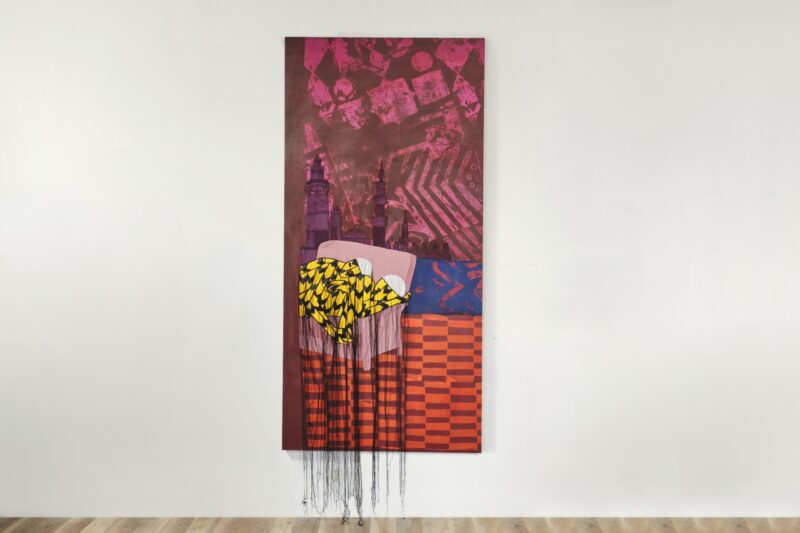
The show is deeply tactile, erupting from layered surfaces that blur the line between flesh and architecture. Yousefzada positions our bodies and the interiors we inhabit in symbiosis, folding into one another and receiving each other in memorial osmosis: fabric as archive, paint as recollective gesture, pattern as both decoration and sign. The Islamic and South Asian cosmological idea of the jinn – mystical figures that exist parallel to the human realm, often said to inhabit inanimate objects – is employed by the artist, who was born in Birmingham to Pakistani and Afghan parents, to animate these ideas. Blessed with the gift of free will, jinns enact both good and evil, and by extending this to our domestic halls, Yousefzada considers how these spaces brim with hidden influence and emotional reminiscence.
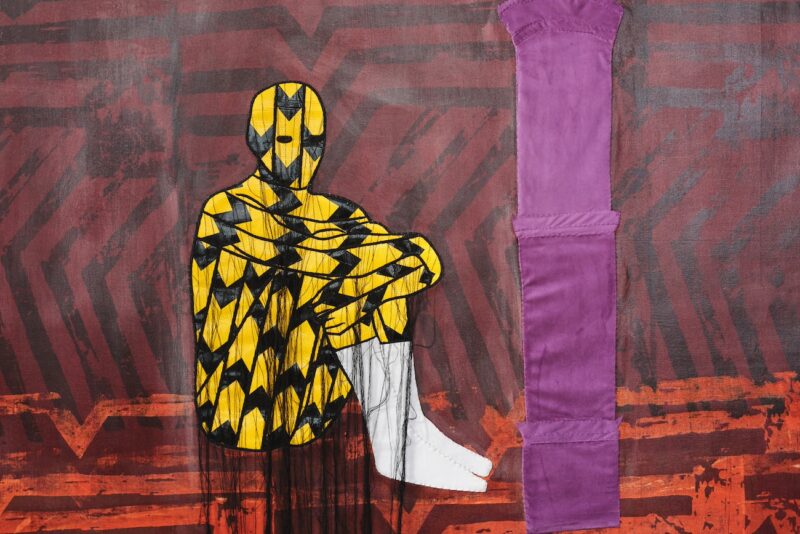
“That’s the foundation of my work; this idea of a place to belong, a place which is othered.” Yousefzada spends much time thinking about how he himself occupies space but A Home That Will Not Behave sees him look at the space itself, moulded in multiplicity by love, power, control and imagination. The exhibition, in No. 9 Cork Street’s Gallery 2, complements Gallery 1’s To Build And Remember, Martand Khosla and Saad Qureshi’s psychological exploration of the architectural practice. By reflecting on the home as “a space of refuge, refusal and transformation,” Yousefzada highlights the domestic interior not just as a space to exist in but as its own body, in flux, where narrative and memory collide. Here, we chat to Osman Yousefzada about the story behind the show’s name, the lessons he learnt about his practice whilst creating the pieces and what he expects audiences to get out of A Home That Will Not Behave.
1. Talk us through the name, A Home That Will Not Behave – what does this mean to you?
The home that will not behave hovers across four realms. The realm of the Domestic, The hidden world of the Jinn, Queerness and The gaze towards the Orient.
Firstly the vision of the domestic as home, as the site of refuge, privacy and of a cosy family life, is sold to us in popular culture as concepts of domestic bliss. These dominant representations of home-life are cherished, aspirational but the reality does not always match the image. The home is not always a place of security, it holds its own precarities.
The world of the jinn, is something I grew up. In Islamic cosmologies they live with the jinn, made of smokeless fire, and they are unseen and live amongst us. Some as friends, sometimes as even lovers, helpers, but also possessors and as mischief makers. My grandmother had her own jinn, which she said helped her through the trials of young widowhood, occasionally placing food items into her space when she needed help. Growing up with these stories, we were told never to walk near trees after dark or when the sun was going down. Hair always attracted jinns, and it was this element of the human body that the jinn used to possess you.
For me the jinn is the equivalent of the queer body, or the immigrant body. Shunned, feared, but also used and useful. The jinn is summoned up in rituals to seek favour or navigate the unknown – the perilous. Helping with matters of employment, love spells, black magic to bring destruction onto enemies. Similarly the queer body is often hidden, yet desired, and the immigrant is useful but shunned.
Queerness in this work, revolves around not fitting into conventional modes of being, the home that will not behave or fit in. Single parent homes, queer homes, homes that don’t necessarily give the comfort that we crave. In the same manner, the orient feeds into this work, and how it is imagined by the west. So, in the western imaginary, the orient is irrational, exotic and too emotional. However, it is useful in post impressionist paintings, the interiors are filled with eastern objects, Edwardian interiors inspired by the Orient, and even today [we talk] of appropriation. We are happy to consume someone’s labour or food but do not necessarily want us living next to us.
2. What have you learnt about your practice through creating this new body of work?
That simply sometimes it takes generations to tell a story – these are generational stories that have been given room surface.
3. Talk us through your creative process for this exhibition. Did you have a clear view of what you the pieces to be and how you were going to create them, or did this develop as you went along?
This is a body of work that I have been working [on] for over a year. These series of works on canvas are hybrid textiles and expanded paintings, where they are layered through various processes and finished with oil glazes.
4. What do you hope people will be left with after viewing A Home That Will Not Behave?
I hope people leave with a more unsettled, expanded idea of home. A space shaped by memory, migration, silence, protection and control, but also one of longing and which holds traces of what cannot always be seen.
‘A Home That Will Not Behave’ is open now at No. 9 Cork Street in Mayfair and runs until April 25. Photography courtesy of Bolanle Contemporary.