December 19, 2025 |
It’s difficult to imagine what the German fashion industry would look like without Christiane Arp. After spending 18 years as the editor-in-chief at Vogue Germany, stepping down from the post at the end of 2020, Arp’s tenure at the title will be remembered for a discerning and daring approach to navigating the storied fashion bible.
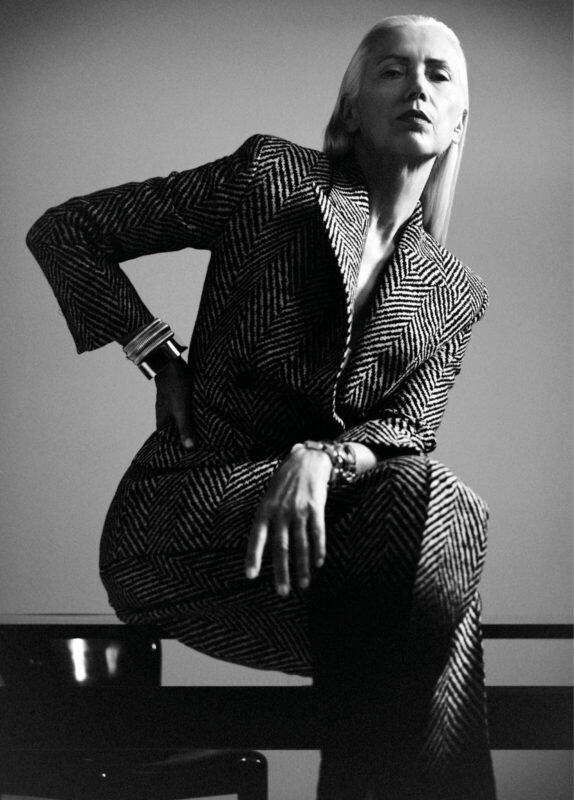
GIVENCHY BY SARAH BURTON
Arp has also, throughout her career, been a fierce supporter of local talent – something that has shaped her approach to building Fashion Council Germany, of which she is a founding member and the current chairwoman.
She is not only one of the most influential figures in German fashion, but is known for her kindness and sincerity. She video-calls me from her home in Hamburg, her gentle features framed by wintry platinum locks. “I grew up in the north of Germany, outside of Hamburg, 80 kilometres to the west. I like the light. I like the smell, I like the wind, I like the rain, I like the water. I like everything that comes with the north of Germany. The apple trees!”
Arp relocated from Munich after exiting Vogue and now splits her time between Hamburg and the west coast of Mallorca, where she owns a house with her husband. She spends her days in the sun gardening when she’s not in the thick of planning the next edition of Berlin Fashion Week. Working alongside the team (including CEO Scott Lipinski), the Council has helped propel Berlin to be one of the most exciting events on the global fashion calendar – it’s chock full of brilliant designers producing both politically charged and innovative collections. The scale of Berlin Fashion Week, held in February and July, has been accelerated by state funding provided by the Senate of Berlin’s Department for Economics, which has supported promoting sustainable fashions and daring designs from emerging labels. This financial injection has also allowed more international press and buyers to be accommodated at the shows, placing Berlin Fashion Week on an international stage.
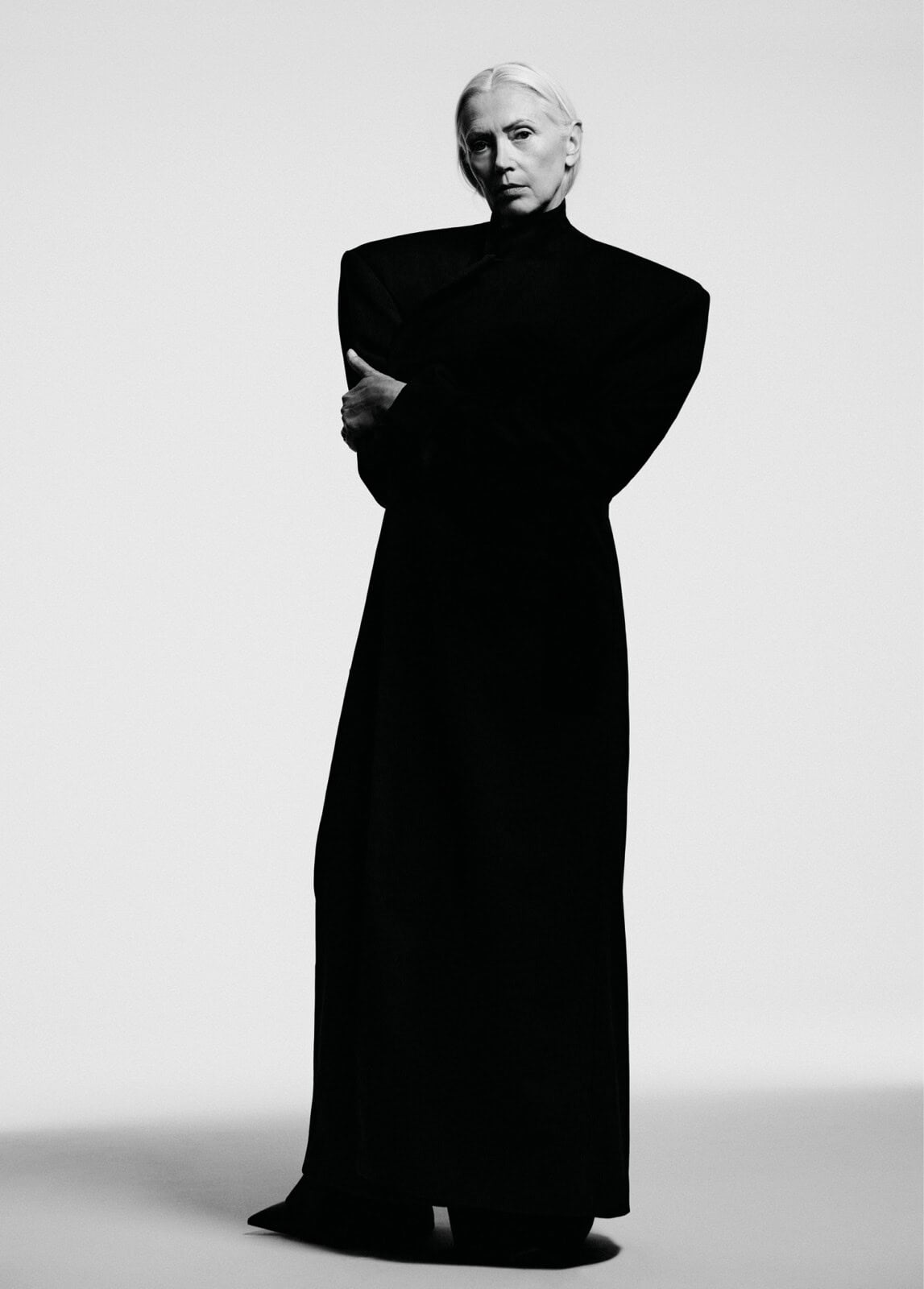
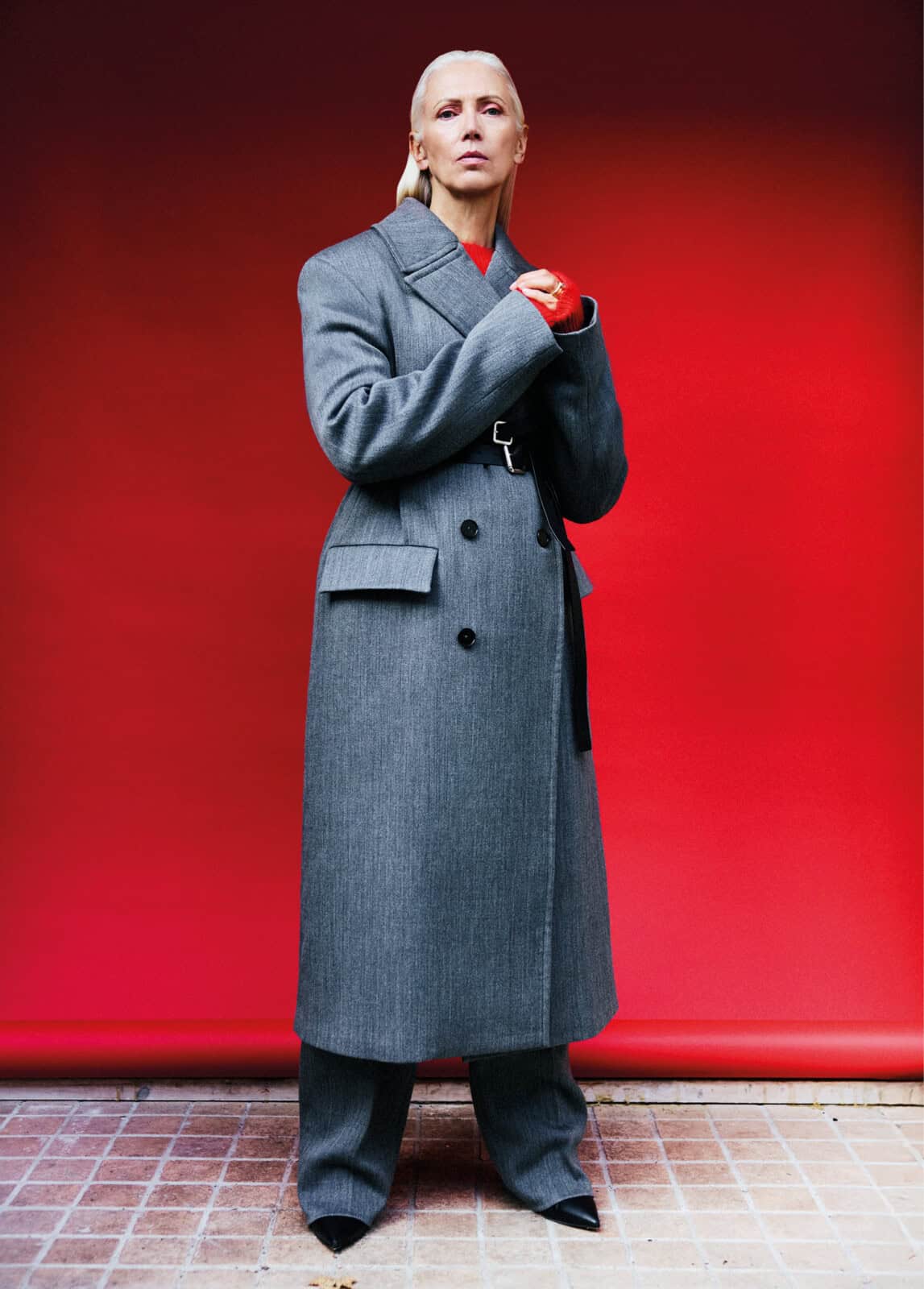
from left: coat by NAMILIA; JIL SANDER
“There is a history of Berlin Fashion Week, but it never really picked up,” she says. “I think that the recognition, credibility and authenticity was not something that you would think of when you thought of Berlin Fashion Week. So to put it on the radar, to make it visible, has been amazing to see. When we get you to Berlin, we can convince you that you will find something that is beautiful and really worthy to look at and write about, or discover pieces from the collections. I think that was the biggest challenge. I’m always very careful, but I’m optimistic that we are on the right track.”
For years before launching the Fashion Council in 2015, Arp started Vogue Salon (now named Der Berliner Salon), a programme to promote young design talent in Germany. Twice a year, during Berlin Fashion Week, the team on the masthead would curate a group of emerging talent, setting up a showcase for each to unveil their latest collections. “Fourteen years later, I believe that setting it up was really the seed for what I do right now,” says Arp.
What sets Berlin apart from cities like Milan, Paris and London? “Fashion, as you know, is an international nonverbal language. It’s constant communication,” she explains. “How you dress says something, but it also says something about the society you’re living in. It says something about your community. And I think Berlin has strong communities. It is known, of course, for the great clubs that we have in Berlin. This culture also has an impact on fashion. What I see as well, especially with a lot of female designers, is that it seems they find their creative freedom in Berlin.”
She namechecks the decadent designs of Lou de Bètoly as a standout, and is drawn to her “emotional, sensitive” ways of accentuating the body with her designs. She’s also a big fan of Central Saint Martins alum Gerrit Jacob, whose airbrushed tracksuits and leather jackets are inspired by trips to pop-up summer fairs during his youth in Hamburg. “You can discover a lot in Berlin, that’s maybe what makes it special right now,” Arp observes.
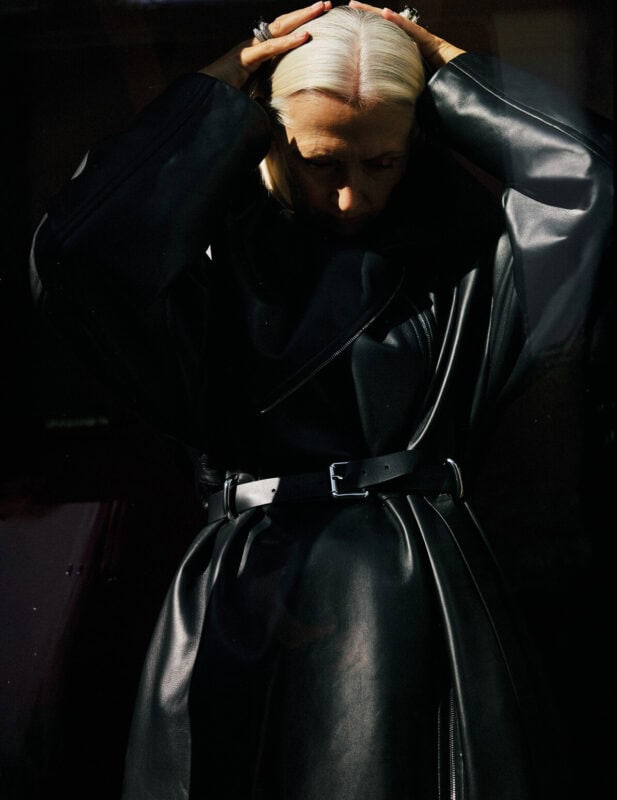
coat by SPORTMAX
Beloved brands such as GmbH and Ottolinger have switched from staging catwalks in Paris to unveiling their collections on home turf in Berlin, with big-name talents like Shayne Oliver also decamping from New York (to show his Anonymous Club SS25 collection). I’m keen to know why Arp thinks the city remains such a magnet for creatives.
“It’s not only a beautiful city, it’s an ugly city,” she says. “I don’t live in Berlin. I’ve never lived in Berlin. But it’s inspiring when you get there. It’s the variety of the music that you can find. You have a wonderful art scene with so many different collections.” She notes both the Boros and Feuerle collections as some of her personal favourites. “Both of the buildings were bunkers – only art can change these buildings into something beautiful. That is what I love when I go to Berlin. Hopefully the city remains this beautiful, creative melting pot.”
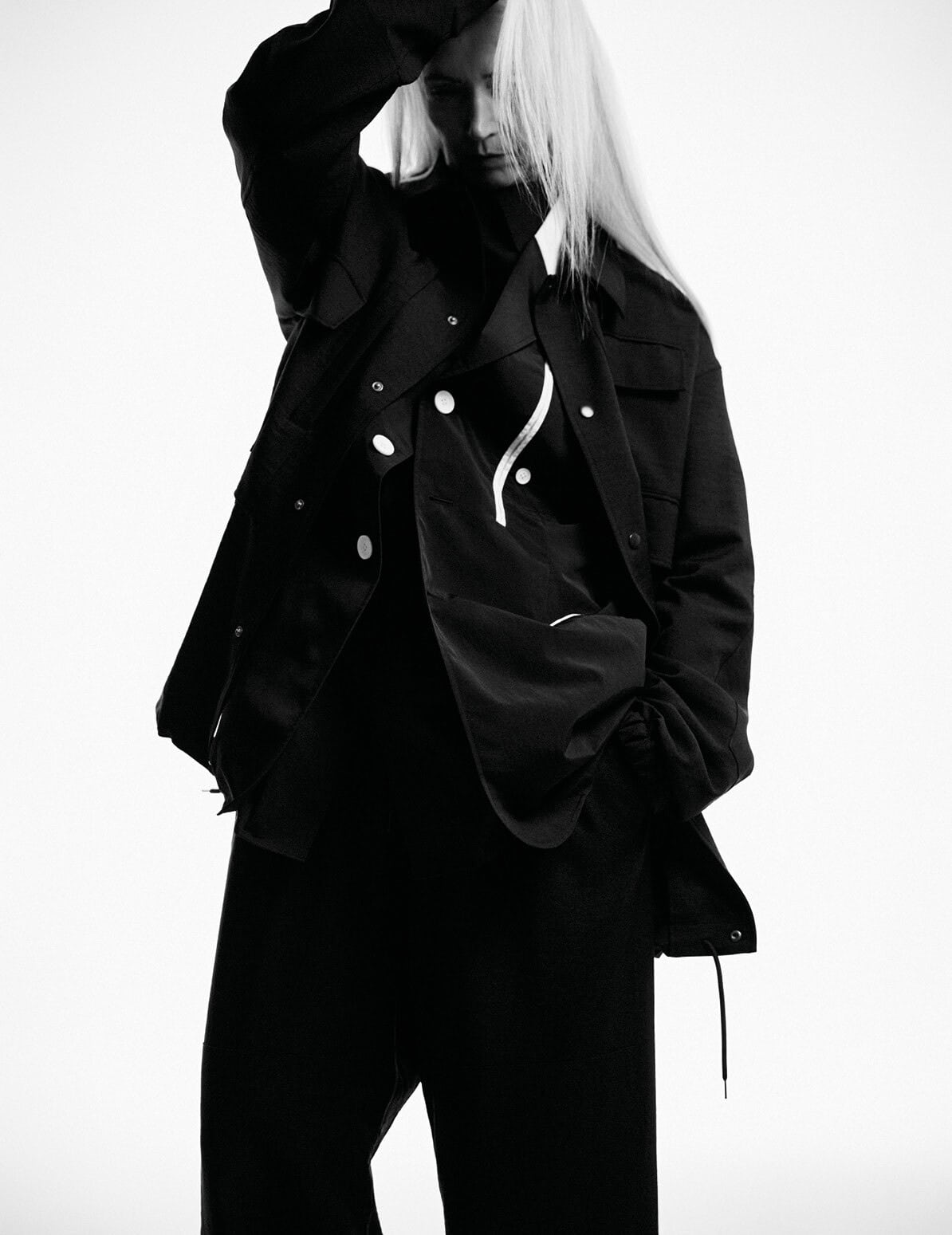
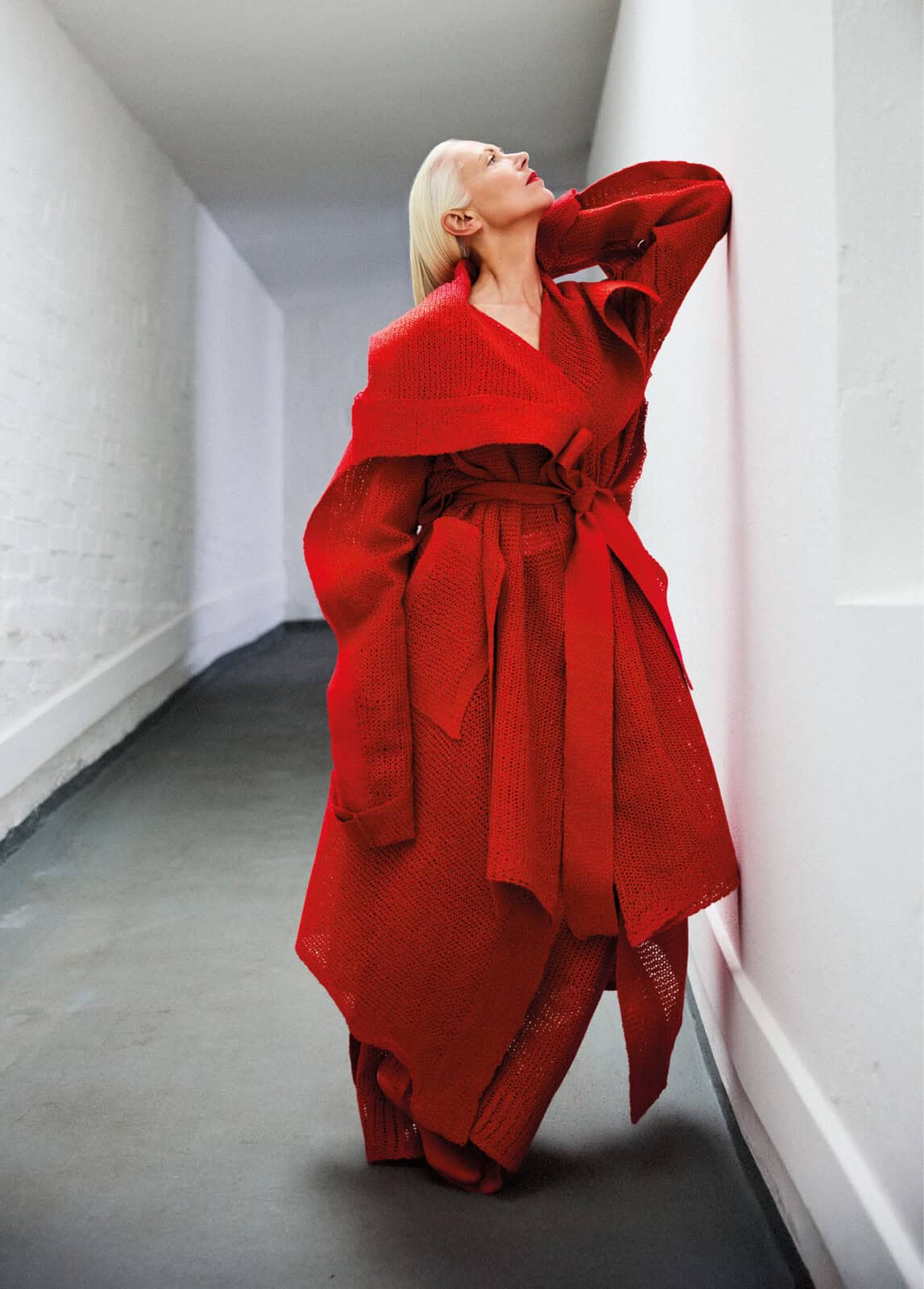
from left: Y-3; ISSEY MIYAKE
During Arp’s rural upbringing on a farm, she had no access to fashion. She was one of four siblings and her mother would make a lot of the family’s clothes. “I started knitting at an early age,” she says. “By the time I was a teenager, I liked that through how I dressed, I became somebody different.” She remembers religiously wearing a pair of purple dungarees, pairing them with big men’s white tees. Later on, she began donning her grandfather’s heavy woollen suits. “They were something I felt really great in. It was about covering myself up to find the way into my body as a woman. It just felt like I had protection.”
Her love for her grandfather’s tailoring segued nicely into a new-found fascination for Japanese designers in the early 1980s, stepping into crow-black Comme des Garçons and Yohji Yamamoto suits. “Everything somehow started to make sense. It was about deciding who you want to be when you dress yourself. It somehow became my uniform, even if I don’t like that word. Whatever I wear today is still kind of a suit, somehow.”
When she was 16, still at school, Arp began purchasing a monthly do-ityourself magazine called Nicole, where she would learn how to craft sweaters and jackets. “When I finished school, I thought, okay, maybe fashion design is something that I would be good at,” says Arp. “I called the magazine up and asked for an internship and they said yes, so I went to Hamburg. I had it in mind that I would stay [in the city] for three weeks and ended up staying there more than 20 years.”
Alongside working at Nicole, she would do a fashion design degree at Hamburg University of Design, but her true passion lay in putting together the magazine. “I felt this love for printed paper, also being in the styling department and being able to tell a story with clothes. That was way more fascinating to me than designing the clothes themselves.”
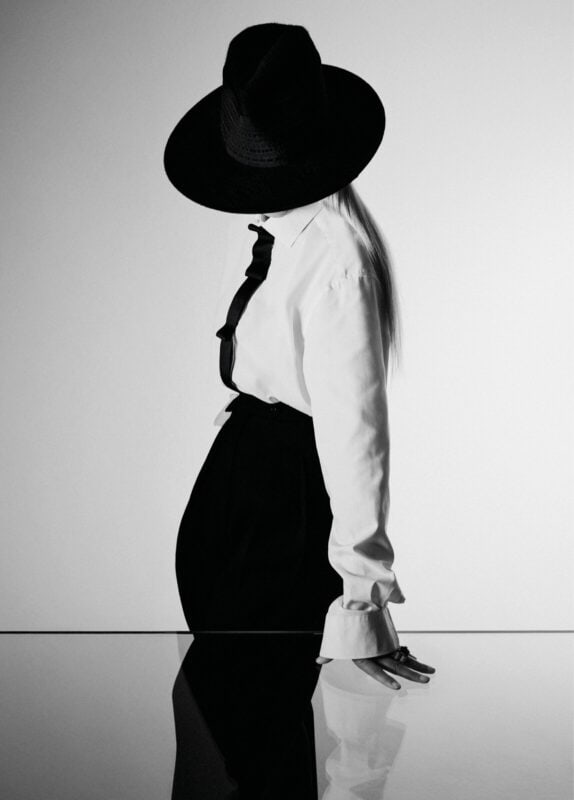
shirt by ANNE BERNECKER, hat by FIONA BENNETT
Stints at the likes of Brigitte and Stern magazines followed, and then in 2001, a call came from a headhunter enquiring if she’d like to interview for the deputy editor role at Vogue Germany. “At first, it didn’t feel right for me because there was a really flamboyant lady at the helm, Angelica Blechschmidt,” she says. “I was so different.”
Arp was also in New York when the 9/11 attacks happened, making her question a career in fashion altogether: “It didn’t feel right to say yes to such a responsible position.”
At the end of that month, she bumped into Blechschmidt during the Paris shows. “She took my hand and said, ‘I learnt that you didn’t want to work with me.’ I said, ‘No, it’s not as simple as that!’”
The Vogue editor convinced Arp to meet later the next day at the Ritz bar. “It was a two-hour conversation over three glasses of champagne. She was a really inspiring person.”
Blechschmidt gave Arp a four-week window to think about accepting the role. “I think I waited three weeks and six days because I didn’t want to leave Hamburg. On a Monday evening at 7:30pm, knowing that office hours were over but also having heard a rumour that she was always there late, I said to myself, ‘If somebody picks up the phone then I will do it.’ She picked up the phone herself.”
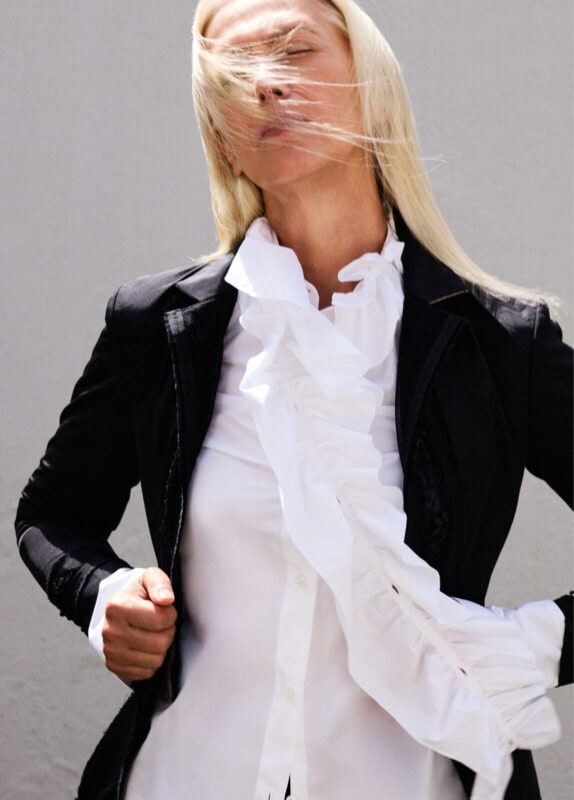
DIOR
“I was frustrated because I didn’t like my results. I had a wonderful team and we did great photoshoots. But it didn’t feel like this was mine.” She was contemplating quitting before her publisher at the time told her to “get your shit together”.
“That was a drastic door opener. I thought to myself, ‘Okay, what is your shit?’ You love fashion so much and you love printed paper so much, which means you have a clue about what fashion can be.” For the next six months she had her blinkers on, not looking at what competing magazines were doing. “I tried to not be influenced by anything and then we became better and better.”
Under her reign, Vogue Germany was one of the first publications to introduce multiple covers per issue (adopted nowadays across the publishing industry). It also embraced models and talent of all ages, putting Sophia Loren on the cover of the October 2005 issue when the actress was 71. “Then we did an ‘age’ issue, which had generational covers [with models] from age 20 to 70. That still makes me proud. We tried to open up borders and open doors, doing social and political reportages, working with German photographers first and fostering young talent. For me, they were the milestones of working on Vogue.”
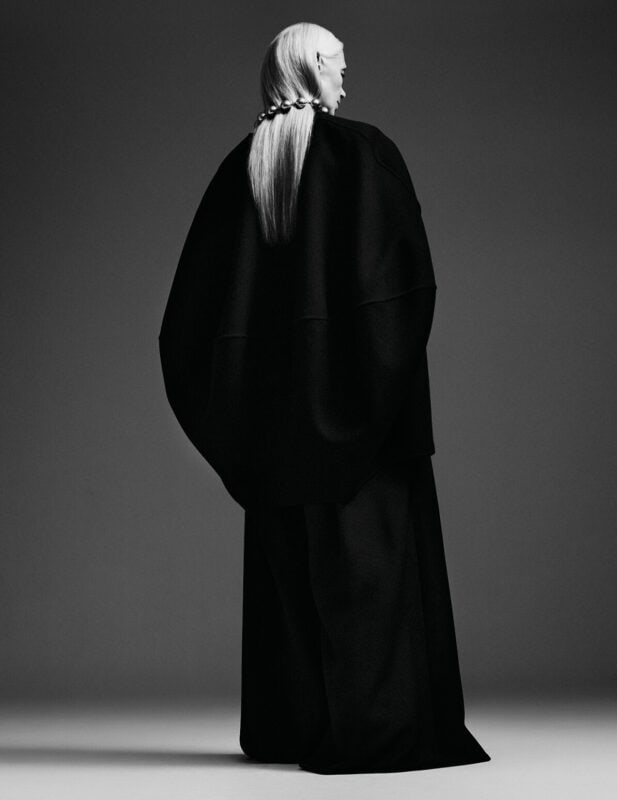
jacket by LORO PIANA, trousers by UNVAIN STUDIOS
She may not be running a monthly title anymore, but there’s plenty keeping Arp busy – such as Doppelreiher, a new seasonal pop-up store she founded alongside the stylists Josepha Rodríguez and Wiebke Bredehorst, which curates an excellent stock of vintage design pieces and second-hand finds and was launched during the Berlin shows in July.
Her work with the Fashion Council is far from complete, however. “I wish that all these wonderful designers and creative minds will find the recognition they deserve. Which at the very end is to sell collections, as well. That means you can pay your rent, you can pay your people and you can go up a level. Our system, somehow, always says the only way to describe success is being known worldwide and being stocked in the big department stores. Is that the only definition of success? No.
“I hope that we can provide the stages, that we can provide visibility, and that the designers find their way and do exactly what they want to do.”
Taken from 10+ Issue 8 – FUTURE, JUBILEE, CELEBRATION – out now. Order your copy here.
Photographer JANA GERBERDING
Fashion Editor LENA LAUER
Talent CHRISTIANE ARP
Text PAUL TONER
Hair DENNIS BRANDT at Diller Global using ORIBE Hair Care
Make-up LONI BAUR using LONI BAUR EDITIONS
Digital operator JONAS REICHERT
Photographer’s assistants DAVID FISCHER
Fashion assistant MANUELLA FERNANDES
Make-up assistant CHRISTINA MOURATIDES
Post-production HENRIETTE at TouchUp
Special thanks to Bird Production
Jewellery throughout PETER PUTZ