October 30, 2026 |
Some collectors would describe themselves as traditional archivists, staunch custodians of cut, silhouette and design. Some are entrepreneurial in their outlook, building burgeoning businesses with a celeb-studded clientele. Some are tastemakers, drawing in fans who appreciate a style that’s taken years to hone.Today, the scene is messy, vibrant, connected, tense and contradictory, tied together by an unbridled, often obsessive commitment to fashion.
The collectors profiled in this piece are all different. They seek out different things and have different opinions, experiences and approaches that shape the ecosystem in a particular way. The question no longer seems to be whether fashion should be preserved – the emotional, cultural and commercial weight these pieces possess have proved that. Today, the question seems to be what happens when collecting gets thrust into the public eye and how that impacts the ways these collectors can utilise their skill and passion for it. Here, Adrian Appiolaza shares his insights.
ADRIAN APPIOLAZA, 20 Age Archive
Adrian Appiolaza wears many hats. Moschino’s creative director between January 2024 and June 2026, the Buenos Aires-born creative has long been in awe of past designers, a trait that has manifested in an archive he runs with his partner Ryan Benacer in their Paris homestead called 20 Age Archive. Clocking in at 5,000 pieces, 20 Age offers a rental service for its avant-garde ’90s and ’00s gems from Maison Margiela, Junya Watanabe and more to celebrity and editorial stylists, as well as fashion historians at prestigious institutions. As a result, 20 Age pieces, which range from fantastically blown-up Comme des Garçons looks to figure-hugging mesh numbers from Jean Paul Gaultier have been inked onto the pages of global publications and displayed as part of exhibitions at Antwerp’s MoMu and Paris’s Palais Galliera.

10: When did collecting and archiving become a more deliberate, structured practice for you?
Adrian Appiolaza: When I realised I had all these boxes of clothes I was buying for inspiration and to wear. Around 2012, I began to see that I was mainly focusing on vintage as an obsession. At the same time, I started learning more about brands, seasons and collections, and had greater access to images. When I started, it was the beginning of the internet, so there wasn’t much information beyond books. As more information became available online, I realised I had pieces from different seasons and it sparked a curiosity to understand what I had. I began organising everything chronologically to understand how collections were constructed. That process – rebuilding collections as they were shown – triggered a way of thinking about how to continue gathering pieces.
When you source a piece now, what are you looking for? Are you filling gaps or collecting more intuitively?
There are different approaches, especially since it’s a business. Initially, the goal became recreating looks exactly as they appeared on the runway and completing collections. At the same time, there was still an element of discovery, like meeting someone who used to wear Margiela and buying their wardrobe, for example. But the foundation was always about completing looks. Once the business developed, it also became about understanding trends – what stylists are looking for – and responding to those needs.
Which trends have you noticed influencing what people request from you?
One example is early 2000s femininity. Our archive is very conceptual, with Margiela, Comme des Garçons, Yohji and so on, but there was growing demand for more feminine pieces from that period. Stylists were asking for that, and it influenced how we sourced new items.
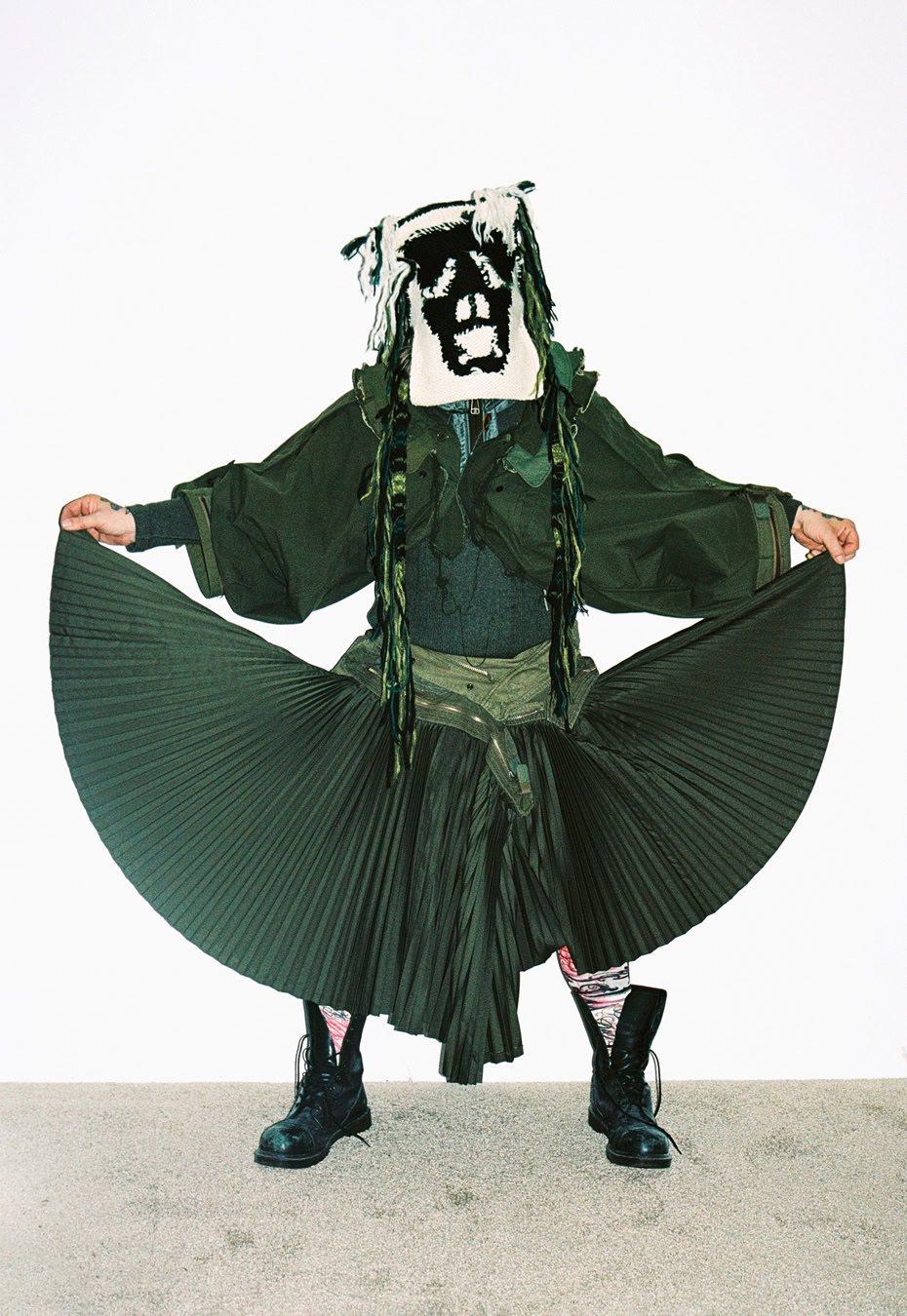
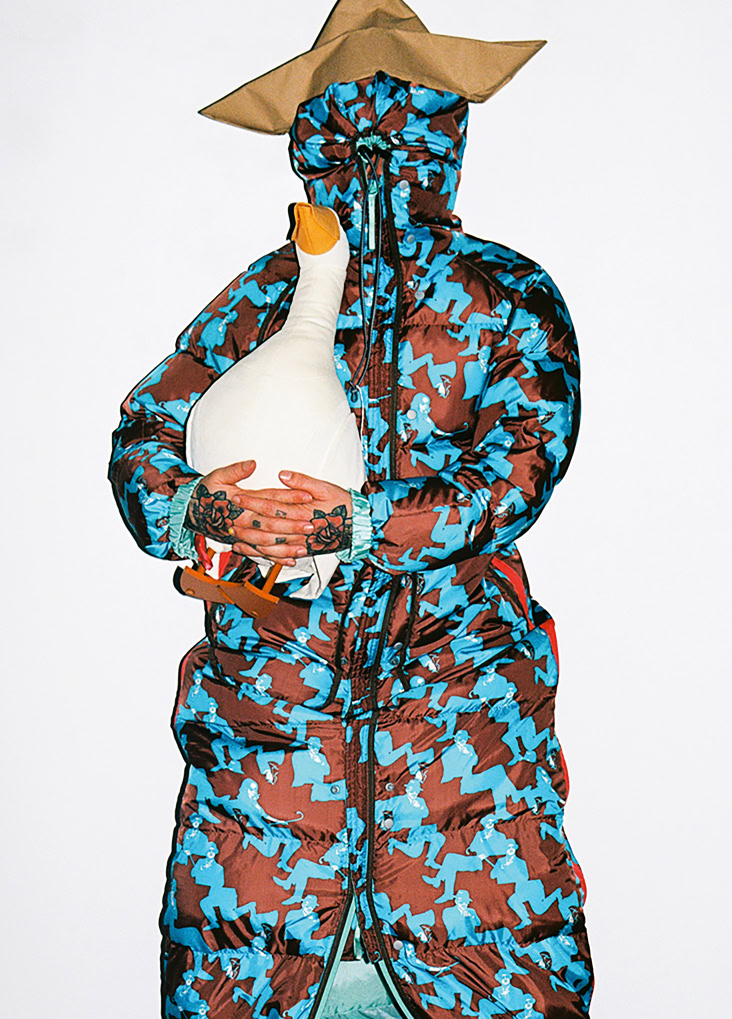
From left: Adrian wears jacket, dress and shirt by Junya Watanabe AW06, hat by Loewe X William De Morgan 2019, tights by Comme des Garçons Homme Plus 2013 and boots by Jean Paul Gaultier x Dr Martens; coat by Issey Miyake AW04, hat by Moschino AW24 and duck prop by Moschino
Why did you decide to rent the collection rather than sell it?
Education is still central. We rent to brands for inspiration, which reflects how I started collecting, when I got my first job at Chloé. Looking at fashion history has always been essential for designers, but access used to be limited. Today, having physical garments available is an important way of learning about construction, materials and design. There’s also something powerful about giving garments a new life. You see pieces from the ’80s or ’90s appear again today – like a 1993 Comme des Garçons dress we had that Pamela Anderson wore recently. Clothes are meant to be worn, to create emotion. Renting allows that to continue. That said, some pieces are too fragile or valuable [to rent out], so we are selective.
How has collecting changed over time?
The shift began during the pandemic. People became more conscious of sustainability and started looking to the past, reusing and reselling. Social media amplified this. Suddenly, vintage and archive became widely visible and desirable. Stylists began incorporating archival pieces into editorials, which further increased demand. But it also created competition. What once took time to consider now requires instant decisions.
Do you see this shift as positive or negative?
Both. It’s positive in terms of sustainability and appreciation for fashion history. People can buy something meaningful instead of fast fashion. But for collectors, it’s more difficult. Prices have increased. Pieces that once sold for €1,500 [£1,300] now reach €70,000 [£60,000] or more at auction.
Where do you see archival fashion heading?
It’s hard to predict. Trends evolve and interest may shift. I’ve thought about creating a museum, a space where everything can be displayed chronologically. That would be ideal. At the same time, the financial value of archives has increased, which complicates decisions. For now, it’s about finding pieces, completing looks and enjoying the process.
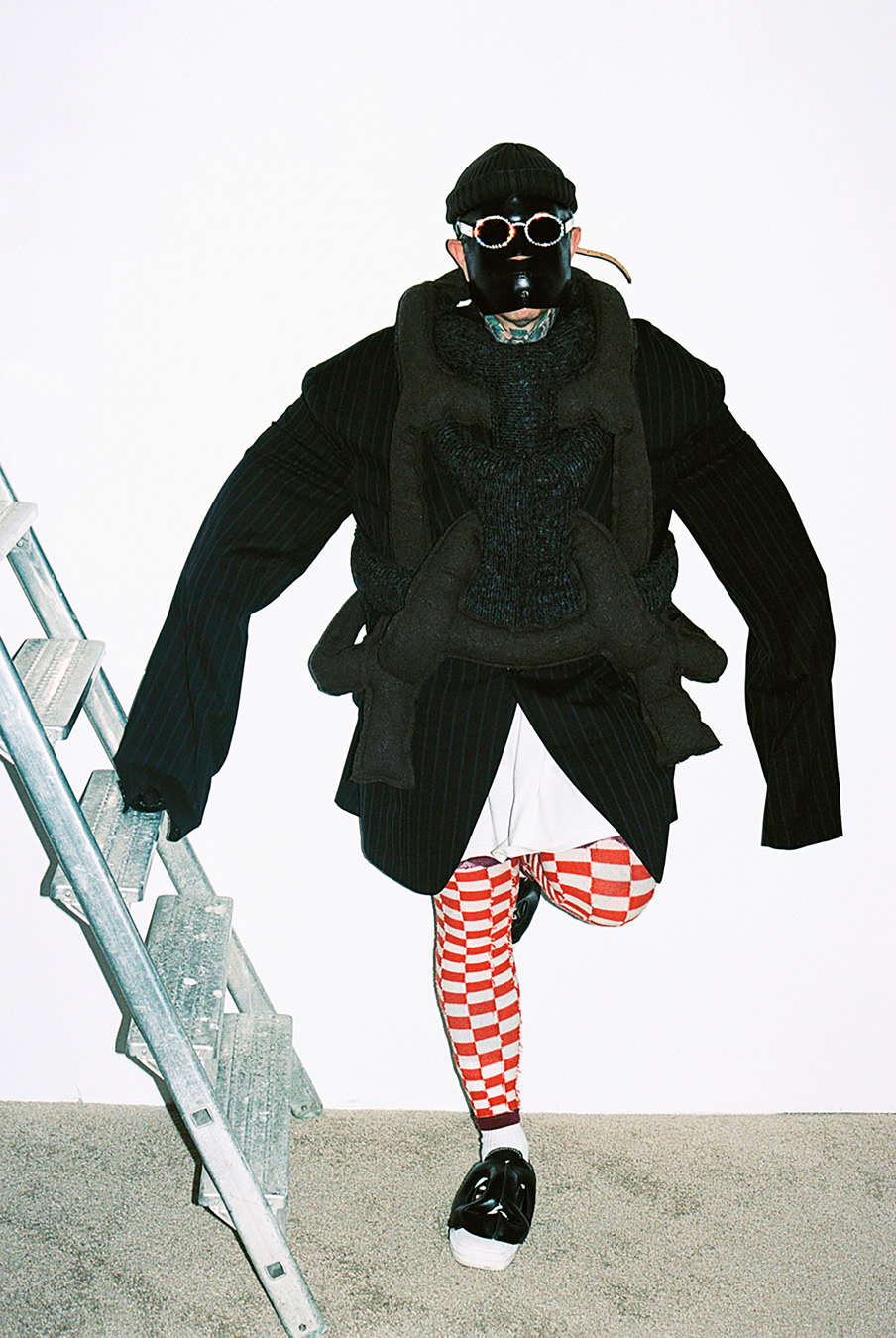
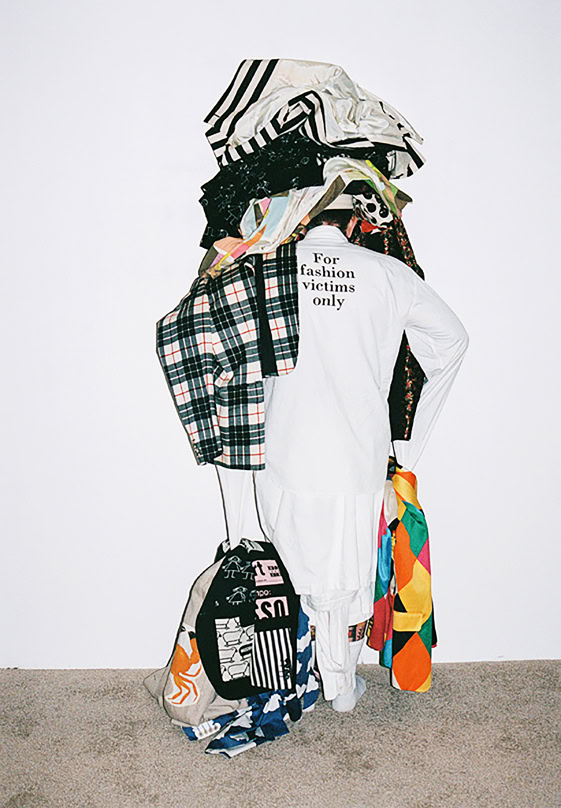
From left: Adrian wears a jacket and harness by Comme des Garçons AW14, leggings by Bernhard Willhelm, sunglasses by Moschino SS25 and shoe covers by Comme des Garçons SS14; shirt by Moschino SS94, skirt by Comme des Garçons SS13 and 1930s blazers by Moschino
Photography courtesy of Francesc Planes. Issue 77 of 10 Magazine – FUTURE, LEGACY, HERITAGE – is on newsstands now. Order your copy here.