January 16, 2026 |
This week, Louis Vuitton took Beijing by storm. Ahead of the grand opening of its newest flagship in the capital city on Tuesday, 10’s global editor-in-chief Sophia Neophitou sat down with LV cosmetics creative director Dame Pat McGrath as LV Ombres – part of the French house’s inaugural La Beauté make-up line – prepared to enter the Chinese market. The focus then shifted from beauty to bricks and mortar, as the house unveiled its latest large-scale retail project at Taikoo Li Sanlitun – a development that underscores just how seriously Louis Vuitton is betting on physical spaces right now
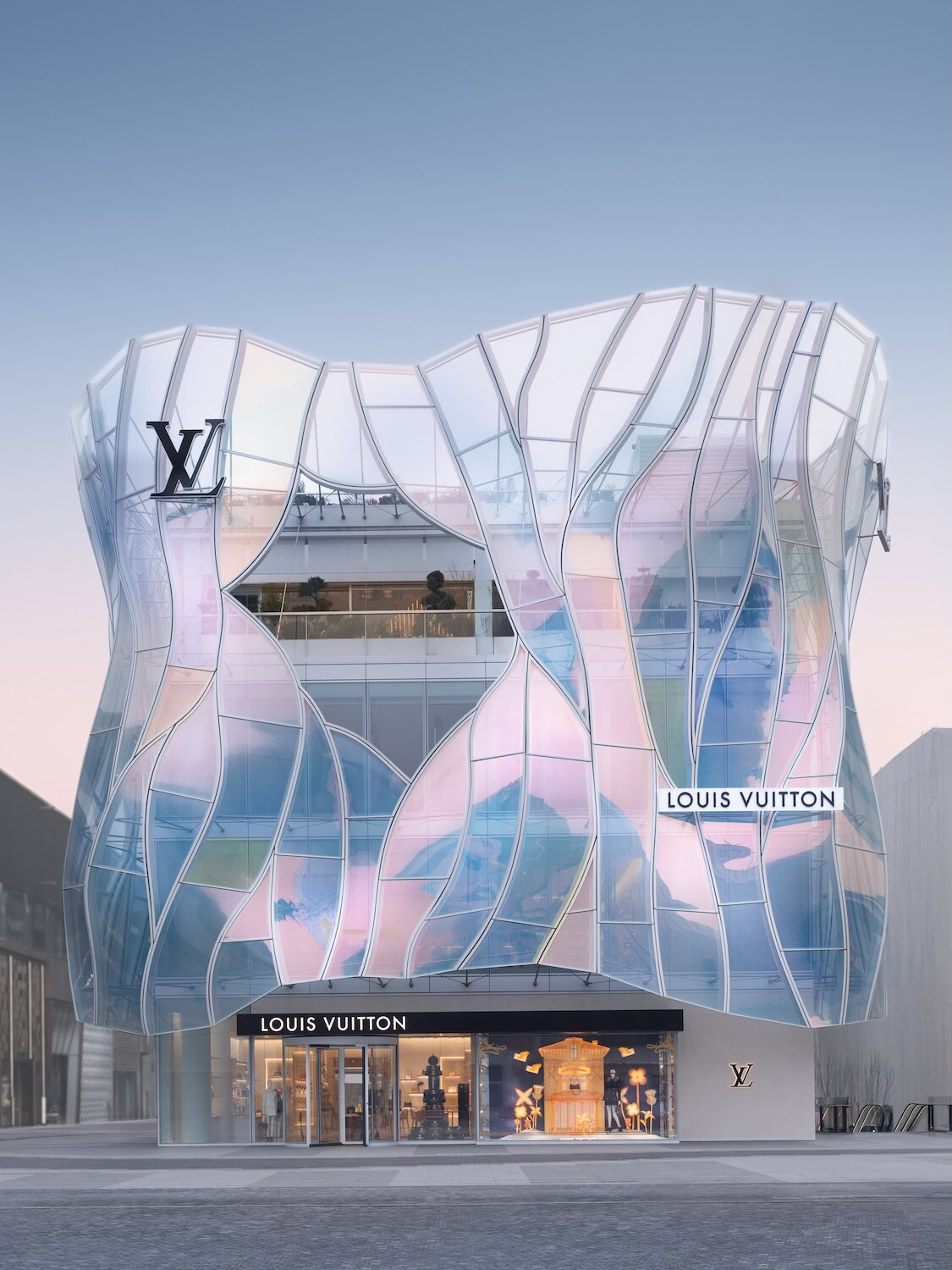
Following on from a ship-shaped flagship in Shanghai and a concept-led experiment in Seoul, the new four-storey building, located within the freshly renovated north district of Taikoo Li, replaces the former Dover Street Market Beijing and arrives as part of a broader urban regeneration push that has reshaped the area over the last three years.
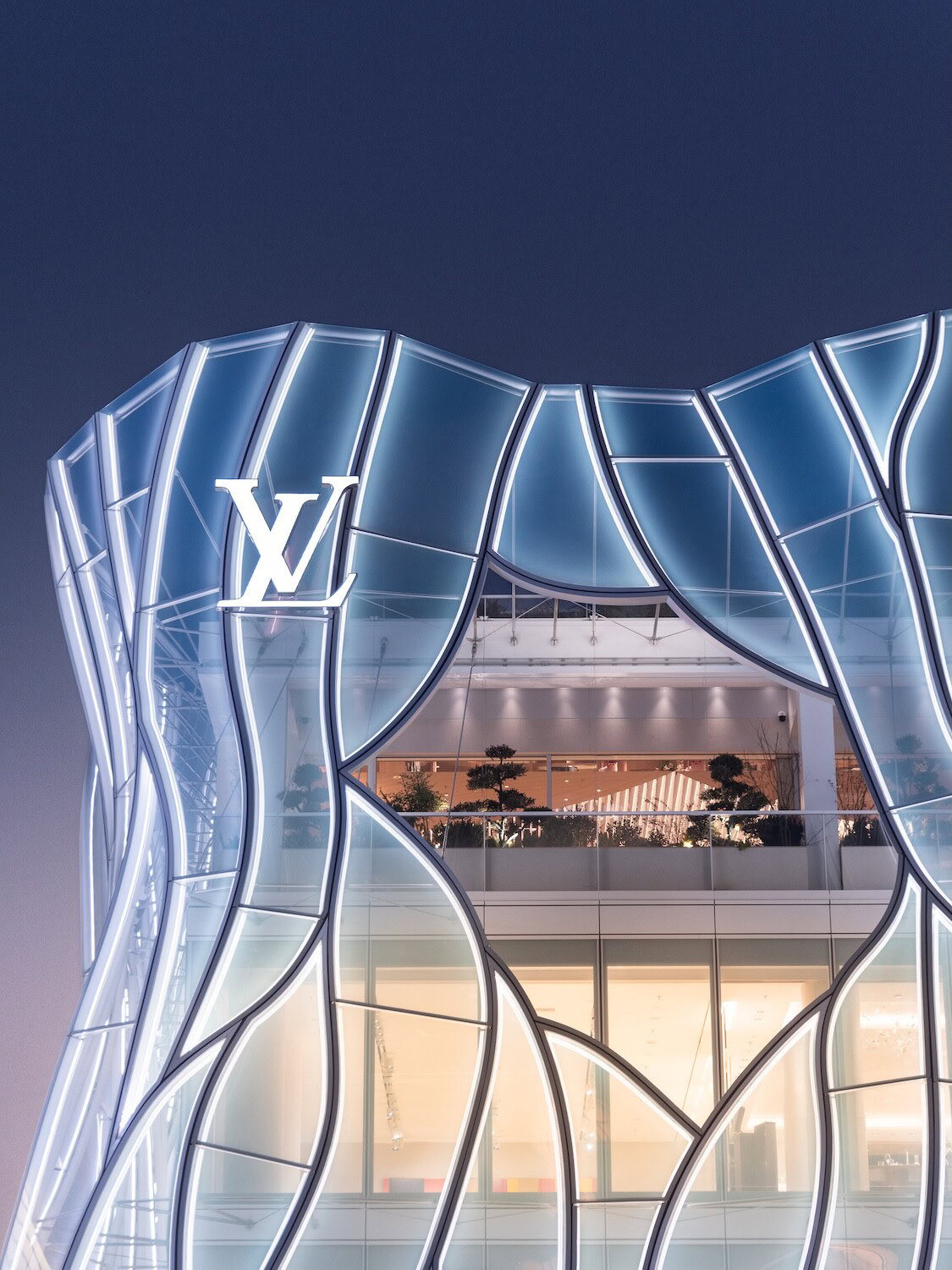
The building is designed by Jun Aoki, Louis Vuitton’s long-standing architectural collaborator, and its most defining feature is its façade. Wrapping the original structure is a skin of 315 hand-curved glass panels, all manufactured in China, assembled to form a continuous outer layer that reads as textured, translucent and deliberately irregular. The surface draws from Taihu stone – scholar’s rocks traditionally used in Chinese gardens – translating their striated surfaces into a rigorously controlled vision of geometric glass. There is also a direct fashion reference embedded in the glasswork: a silver finale look from Nicolas Ghesquière’s spring 2016 collection, later reimagined digitally, informed the idea of the façade as something akin to an architectural garment.
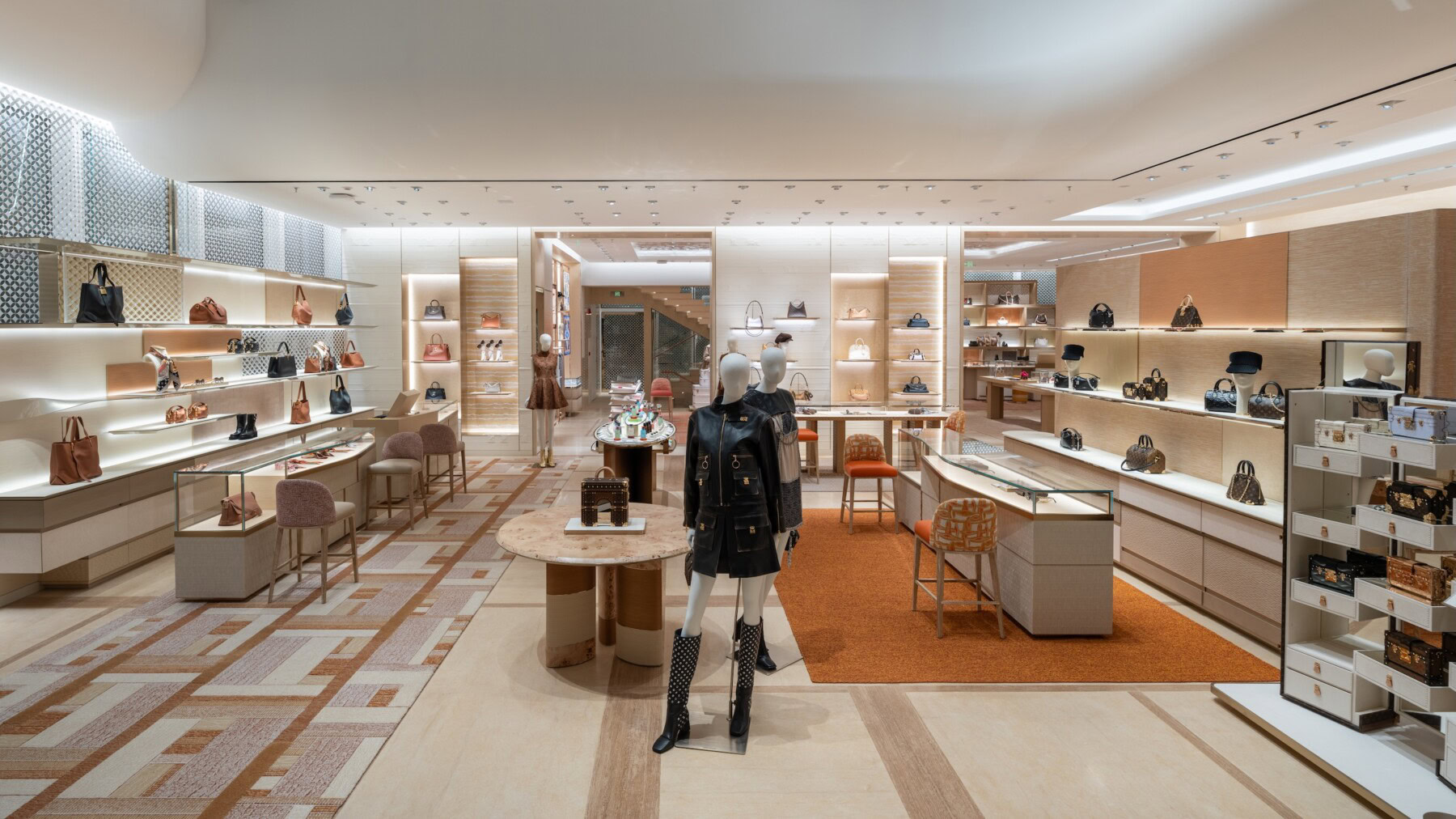
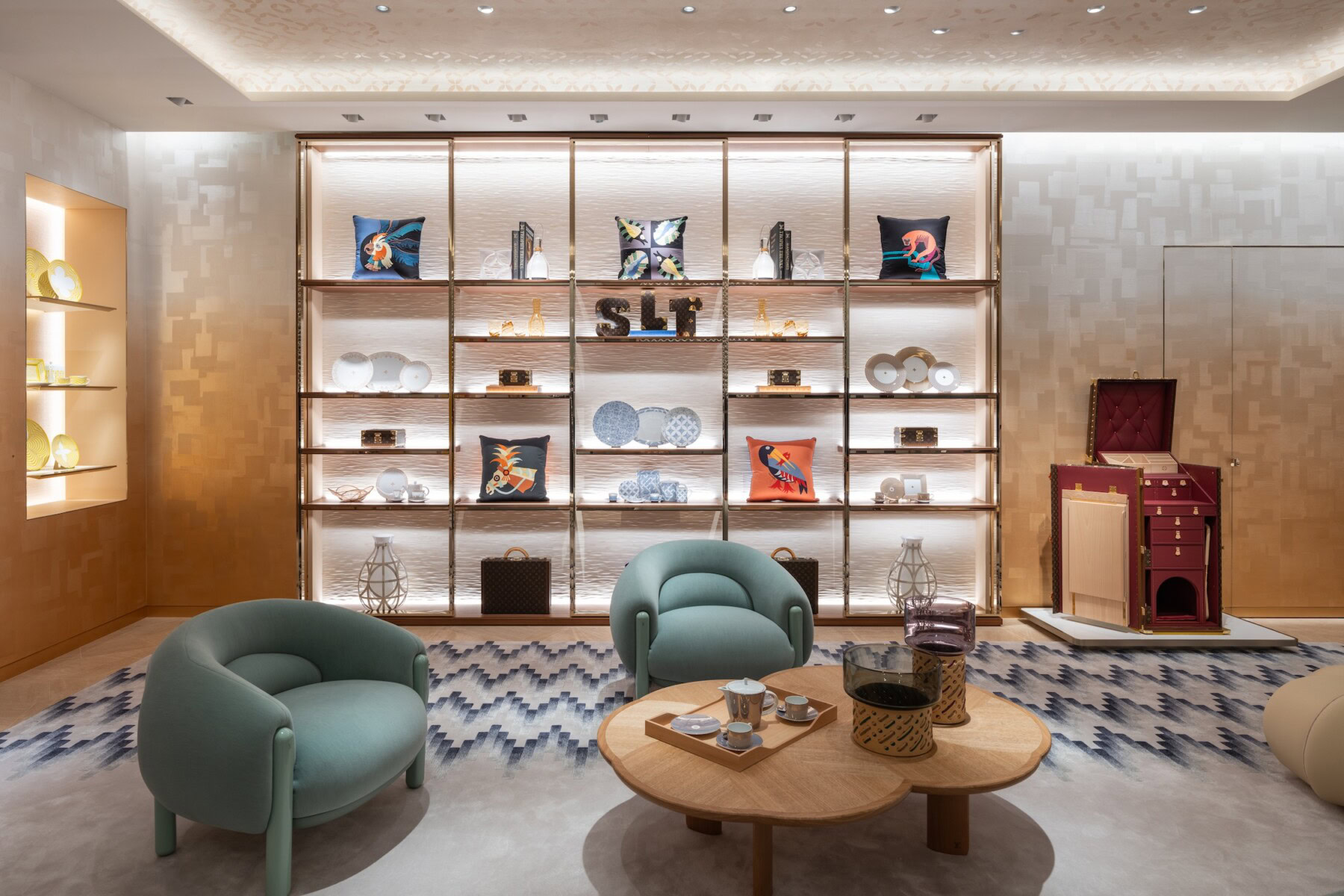
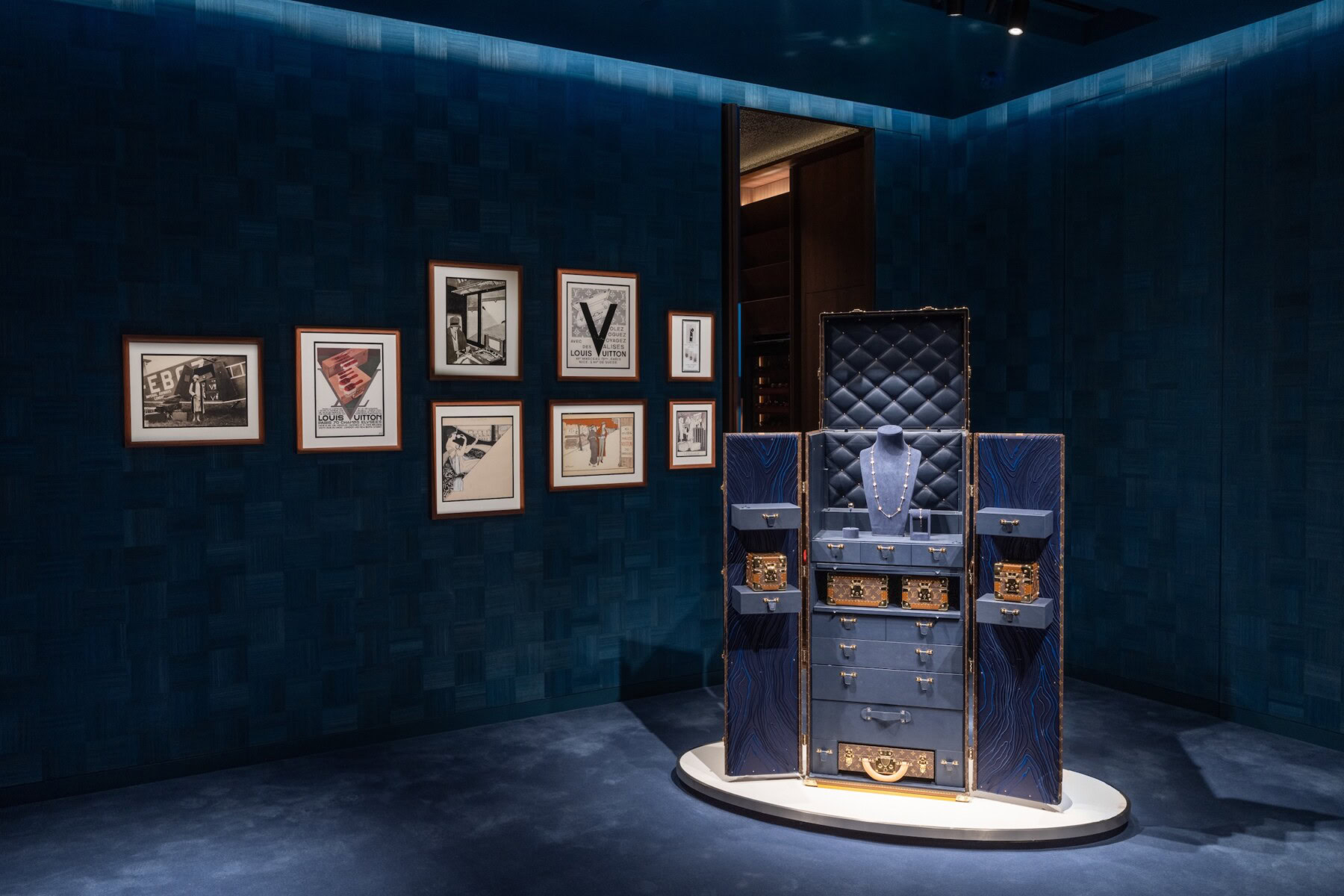
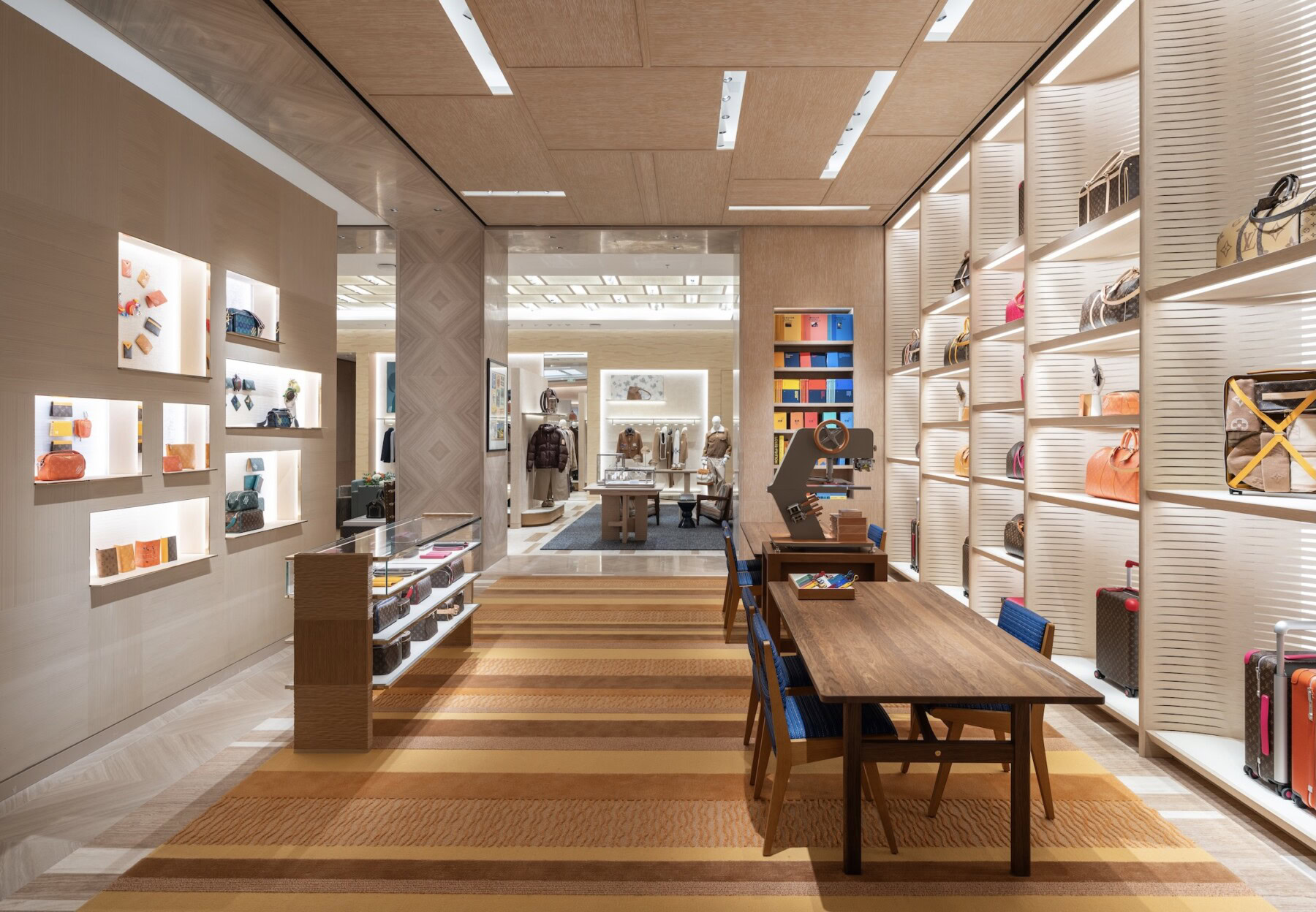
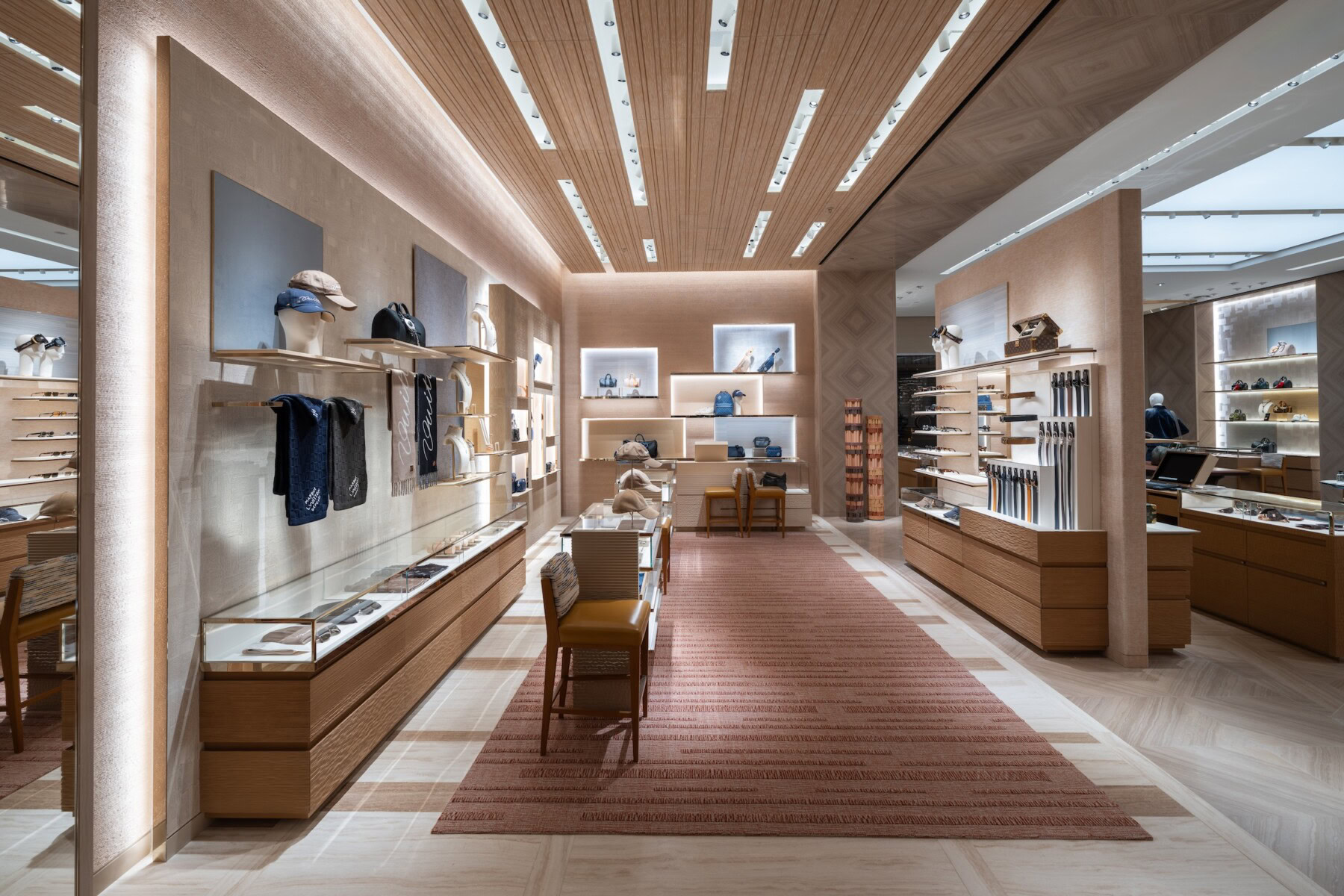
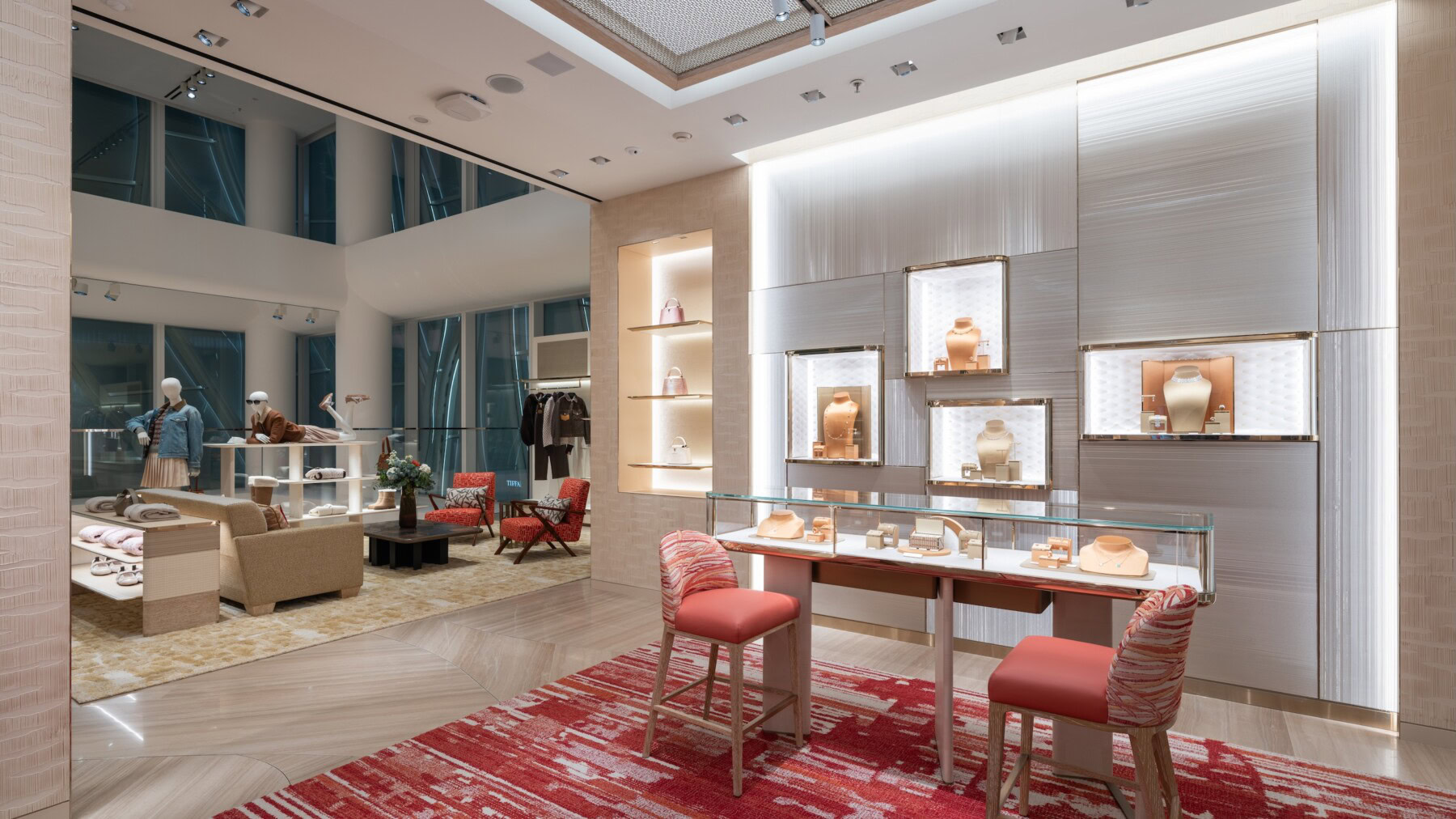
Inside, the store is organised as a continuous vertical sequence designed by Vuitton’s in-house architecture team. Womenswear and women’s leather goods and accessories dominate the first and second floors, sharing space with the Chinese launch of LV Ombres, which takes a prominent position on the ground level. The lower ground floor is given over to men’s collections, pet accessories and the brand’s hot-stamping service which remains a consistent draw for local clients.
Up on the third floor the focus shifts to the home category, with a private viewing room showcasing furniture and objects by designers including Patricia Urquiola and Cristian Mohaded, alongside the Depero textile collection and a maroon Totem Vinyle speaker first introduced at Milan Design Week.
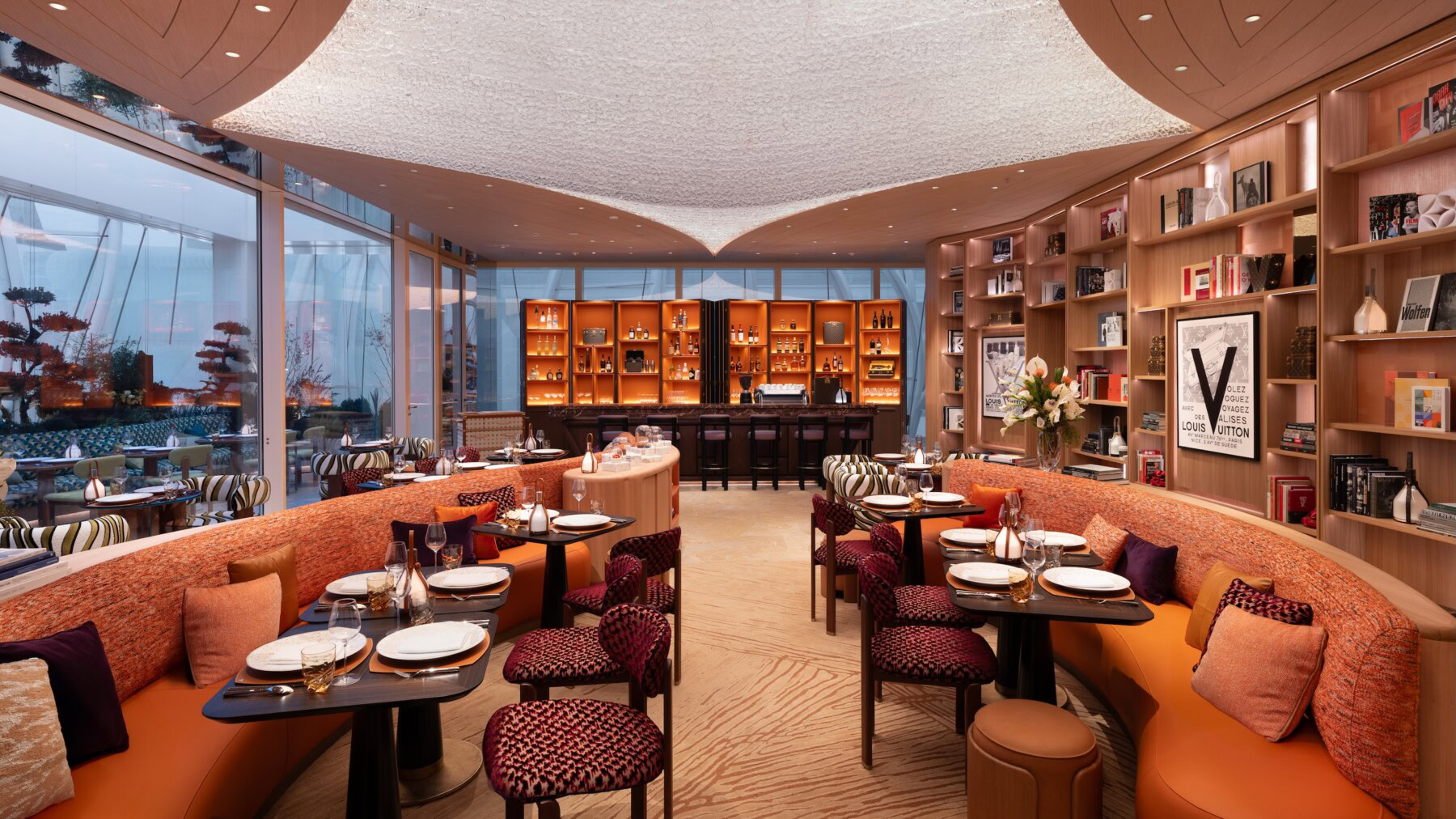
At the top, the mood changes again. A mirrored “infinite room” filled with books and objects acts as a transitional space before leading into the Louis Vuitton Café – the brand’s first in Beijing. Run by chef Leonardo Zambrino, the café offers lunch, afternoon tea and dinner, with a menu tailored to the city, and includes outdoor dining areas and a rooftop terrace scheduled to open seasonally. The eatery is available for booking on its WeChat Mini Program.
Artworks by Chinese artists such as Sun Yitian, Zhou Yilun and Nanchuan Daocheng are integrated throughout the building, alongside one-off hand-painted luggage pieces. The official opening drew figures including Gong Li and a line-up of brand ambassadors, but the wider message is structural rather than celebratory. As Louis Vuitton continues to consolidate its China strategy, Sanlitun stands as a clear signal: larger statements and a tighter link between architecture, product and place.
Photography courtesy of Louis Vuitton.