November 16, 2026 |
In 1987, Nicholas Walt was in Bloomsbury, walking north down Museum Street, unaware of the British institution that sits at the end of it. Dawn had only just broken and the first light caught the small band of gilding high on the pediment of the British Museum, making it gleam against the Portland stone. Having spent much of his adult life in Canada and the United States, he didn’t know what the building was.
But he knew, almost instantly, that this was where the historic artists’ colourman L. Cornelissen & Son belonged (a colourman being a specialist merchant who prepares and/or supplies raw pigments and other high-quality materials directly to artists). And then in his periphery, another glint, this time a ‘For Let’ sign on a shopfront nearby. Serendipity was in motion.
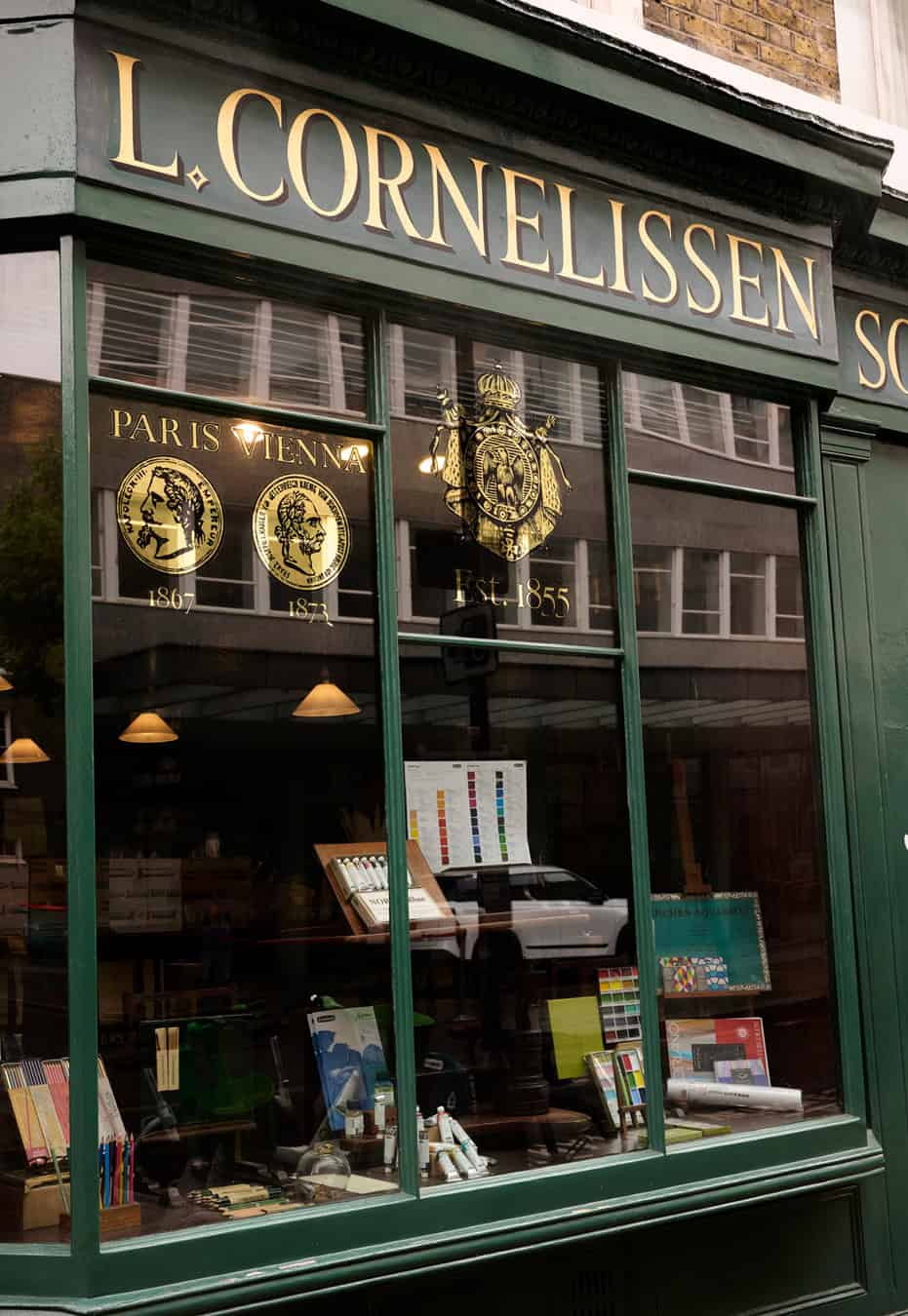

That synchronicity had arrived at an improbable moment. Walt was weeks away from losing the shop he’d painstakingly brought back to life. After reopening Cornelissen in 1979, he and his business partner, Stavros Mihalarias, had spent years restoring its Great Queen Street premises while navigating an increasingly unstable tenancy. Their landlords – the Freemasons –had refused to grant a lease, and then the building was sold. The new owner offered them six months to leave, accompanied by a threat to “break your kneecaps”should they overstay.
By morning, after another late night balancing the shop with his corporate day job, Walt peered behind the dusty windows, net curtains and display of neglected Postman Pat books at 105 Great Russell Street, where that ‘For Let’ sign loomed. It was a former publishing house, and would soon become the company’s home for the next four decades and counting.
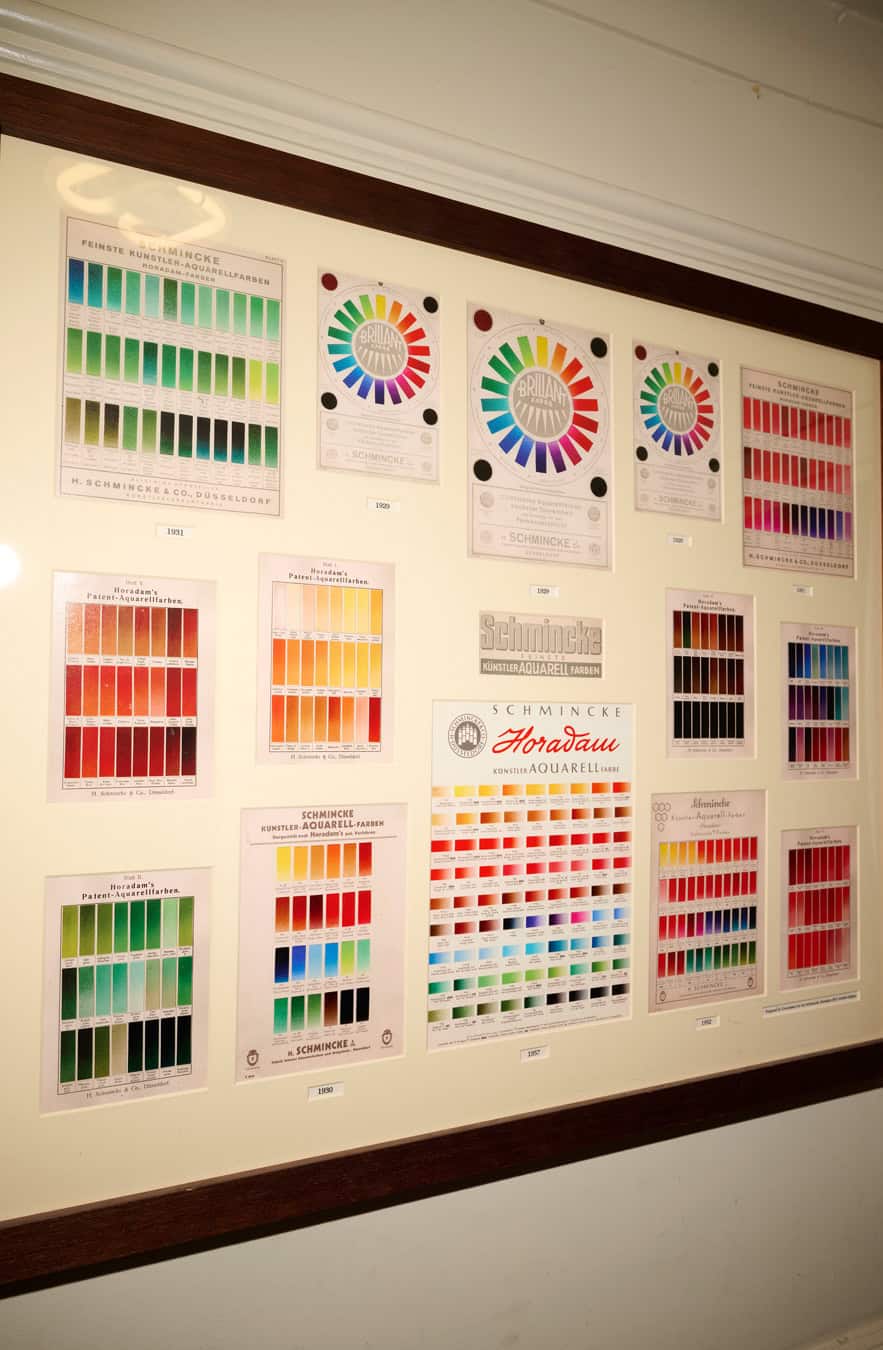
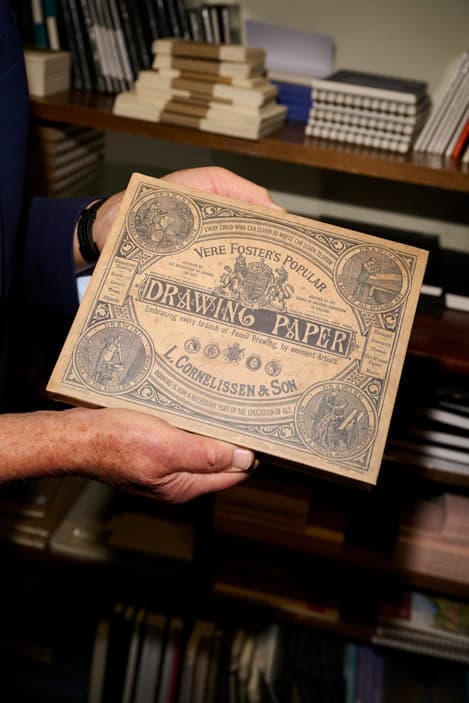
The historic significance of L. Cornelissen & Son transcends that of an art supply shop. It is, in fact, one of Britain’s last traditional artists’ colourmen, its dark timber shelves lined with pigments, gilding materials, handmade brushes and centuries-old recipes that continue to serve every customer, from conservators and restorers to contemporary painters.
The business was founded in 1855 by Louis Cornelissen, a Belgian lithographer who had fled political unrest in Paris for London several years earlier.Company lore has it that it was the painter J.M.W. Turner who encouraged his friend to cross the Channel, convinced the capital offered fertile ground for both artists and craftsmen. Cornelissen initially established himself on Covent Garden’s Drury Lane, supplying the specialist materials required for lithographic printing, before relocating to Great Queen Street later that same year.
As printing became increasingly mechanised during the late 19th century, the business evolved with it. Rather than disappearing alongside the trade that had first sustained it, Cornelissen broadened its stock to serve painters, printmakers and gilders, gradually building a reputation for sourcing materials that were becoming harder to find elsewhere. Brushes, handmade papers, stretched canvases, dry pigments and traditional binders joined the shelves, while the business Above: Nicholas Walt formally became L. Cornelissen & Son in 1884, reflecting its transition into a family enterprise that would remain under Cornelissen ownership for more than a century.


When Len Cornelissen, the last family member to run the business, died in 1977, it appeared the story had reached its conclusion. Enter Walt and Mihalarias, who reopened the shop, preserving not only its name but a way of working that had become increasingly uncommon.Because Cornelissen isn’t just old, it’s a survivor of successive technological revolutions.
The names that have passed through Cornelissen’s doors over the decades read like a roll call of British art, although Walt is quick to point out that fame rarely announces itself. “A lot of them might send an assistant in,” he says. Lucian Freud was one of them. “He had one colour that was very important, called [Daler] Rowney Naples Yellow One, and we always had to have 50 tubes set aside for him.” Every fortnight, an assistant would arrive to collect them. “When you look at his paintings, you can see that colour immediately.”
The British-Portuguese artist Paula Rego would spend hours selecting pastels one by one. Then there was Bernard Dunstan, the Royal Academician who reshaped the way Walt thought about artists altogether. Early on, eager to be helpful, Walt suggested Dunstan try a newly arrived cerulean blue. The painter looked back with what Walt describes as “scorn”. “Nicholas,” Dunstan told him, “you’ve got a life lesson to learn…painting is very, very difficult, however experienced you are, and the last thing you want to do is change your palette.” Years spent understanding a colour’s opacity, transparency and behaviour couldn’t be replaced by novelty. “It was a very important lesson,” Walt says. “Not to be prescriptive, to be descriptive.”

That instinct to listen has shaped both the business and Walt himself. Before Cornelissen, his career had little to do with art. Born in Nottingham, he emigrated to Canada at 18, studying at McGill University in Montreal before joining management consultants McKinsey & Company in New York and later working across Boston, Detroit, Chicago and Los Angeles. “I worked out that I had changed address once every six months for about 12 years,” he says with a laugh. His CV reads more like that of a corporate strategist than a colour merchant – Procter & Gamble, Harvard Business School, the Boston Consulting Group – and yet he insists that he arrived at Cornelissen with “no knowledge” of artists’ materials, only “an affinity” for “old dusty shops”.
Even now, after almost half a century and in his eighties, Walt resists the notion of expertise. “I’m still learning,” he says. “You always feel slightly uncertain.” This is perhaps why the shop feels less like a retailer than a conversation that has been unfolding for generations. Following him around the shop feels like wandering through a cabinet of curiosities. Every surface reveals another niche, another craft, another object whose existence most people have never considered. There are squirrel-hair watercolour brushes prized for carrying extraordinary amounts of water, sable brushes fashioned from the tail of the marten, Japanese brushes made exclusively for Cornelissen by a manufacturer whose identity remains a closely guarded trade secret. There are conductors’ pencils developed after composers complained that nobody made the right tool for annotating scores, proportional dividers once indispensable to 19th-century draughtsmen and specialist decorative brushes whose original trade has all but disappeared. Walt lifts one from its hook, turning it over in his hand. “Actually,” he says, smiling,“this is quite a beautiful object.” There’s even a failed invention he still chuckles about – a “reader’s pencil” with a 2H lead at one end and an eraser at the other. “[It was] completely unsuccessful,” he says, laughing. The list goes on and on.
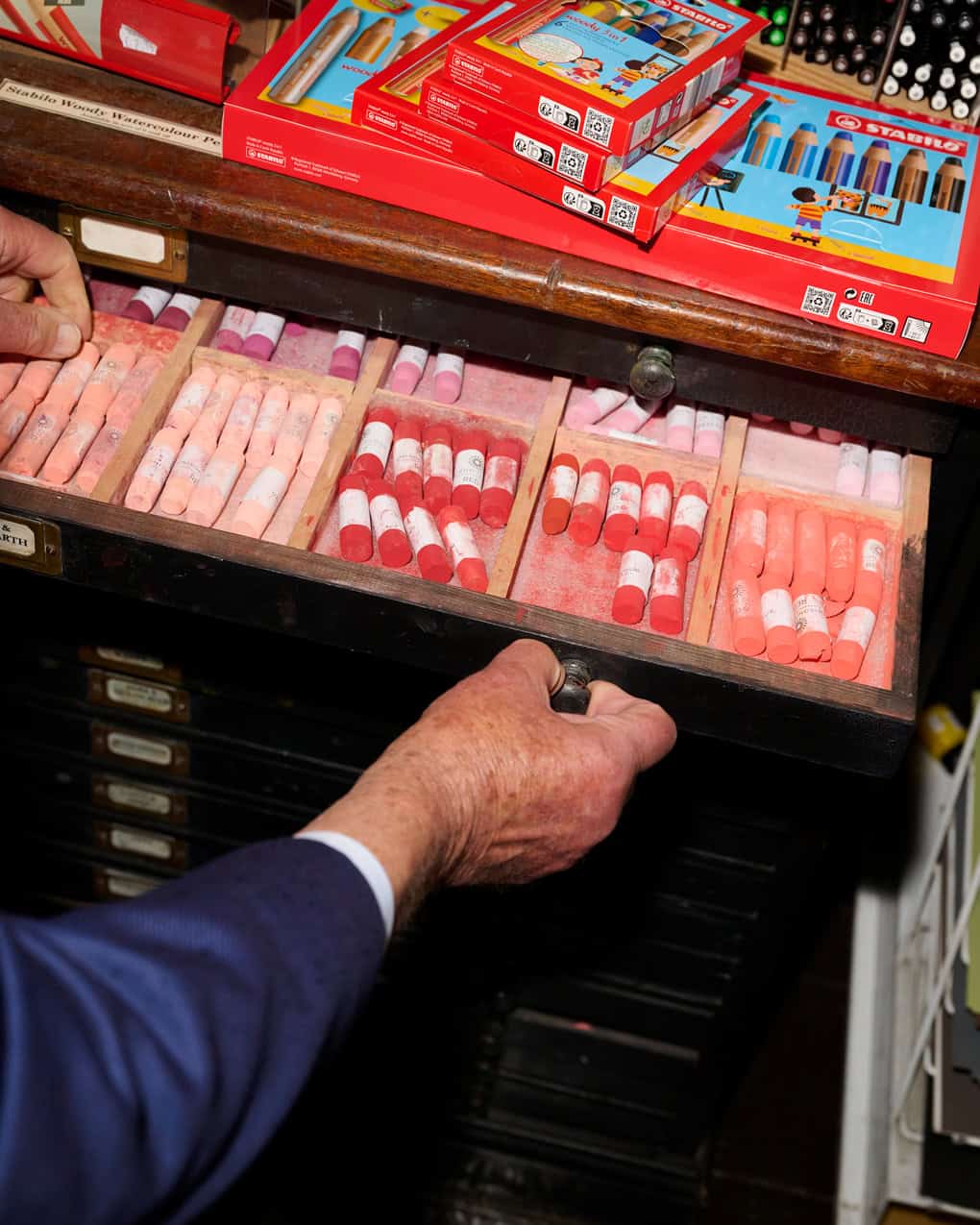

Cornelissen is home to close to 50,000 stock-keeping units – remarkably close to the inventory of a Tesco superstore, yet almost every item belongs to a niche that exists almost nowhere else.
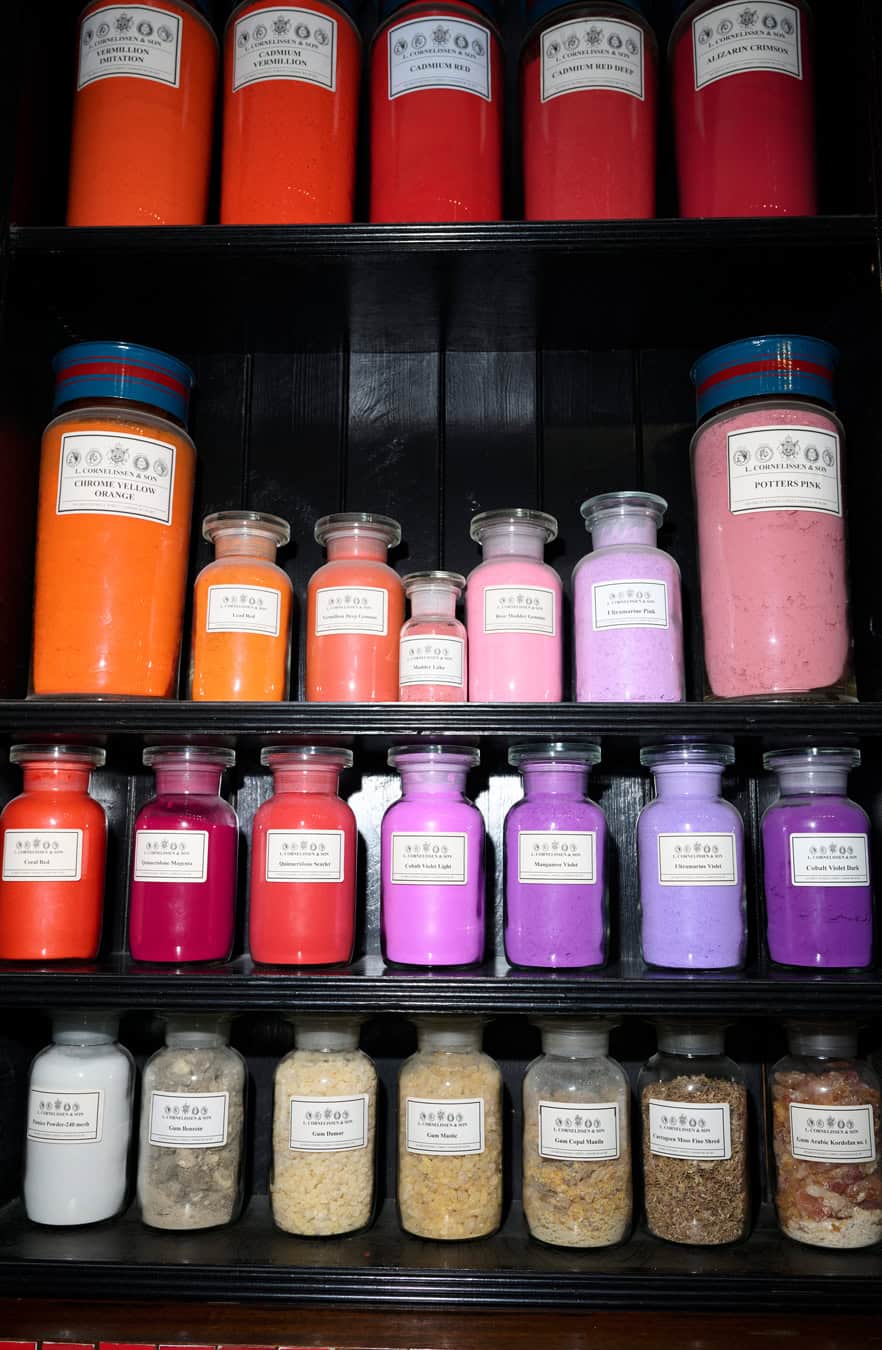
The pigments remain the soul of the shop. Luminous jars of powdered colour sit behind glasslike specimens – ultramarines, ochres, verdigris, earths and lakes whose names alone evoke centuries of painting. Walt’s own favourite is unexpectedly modest: Schmincke Mussini Transparent Orange. “Every painting needs a little bit of red,” he says, before settling on the glowing transparent orange tube with obvious affection. What fascinates him is not simply the colour itself but the chemistry behind it, the gamma resin that gives Mussini paints an extraordinary transparency, allowing artists to build luminous glazes layer upon layer rather than opaque surfaces.
That approach defines Cornelissen. “I couldn’t care less,” Walt says of retail metrics like stock turnover. “I want availability.”
Perhaps that is why Cornelissen continues to matter, because it operates as a repository of accumulated knowledge.“You should not apply the normal principles of business to Cornelissen,” Walt says. Customers arrive not simply to buy paint but to solve problem that Google cannot. Conservators are on the hunt ford is continued pigments, icon restorers seek traditional materials, gilders want to match centuries-old finishes and colour manufacturers themselves source raw materials. Earlier this year, one overseas company placed a single pigment order worth £27,000.
Cornelissen has also recently found an unexpected new audience. Following a short TikTok video posted in May by The Observer to accompany their article about the 171-year-old shop, Walt discovered he had gone viral. A million views later, visitors began arriving from around the world simply to meet the softly spoken man behind the counter. He still seems rather baffled by the attention.
Yet perhaps the internet has merely come to recognise what artists have known all along. L.Cornelissen & Son remains dusty where it should be dusty, complicated where it should be complicated and gloriously unconcerned with convenience. Long may it stay that way.
Photography by Anna Stokland. Taken from 10 Men Issue 64 – FUTURE, LEGACY, HERITAGE – out NOW. Order your copy here.