November 23, 2026 |
Behind unassuming closed doors lies something rather unexpected. In Kyoichi Tsuzuki’s world, a cramped Tokyo flat can contain piles upon piles of clothing from Pleats Please Issey Miyake, a trio of Lolita-like girls who can’t get enough of Miss Marple or a Buddhist monk with a penchant for purchasing Comme des Garçons. It’s less fashion fantasy than fashion fallout – the real lives of the real people who actually buy the clothes.
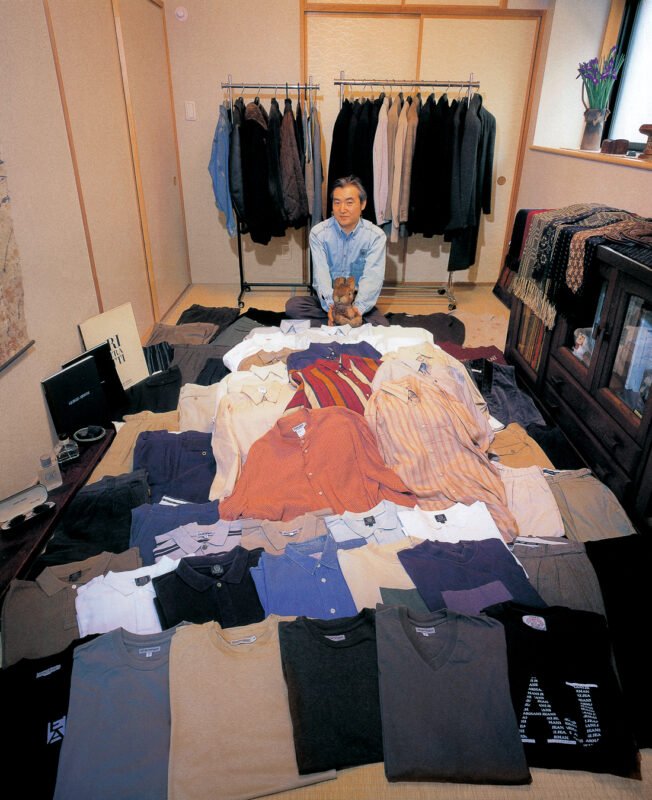
Armani, May 2003
Tsuzuki, the Tokyo-born reportage photographer, writer and former Popeye and Brutus editor, has spent decades documenting Japan’s subcultures with the forensic eye of a journalist and the curiosity of someone who genuinely likes people. His cult 1993 photobook Tokyo Style (reissued by Apartamento in 2024) peeled back the doors of the city’s tiny flats to reveal how locals really lived. His latest book Happy Victims, first serialised in the Japanese fashion magazine Ryuko Tsushin (meaning ‘Trend Bulletin’) between 1999 and 2006, pushed that idea further. Every month for seven years, Tsuzuki sought out obsessive collectors devoted entirely to one designer or brand. “Neither I, the author, nor the editors could have imagined that a project so very far from normal fashion fare might last for so long,” Tsuzuki said in 2008. “For one thing, I had no idea there were so many different designer brands.” Bound in paperback in 2008, then reissued last year, again by Apartamento, Happy Victims gathers 85 brands across 86 pages – from Hermès, Chanel and Martin Margiela to niche Japanese labels and collections so specific they only feature Gucci shoes. Each spread pairs a portrait with a timed breakdown of the subject’s daily routine for a slightly lascivious glance behind closed doors.
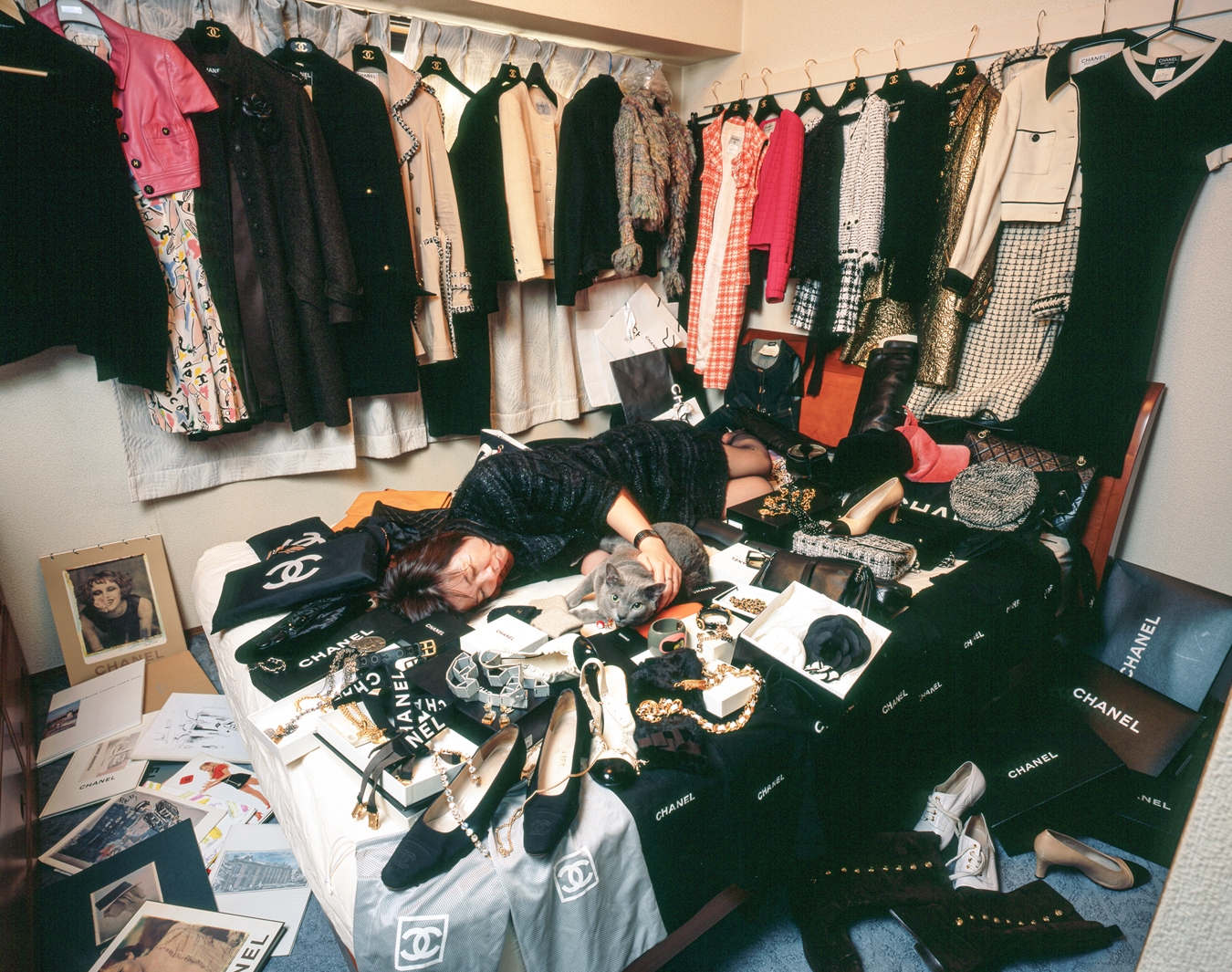
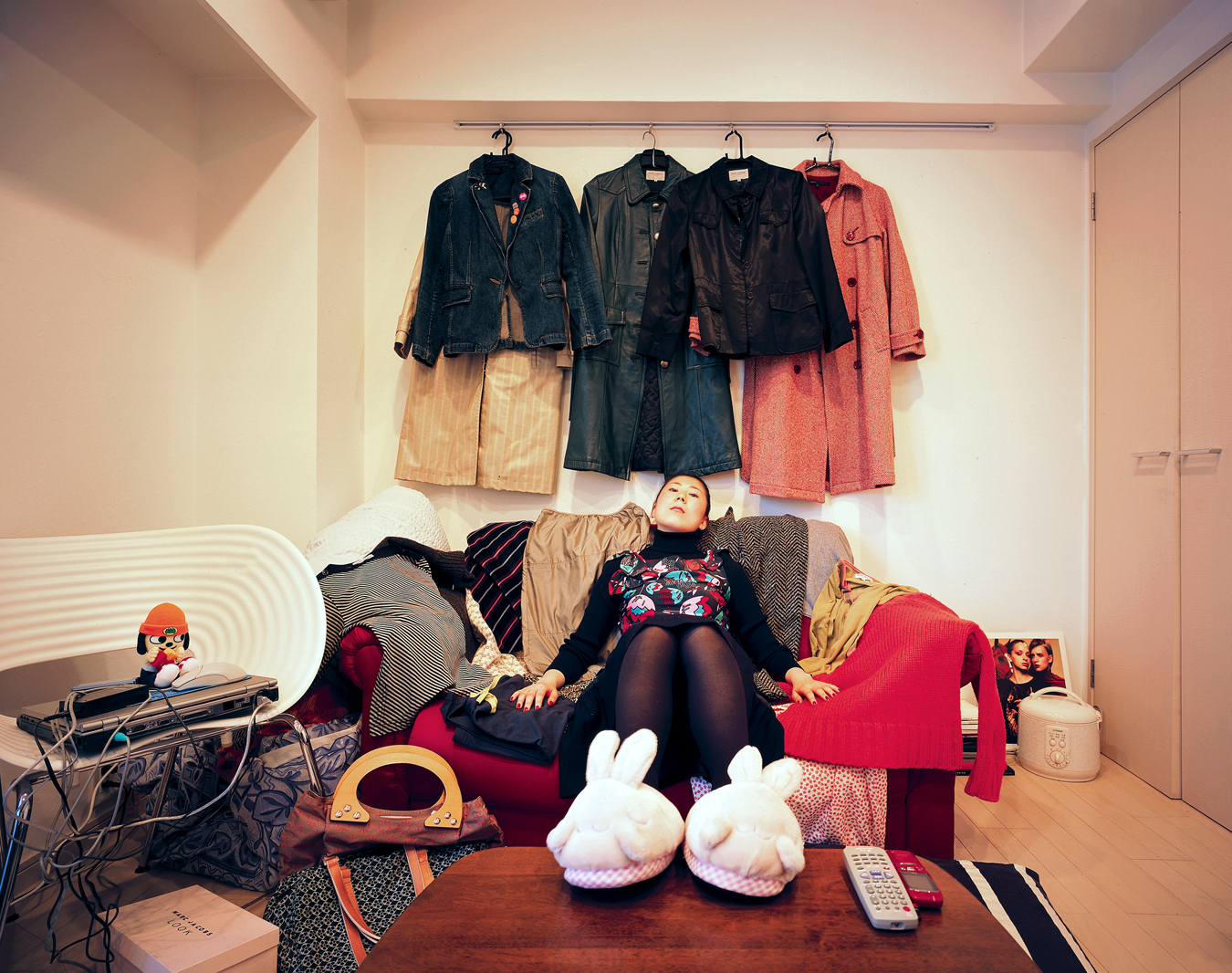
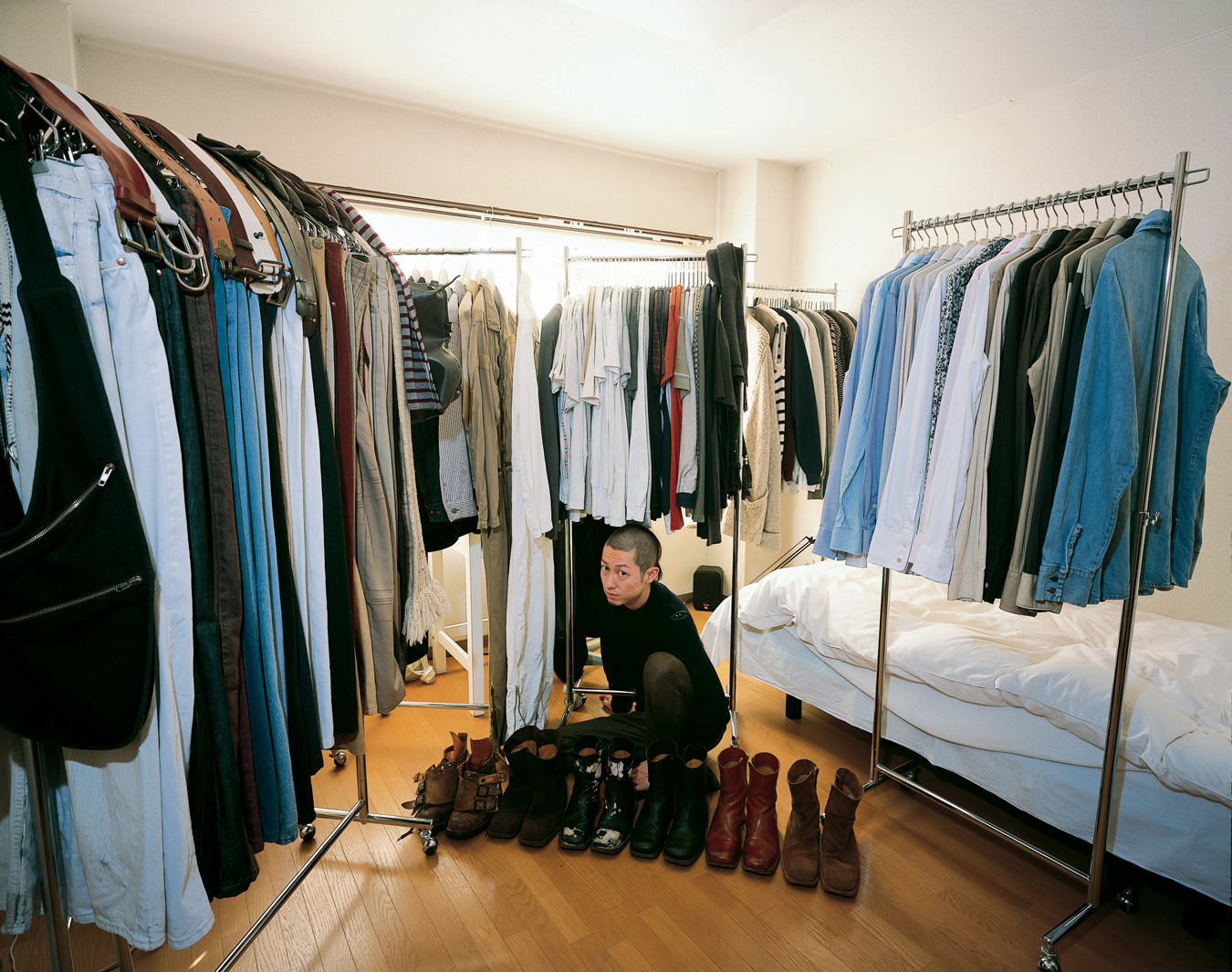
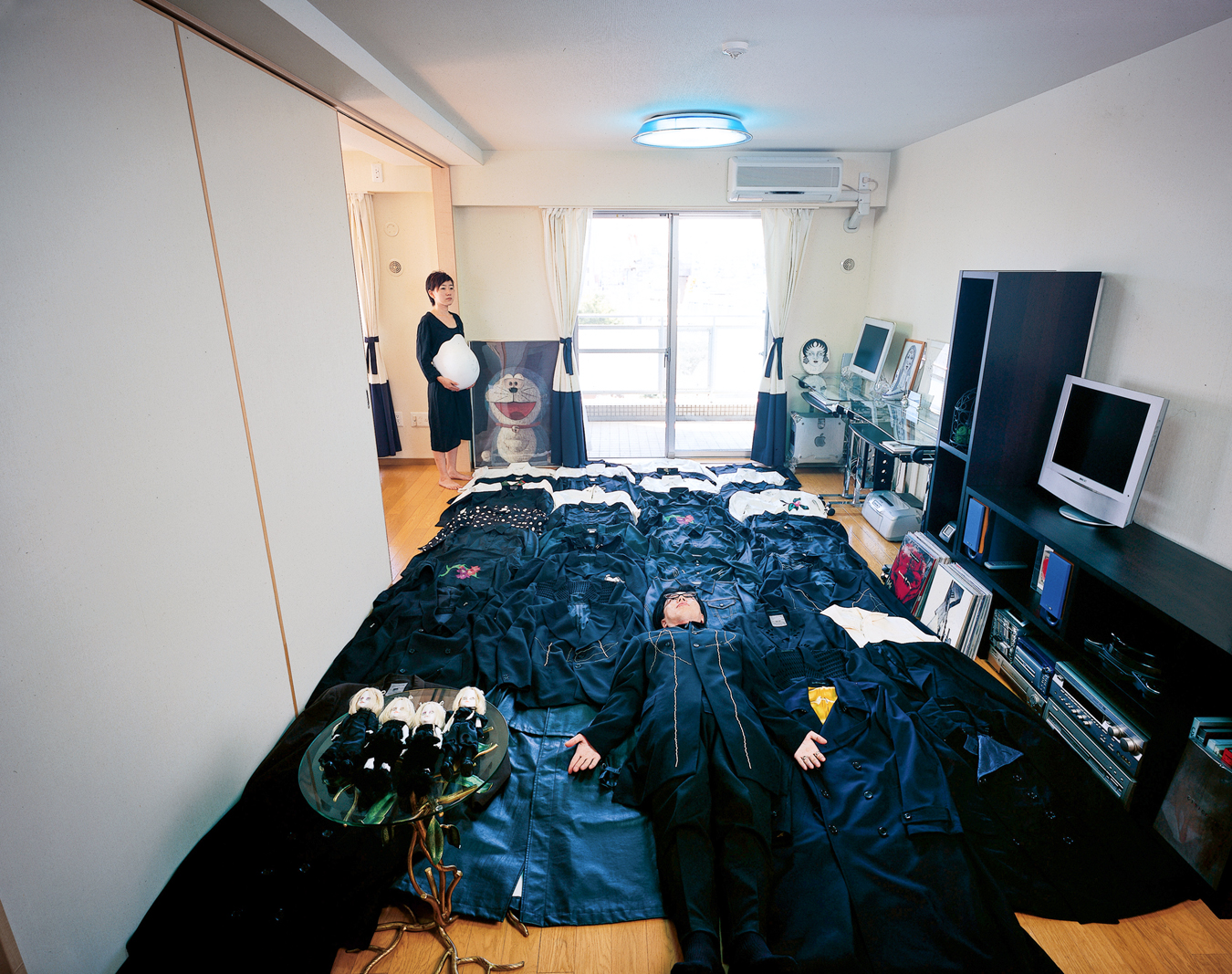
Chanel, February 2006, Marc Jacobs, April 2002, Martin Margiela, April 2003, Yohji Yamamoto/Y’s for men, December 2005
The effect is intimate, faintly voyeuristic and often very funny. One collector listens to his neighbours through paper-thin walls while surrounded by McQueen. Another loses more than a stone just to fit into a precious pair of Jean Paul Gaultier trousers. “A man living in a run-down hole-in-the-wall who owned a ¥550,000 Hermès briefcase, a secretary surviving on instant noodles who buys a dress costing close to ¥1,000,000 [£4,600], I met all types,” Tsuzuki said in 2008 of the people he encountered.
The rooms themselves feel intentionally cluttered, like the mind of a writer in the midst of their research. Garment bags hang from curtain rails. Shopping bags pile to the ceiling. Beneath the humour is a level of obsession hardly matched. “No, these happy victims aren’t rich: they’re decidedly on the poor side,” Tsuzuki said in 2008. He goes on to describe the ways that these obsessives sacrifice basic necessities in order to get their hands on designer pieces. “Most especially by foregoing living space, which is probably the most expensive thing there is in Japan,” he says.
What fascinated Tsuzuki wasn’t just the clothes, but the power structures surrounding them. “There is a kind of accepted hierarchy of collecting in society. At the top are books and fine art, then music, cars and so on. Clothes and shoes come at the bottom. Collectors of clothes don’t command much respect, but I have great admiration for these people. That’s why I called them ‘happy’ victims. Many are shy young kids and this is like salvation for them,” he said last year.
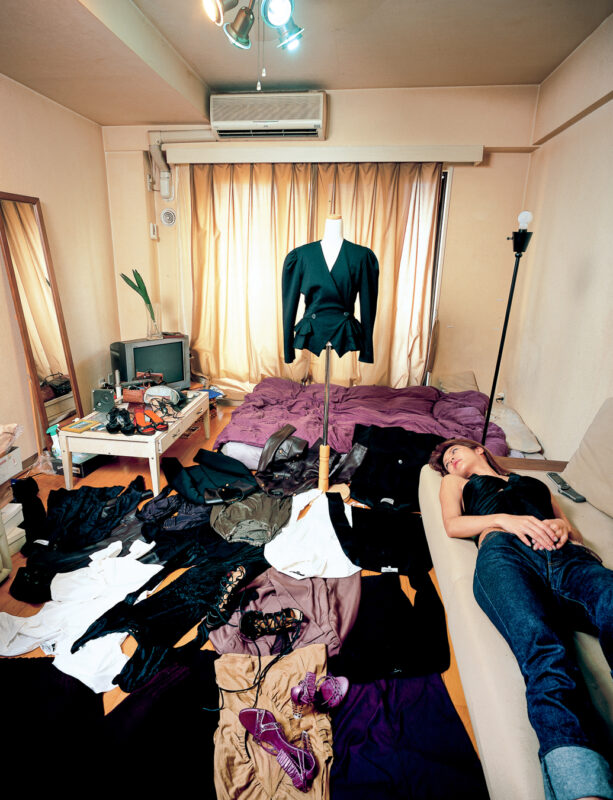
Tom Ford, September 2005
That empathy is what has made Happy Victims endure. Tsuzuki never mocks his subjects, even when they’ve reduced “the three necessities of human life – food, clothing and shelter – down to just one”. Instead, he treats them as anti-heroes of consumer culture who are awkward, devoted and strangely relatable. “But they’re magic to my eyes, they radiate positive vibes that transcend all reason,” Tsuzuki said in 2008.
Today, he believes the series would be impossible to recreate. “Now that a quarter of a century has passed since I started these reports, I don’t think I could make Happy Victims again,” he said last year. “In the last quarter of a century, fashion design has turned into an infinitely fragmented, diffuse cultural phenomenon with no central focus.”
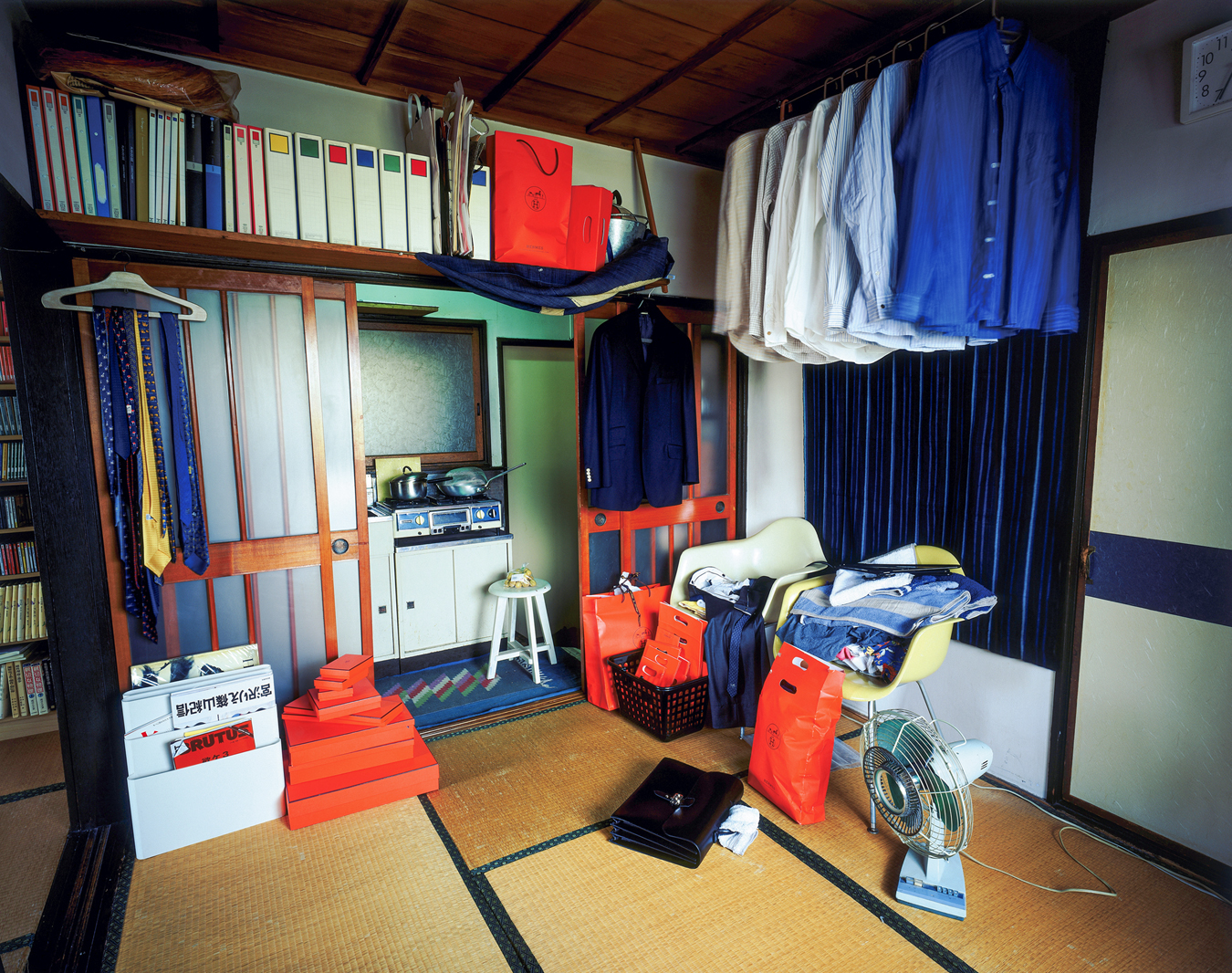
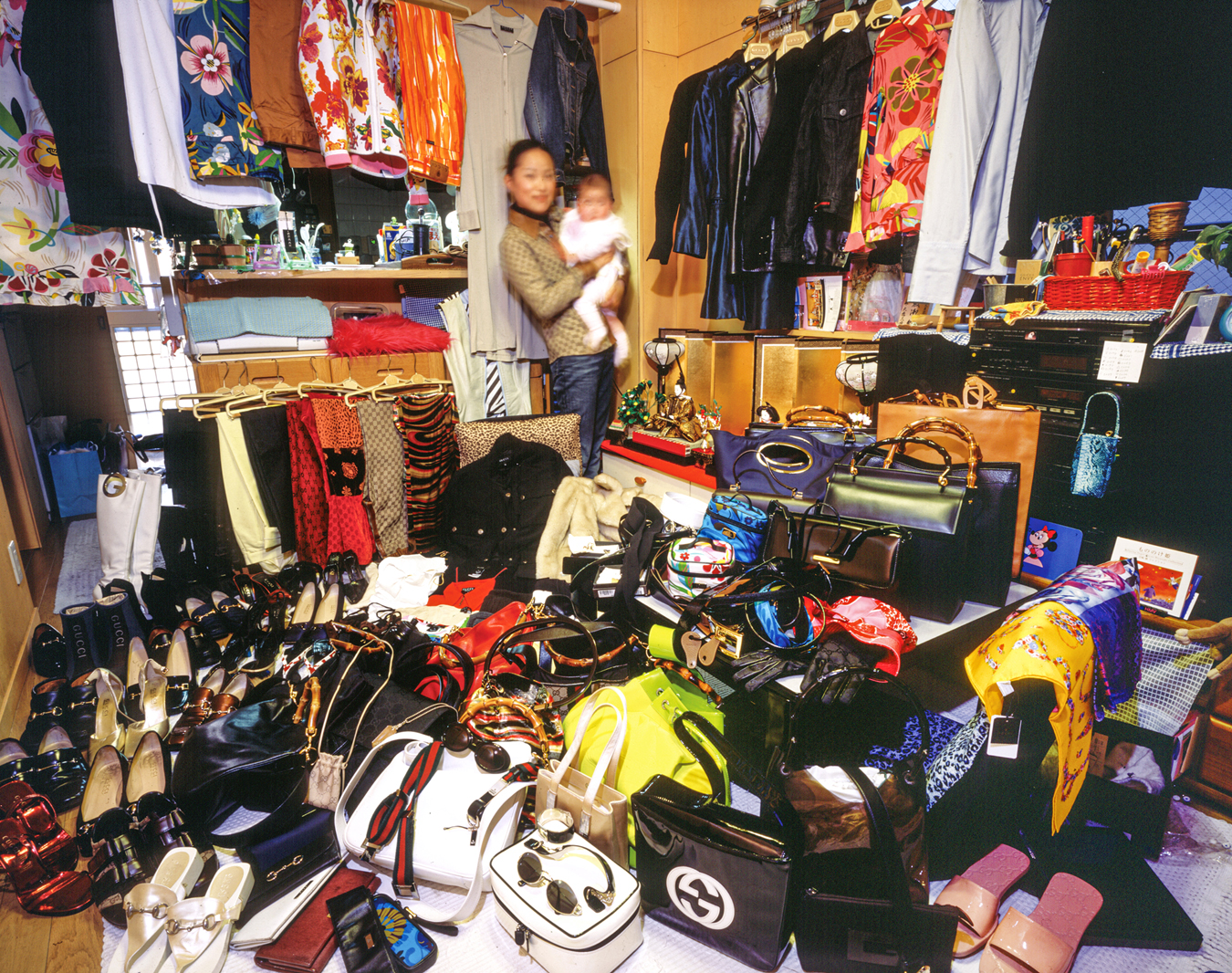
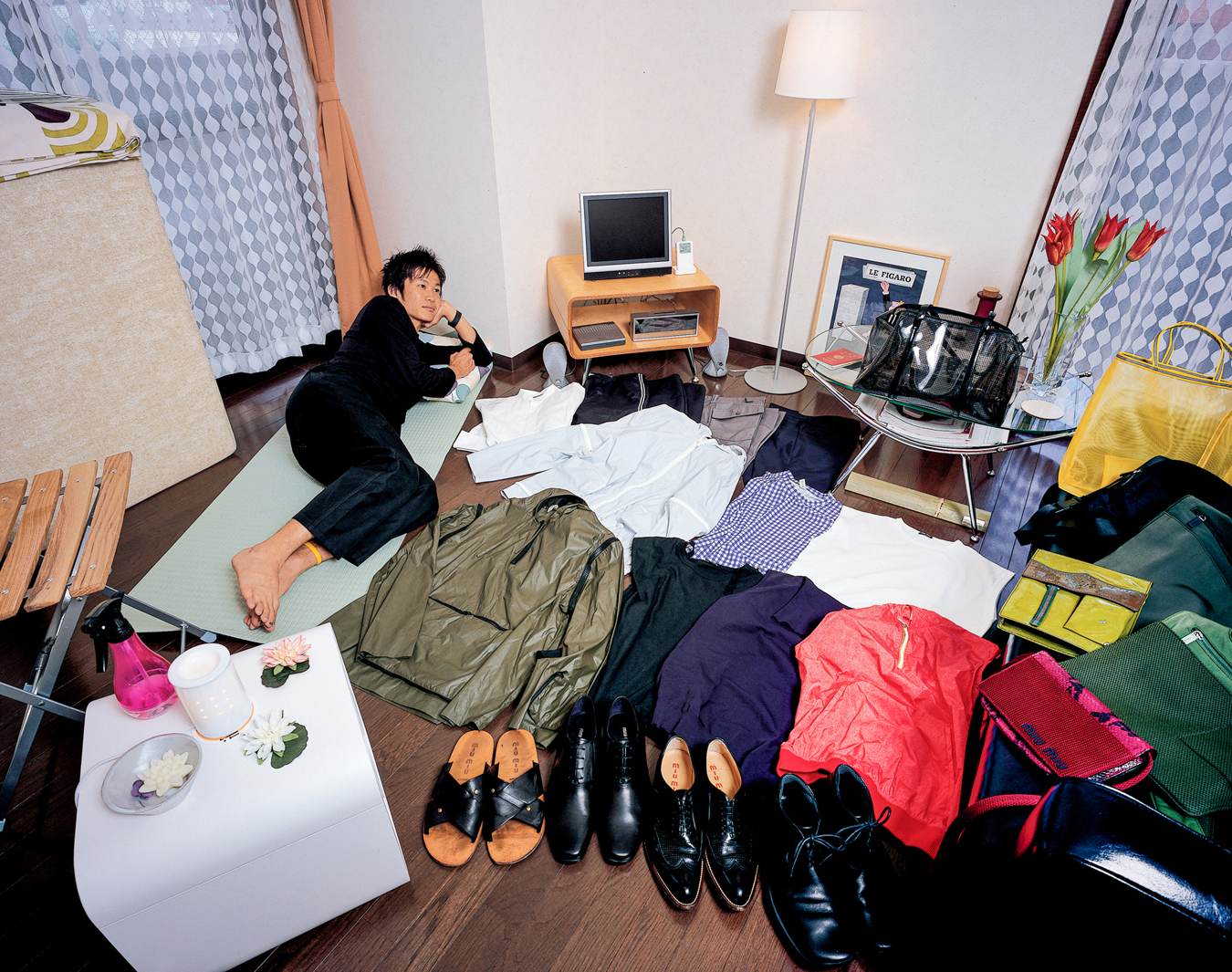
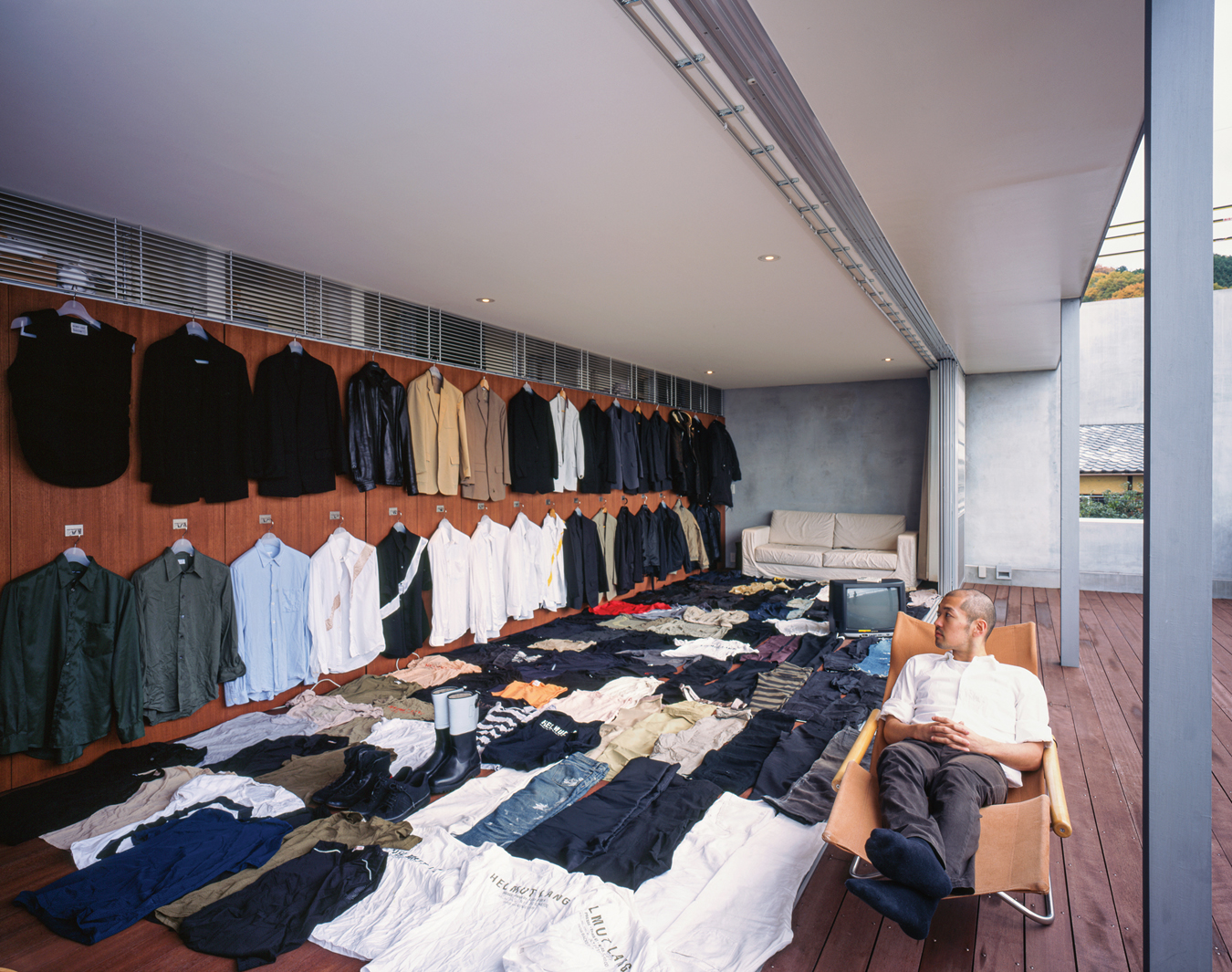
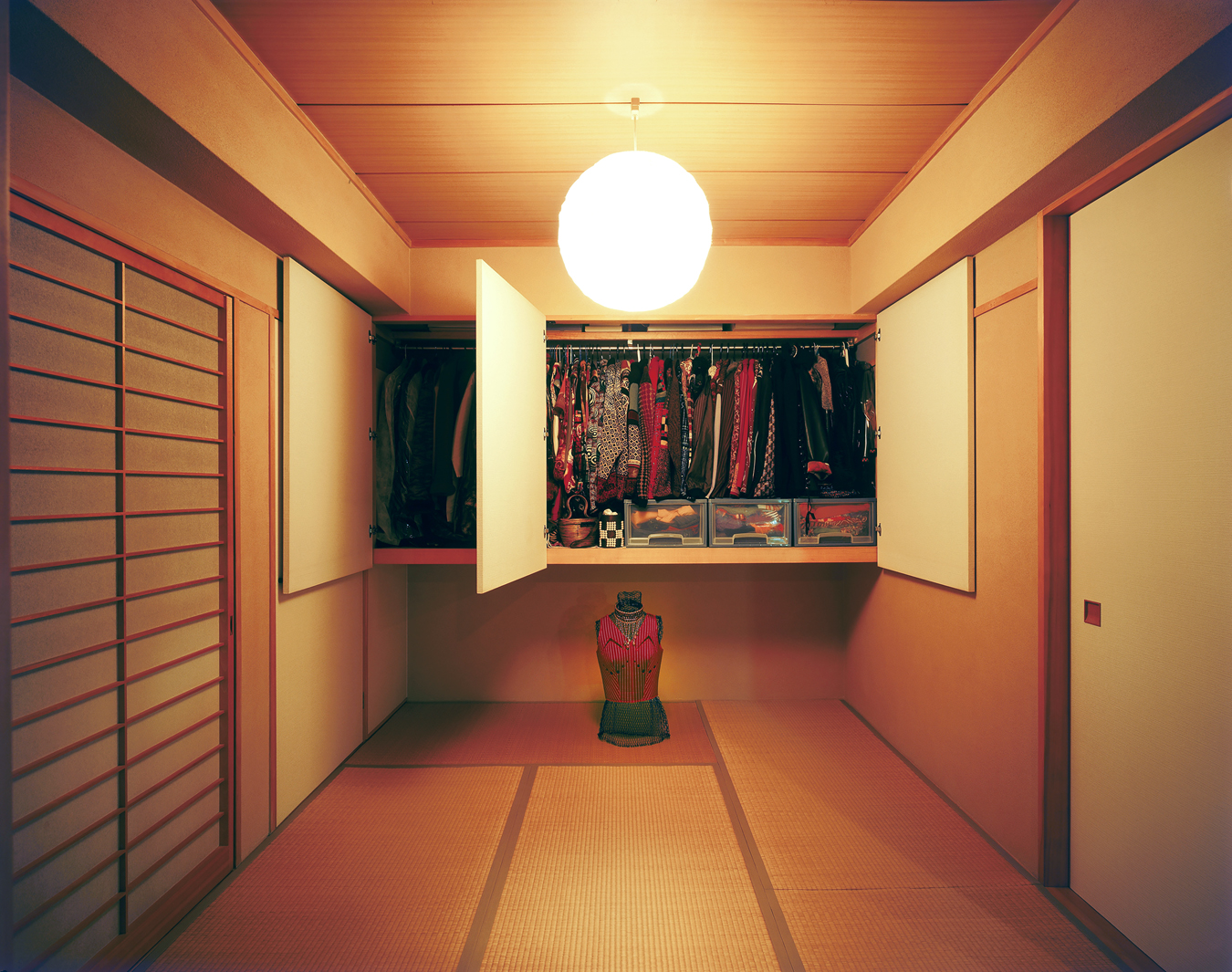
Hermès, August 1999 Gucci, June 2002Miu Miu, November 2004 Helmut Lang, March 2004, Jean Paul Gaultier, January 2000
Still, Happy Victims feels oddly current. Before algorithms and personal branding turned style into content, Tsuzuki was able to capture something far messier and more sincere: people who were building their identities through clothes in rooms that were too small to hide anything. There’s something deeply human about his ‘happy victims’ – the people who love something irrationally, impractically and completely. Behind those closed doors, surrounded by rails of clothes and stacks of shopping bags, Tsuzuki wasn’t photographing consumption at all. He was photographing devotion.
Photography by Kyoichi Tsuzuki. Taken from Issue 77 of 10 Magazine – FUTURE, LEGACY, HERITAGE – is on newsstands now. Order your copy here.
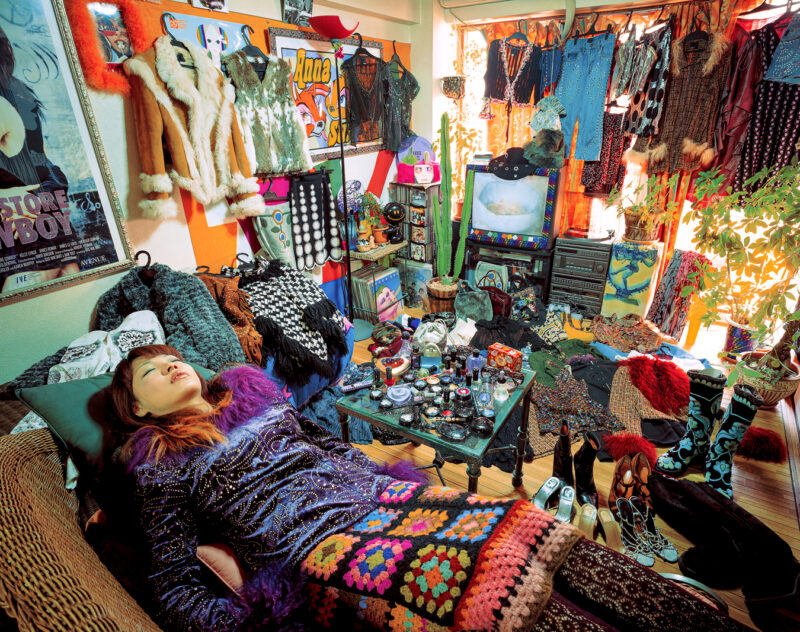
Anna Sui, March 2001