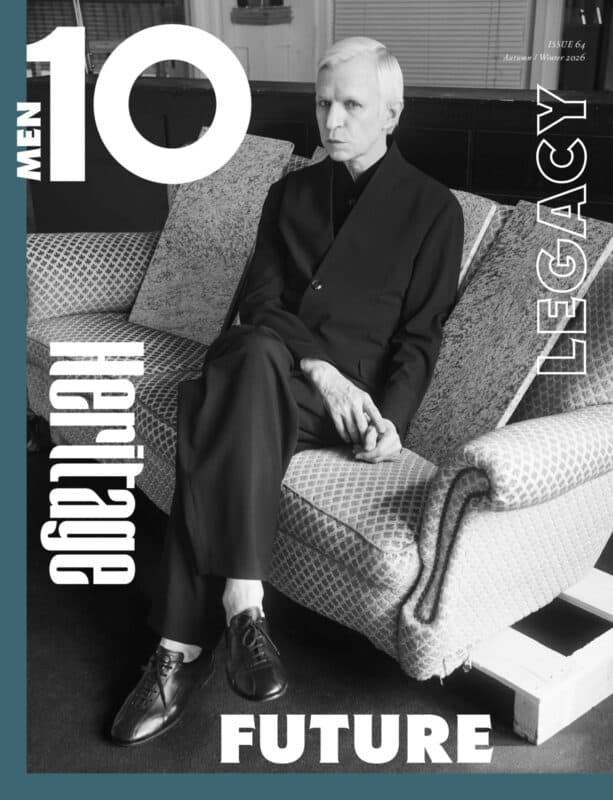
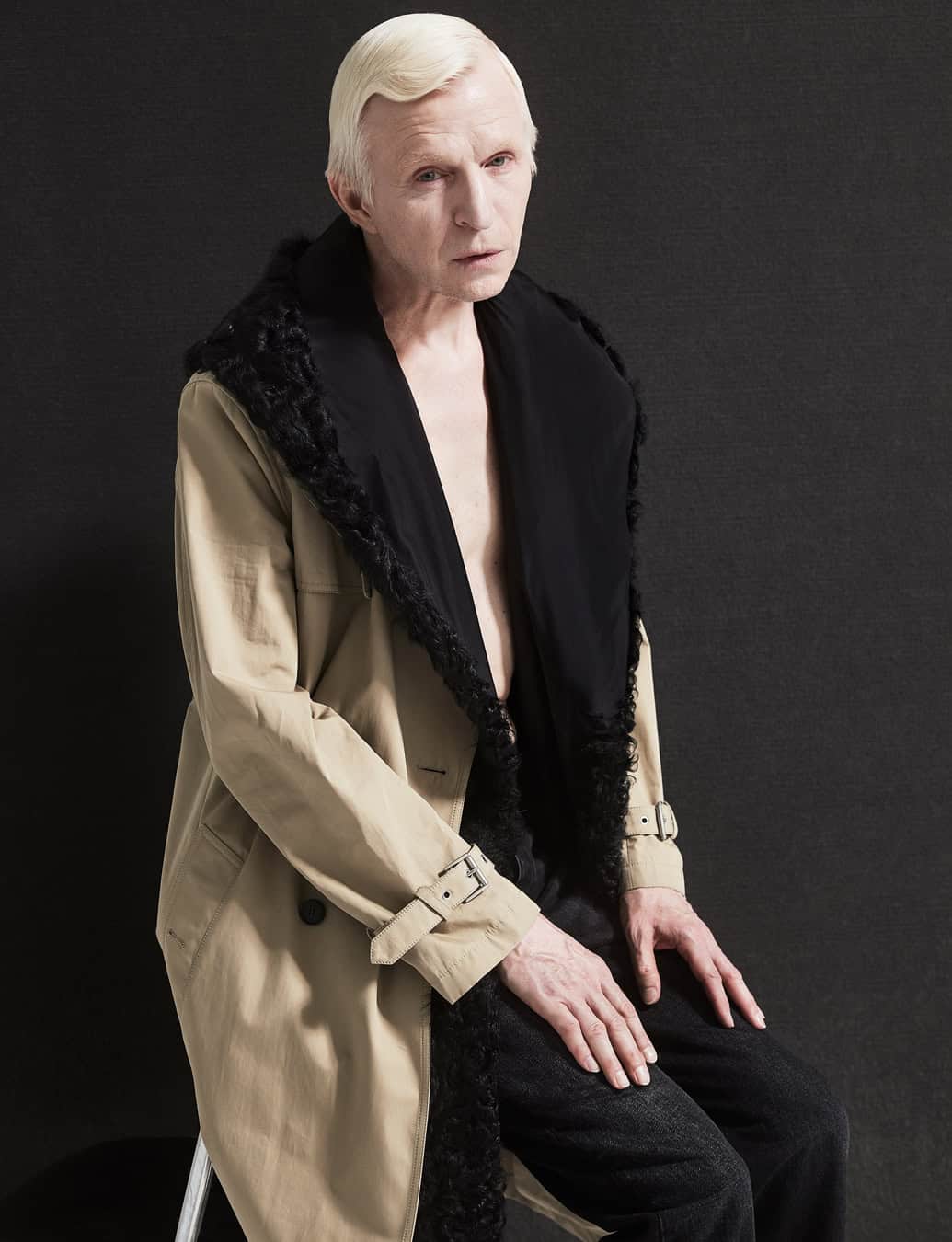
There’s an air of mystique that surrounds Jay-Jay Johanson. The Swedish musician has released 15 studio albums in the last 30 years. In that time, he has continuously shapeshifted his sound, keen to never linger on a genre for too long. What has remained a constant, though, is his hauntingly beautiful vocal performances, which have earned him a cult fanbase internationally. Johanson cuts quite the figure, with pale blond hair and a slick, all-black tailoring uniform. You’ll usually find him in Comme des Garçons or Balenciaga by Demna – he walked the designer’s SS24 show for the house.
No stranger to a striking silhouette, or a Balenciaga catwalk either, is fashion legend Diane Pernet, the founder and director of A Shaded View on Fashion Film (ASVOFF) festival, who has long enjoyed Johanson’s music. In keeping with the theme of the issue, the pair talk about ideas around heritage.
Diane Pernet: You’re from Trollhättan on the west coast of Sweden but moved to Skara when you were young. What did growing up there leave inside you that you’ve never been able to shed?
Jay-Jay Johanson: As soon as I realised I wanted to work with something that had to do with art, I had to leave. I left home when I was 15 and moved to Stockholm. Most people from the west coast stay there; they go to Gothenburg or maybe down to Malmö or over to Copenhagen, but it’s not that common to go to Stockholm. Even though I was the youngest, I left first. The family was so big, I needed to break out of that. I couldn’t focus. It was not good for art. Though what I kept from the west coast was some sort of small-town attitude that I have always felt is super strong in me, first and foremost in Stockholm, but even more when I went to London or Paris. To come from a city of 7,000 inhabitants was something. When I moved to Stockholm, I lived in the city centre for a while, but quickly moved out to the suburbs to, let’s say, a small-town situation in the big city. I’ve been living in the same flat for 27 years.
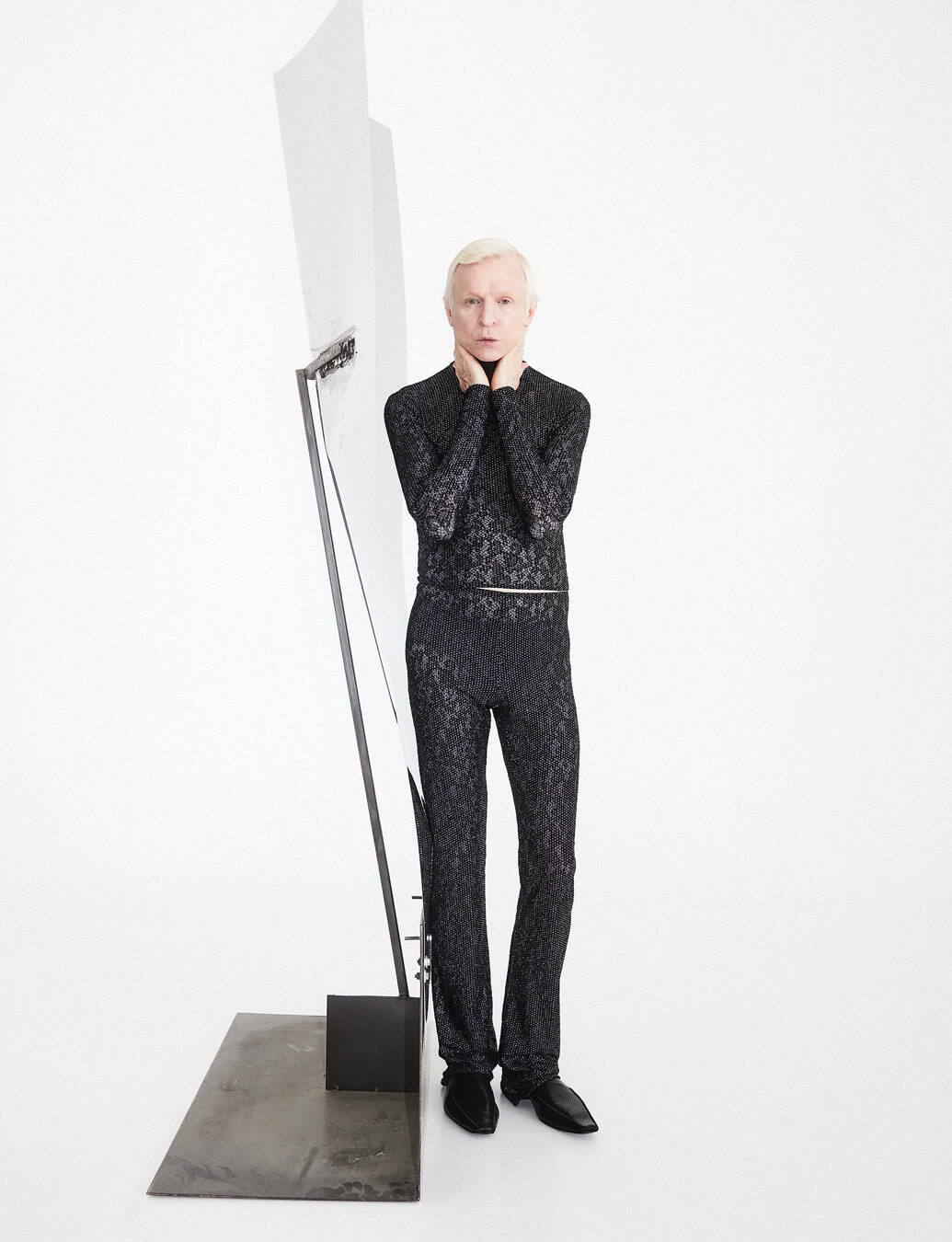
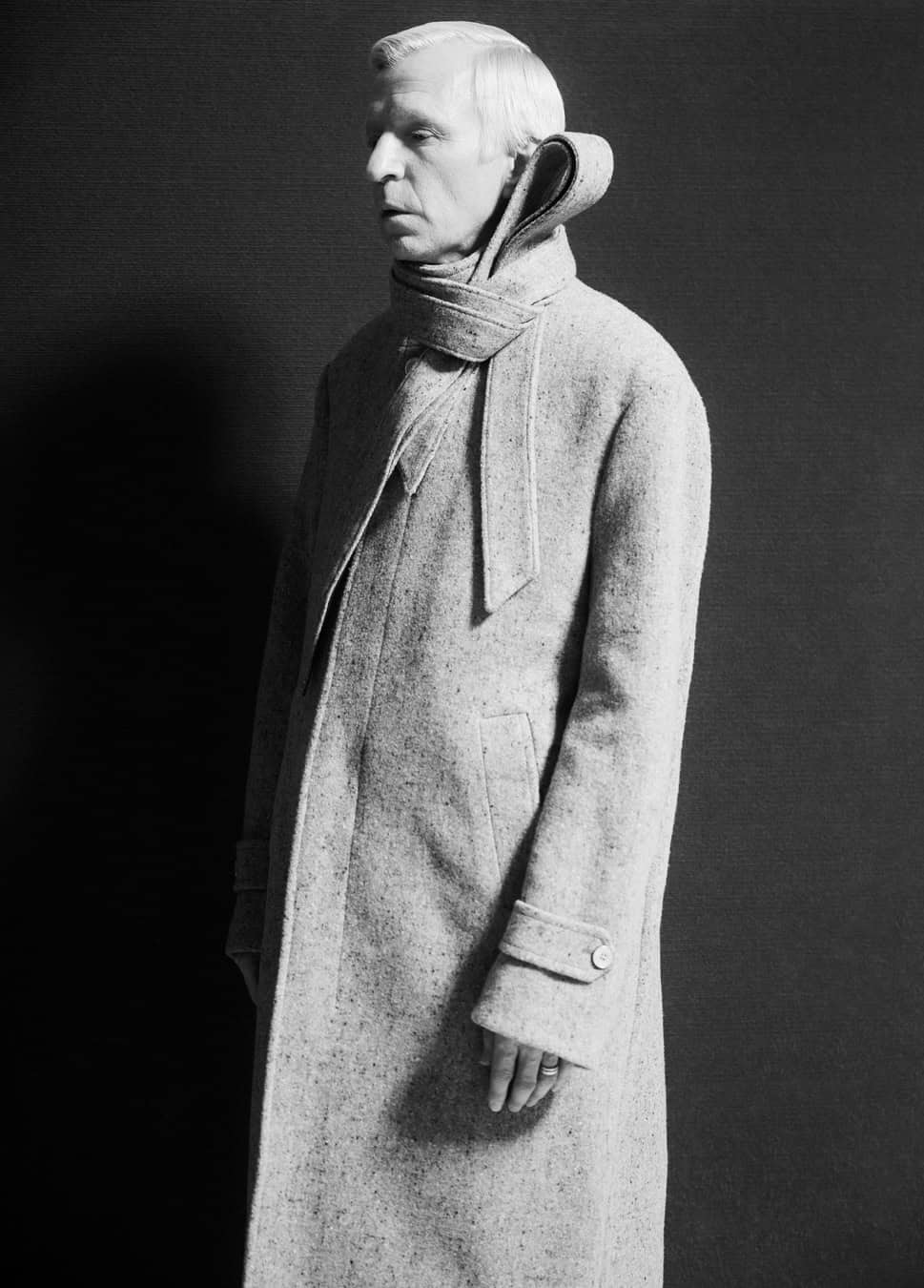
From left: GUCCI, LOUIS VUITTON
DP: Didn’t your father have a jazz club?
JJJ: My dad was in the printing business. He started working at a morning paper but then he and his friends started a bigger printing plant to make books, catalogues and record covers. They moved a bit more into Sweden, to Skara, where they started a jazz club called Mäster Olof. They realised that in the 1950s all the big American stars came to Sweden because they wanted to discover Swedish girls. They always came to Gothenburg and Stockholm by car. My dad and his friends realised, ‘Let’s do a stop between Gothenburg and Stockholm and ask these guys if they want to stop in our little club, we give them the hotel and drinks.’ So many of the big guys came to our small town. I thought it was boring, until one evening in 1984 when dad asked me if I wanted to come down to the club because they had Chet Baker in town. I told him I was waiting for a phone call from a girl called Camilla, but she never called, so I went down to the club and saw Chet Baker. That changed my life.
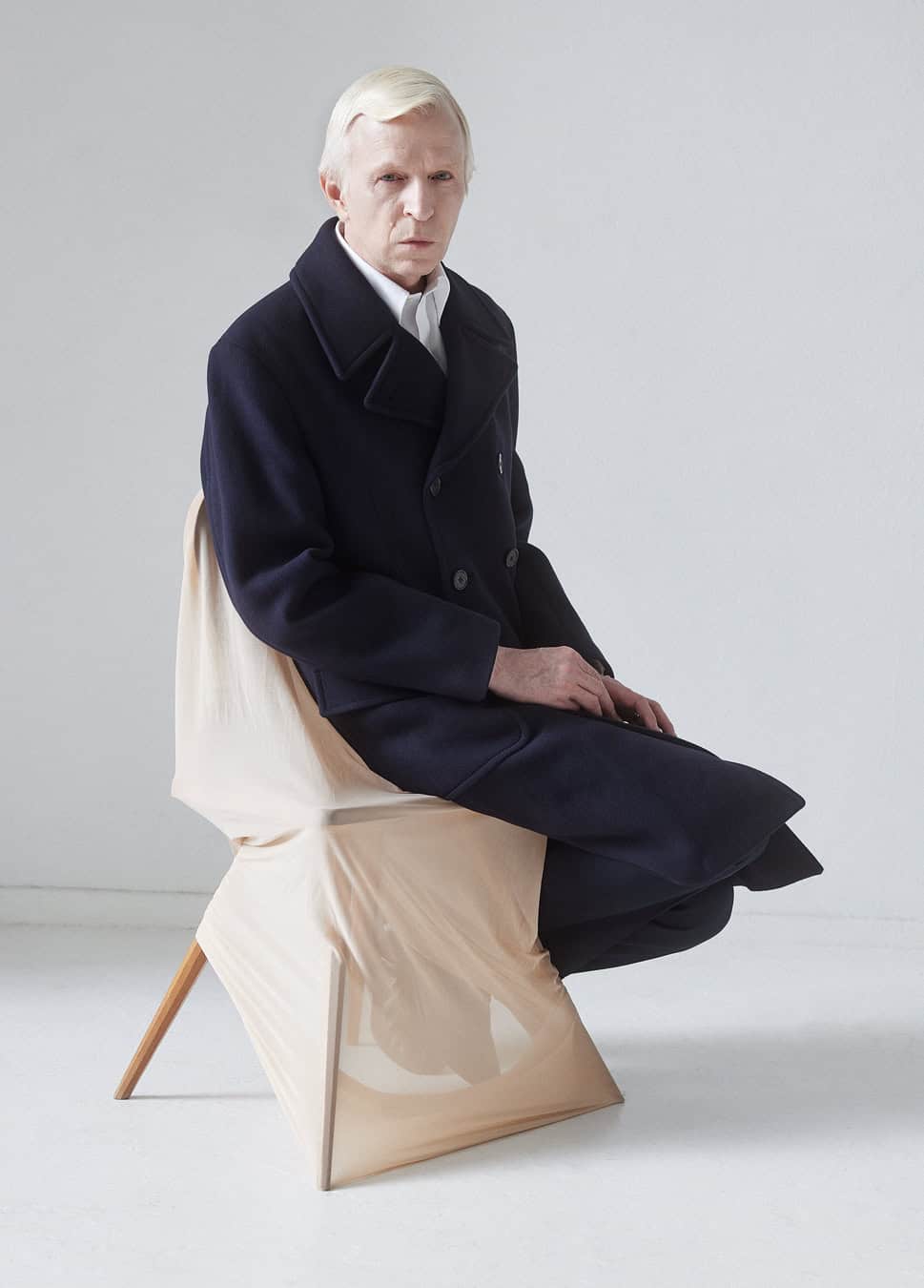
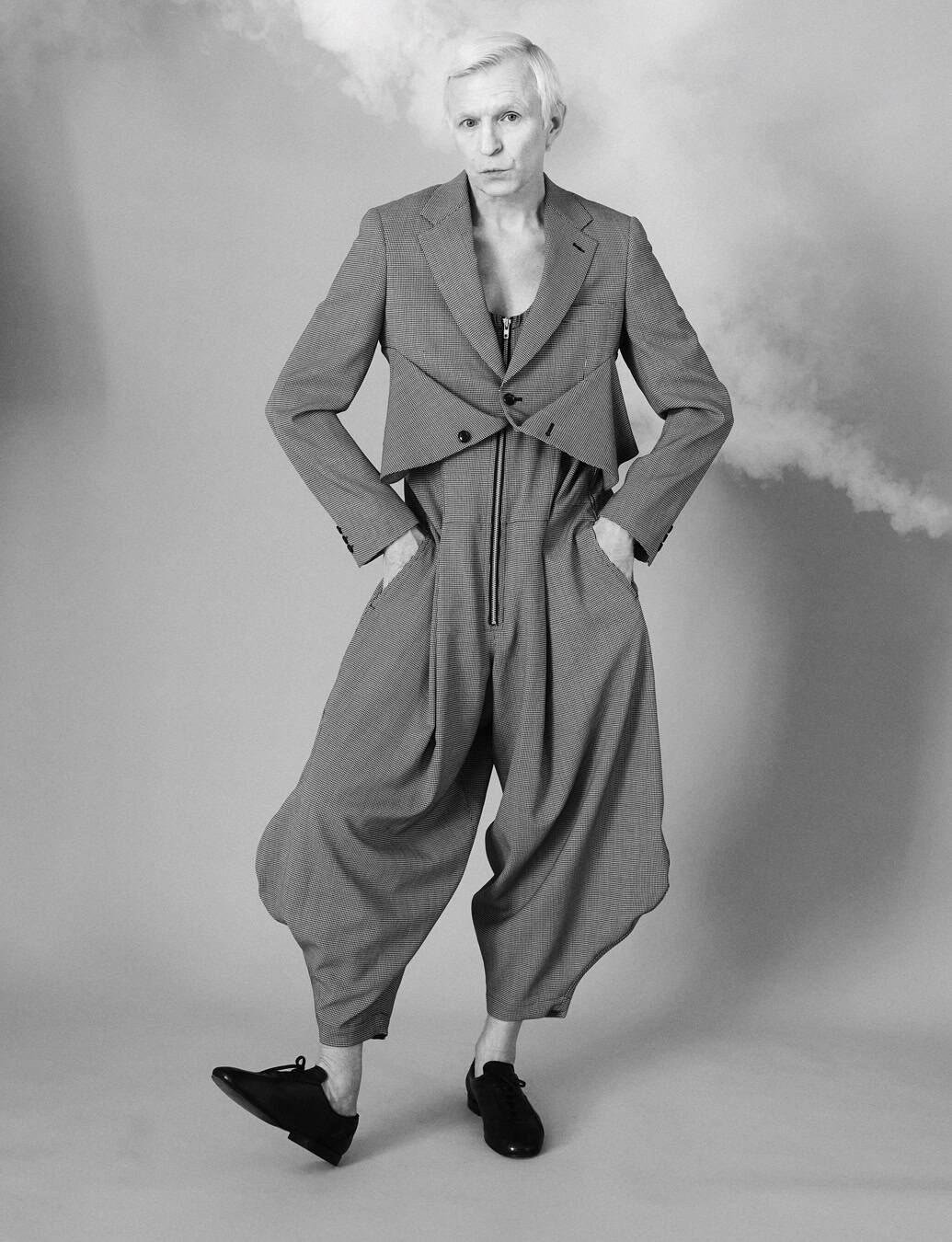
From left: POLO RALPH LAUREN, COMME DES GARÇONS HOMME PLUS
DP: You named your 1996 debut album Whiskey. There’s something very worn-in about it, nostalgic for mood rather than a memory. Do you think you were born melancholic, or is it something you learned?
JJJ: I was definitely born melancholic. I think I was even more melancholic when I was 10. I tried to hide it as much as I could. All the things I wanted to know more of were only available to find in the library, and I realised that there were books that I couldn’t borrow the normal way, because I didn’t want them to have a record of [me having] these books. I had to steal from the library. I was into studying Sylvia Plath, the suicide of [Vladimir] Mayakovsky, the Russian poet – it was for sure super melancholic.
DP: When you think of Sweden, you think of acts like Abba, Robyn, The Knife…
JJJ: I was thinking more Ingmar Bergman than Abba.


From left: PRADA, DOLCE & GABBANA
DP: Your influences were more Nick Drake…
JJJ: That came a bit later, at the end of the ’80s. As a kid it was hard rock, like Ozzy Osbourne and Kiss, and then it became more like Brian Eno, David Sylvian and Roxy Music. The New Romantics in the UK were great to discover, and that made me want to go to London. My first summer job was in 1984 at a graveyard, cutting the grass and planting flowers on the graves. As soon as we had a little bit of money, me and my friends took the boat to London and went to all the clubs. We were tall, blond, skinny 15-year-old kids from Sweden. We had read NME, Melody Maker, i-D and The Face. It came a week later than it came out in UK, but it was enough to be able to read what was going on, what club to go to. We came too late to be in the whole Blitz thing, but there was Taboo [founded by Leigh Bowery], the Limelight [in Shaftesbury Avenue]. One of my favourite evenings was New Year’s Eve at Limelight in 1985. It had opened in September and I spent the whole night with Frankie Goes to Hollywood – it was awesome. Looking to the end of the ’80s, I really loved the Wag Club [in Soho], acid house and the birth of the whole Soul II Soul thing, early Massive Attack, Neneh Cherry – clubbing in London, in the 1980s, was unbeatable.
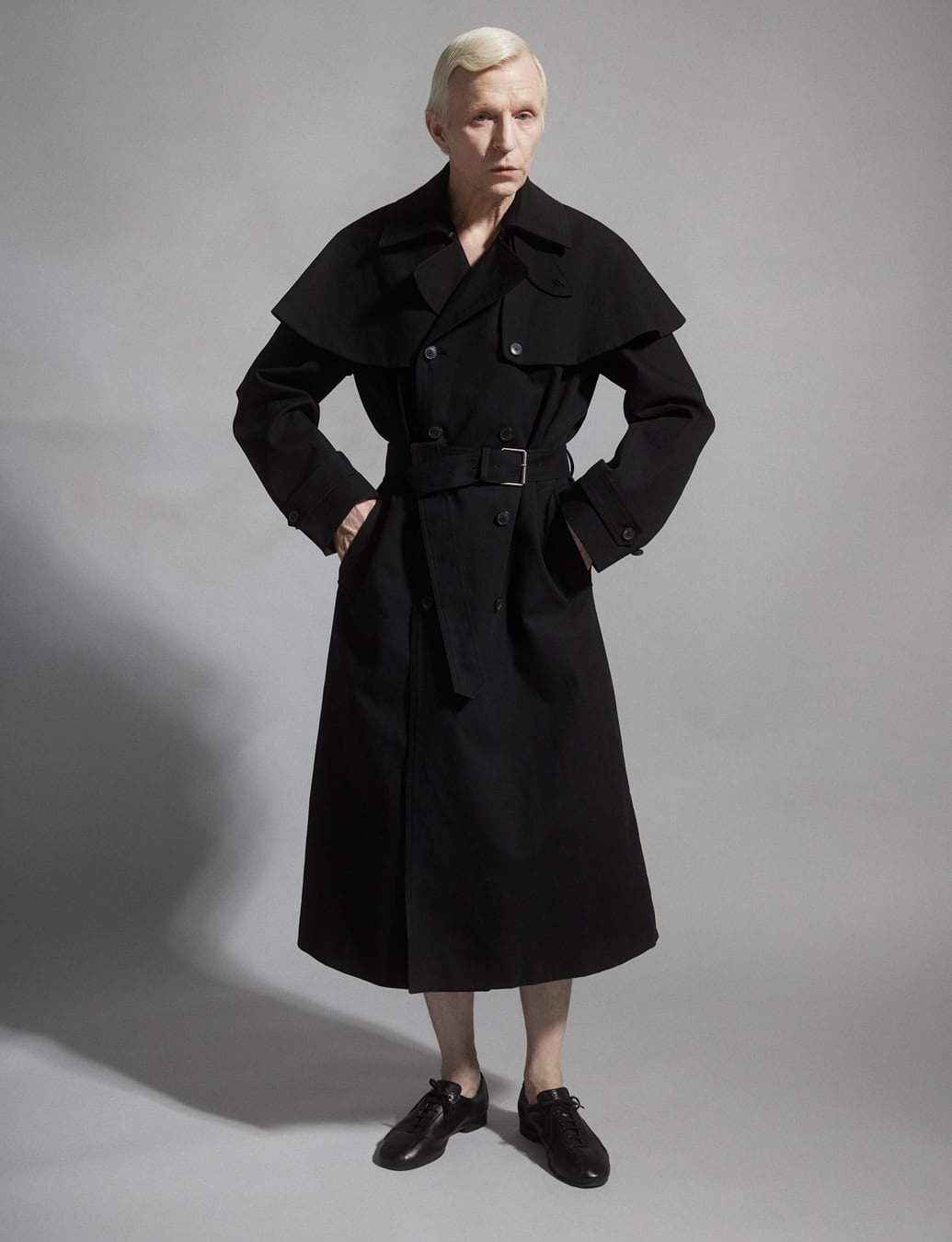
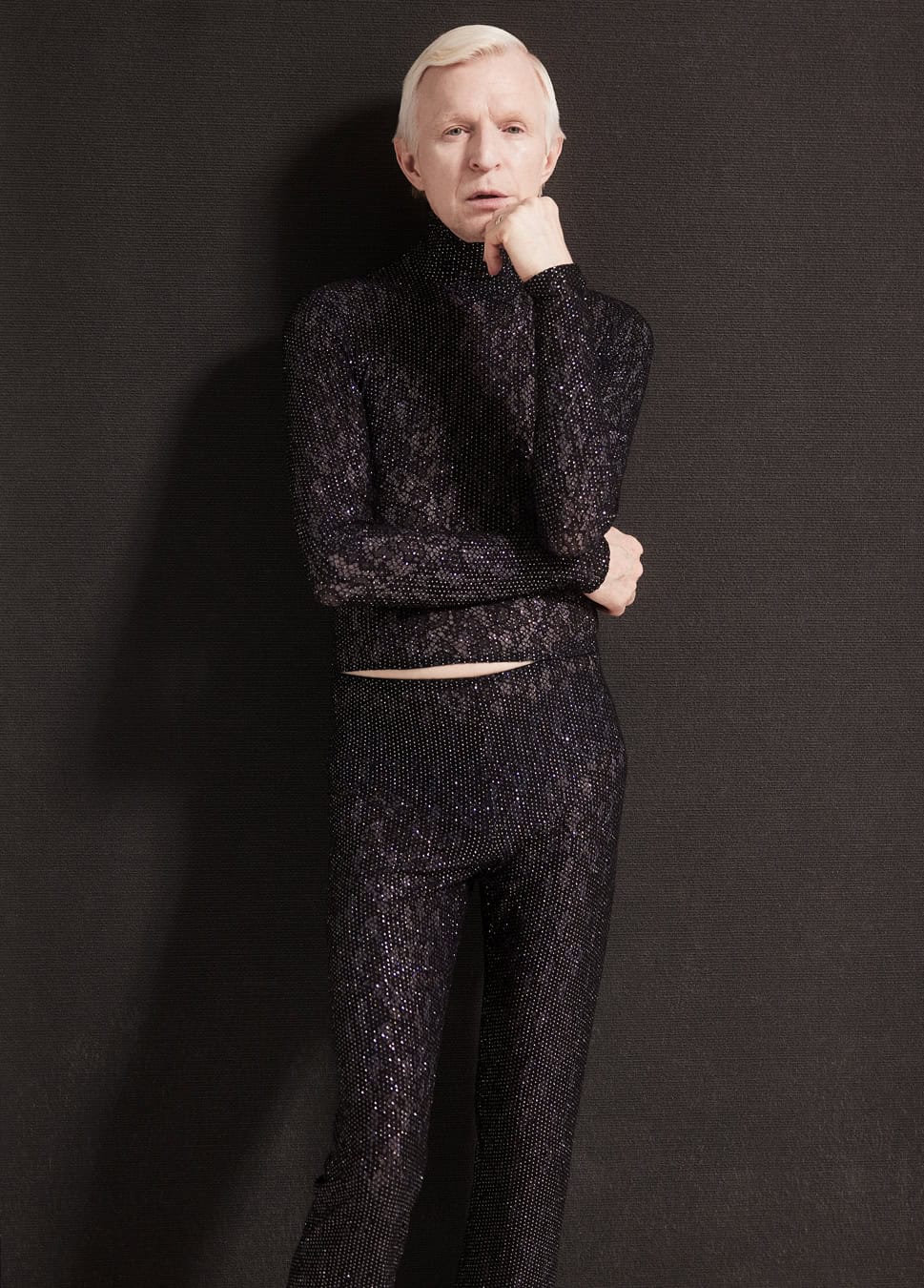
From left: DRIES VAN NOTEN, GUCCI
DP: Your music’s always felt like it belongs to a city and a time, like at 3am in Paris, particularly when Poison entered the French charts at number four in 2000. Did France feel like a homecoming to a place you’ve never actually lived in?
JJJ: France was the first country outside Sweden to release my stuff. Then came Spain, Portugal, Canada and South America. When they invited me to France for the first album, it was my first time discovering the city [Paris]. The first thing I did was go to the Comme des Garçons store. I didn’t have any money to buy anything, I just installed myself and they were like, what are you doing? I just wanted to sit there and suck up the atmosphere. I started to knock on Adrian Joffe‘s door and say, “I want to hang out with you guys.” As much as I wanted to meet musicians, I was much more interested in knowing how Comme des Garçons functioned. Adrian was so charming. I often had tea with him, he introduced me to Rei [Kawakubo].
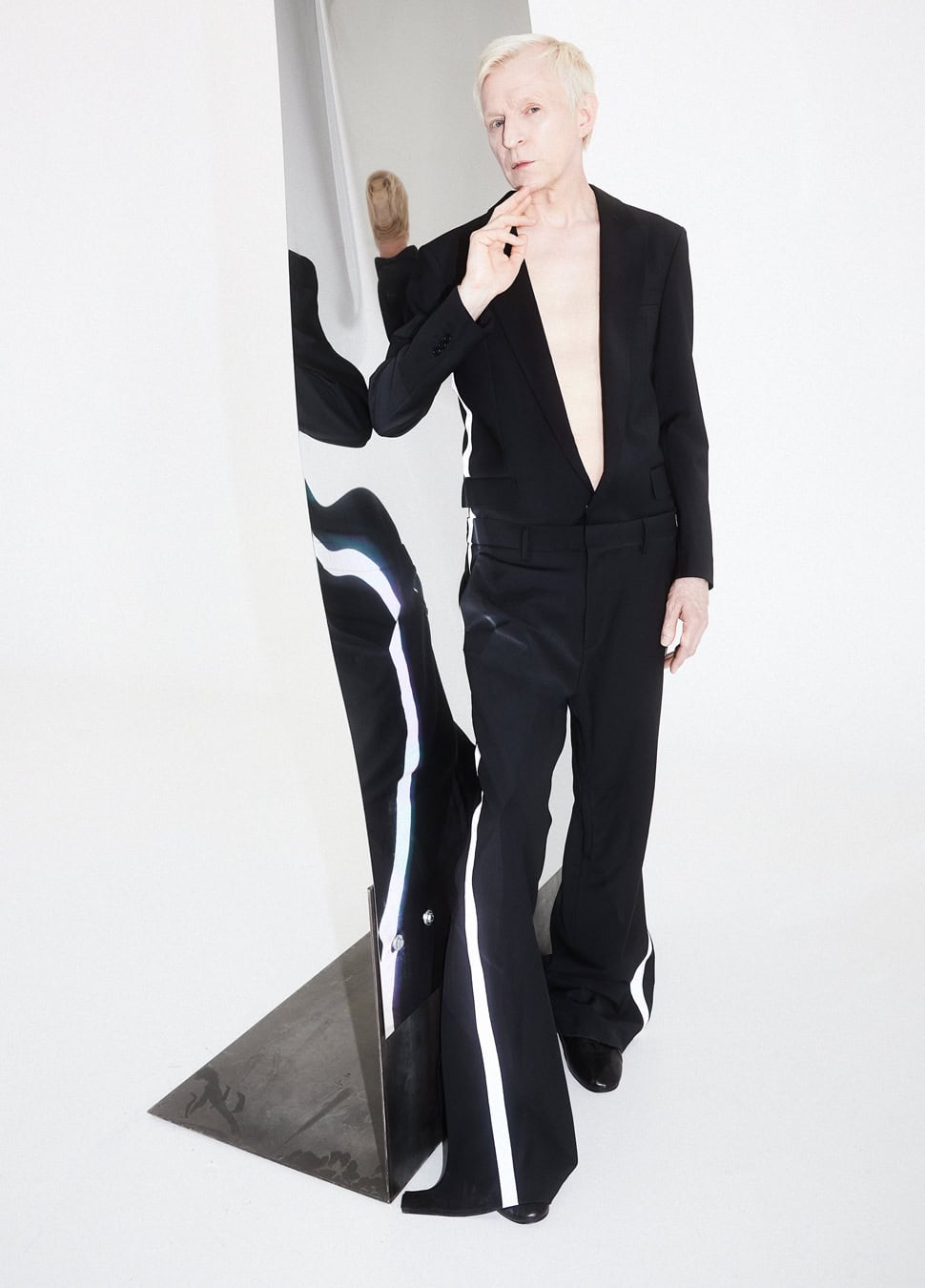
From left: FENDI, DSQUARED2
DP: You studied art before music. Do you think the visual language you absorbed then still shapes the way you construct a song or an album’s world?
JJJ: When I was working at i-D as an art director’s assistant in 1993, I really thought this was the direction I wanted to go in. I thought my job would always be working at a magazine, a bit like my father, being a typographer or something like that. It was a great year at i-D with Nick Knight, Edward Enninful, Pat McGrath, the whole team was amazing. It was also the last year when i-D was still analogue. We were doing it with fax machines and scalpels and glues and scissors! When I got the record deal, I told the label I wanted to do the covers myself. I just couldn’t let anybody else do it; today it’s the same, because it’s so linked. The whole process of making a song is so visual, and I wish I had more time and money to make much better videos.
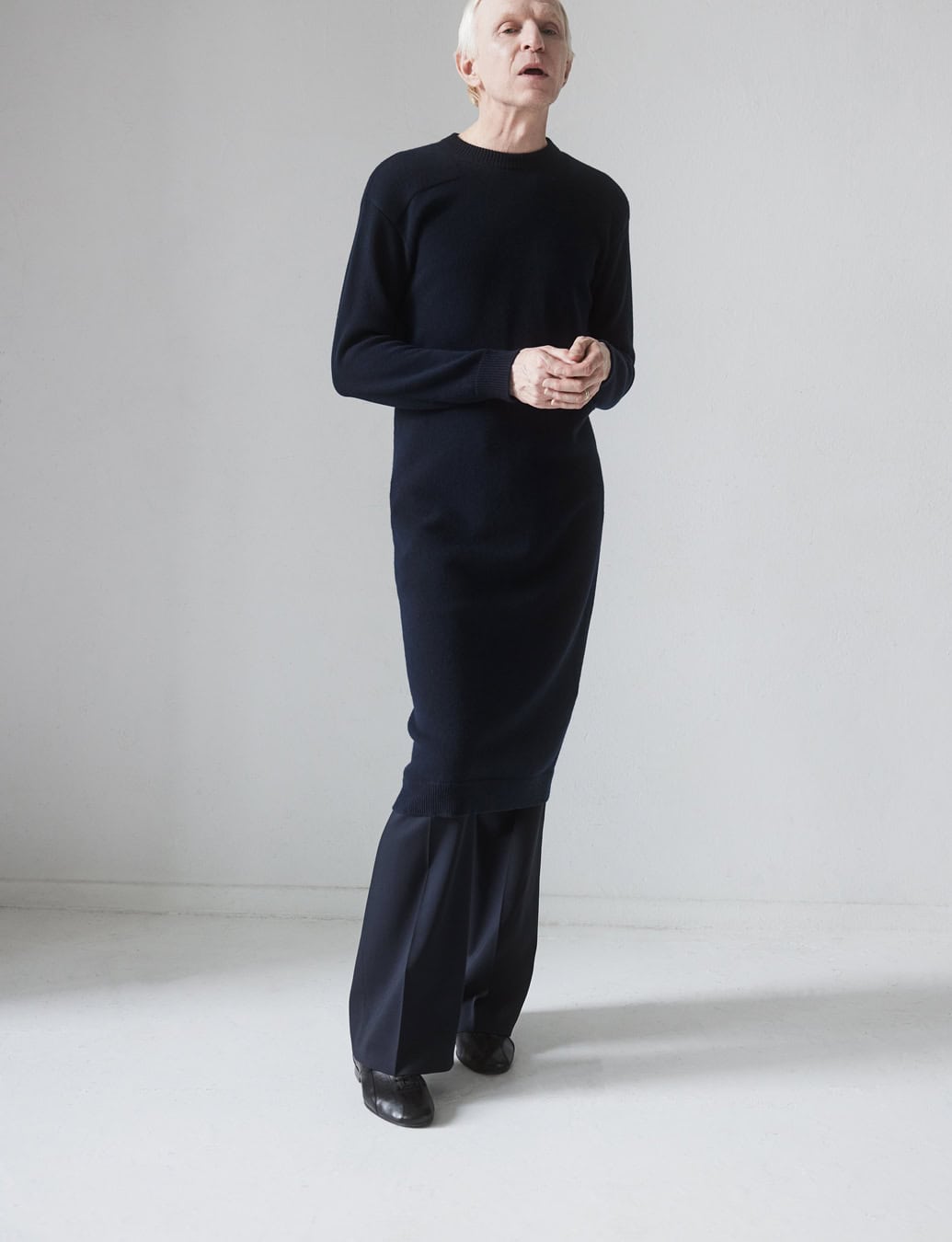
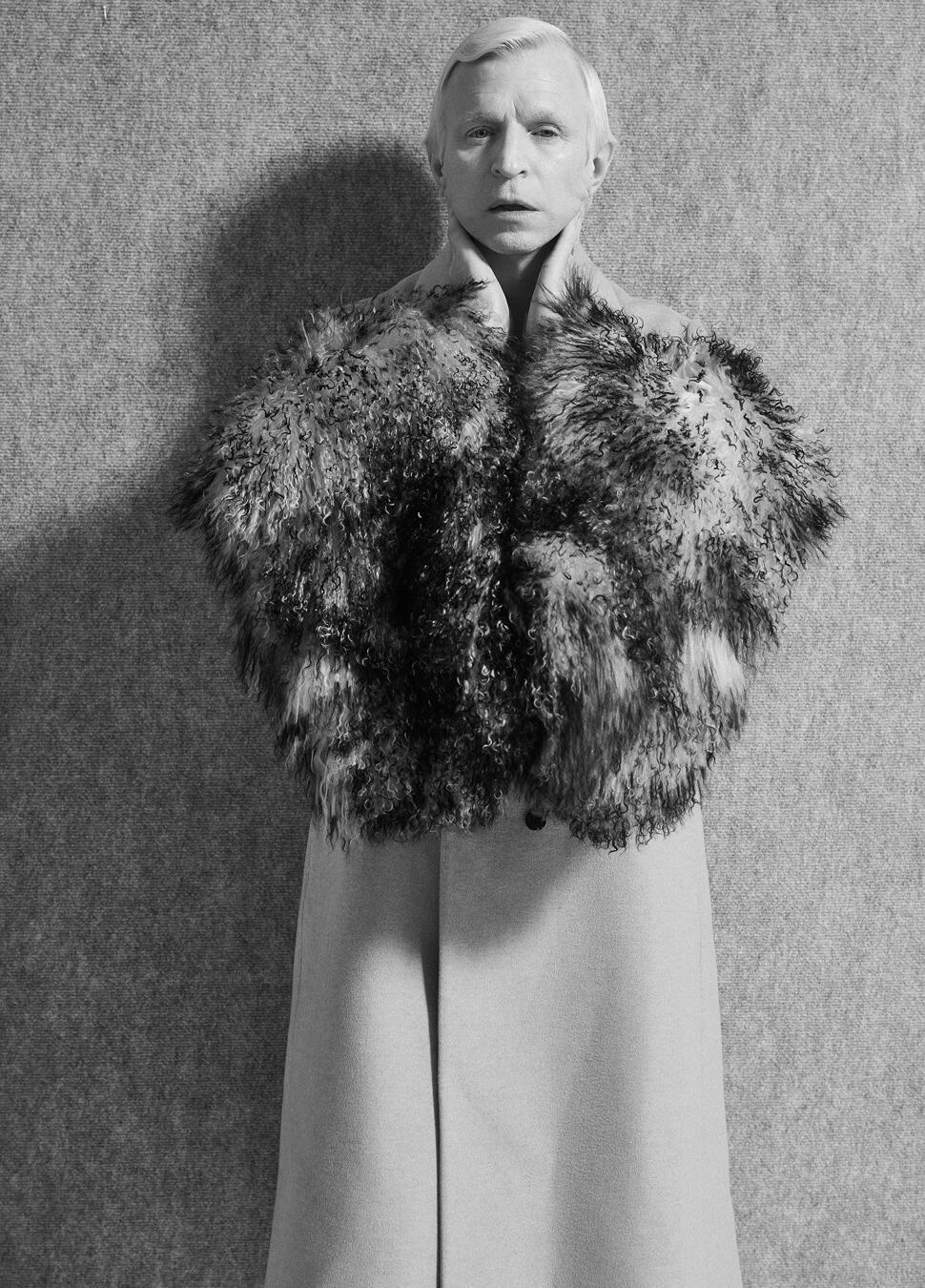
From left: JIL SANDER, DIOR
DP: You named your 2019 album Kings Cross after where you lived before your career began. Do you feel you honoured the person you were then?
JJJ: I was squatting in King’s Cross. At the time it was rough; it was only drug addicts, prostitutes and a lot of squats, which always draw the attention of creative people, because they usually have no money. After Alice Temple and Eg White made a record [as Eg and Alice, in 1990], I contacted them. They showed me cool places in London, like the squat in King’s Cross because there was a guy in it who was doing their record cover. When I got the job at i-D, I went back and knocked on this door at the same squat and asked if I could be in the corner. I walked from King’s Cross to Covent Garden to i-D every morning. I was eating one potato per day, that’s all I could afford. That person was definitely the same kid who was stealing the books at the library, and it’s very much the same person you’re talking to. I haven’t changed that much. The small-town boy is definitely still the same kid.
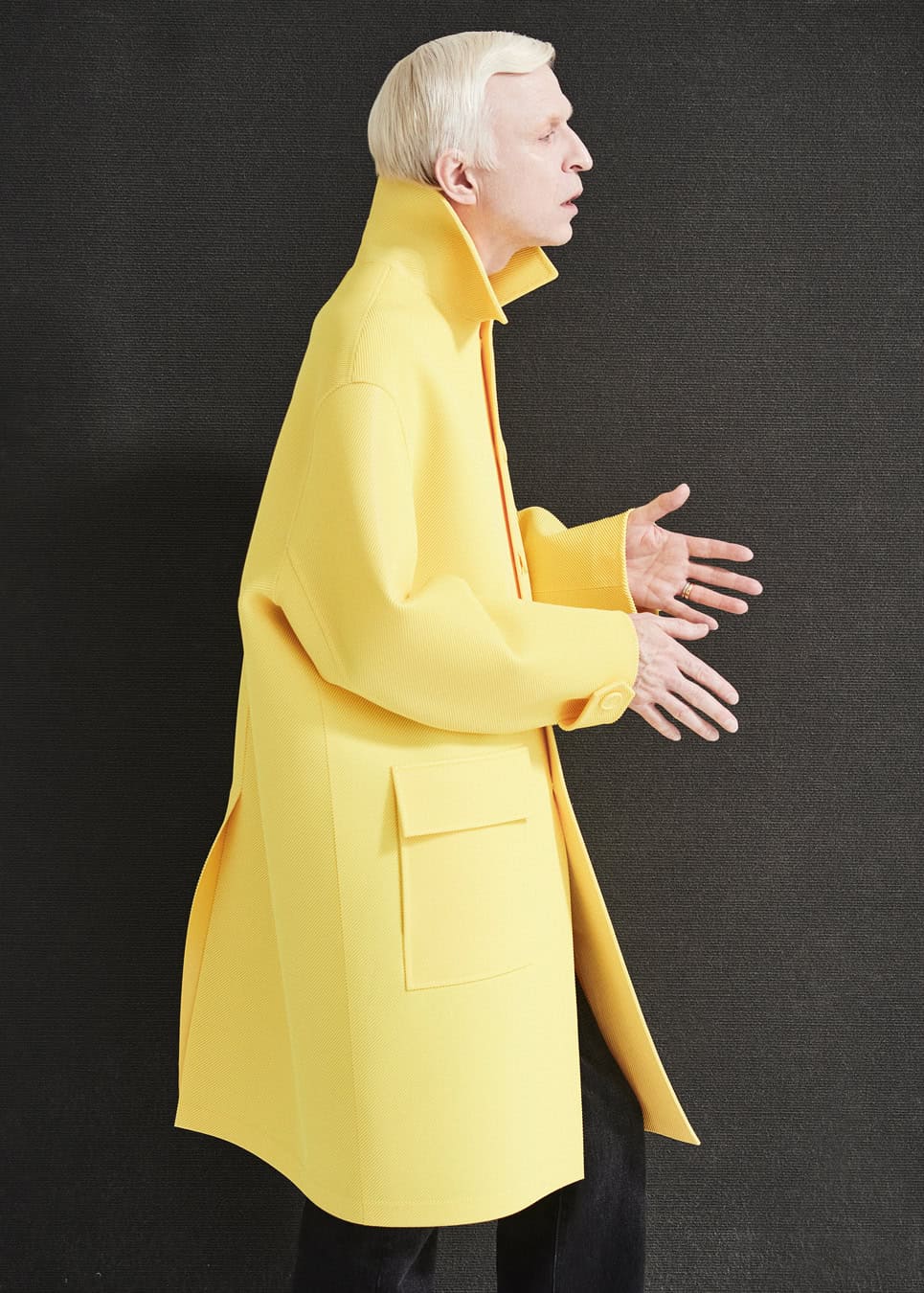
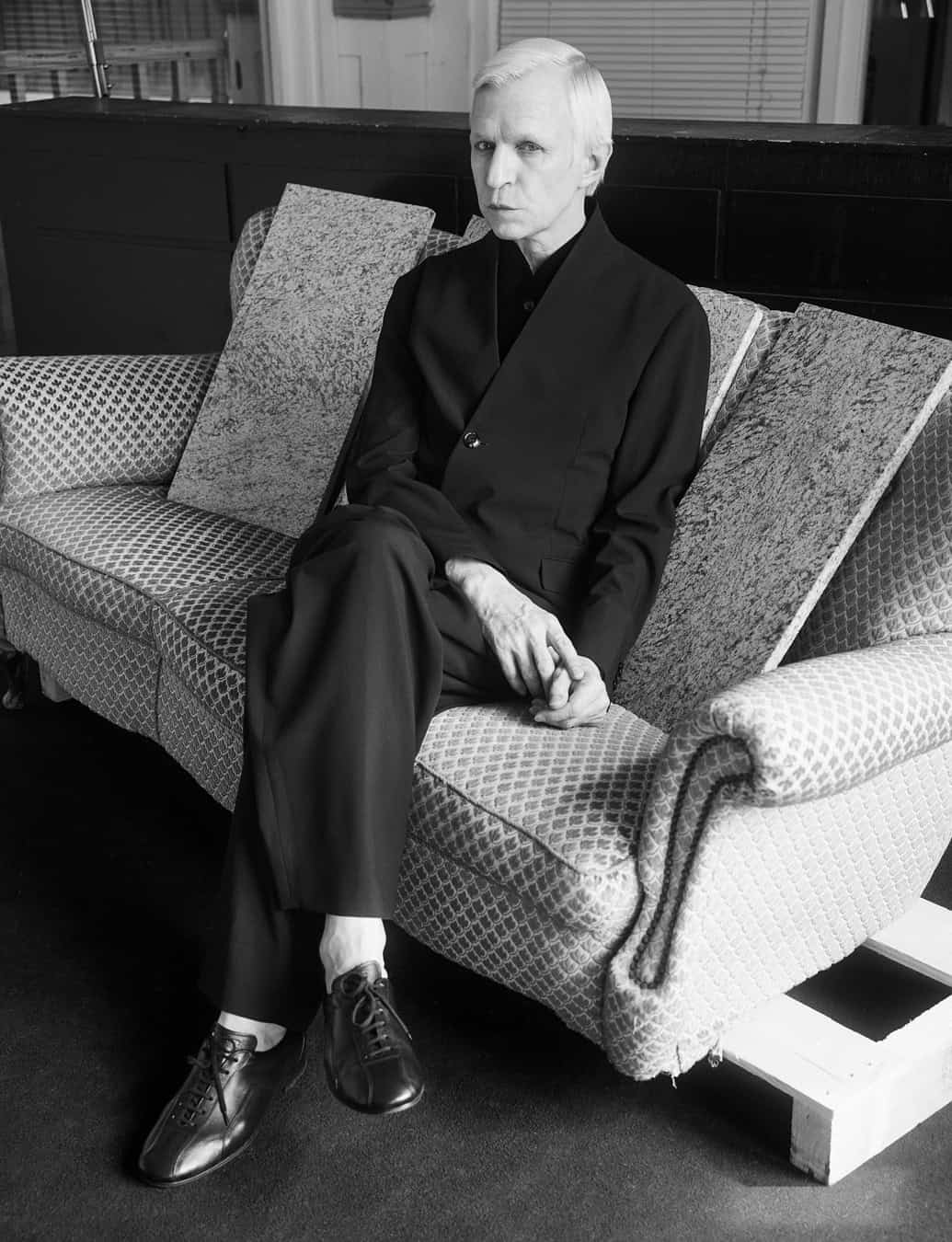
From left: LOEWE, GIORGIO ARMANI
DP: What do you want your music to carry forward? What do you hope survives you?
JJJ: The best thing about having this job is getting all the messages from people who tell me how much my music has meant for them during certain situations in their life. Or how it has helped them go through difficult times. Some people send me messages saying how my music made couples get together.
DP: If the archive of your work were to burn tomorrow – every album, every recording – what would you grieve, and what would you be secretly relieved about?
JJJ: If my music has helped people go through hard times and stuff, it will be sad for the others who might need it as therapy, as much as making my music is therapy for me. That would be the saddest thing, that that tool would not be there anymore. I don’t think there would be any relief – I even keep my old diaries here in my closet. If they would burn, of course, it’s okay, but I like them. It’s nice to revisit what that old, young kid was writing.
10 Men Magazine Issue 64 – FUTURE, LEGACY, HERITAGE – is out on newsstands September 25. Pre-order your copy here.
SMALLTOWN BOY
Photographer MARK PILLAI
Fashion Editor TOBY GRIMDITCH
Talent JAY-JAY JOHANSON
Interview DIANE PERNET
Introduction PAUL TONER
Hair ATTILA KENYERES
Make-up ANRI OMORI using ANASTASIA BEVERLY HILLS
Set design DESIREE KLEIN STUDIO
Digital operator MOSHE ZOLL
Photographer’s assistant ANDREAS MUSCULUS
Fashion assistants LENA LAUER and FRANKA DEHMEL
Production BERLIN WESTEND
Producer JUSTIN LAHMER
Shoes throughout JIL SANDER
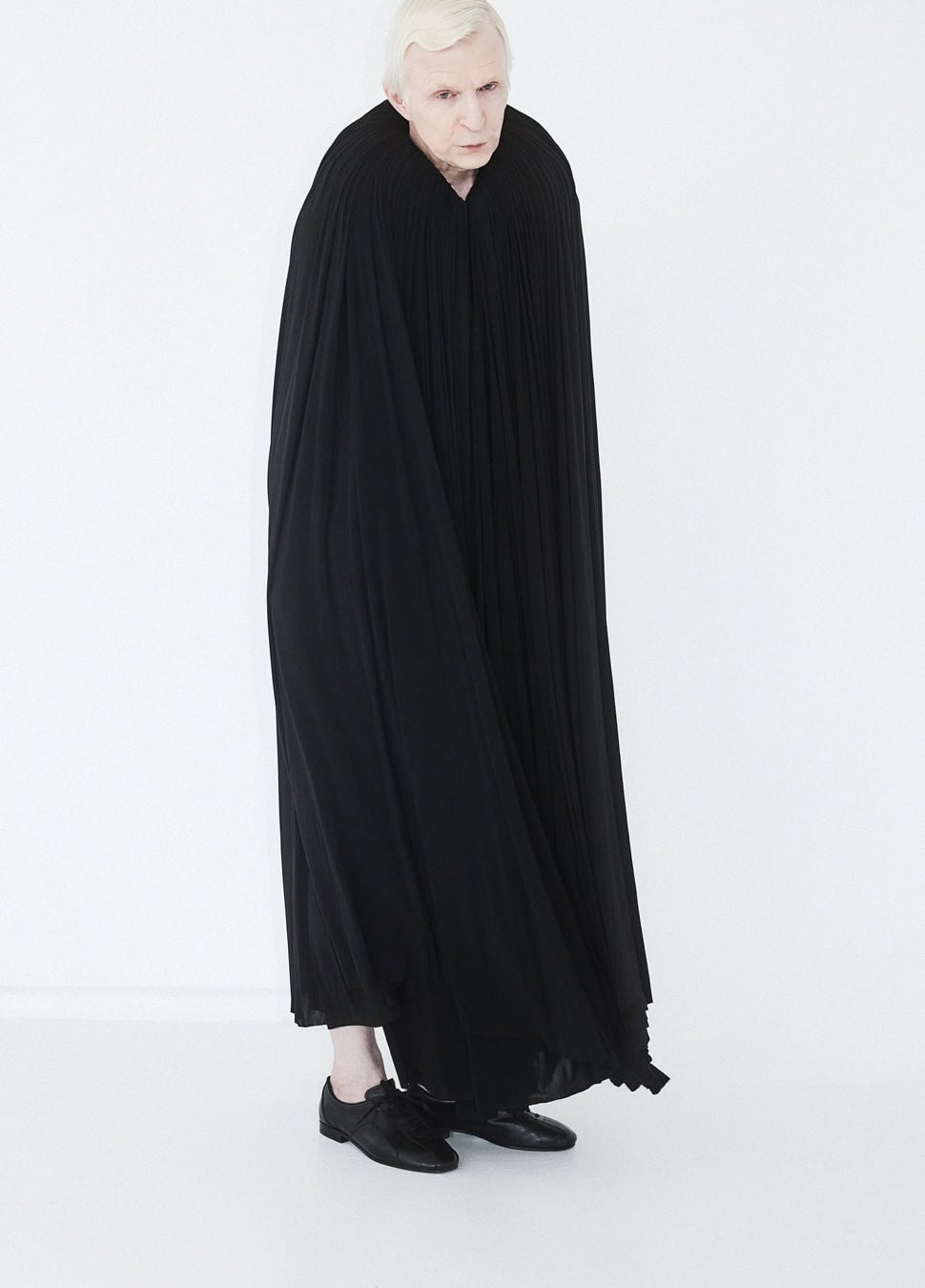
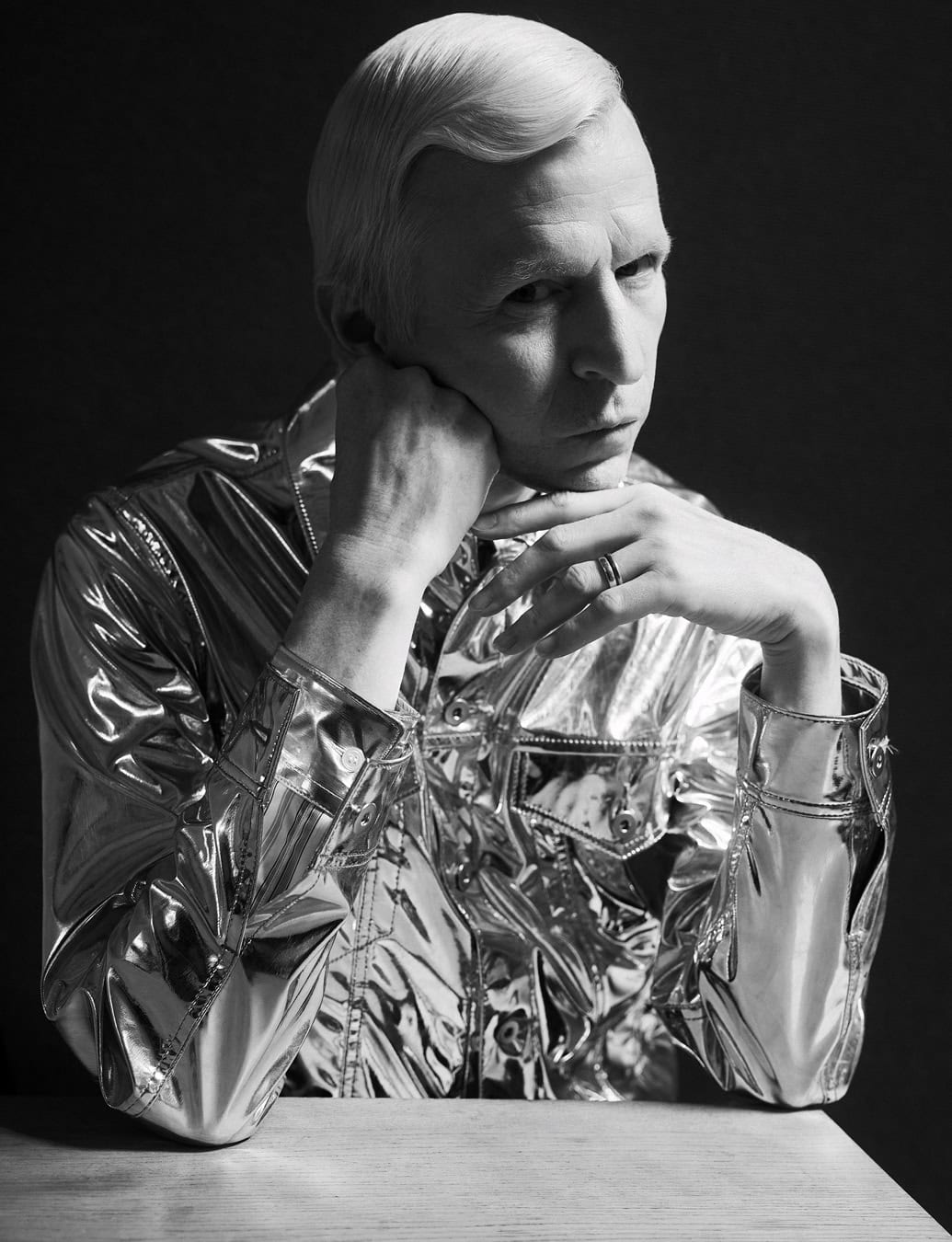
From left: JEAN PAUL GAULTIER, COMME DES GARÇONS SHIRT