November 19, 2026 |
Some collectors would describe themselves as traditional archivists, staunch custodians of cut, silhouette and design. Some are entrepreneurial in their outlook, building burgeoning businesses with a celeb-studded clientele. Some are tastemakers, drawing in fans who appreciate a style that’s taken years to hone.Today, the scene is messy, vibrant, connected, tense and contradictory, tied together by an unbridled, often obsessive commitment to fashion.
The collectors profiled in this piece are all different. They seek out different things and have different opinions, experiences and approaches that shape the ecosystem in a particular way. The question no longer seems to be whether fashion should be preserved – the emotional, cultural and commercial weight these pieces possess have proved that. Today, the question seems to be what happens when collecting gets thrust into the public eye and how that impacts the ways these collectors can utilise their skill and passion for it. Here, Gonçalo Velosa shares his insights.
GONCALO VELOSA, Numero237
Portugal-based Gonçalo Velosa is a long-time lover of Jean Paul Gaultier. Since he bought his first piece in1989 (a café jacket and pair of denim trousers from Junior Gaultier), Velosa has slowly been accumulating a vast collection of the fashion enfant terrible’s most recognisable pieces. Pair this with a healthy stash of masterful multidimensional cutting from Jean-Charlesde Castelbajac, the baroque decadence of Gianni Versace and the neon graphics of Stephen Sprouse, Moschino and Walter Van Beirendonck, and you have Velosa’s recipe for building his 2,500-piece collection. After starting the renowned London spot House of Liza in 2010, Velosa shuttered the space in 2020, continuing online through 1st Dibs and Farfetch, before moving to Porto, where he opened Numero237 in 2025 with the same collection. Open to purchases and rentals, Velosa’s reputation as a committed and knowledgeable collector precedes him at home and beyond.
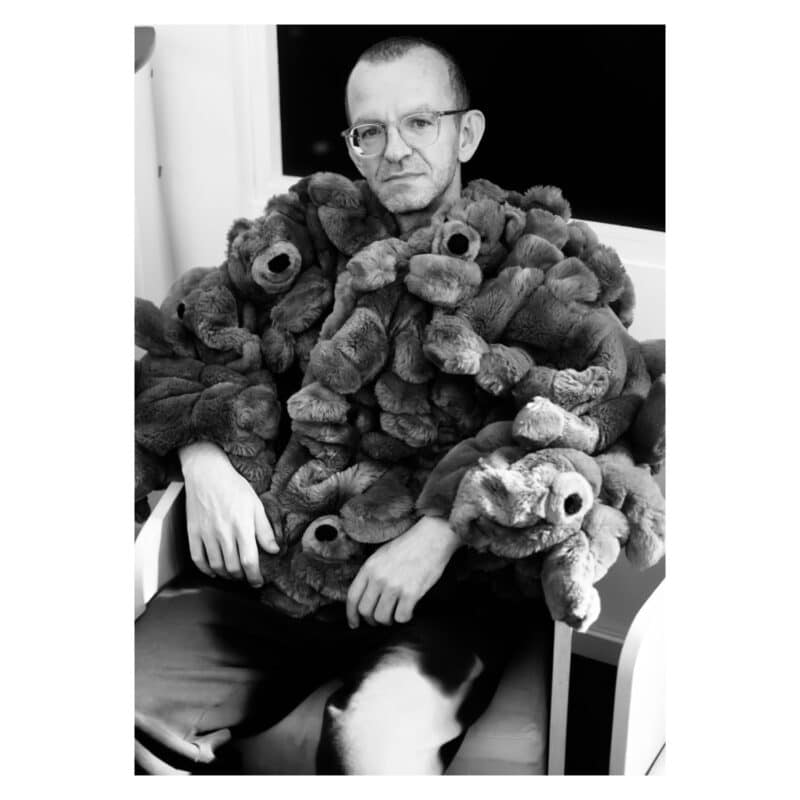
Gonçalo Velosa in a Jean-Charlesde Castelbajac teddy bear coat
You’ve been collecting since 2010. Which shifts in the landscape of archival fashion have you noticed over the past 16 years?
Gonçalo Velosa: I’ve actually been collecting since the late ’90s and 2010 was when I opened the brick-and-mortar House of Liza archive in London. The biggest shift I’ve noticed over these last 20 years is how the concept of ‘archive’ has taken on a life of its own and then obviously social media happened, where suddenly everyone’s a curator of their own archive.
What drives you to collect fashion?
It started from self-expression, from wanting to wear things that felt like me. Then it became an obsession, honestly. One of those couldn’t-stop-even-if-I-tried situations. But over time it turned into something else, a responsibility almost.
How so?
I feel a responsibility to keep the conversation alive. Fashion has never felt shallow to me. It’s tied to culture, politics, music, identity and rebellion. Collecting became a way of documenting those intersections, almost like building a personal archive of the ideas and moments that mattered. At a certain point, I think every collector realises they’re preserving culture in some small way. Fashion moves so fast that incredible work can disappear almost overnight. Collecting became my way of pushing back against that.
What do you look for in a piece that makes it into your archive?
Instead of looking for particular pieces, I let chance dictate my choices… I’ll be somewhere, and it’ll just be there in front of me. And it’s instant, there’s no deliberation. It’s a gut feeling, but it’s not random – my gut has been trained by decades of looking. What it’s really responding to is craftsmanship, the way something was made and the intention behind it.
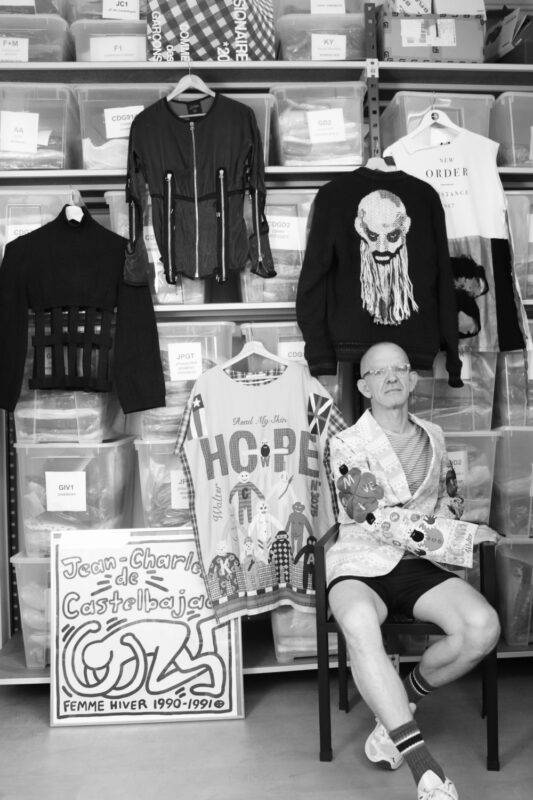
Gonçalo Velosa with pieces from his collection
Why did you decide to rent out your archive, as opposed to keeping it private or using it for educational purposes?
Sometimes you have to make a living. I won’t pretend that wasn’t part of it. I needed the income to keep expanding the collection. But honestly it felt right for other reasons too. Clothes were made to be worn, that’s their whole purpose, and there’s something a bit sad about a beautiful piece just sitting in a box.
What would you say is your most prized piece?
Honestly, it’s not even a piece of clothing, it’s my Rei Kawakubo chairs, which live at my home. They’re probably the thing I’d grab in a fire. They represent everything that excited me about that whole ’80s Japanese moment – this idea that a fashion brand could go far beyond clothes, that it could be a total vision, a whole world. That’s what I’ve always been drawn to and those chairs kind of say it all without saying anything.
Have your customers changed?
Customers are much more informed. They don’t see archive pieces as second-hand anymore, they see craftsmanship, history and, honestly, a smart investment. This whole culture of archive fashion online has completely changed the conversation. Suddenly a younger generation gets it – they’re not just buying clothes, they’re buying ideas.
Do you think increased attention on archival fashion is harmful or beneficial?
It’s a double-edged sword. And fashion has always been very good at picking up that sword and cutting itself with it. On one hand, it’s a genuine antidote to fast fashion, people actually stopping to think about what they buy. But give it five minutes and it becomes performative, just another trend within the very system it’s supposed to be rebelling against. When it’s about clout rather than knowledge… Archive fashion becoming its own kind of hype is probably the most fashion thing that’s ever happened.
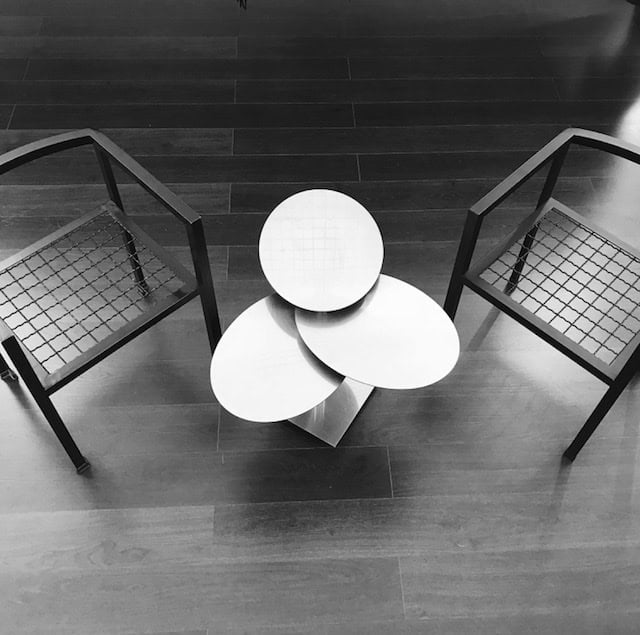
Rei Kawakubo chairs
Photography courtesy of Gonçalo Velosa. Taken from 10 Issue 77 – Autumn Winter FUTURE, LEGACY, HERITAGE – out NOW. Order your copy here.