September 6, 2026 |
Like many sensitive and curious boys, Duran Lantink raided his mother’s closet as a child. He wasn’t tottering around in her heels and posing in her dresses, however, but chopping them up with scissors. His mum, a fashion-loving interior designer, would “freak the fuck out” at discovering a favourite Margiela in pieces. Lantink giggles wickedly. “But it was a good investment, I guess.”
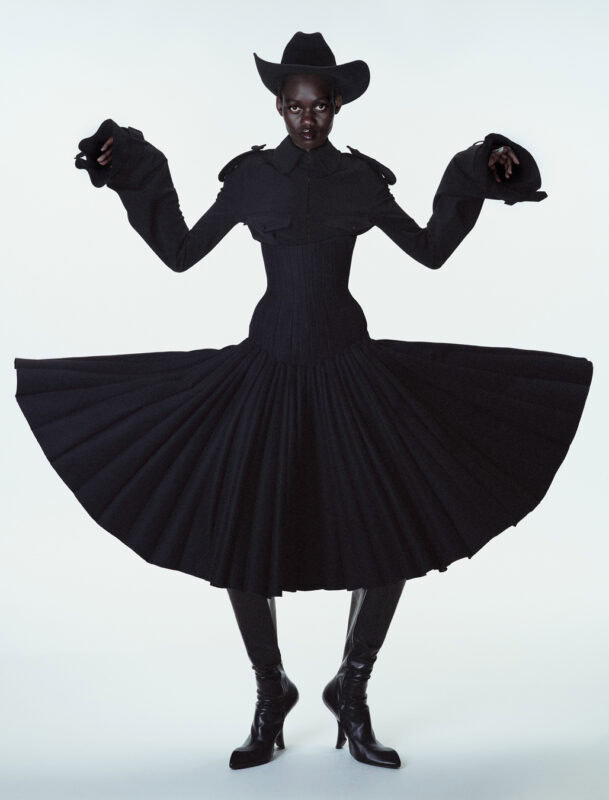
Indeed it was. Now in his late thirties, Lantink is the creative director of Jean Paul Gaultier and has taken up the mantle as the enfant terrible of his own generation with an irreverent audacity that makes him a fitting successor. “It’s pretty chaotic and all over the place right now,” says the designer, who is zipping around his Paris studio between fittings before his debut couture show.
Now a year and a half into his tenure at Gaultier, the Dutch designer is finding his footing. “I’m really starting to get my people around me and forming a group I enjoy working with.” What is his relationship like with Gaultier? “We hate each other! No, we love each other. I mean, I love him – I don’t know if he loves me! But we have a good relationship.” Lantink will visit Gaultier’s Paris home every few weeks. The two love Absolutely Fabulous and enjoy gossiping about fashion together – a real-life Eddy and Patsy – and Gaultier will give him movie recommendations.
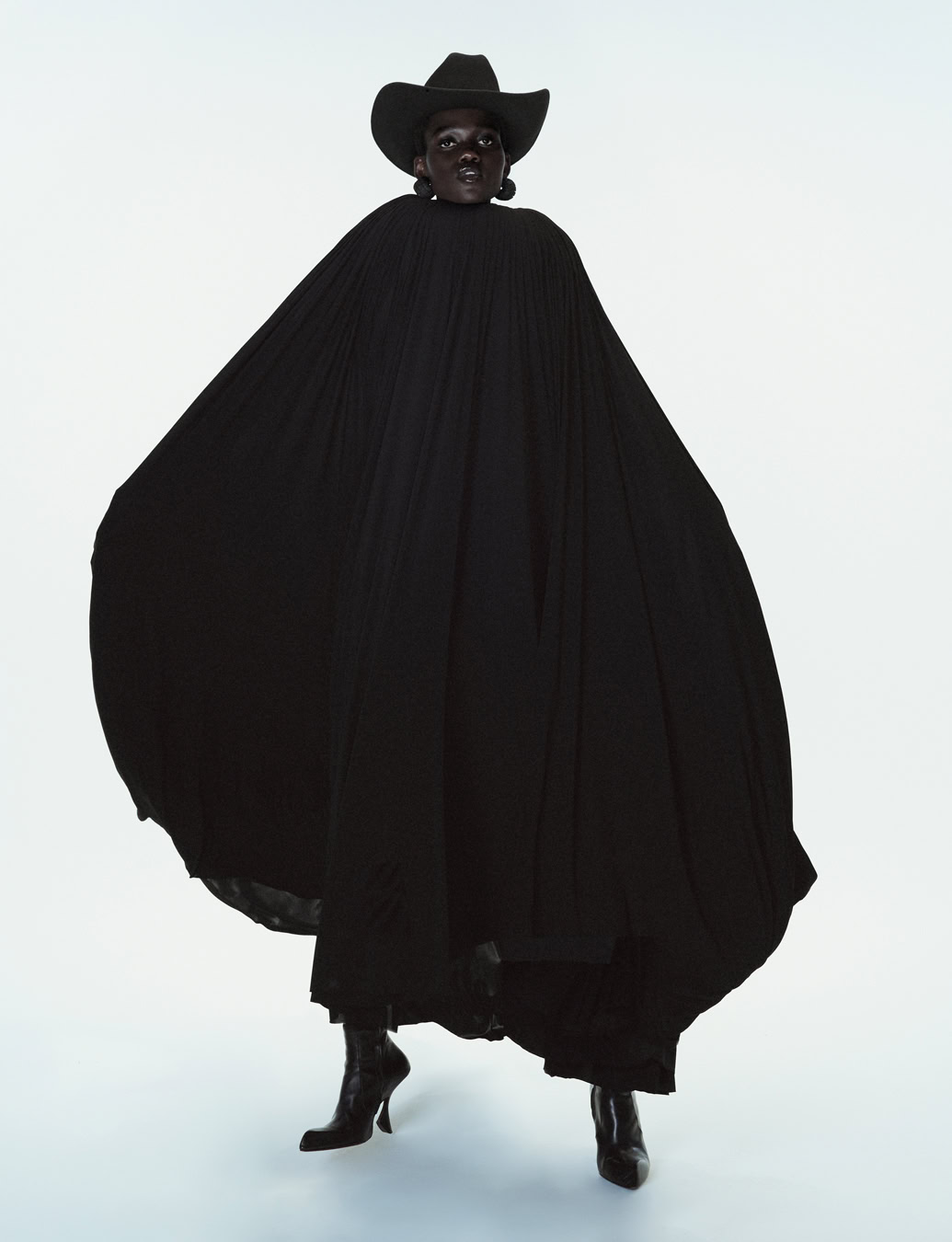
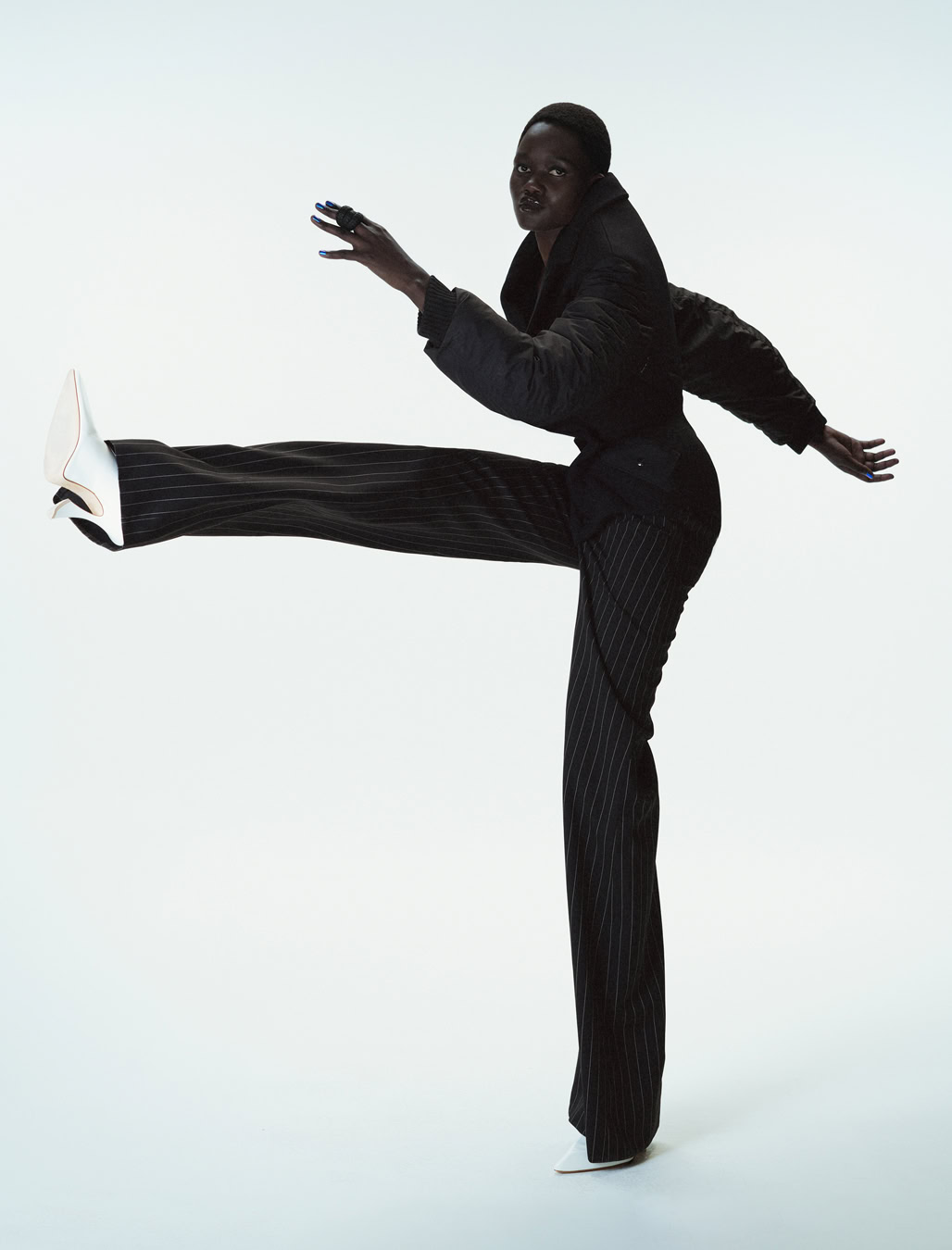
Fittings are central to his creative process; rather than sketching out his ideas or building moodboards, the designer’s favourite thing is to experiment directly with the body. “I like the interaction with the model, the clothes and your team, to see where it goes,” he says. “It almost always ends up going somewhere exciting.”
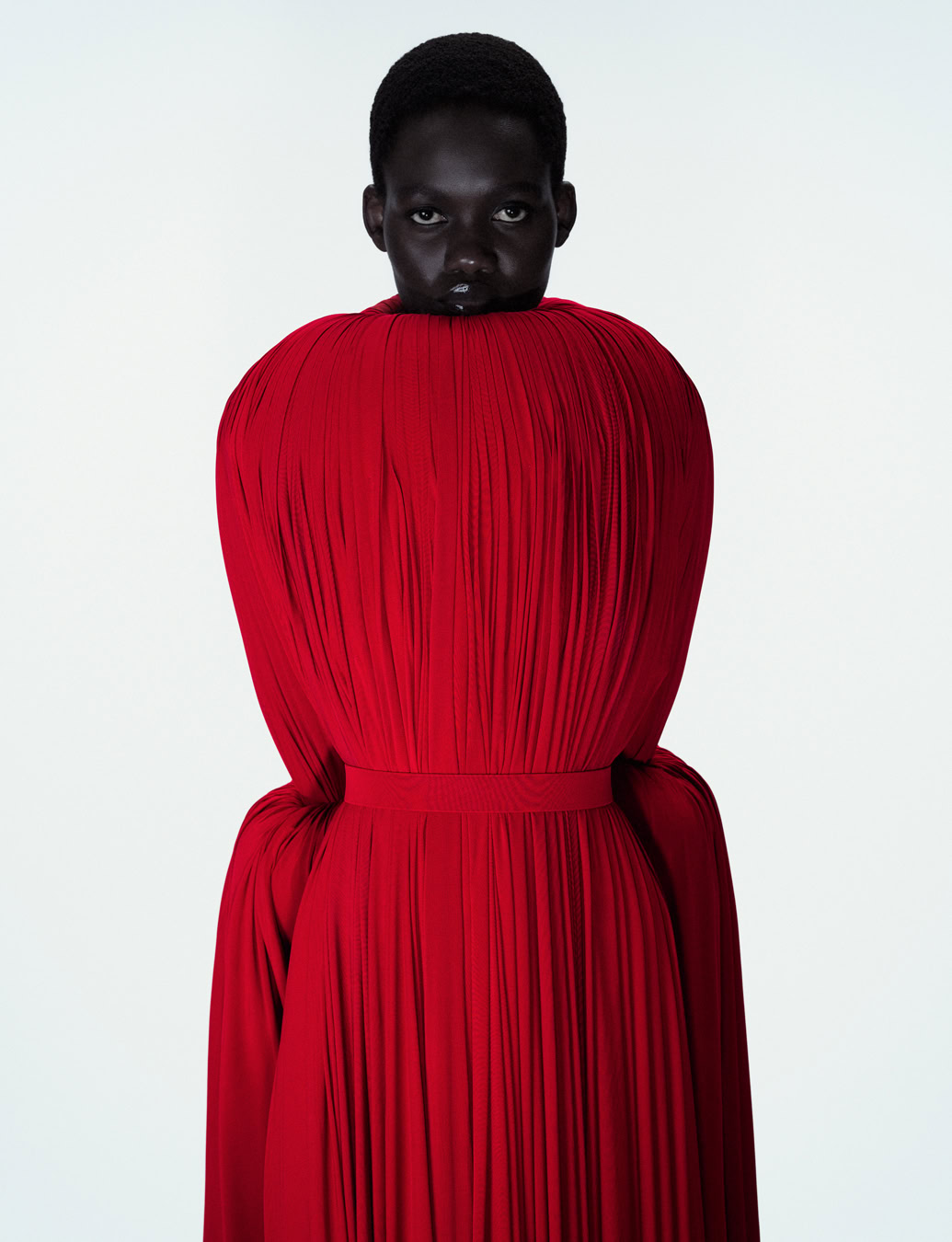
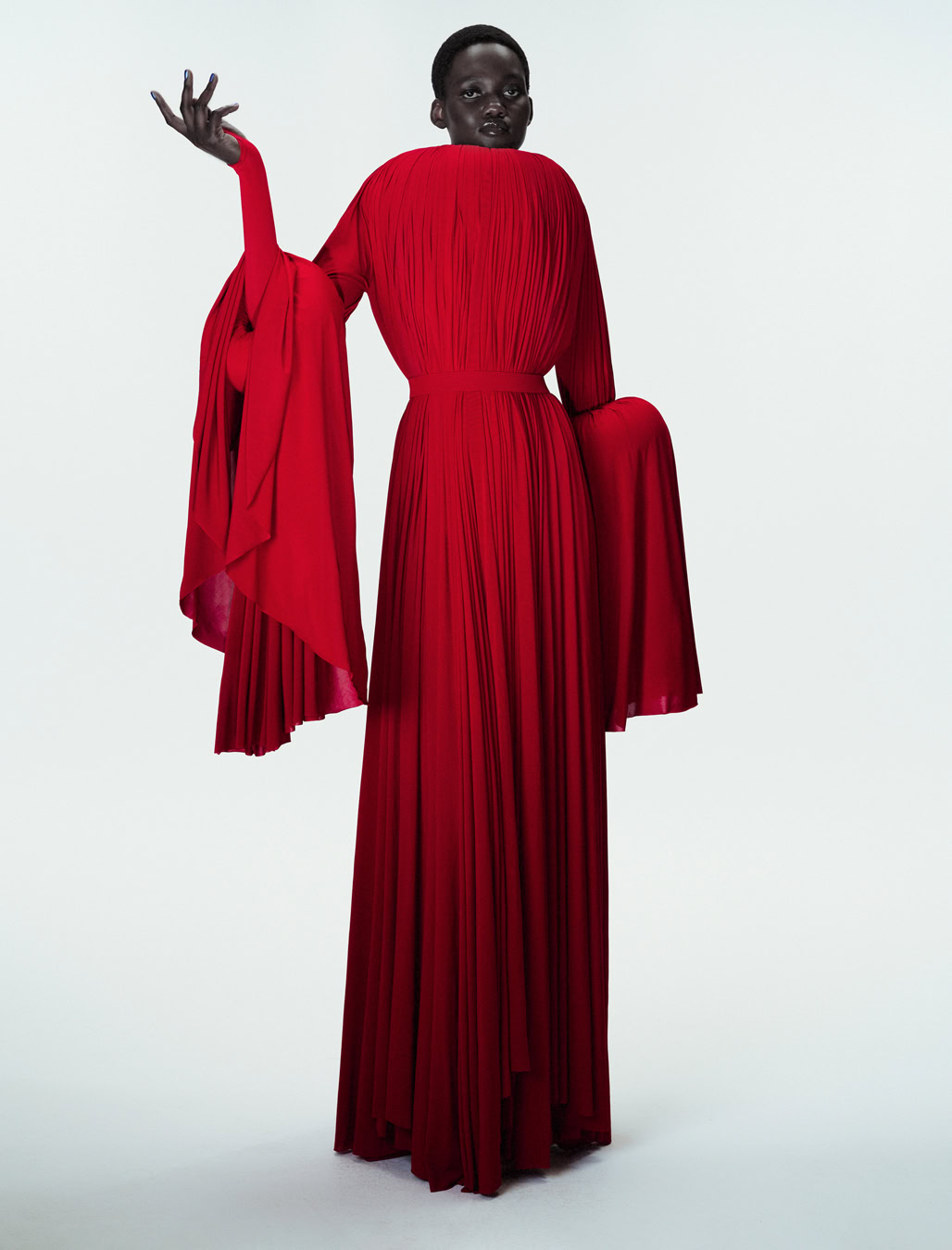
Exciting is Lantink’s native tongue. His designs are defined by their human-defying proportions: chin-high bodices, pointy-shouldered jackets and jutting panniers. At his debut couture show he sent out chassis-like dresses with tubes for hips, spilling geysers of tulle as they swaggered down the catwalk, and lacquered torsos that rippled and warped so they looked as though they were screens glitching. “Couture nowadays, besides Schiaparelli, feels quite wearable and light,” he says. The proportions were inspired by Marie Antoinette. “That was a woman who would make herself almost above humanity. She would make herself completely unfunctional and say: I’m better than you, I’m just here as a statement,” he says. “I felt very drawn to that part of Gaultier.”
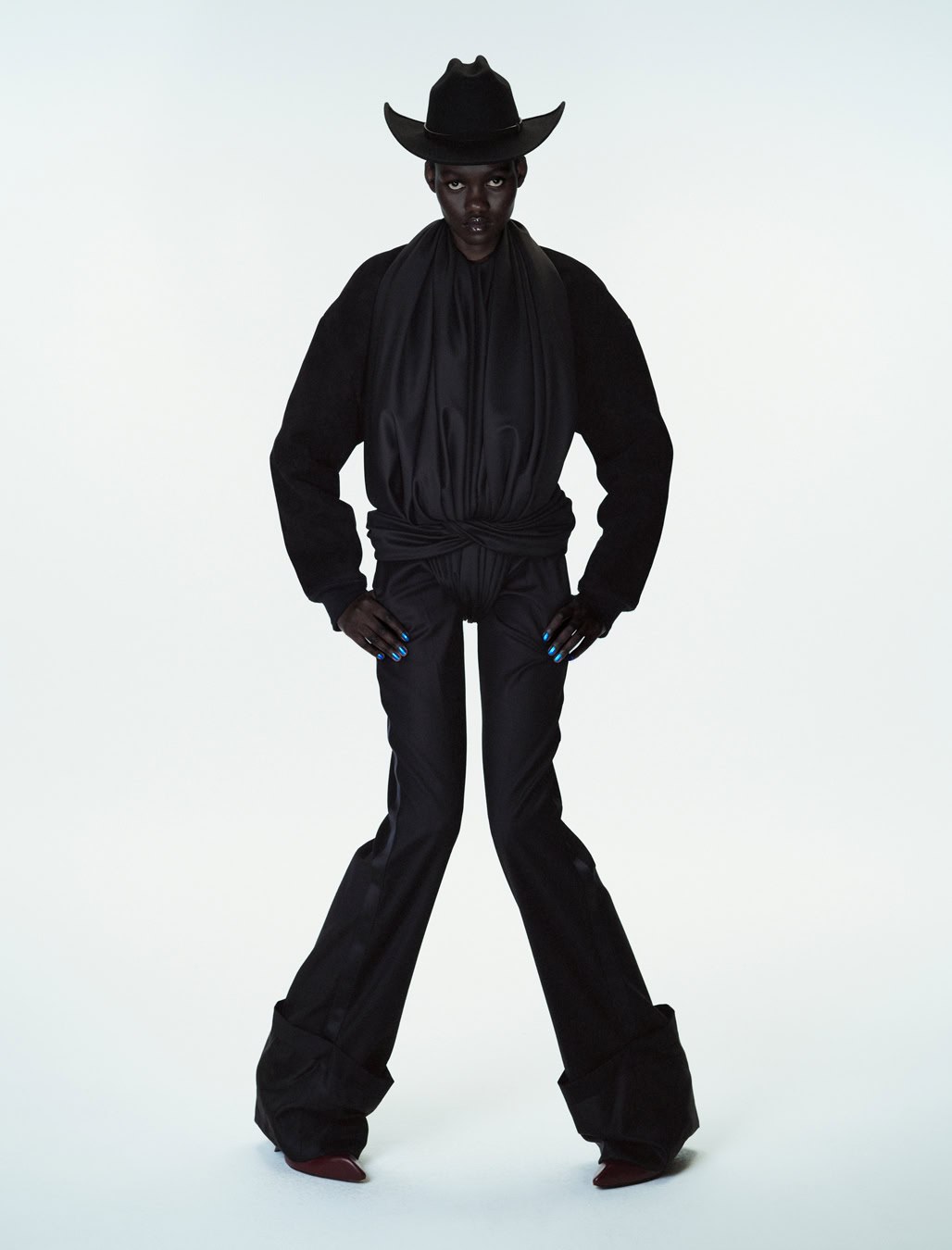
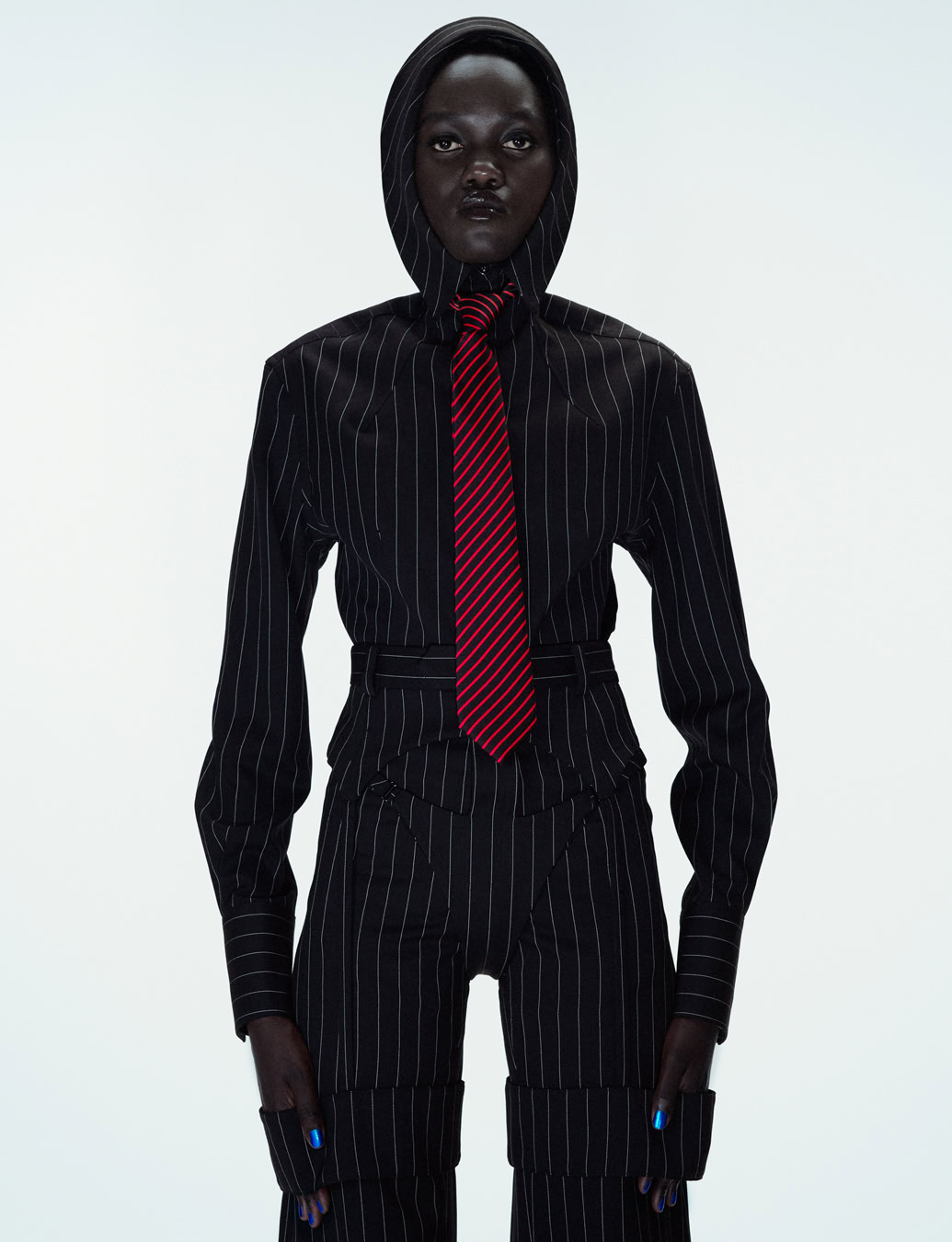
Where does this curiosity for warping, enhancing or mutating the human form come from? “It’s funny because it never started with the idea of transforming the body. That was never the starting point.” In his student days in Amsterdam, Lantink’s trademark was upcycling, splicing together existing pieces of clothing that he found. “But eventually I got bored of that and thought: okay, how can we actually transform a clothing piece without combining it?”
By the time he started his own brand, Lantink was building a visual language around shapes that warped the body, experimenting with polystyrene balls by stuffing them in fabric to alter the silhouette. “It could be anything,” he says, pointing to a basket in his studio. “You’re like, oh my God, maybe we should put that basket in and see what happens. You naturally start moving away from the clothing rack and start using the objects in the room to be playful. It’s about grabbing everything around you and seeing what makes sense.”
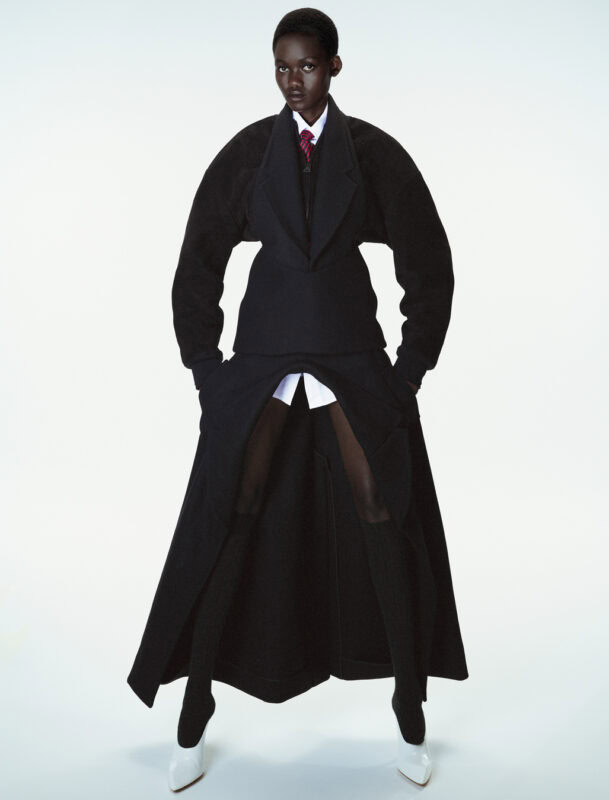
These outsized silhouettes inspire outsized reactions. The swan song show for his eponymous brand in AW25, before he took the top job at Gaultier, caused commotion after he sent two models down the runway in silicone bodies: a female model wearing a male torso and a male model in a pair of bouncing breasts his team bought from a Paris sex shop. The outfits drew accusations of misogyny and poor taste. Rumours even circulated that he’d bought them from Amazon. “People said how dare I use Amazon in a fashion show! I’m like, ‘Isn’t everybody on Amazon? Isn’t that the most relevant thing of today?!'” he says, laughing. “But anyway, they were not from Amazon.”
Just six months later came his first ready-to-wear show for Gaultier. It featured a naked bodysuit (hairy phallus and all), inciting comments that accused Lantink of rage-baiting the internet and desecrating the legacy of the house. He clearly intended it to be cheeky – like Gaultier, cheekiness is in his blood – but was blindsided by the extremity of the response. “I mean, obviously it does hurt me a little bit,” he says brightly, adding that he no longer reads the comments. “I’m just doing my job.” He’s lost faith in social media’s ability to meaningfully affect culture. “It’s just a small wave of people who are angry and the clickbait [favours] hate comments because they perform well. But the next day they’re angry about something else. I find that interesting, but a little dangerous because will we ever be able to create a new era? Like, besides the internet era, I’m actually talking about a cultural subculture. Where’s the music? Where’s the art?”
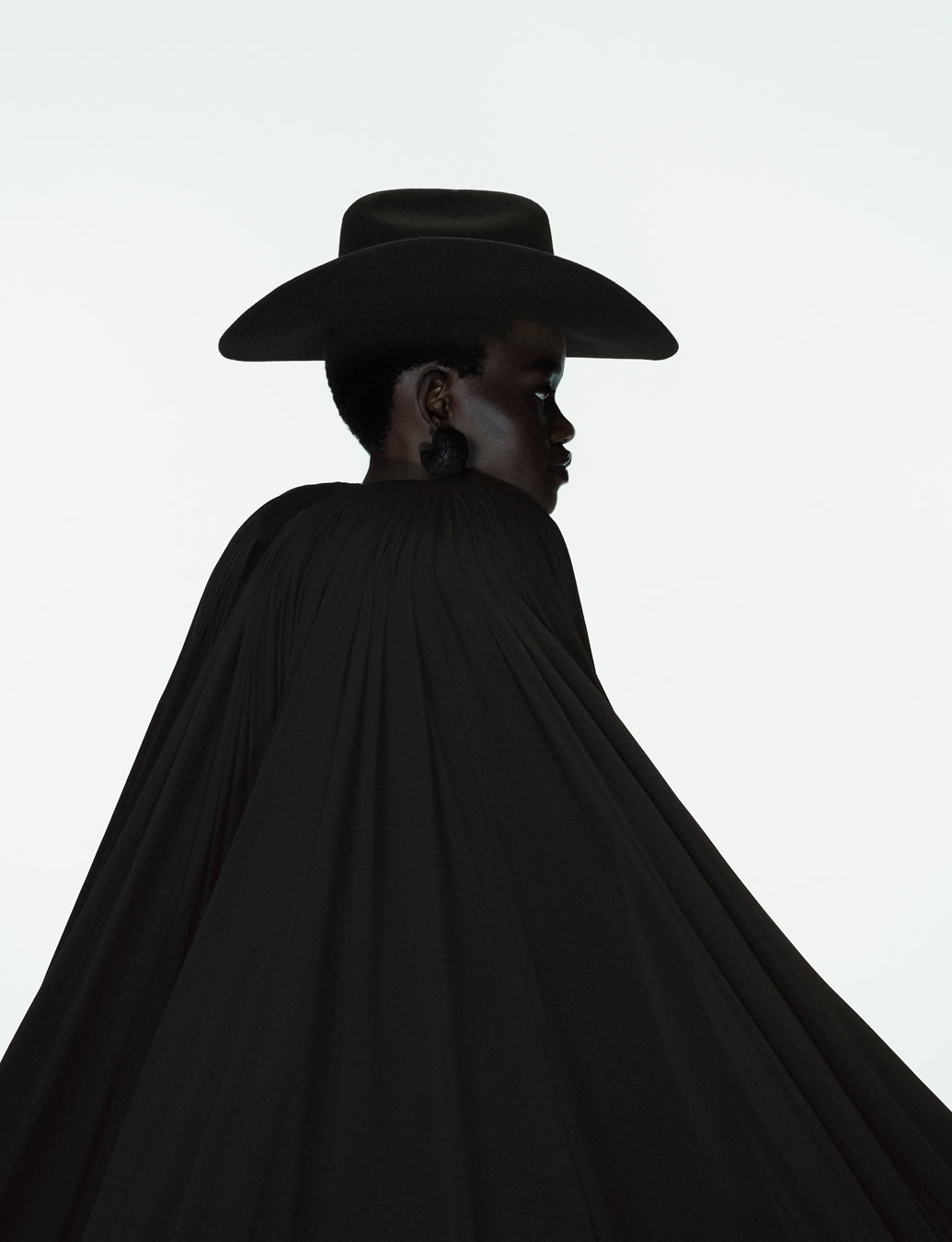
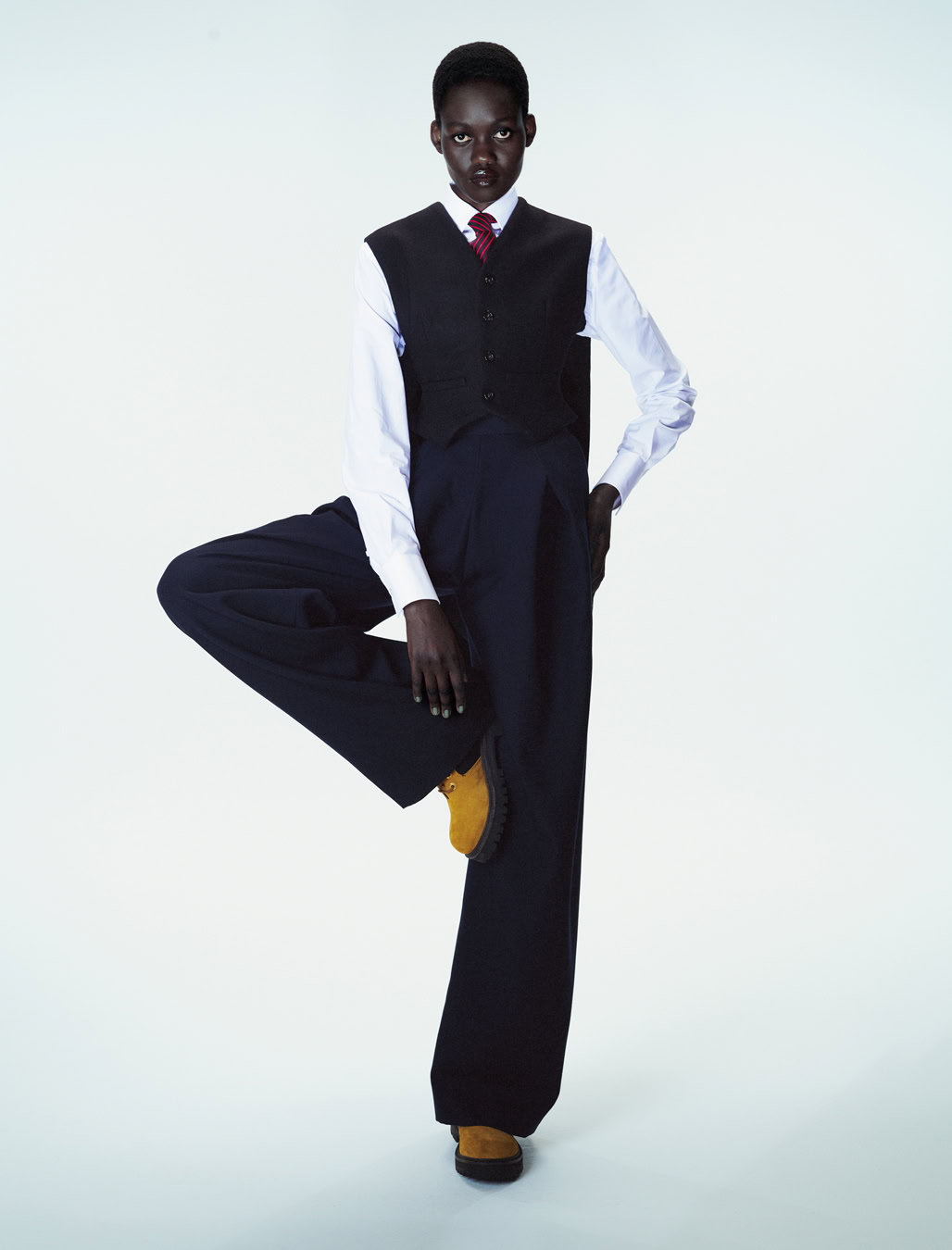
Growing up in The Hague, when he wasn’t taking sharp objects to his mother’s closet, Lantink, an only child whose father died when he was six months old, would escape into make-believe. “I would have all this time by myself and I’d create fantasy worlds and play with Barbies. That was really important,” he says. His mother, who was young and glamorous, would invite friends over for parties, which Lantink observed with wonder. “It made me feel like there was another world than my elementary school, where everybody was quite toned down.”
He’d dreamed of being a designer for a big fashion house since he was in school. “That was the goal. But then during my teenage and art school years, it was not the goal at all, I just wanted to do my own thing.” He founded his own brand in 2016, but after taking the job at Gaultier, put it on standby: “I found it very hard not to continue my own brand, I have to be honest about that. That is my baby, so it wasn’t an easy choice.”
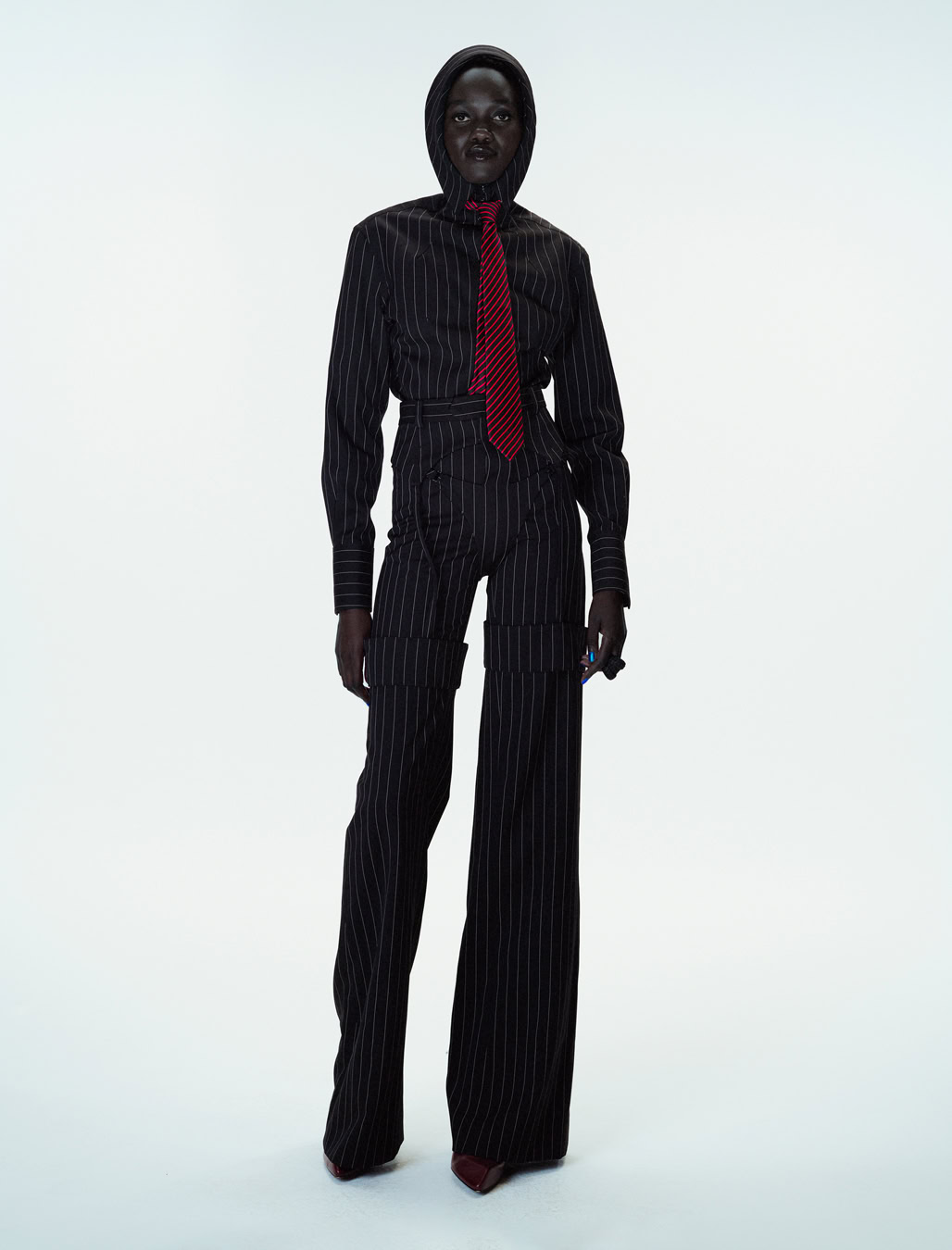
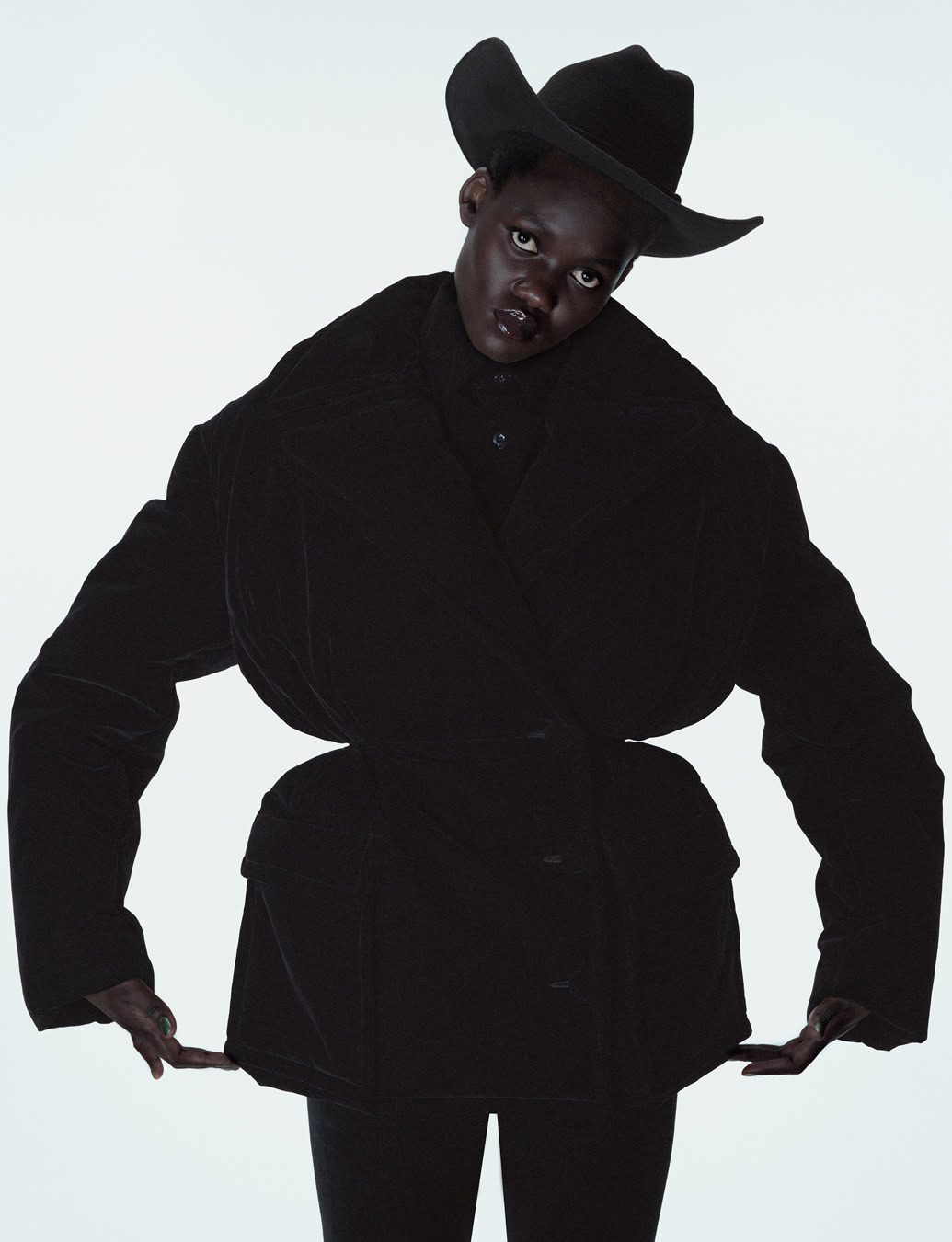
Being in charge of Gaultier, however, provides a freedom that Lantink relishes. “I don’t have to take care of the finances anymore, I don’t have to take care of the production, so I’m much more focused on collections,” he says. “It’s a different way of being busy and a different way of [experiencing] stress. I would say I’m a little bit more…” He catches himself, but he can’t resist: “Oh my God, maybe it’s not good to say, but I think I’m a little bit more relaxed!”
Lately he’s been taking long walks around Paris near his home in the 9th, going to the Louvre or to the opera at the Palais Garnier, where he enjoys people-watching. “I’m obsessed with observing people in the street,” he says. He’s a shopper, too, and is currently wearing a lot of Japanese brand A.Presse, as well as constantly buying vintage for research. Lantink remains scissor-happy; nothing in his wardrobe stays safe for long. “It’s less, but it’s still happening,” he says.
The impish naïveté with which he wields those scissors is what sets him apart. In a business that delights in spotlighting which designers are succeeding and failing, with an army of blood-hungry keyboard critics ready and eager to pass judgement, Lantink’s arrival in the arena feels like a slap to fashion’s peachy cheeks. His own legacy has barely begun, but we already know it will leave a mark.
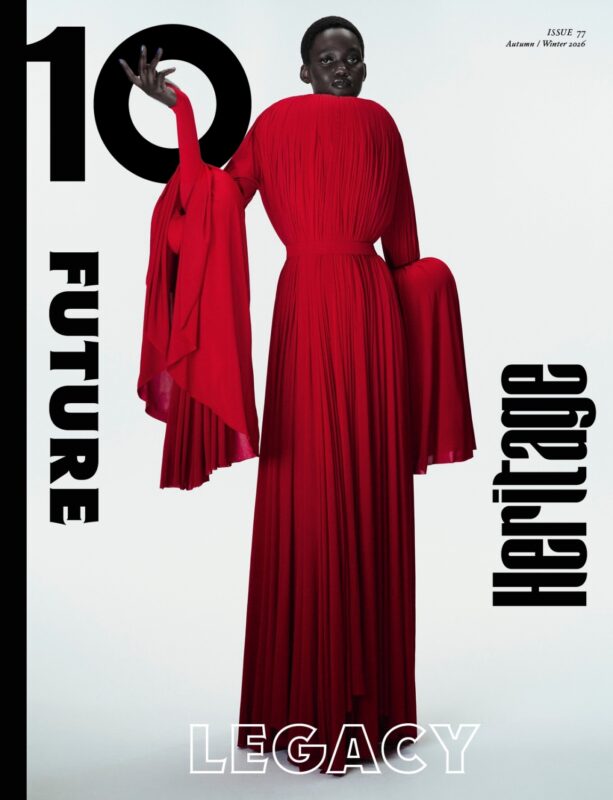
Issue 77 of 10 Magazine – FUTURE, LEGACY, HERITAGE – is on newsstands September 18. Pre-order your copy here.
JEAN PAUL GAULTIER: FANTASIA
Photographer FERRY VAN DER NAT
Fashion Editor SOPHIA NEOPHITOU
Text ASHLEY OGAWA CLARKE
Model CAREN JEPKEMEI at Titanium Management
Hair YURI KATO
Make-up NATSUKI ONEYAMA using BYREDO
Manicurist MAGDA S.
Digital operator MARTIN SIMONIC
Photographer’s assistant QUENTIN PEREZ
Fashion assistant GEORGIA EDWARDS
Production ZAC APOSTOLOU
Location Studio Jacques Paris
Clothing, shoes and accessories throughout JEAN PAUL GAULTIER AW26