July 20, 2026 |
Margene, by its founders’ own admission, “started with a complaint”. Aditi Sahoo and Kewal Gala – friends since they met in student halls nine years ago – are cut, they’ll happily tell you, from different cloth. Growing up in India, Sahoo had her clothes tailored as a matter of course. Alterations are a democratic, everyday practice and trousers come with generous seam allowances – room built in for a body to change. In London, she found, brands offered no such thing. So, turning to Gala for his knack with the technical side of clothes, the pair decided to make some trousers themselves, engineered in a way that every stitch could be let out, taken in, lengthened and shortened. People have always altered themselves to fit their clothes, the pair, coining their brand Margene, wondered why the clothes couldn’t take the alteration instead.
The division of labour between the duo has always been instinctive. Sahoo studied womenswear before designing bags at Burberry – where she learned “how transferable a design handwriting is” – before jumping to the smaller, faster machinery of JW Anderson. With Margene, she says she keeps “a bird’s-eye view” of the label while staying “rooted and nerdy about the details in each piece”. Sahoo’s area is the design language, the imagery, the inspirations.
Gala, on the other hand, is trained in pattern cutting and came up through product development, including years at Phoebe Philo that taught him “how much systems matter.” When they design pieces, he’s the one “geeking out about details, threads or the stitches per cm,” he says. What they share is the conviction, drawn from Savile Row and Indian garment making alike, that clothes are something to cherish for decades, not discard after a couple of wears.
Since 2023, the label has grown into exactly the kind Gala envisioned. Fabrics are deadstock and surplus from British and European mills, silks are sourced from India, and the pair recently completed the British Fashion Council‘s Low Carbon Transition programme, with the ambition to achieve B Corp (the independently audited sustainability standard) status soon. Collections start by being playful. The designers source vintage across London and imagine what it would look like with a distinctive Indian tailoring sensibility. This then gets edited down, with a hefty dose of colour injected further on. “Someone told us years ago – colour is seductive,” they say. “Margene is proving that point.”
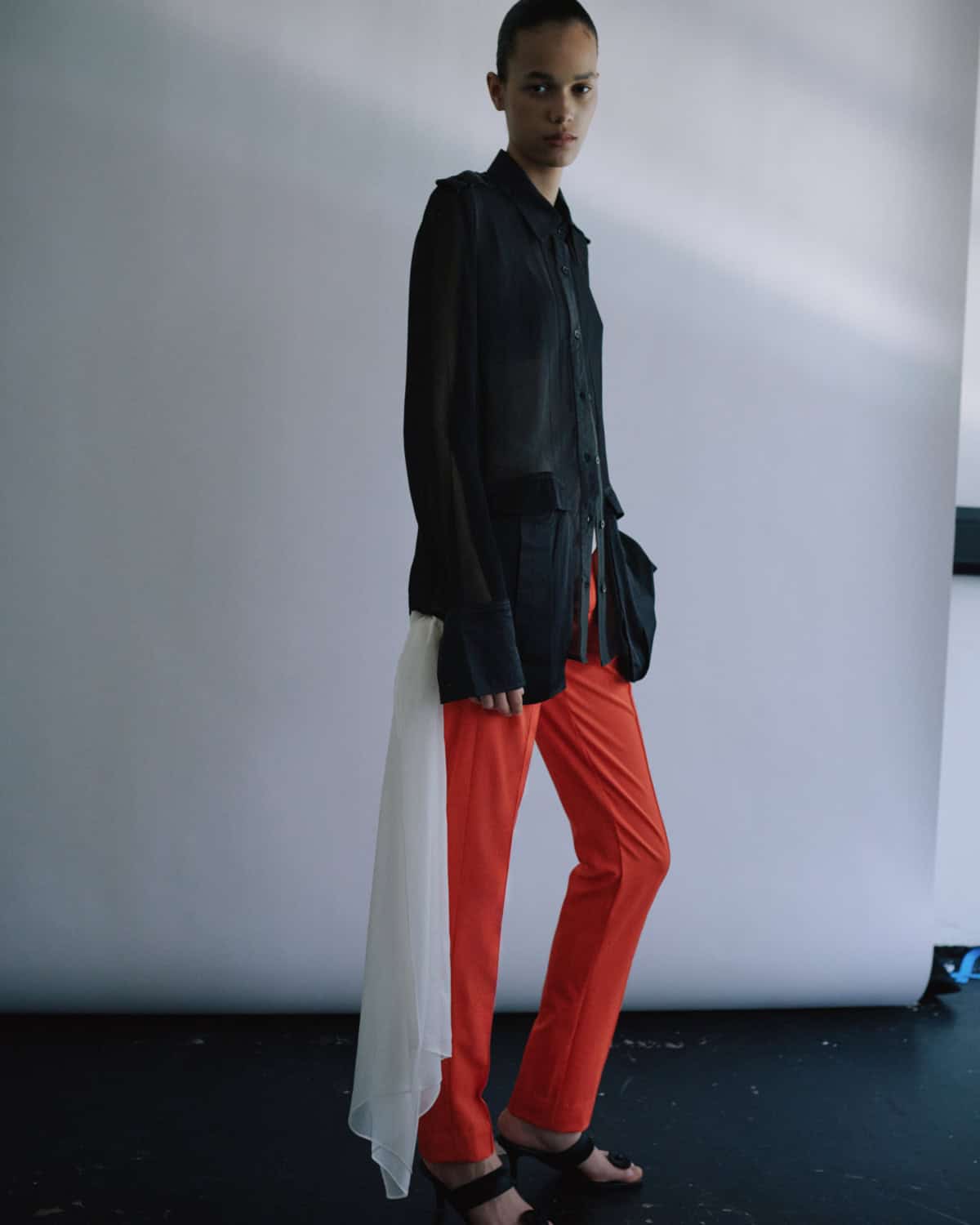
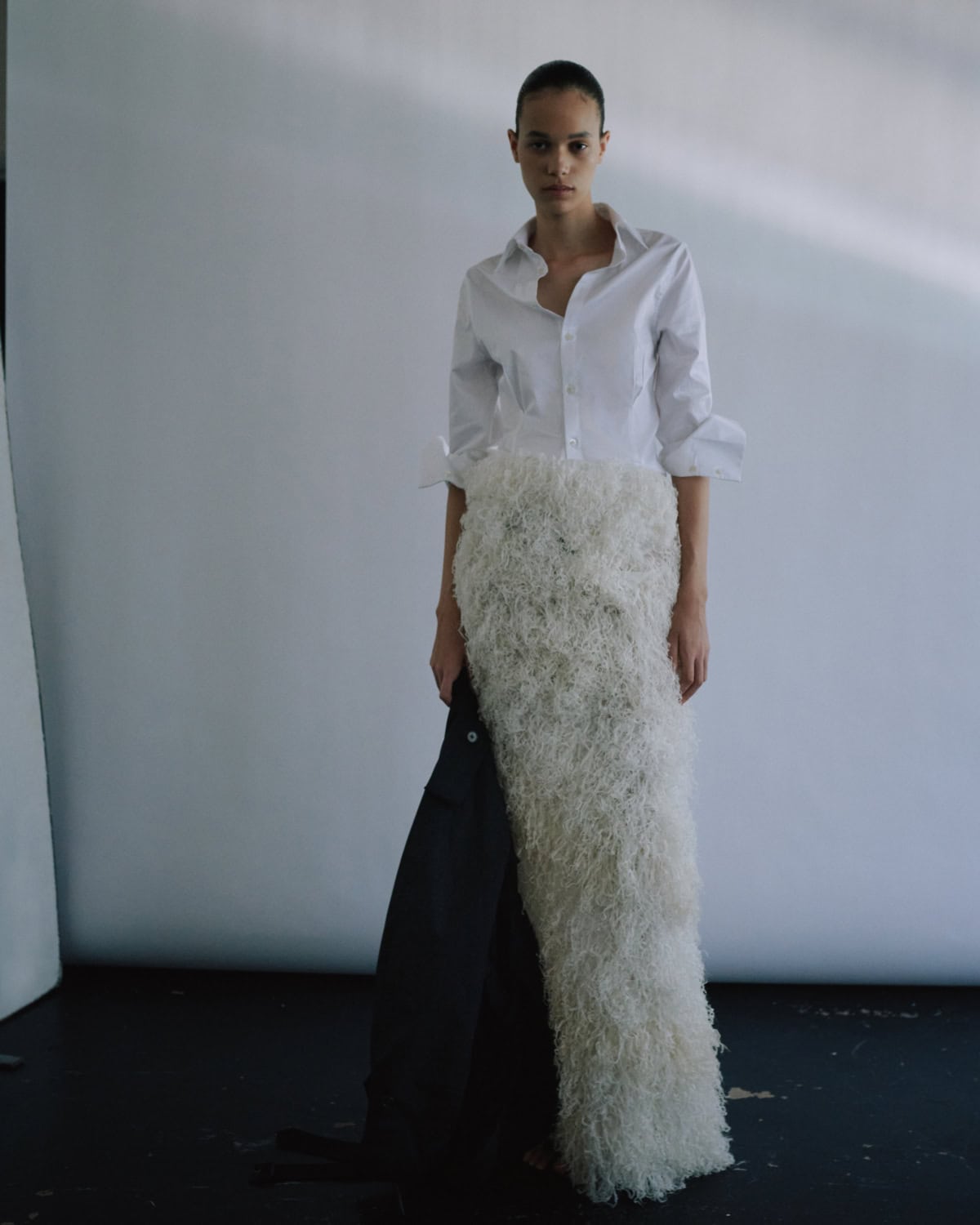
Their third collection, shot by Indigo Lewin and styled by Isabelle Kountoure, previewed this season at Frieze‘s No.9 Cork Street courtesy of gallery director Selvi May. “What surprised us is how emotional it has been,” the pair say about the excited response they’ve received. Perhaps that’s what happens when clothes stop demanding perfection from the bodies inside them. Everyone has that one piece at the back of the wardrobe that fit perfectly once and doesn’t now. Margene’s proposition is everyone deserves a wardrobe that evolves with the wearer – a flat refusal of the idea that clothing should come with an expiry date.






1. What does tailoring mean to you both, and how do you approach it in a unisex way given its links to menswear?
Aditi Sahoo and Kewal Gala: Tailoring was part of everyday life growing up in India. If something didn’t fit, you went to a tailor. If your body changed, the garment changed too. Nobody thought twice about it. We think of tailoring more as a system, not a product. The more we’ve worked on Margene, the more interested we’ve become in tailoring as a symbol and a system of care.
We start with proportion, movement and attitude – how somebody sits, walks, works and lives. Gender becomes much less important when you’re designing around a human being rather than an identity. Our outerwear and denim, we think it has a masculine, boyish approach, whereas our sheer tops bring in a sense of feminine sensuality. It’s for a dynamic person who juggles multiple responsibilities, and does it well. We think people should feel sexiest when they wear our tailoring, like they’re ready to walk into a room and make their presence felt.
2. What from your early lives influences how you create today?
AS: A limitation of resources – a tight brief. Wanting to wear things from home, like a Patiala or a tunic, but with my own twist. What was normal in India did not feel normal in London, and that was interesting: how do you transfer that visual across geographies while maintaining its DNA? I grew up in a very academically driven household – I was always great at maths and not so much at sketching and drawing – and I think that shaped my approach. I’m more interested in how art intersects with clothes, but always in a way that feels logical to me, never forced.
KG: I spent summers going to Kutch [a district of Gujarat state in western India] during my childhood. I used to see things being made all the time, but never within the context of ‘high art’ or ‘high fashion’. It is in recent years that I started taking more focused trips to spend time with artisans – printers, embroiderers – and learning about their work. Fashion was never a confirmed route for me; I was more inclined towards making something creatively.I did a foundation in art and design, the first time that I was studying art formally, and then things fell into place.
3. You combine Savile Row construction with traditional Indian garment-making. What similarities and differences stand out?
Both are rooted in respect – the garment is seen as something you cherish over the years, not discarded after a couple of wears. India also believes in resourcefulness. Respect for the craft. Respect for the maker. Respect for the garment. The biggest difference is that Savile Row is obsessed with precision, while traditional Indian clothing culture is obsessed with usefulness.
Savile Row asks: How can we make this fit perfectly? Traditional Indian culture often asks: How can this continue being useful for decades? Neither is better than the other, but the older we get, the more interested we become in the second question. We think there’s something incredibly modern and sexy about designing for longevity.
4. Could you tell us a little more about your Alter program, which is launching soon?
Why is it normal to service a car every year, but unusual to service a pair of trousers? How do we offer maintenance for clothing? Why is there no solid system for aftercare?
Alter reconnects customers with local tailors and alteration specialists, allowing garments to be adjusted throughout their lives. It’s simply bringing back a behaviour to London that is completely normal in other parts of the world
5. What is next for Margene?
We’re interested in growing deeper, at an intentional pace. We want the luxury of time – time to think things through, time to think of every stitch, every detail and most importantly time to connect with the women we are dressing.
Photography by Indigo Lewin.