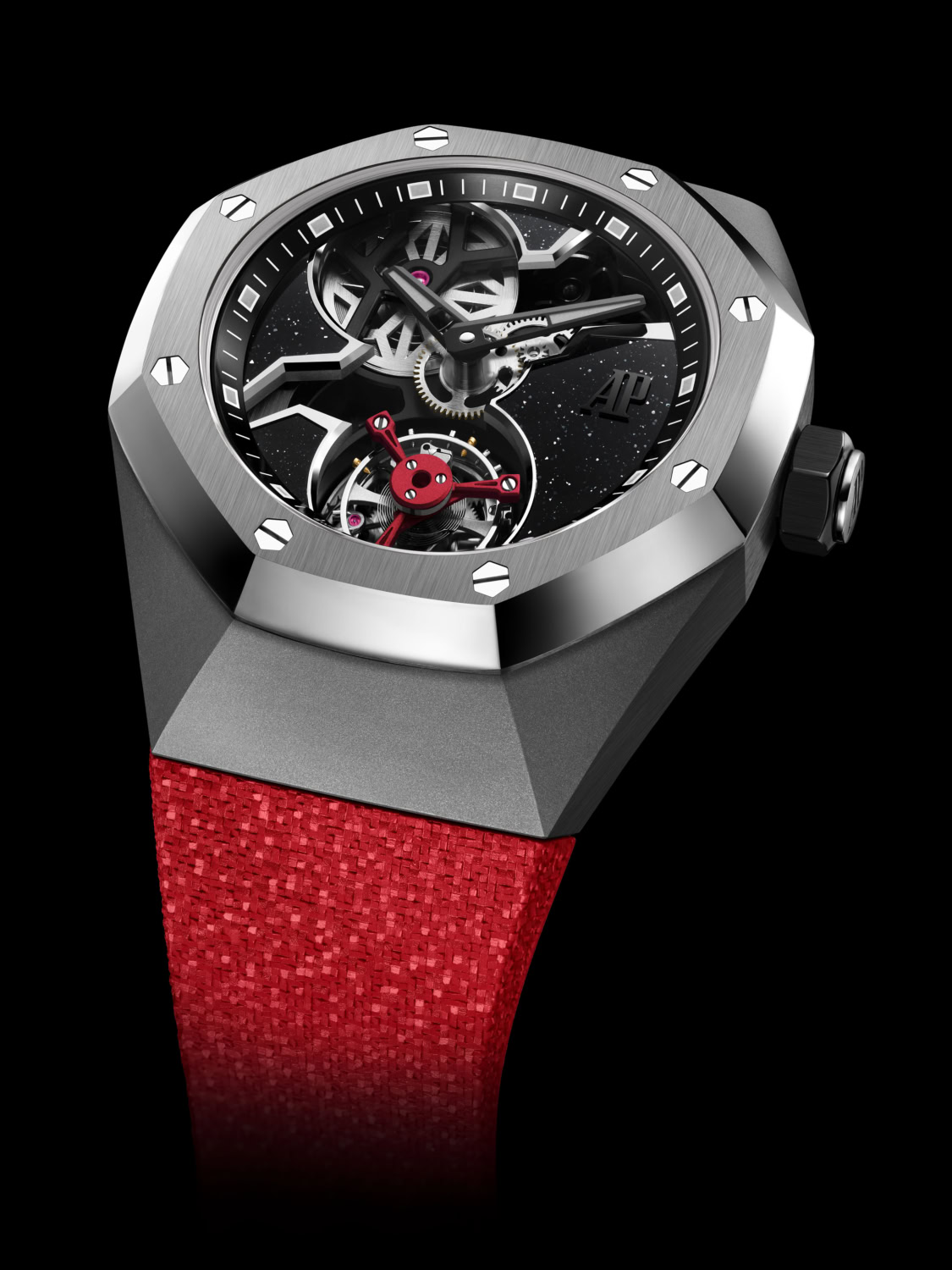
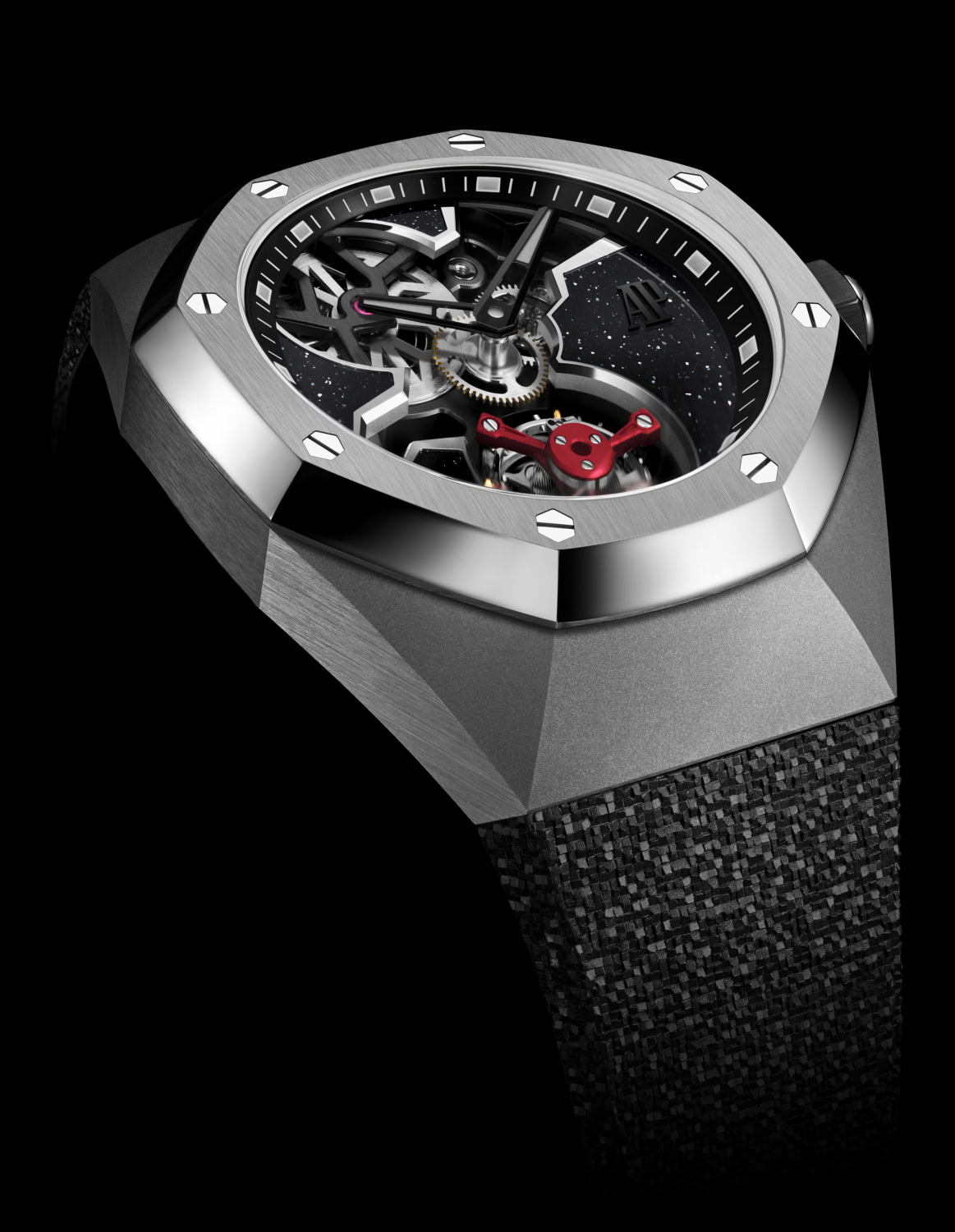
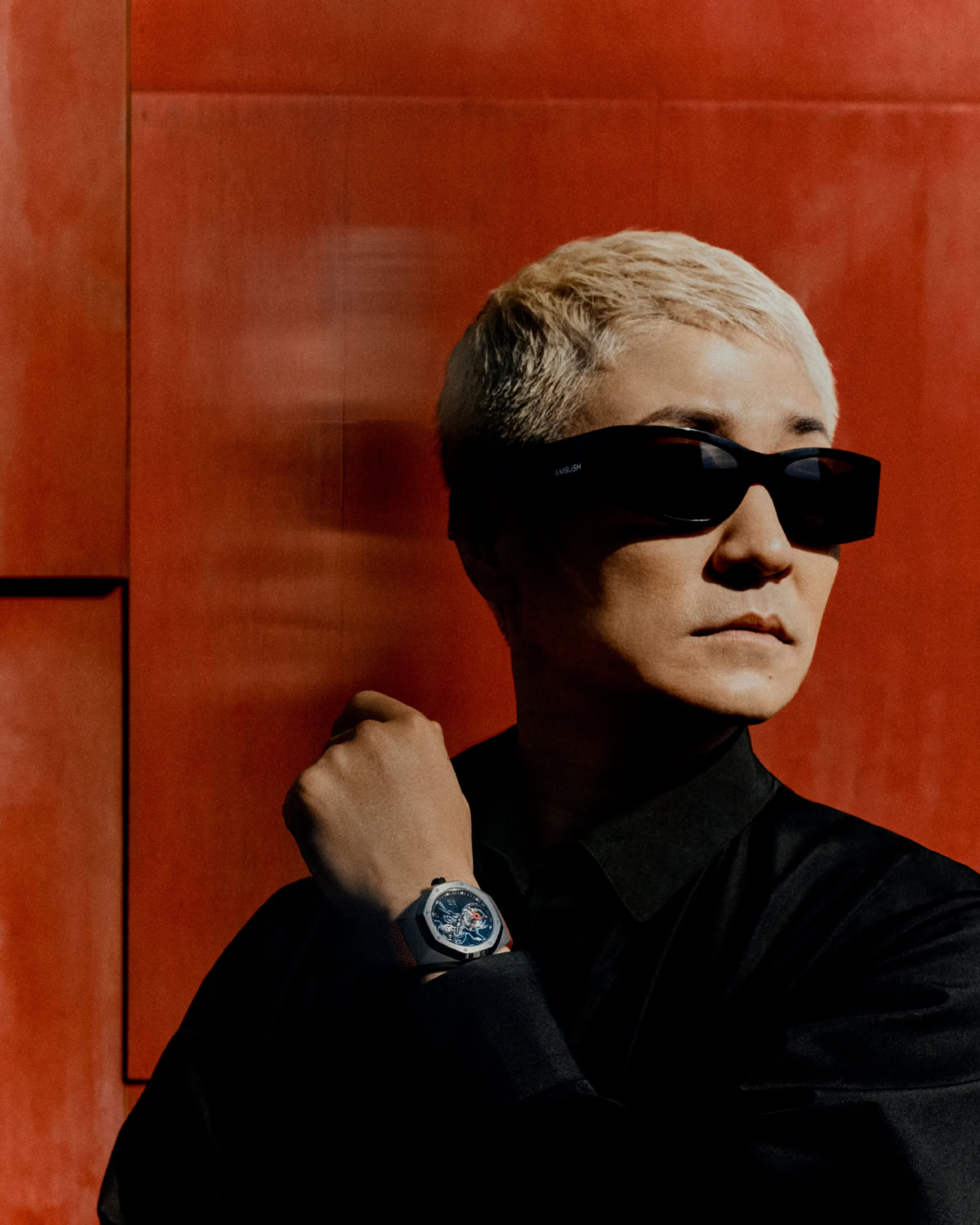
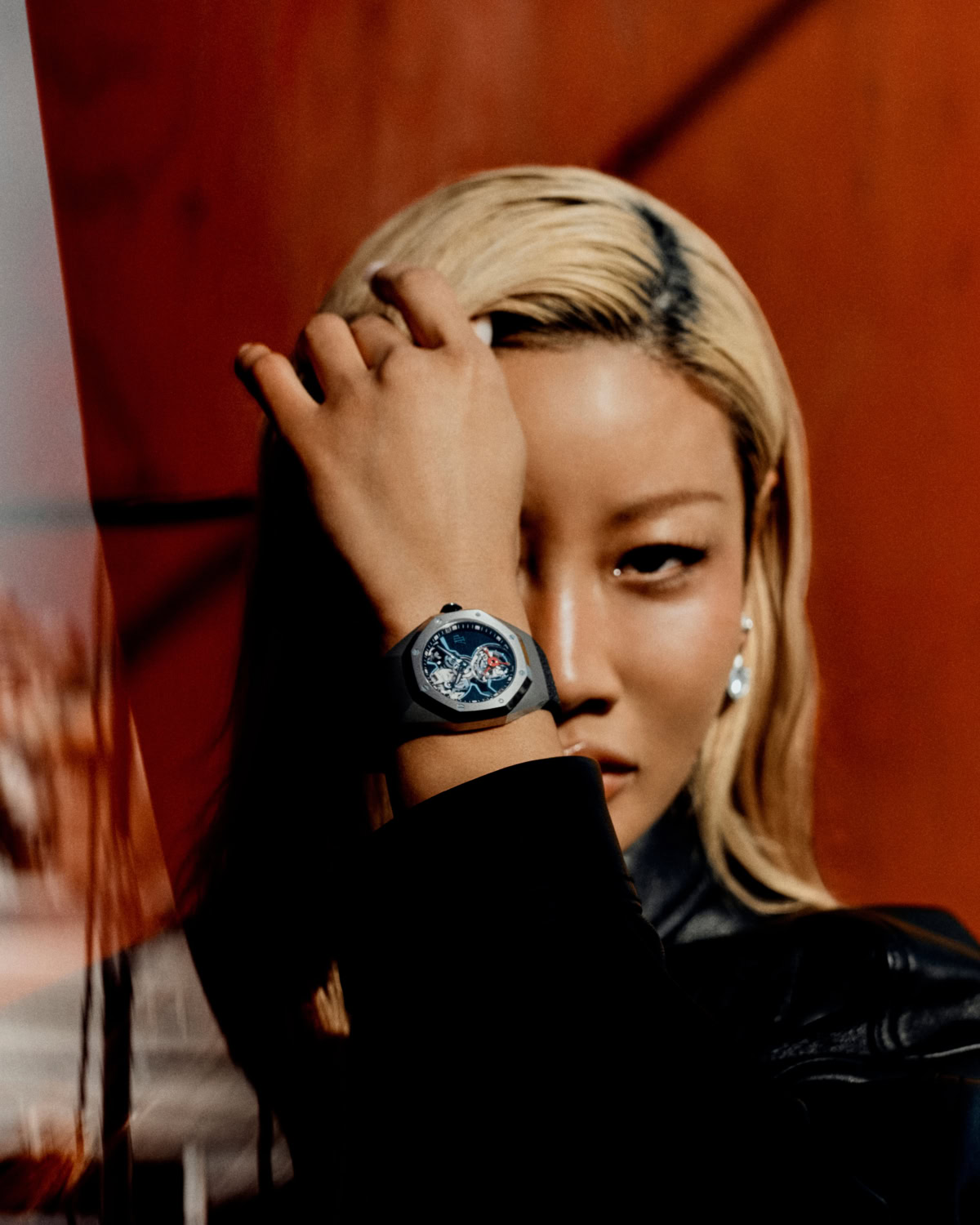
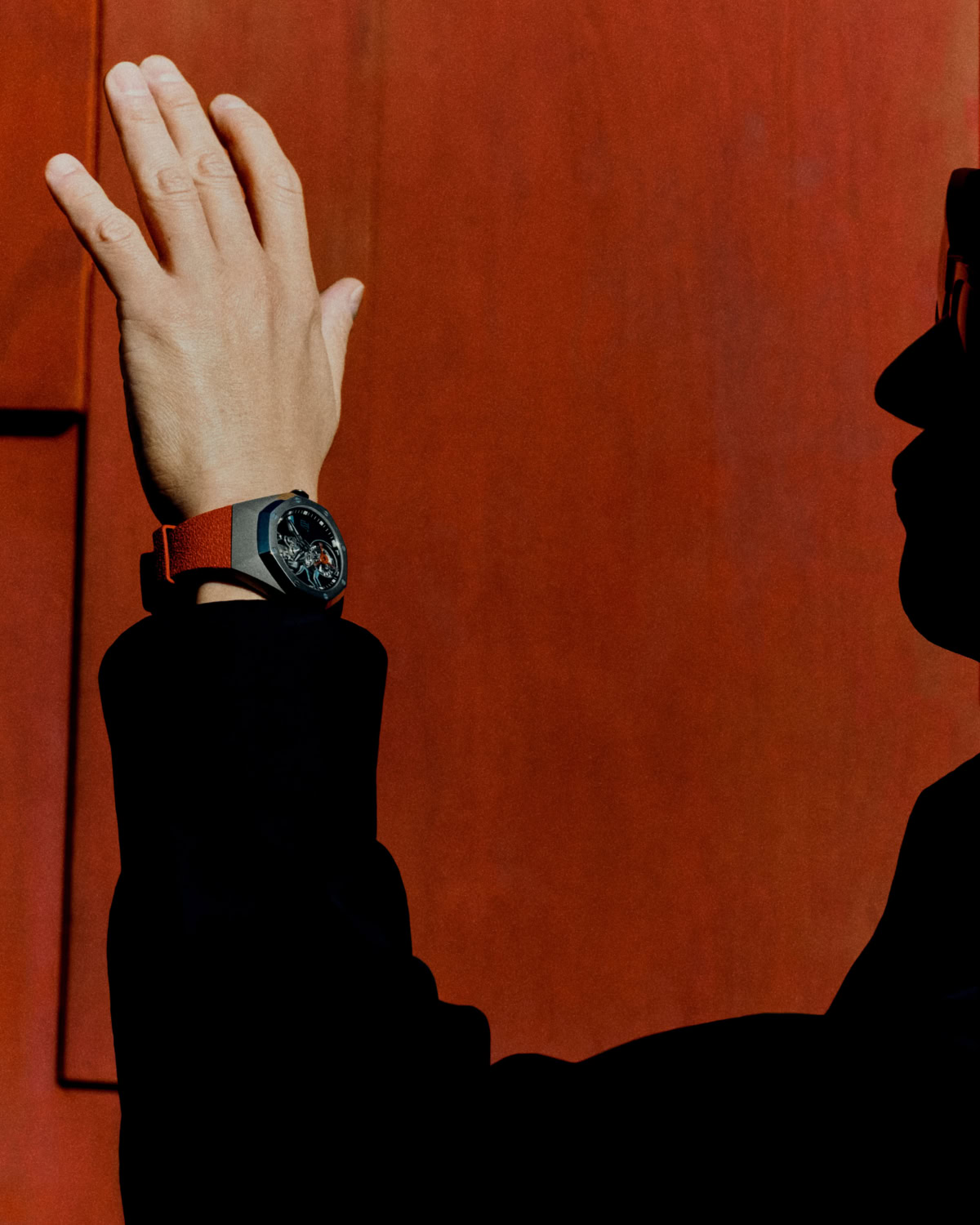
For her latest project, Yoon Ahn is entering the world of Swiss watchmaking. The Ambush co-founder and creative director, alongside her husband and longtime collaborator Verbal, has partnered with Audemars Piguet on a new limited-edition Royal Oak Concept Flying Tourbillon – a 38.5 mm titanium watch limited to 150 pieces that pairs a black aventurine dial with a striking red tourbillon cage. Compact, sharply engineered and stripped back in appearance, the watch channels the same visual precision that has come to define Ahn’s work across fashion, jewellery and design.
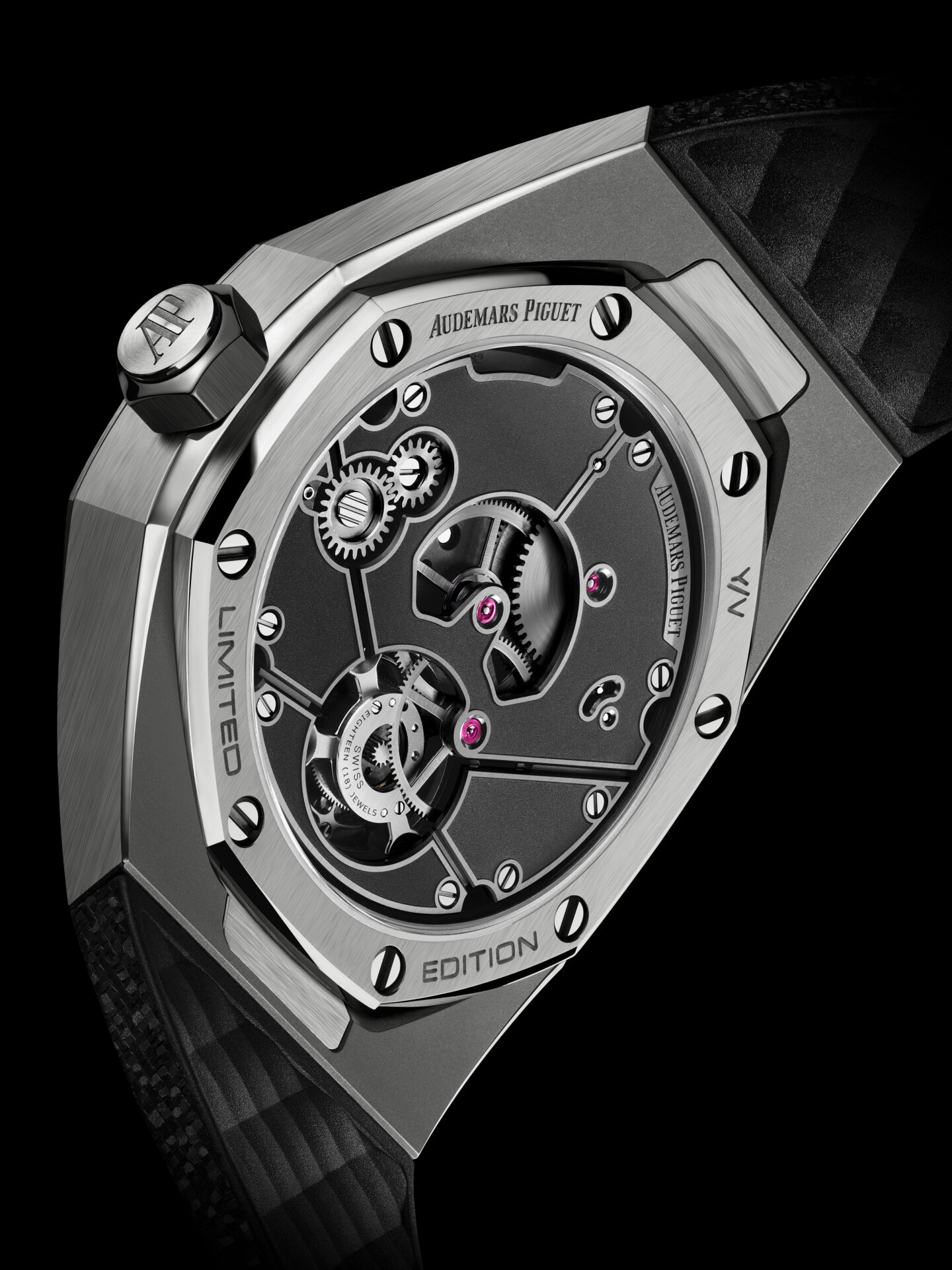
Since launching Ambush in Tokyo, Ahn and Verbal have built a distinct creative language that moves easily between luxury fashion, streetwear, music and industrial design without fully belonging to any one category. Their references are global but controlled – bold graphics, technical materials, monochrome palettes interrupted by sharp bursts of colour. That sensibility carries through into the Royal Oak Concept collaboration, which places emphasis on clarity rather than decoration. The exposed movement, openworked architecture and vivid red detailing all centre on the mechanics of the watch itself, rather than concealing them.
The project also marks a more personal collaboration for Verbal, a longtime Audemars Piguet collector who has spoken about the significance of the original Royal Oak Concept released in 2002. Here, that history is reworked through the duo’s own lens. The red tourbillon – positioned at six o’clock and designed as the visual centre of the piece – references energy, motion and what Verbal describes as the Earth’s core, while the smaller case size shifts the traditionally oversized feel of the Royal Oak Concept into something more versatile and wearable.
More broadly, the collaboration reflects how luxury watchmaking continues to intersect with fashion and contemporary culture without losing its technical focus. Rather than simply applying branding to an existing model, Ahn and Verbal worked with Audemars Piguet’s designers, engineers and watchmakers to reshape the watch’s visual identity from the inside out.
Ahead of the launch, we spoke to Ahn about how the collaboration came about, balancing the masculine with the feminine and her plans for a future delving into horology.
Could you tell us more about how the process unravelled from initial conversations to the final product?
Yoon Ahn: The process really started from conversation and trust. From the beginning, AP gave me space to think as a designer, not just as a collaborator putting a surface treatment on an existing piece. The first conversations were about emotion, proportion and what kind of object this should become. I wanted it to feel powerful but intimate technical, but still very human. From there, we went deep into shape, material, colour, finishing and how every detail would live on the wrist. Because it was a complication piece, nothing could be treated casually. Every design decision had to respect the engineering, the movement and the heritage of the Royal Oak Concept, while still bringing my own language into it. It was a very patient process a lot of back and forth, a lot of learning, a lot of small decisions that most people may never notice, but that completely change the feeling of the final piece. That’s what made it so special.
For me, the final product feels like three years of trust, obsession, and quiet dreaming becoming real. It was not just about making a watch – it was about creating something that could carry both AP’s legacy and my own design world in one object.
How does your work in Dior men’s jewellery design compare to and inform the work in this collaboration?
YA: They are completely different design processes. With Dior Men’s jewellery, I’m working within fashion it’s about styling, attitude, silhouette and how the piece completes a look or expresses a certain energy of the season. Jewellery can be more instinctive and immediate. It lives very close to the body and to the emotion of the collection.
Watch design is a different universe. Especially with AP, you are working with engineering, movement, proportion, ergonomics, heritage and extreme technical precision. Every millimeter matters. Every material choice has a functional consequence. You cannot just design from the outside in you have to understand the architecture of the watch.
But both worlds inform each other through detail. My jewellery background makes me sensitive to how an object feels on the body, how it catches light, how it becomes part of someone’s identity. With AP, I brought that same sensitivity, but applied it to a much more technical and architectural object. So the processes are very different, but the intention is the same: to create something people feel connected to, not just something they wear.
How did your background in jewellery design inform this venture into watchmaking? Are there certain crossovers that occurred? Or was a lot of this new to you?
YA: My background in jewellery definitely informed the way I approached the watch, especially in terms of proportion, detail, material and how an object feels on the body.
Jewellery teaches you to think very closely about scale. A small change in volume, edge, polish, texture or colour can completely change the emotion of a piece. That sensitivity carried over into this project. I was thinking about how the watch catches light, how it sits on the wrist, how it feels almost like a sculptural object rather than just a technical instrument.
There are crossovers in the way both jewellery and watches become personal objects. They live with you. They carry memory, identity and emotion. So that part felt familiar to me. But at the same time, a lot of watchmaking was completely new. With a complication piece, you are not only designing form – you are working around movement, engineering, construction, precision and heritage. There are many rules you have to respect. Every millimeter matters.
So for me, this project was a beautiful meeting point: I brought my jewellery instinct, but I had to learn the language of watchmaking. That challenge made the process even more meaningful.
Ambush was set up by yourself and Verbal together, and this watch is meant to reflect both yours and Verbal’s personal journey. Can you speak on this and how the timepiece reflects both your journey and the language of Ambush?
YA: There is definitely an aesthetic connection to Ambush in the piece in the way we think about contrast, proportion, material and objects that feel both futuristic and personal.
But we approached this collaboration less as Ambush as a brand working with AP, and more as Verbal and I approaching AP as watch collectors. That distinction was important to us. We both genuinely love watches, so the process came from respect for the craft, the history, the movement and the emotional value that a watch can carry over time. In that sense, the timepiece reflects our personal journey in a more subtle way. It is not about putting Ambush loudly on the surface. It is about our shared eye, our taste, our love for detail, and the way we have always moved between culture, music, fashion, design, and collecting. So while the design language naturally connects back to our aesthetic, the spirit of the project was much more personal. It was a collaboration between people who love watches, not just a brand-to-brand project.
How did you balance both the masculine and feminine elements of the watch?
YA: The 38.5mm case size was a big part of that balance. It gives the watch presence, but it does not feel overly masculine or heavy. It sits in a space that feels strong, refined and very wearable.
For me, good design should not feel trapped in one category. I wanted the watch to have enough technical attitude and architectural strength while balance also allows it to move between different moments. It can feel casual and effortless, but also dressed up and precious. That versatility was important something that feels powerful, but still personal and intimate on the wrist.
The watch features the geometric motifs so prominent in Audemars Piguet’s pieces and the polished yet undone experimental look of Ambush jewellery, what inspired you and what was your creative process like?
YA: I think the watch shares a similar energy with Ambush, not only through the polished yet experimental feeling, but through the idea of world-building. Ambush has always been about creating objects that feel like they come from a larger universe pieces that carry tension, attitude and imagination beyond just product.
For this watch, the deeper inspiration was nature, the moon and our relationship to time. The moon was one of the first ways humans understood time, long before watches or calendars. That felt very powerful to me. So rather than only looking at Gerald Genta’s geometric motifs in a literal way, I was more interested in connecting that architectural watch language to something more emotional and celestial. The creative process was about building a world around the piece a world where precision, nature, the moon all exist together.
Had you considered venturing into watchmaking before this collaboration with Audermars Piguet? And has this opportunity inspired you in terms of future creations?
YA: Yes, this collaboration definitely opened up a new way of thinking for me. Working on a luxury watch, especially with a house like Audemars Piguet, made me slow down in a way that fashion does not always allow. Fashion moves very fast seasons, calendars, drops, constant newness. But watchmaking asks you to think in a much longer timeline. You are designing something that is meant to live with someone for years, maybe even generations. That was very inspiring to me. It reminded me that design does not always have to chase the next moment. It can hold memory, time, craft and emotion in a much more permanent way.
Do you plan to continue working within the realm of horology?
YA: Yes, absolutely. This experience opened up a new way of thinking for me. [It] made me think more deeply about how objects can exist beyond the fashion calendar – how they can become part of someone’s life, not just part of a season.
Horology moves at a different rhythm from fashion. In fashion, we are often working within seasons and fast cycles, but with watches, you are thinking about permanence, precision, legacy and how an object can live for decades… even generations.
Being able to work on a complication piece with Audemars Piguet made me slow down as a designer. It reminded me how powerful it is to create something that is not only visually meaningful, but technically considered, emotionally lasting, and timeless. I would love to continue exploring horology, not just as a design category, but as a world where craft, engineering, emotion and time all meet.
Shop the Royal Oak Concept Flying Tourbillon here. Photography courtesy of Audemars Piguet.