May 11, 2026 |
“Meji Meji is a living archive,” says founder Tolu Oye of her brand, a vibrant, colourful collection of clothes with an unapologetic Y2K edge dreamed up in 2020. “It’s where memory meets expression, where African heritage, sisterhood and storytelling come together through clothing. As a Pan-African lifestyle brand, it exists to connect stories across the diaspora, bridging cultures, histories and identities through a shared visual language.” For the Lagos-born label’s latest release in its ongoing exploration of memory and identity, Meji Meji has unveiled a campaign and short film titled The Past That Never Fades and with it, a collection rooted in family, friendship and the textures of everyday Nigerian life.
The clothes themselves feel like snapshots pulled from a bedroom wall or the pages of an old photo album. Stretchy second-skin mesh tops in cotton spandex are plastered with graphic imagery and bold typography, and are styled alongside tracksuits and denim mini skirts. There are flashes of nostalgia everywhere – a vintage laundry detergent packet transformed into the Omo top, danfo buses reworked into wearable collages, handwritten letters pressed against the body like keepsakes. Shot through a vintage-tinged lens and directed by Tracey Dee, the accompanying film possesses the hazy warmth of childhood memories, blurring past and present in soft focus while exploring life lived in Lagos, memory and preserving Black love as a lived experience.
At the centre of the collection is the Family Album mesh top, a graphic, sunset-hued long sleeve inspired by Oye’s discovery of her grandmother’s family archive after moving back to Nigeria in 2019. “I went through old storage spaces looking for photos of my mum, but instead uncovered an archive of family photographs, postcards and handwritten notes from the 1950s to ‘70s,” she says. “It felt like discovering a time capsule, an intimate record of memory, migration and storytelling across generations.”
That archive became the foundation for Meji Meji’s visual world. Oye, who studied at FIT in New York, has long been drawn to collage and image-making, translating fragments of personal history into clothing that feels at once intimate and playful. “Each design becomes a kind of stamp in time, drawing from family albums, vintage prints, postcards and love letters that have travelled across decades,” she says. “Rather than something preserved and kept out of reach, I wanted to create pieces that carry history but are meant to be lived in and moved through.”
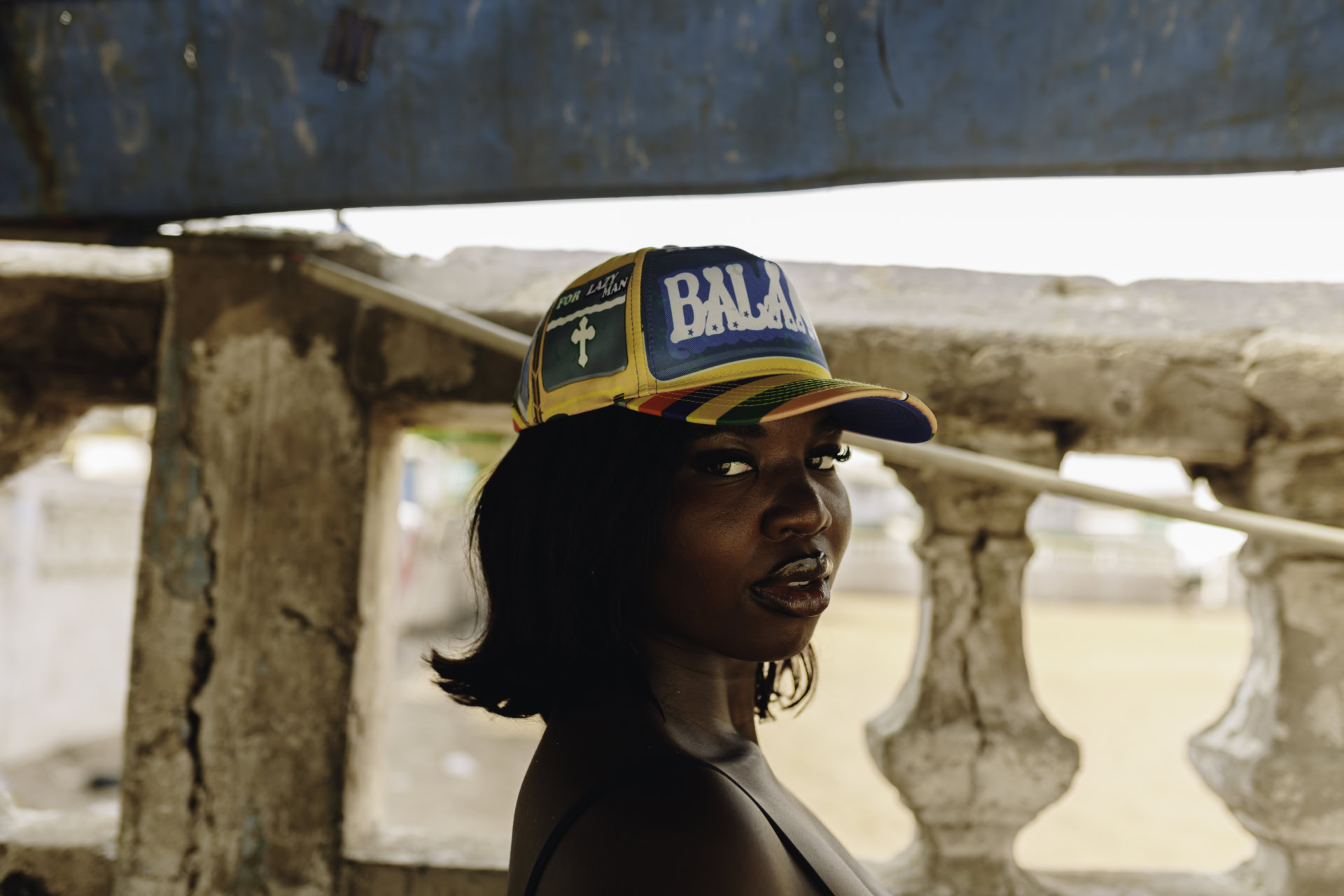
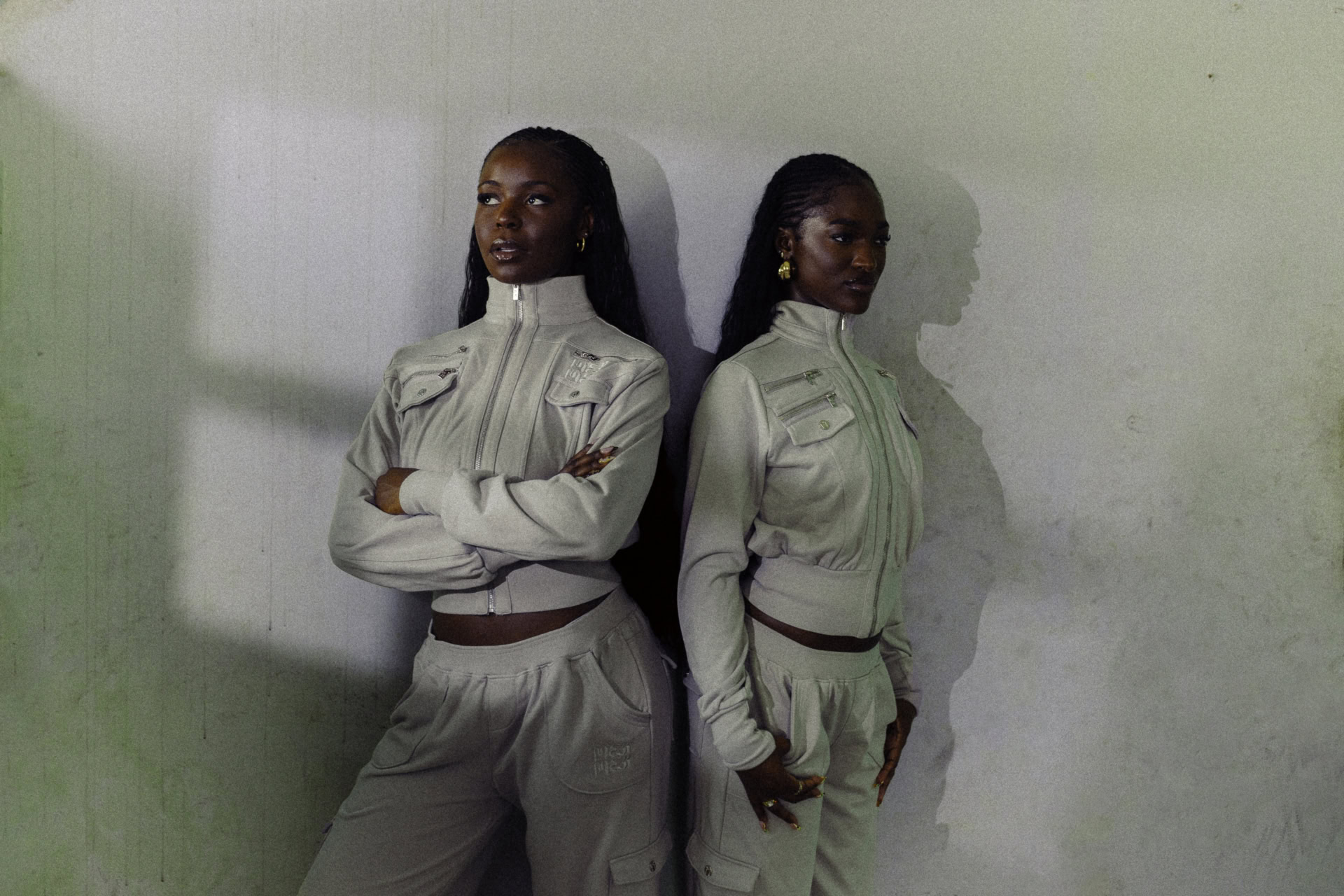
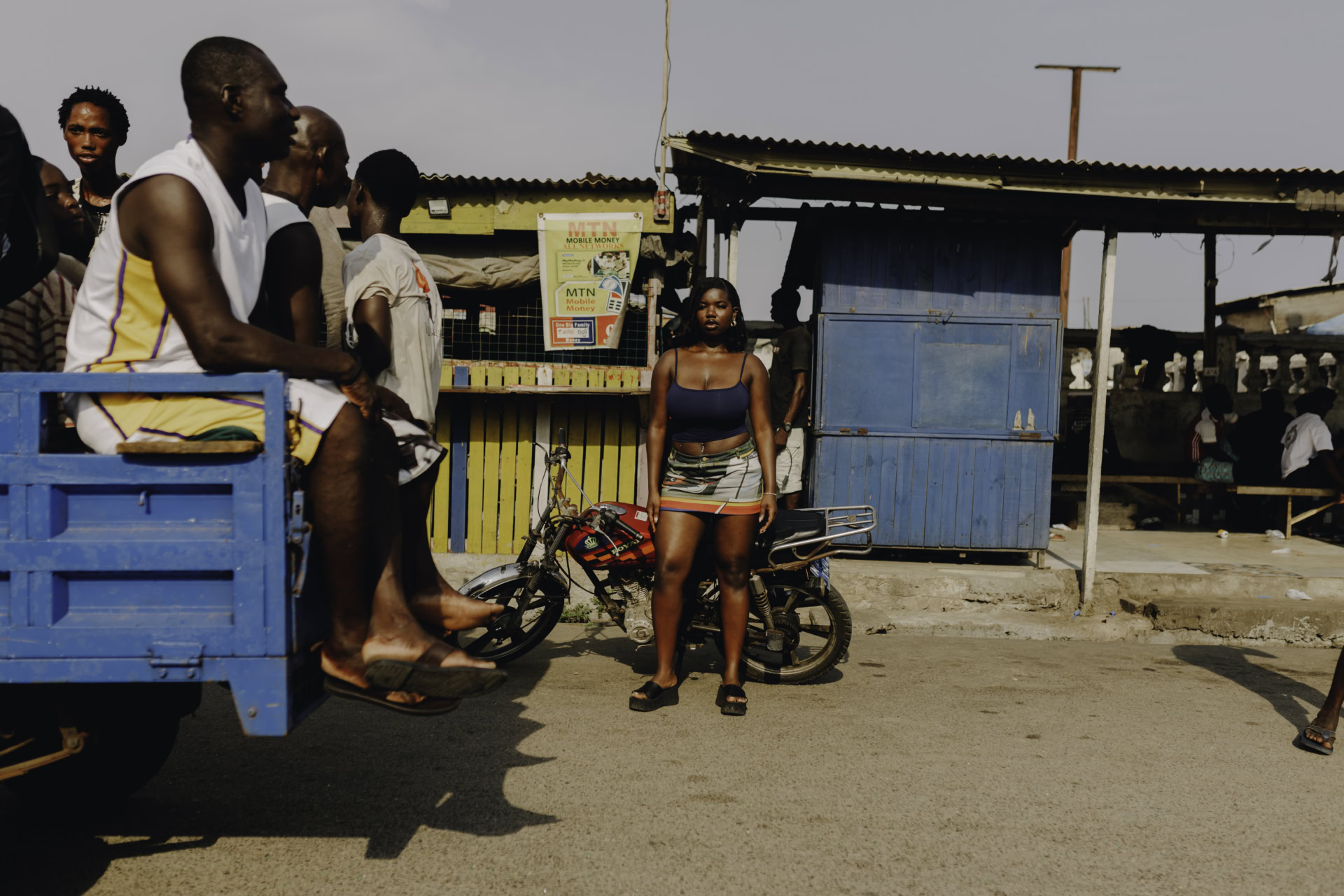
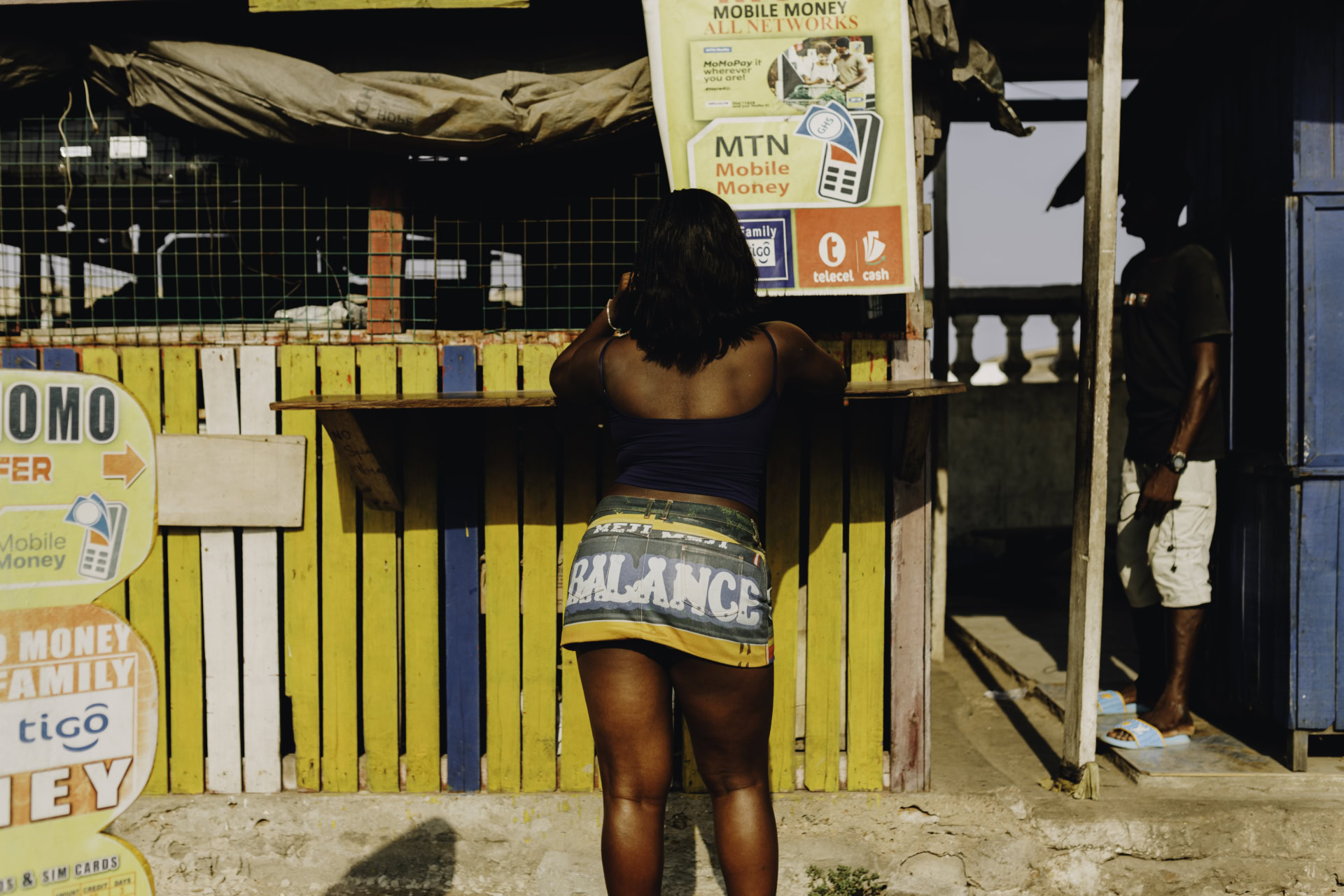
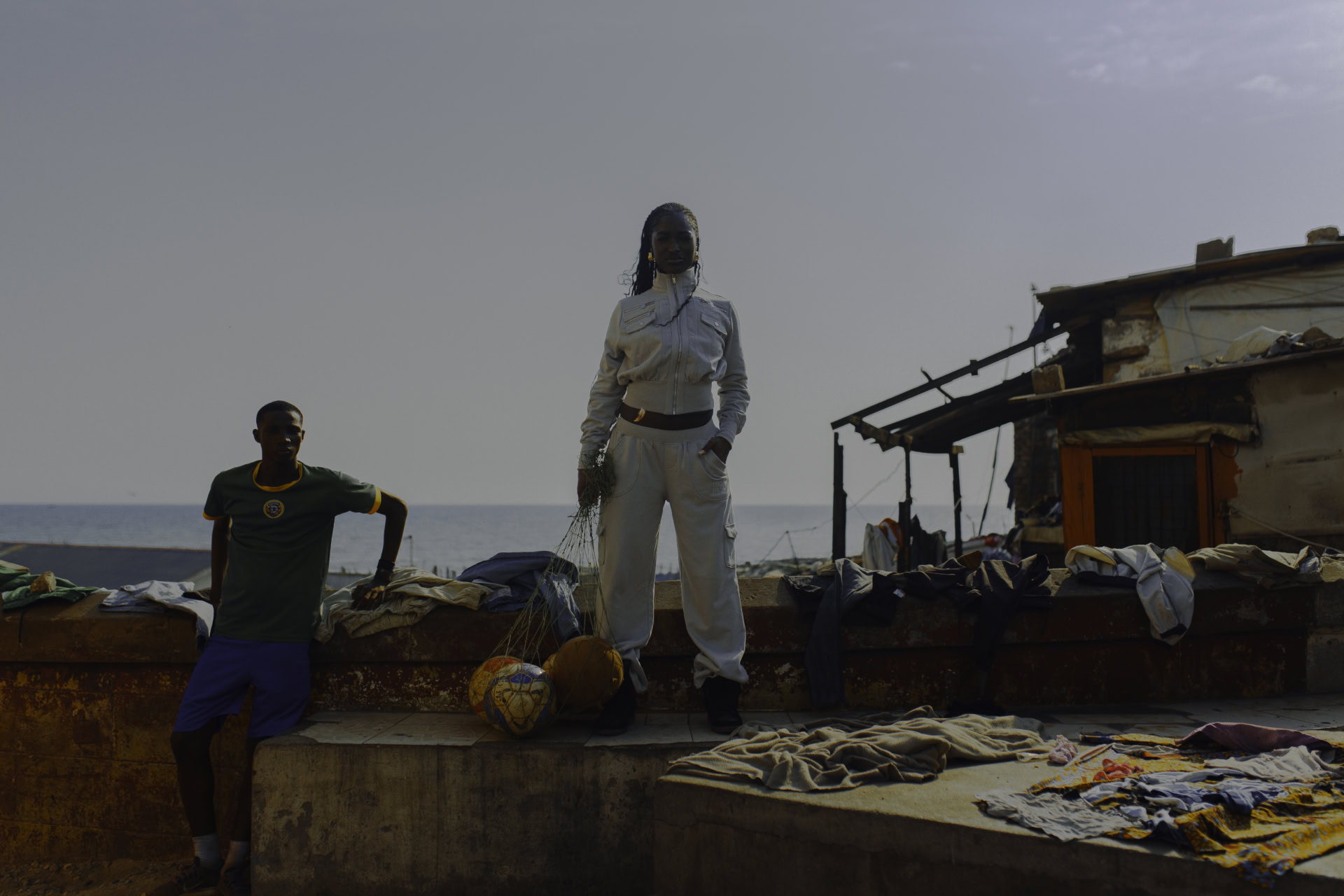
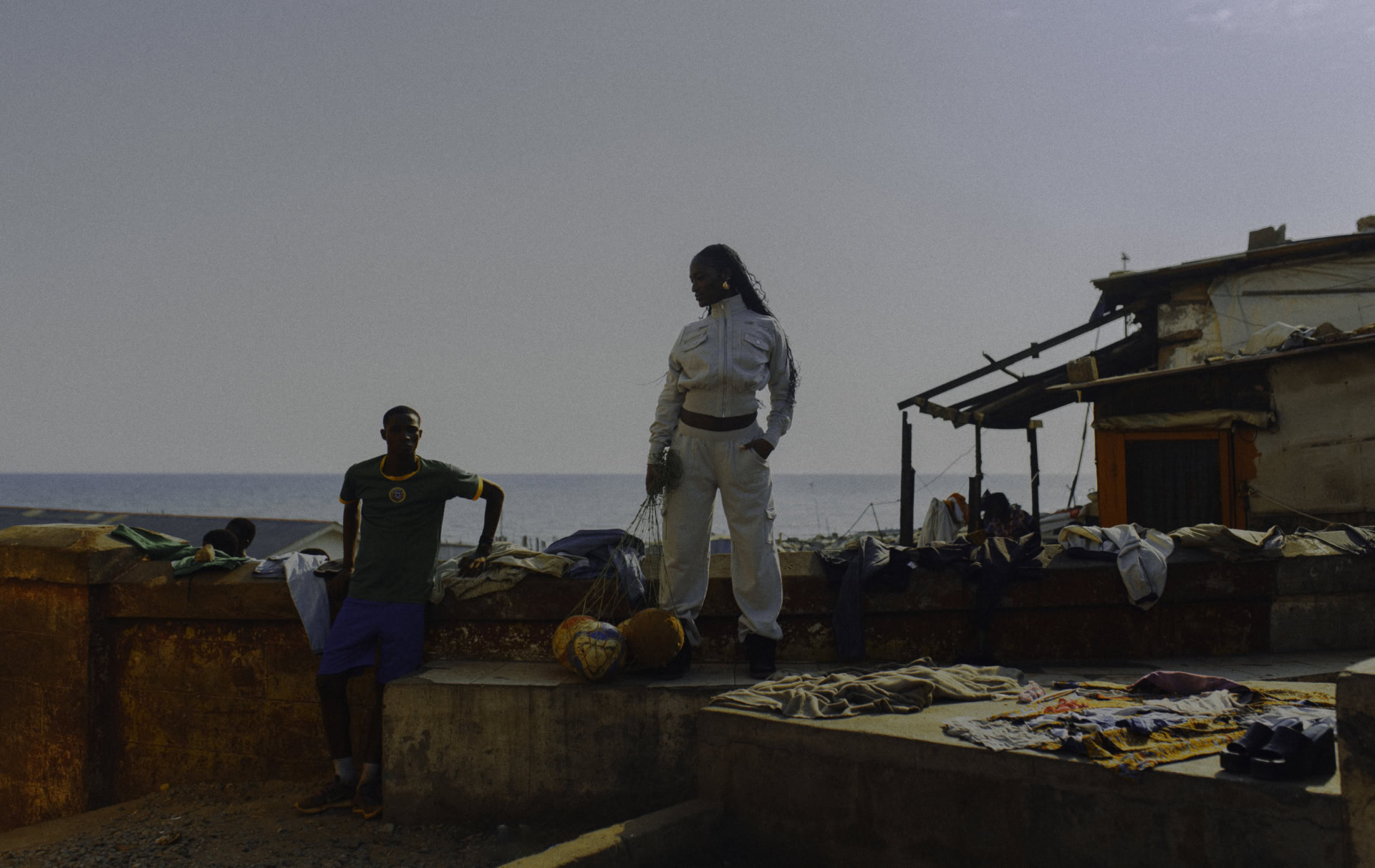
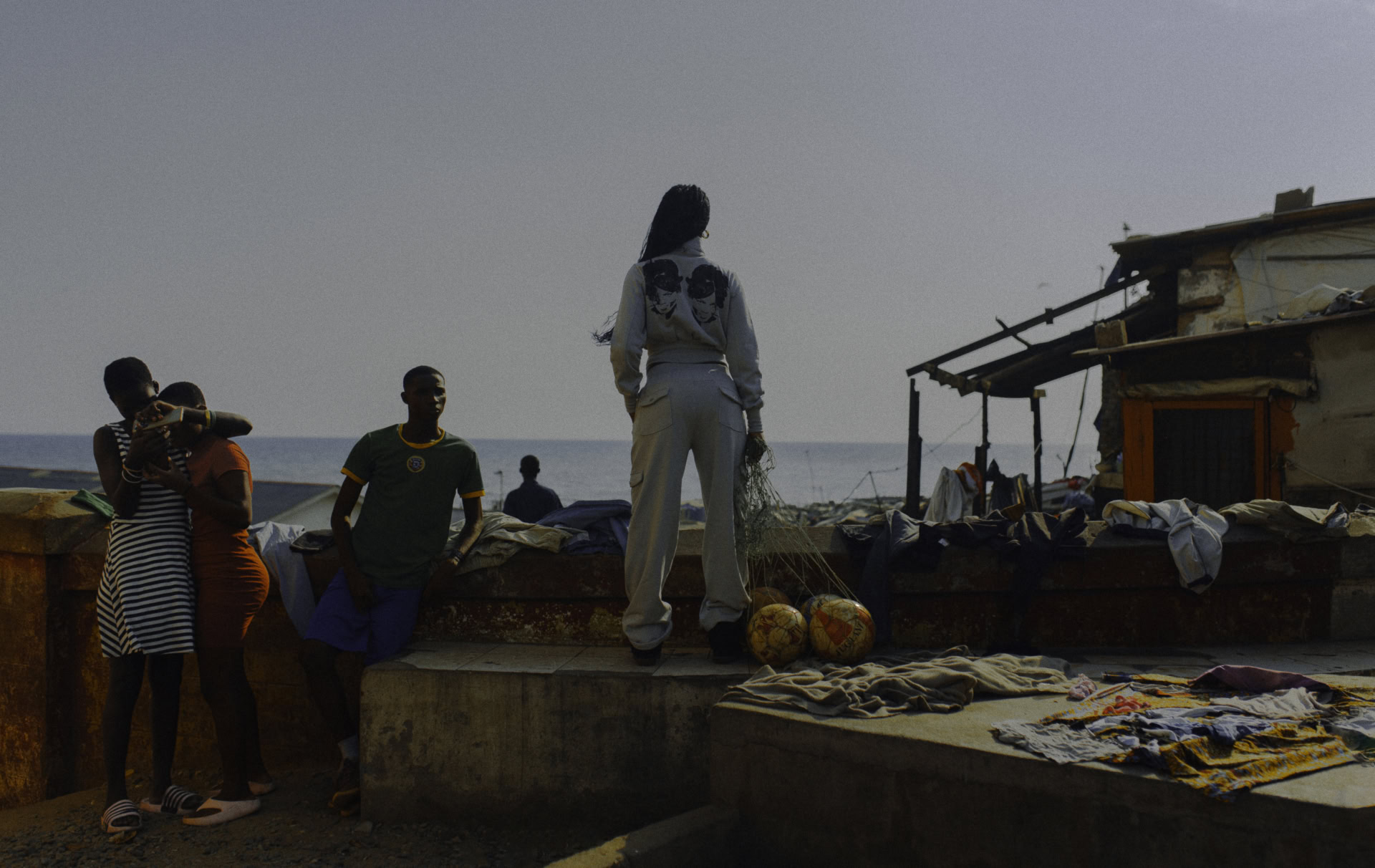
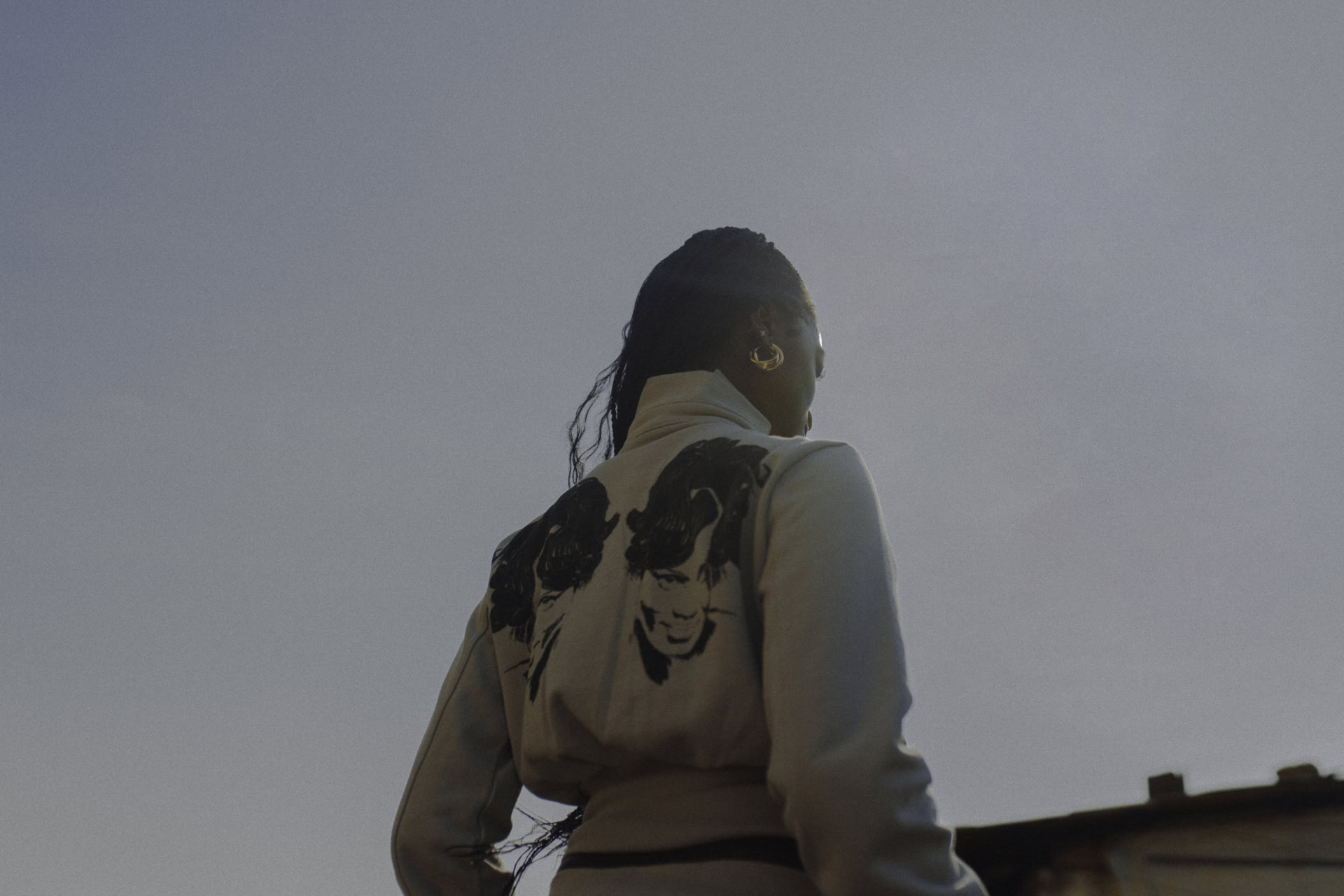
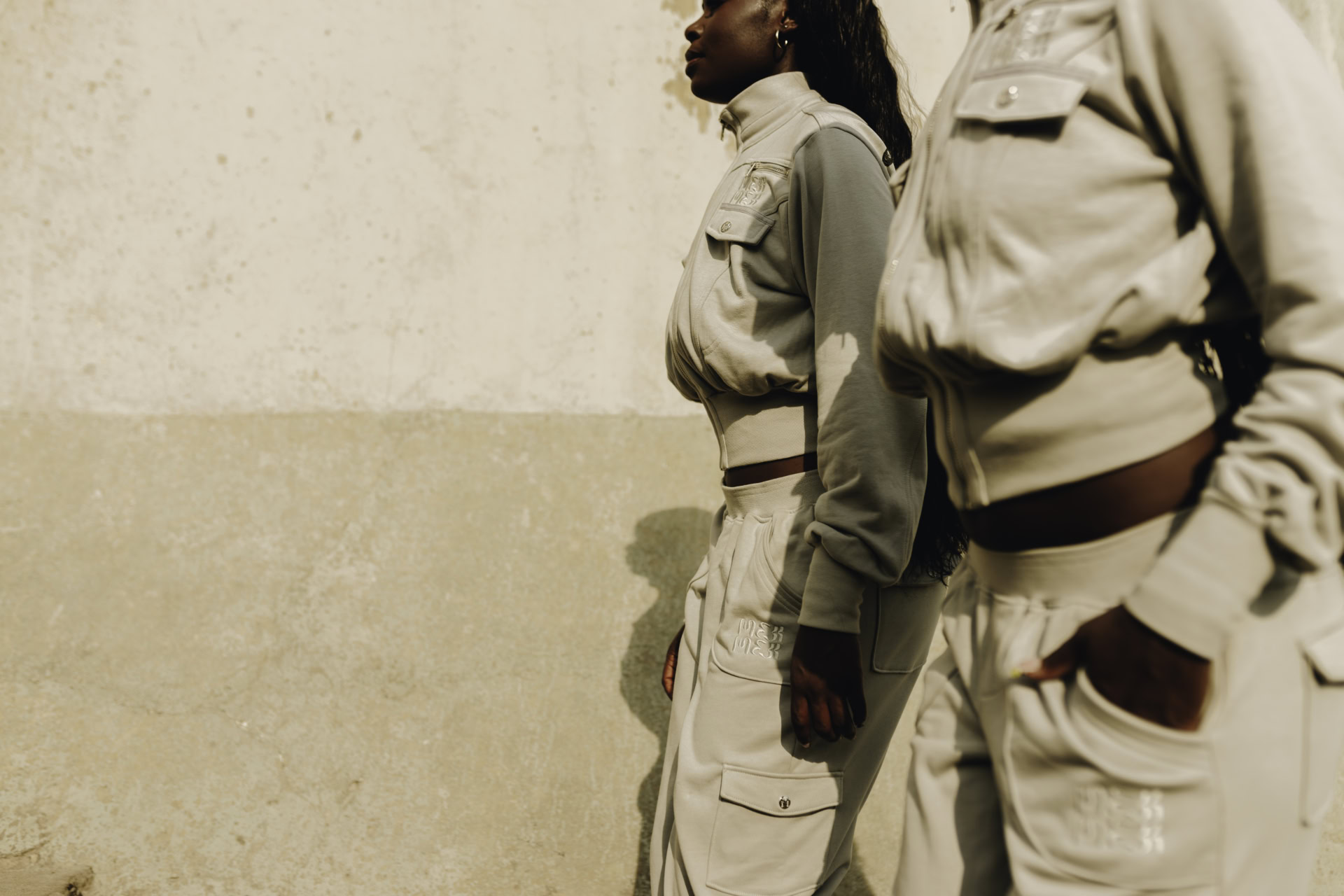
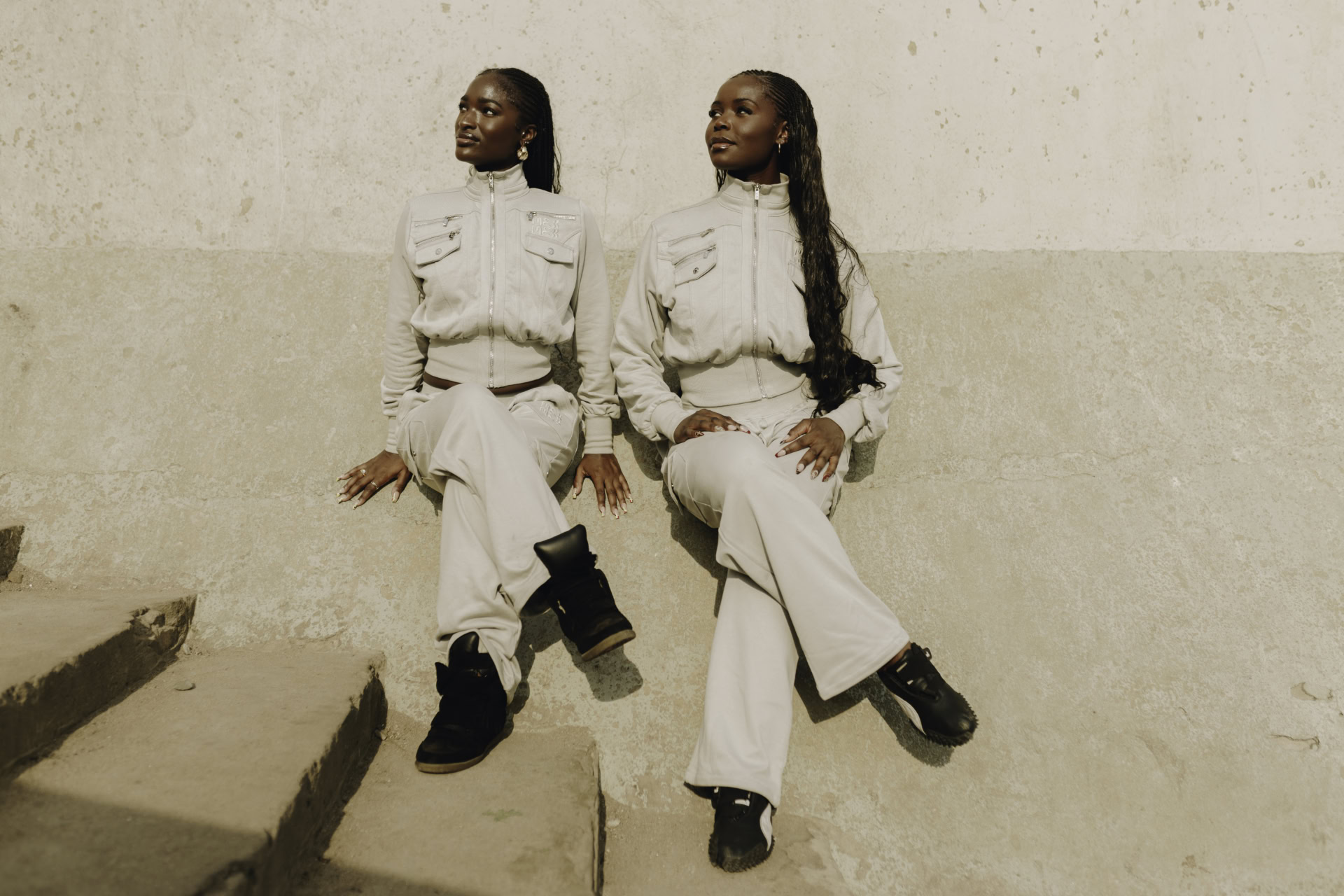
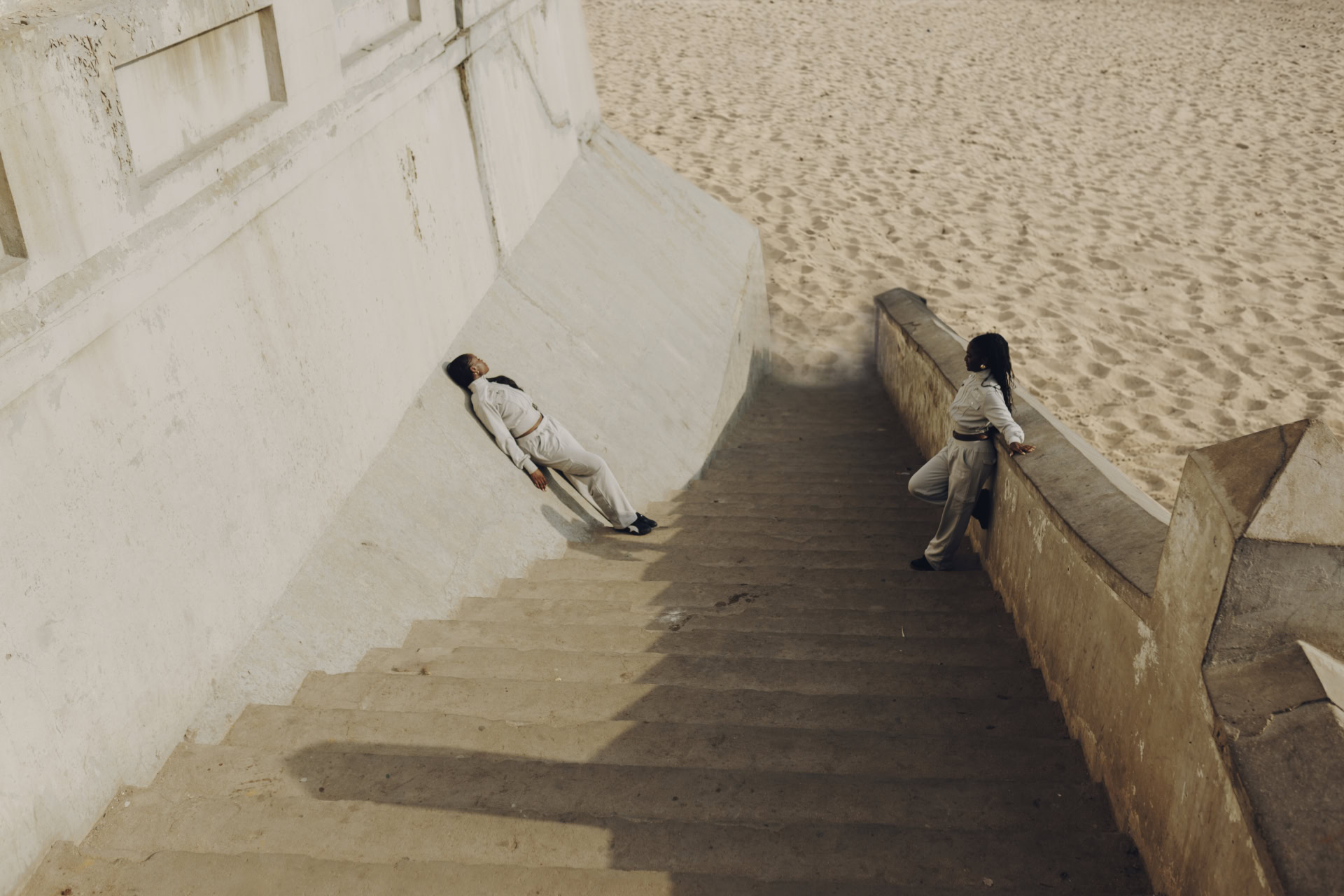
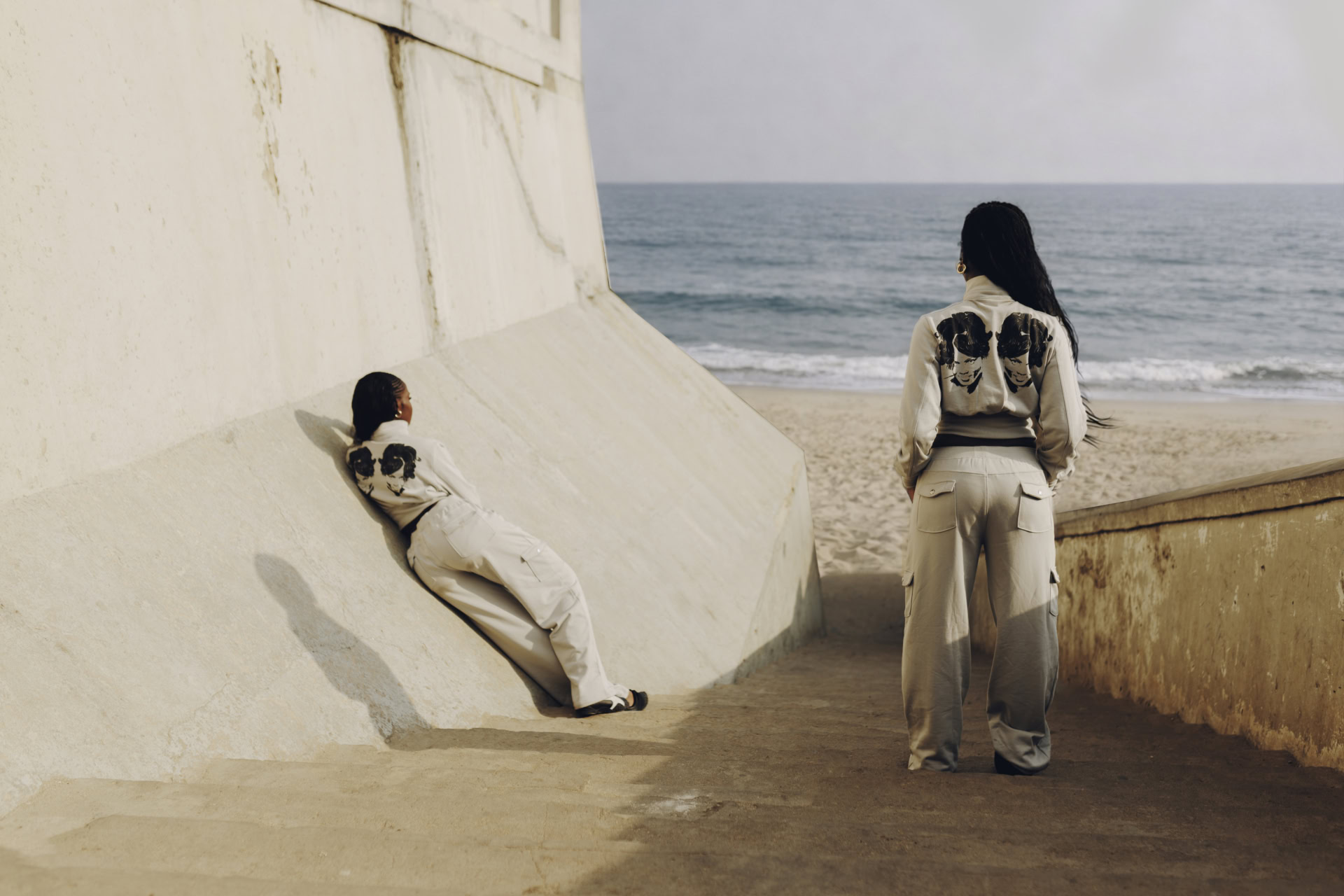

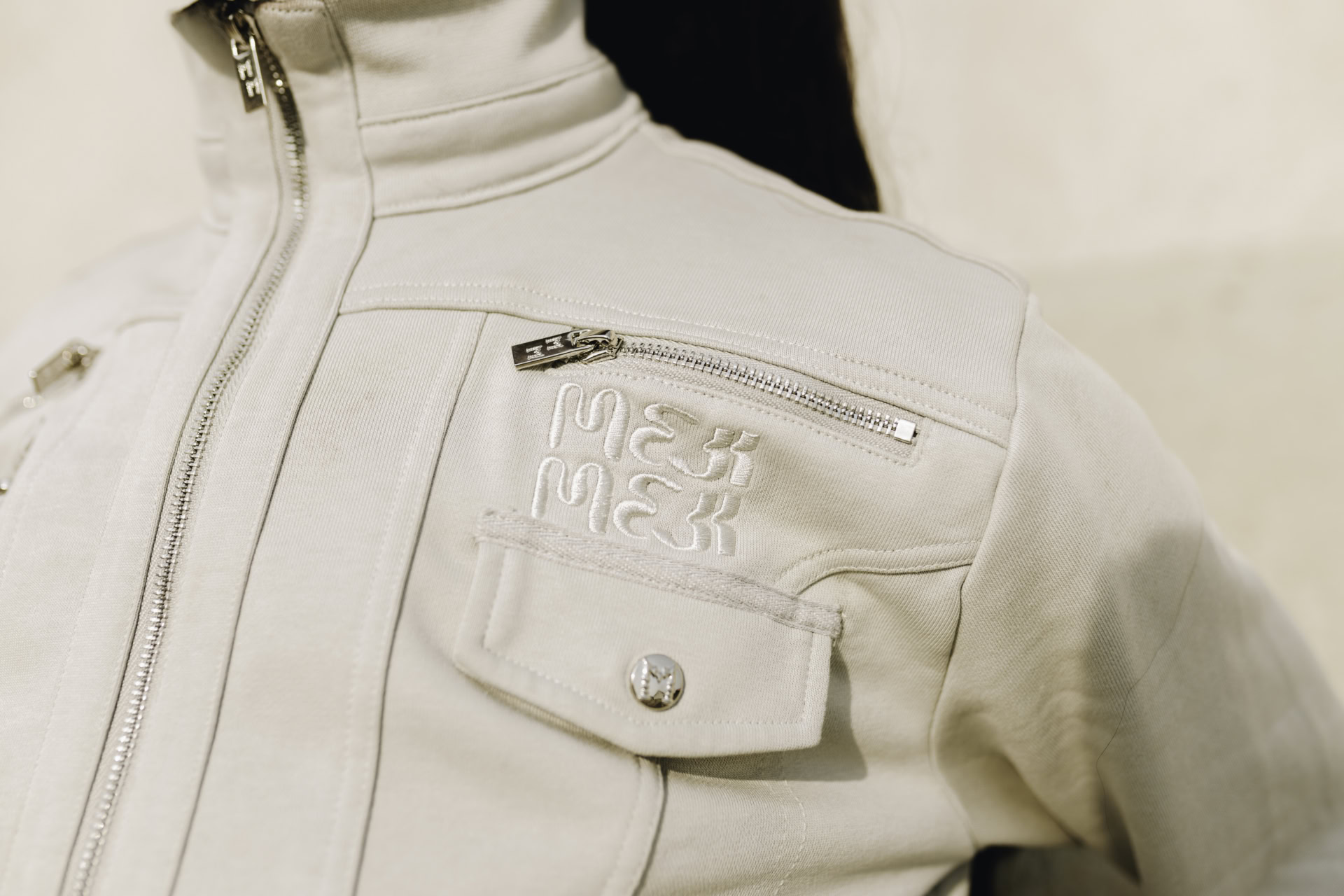
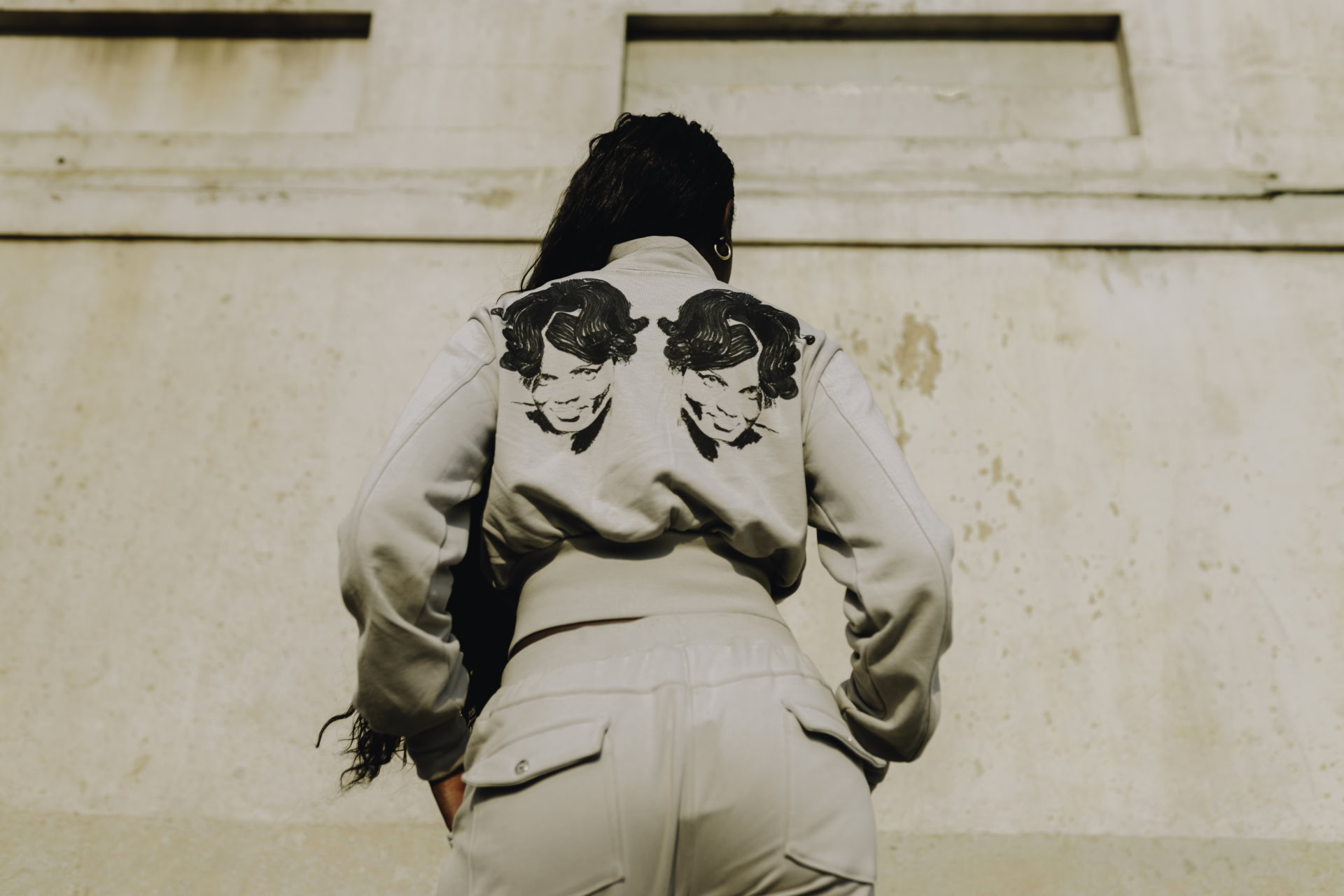
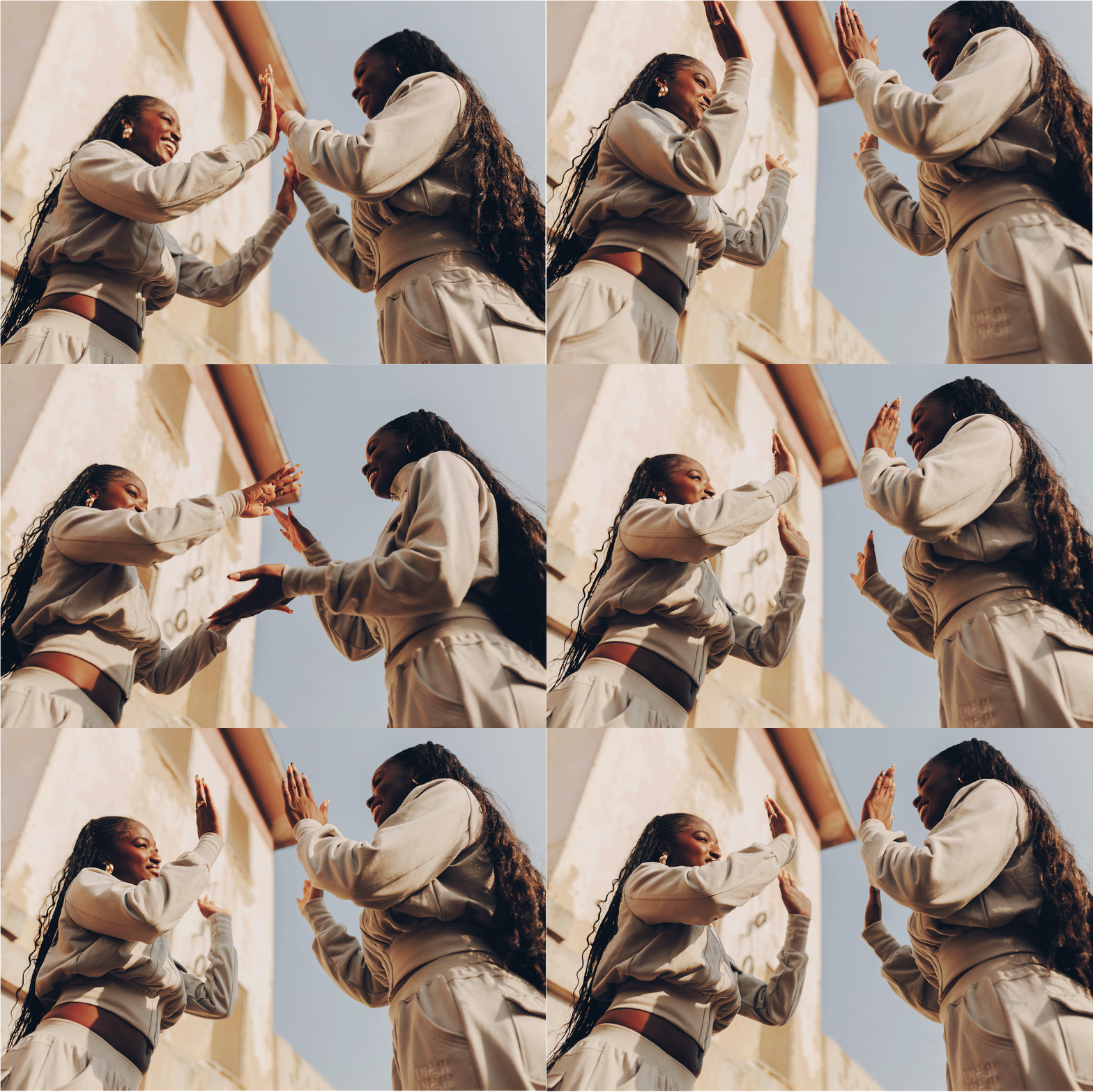
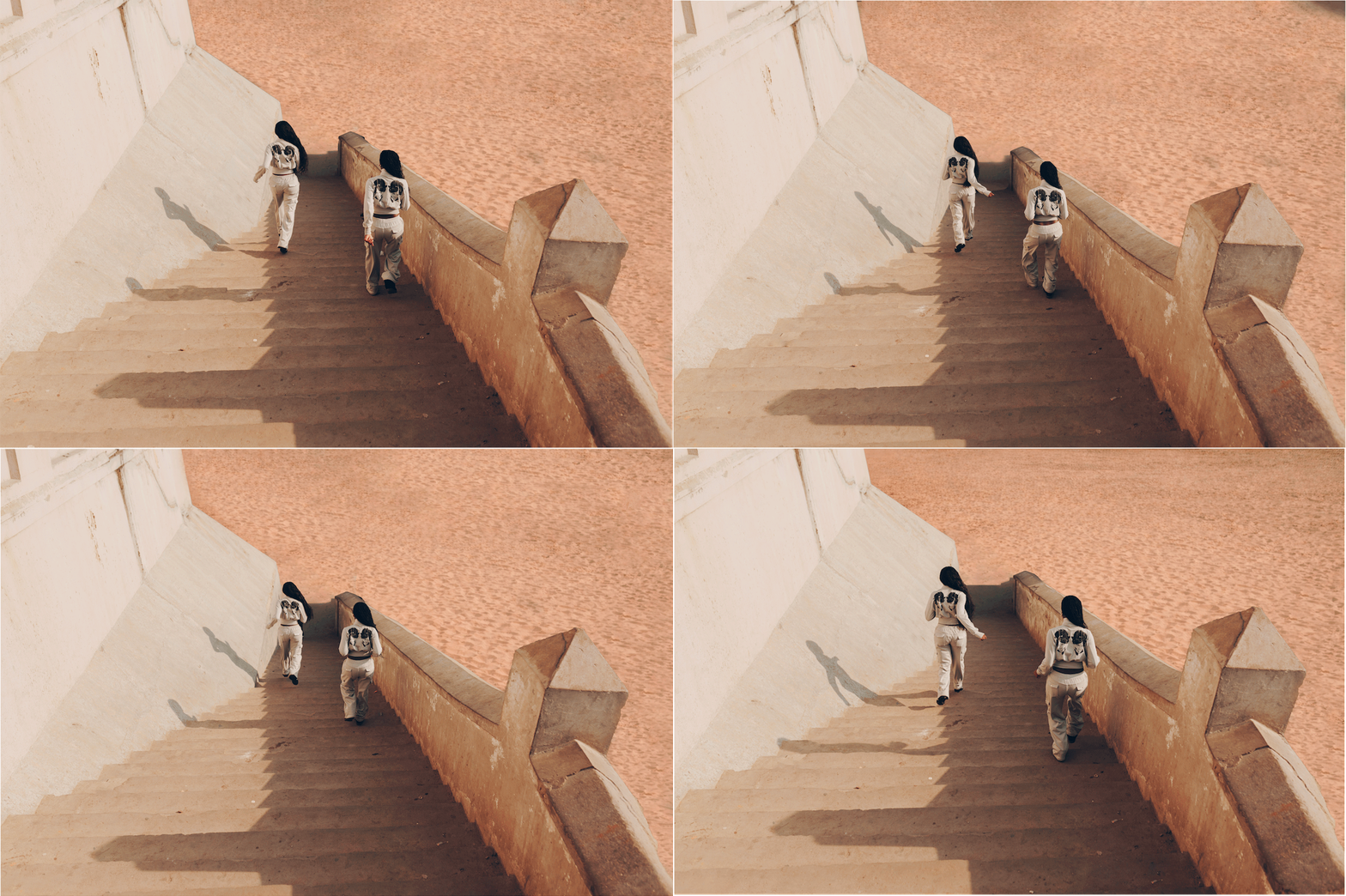
There’s an instinctive ease to the way Oye talks about Lagos, the city pulsing through every inch of the collection. “My day is chaotic, but there’s a certain beauty in that chaos,” she says. “Living in Lagos means nothing is ever dull and that’s exactly why I’m drawn to it.” That energy shows up in the clothes: the saturated colours, the graphic text, the references to buses, wash days and roadside slogans. “I find inspiration in the everyday: the traffic, the rhythm of the streets, the sounds, the food and most importantly, the people.”
The grey, 420 Terry Cloth Soul Sistas tracksuit, one of the collection’s key pieces, explores the push and pull of female friendship – comfort and friction existing side by side. Sisterhood sits at the core of Meji Meji’s DNA, right down to its name. “Even the name Meji Meji reflects that, ‘Meji’ means two in Yoruba,” says Oye. “The brand was inspired by my grandmother, who lived on Ore Meji Street, which translates to ‘two friends’. That sense of duality, connection and sisterhood runs through everything we do.”
The women in her own life have shaped the label too. Oye speaks warmly about her mother, who taught her to sew using newspaper pattern paper and transformed their basement into a makeshift workshop. “My mother was my first example of conviction,” she says. “She believed in me even when others didn’t understand my desire to become a designer.” Then there’s her sister, “my womb flame Kanyinsola”, and the wider network of female friends who continue to inspire her. “It is not just about clothing, it is about connection, reflection and women moving through life together, dreaming, building and holding space for one another.”
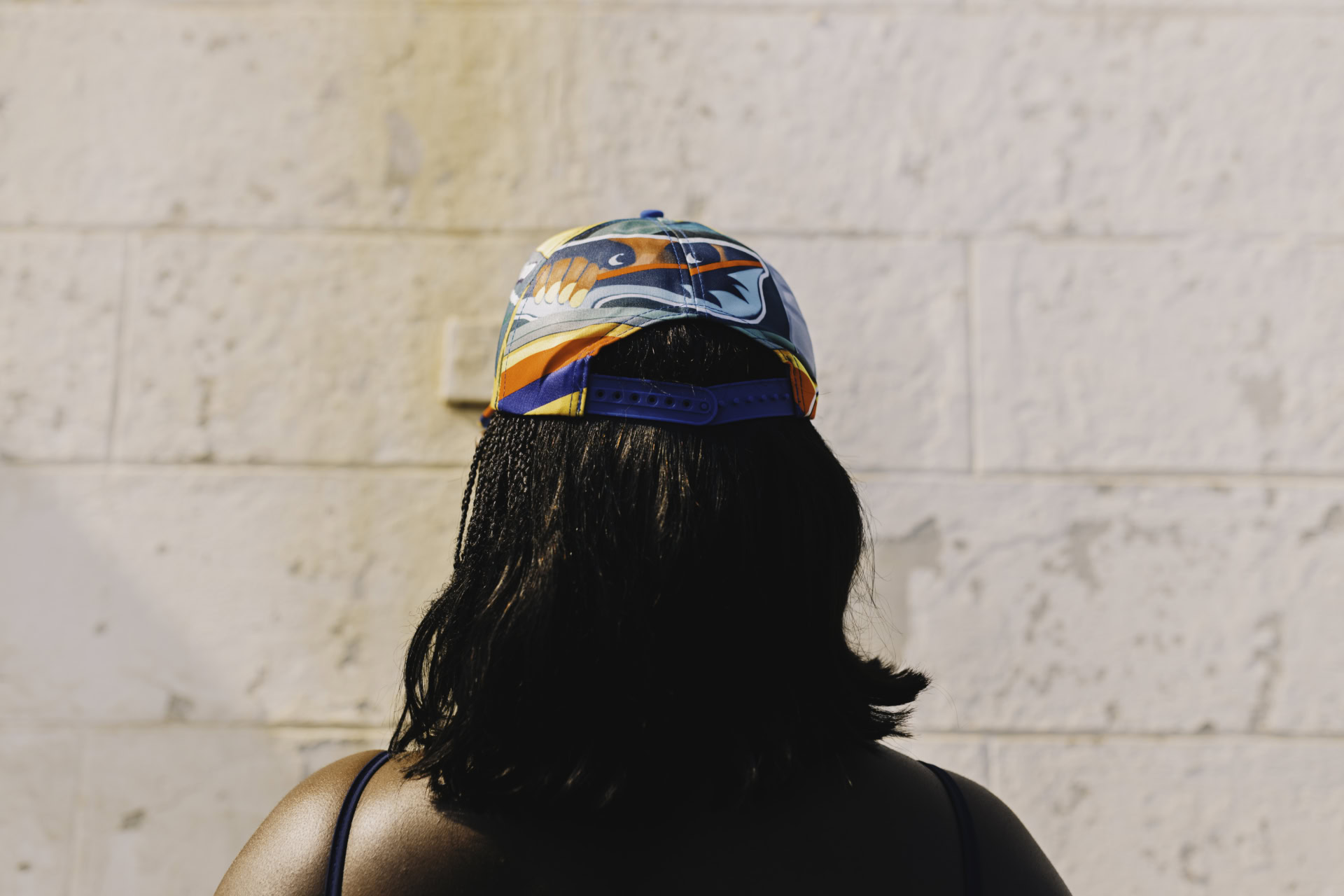
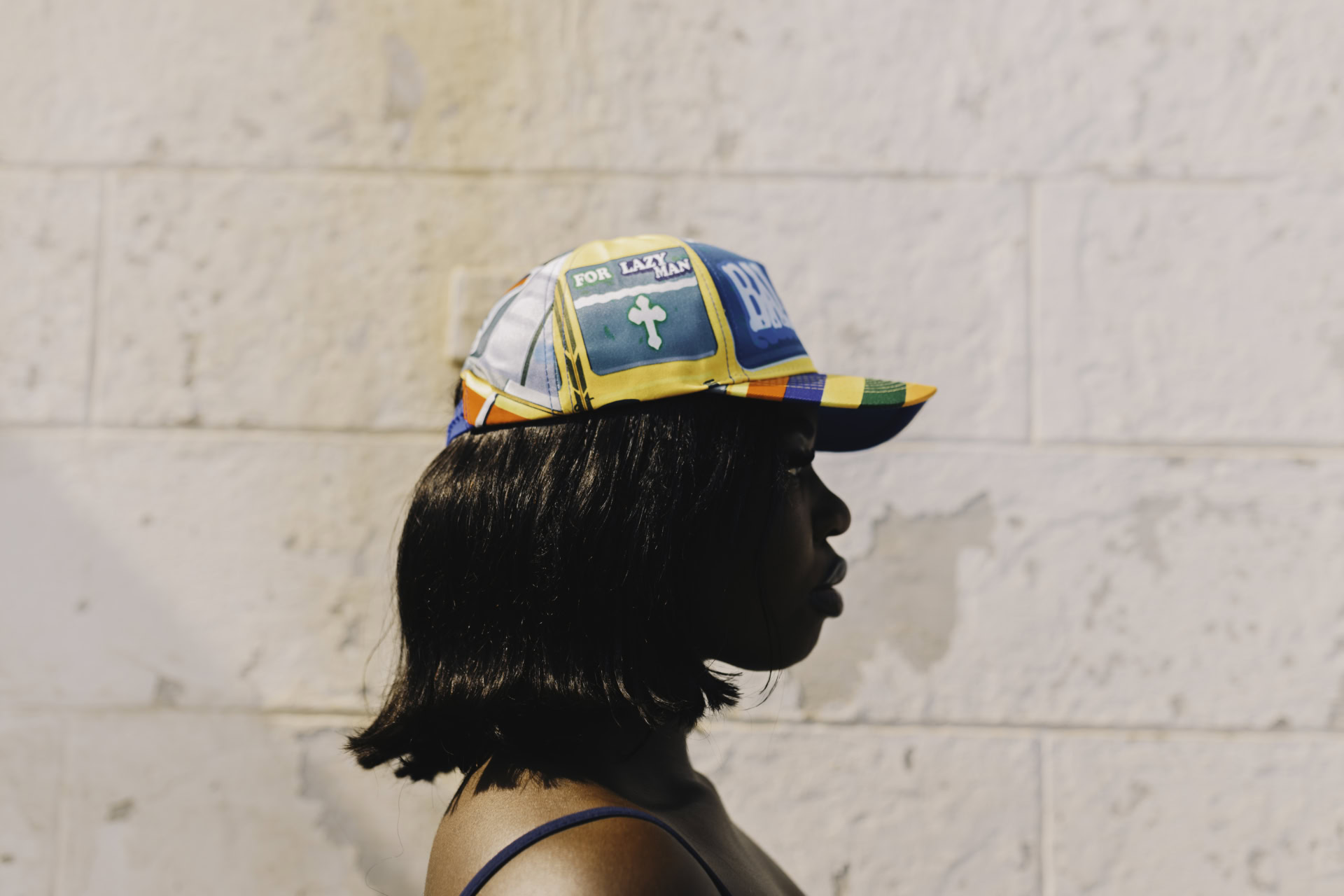
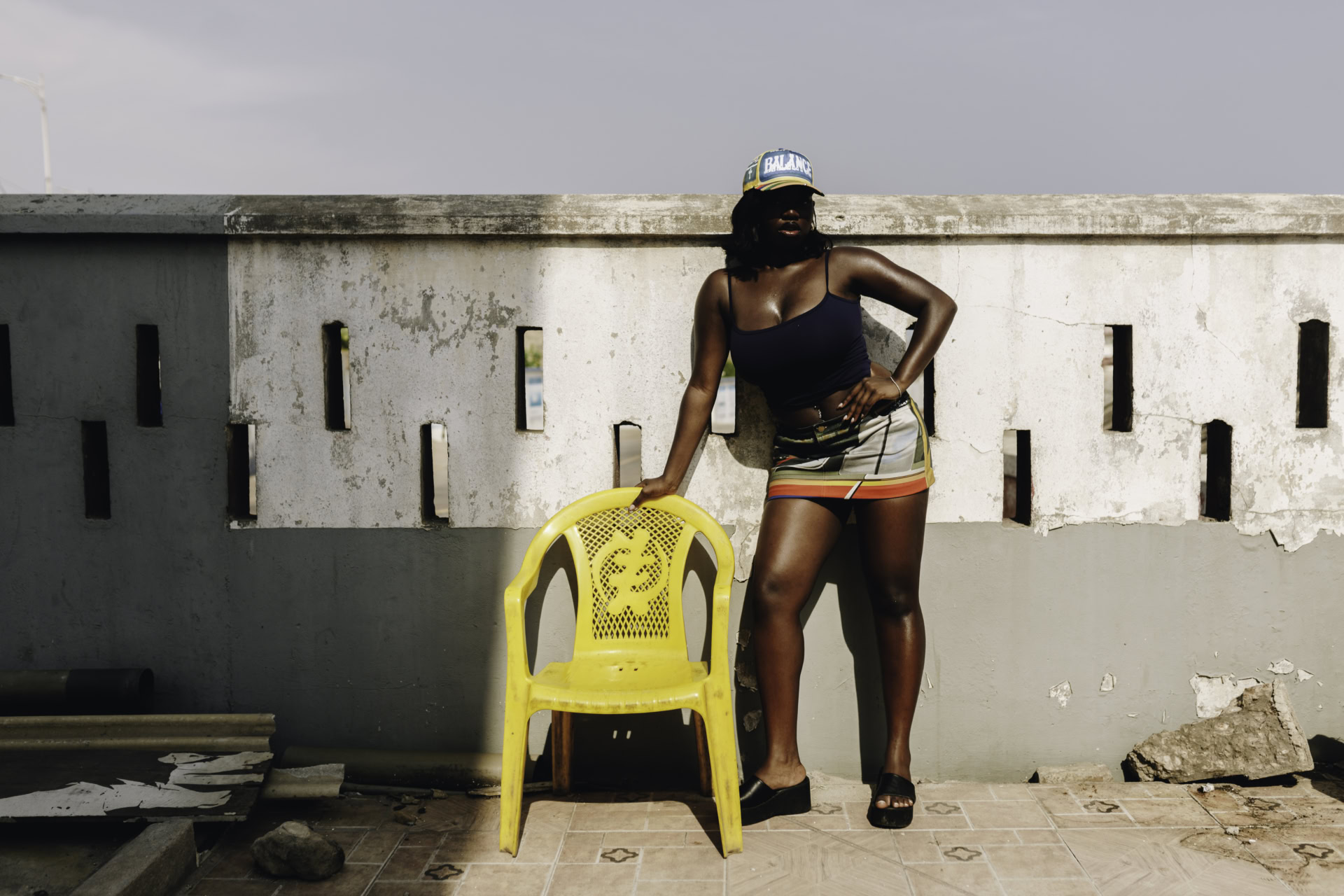
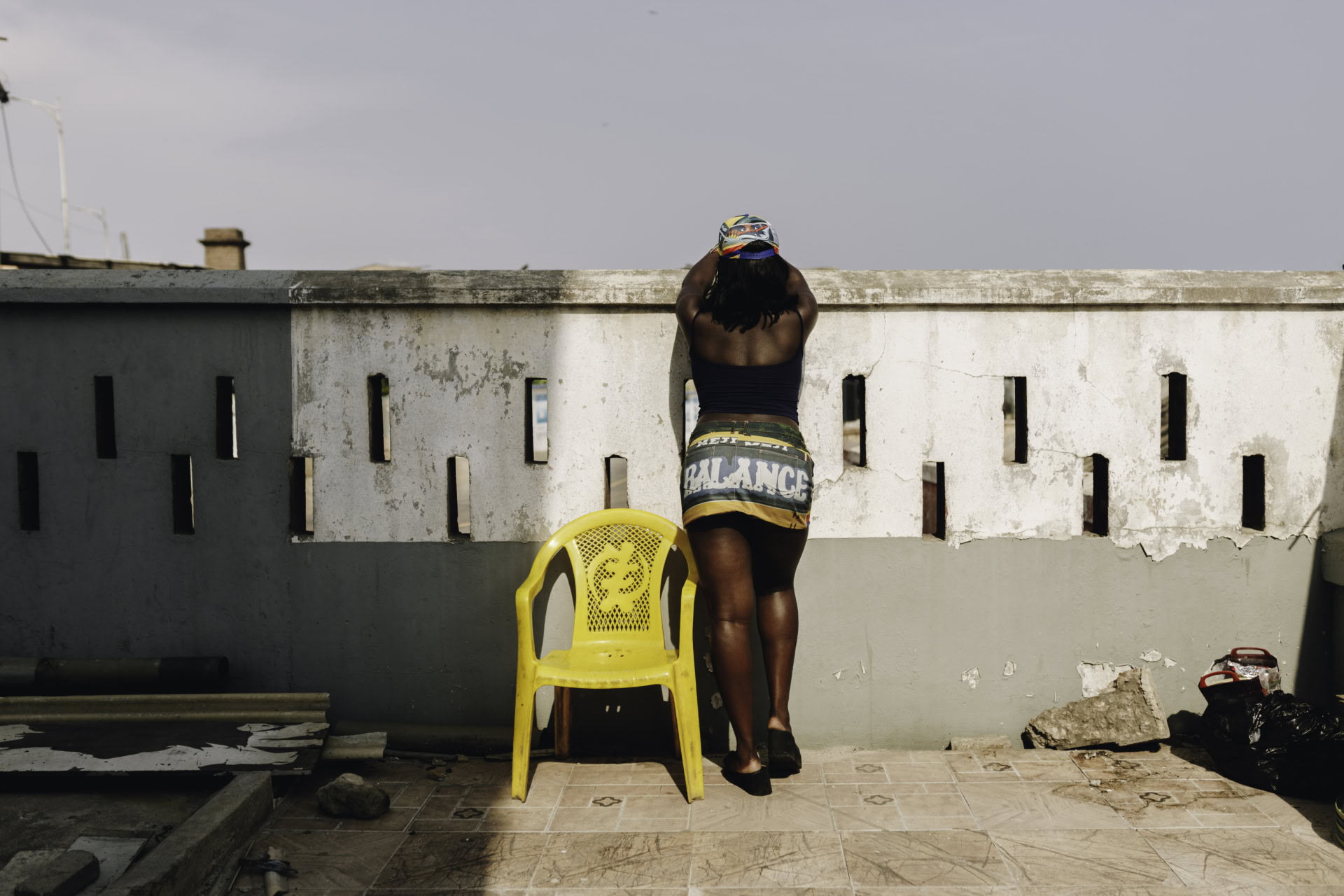
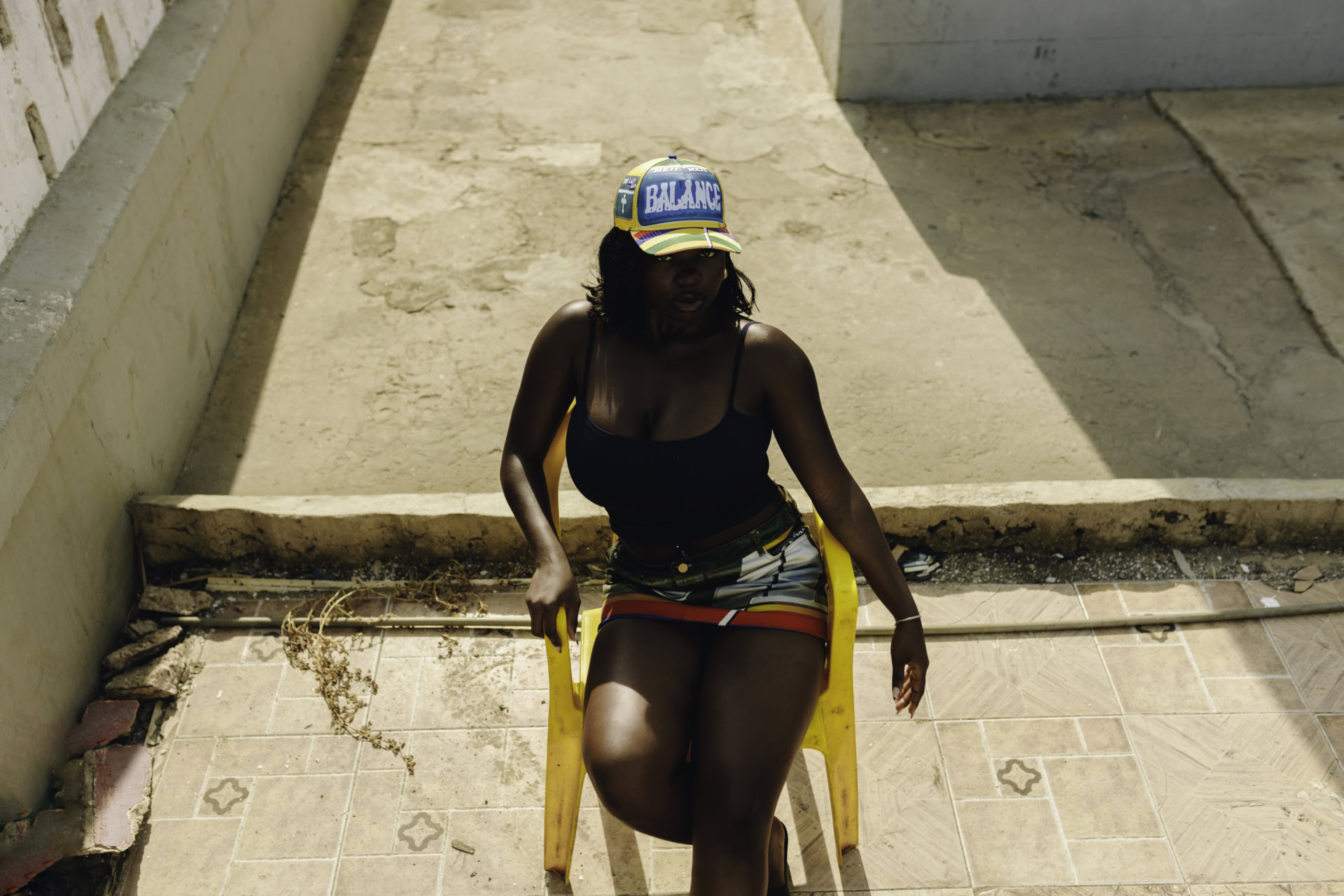
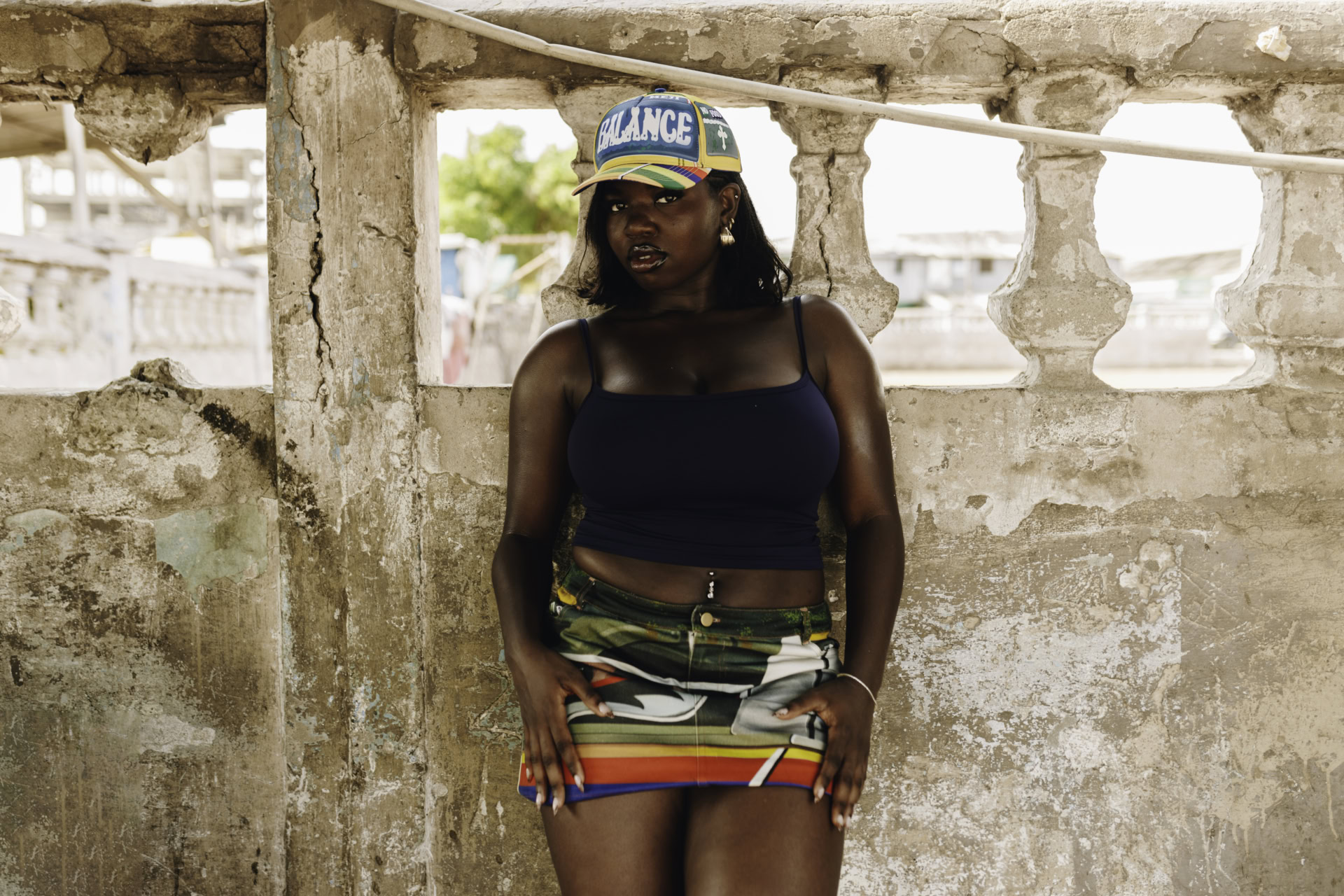
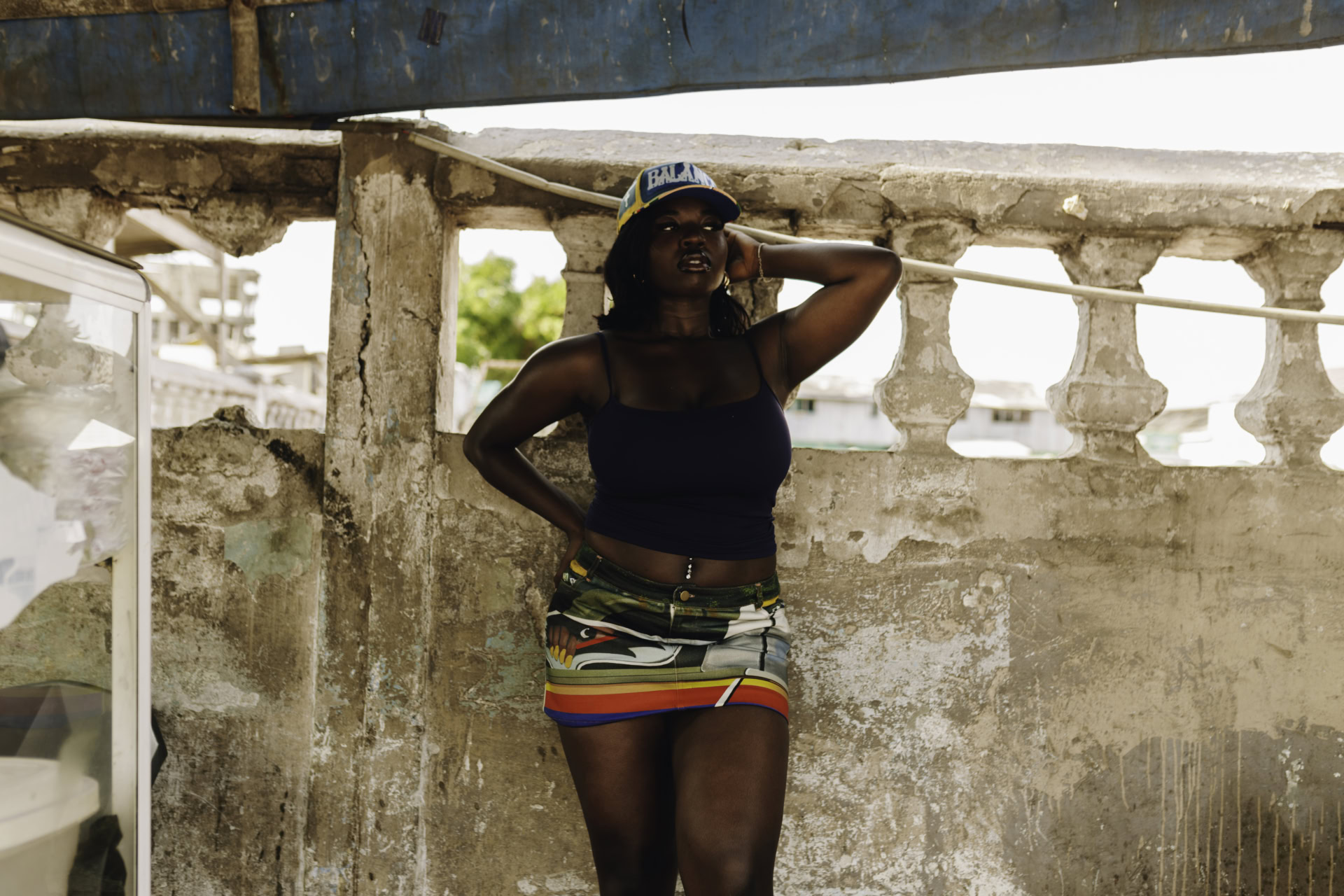
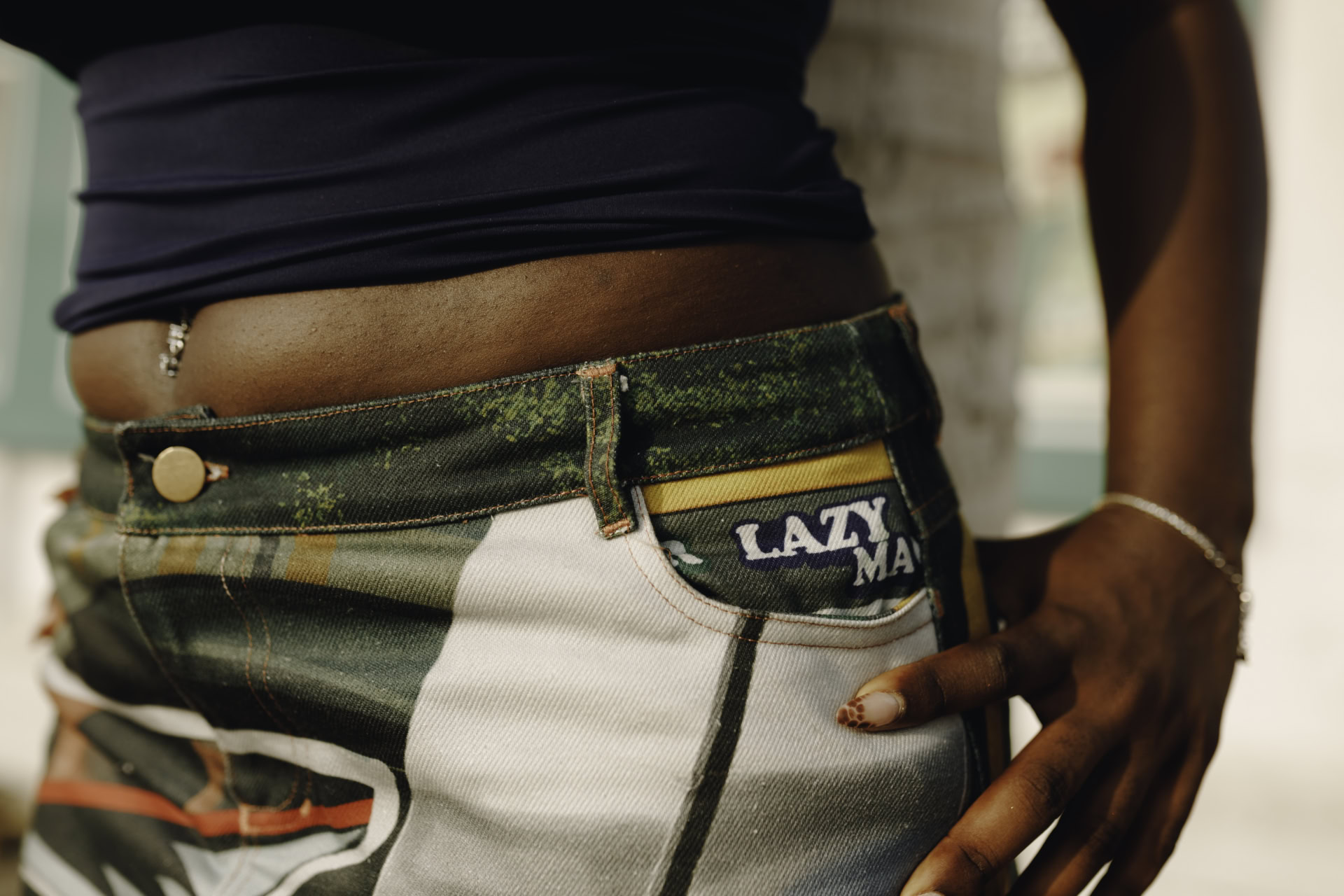
Elsewhere, Meji Meji’s collaboration with photographer Chukwuka Nwobi turns Lagos street culture into wearable typography. The Danfo skirt and hat, plastered with the words ‘balance’, are based on one of Nwobi’s photographs of a bus emblazoned with the phrase: “No food for lazy man so balance.” Oye sees these slogans as a language of survival. “Phrases like ‘no food for lazy man’ are more than sayings, they are constant reminders people carry with them,” she says. “Across Africa, especially in cities like Lagos, public buses act as moving billboards of motivation.”
For Oye, Meji Meji is ultimately about preserving stories while pushing them forward. “Through each piece, Meji Meji carries a message: to honour where we come from, celebrate who we are and share that spirit with the world.” In her hands, memory becomes something tactile – stretched across mesh, printed onto cotton and worn proudly out into the street.
Photography Nana Kwadwo Agyei Addo.