April 21, 2026 |
At Scarlett Green on April 10, the usual churn of brunch service gave way to something slower, yes, but altogether more exciting. Models didn’t stride so much as arrive. And instead of a soundtrack, there was a voice – measured, precise – talking us through each look. This was Huguette Tchiapi’s namesake brand’s debut, Numéro 01, and rather than compressing months of work into a fleeting runway, she chose to stretch it out, piece by piece, story by story.
“Typically, fashion shows are only a few minutes, but for Numéro 01 we went with a more traditional salon format which enabled me to talk about the looks as they were shown,” she explains. “I felt it was important to speak about all the artisans that have worked on the collection and spotlight them.”
That instinct – to slow things down, to credit process over spectacle – runs through everything Tchiapi does. Raised in London but shaped by a broader cultural lens, her route into fashion wasn’t immediate. “I have been very interested in arts since I was a child,” she says. “I went through a lot of different phases from wanting to be a painter to a book illustrator, graphic designer and much more before becoming interested in fashion when I discovered Hussein Chalayan.” It was that moment – encountering Chalayan’s conceptual, culturally anchored work – that reframed fashion entirely. “I had always had the impression that fashion was quite glamorous which I think I’m quite the opposite of, but when I saw Chalayan’s work and how culture can be entwined becoming more of a living art, I started to see how fashion is a part of everyone’s lives.”
Menswear came later. “I didn’t gain an interest in menswear until I saw how much of it hasn’t been explored until quite recently and believe I could perhaps bring a new perspective to it.” That perspective is grounded less in trend than in observation – of people, of habits, of quiet details. “I have always started by listening and talking to people. I believe the best stories and inspiration come from people’s shared experiences.”
It’s a methodology that took on new depth at Central Saint Martins, where Tchiapi studied as a British Fashion Council scholar. “Being a BFC scholar at CSM helped shape my practice hugely,” she says. “Before I attained the scholarship I had to think of ways I could create garments with a limited budget. Becoming a scholar in my second year allowed me to think more about what I truly wanted to create.” Since graduating in 2024, she’s moved between industry and academia – working at Wales Bonner and now lecturing back at Central Saint Martins. “Talking to students has made me rather nostalgic of my time studying.”
Numéro 01 is where all of this converges. The collection draws directly from Cameroonian dress, filtered through a London wardrobe – not as fusion, but as dialogue. “Being Cameroonian myself I have always had an interest in Cameroonian textiles but never had the chance to explore it in depth.” That changed with research trips that took her from family conversations to museum archives. “I started with speaking to my parents and learning about their personal history with Ndop fabric, before travelling to Cameroon to research Ndop more in depth. I met with Christian Nana, curator of The Blackitude Museum in Yaoundé, and together we went through their archives.”
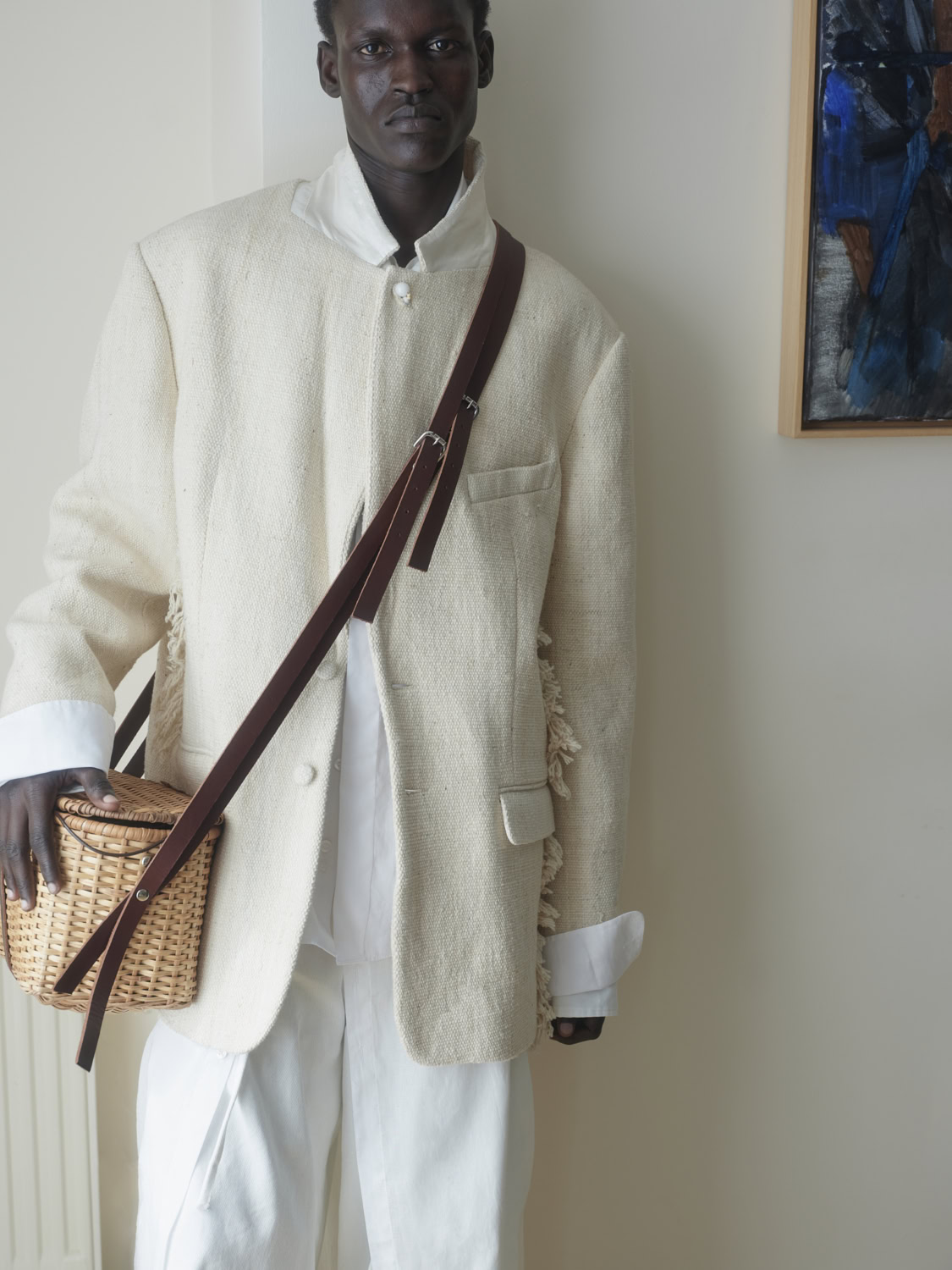
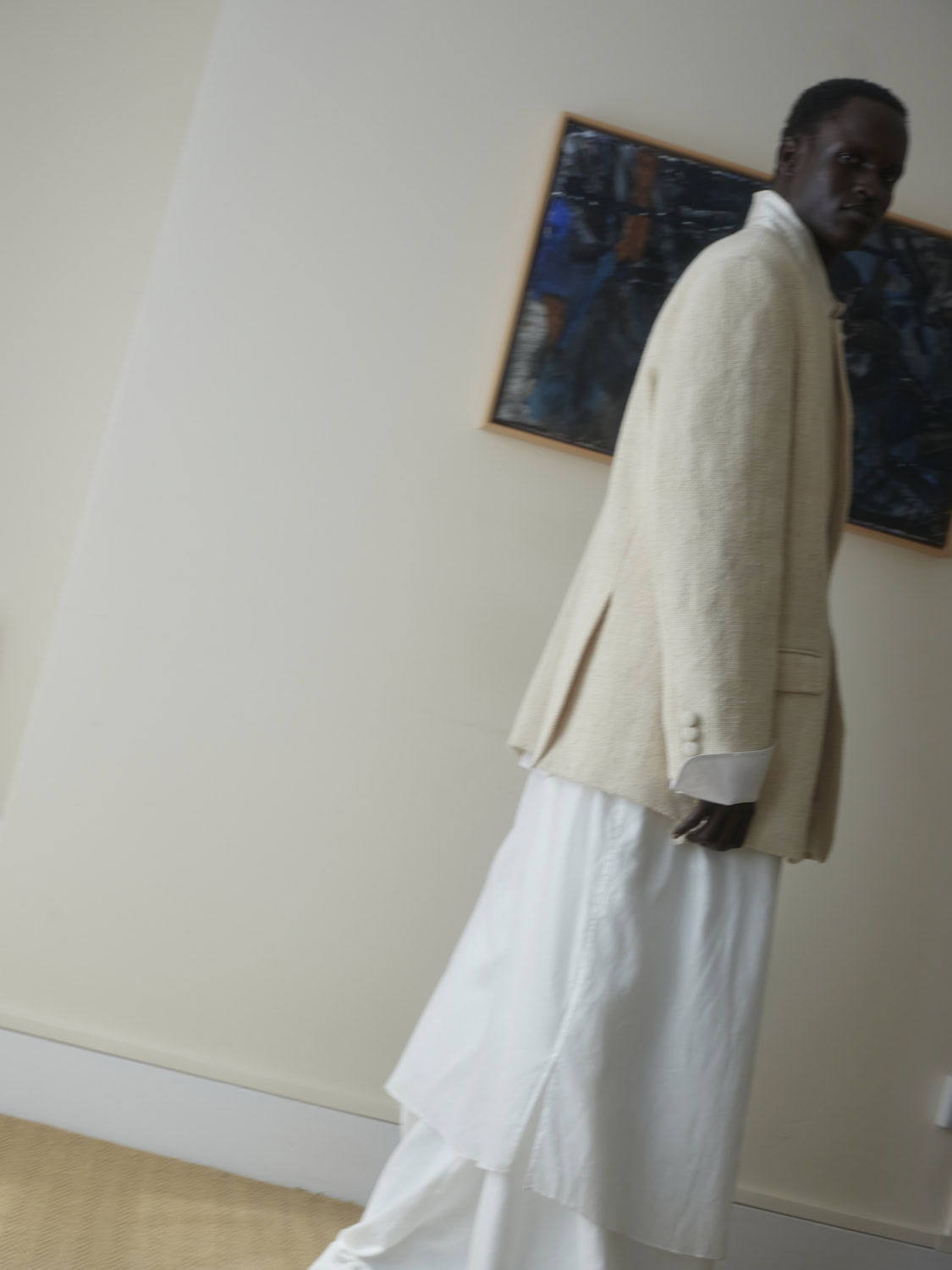
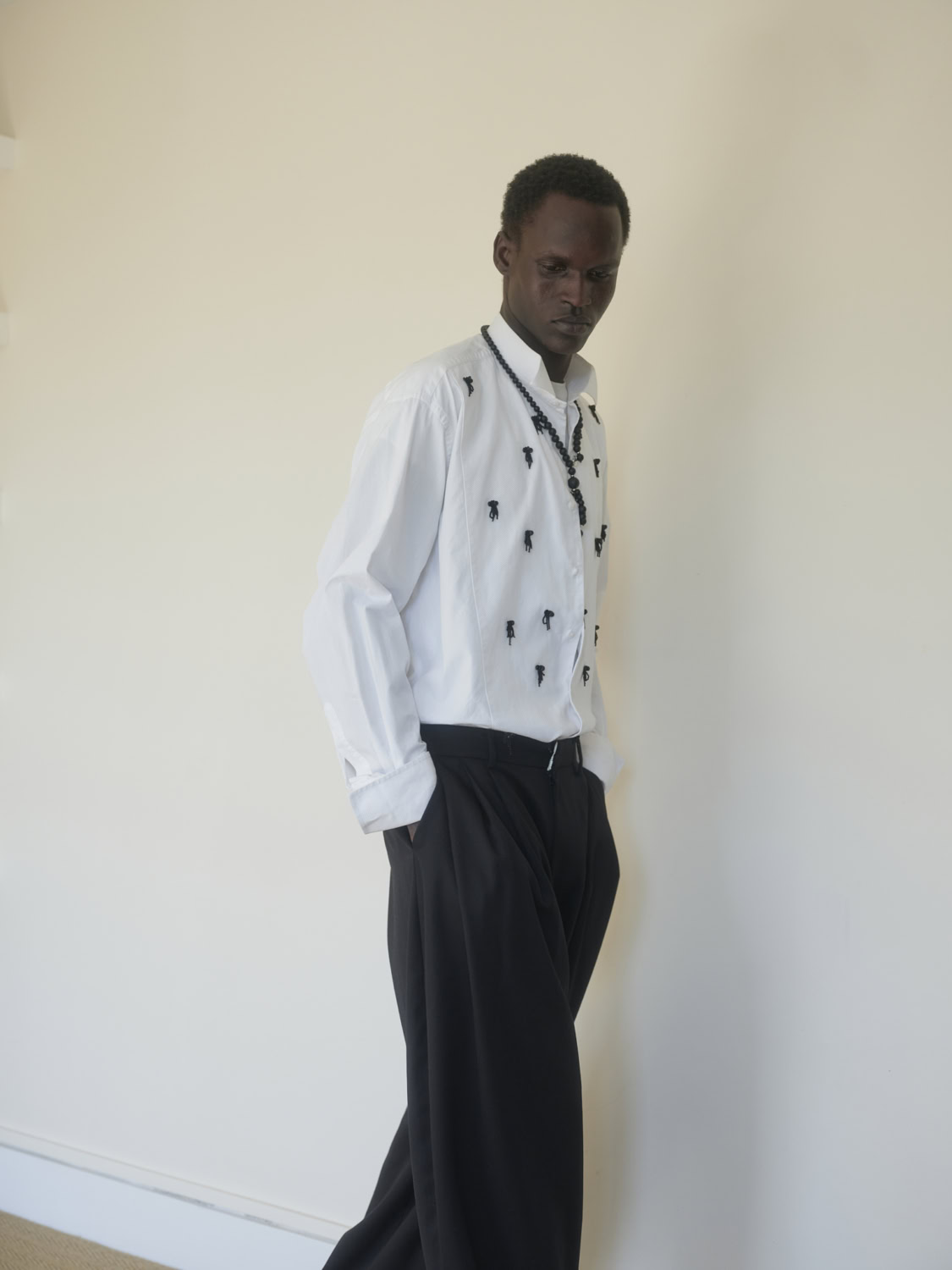
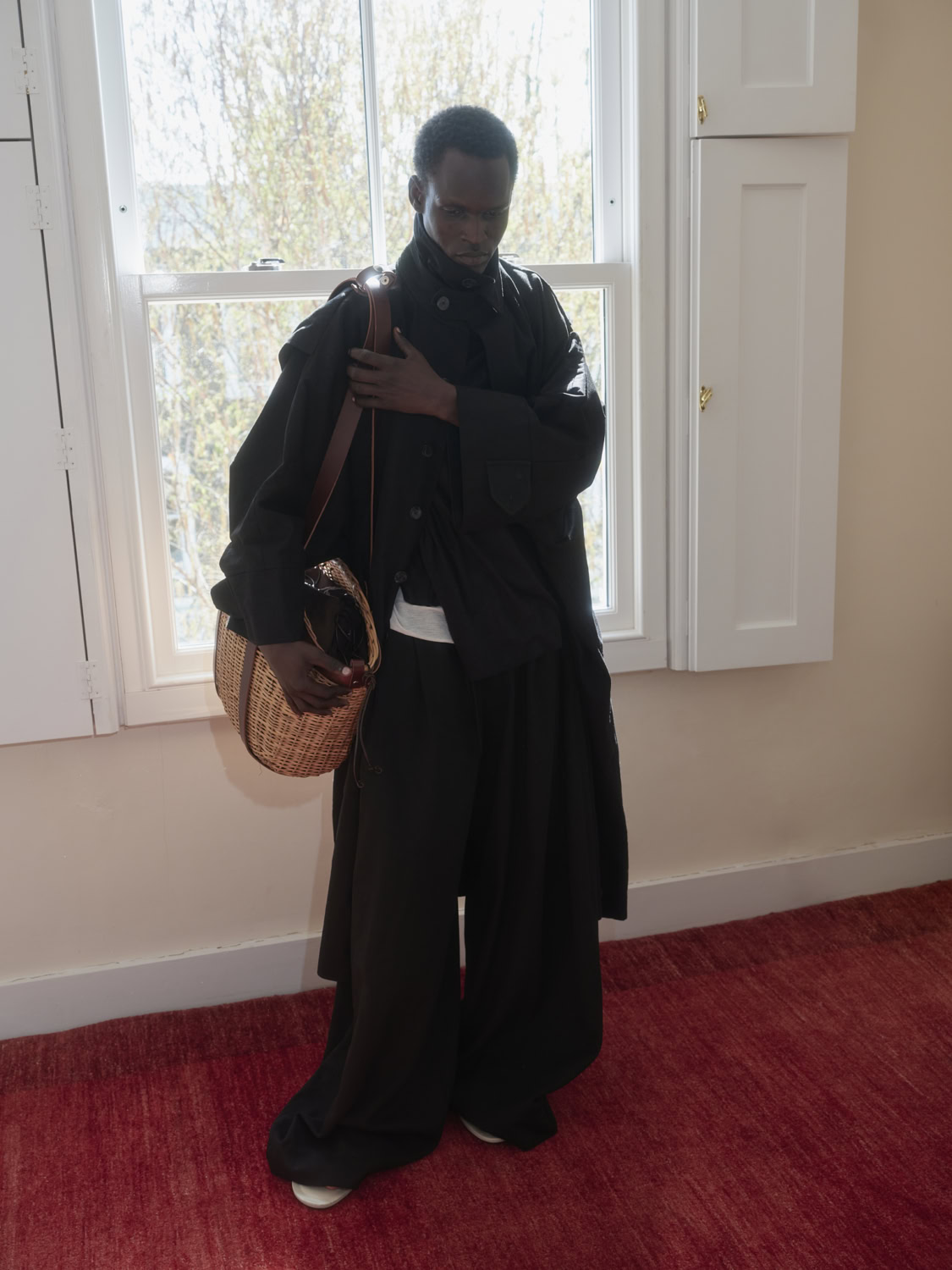
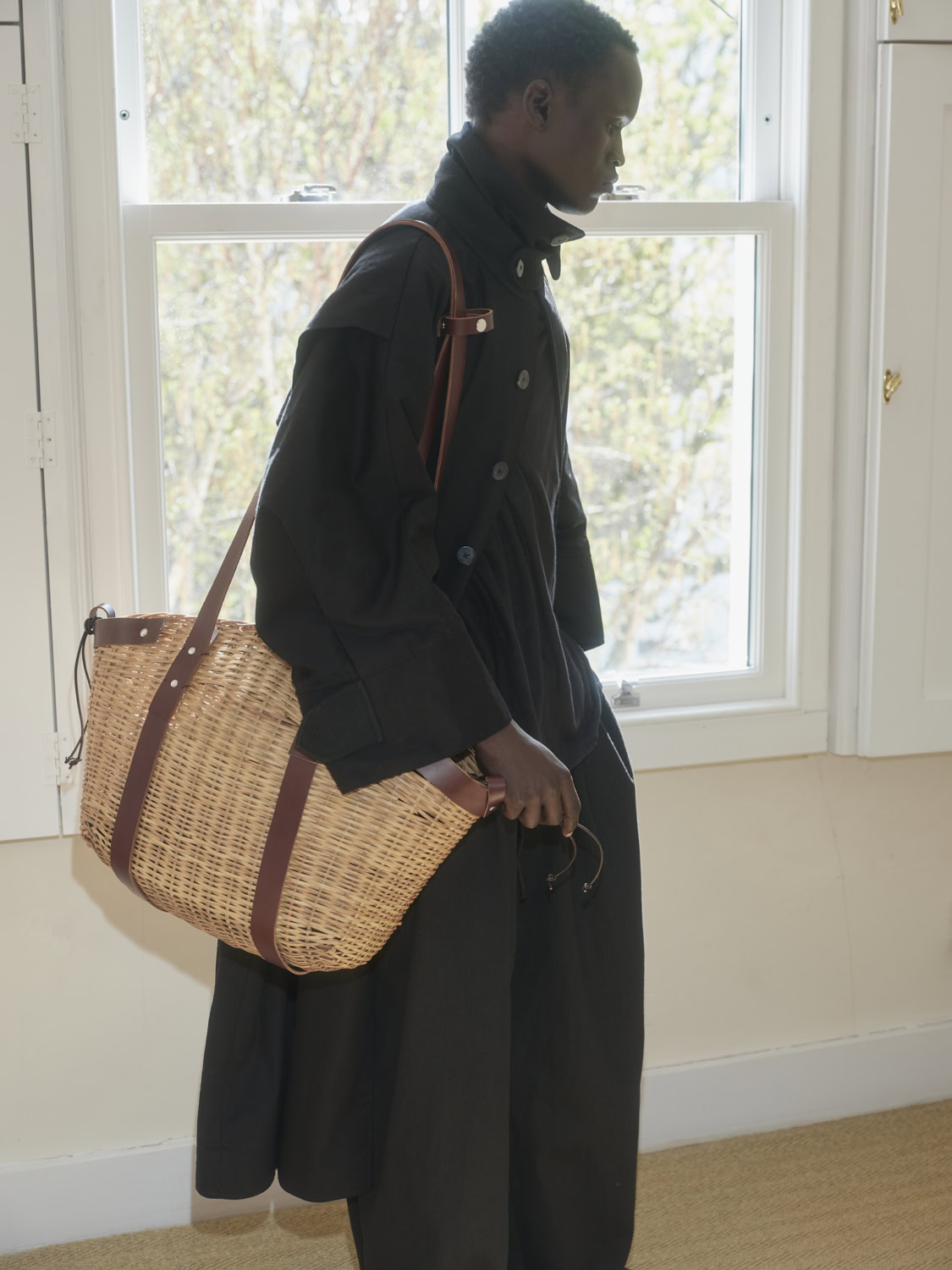
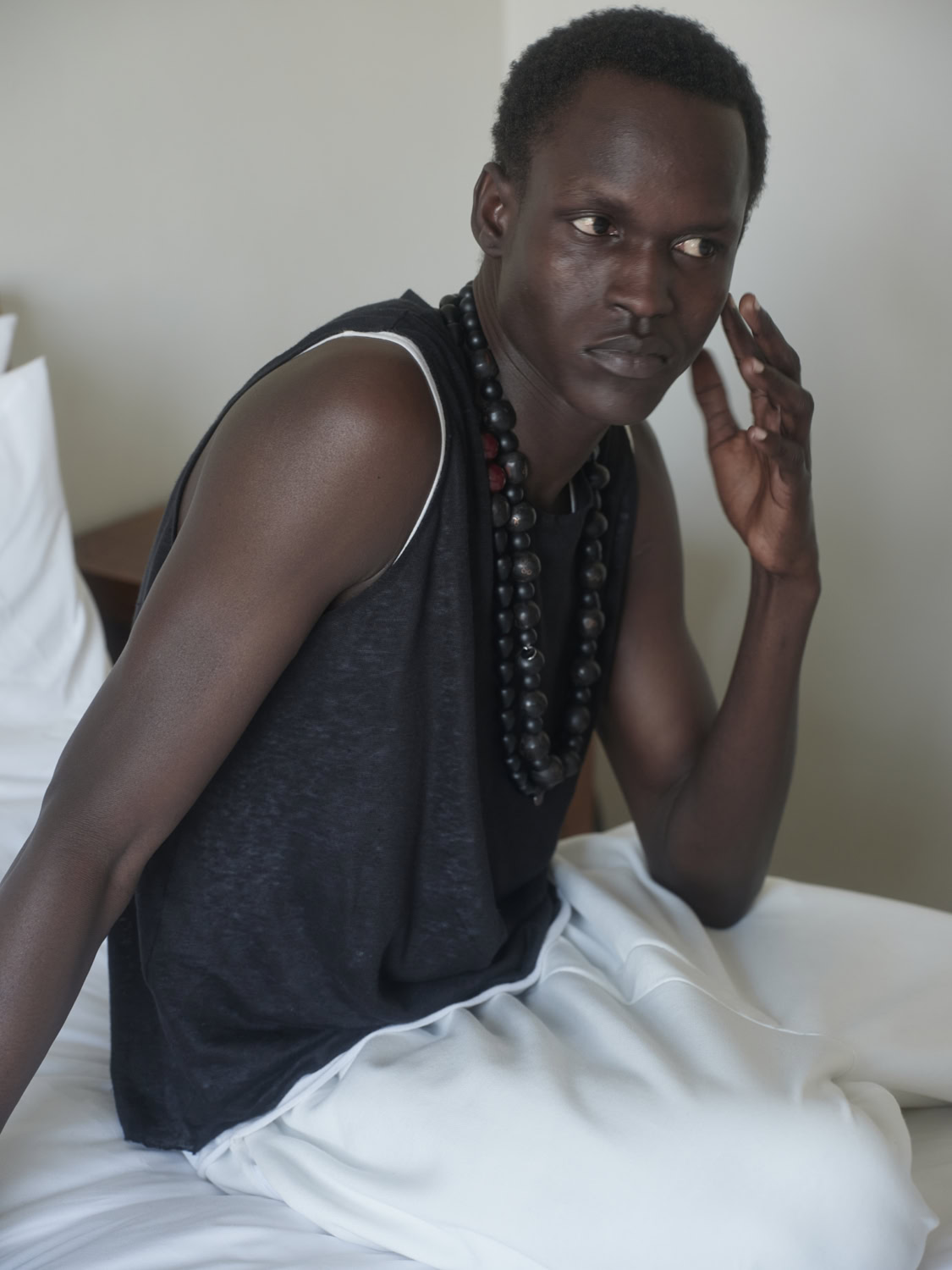
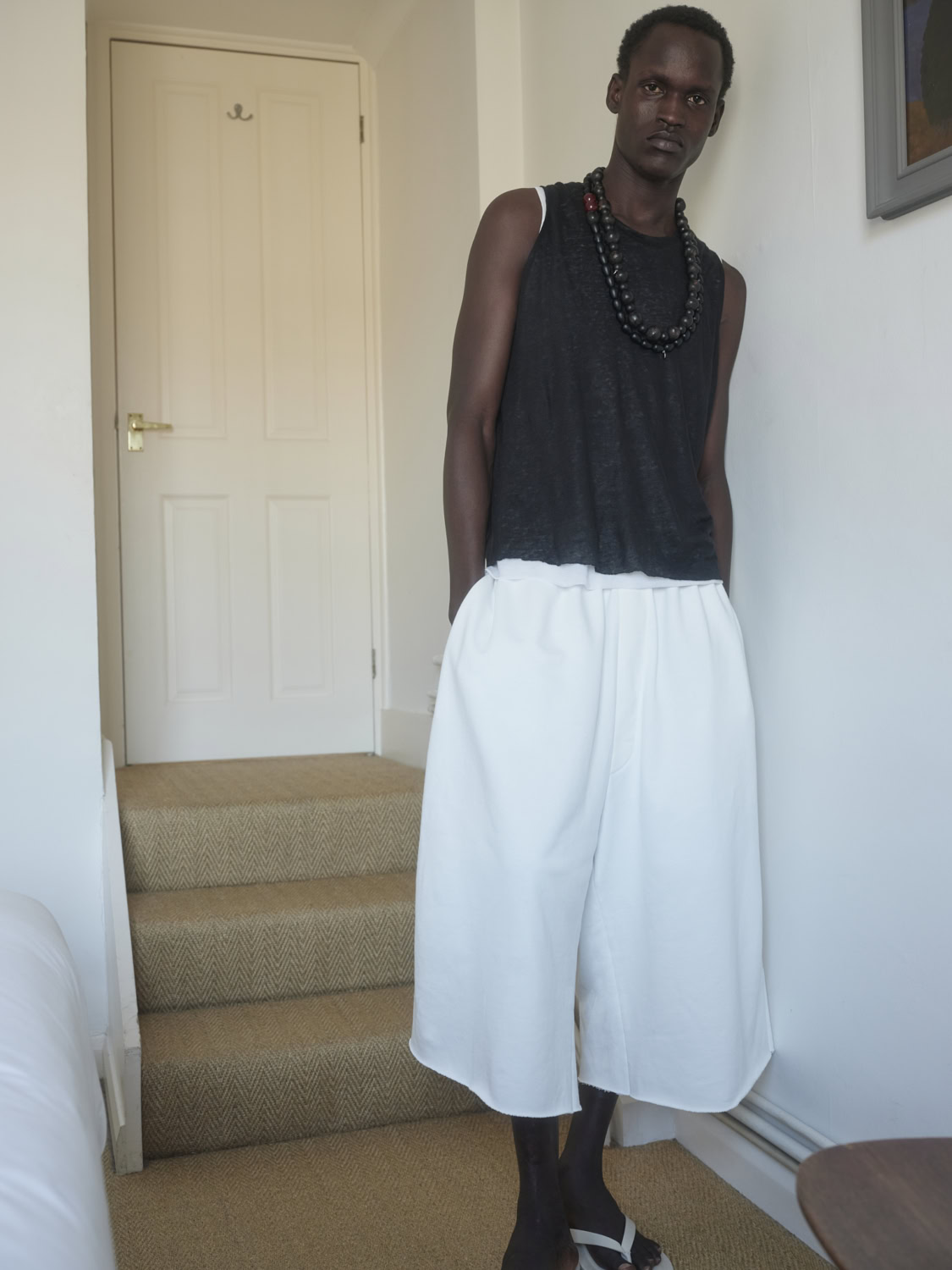
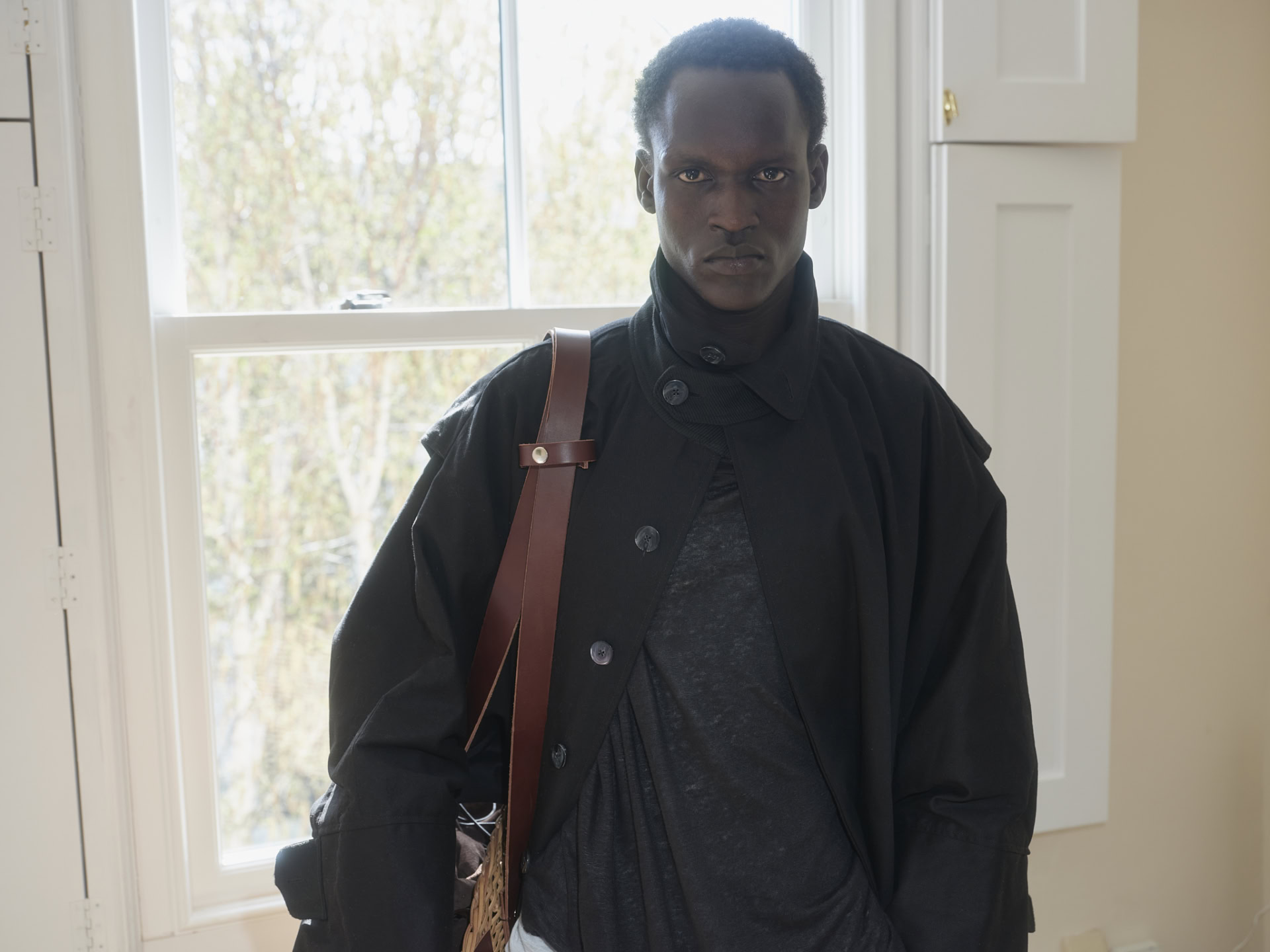
From there, the work became physical. In Douala, she collaborated with artisans including Constantine, developing new Ndop fabrications on traditional looms. Elsewhere, encounters were less formal but no less significant. “We met Paul, who weaved the bags in this collection, weaving furniture with his co-workers on the side of the road. He was really happy to work on the two bamboo bags featured in this collection as he has been making bamboo furniture and lampshades for 20 years now and wants to see how it can be reinvented in a new way.”
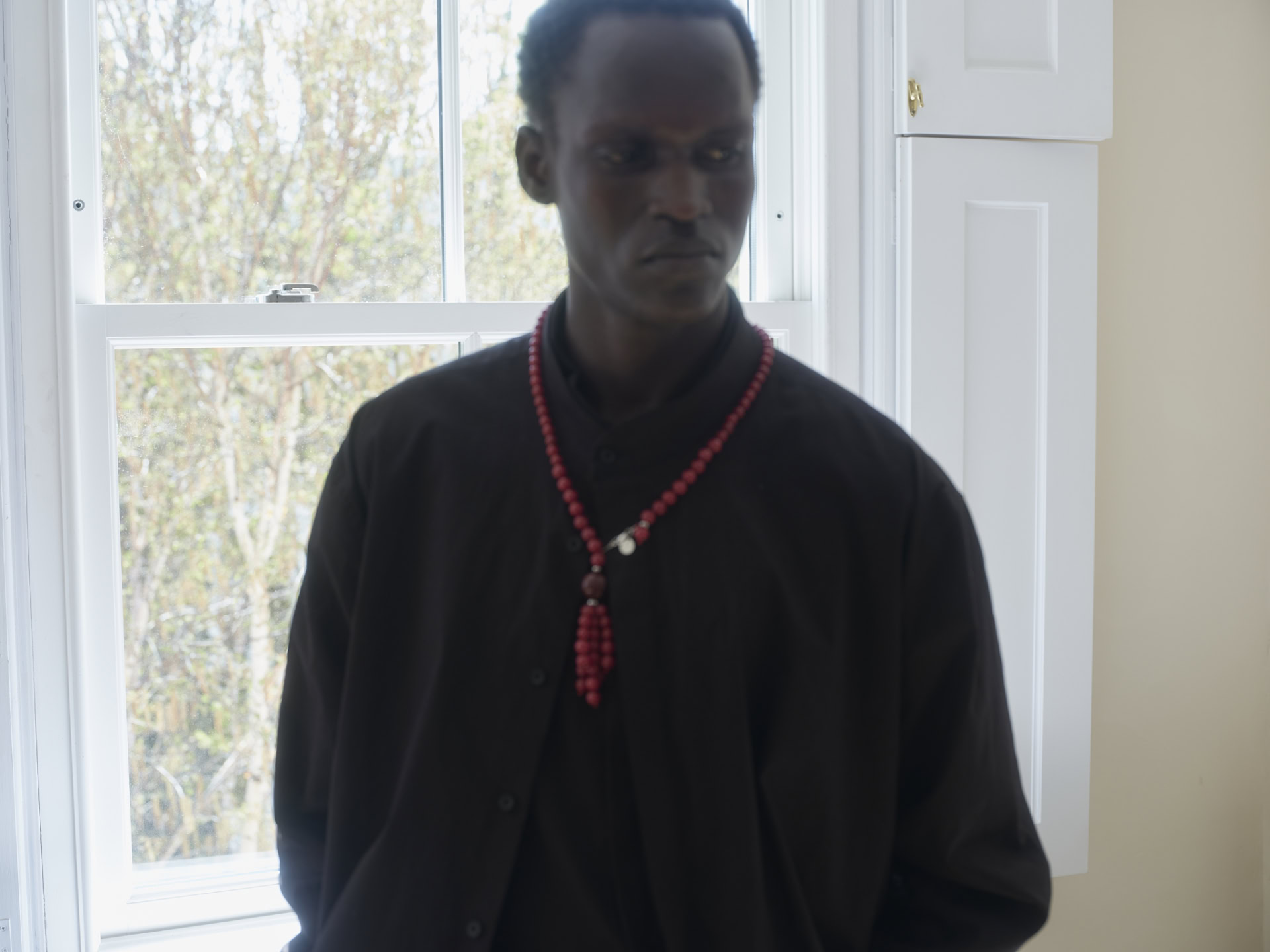
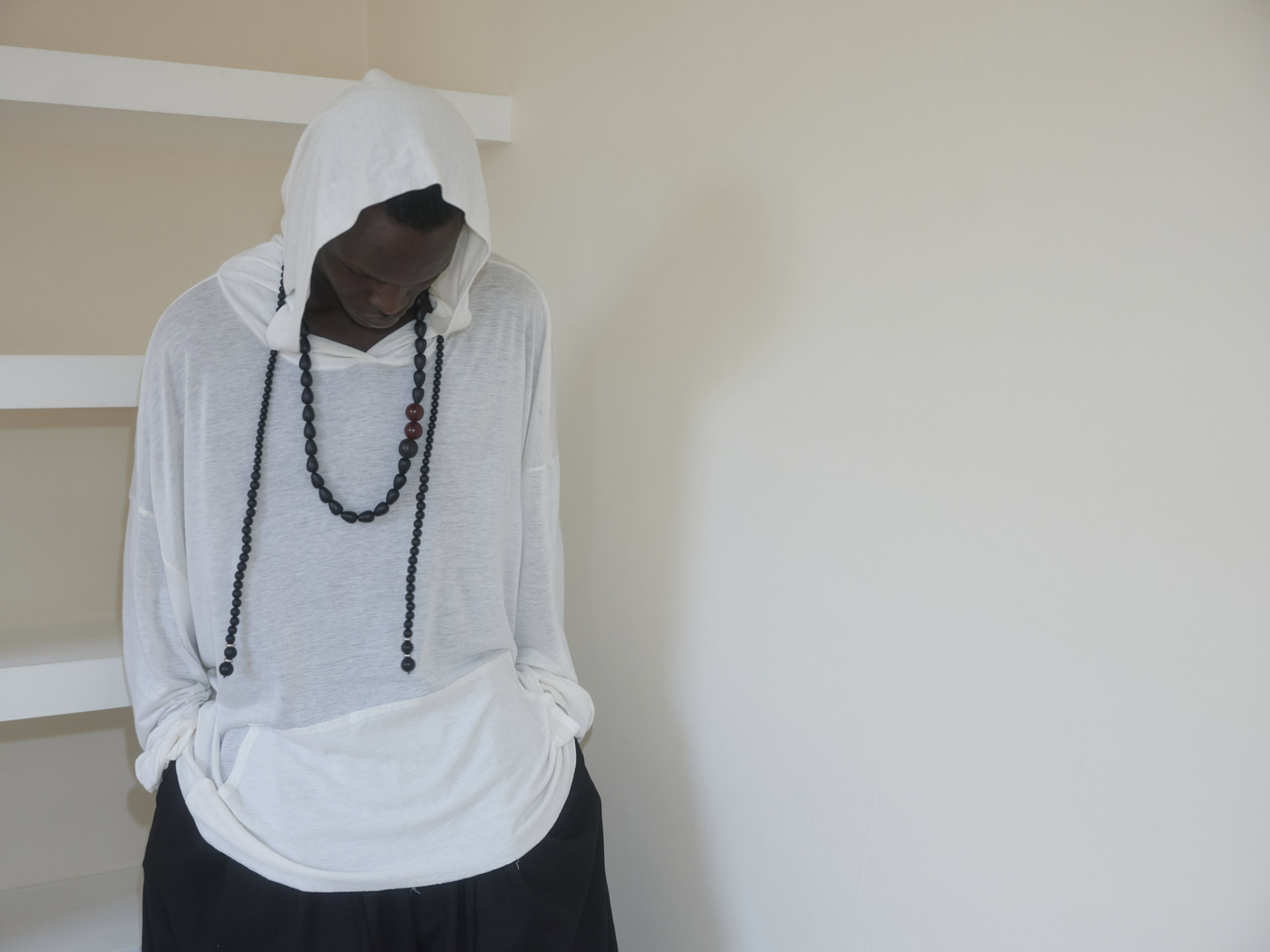
There is a clarity to the way she recounts these meetings – not romanticised, not abstracted. The same goes for her description of a workshop run by a couple supporting young mothers. “It was really lovely to meet them and see how they are supporting these women by giving them a school for their children to study upstairs.” The resulting pieces – beaded jewellery, Ndop garments – carry those contexts with them, quietly.
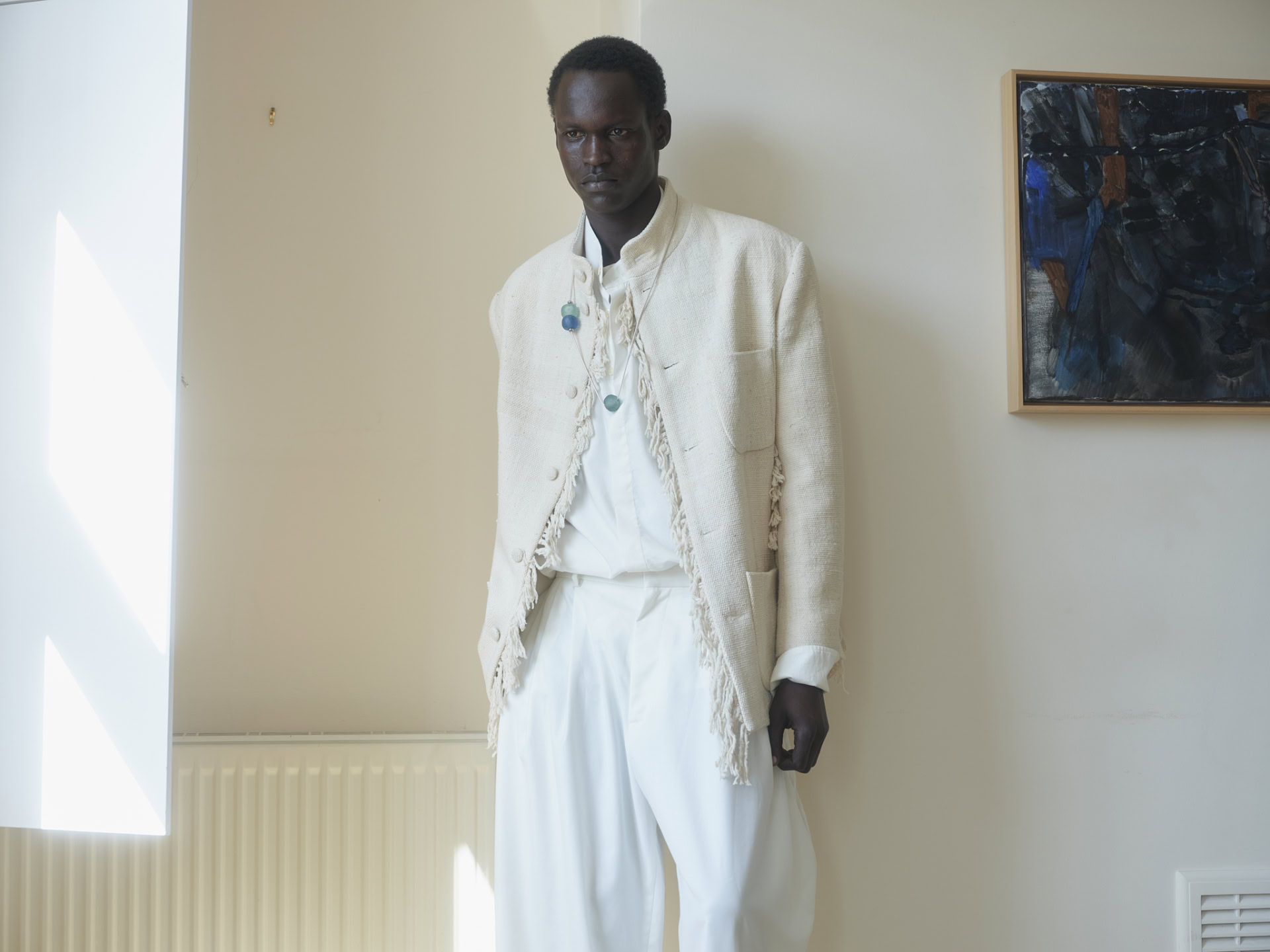
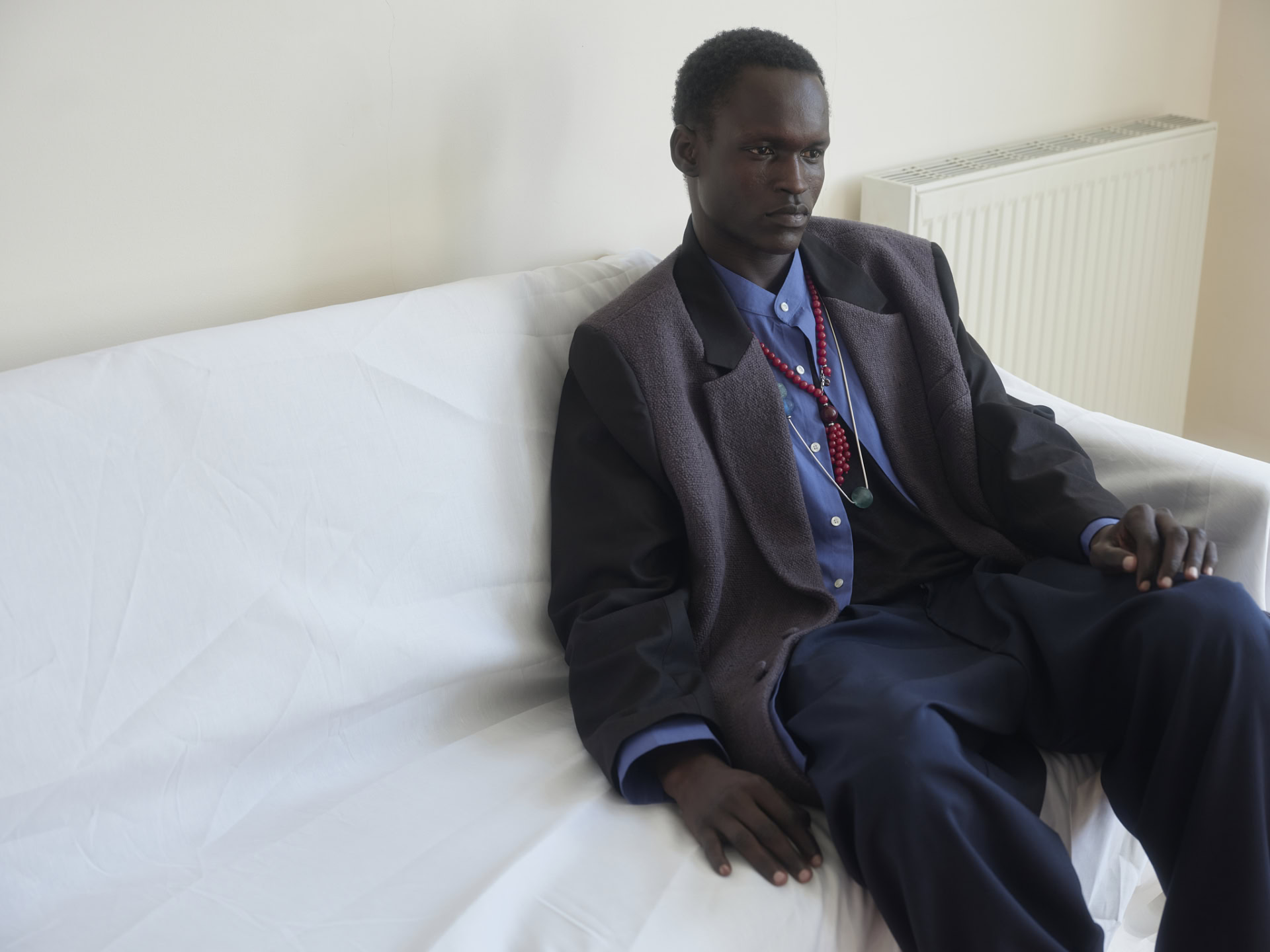
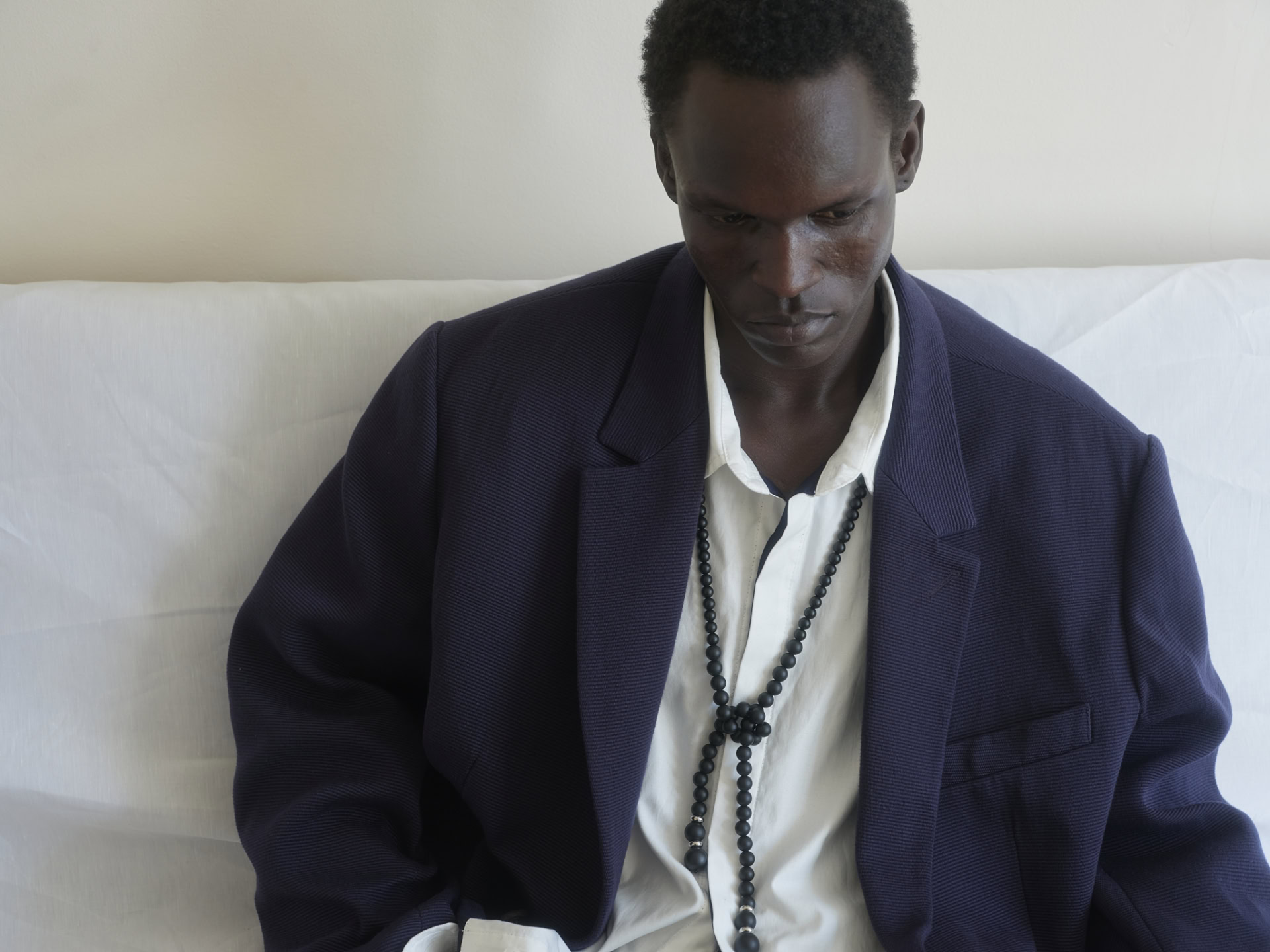
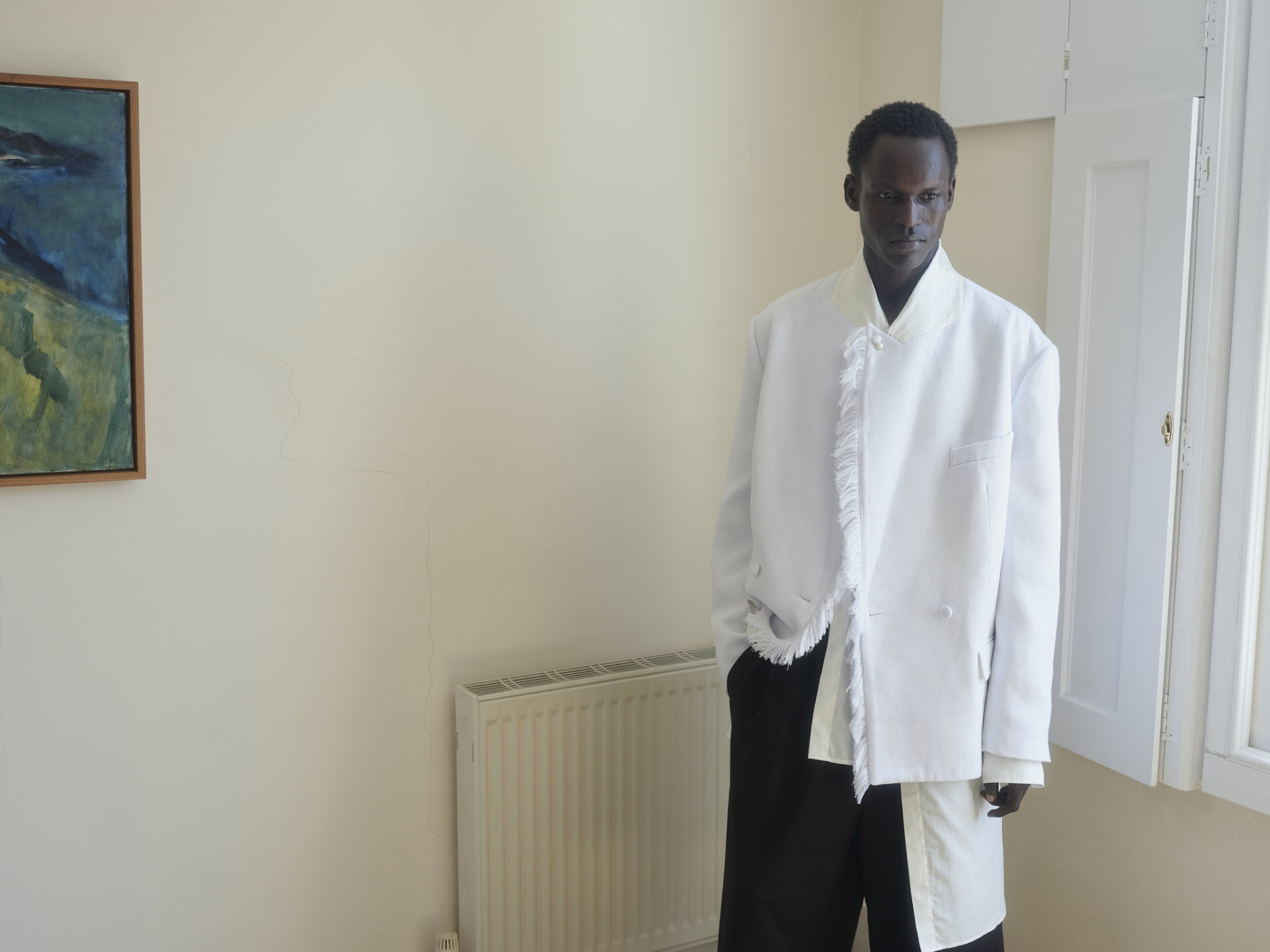
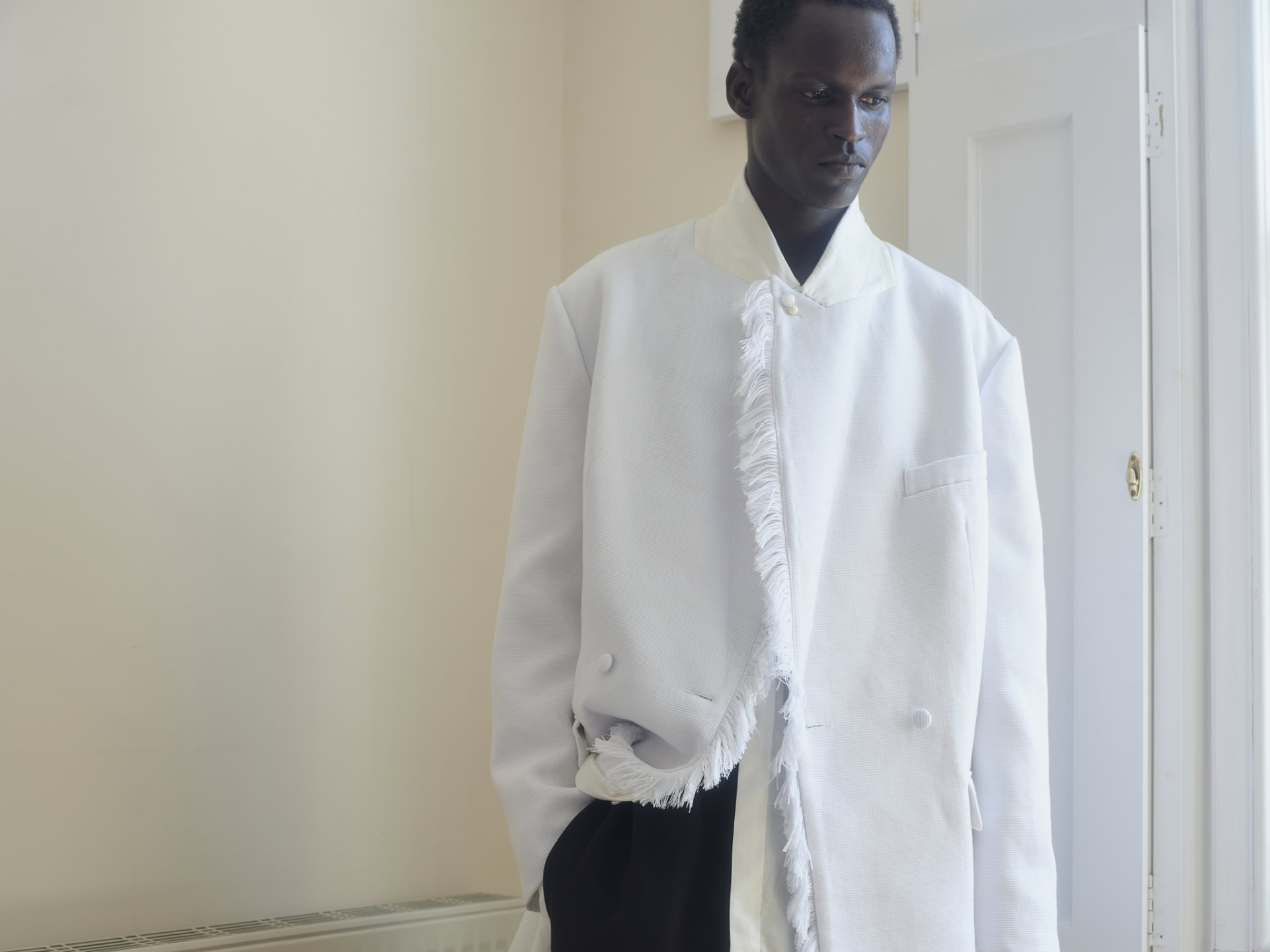
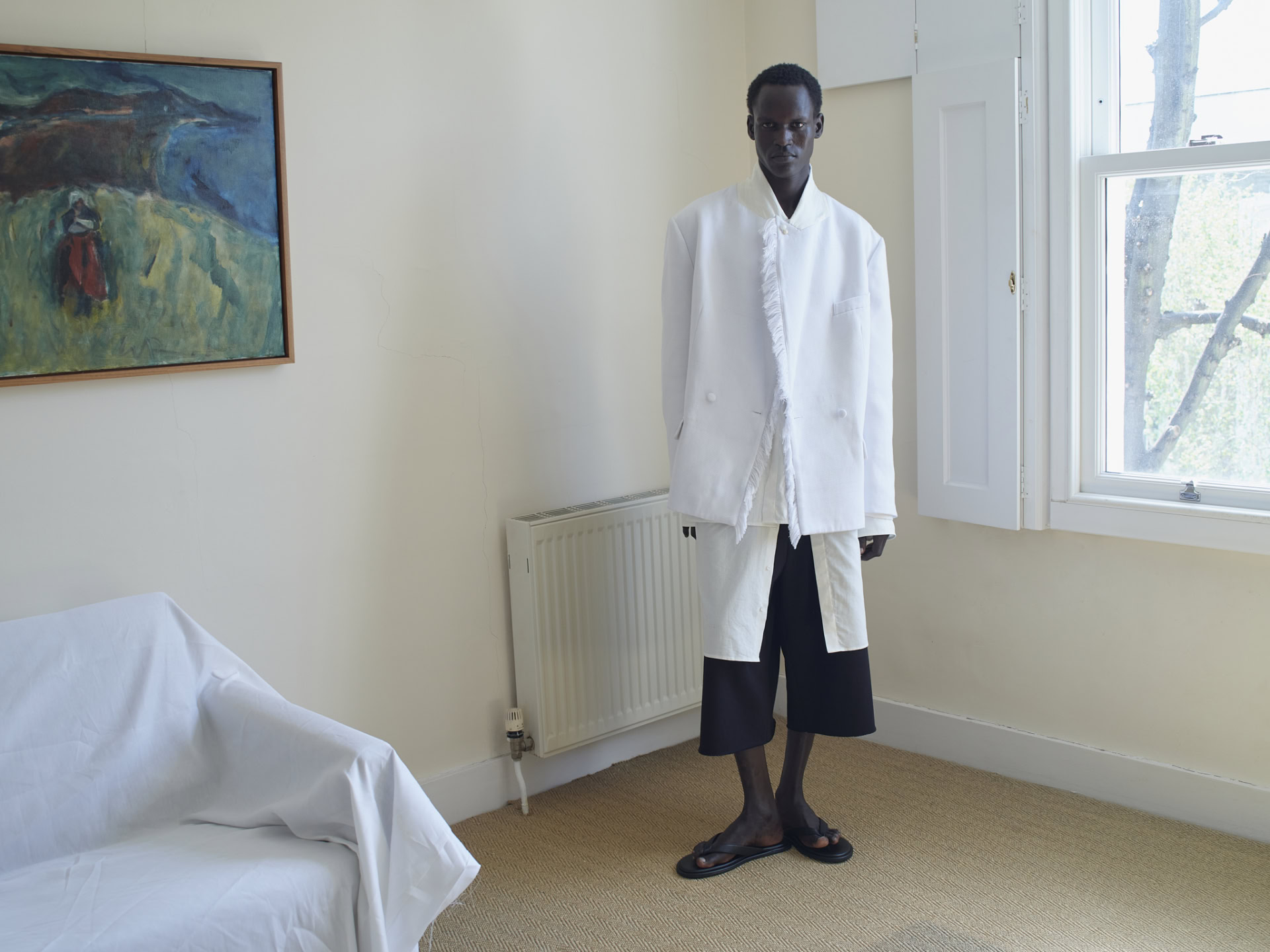
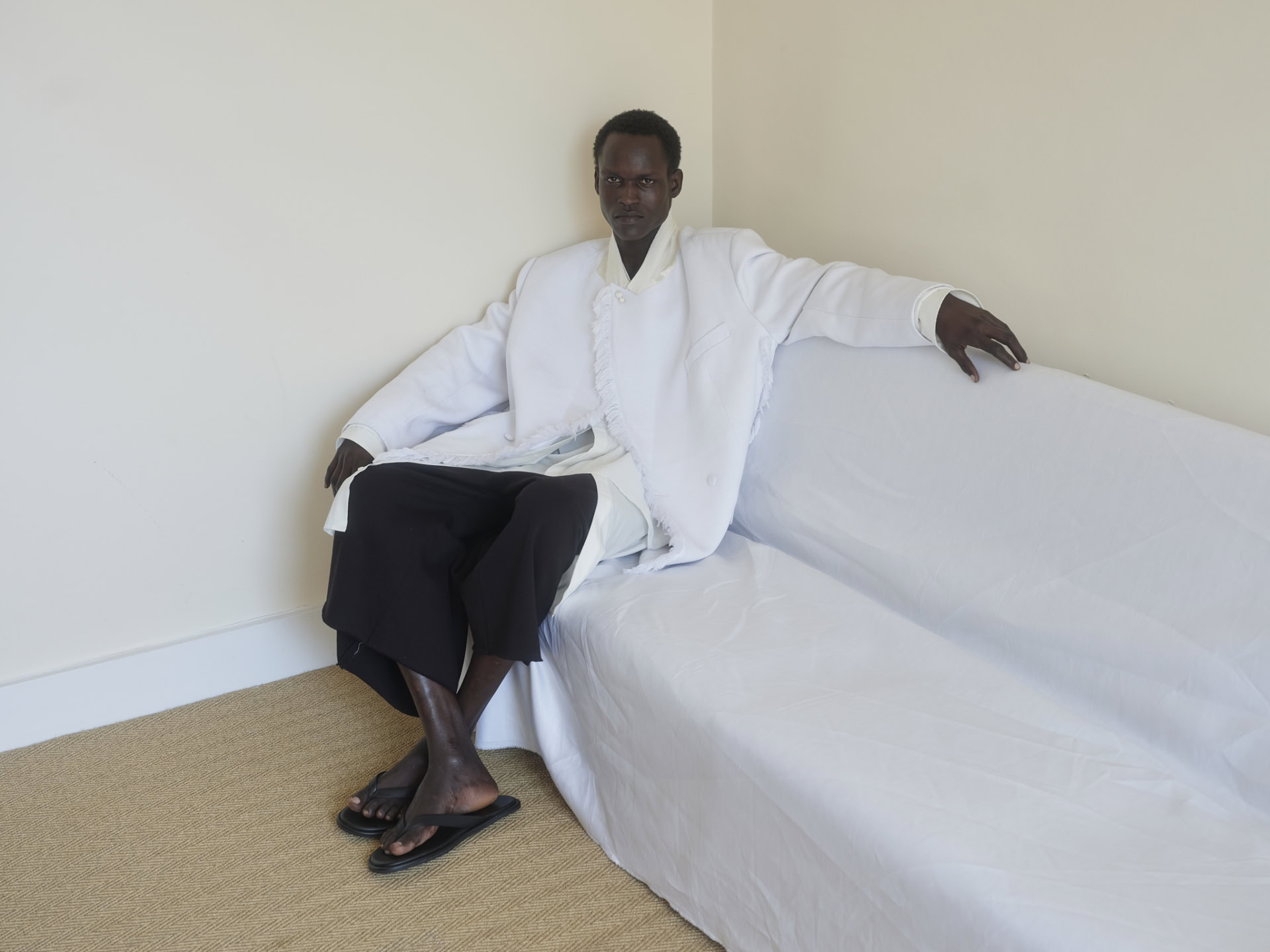
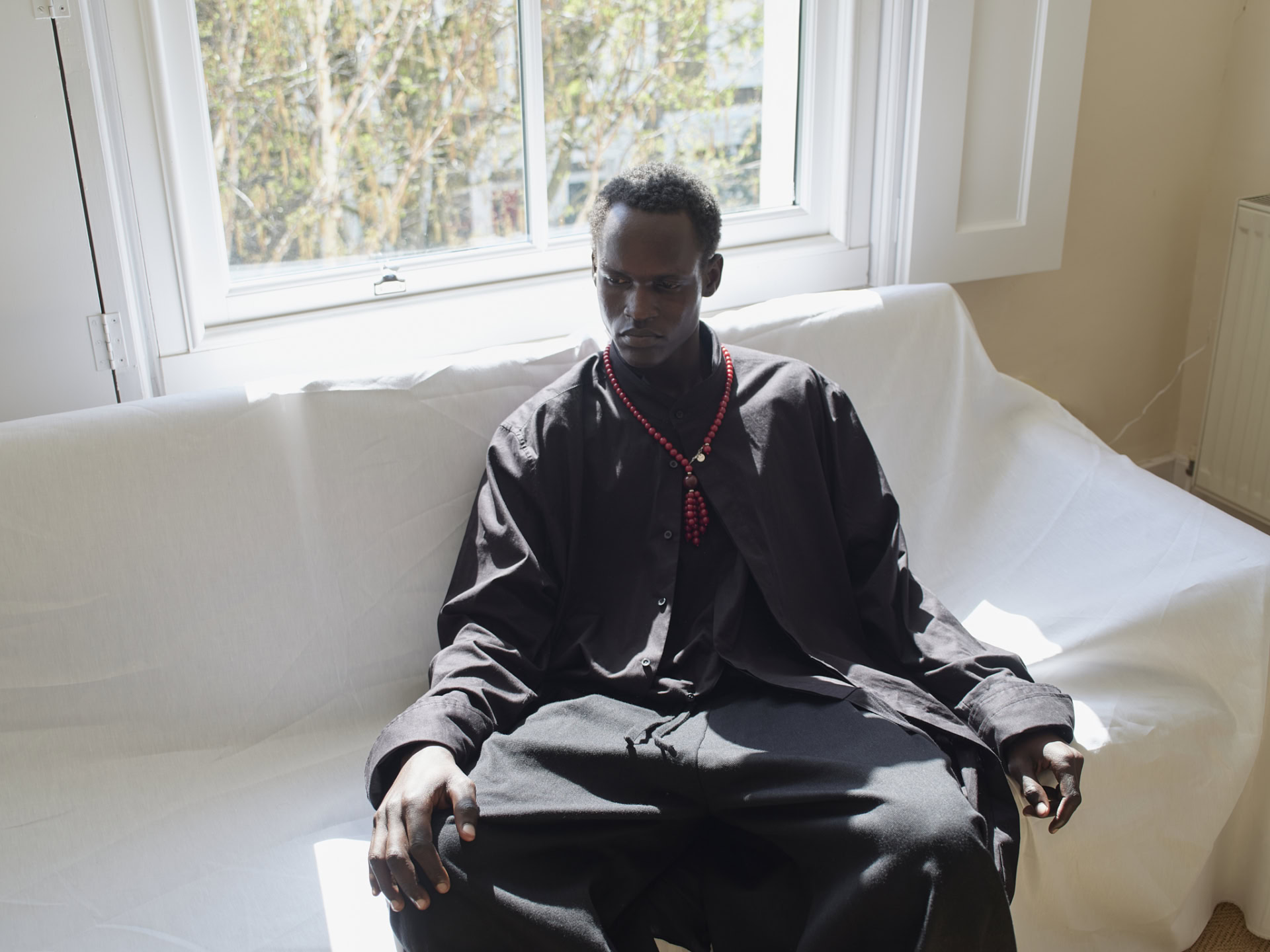
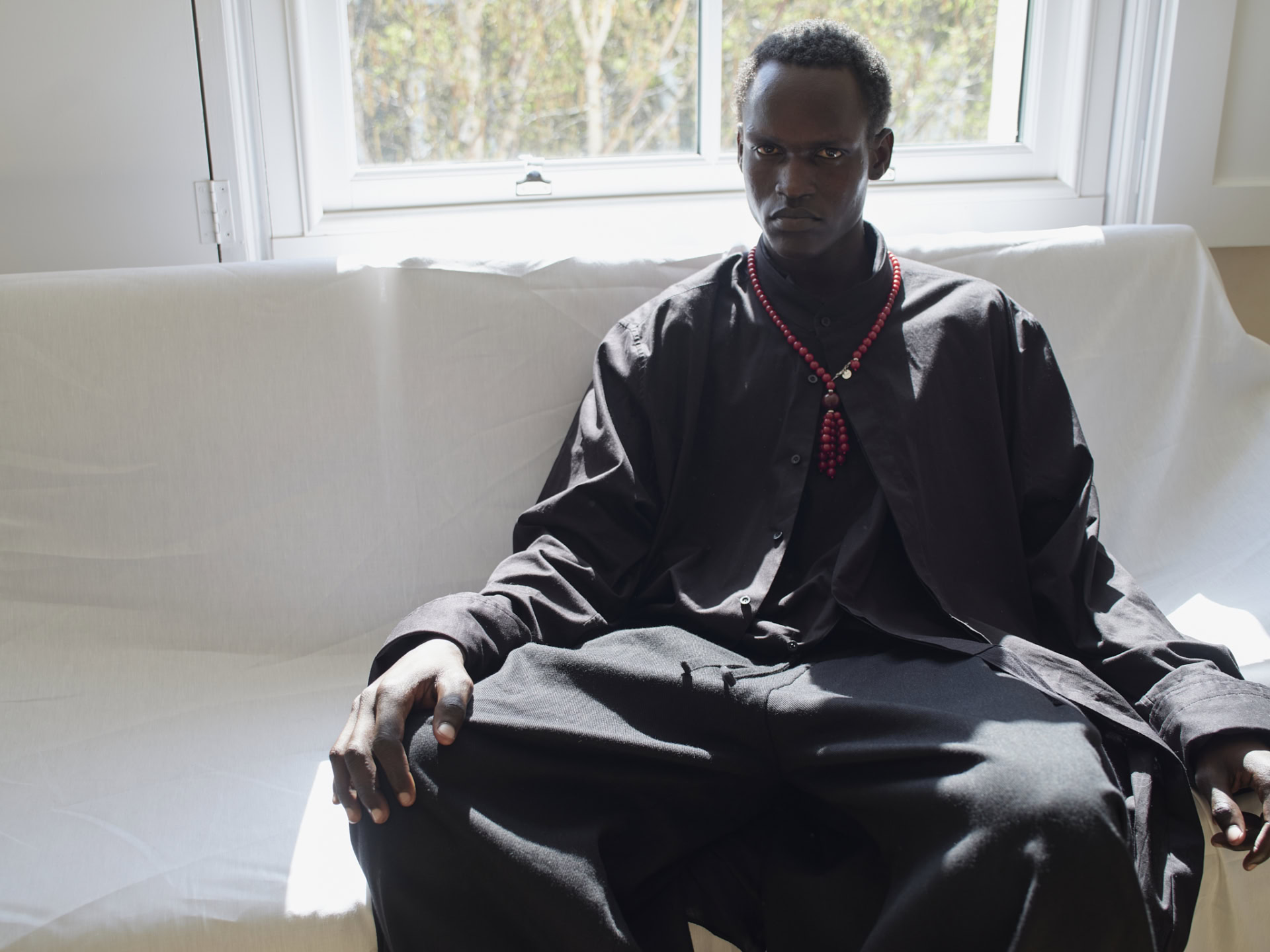
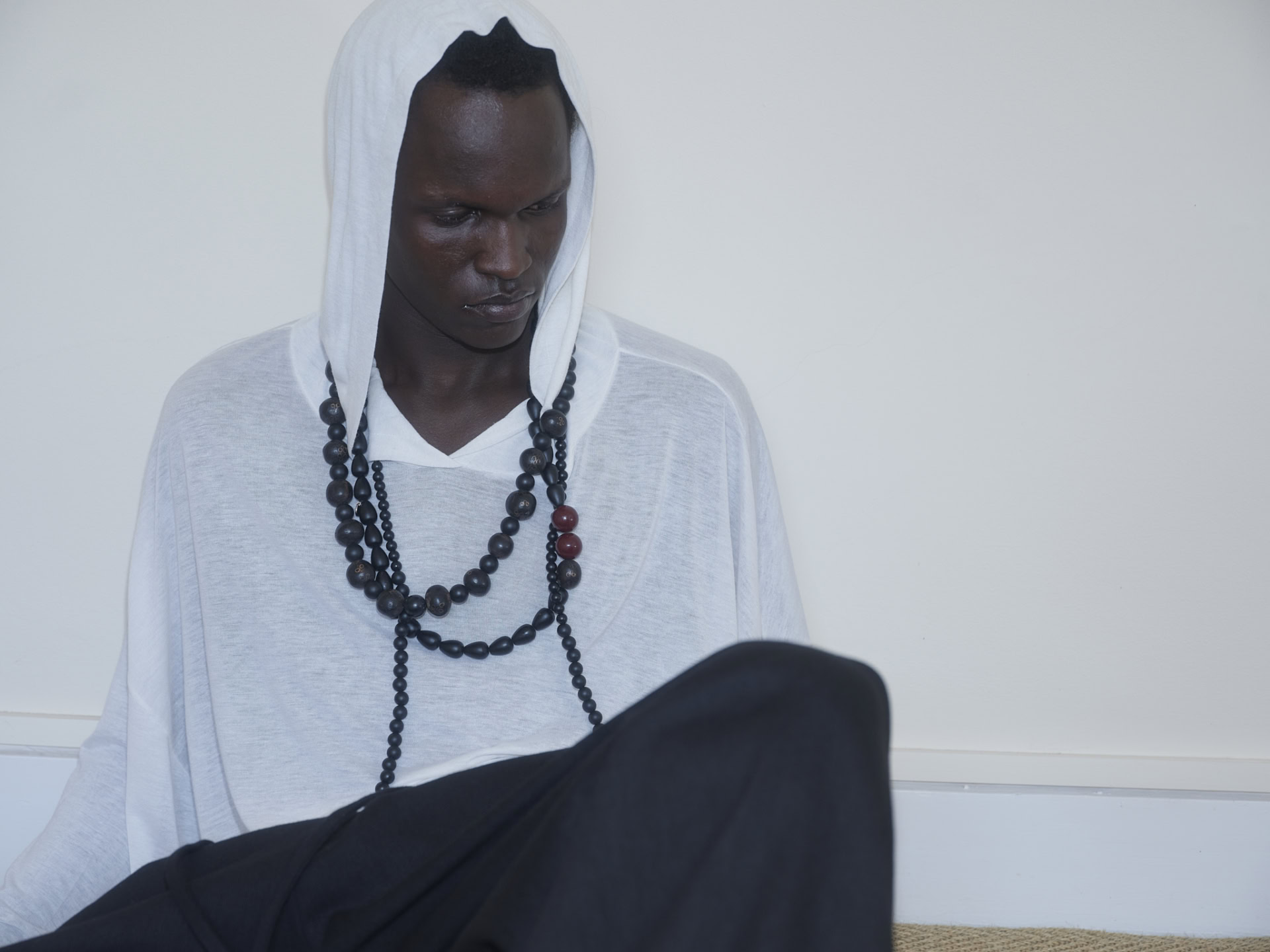
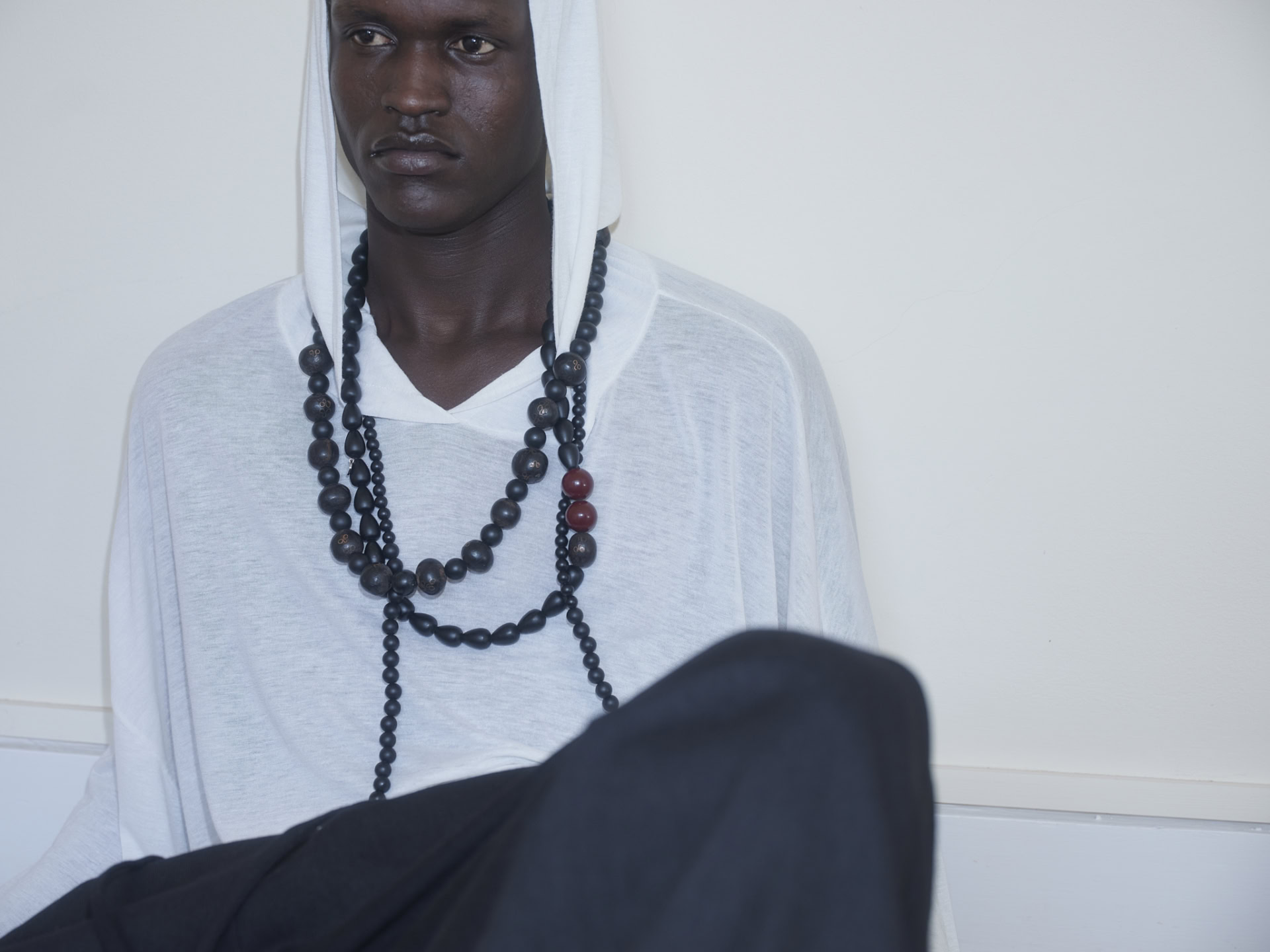
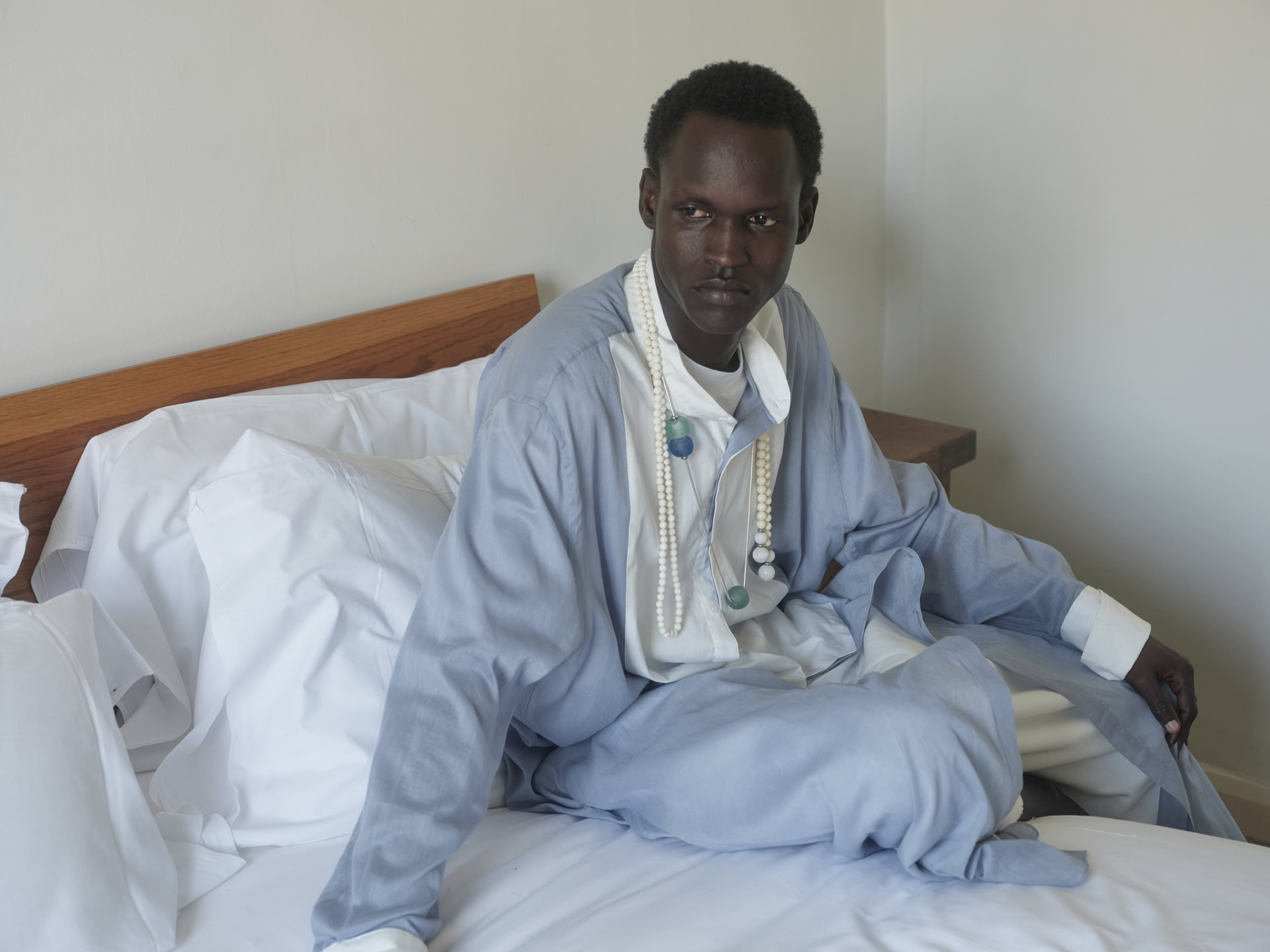
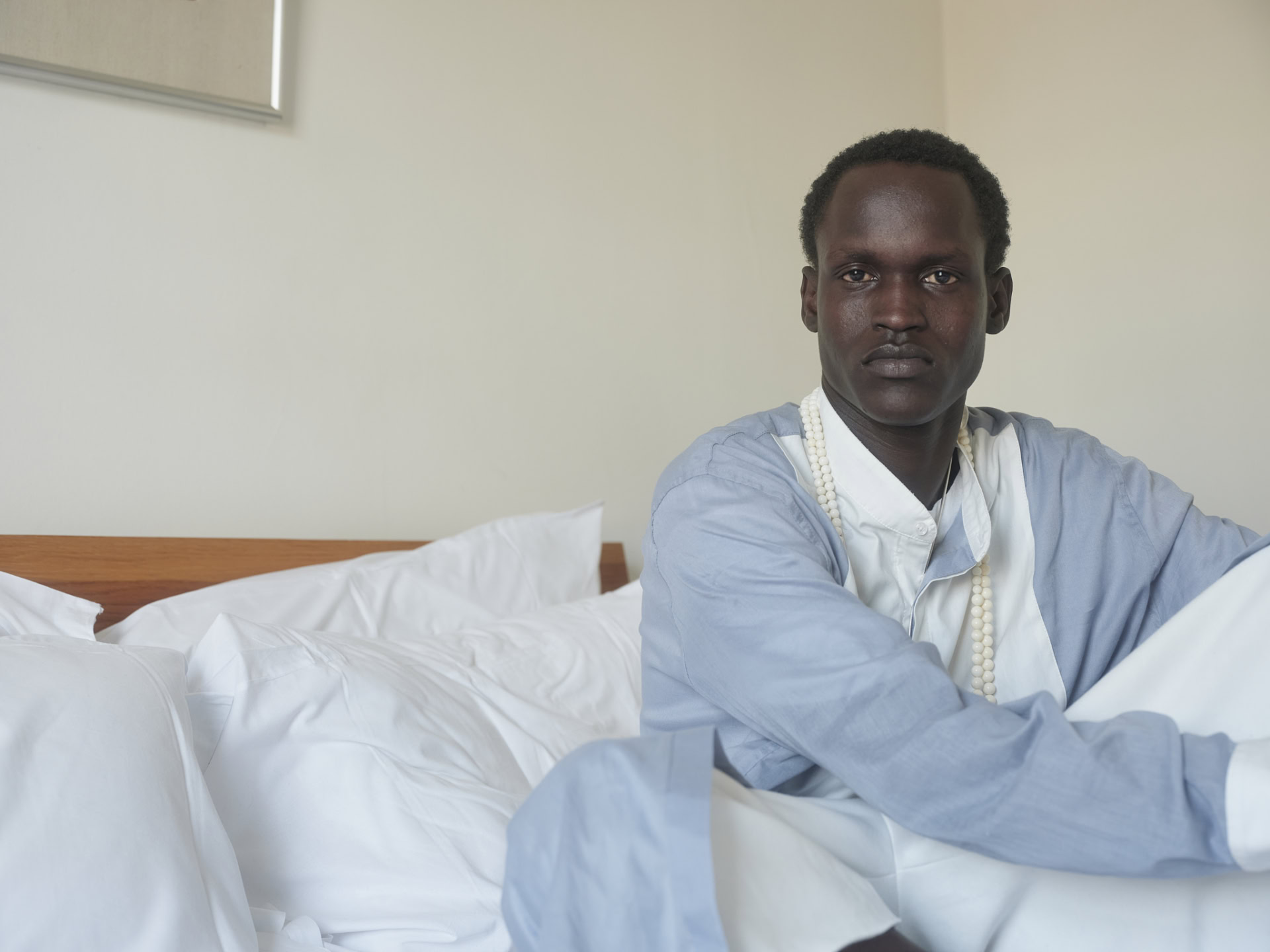
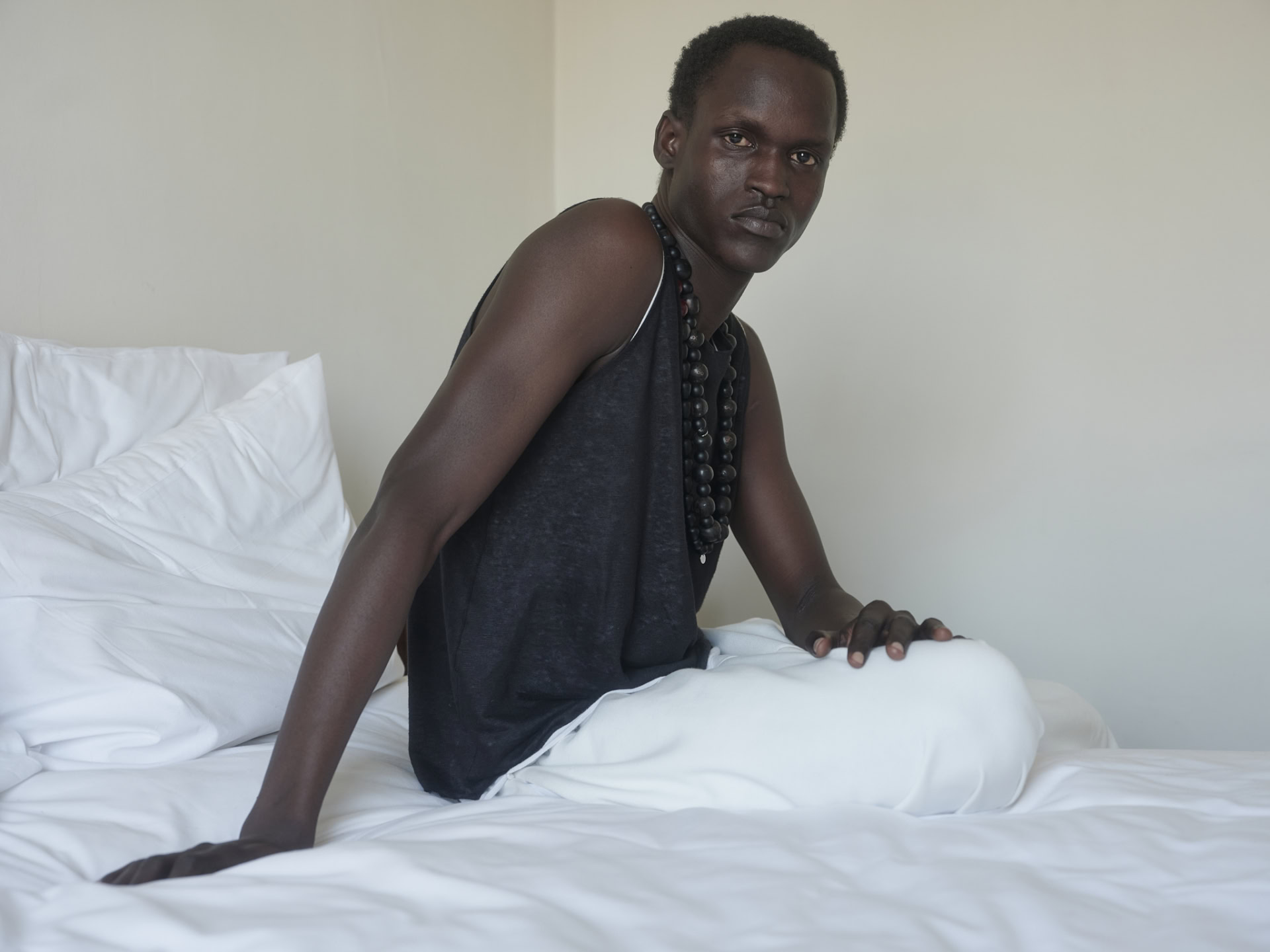
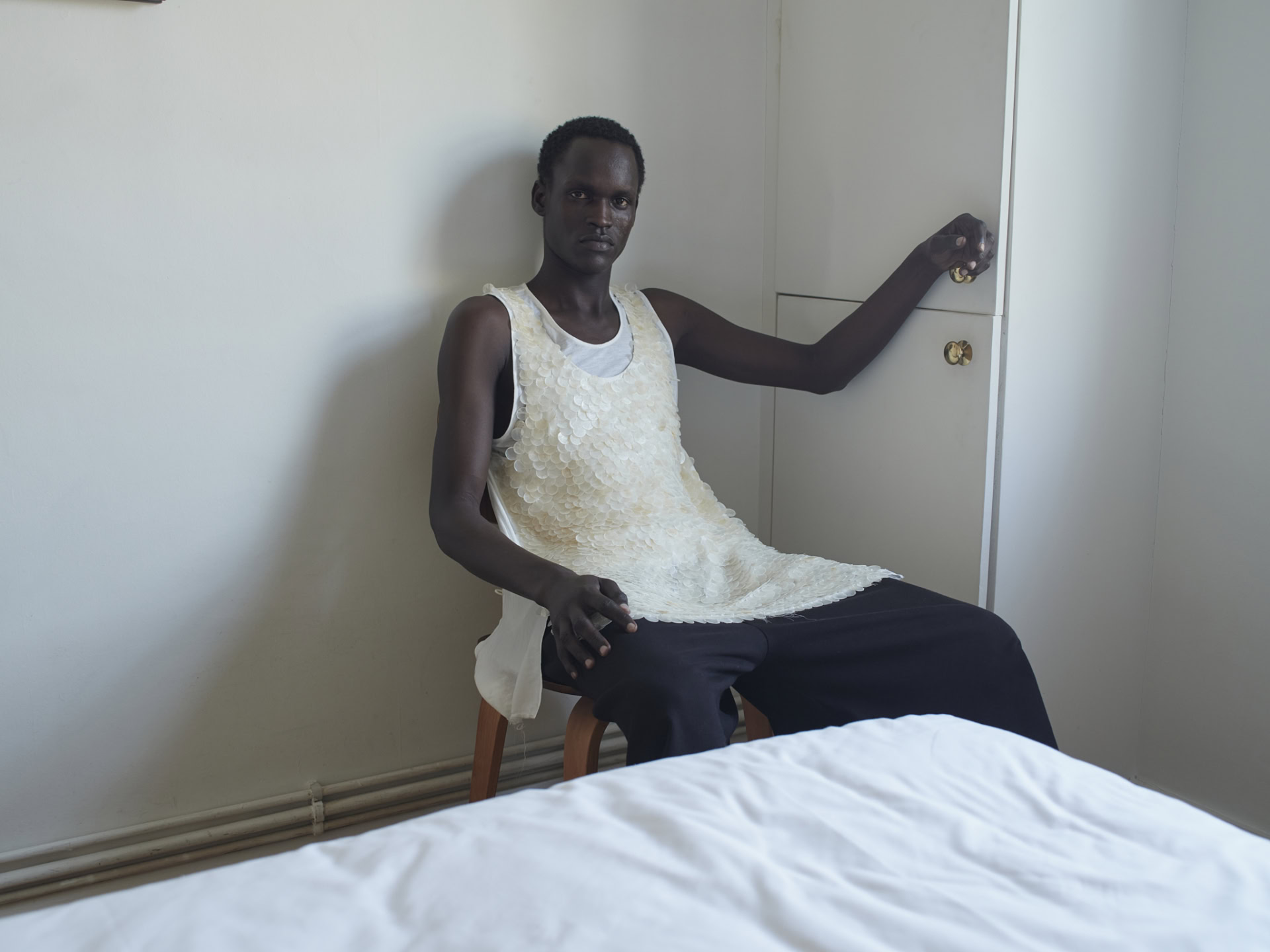
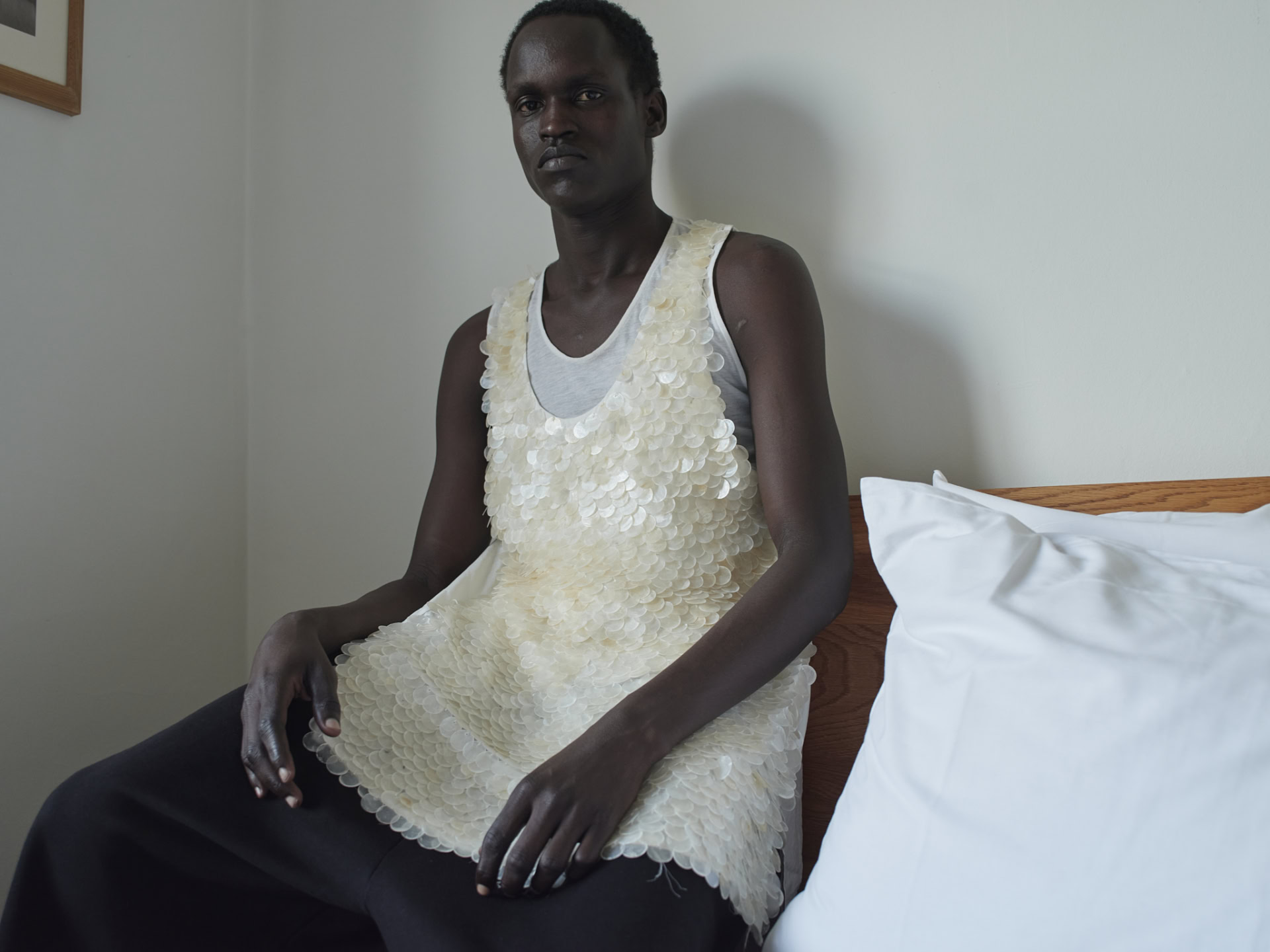
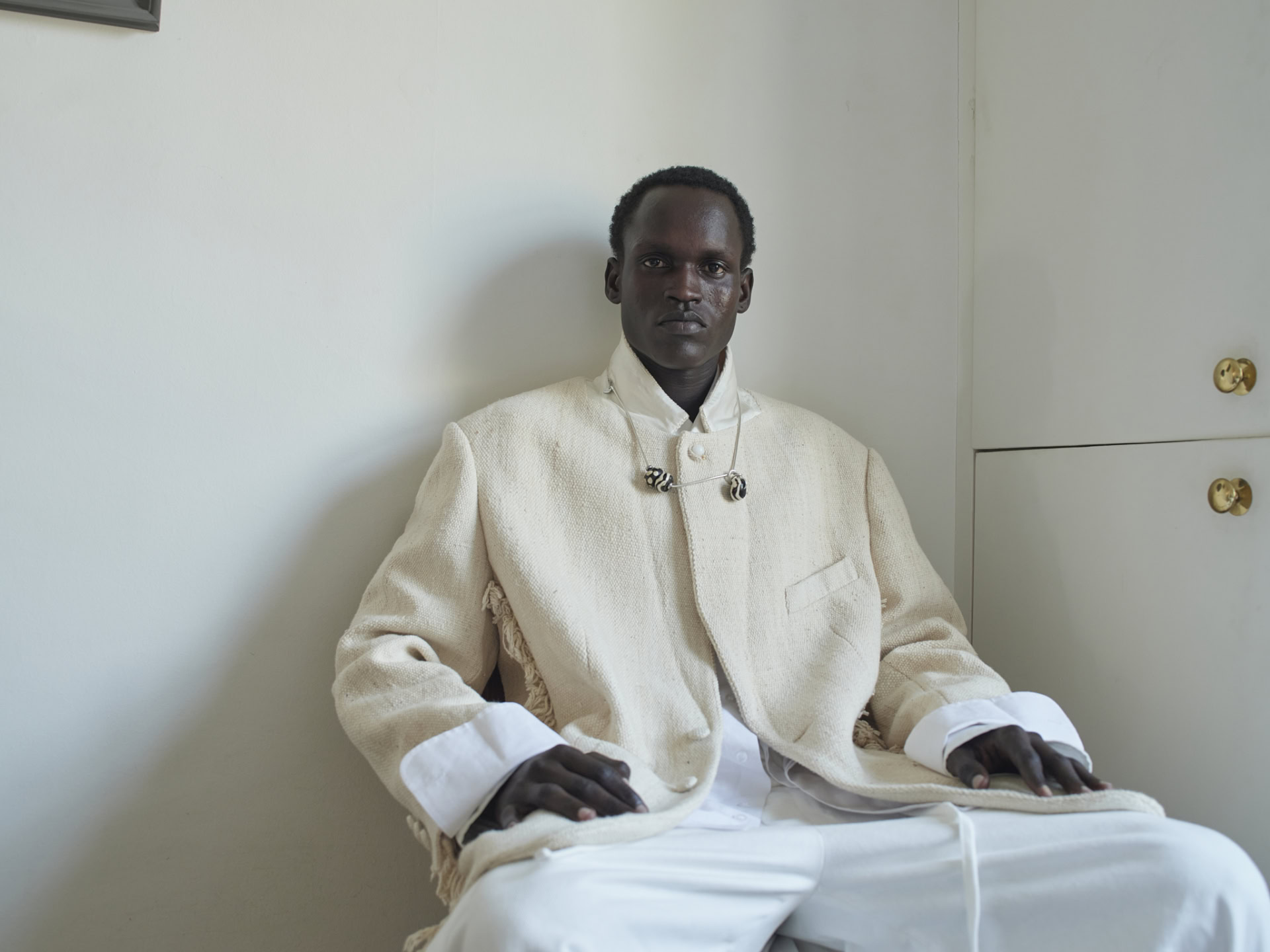
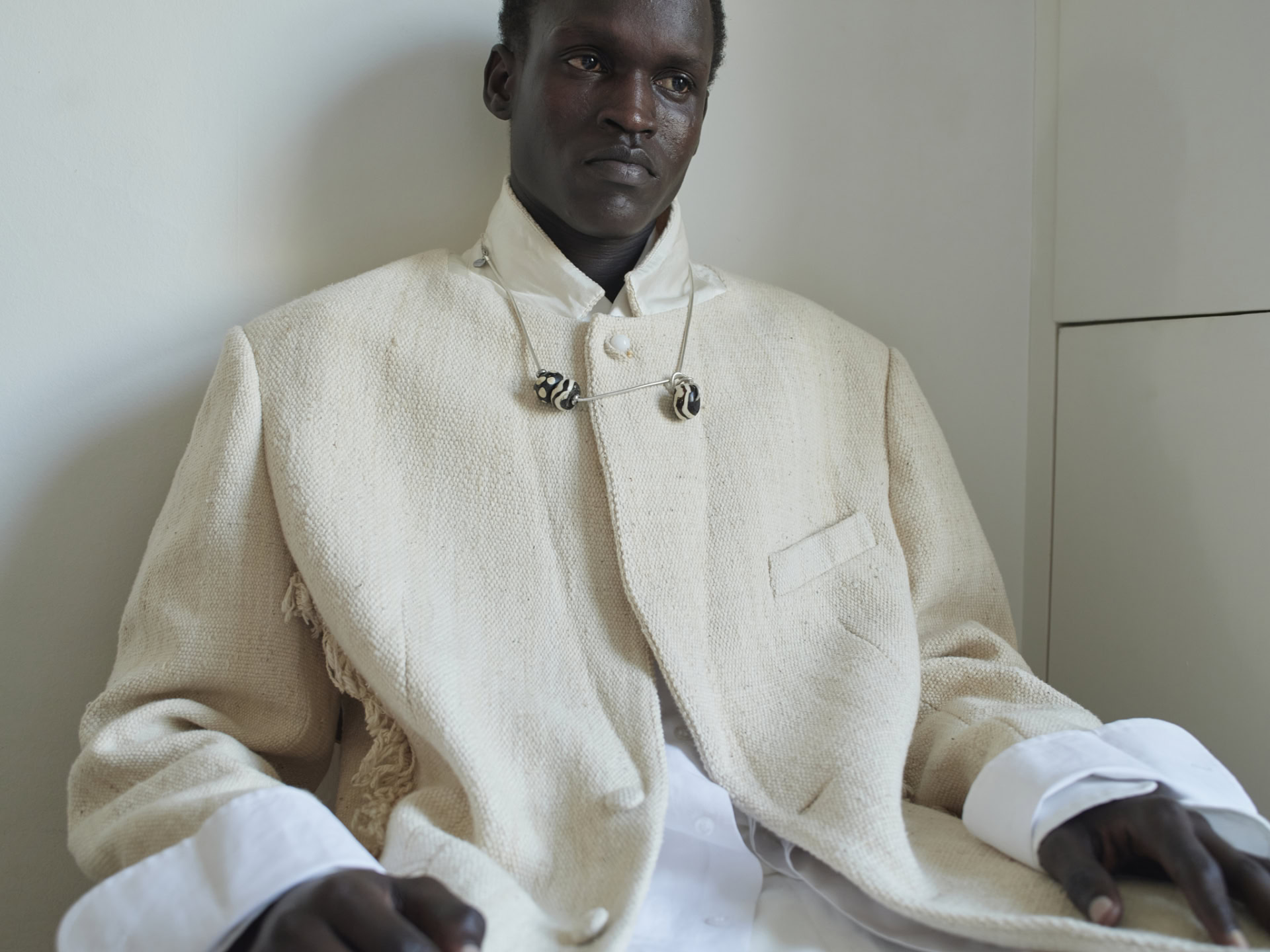
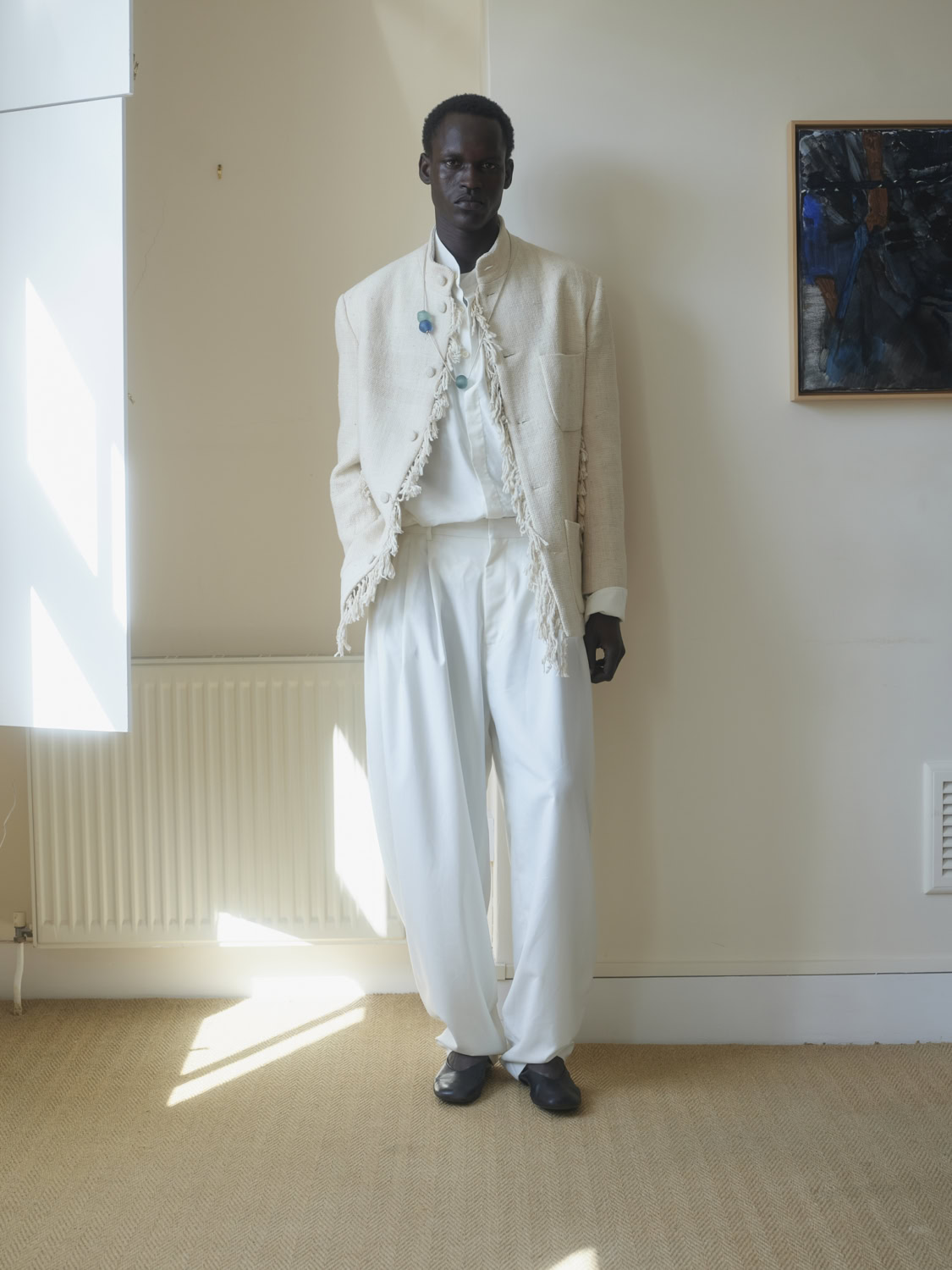
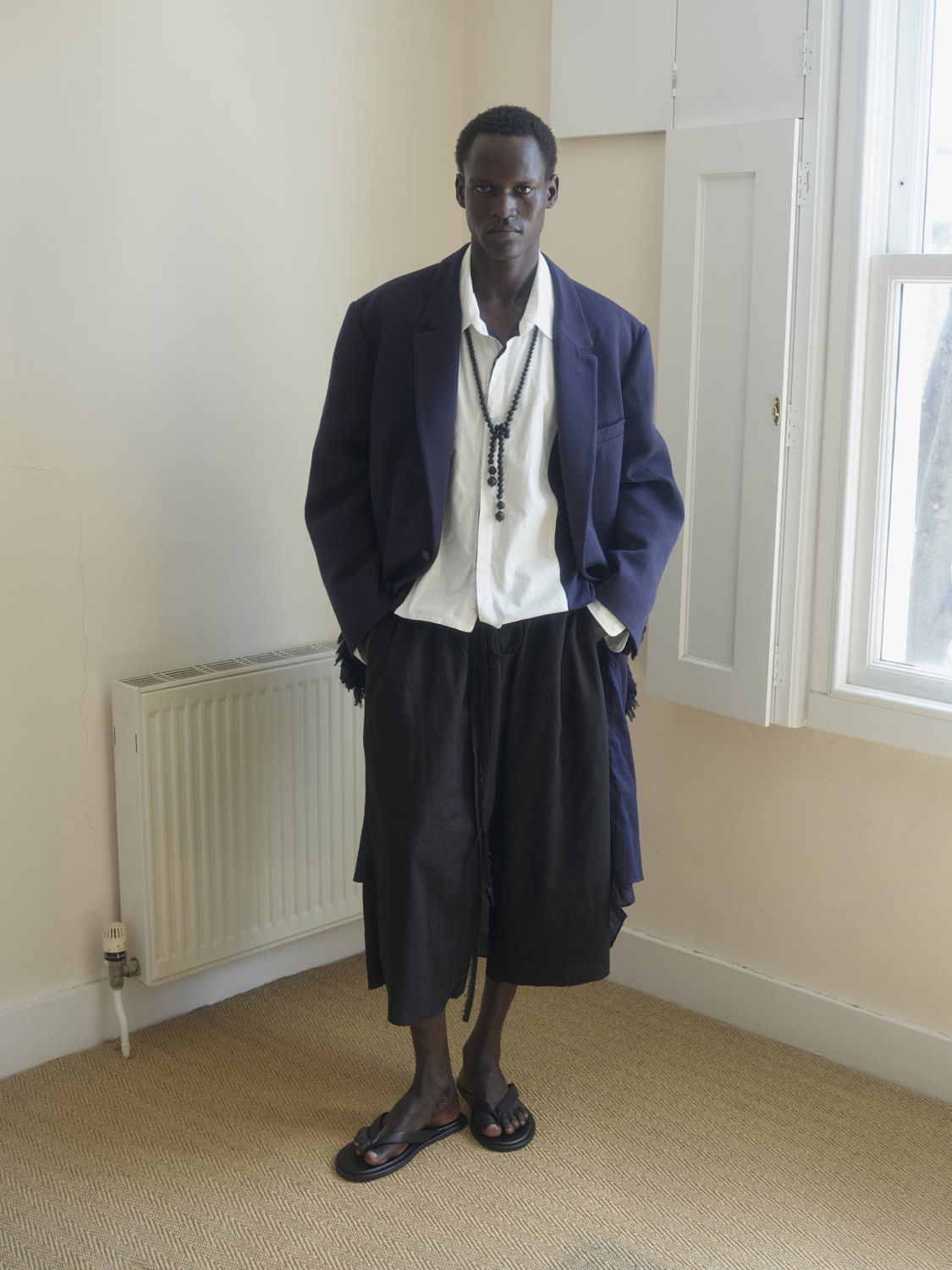
On the rack, the collection reads as controlled and considered. Longline blazers cut in textured cotton and Ndop panels. Tunics edging towards mandarin collars. Sheer jerseys and linens that sit close to the body. The palette – deep blues, sun-bleached whites, rusted reds – feels settled, not imposed. There’s decoration, but it’s integrated: beadwork threaded with clay and glass, bamboo split into structured bags, Capiz shells layered into a shifting surface.
What anchors it is a sense of movement – not runway movement, but everyday rhythm. “In Cameroon I noticed people tend to put on the first thing in their wardrobe that fits the weather, rather than having a very curated ‘look’ as we do in Europe. This creates a very effortless feeling in how the men there wear their clothing.” That observation becomes a framework: “This led to me becoming quite focused on this image of a young boy playing football in the grass opposite to the gentleman who is going to work in a tunic and blazer, and how their wardrobes slowly shifted from one to the other yet still retained this feeling of youth and calm.”
There’s a duality running through it – British and Cameroonian, tailored and relaxed – though not always consciously. “I grew up and live in London so how we dress here will always influence my work. My friend told me once that the muted colours and tailored silhouettes I gravitate towards really display my British background. I wasn’t aware of this until I heard that.” Now, it’s more deliberate. “I really love to play with balancing my Cameroonian background and British sensibilities to create a new image of who that man could be.”
That “man” isn’t rigidly defined. “I see the man but also women who wear Huguette to be quite free in their approach to life yet still interested in the world surrounding them.” It’s less about archetype, more about attitude – an openness, a curiosity.
Back at Scarlett Green, as the final look passed and the room settled, that curiosity lingered. Tchiapi isn’t rushing what comes next. “Right now, I’m hoping people will see the collection and feel curious to investigate crafts from places all over the world. I’m planning to take things quite slow for now, and show a new collection next year, with more work from different artisans.”
Slow, considered, specific – Numéro 01 doesn’t try to do everything at once. Instead, it sets a pace. And if the debut is anything to go by, Tchiapi is in no hurry to change it.
Photography by Valdimir Kaminetsky.