July 30, 2026 |
Three hours outside of Paris, on the west coast of France, sits a beautiful seaside home painted in blushing pink. The building, now a museum dedicated to the life and career of Christian Dior, cusps the lapping shores of the English channel. Commonly known as Villa Les Rhumbs, it acts as much as a portal to the symbols that echo throughout Dior’s designs as it does an educational monument.
The name of the home is notable, referring to a mosaic compass rose that’s nestled away in it’s lush garden. Memories of Childhood – the exhibition currently on display at Villa Les Rhumbs – explores the relevance of this symbol and others native to the home, and how they embedded themselves into Monsieur Dior’s childhood psyche and in turn, guided the luxury behemoth for years to come. A visit to Granville means being absorbed by the subtle, calming movements the designer experienced everyday. The gentle tide, the breeze that rustled the twisting plants, the clouds that drifted ahead – all of which can be looked at when studying why nature and its beauty are chiselled into Dior’s heart.
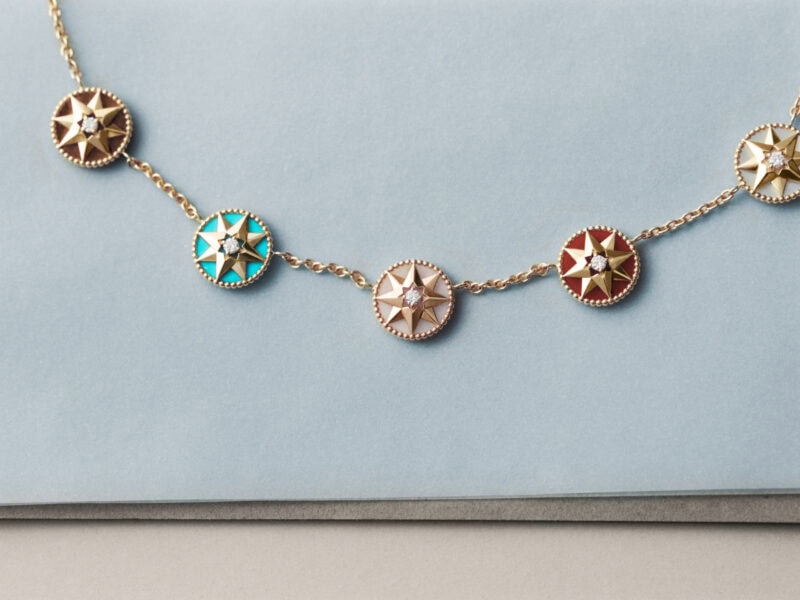
A métier that has consistently looked to Dior’s childhood home for inspiration is fine jewellery. Nearly seventy years after his death, the house returned to Granville once again for its Rose des Vents collection. Introduced in 2015 by Dior Joaillerie’s creative director Victoire de Castellane, its foundational elements reflected the decorative compass star from which the villa takes its name. Mirroring the design’s exacting symmetry, the pieces were designed to be reversible, either displaying the compass’s geometric pattern or a brightly-coloured ornamental stone.
Fast forward three years and Dior presented Rose Céleste, a collection that built on looking to the house for inspiration by looking above it. Nodding to how people use the cosmos to navigate with a compass, the house integrated sun and moon symbols into this release, adding a celestial dimension to its developing canon.
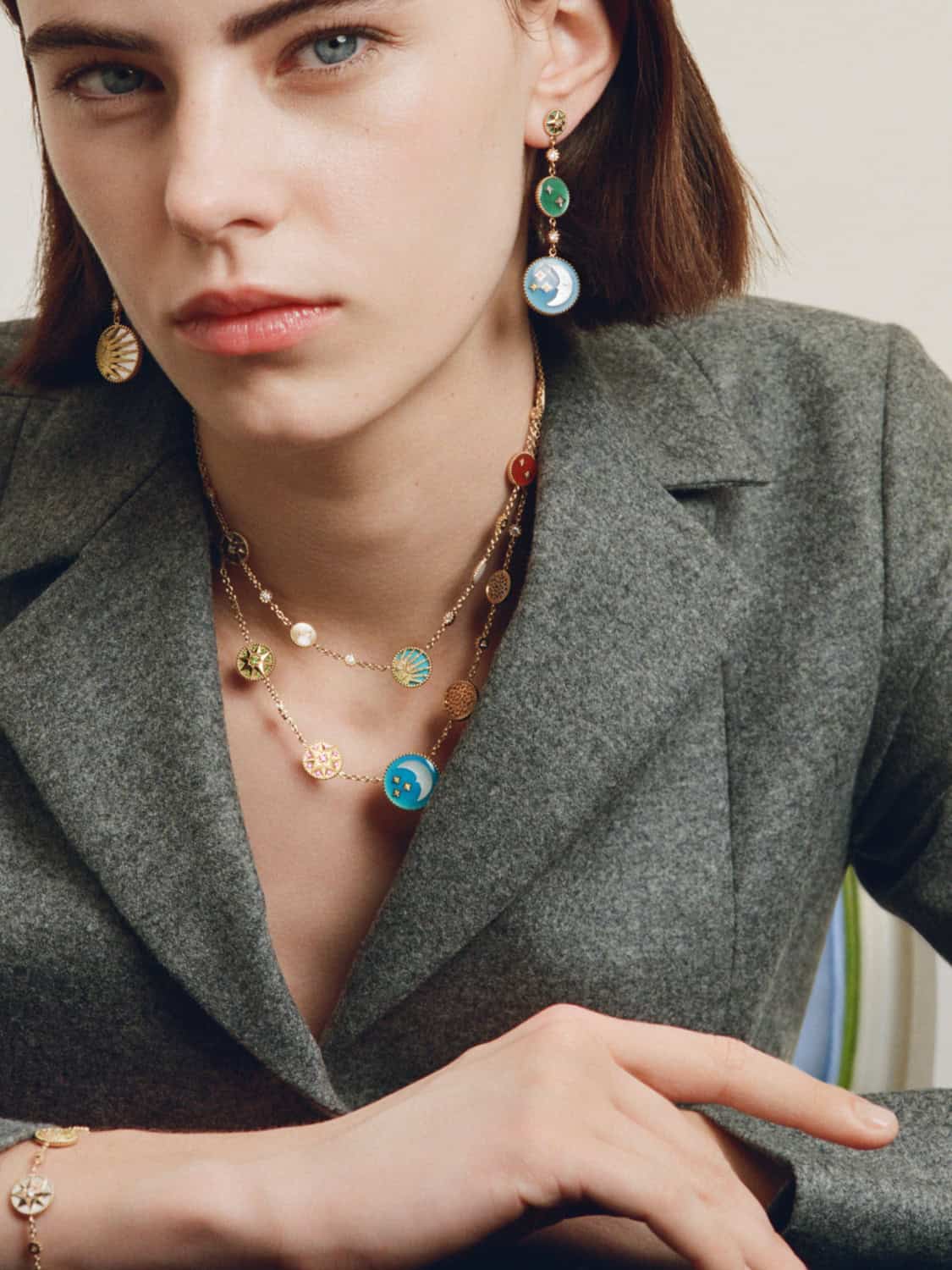
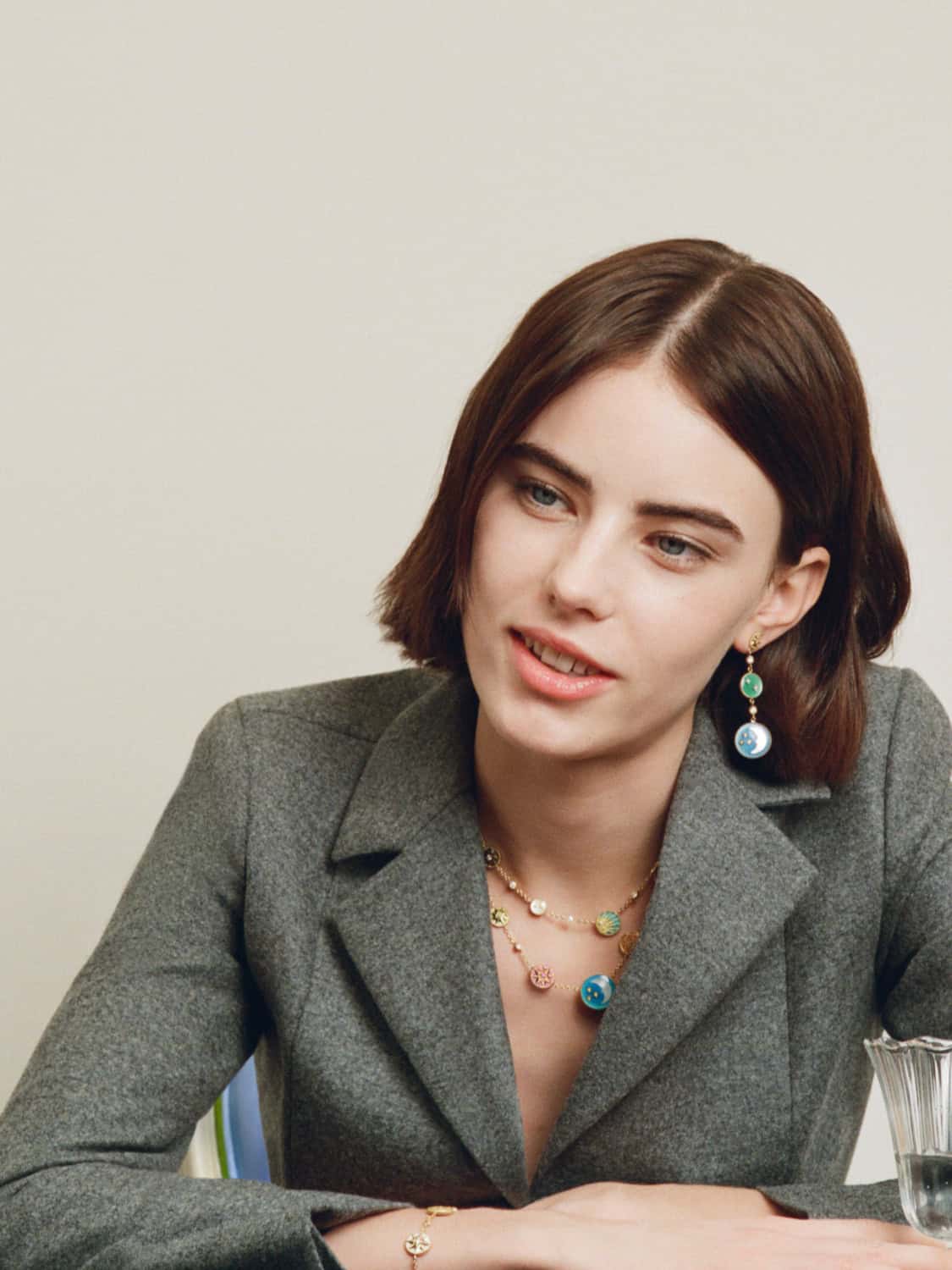
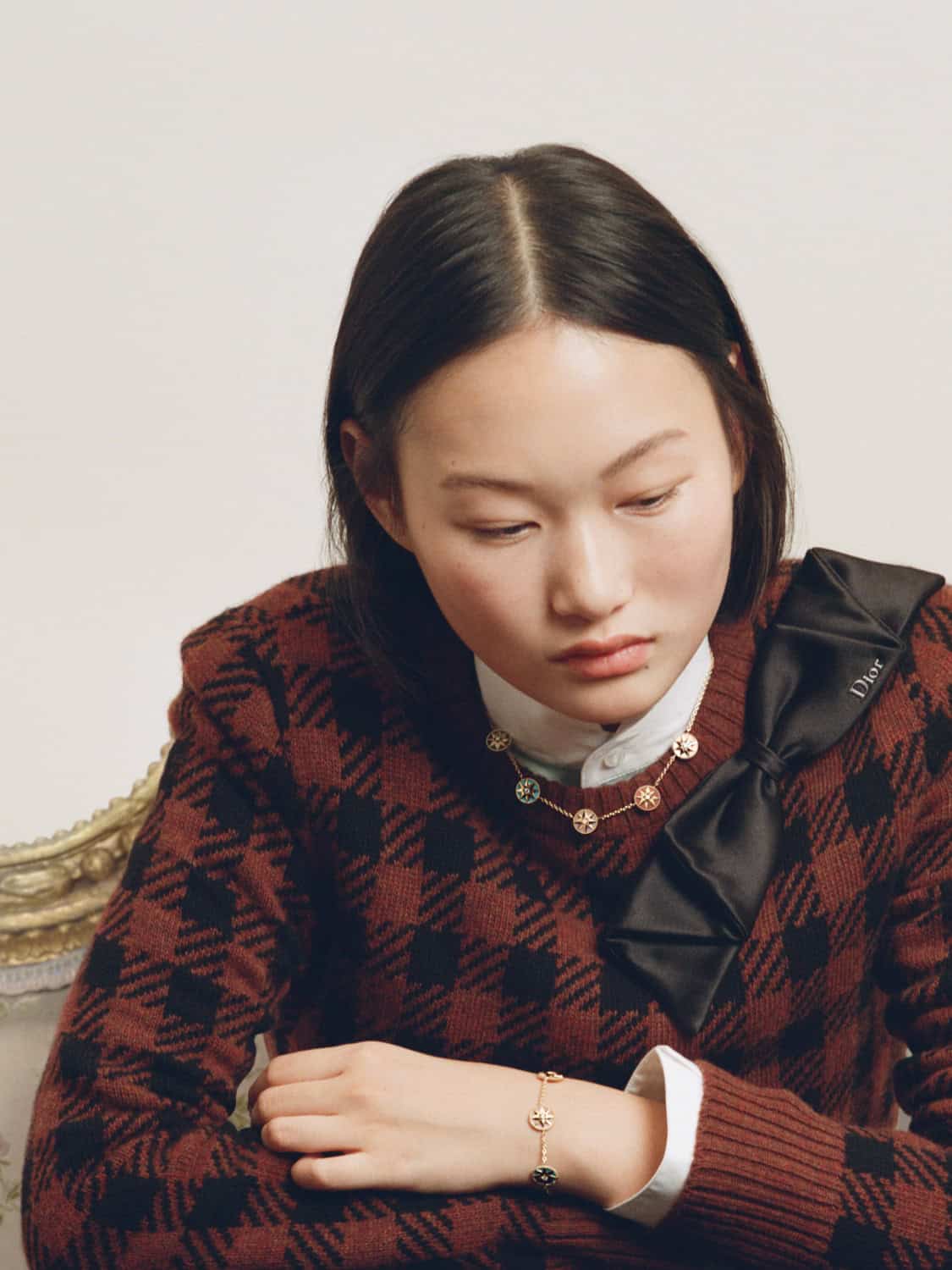
In 2024, de Castellane integrated more of Christian Dior himself into a new offering, the Etoile des Vents collection – a minimal take on the original designs, but this time with a focus on gold and diamonds. This time, Monsieur Dior’s lucky star symbol became a centre piece. The symbol originally crossed the designer’s path in the rue du faubourg Saint-Honoré while he was on his way to meet with entrepreneur Marcel Boussac, who agreed the fashion house that would bear his name. A superstitious man, the designer carried this symbol with him, stitching it into his designs across many years.
Arriving at the present day, these motifs are still prominent in Dior Joaillerie’s most popular collections. Most recently, a fresh iteration of Rose des Vents was released in May, introducing new silhouettes like double-strand necklaces and a limited-edition timepiece, studded with turquoise, carnelian, pink opal and agate.
Upon visiting, it’s clear Villa Les Rhumbs is no longer simply Christian Dior’s childhood home. It has become one of the house’s richest archives, where a mosaic hidden beneath the trees, the inky depths of the midnight sky and the gardens overlooking the sea continue to inspire new interpretations decades later. The destination may change, but for Dior Joaillerie, the compass still points back to Granville.
Photography by Chaumont Zaerpour.