October 21, 2026 |
If you think the internet contains everything, then think again. Hidden in the small town of Vanzago, just nine miles from Milan, lies one of Europe’s largest shrines: Milano Fashion Library. More than a reference archive and bookshop, it’s a living collection where every shelf tells a different chapter. Housing more than 80,000 fashion publications from around the world, its collection spans nearly two centuries, from books, magazines and catalogues to photographic prints, rare ephemera and original archival material dating from 1850 to the present day.

There are more than 80,000 fashion publications in the Milano Fashion Library.
Founder Diego Valisi and his son Pietro run the library together, combining their different approaches to the project, and enabling it to flourish. “We believe it is a positive exchange that brings together inevitably different, yet complementary, skills and perspectives,” says Pietro. “This synergy is most clearly reflected in our digital development.
What was once built out of the elder Valisi’s personal curiosity has gradually become a shared resource for an entire industry. “The first idea was born from the desire to make a private collection accessible to the public, allowing not only fashion professionals but also students and enthusiasts from all around the world to access it,” says Diego. Now, alongside the physical library, the initiative includes a specialist bookshop and an online platform, making part of its collection accessible to everyone beyond its walls.
Milano Fashion Library does far more than lend or sell publications. Increasingly, brands, publishers and creative studios rely on Diego and Pietro’s expertise. As Pietro explains, enquiries have become “increasingly broad and less focused on specific titles”, as clients approach the library with ideas about themes, moods or historical references, trusting the team to identify the publications best suited to their research. That expertise means Milano Fashion Library extends well beyond fashion clientele. Architects source publications to furnish private residences and law firms consult the archive for copyright cases, while production companies borrow material for films, exhibitions and photoshoots.

Founder Diego Valisi and his son Pietro run the library together.
Over the years, those collaborations have taken increasingly unexpected forms. One of the biggest surprises was being called upon by major international brands to act as expert witnesses in intellectual property disputes. At the same time, the Valisis were surprised that a space originally conceived as an archive and storage facility would become an unexpected location for countless shoots, ranging from emerging influencers to established global brands. Since many collaborations resemble consultancy projects rather than the traditional relationship between a library and its visitors, the pair are often required to sign confidentiality agreements. As a result, many of the archive’s most remarkable collaborations – and perhaps some of its most memorable visitors – must remain behind closed doors.
The archive’s greatest value lies not in what it displays, but in what it preserves, keeping these works from disappearing altogether. “One of our greatest challenges is demonstrating a truth that many people overlook,” says Pietro. “The web does not show you everything – it only shows what has been published online. We hold thousands of publications that have no digital trace whatsoever. One of the fundamental missions of a physical archive is to provide access to materials that simply cannot be found by typing a few keywords into a search engine from your sofa.”
In an era shaped by digital platforms and endless image feeds, Milano Fashion Library preserves a printed history that remains invisible online. For Pietro Valisi, print still offers something digital culture cannot: “Depth and aesthetics,” he says. He also points to the growing popularity of coffee-table books, as these are objects that are valued not only for the information they contain, but also for their artistic and cultural presence.
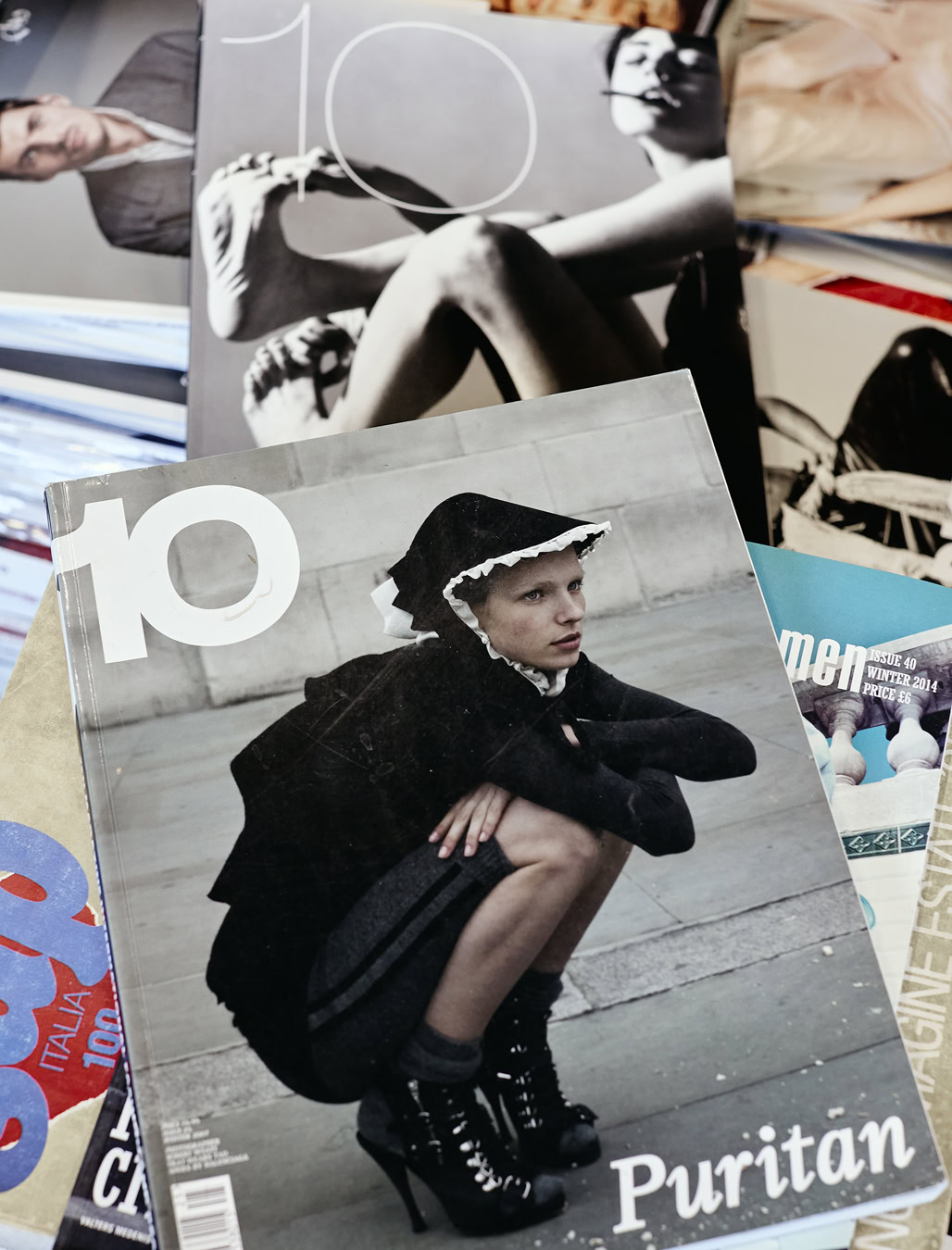
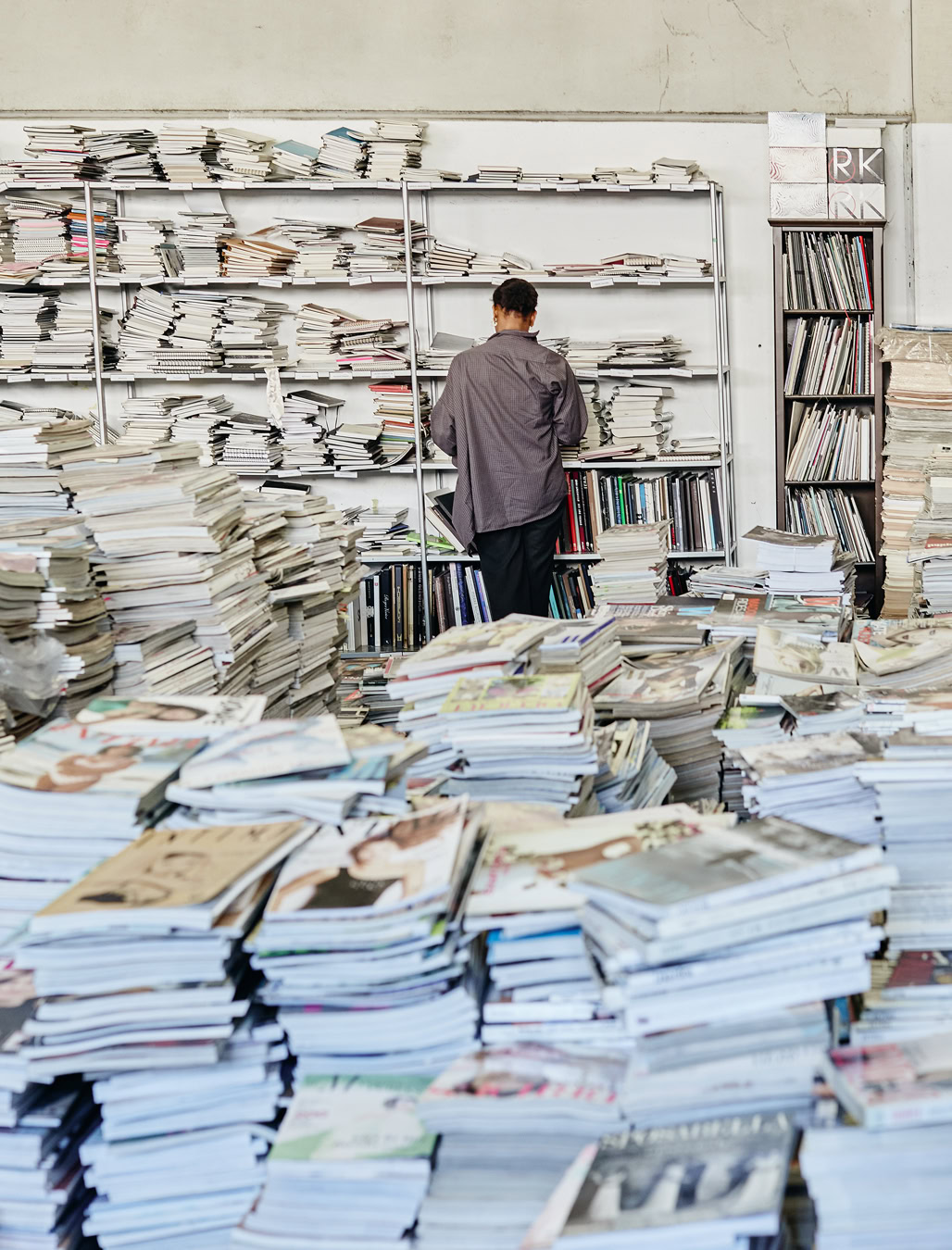
Publications are piled high in the archive; early issues of 10
With its tens of thousands of publications, rarity remains the library’s guiding principle. “The more difficult publications are to find, the more interested we are in preserving them,” says Pietro. At the same time, the collection continues to grow through constant research across every segment of the fashion industry, ensuring each is represented with equal attention. Among its most prized holdings are the complete collection, published between 1860 and 1937, of La Mode Illustrée, one of the most influential French fashion magazines. Rather than serving simply as historical records, these publications continue to inspire contemporary designers, publishers and creative teams. “They provide endless inspiration – not only for brands and design teams, but also for publishing houses producing books and magazines,” says Pietro.
Asked whether he has a favourite publication in the archive, however, Pietro demurs choosing just one. “Every category contains titles that are especially meaningful to us, whether they are catalogues, lookbooks, magazines, books or original photographs by renowned photographers.”
Looking ahead, the Valisis are expanding their offering of digital access without losing sight of the importance of preserving the library’s physical archives. Digital is incomplete, and tangible collections still contain knowledge that hasn’t yet crossed into the digital world. Their first international franchise recently opened in Dubai, while the archive itself is becoming increasingly accessible remotely. “We are extremely optimistic about the future,” Pietro says. “The success of our e-commerce platform has also been very rewarding, as it is perceived not only as a sales channel but also as a powerful communication platform.”

Diego’s dog and his favourite publication.
Perhaps most encouragingly, they have also noticed a renewed appreciation for print among younger generations. Pietro compares it to the resurgence of vinyl records: it’s an interest driven not by nostalgia alone, but by the desire to engage with objects that are original, real and impossible to replicate through a screen.
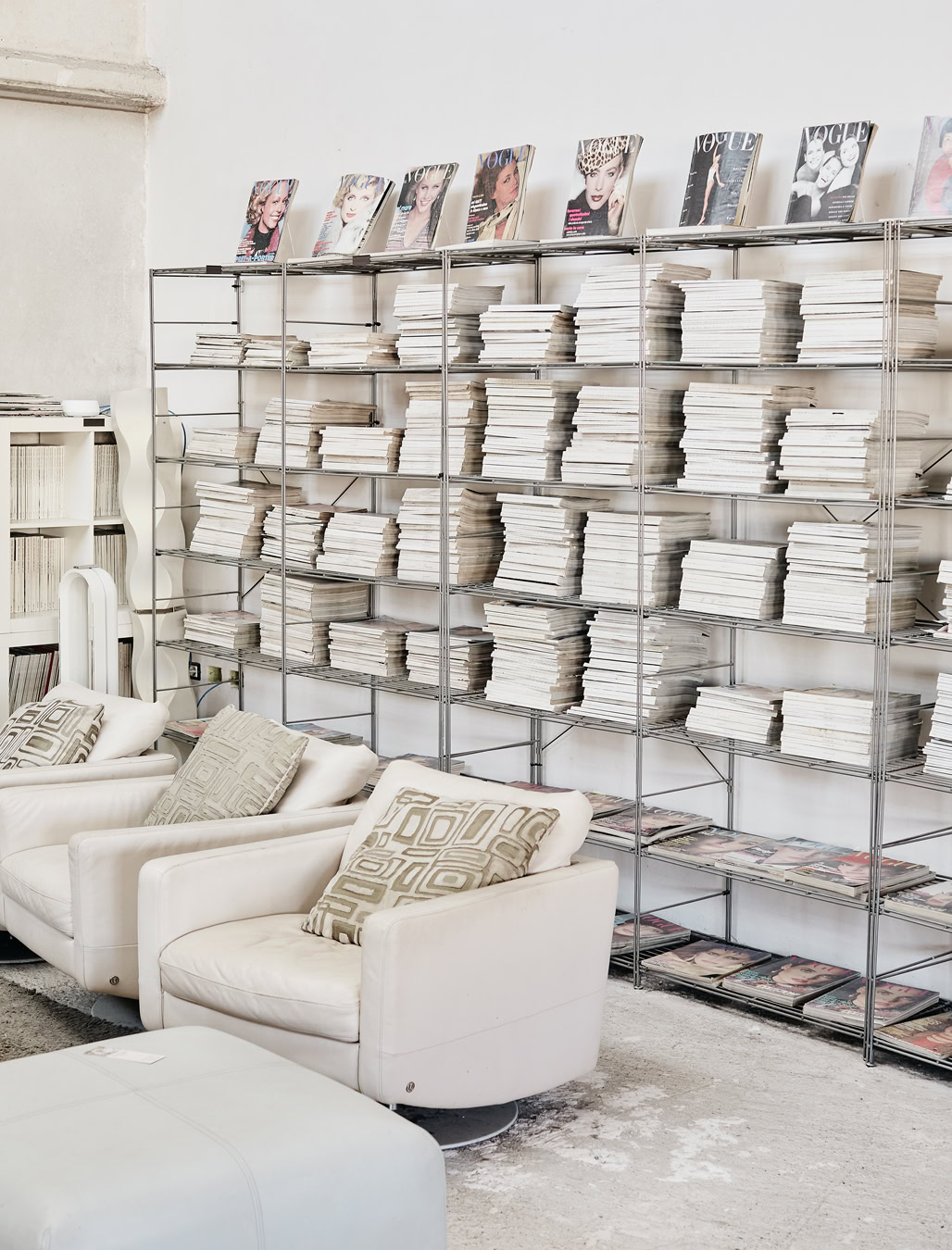
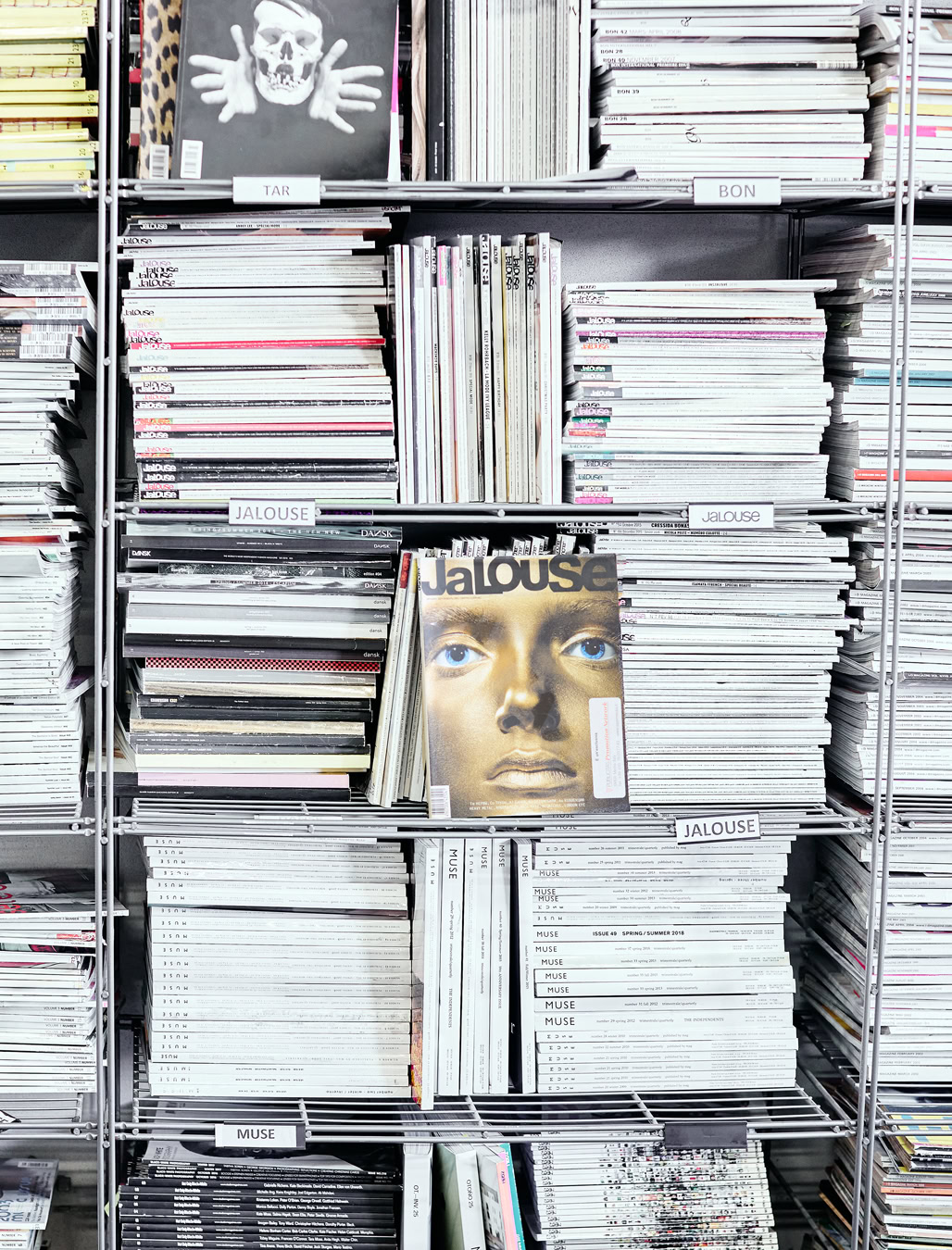
‘Vogue’ magazines from every decade are in the collection: rare issues of ‘Jalouse’ and ‘Muse’ are stocked.
Photography by Isotta Giulia Acquati. Issue 77 of 10 Magazine – FUTURE, LEGACY, HERITAGE – is on newsstands now. Order your copy here.