


March 14, 2026 |
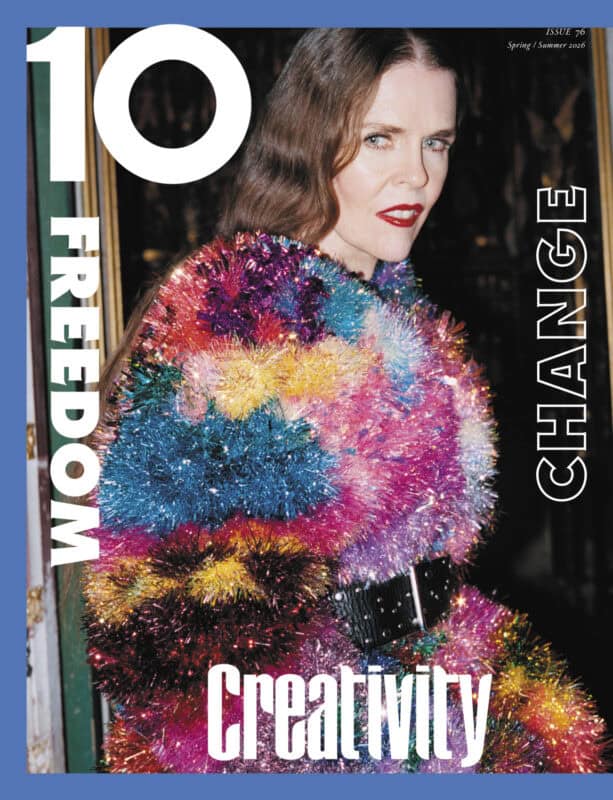
Linder Sterling has always been immersed, never just an observer. A cult figure since the 1970s, her work is immediate, visceral, subversive, glamorous, political, cathartic and often incredibly funny. But it’s laughter in the dark. As she says: “I love the phrase, ‘Don’t let the bastards grind you down.’ Wit is a human thing. There’s a power in laughing together as one.”
The artist, who was the subject of a 50-year retrospective – Danger Came Smiling – at the Hayward Gallery in London last year, was born as Linda Mulvey in Liverpool. She moved to Wigan as a teenager in the early 1970s, then to Manchester for university, and later became the frontwoman with the band Ludus, setting Sylvia Plath poems to post-punk melodies and singing on stage at The Haçienda in a dress made of raw meat 30 years before Gaga did it. And yes, she was – and remains – great friends with Morrissey. Beyond the stories that built Linder-as-myth, such as being the inspiration for The Smiths song Cemetry Gates, she became a pioneer of photomontage art, cutting and pasting together surreal, provocative imagery incorporating pornography and advertising that promised a better life through consumerism and domestic submission. She also continued to perform, shifting from music venues to galleries, continually using her body as a medium. That raw meat is just a footnote.
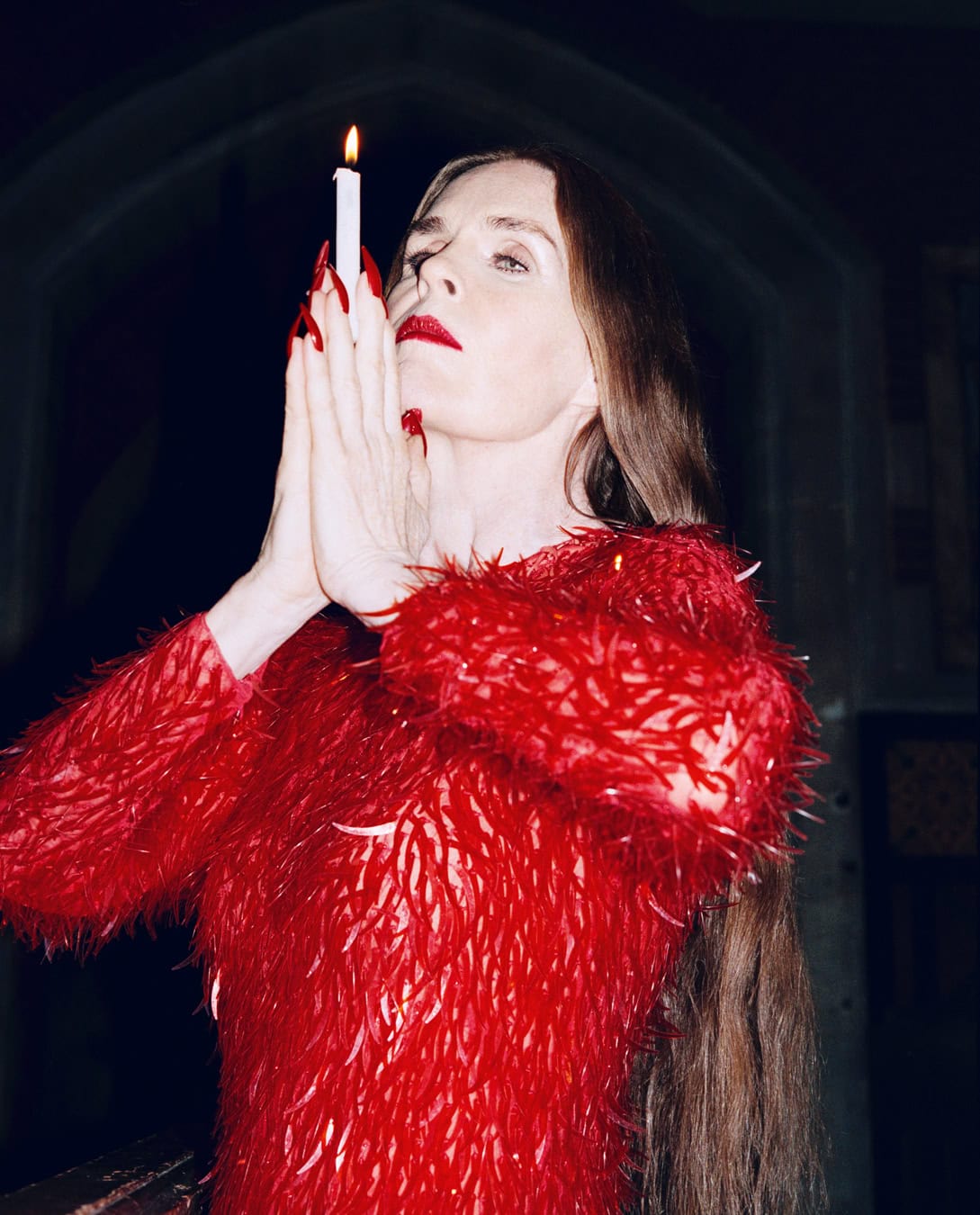
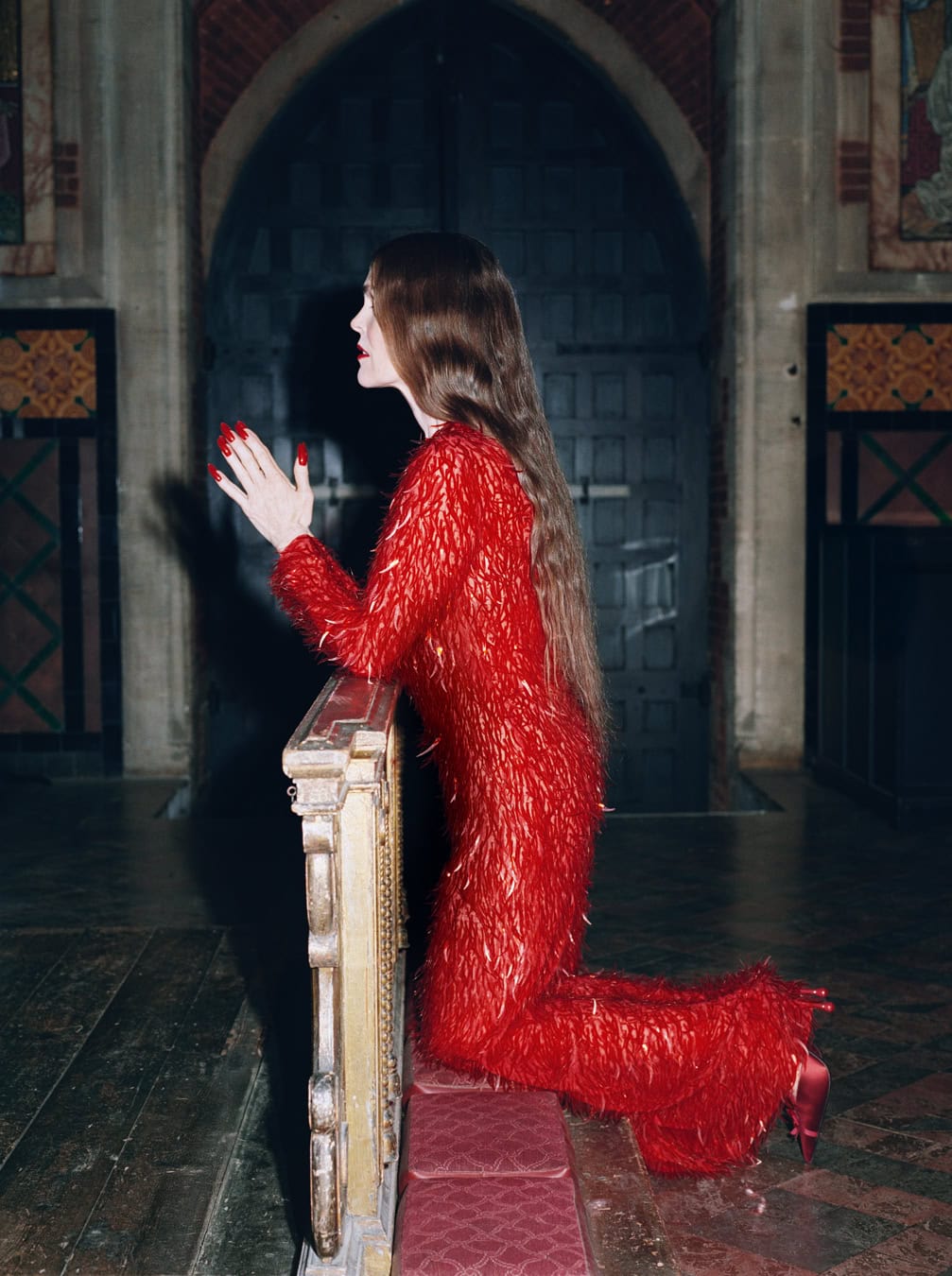
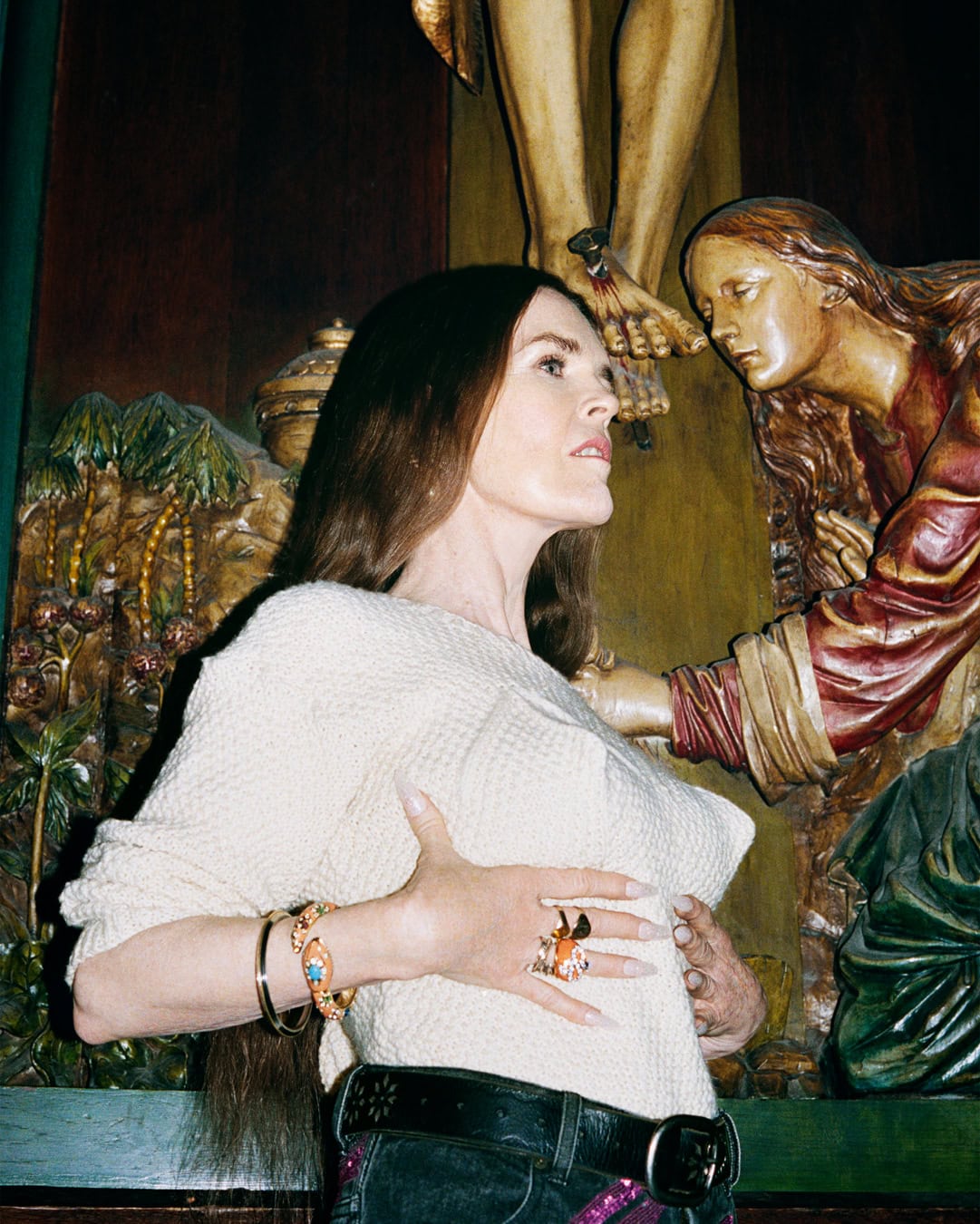
from left: dress by ASHISH and dress by ASHISH, shoes by JIMMY CHOO
In the late 1970s, when the Yorkshire Ripper was at large and Manchester’s women felt overwhelming menace, Linder started going to the gym, primarily as a means of self-defence. But it soon became something else. In the early 1980s, postmodern author and heiress-turned-stripper Kathy Acker engaged in bodybuilding as a creative statement. There’s a fabulous episode of The South Bank Show on YouTube that shows her weight training at a gym on the Lower East Side: “It’s about changing my body the way I want. It mirrors what I do in my writing, which is about women deciding how they want to be,” she said. Linder shared that feeling, having been fascinated by American bodybuilding magazines for years. “I looked at those bodies and wondered what it must feel like to look like that,” she tells me while getting ready to install her most recent show – Where the tongue slips it speaks truth – at Stuart Shave’s Modern Art gallery in St James’s, central London. “I was the only woman in the gym I joined in Manchester, in a mostly Caribbean part of the city. It was nerve-wracking, but two guys offered to show me how to train. I worked out with them early every morning for years,” she says. Changing my body felt extraordinarily powerful. It was internal as well as external.”
Some of Linder’s most recent work has been similarly physical, in collaboration with her friend, the fashion designer Ashish Gupta. Whenever she is photographed, it’s invariably in an Ashish knit or a sequinned garment. She worked with him on his London Fashion Week show last September, unleashing dancers on the runway to create something that felt like a solstice ritual, and is working with him again right now. “I was in heaven from the second he asked me to work with him,” she says. “Last summer, I had done a performance with dancers and Ashish costumes outside on the [Scottish] Isle of Bute, then again in Edinburgh, and [he said] he’d never seen his clothes move like that.” With Ashish she is part pagan celebrant, part animateur. “We wanted to work with a large group of dancers just to see what happened. My son, Maxwell Sterling, is a composer, and he created the soundtrack. I asked the dancers to imagine it was 3am in a club, when any substances they had consumed were really kicking in, and they were feeling languorous and sensual. We created an alternative reality in real time.”
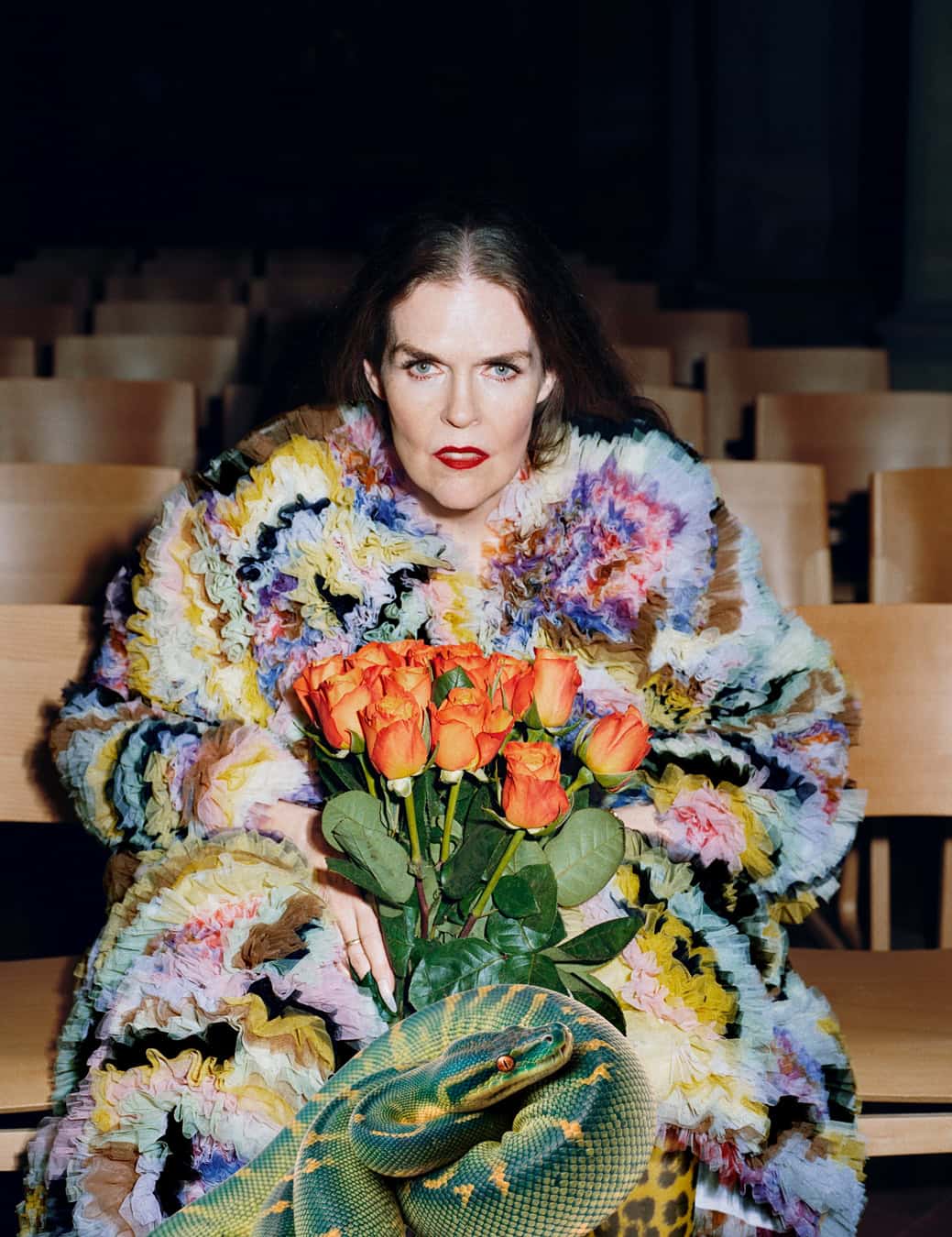
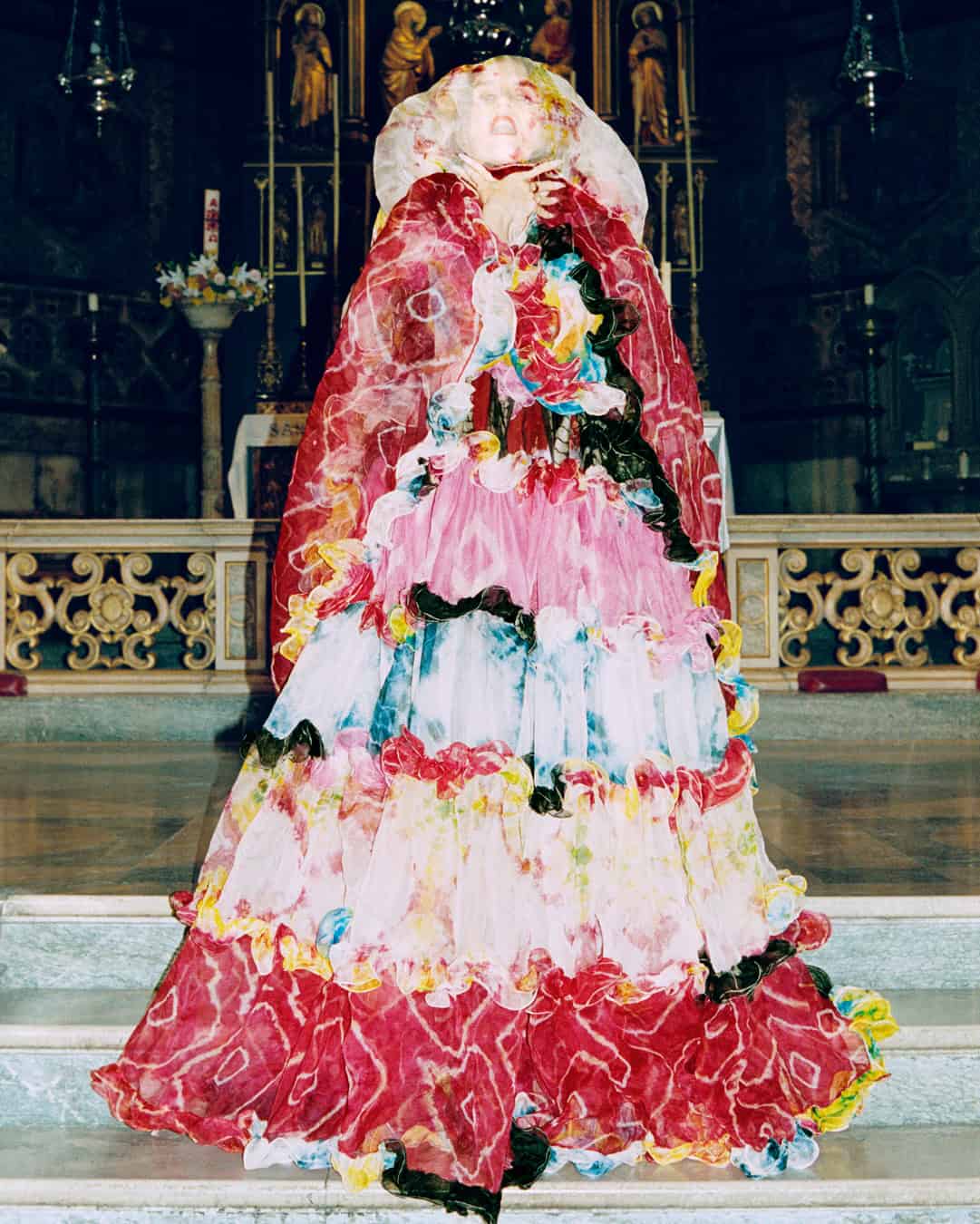
from left: coat by ASHISH and dress by ASHISH, bodysuit by CELIA CALDERON ASENSIO
Linder has never been dormant, but last year’s retrospective caused a sensation that brought her to the attention of an audience whose parents weren’t born when she started her career. The poster for the show featured one of the most famous images from 1970s pop culture: on a vibrant yellow background is an upside-down, blue-tinged naked woman with upstretched arms, an iron for a head and smiling, rouged lips for nipples. Linder’s colour photograph was used by graphic designer Malcolm Garrett as the central element of the sleeve for Buzzcocks’ 1977 single Orgasm Addict and became part of punk’s lexicon.
“I’d had a retrospective at Musée d’Art Moderne de Paris in 2013, but the Hayward felt like the right space at the right time. I love that big brutalist building.” While it took over the smaller of the gallery spaces on the South Bank, word of mouth made it a phenomenon. It felt truly timely. “I grew up as part of a generation that had trauma and anxiety passed on to them from their parents who lived through the war,” she tells me. “The world is fucking up on such a major scale right now. We have so much anxiety that isn’t just free-floating, it’s specific… the homophobia and transphobia. I met so many incredible people at the Hayward. Some had made a pilgrimage, like two beautiful men with their young son who had come from Birmingham. They told me they are too frightened to go out much with their child now. They try not to leave the house.”
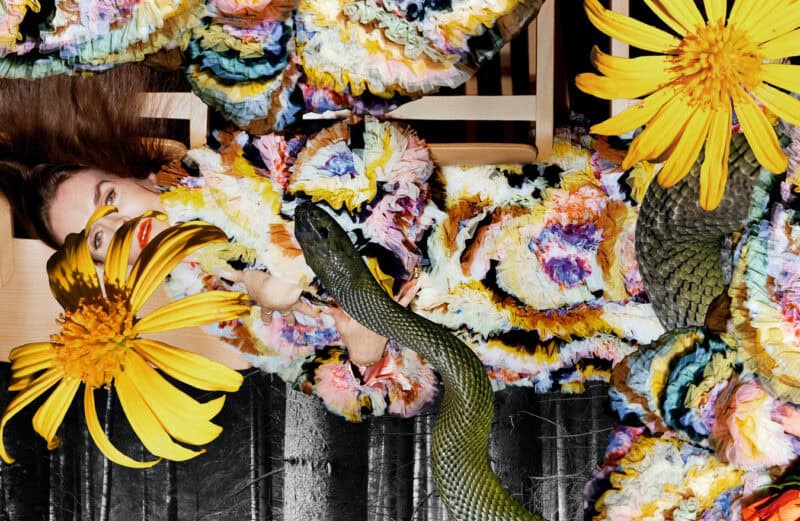
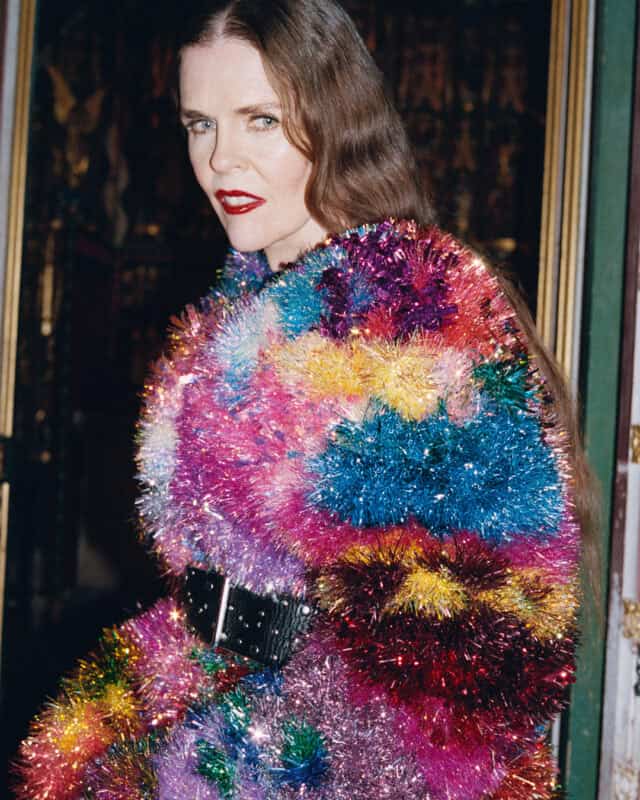
coat by ASHISH
Danger Came Smiling incorporated Linder’s meticulous cut-and-paste punk collages, her work with choreographers and fashion designers (including the Northern Ballet and the late Richard Nicoll) and new, large-scale, luridly coloured portraits of her covered in custard, honey and food colouring. Linder’s use of her body fits into a bold movement in feminist art that includes Karen Finley, who was the subject of a Supreme Court obscenity charge in 1990 in the States for smearing her naked body on stage with chocolate (a symbol, she said, “of women being treated like dirt”). Closer to home is Linder’s contemporary Cosey Fanni Tutti, best known as part of industrial post-punk pioneers Throbbing Gristle, but also an individual who has made profound statements through performance about objectification, pornography and the morality of sex work. In an age when a female nipple gets flagged on social media, a woman’s body remains insanely contentious.
“I find it interesting that the Women’s Liberation Movement was called a ‘movement’,” says Linder. “When I perform, I’m terrified. I am vulnerable. I never rehearse, it’s improvisation. It’s about physical movement and pushing forward. I want to inspire young women and queer communities in Edinburgh or Swansea or London and show them that you can walk into a room as an artist and just respond to how you feel in that moment. I feel fear but then afterwards I’m really high. Adrenaline kickstarts the glamour.”
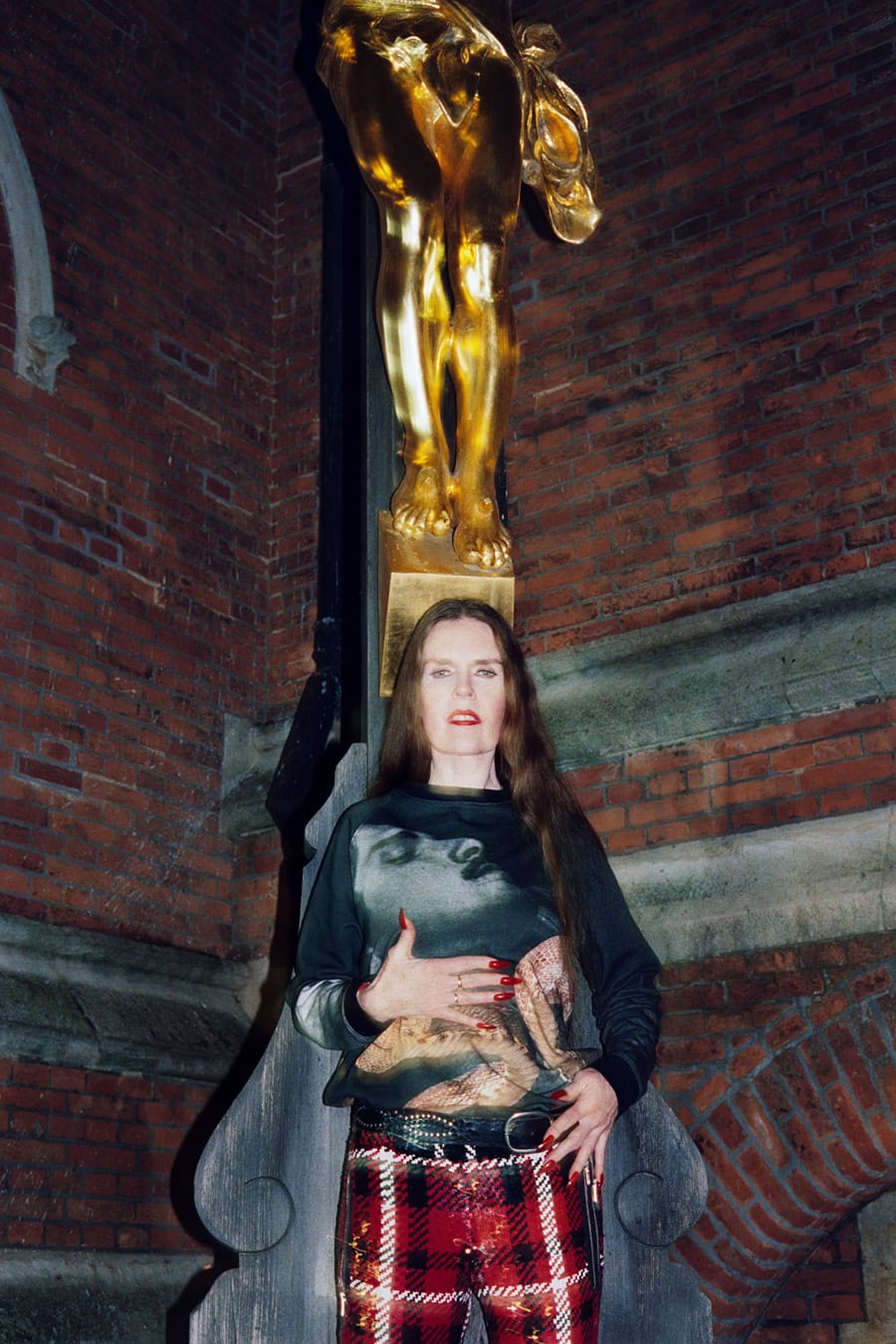
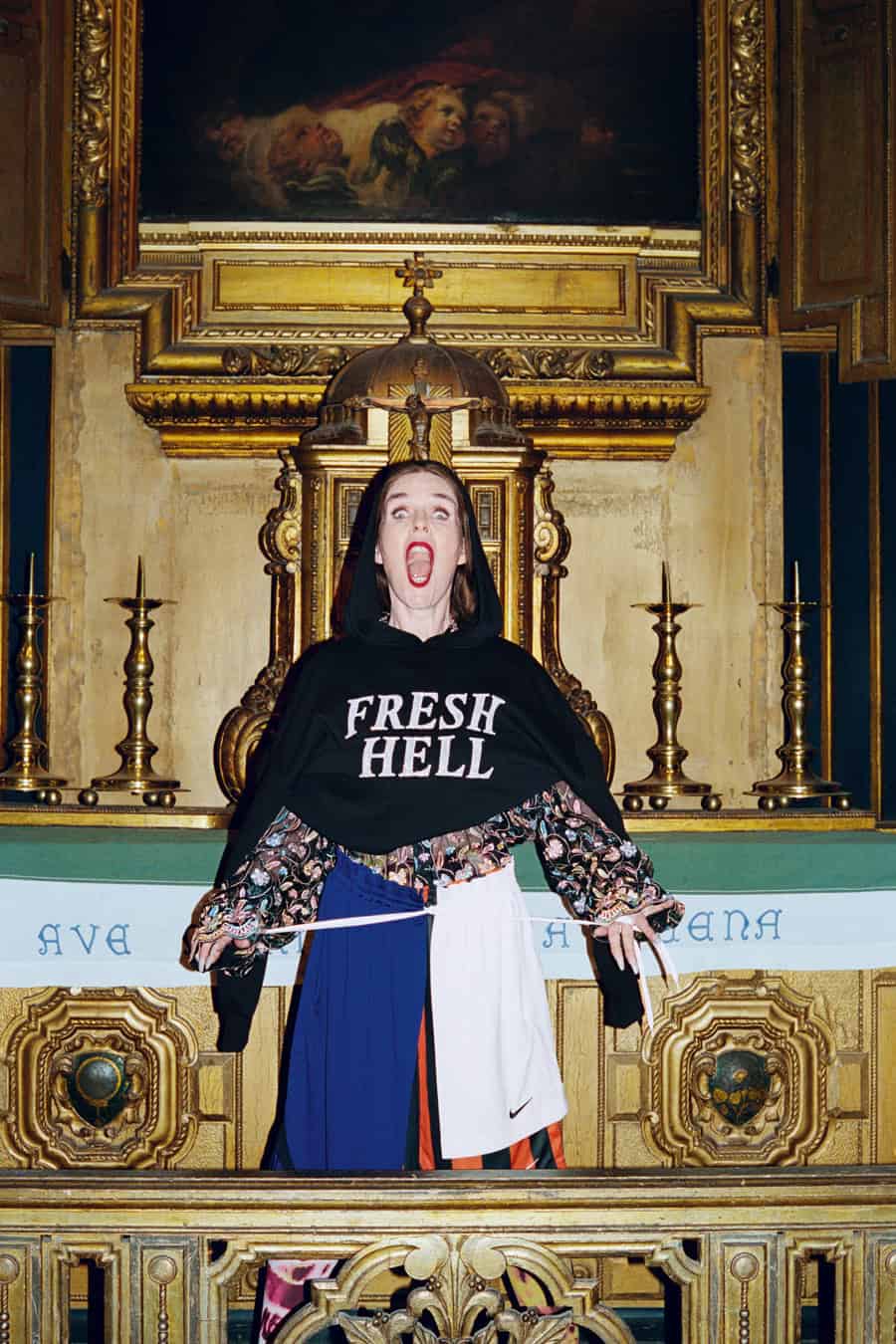
from left: top by RICHARD NICOLL, trousers by ASHISH and top and shirt by ASHISH, shorts by CHRISTOPHER SHANNON, tights by CELIA CALDERON ASENSIO
There is absolutely a sense of something pagan and magical in a lot of what Linder has been doing of late – a reaction to the world of phone addiction and AI. “When we performed on Bute it was about stripping things down to the body and the earth. At one point the dancers were smearing earth on themselves and eating it. It was mesmeric and everyone wanted to join in.”
It’s that same sense of joy and ritual that comes into play with Gupta, but there are other reasons why the two have bonded. “He is so sensitive,” she says. “He works with such nuance in terms of culture and politics. When I am working on a montage, I am doing it with newsprint halftone dot [a reprographic technique], and Ashish works with sequins in the same way. It’s the attention to detail, making something big out of something little.”
Linder says she isn’t happy in front of a camera, “although I know from working with photographic images how a human body sits within a rectangle of glass.” But she has been photographed by Paolo Roversi and Tim Walker, for example, so she’s experienced working with the medium’s most revered auteurs. For the shoot on these pages, with Linder wearing Ashish at St Mary Magdalene’s Church in Paddington, photographer Hazel Gaskin directed her subject to throw her head back, scream and laugh, break the silence of a space usually defined by contemplation and stillness. “In one of the shots I am wearing the top that says, ‘fresh hell’. It comes from the Dorothy Parker quote: ‘What fresh hell is this?’, which was her response to the phone or doorbell ringing,” she says. “The news cycle makes us feel like that the whole time now. Total anxiety. I’m 71 and this feels like the most fragile time for the planet I’ve experienced.”
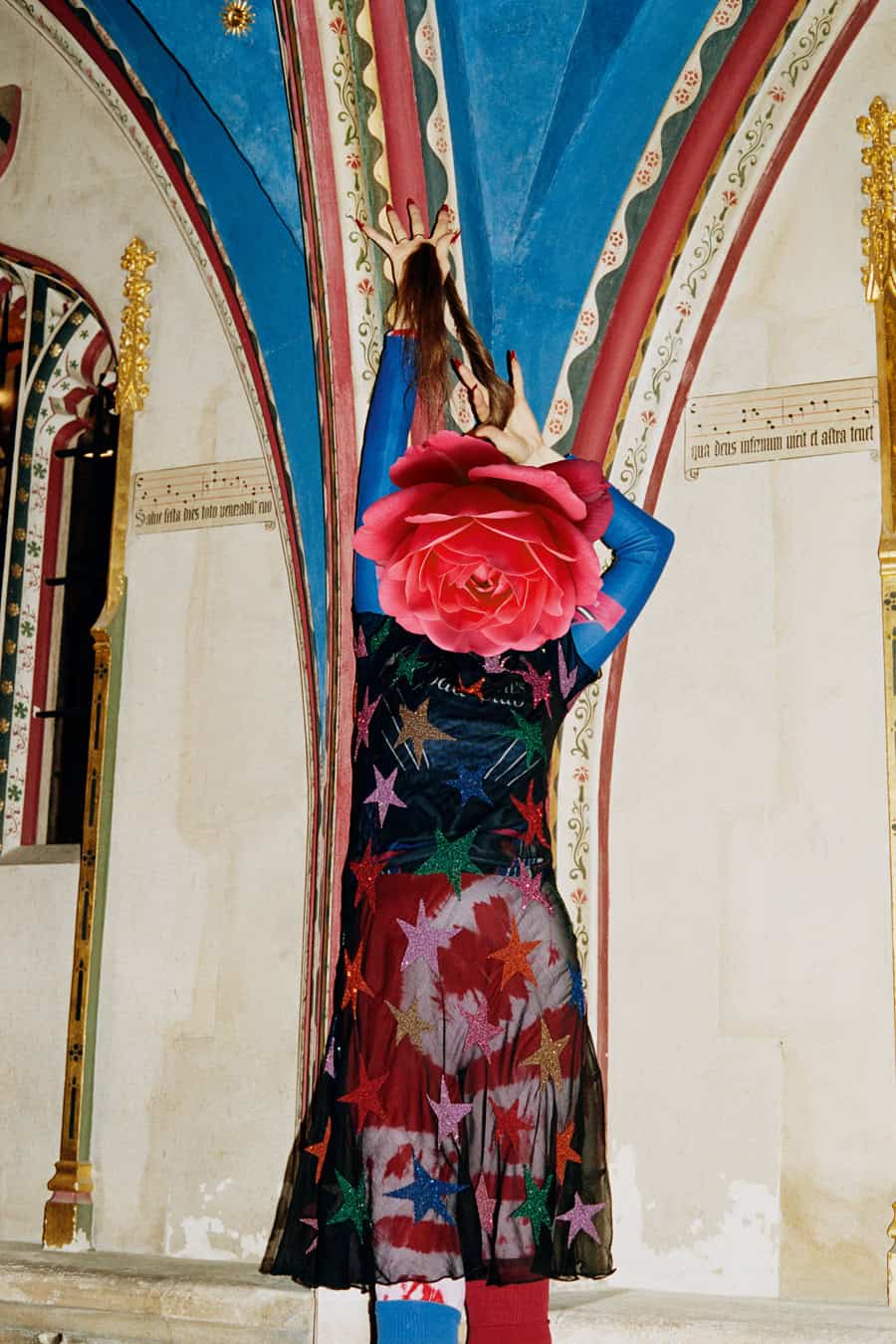
from left: jumper and jeans by ASHISH and dress by ASHISH, bodysuit by CELIA CALDERON ASENSIO
Three years ago, Linder photographed retired pornographic performer Mia Khalifa at the same church. Giving agency to a woman who had experienced such a lack of it forged a strong connection with Linder’s collage work, which she made using vintage pornography. “I have thousands of images of naked women shot by men who gave them fake names, so they are impossible to trace and talk to. They don’t exist,” she says. “Mia has been abused within that industry and is now a spokesperson for it, working at the level of law to change the way it works. She is so important.”
I ask Linder if she thinks changes in the production and distribution of pornography has allowed it to become ethical? If it’s DIY and disseminated by OnlyFans, does that provide the subject with agency? “That was one of the first things I asked Mia,” she says. “And yes, it can be ethical, but the problem is distribution. A lot of those channels are involved in child trafficking or are simply corrupt.” There’s also the whole issue of deepfakes, which is fascinating in relation to some of her older works, as these consisted, essentially, of analogue deepfakes. But they date back to the 1970s, when they were making a statement about the representation of women at a time when Elon Musk’s nefarious Grok chatbot was science fiction.
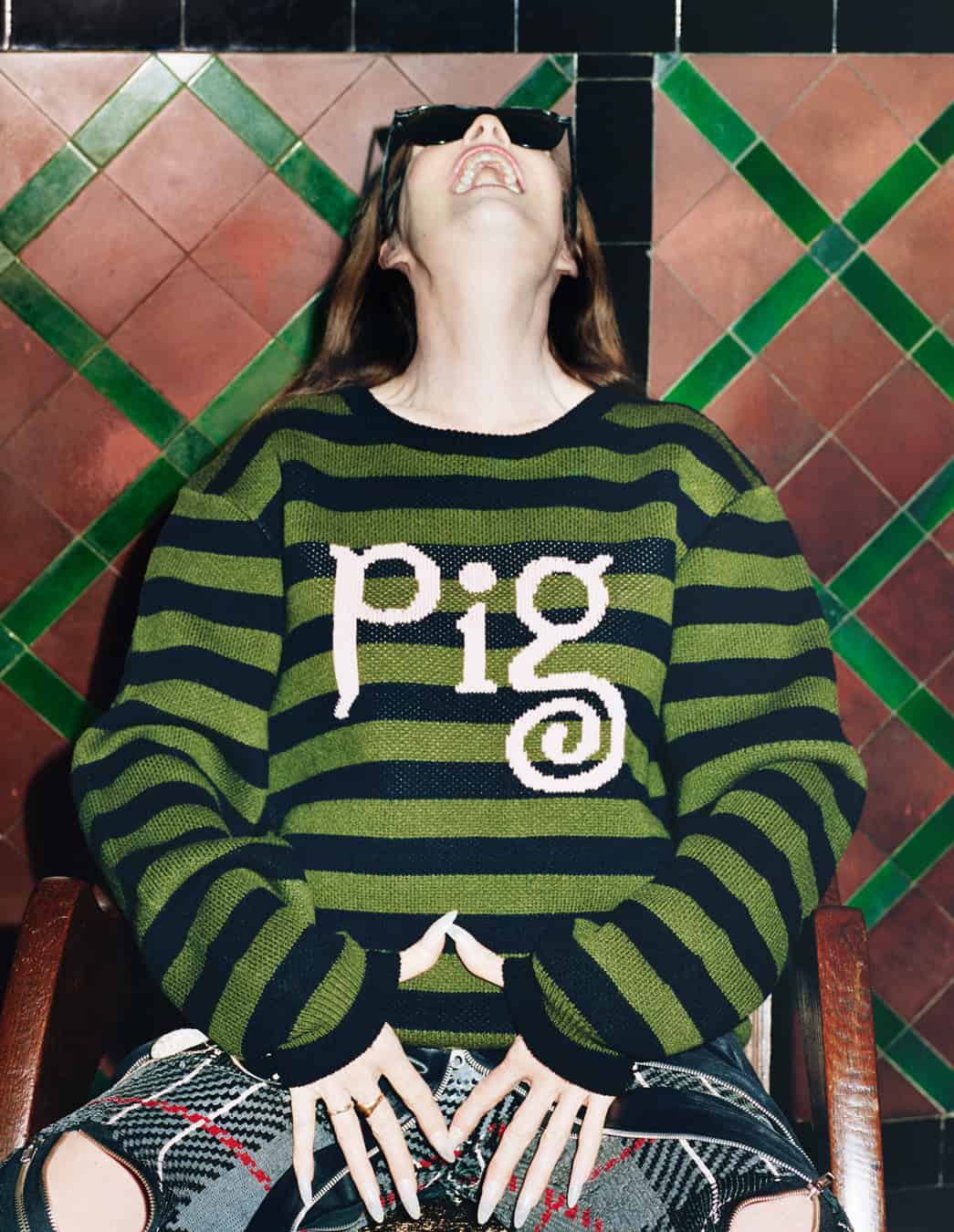
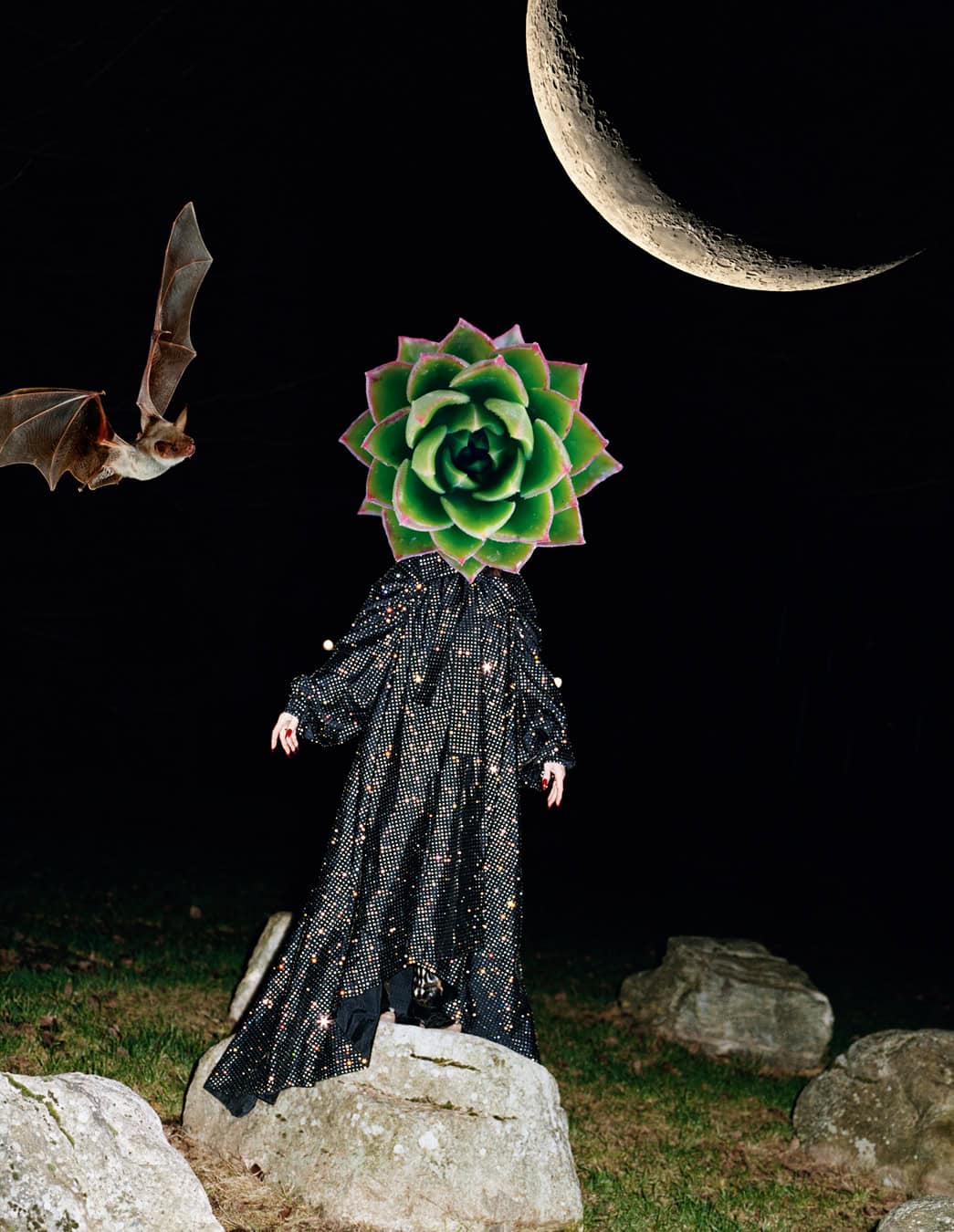
from left: jumper and trousers by ASHISH, brooch by EMILY FRANCES BARRETT and cape by ASHISH
Linder’s work is also about visibility: obscuring faces, corrupting them visually. She recently shot a group of friends at a party and deliberately distorted the images in-camera by holding a martini glass in front of the lens as a way to escape the default razor-sharp setting of the device. I ask if she considers herself a portraitist. “I think maybe I am more of a deportraitist, if we can use that as a word,” she says.
Context is everything. As is timing. Linder’s 1997 Pretty Girls series of collages, which the Buzzcocks image came from, now look dated – from the furniture the nudes are posing on to the electrical devices obscuring their features. They are part of punk, but with punk now ancient history, and a commodity, the eye of the beholder dictates meaning. “I was in the Hayward talking to a group of 16-year-old girls,” says Linder. “To me those images are about oppressed housewives, but they saw them more as examples of what [feminist scholar] Donna Jeanne Haraway is writing about, and women as part cyborg. They were all laughing and enjoyed the images so much.”
dress by ASHISH
It’s thrilling to see an artist work so comfortably – or deliberately uncomfortably – across so many different mediums. And Linder has a lot of material to work with. (Interestingly, she says one of the most subversive things she does today is take a scalpel to books, because she has such reverence for them in the digital age). Many women – and men – are unrecognisable from the models she collaged into artworks decades ago. “People are piercing their faces and putting fluids into them,” she says. “It’s interference on a cellular level. I’m not remotely against it if it makes you happy. But it’s funny the way people say they are ‘having work done’. As if it’s wallpapering the back bedroom. I certainly didn’t see any of it coming when I started out.”
10 Magazine Issue 76 – CREATIVITY, CHANGE, FREEDOM – is out on newsstands March 18. Pre-order your copy here.
LINDER STERLING: LAST LAUGH
Photographer HAZEL GASKIN
Creative Director ASHISH GUPTA
Fashion Editor AMY STEPHENSON
Talent and Artist LINDER STERLING
Text MARK C. O’FLAHERTY
Hair HIROSHI MATSUSHITA using ORIBE Hair Care
Make-up ANDREW GALLIMORE using BYREDO
Manicurist HAYLEY EVANS-SMITH using ESSIE
Photographer’s assistant MAXWELL ANDERSON
Fashion assistants DAYUN ZHANG and KATIE POPPY MINTO
Production PAUL TONER and SONYA MAZURYK
Processing and scanning Labyrinth Photographic
Post-production Crosspost
Location St Mary Magdalene’s Church, Paddington
Special thanks to ANDY BUTCHER and ALICE SEAR at Village


