


December 17, 2025 |
In 1961, Gerhard Richter, now 93, risked his freedom for creative autonomy. Germany was under communist control and the government were on the cusp of constructing the Berlin Wall. He decided not to give in to increasing artistic censorship, which was manifesting as a type of state-led approval that favoured figurative, optimistic work over his shrewd, experimental approach. Instead, the artist, 29 at the time, took a train to West Berlin from his home in what would soon become East Berlin with 350 Deutschmarks in his pocket (the equivalent of £118) to start a new life.
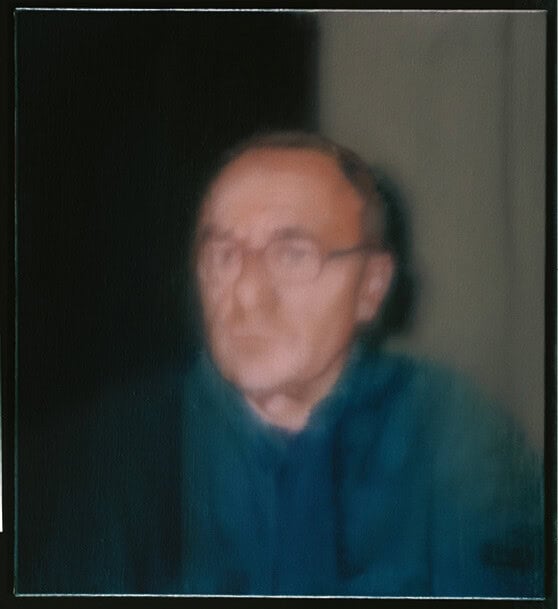
‘Selbstportrait’, 1996
Through sheer grit and a determination to liberate himself from creative constraints, Richter built his career into one of the most respected in the artistic canon, with his contribution to painting among the most significant. It’s this captivating journey that has inspired a major retrospective at Fondation Louis Vuitton, curated by art historian Dieter Schwarz and Nicholas Serota, former director of the Tate and current chairman of Arts Council England. Running until March 2, the display pays homage to Richter’s deft ability to balance consistency in his approach to creation while being a master of reinvention.
Renowned for its monographic exhibitions that cover the extensive breadth and depth of an artist’s work, Fondation Louis Vuitton and Richter are a match made in heaven. Guided by the artist’s commitment to consistent evolution, his body of work encompasses oil paintings, glass and steel sculptures, pencil and ink drawings, watercolours and overpainted photographs, created over the course of the last six decades.
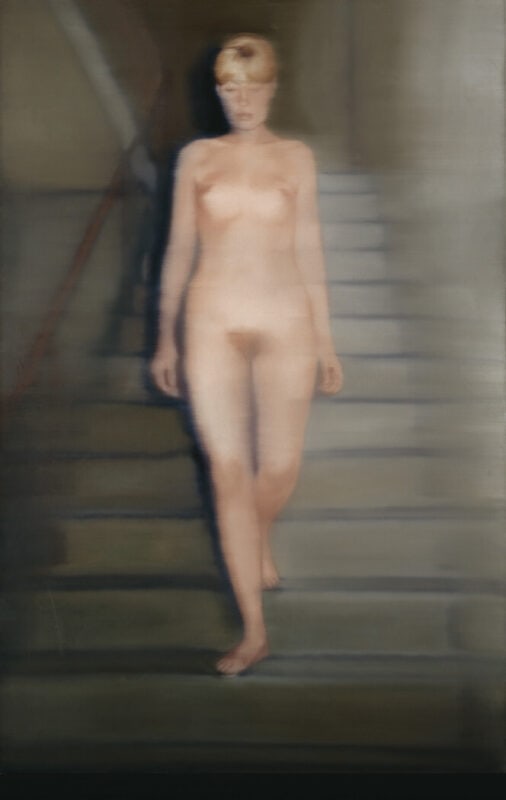
‘Ema’, 1966
“Richter has a restless curiosity about the way in which painting can represent the world,” says Schwarz, who was tasked with selecting and organising the 275 pieces on display. Traversing the vast range of techniques Richter, who stopped painting in 2017, used throughout his career, this opening marks the largest exhibit dedicated solely to his work. Because of this, Schwarz and his team felt it was essential that the display be digestible, despite its vast scale. “We think that the visitors should discover Richter’s work by following it step by step and so learn to understand his ways of thinking, of working and of inventing ever-new approaches to painting and to producing pictures.” As such, the display is divided into 10 separate galleries, each representing a different wave of his artistic evolution.
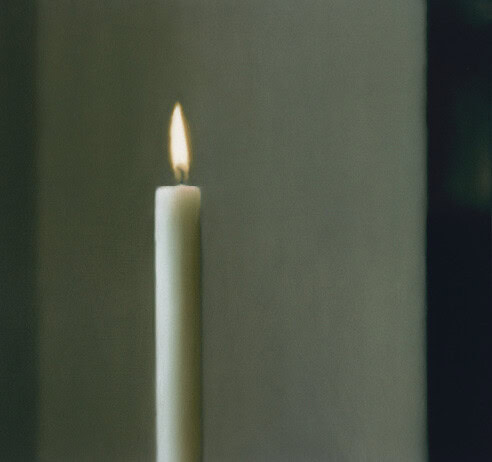
‘Kerze’, 1982
Schwarz and Serota’s journey into Richter’s artistic career kicks off in the early 1960s, following the German’s first taste of renewal, when he put all the work he produced as a student at the Düsseldorf Art Academy on a bonfire in its courtyard as a symbolic gesture of the change coming. Focusing on Richter’s subject choices – he liked to take seemingly mundane images like family portraits (Onkel Rudi, 1965) or pictures of tables (Tisch, 1962) and give them a haunting makeover through smudging or coating them with gashes of paint – this initial selection covers works up until 1970. It’s here that the foundation is laid for how Richter used photography as a source for his work. This technique became a consistent feature of his style throughout the years and acted as a backbone for blurring the boundaries between reality and representation.
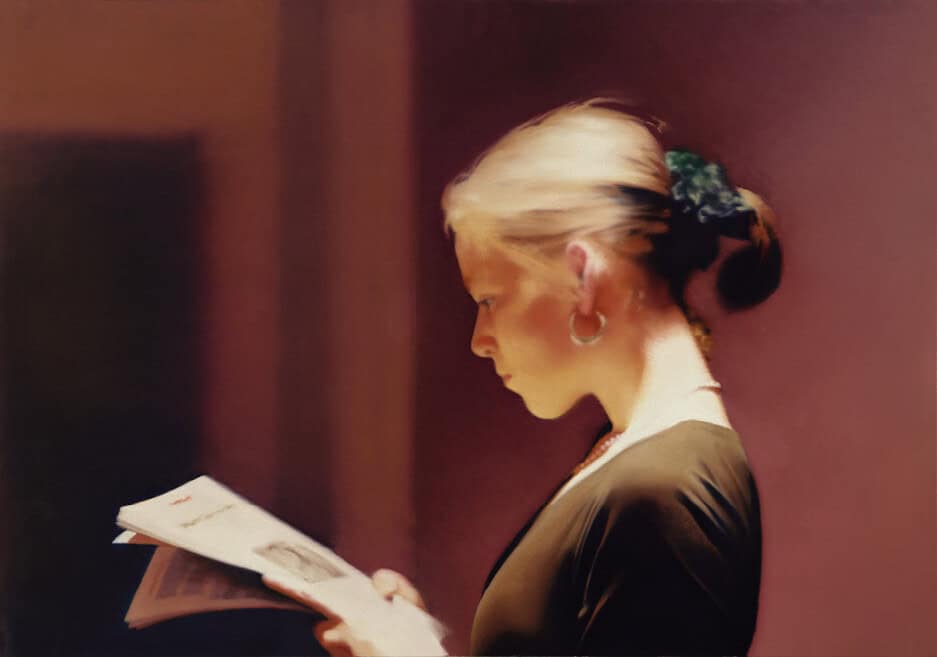
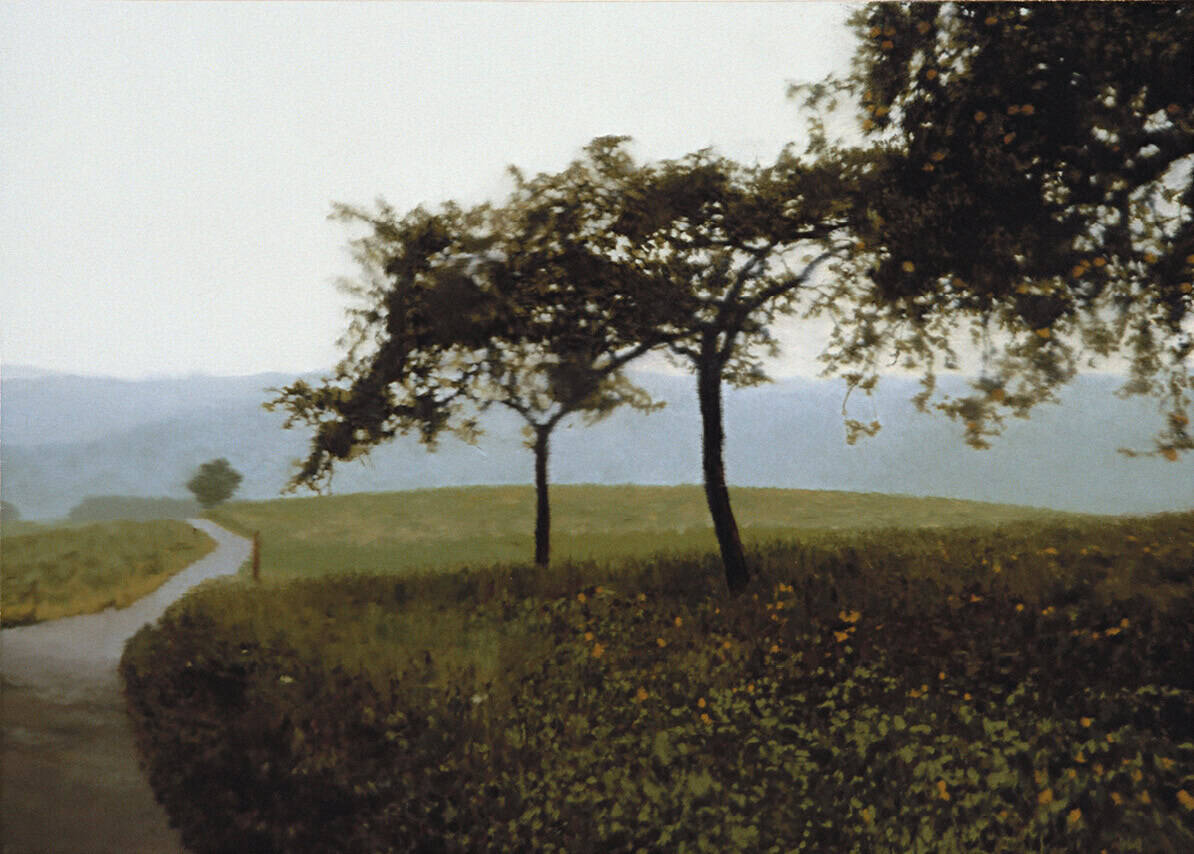
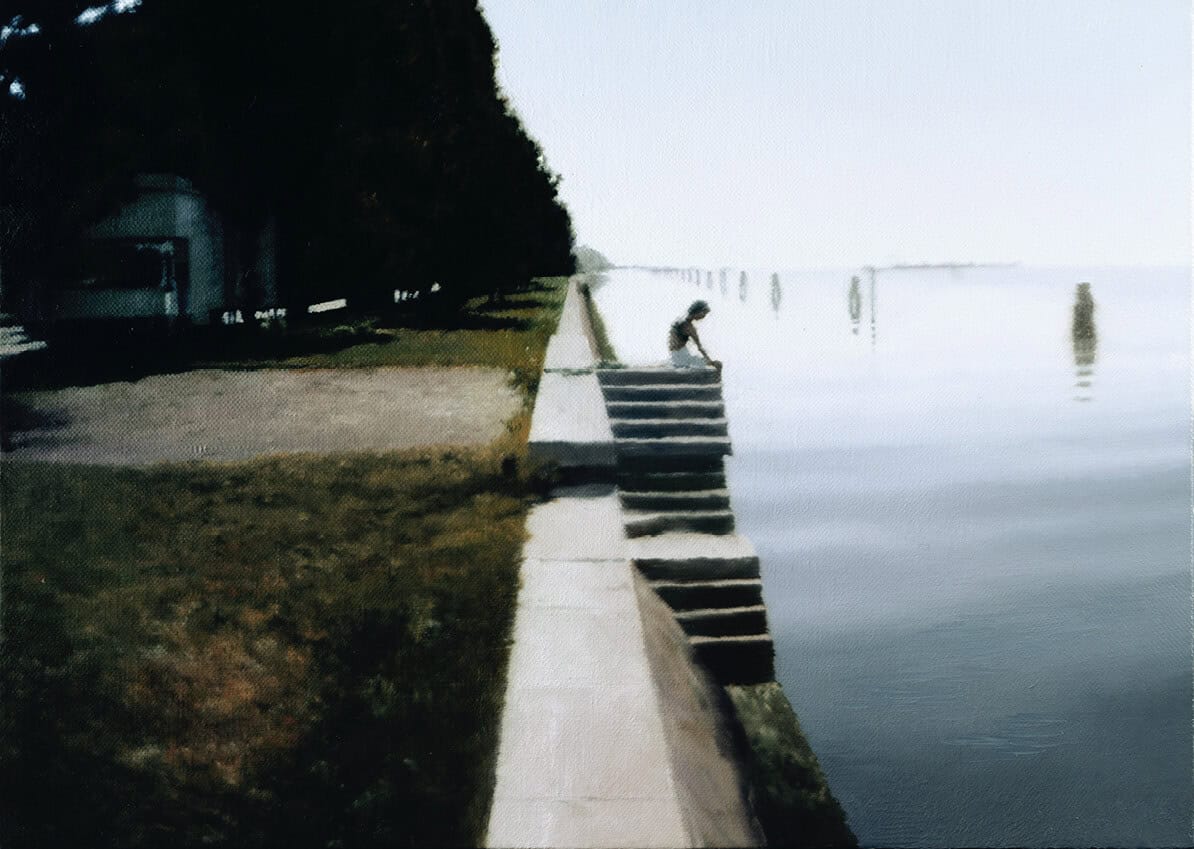
from left: ‘Lesende’, 1994; ‘Apfelbaume’, 1987; ‘Venedig’, 1985
The next sections of the exhibition dive a little deeper into this idea and how Richter used painting to not just represent a subject, but question what it means to represent something at all. Here, viewers see the origins of his signature blur technique, as well as his desire to take something recognisable and iterate it, altering it each time so it can no longer be easily identified. One example is his five-piece series Annunciation after Titian (1973), an interpretation of Titian’s 16th-century depiction of the Virgin Mary and an angel of the same name.
However, by Richter’s brush, it’s gradually copied and smudged until the final piece resembles what one would see if viewing Titian’s original through frosted or steamed-up glass.
The same desire to experiment is at play in his 19-part Colour Chart (1966) series, which initially had the old-school art world turning its nose up, claiming it was unimaginative. But the opposite is true. Breaking free of the restraints of a more figurative approach in his early years, Richter swells and shrinks different-coloured squares, shuffling them into various arrangements inspired by mass-produced colour charts. Here, painting itself, and what it should and shouldn’t be used for, is the subject. For Richter, it doesn’t just matter what he paints, but how he does it.
His large-scale abstract works, like Lilak (1982) and Cage (2006), push this even further. In these pieces, Richter deployed one of his most recognisable techniques – the use of a squeegee – a tool he used to drag paint across the canvas. First used in his blurred work, the squeegee in the context of these bold, expressive pieces allowed him to flip the precision usually associated with painting.
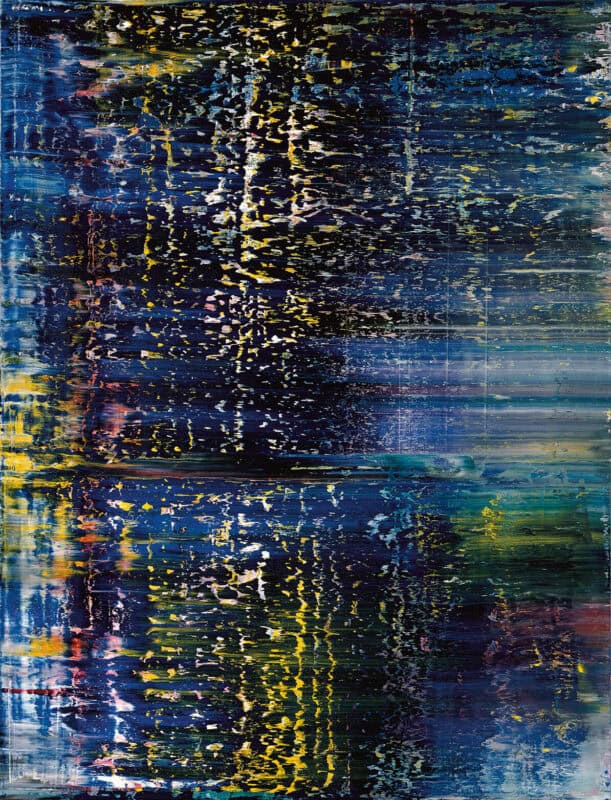
‘Wald (3)’, 1990
Here, the unpredictability and spontaneity was created by the squeegee, whereby the process of applying the paint became the subject. In turn, he once again shunned what was expected of him as a painter, favouring chance and imperfection over delicacy and accuracy. Despite his reverence for the craft, Richter’s understanding of painting was grounded. For him, painting wasn’t about enacting monumental change, but communicating the realities of human existence. “Painting has the value of enabling us to perceive the world without prejudices and from different points of view,” says Schwarz. “Art doesn’t have the power to change the world, but to make it visible.”
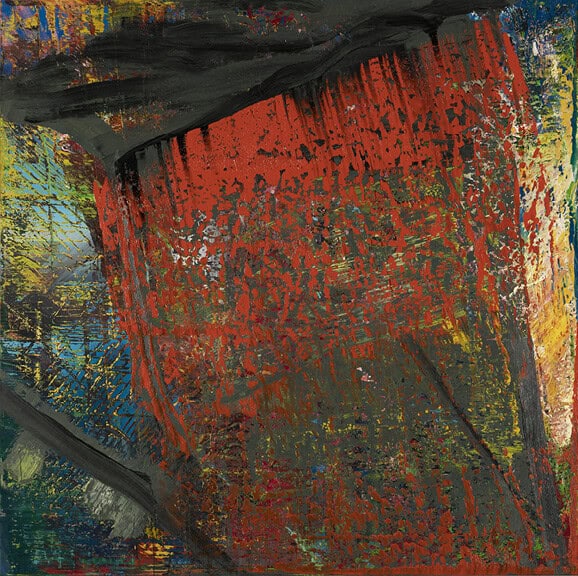
‘Gudrun’, 1987
This is evident in the most overtly political work in Richter’s collection, October 18, 1977 (1988), on show in the fifth section of the exhibition. A 15-piece series, it features Richter’s interpretations of widely circulated photographs of the Red Army Faction, a far-left terrorist group embroiled in the political upheaval at the time. On the date titled in his artwork, three out of the four imprisoned members died in their cells; the lone survivor claimed a government assassination attempt.
By utilising repetition and blurring, Richter abstracts the once crisp documentary images to emphasise the impossibility of forgetting them once they circulate into public view. “He remained convinced that with this old-fashioned technique [of painting] you could represent the contemporary world,” says Schwarz.
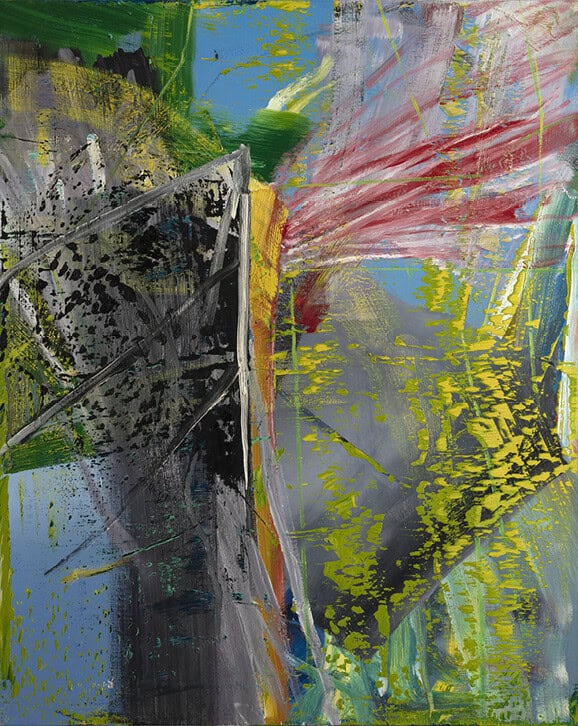
‘Carotte’, 1984
Richter’s willingness to experiment didn’t stop at paint and canvas. By the late 1990s, he was embracing technology, using computer programs to test how randomness could shape composition. The result was 4900 Colours (2008), a vast grid of multicoloured squares that built on his earlier Colour Chart series. For the artist, digital tools weren’t a departure from painting but an extension of it, another way to play with order, chaos and perception.
When considering why a Richter exhibition at the Fondation Louis Vuitton matters now, the answer lies in his lifelong refusal to be boxed in. He has never shied away from the new or the uncertain, embracing creativity and discovery with such reverence that he uprooted his life to pursue them. That’s the lesson his career offers: to stay open, experiment and face change with courage rather than fear. His story and his art both speak to the resilience of the human spirit – proof that meaning and beauty can always be found, if we’re willing to look for them.
Photography courtesy of Louis Vuitton Fondation. Gerhard Richter is open at Fondation Louis Vuitton until February 2, 2026
Taken from 10+ Issue 8 – FUTURE, JUBILEE, CELEBRATION – out now. Order your copy here.


