November 9, 2026 |
Once upon a time, fashion was so focused on looking forward that even the most historic houses rarely kept anything from their pasts. History was baggage. Today, the story is different. Heritage is a house’s most valuable asset. Archives are no longer considered to be dusty storage facilities. They have become the beating heart of many brands, allowing them to safeguard heritage, inspire creative teams and capitalise on their origin stories. We go inside five of fashion’s finest.
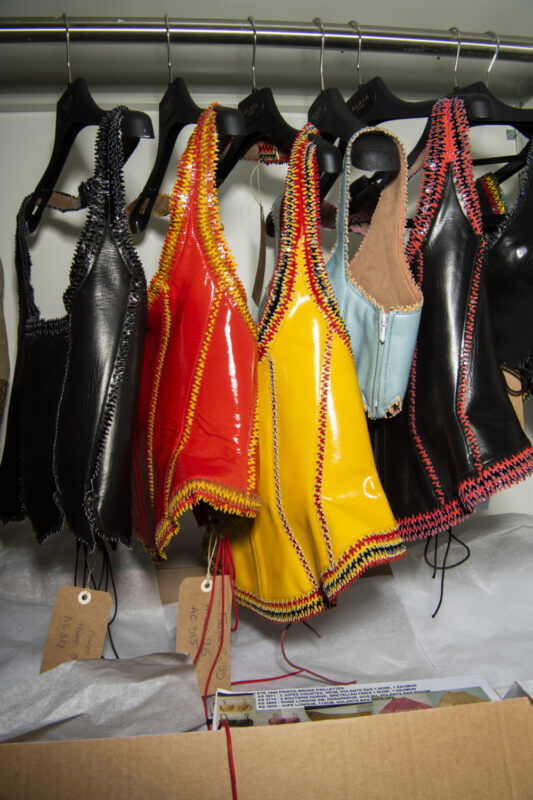
Colourful SS96 leather pieces meticulously archived by Azzedine Alaïa – the designer kept at least one of everything he made
FONDATION AZZEDINE ALAÏA
Long before it became accepted practice, Azzedine Alaïa, who died in 2017, was archiving his own work. “He kept every piece he made, sometimes in triplicate,” explains Carla Sozzani, the publisher, gallerist and owner of the 10 Corso Como stores, who was also entrusted by the designer and his late partner Christoph von Weyhe to create and oversee the Fondation Azzedine Alaïa. “As he said, ‘I am not a designer. I am a couturier.’ He knew the value of his work: so much passion, so many nights, so much dedication,” says Sozzani. The late designer wanted his foundation to be a cultural and educational space for future generations and, in 2020, she created the foundation, according to his wishes. Her first task was to assess the extent of the collection.
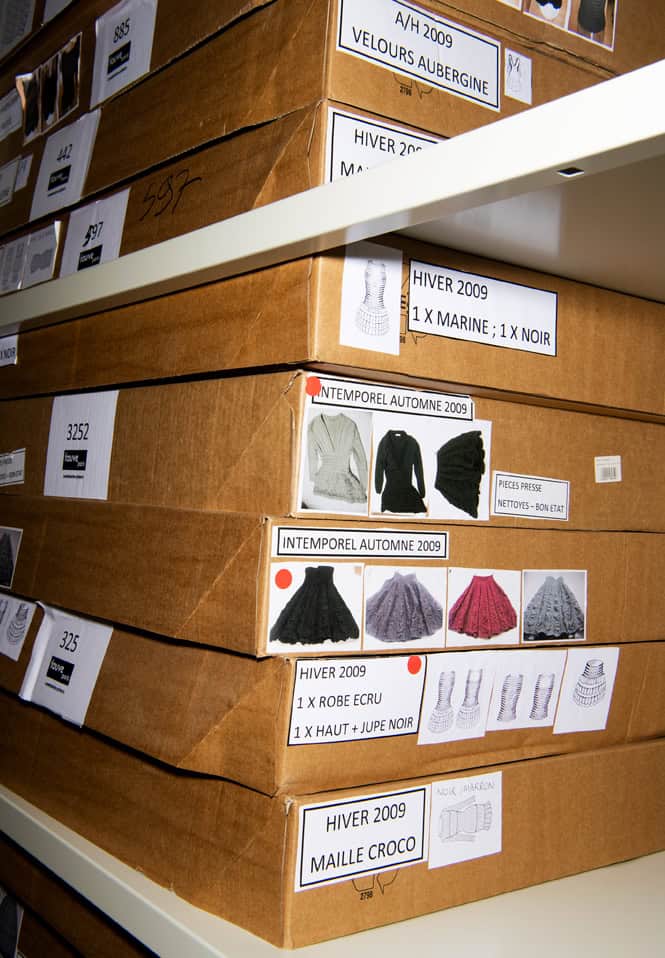
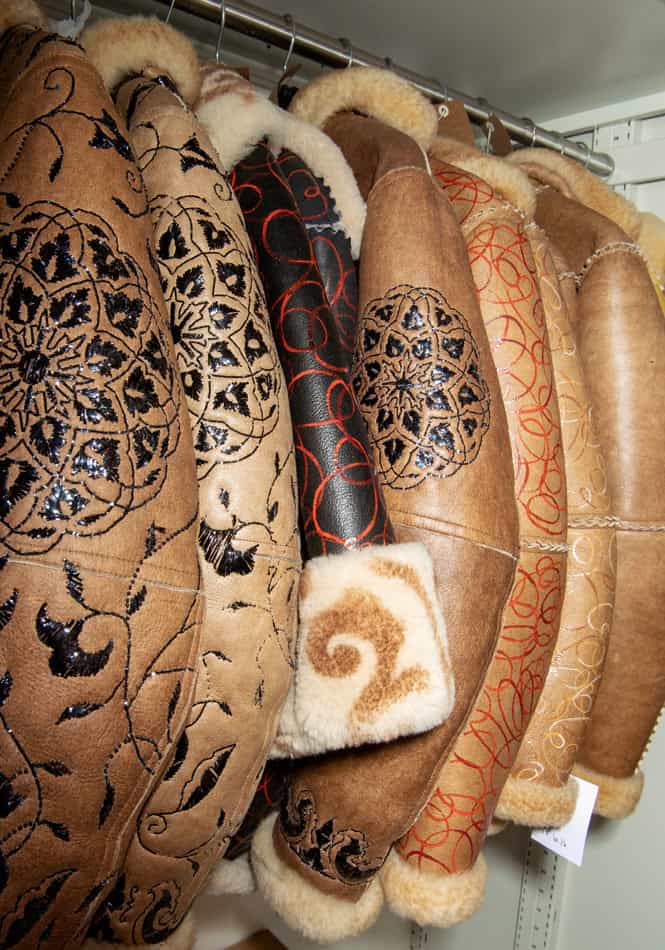
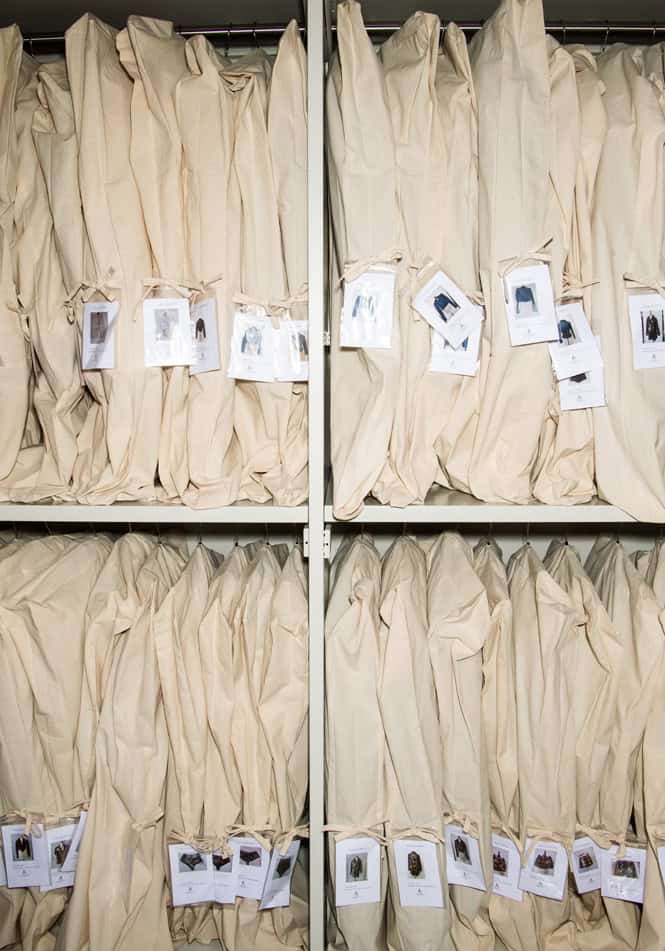
From left; items from 2009 stored in boxes; exquisitely embellished shearling jackets; pieces from a 1991 collection
It was no secret that Alaïa was a prolific collector, but the extent of his passion only became clear after his death, as Sozzani set about converting the designer’s studio, gallery space, three-room hotel and private apartments into the Fondation. Spread over its five floors and three buildings on the Rue de Moussy in Paris, were rare and important 20th-century design pieces, photos and books. Priceless, museum-level artefacts were piled high in its many rooms. Not only were there more than 20,000 Alaïa pieces, including items worn by Tina Turner and Marlene Dietrich, but the designer had also amassed a vast, museum-quality collection of haute couture masters. Totalling around 15,000 pieces, there are over 600 Christian Dior originals and 300 Balenciaga couture pieces, as well as clothing by Madame Grès, Chanel, Charles James, Paul Poiret, Madeleine Vionnet and the Hollywood costume designer Adrian. Every room in the complex from the basement to the rafters was “full, full, full,” says Sozzani. “Of clothes, of his own work and collections, and lots of the masters of fashion that he had been collecting. You can’t imagine. We have pictures of how they were,” she says.
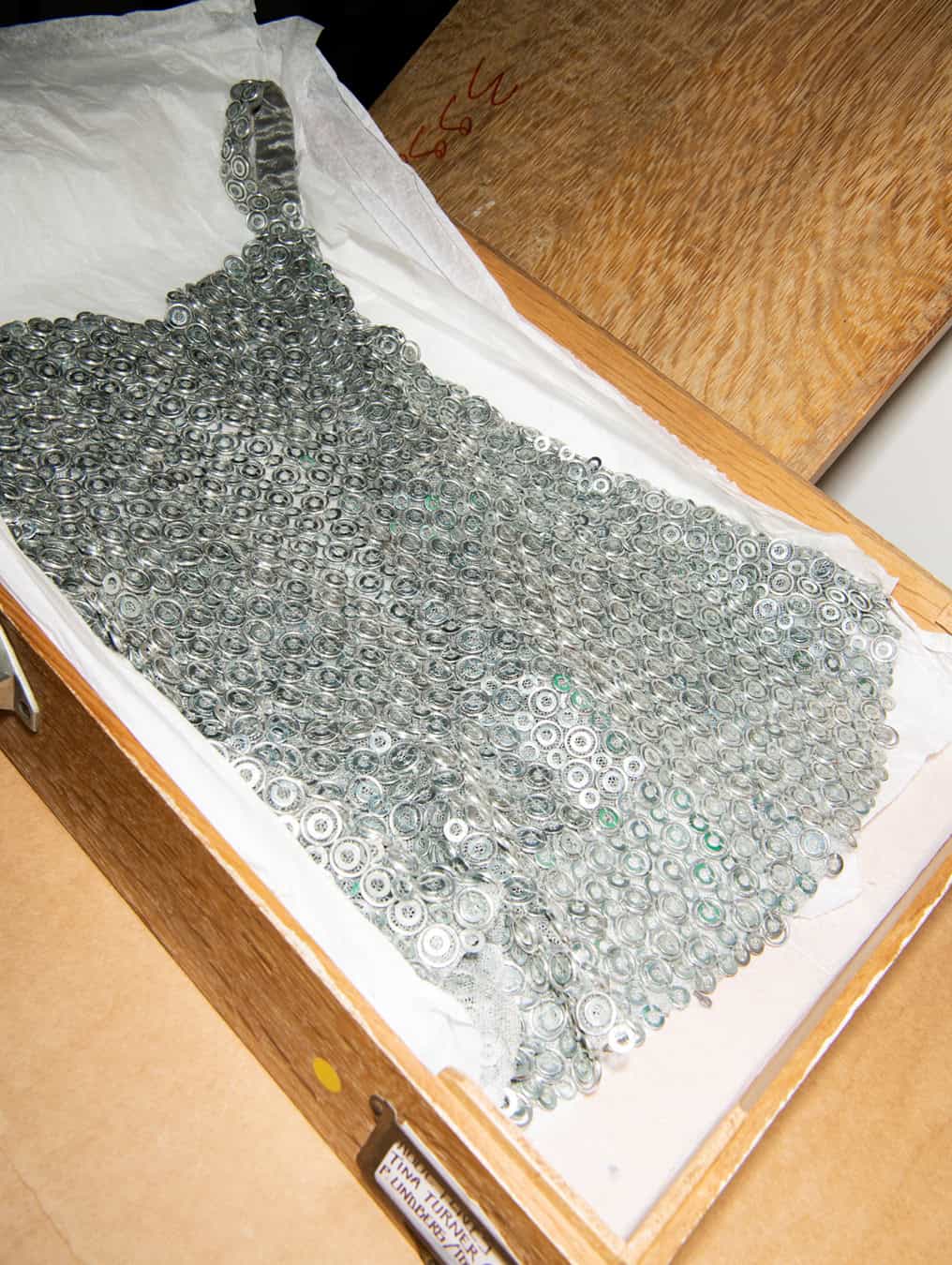
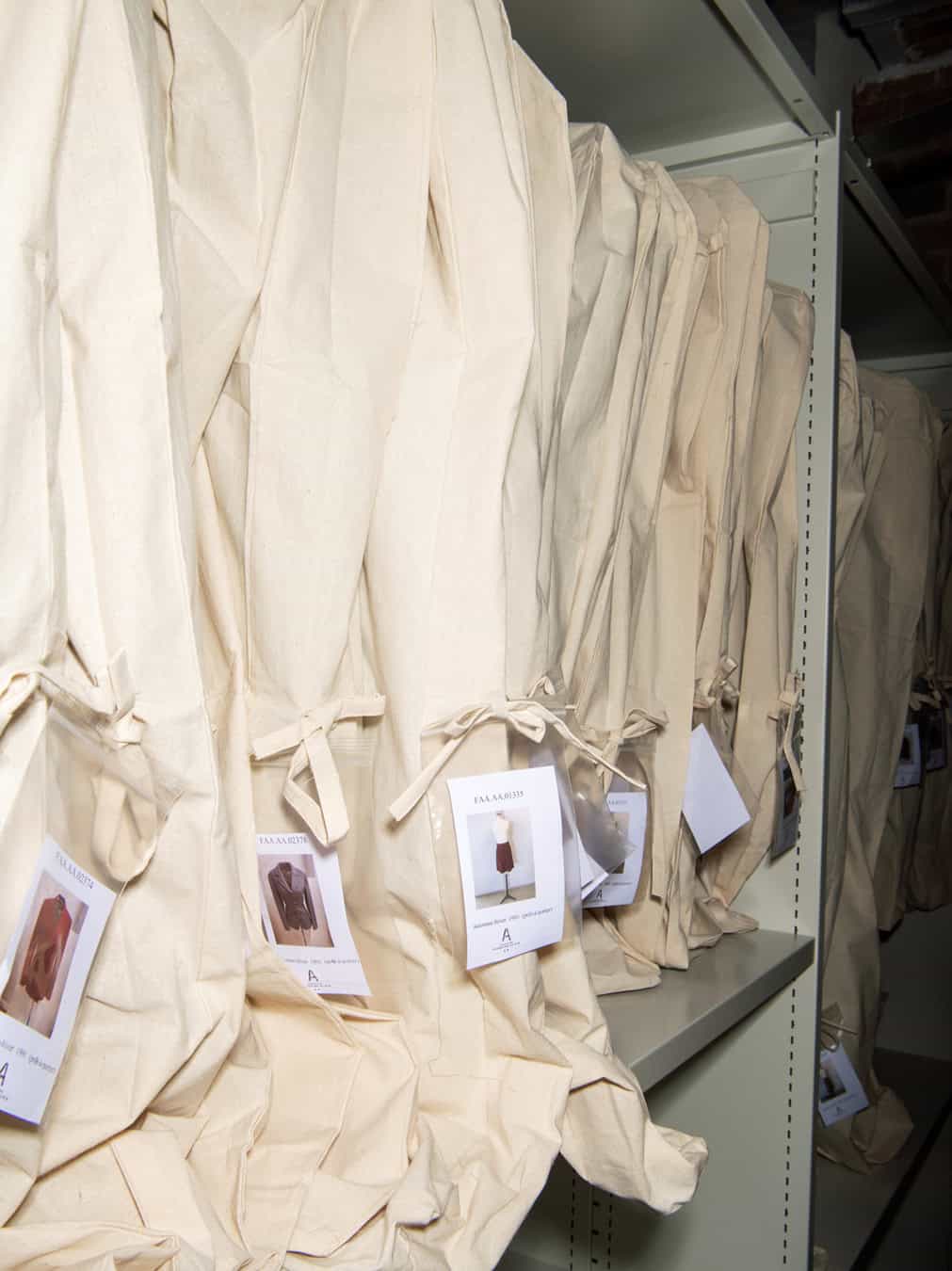
A silver mini dress made for Tina Turner, pieces from the AW91 collection.
Just as Alaïa’s instinct to archive his own work was far ahead of its time, so too was his urge to collect pieces by the masters of 20th-century fashion. Long before the idea of vintage or heritage was fashionable, he was amassing the largest and most important private fashion collections. It started in 1968, when upon hearing of the sudden closure of Cristóbal Balenciaga’s couture house, he went with a model friend to his studio. “They saw all these amazing pieces, so he took them home and started to cherish them. He collected Balenciaga all his life,” says Sozzani.
After Alaïa’s death, she remembers taking Andrew Bolton, the head curator of the Anna Wintour Costume Center at The Metropolitan Museum of Art, on a tour. “He told me you need five years and 12 people a day to organise it. I said it would take 15 years because we don’t have that many people.” She did it in five. Each floor of the building took roughly a year to complete, with the contents of every room documented, organised and catalogued.
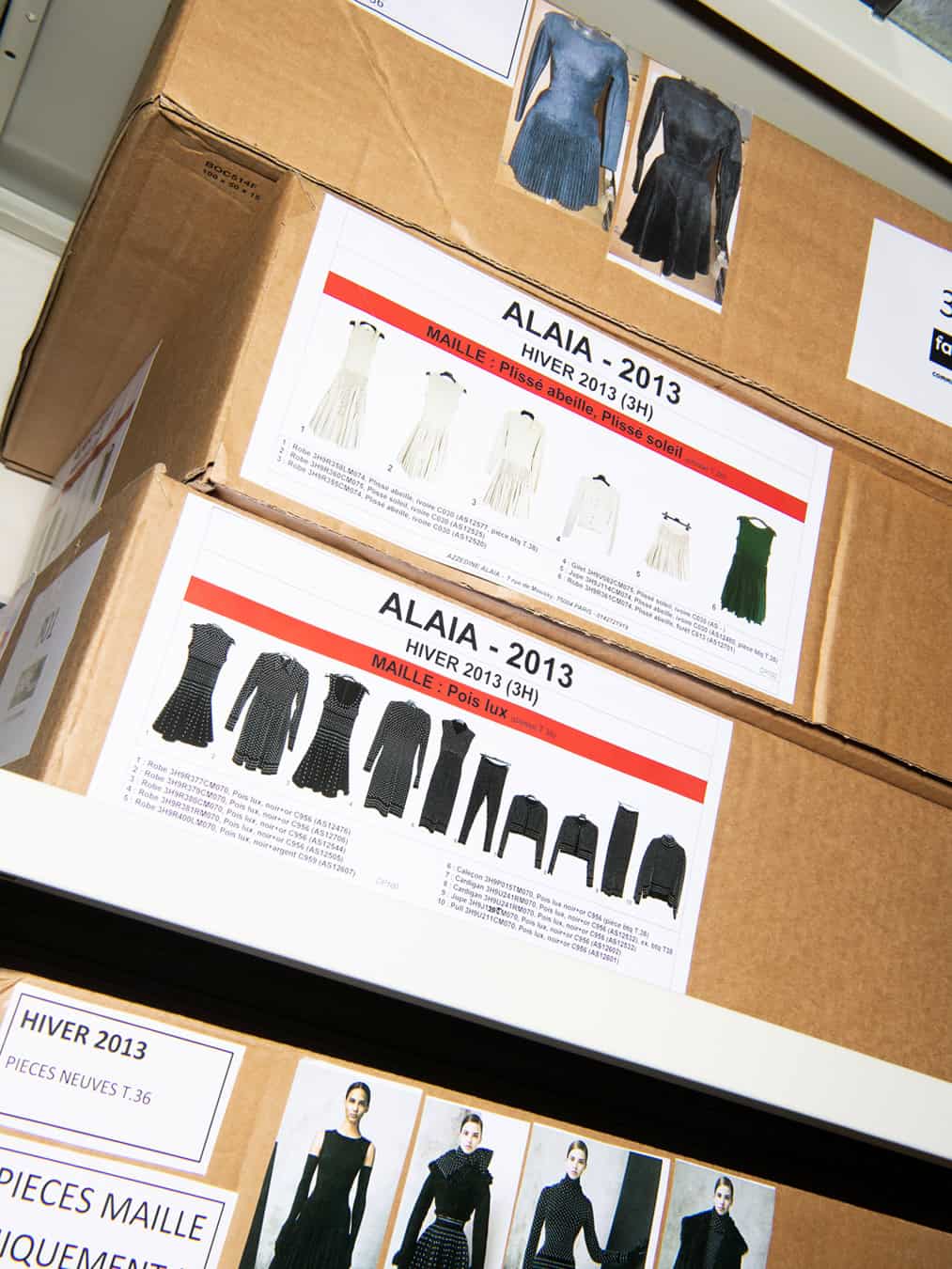
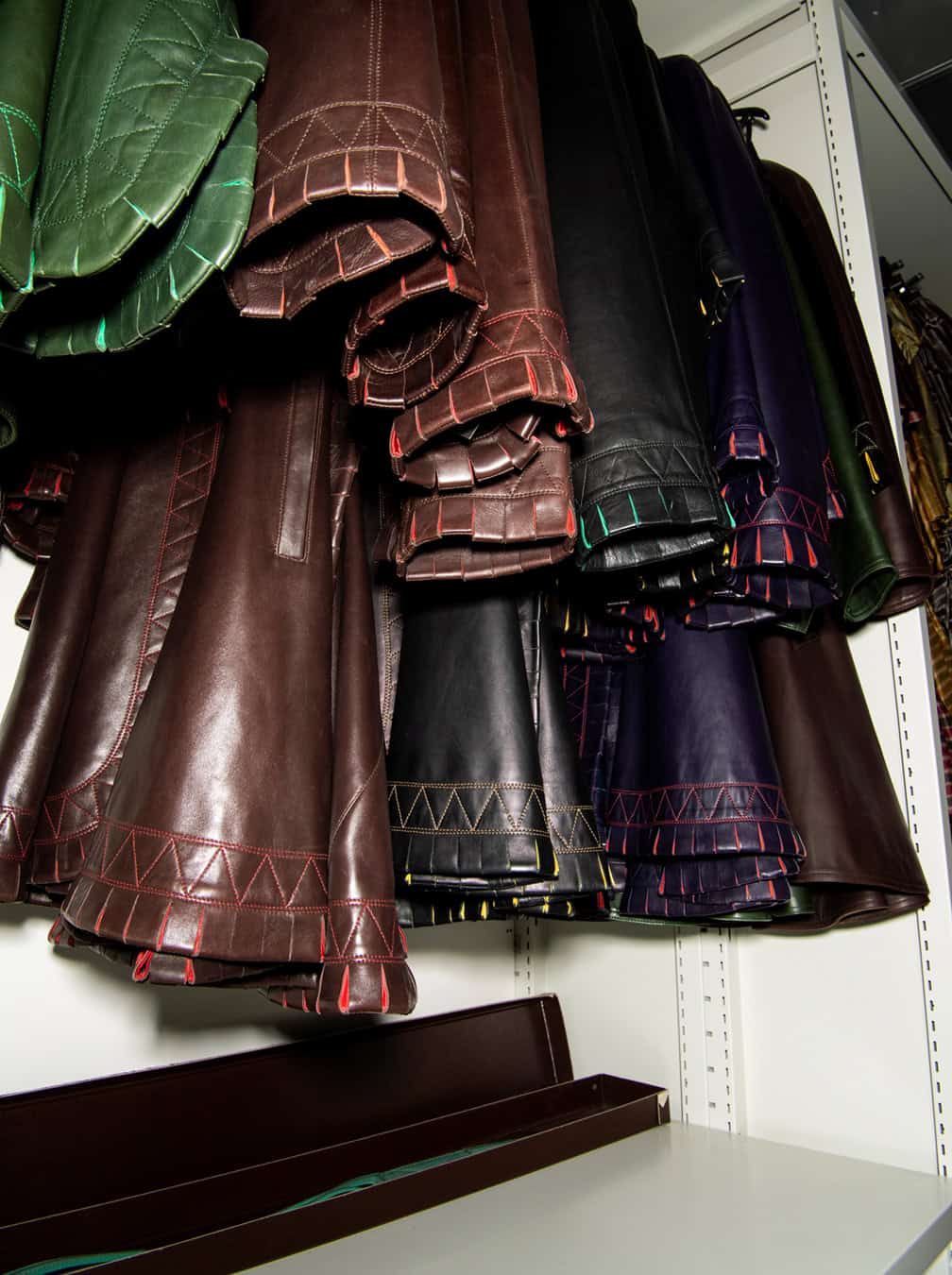
From left; knits from 2013; leather pieces hanging in the archive
Gradually, the building yielded its treasures. By 2023, Sozzani had converted the vaulted basement of the Rue de Moussy space into a huge temperature-controlled Alaïa fashion archive and brought in esteemed fashion historian and curator Olivier Saillard to oversee it. A master storyteller, he has used the world-class collection to stage thrilling exhibitions, which throw fresh light on Alaïa’s legacy, from his fascination with the costume designer Adrian to his obsessions with Balenciaga and Dior, his employer for a very short time at the beginning of his fashion career. The latest exhibition, Azzedine Alaïa and Africa, explores the influence of Alaïa’s Tunisian homeland on his design aesthetic, and Saillard recently worked on a ground-breaking joint exhibition with La Galerie Dior, showcasing previously unseen pieces from Alaïa’s collection of Dior couture, which ran concurrently in both spaces.
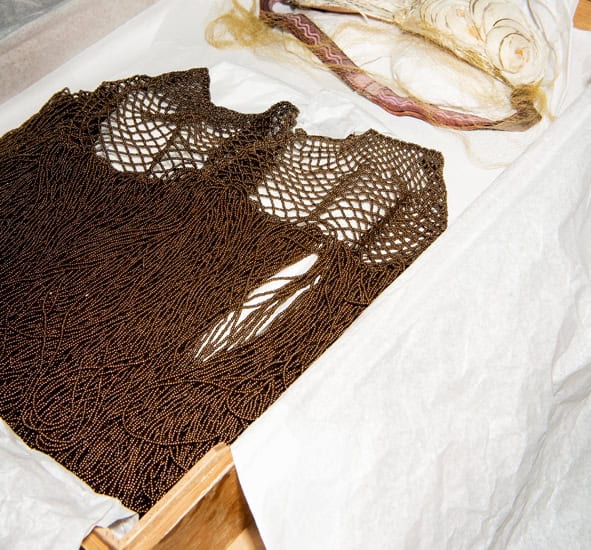
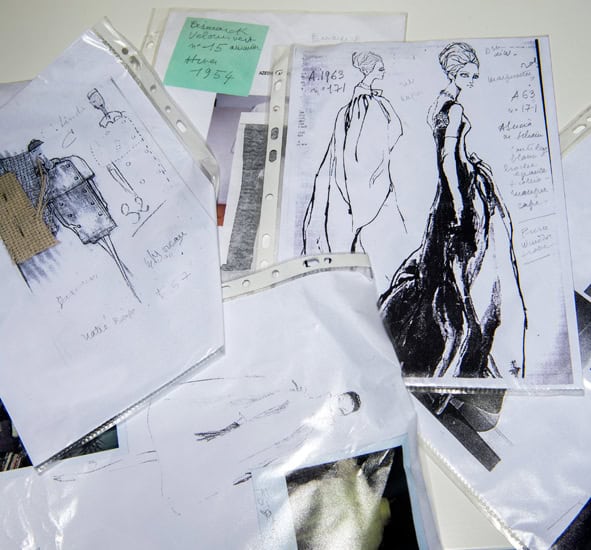
From left; bra and beaded skirt; Alaïa’s sketches from the 1950s and ’60s
Alaïa kept many of his prolific purchases a secret. One of his favourite ruses was to tell everyone at the atelier he was going to a physio appointment for his knees, when in fact he was slipping out to an auction or a vintage shop. He always bought the rarest, finest pieces and often outbid museums to get his prizes. “He had no budget because he had no sense of money,” says Sozzani. “He wanted only ever to have enough money to afford the most important thing in the world, which is freedom.” He took the same covert approach with furniture and design.
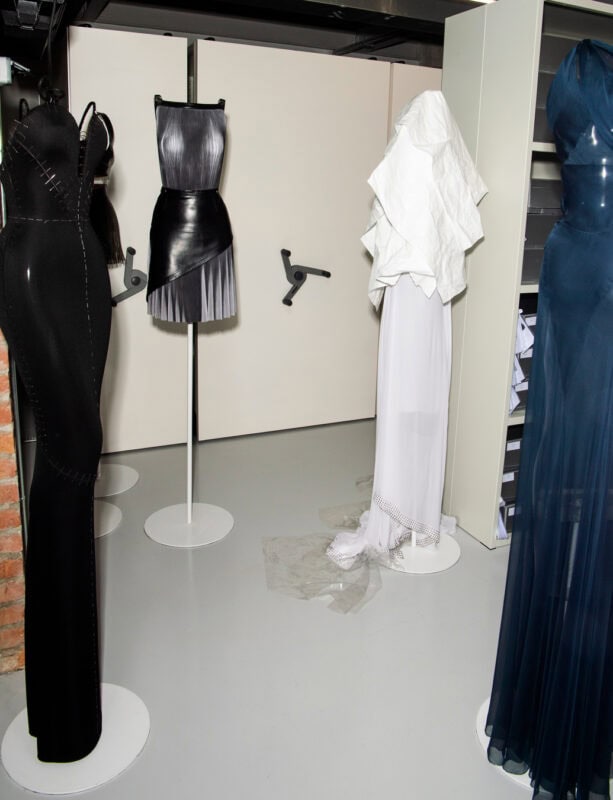
Inside the basement archive at Fondation Azzedine Alaïa, which was completed in 2023.
She describes how he’d leave secret purchases in his car, retrieving them late at night after everyone at Rue de Moussy had gone to bed, then squirrelling them away in any one of the three buildings on the site. Sozzani remembers finding 15 museum-quality Balenciaga pieces packed into plastic bags in one room. “So, you can find a Balenciaga on the fifth floor, you can find a Balenciaga in the basement.”
Those Balenciaga pieces, alongside his collection of other couture masters, now live in a separate archive space next to a library that houses Alaïa’s vast collection of fashion and art books. The foundation is ever-evolving and will soon expand into the space where Mr Alaïa had his fitting room and boutique since 1981. This autumn, it will become a museum and cultural space. The legacy continues.
Photography by Jason Lloyd Evans. Taken from 10 Magazine Issue 77 – FUTURE, LEGACY, HERITAGE – out NOW. Order your copy here.