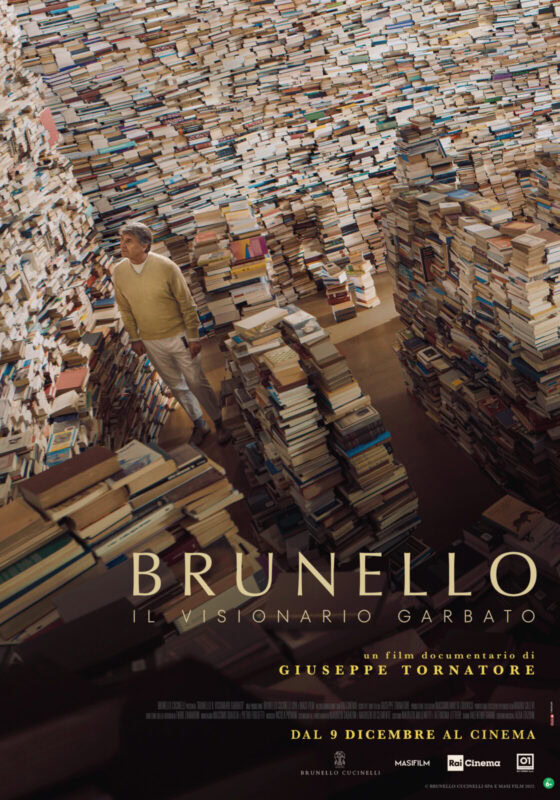
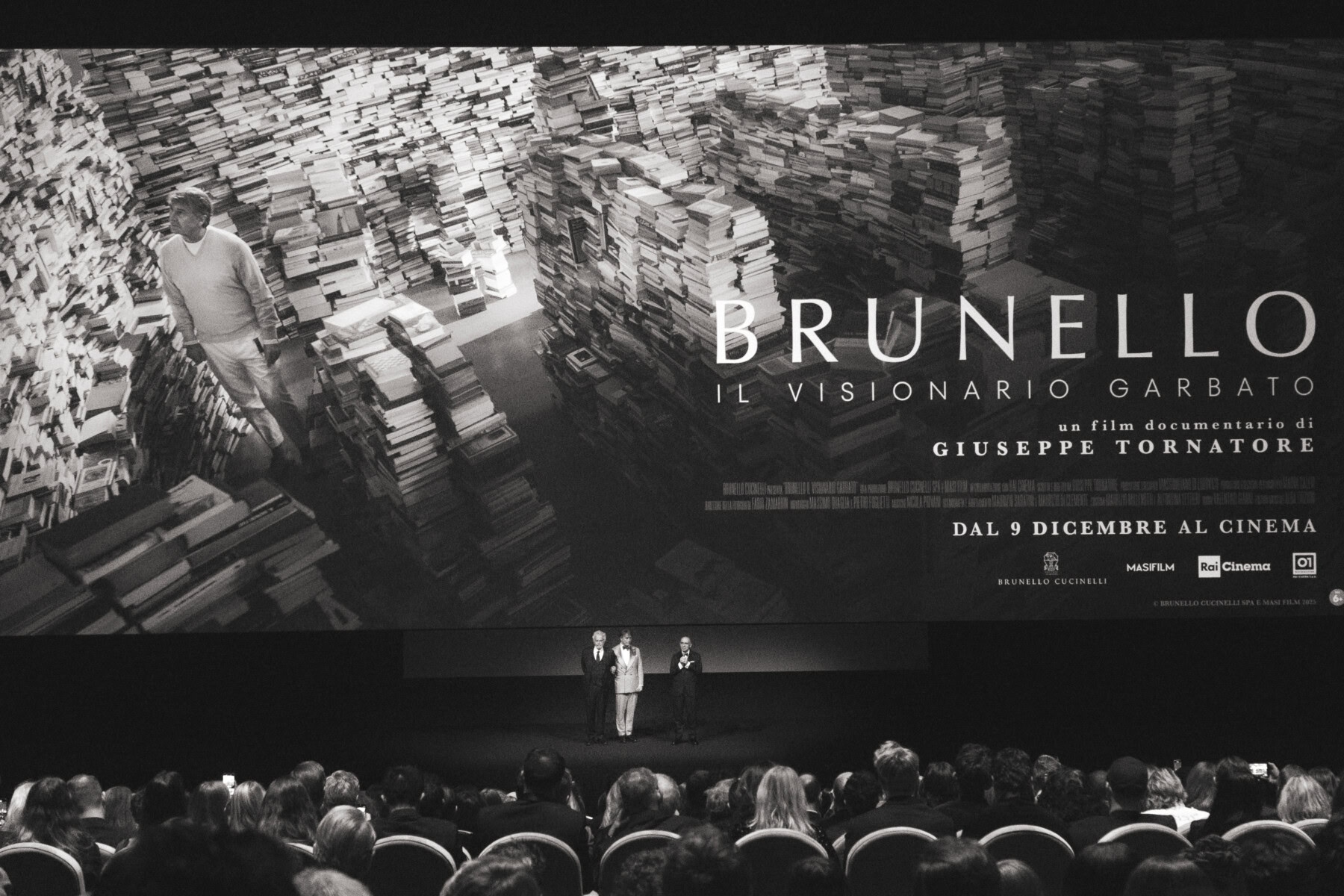
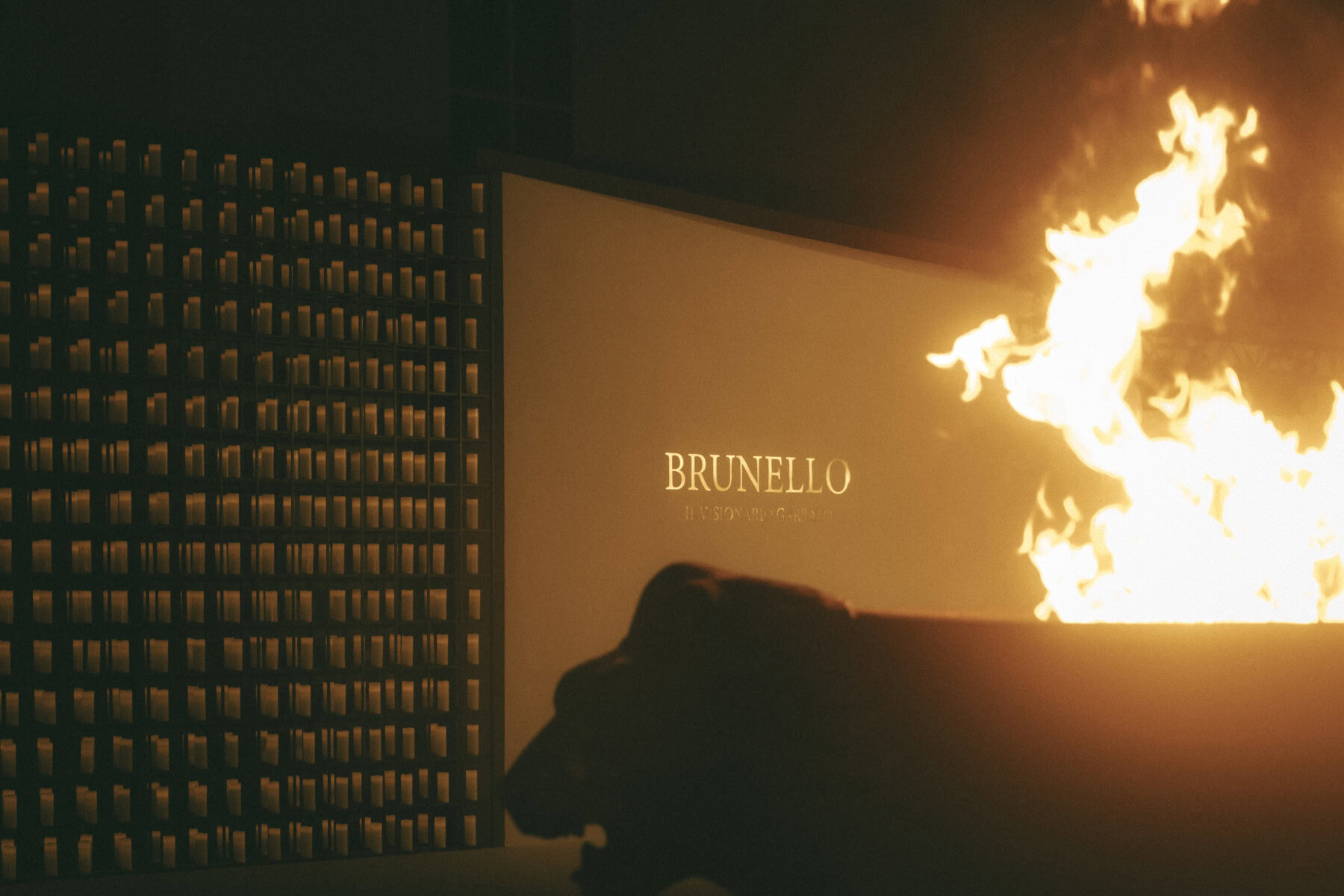
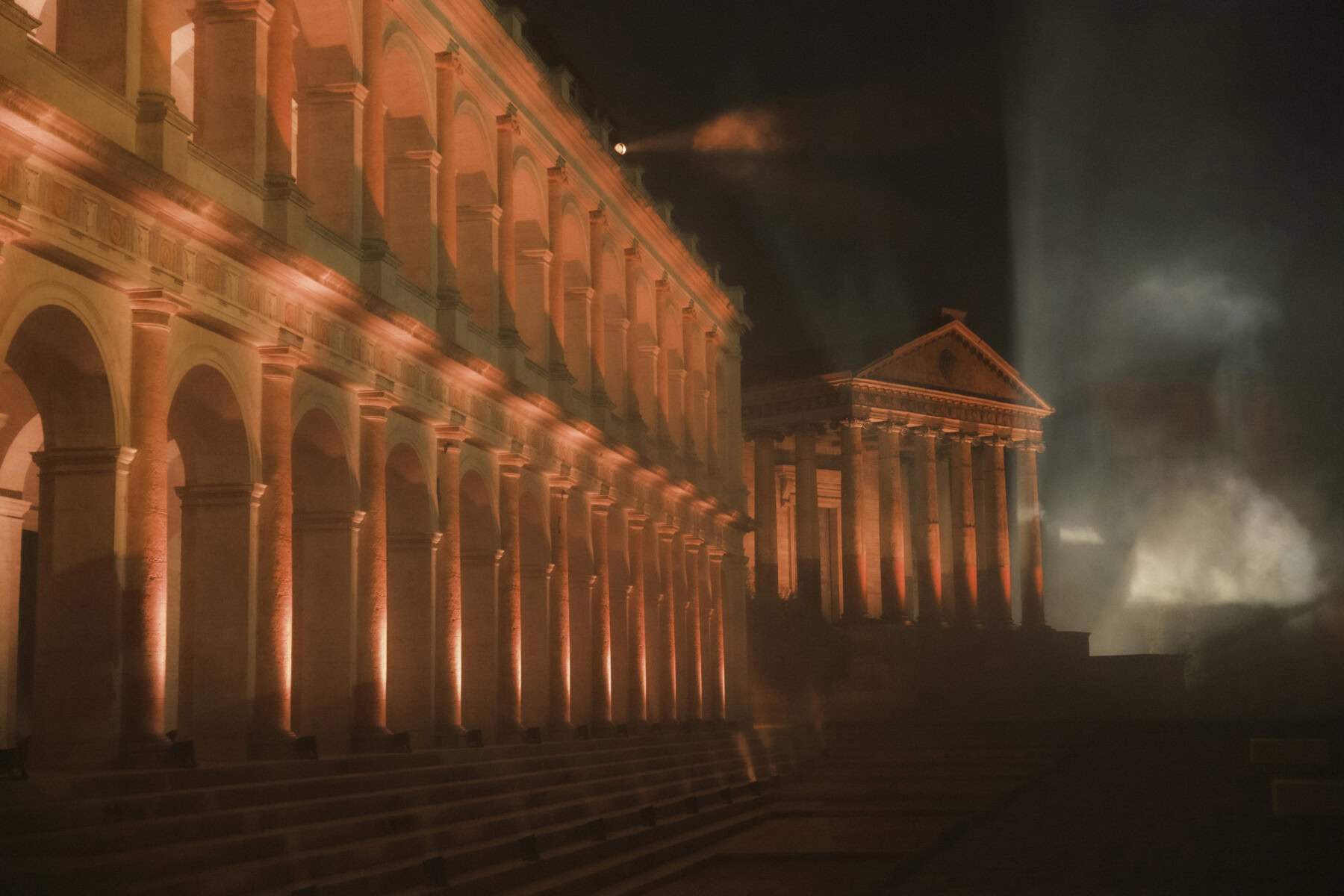
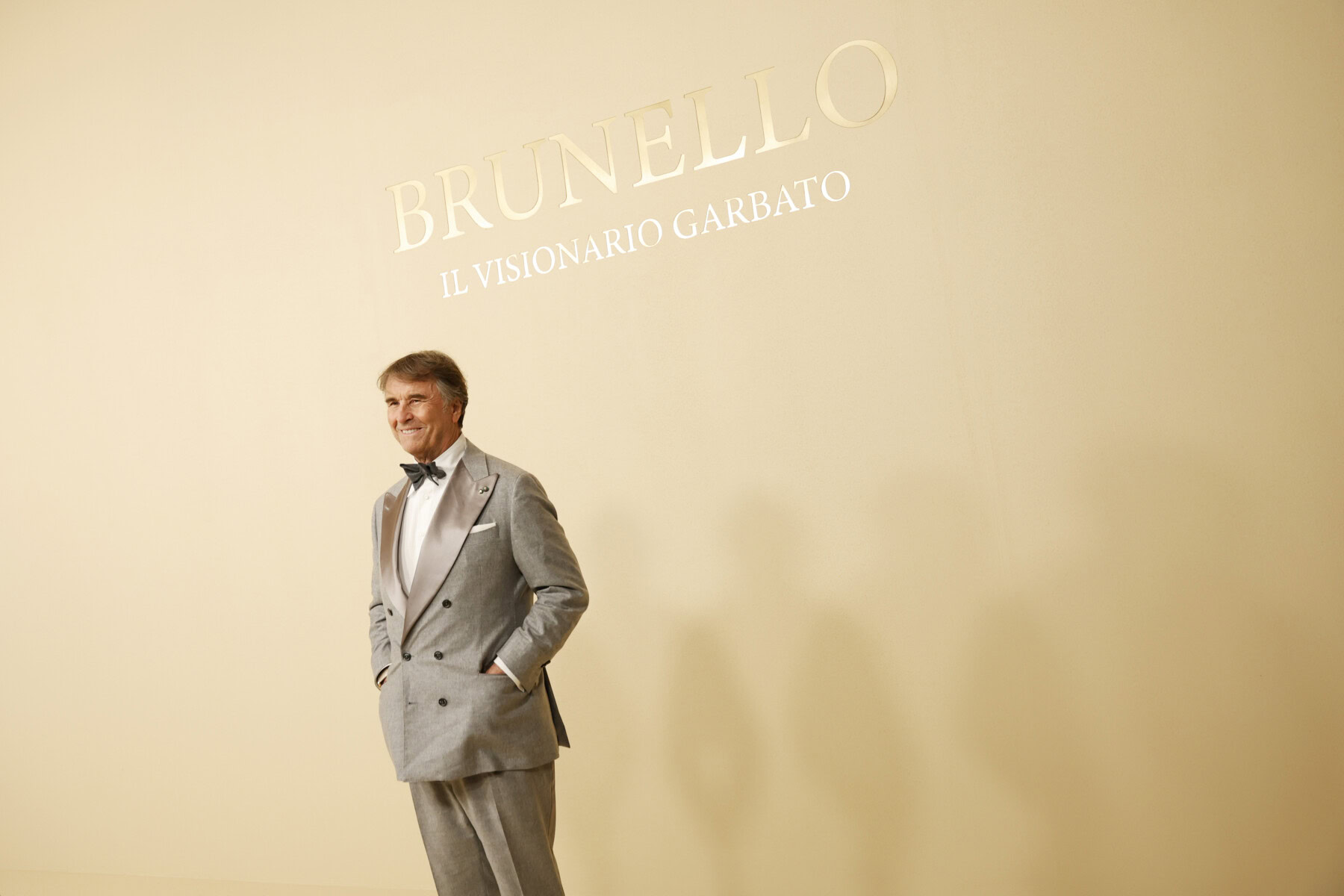
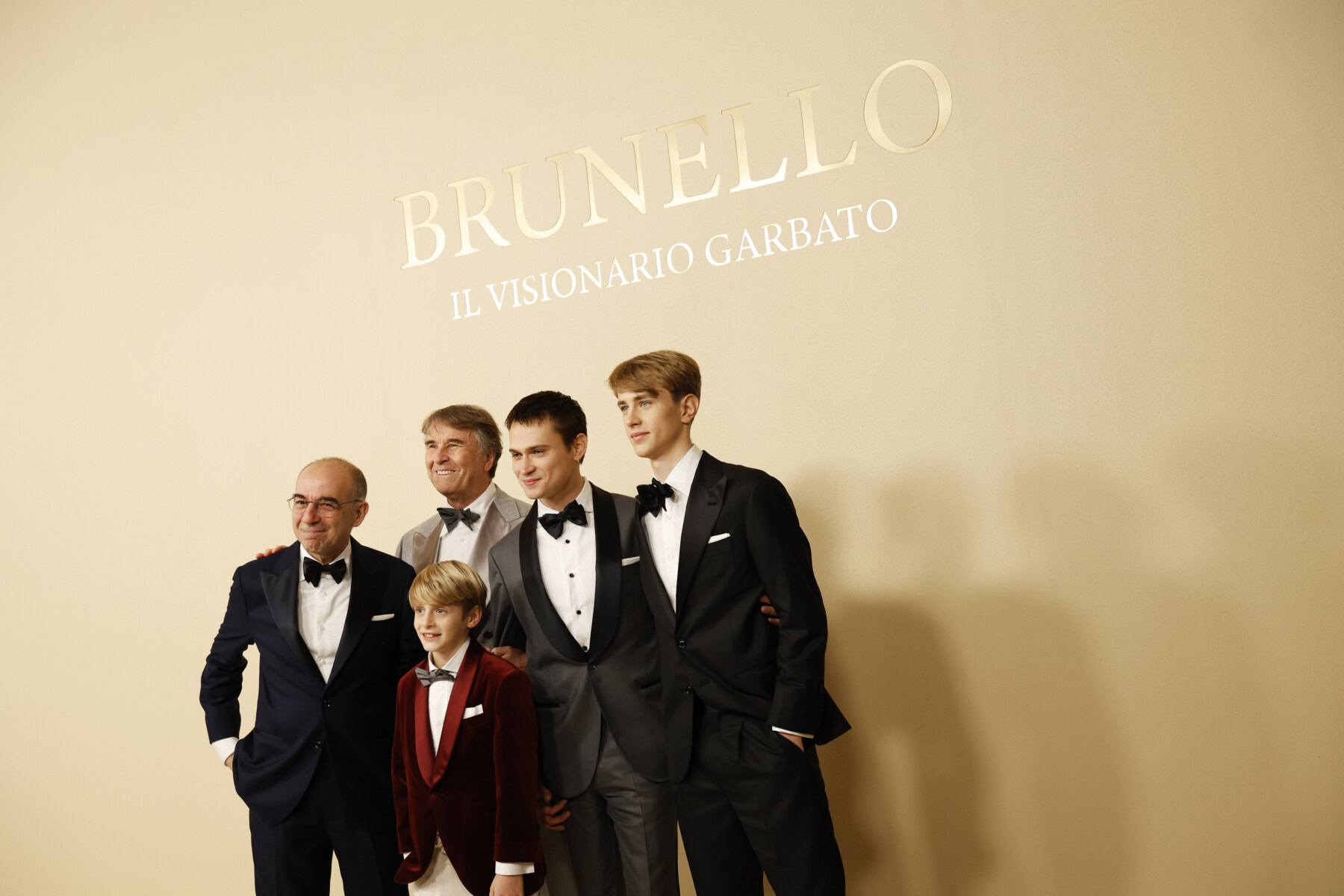
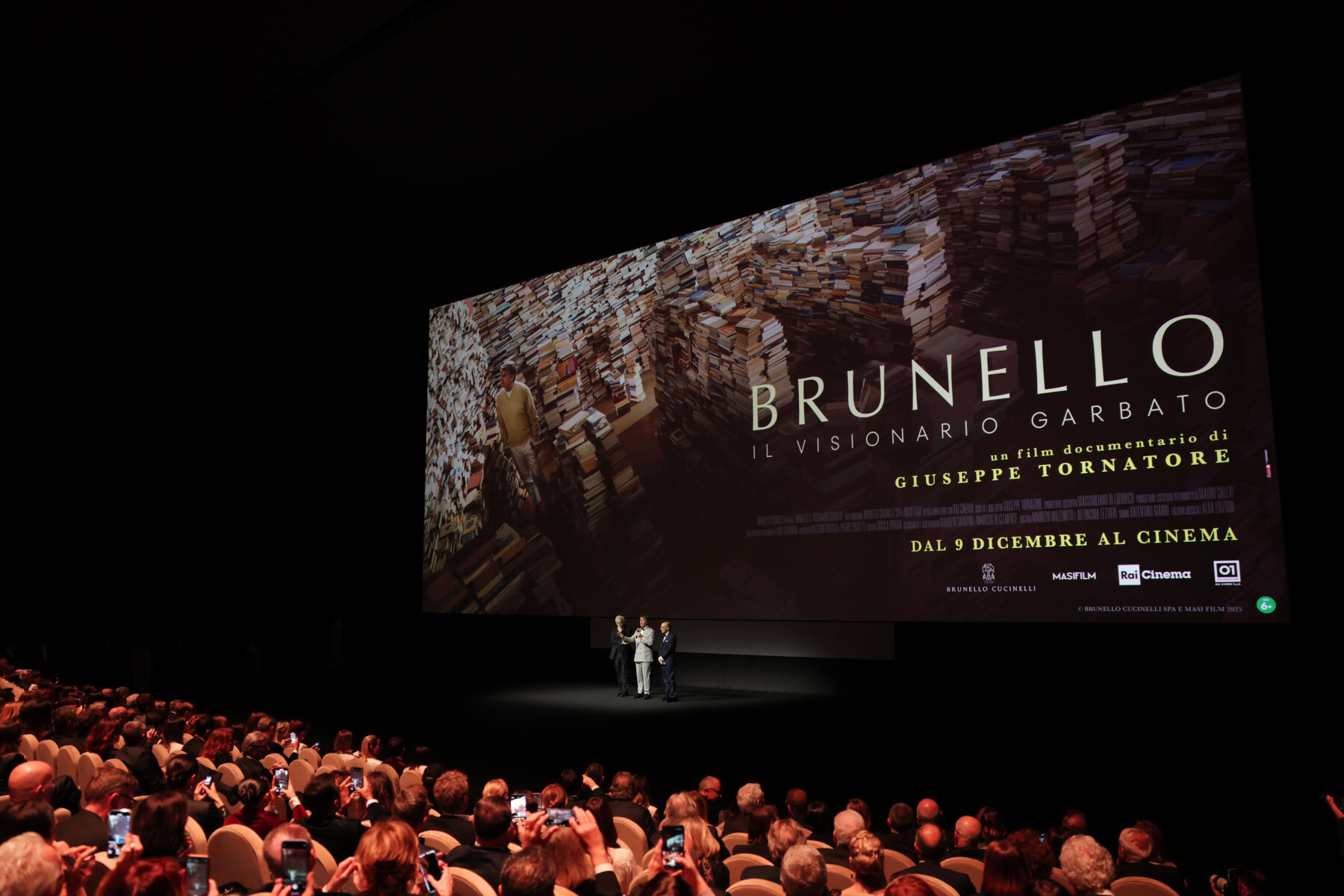
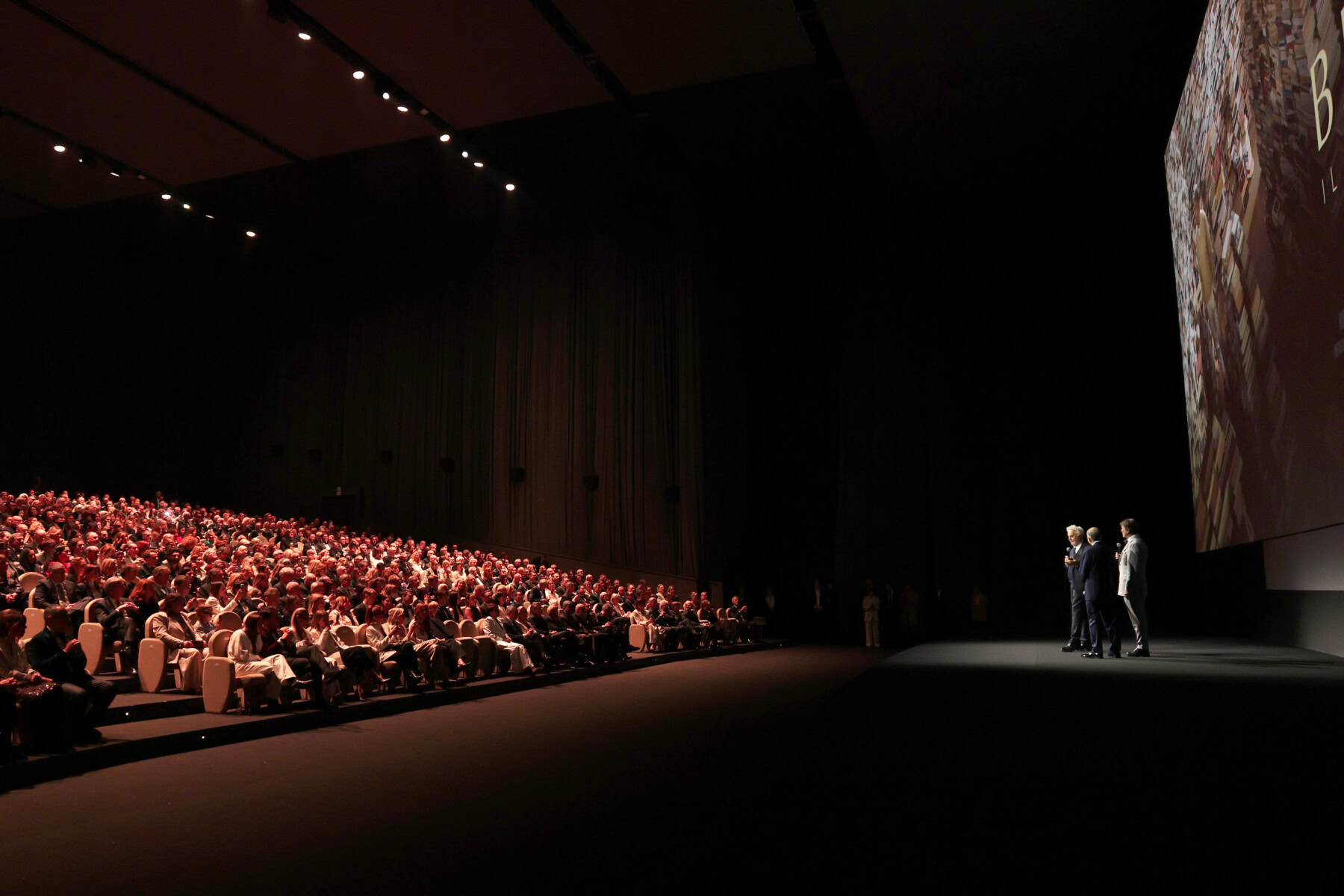
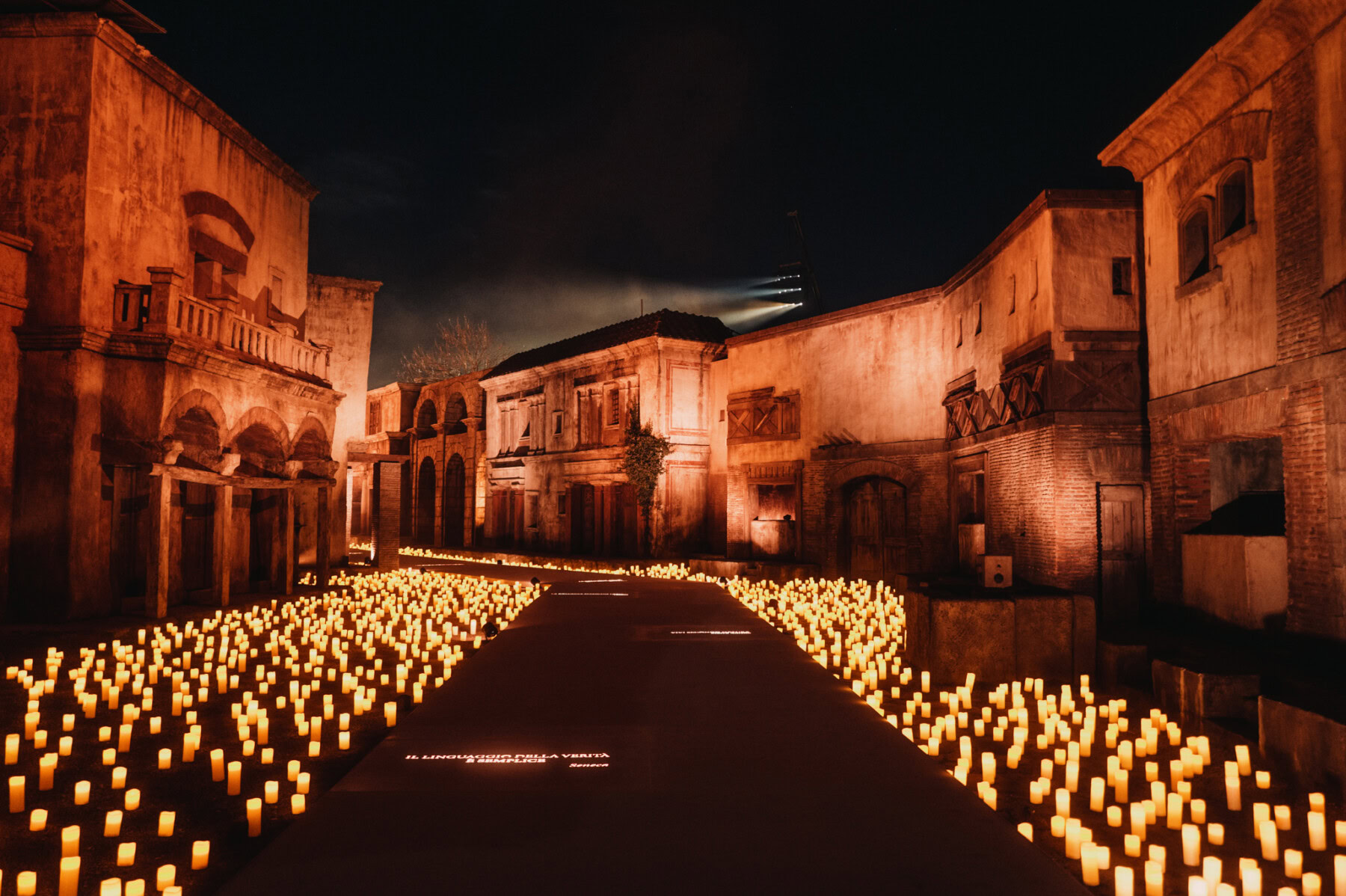
“I wanted my life translated into a movie whilst I am alive so people can hear my voice and my take on it,” said Brunello Cucinelli the day after he hosted a premiere in Rome’s Cinecitta for his latest project: a movie of his life, directed by the acclaimed Giuseppe Tornatore of Cinema Paradiso fame.
Brunello: the Gracious Visionary is part documentary part drama, woven together with Tornatore’s signature poetic charm. It tells the story of Cucinelli’s rise from a poor farm boy, who slept above the barn and didn’t see a TV until he turned 14, to Italy’s billionaire cashmere king and a campaigning humanist capitalist with popes, kings and tech titans in his circle of influence. It boasts cameos from characters as diverse as Oprah Winfrey and his priest as well as his wife, daughters Carolina and Camilla (who are vice presidents and creative co-directors of the company) as well as many childhood friends. Their insights are deftly layered in with beautifully shot scenes from Cucinelli’s life.
“We entered the deep most intimate corners of my soul,” said the designer of his collaboration with the director who interviewed the designer on every aspect of his life, from the games he played as a child to how he met his wife (he followed her bus on his motorbike wearing his best outfit, hoping she’d notice him).
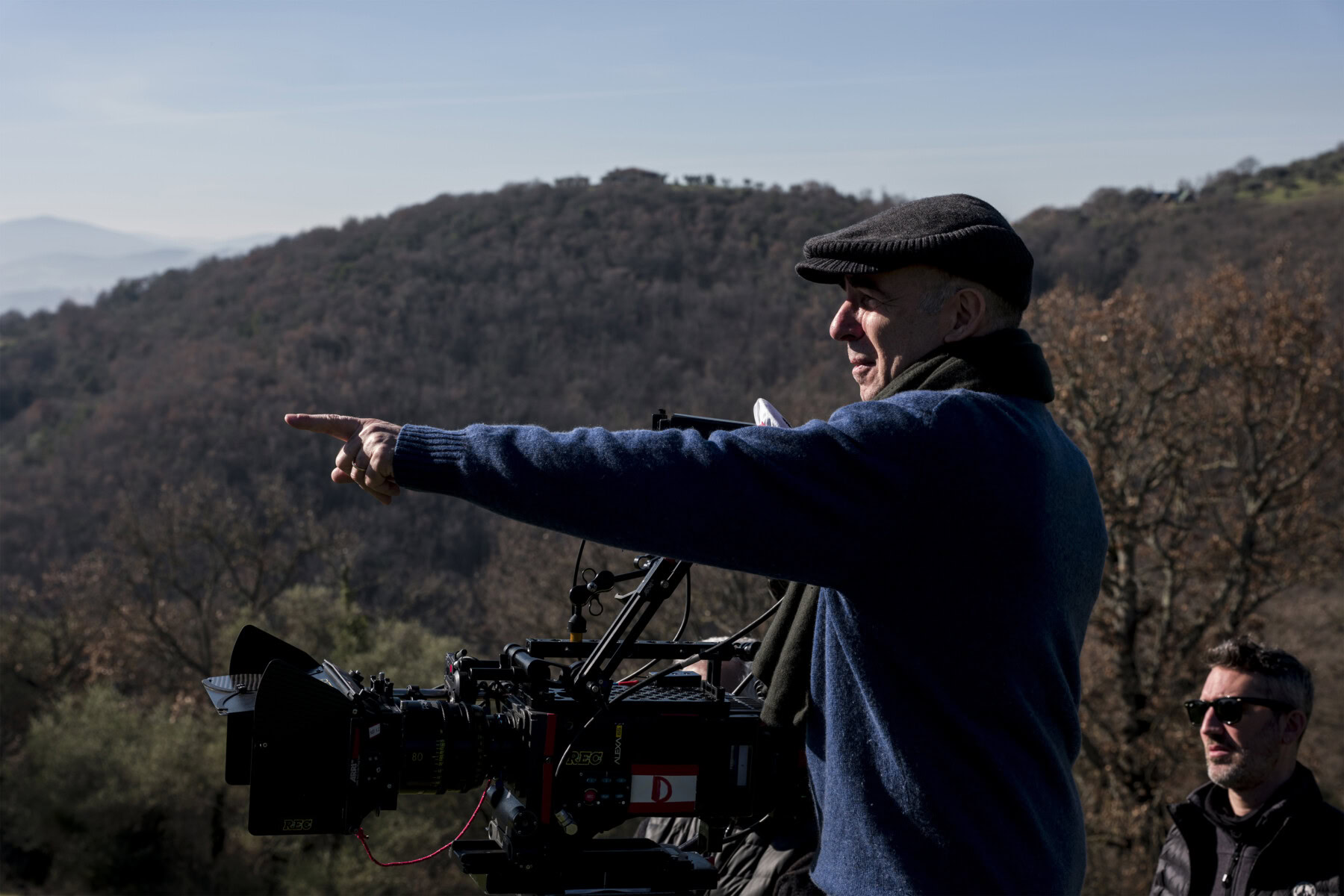
Tornatore filmed on and off for two years and spent a year editing the movie – his first cinema release since his 2021 documentary on the late composer Ennio Morricone. The director said it was a project like no other as his languorous style and attention to authentic detail brought Cucinelli’s story to life.
Tornatore filmed many scenes in their original childhood locations including the farmstead where Cucinelli grew up, which, aside from the addition of electricity, he found it largely unchanged. When he told Cucinelli, the designer decided, on the spot to buy the place and take out the electricity so it was exactly as it had been when he was a child. He described the scenes he filmed there, walking through his past life, with actors playing his parents, brothers and cousins as “very poignant.”
Tornatore paints a picture of a smart, charismatic kid who was good with numbers and always won at cards, “I had a very mathematical mind. I see all the cards that haven’t been played. This passion helped me well in my job. If you have good mathematical skills you can do the calculations very quickly and you know if you are being screwed,” explains Cucinelli. His cashmere may be soft, but he’s as sharp as they come.
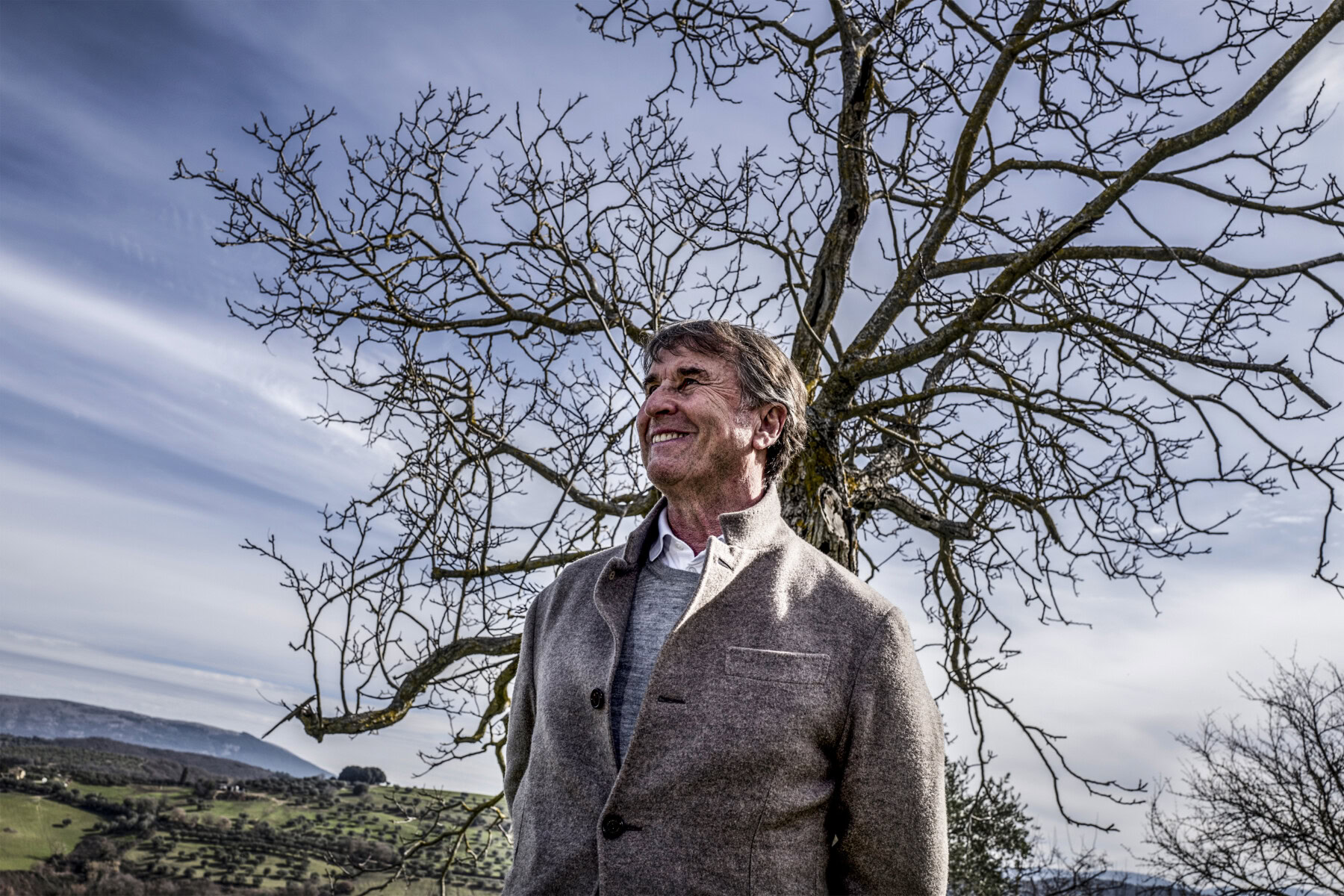
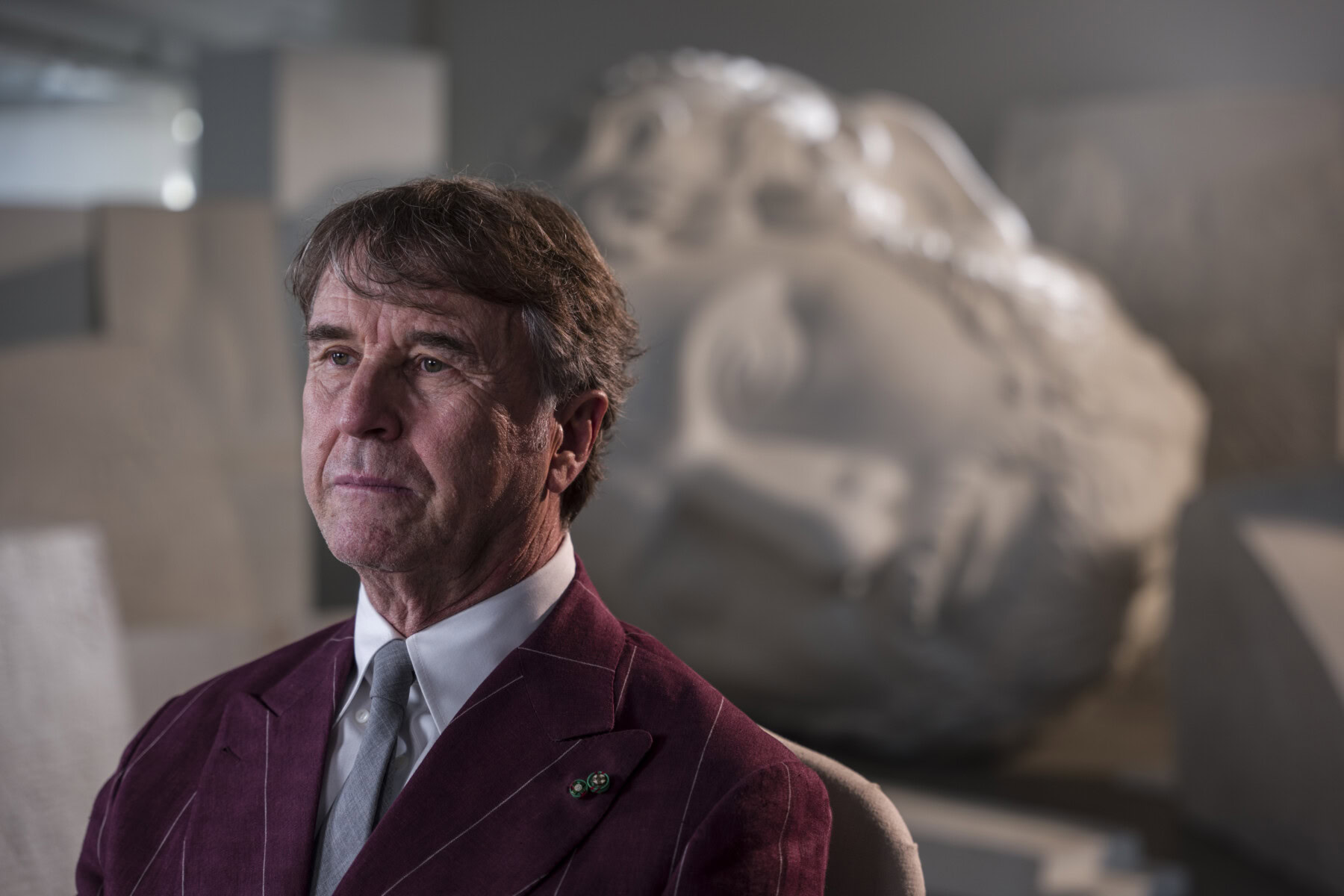
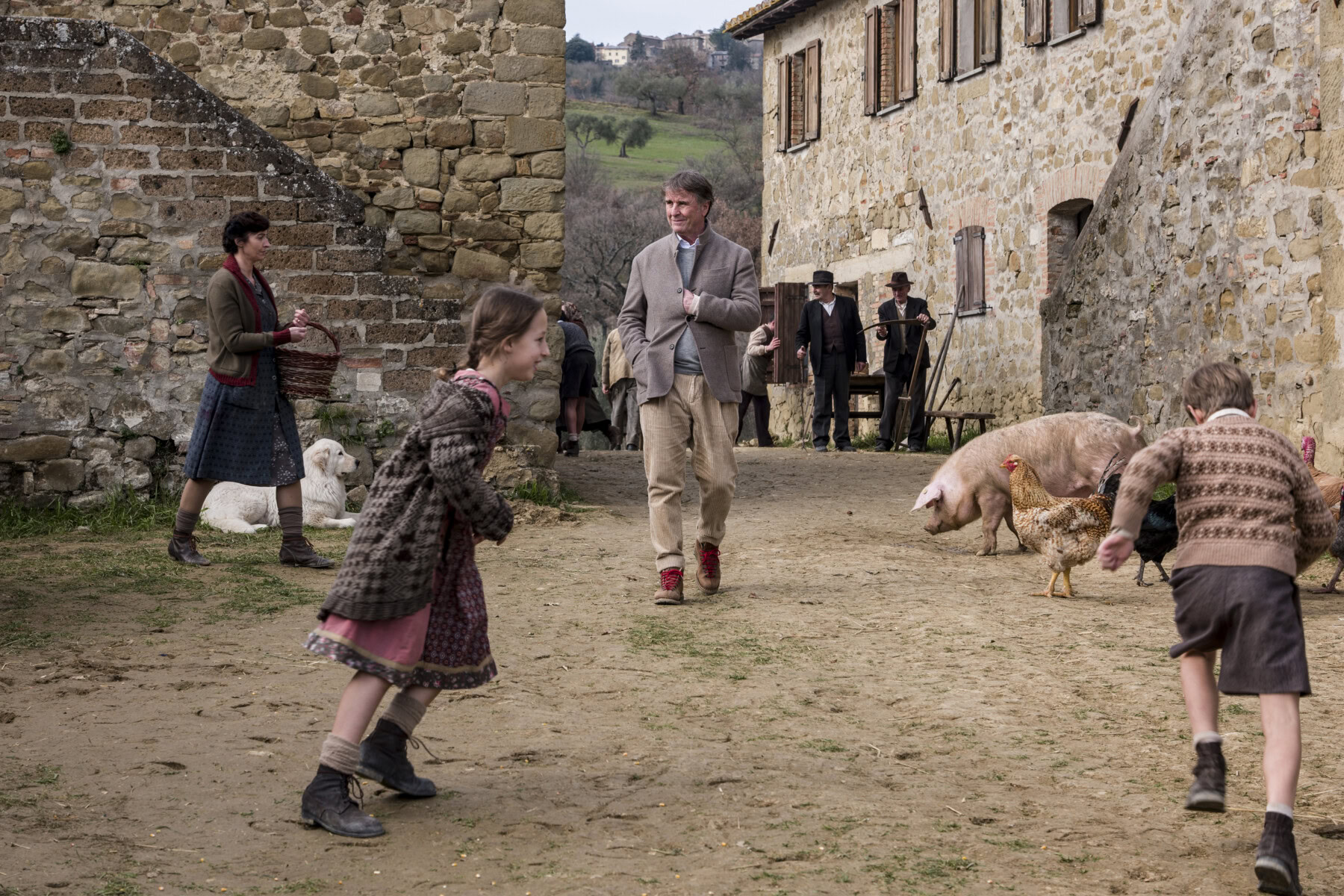

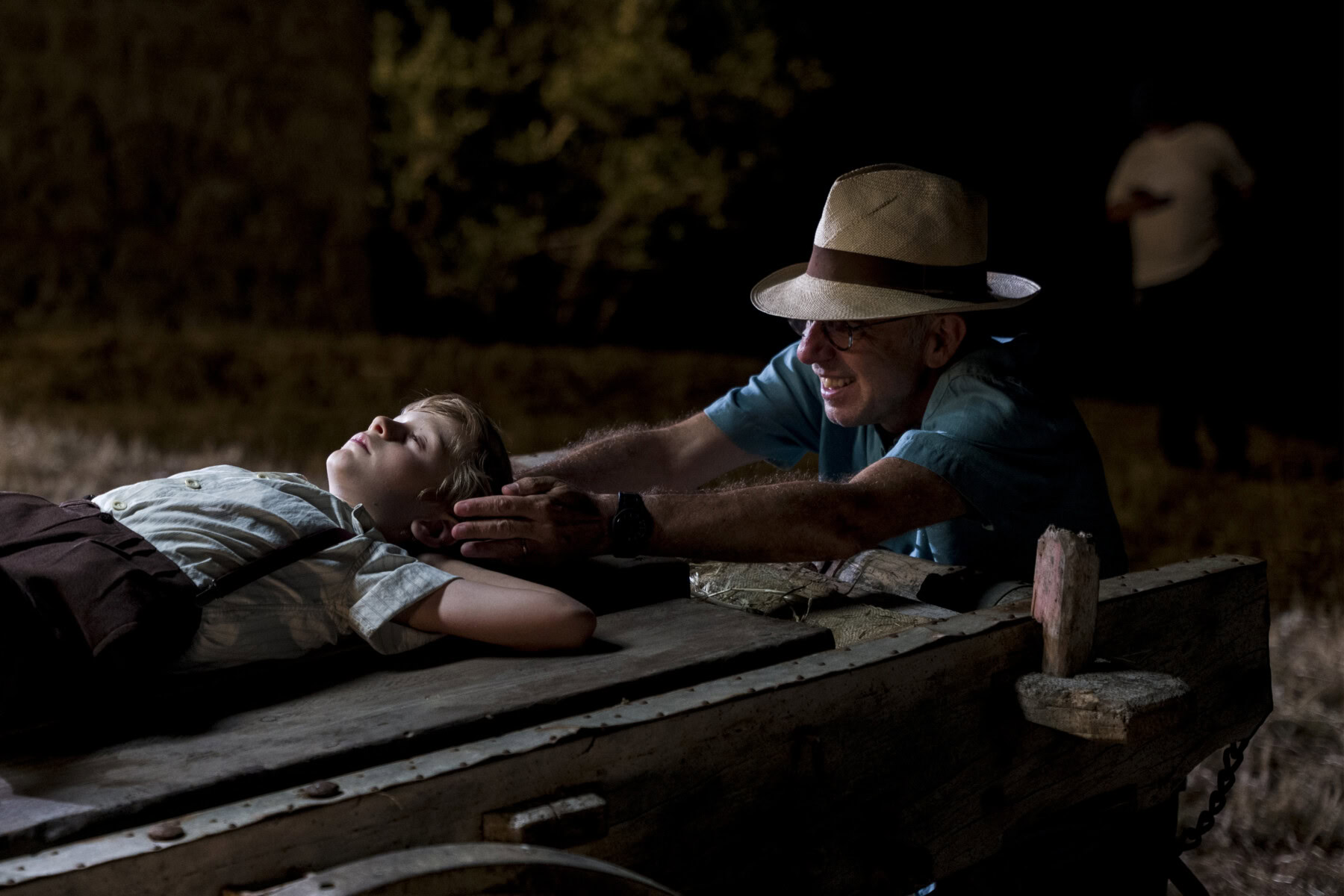
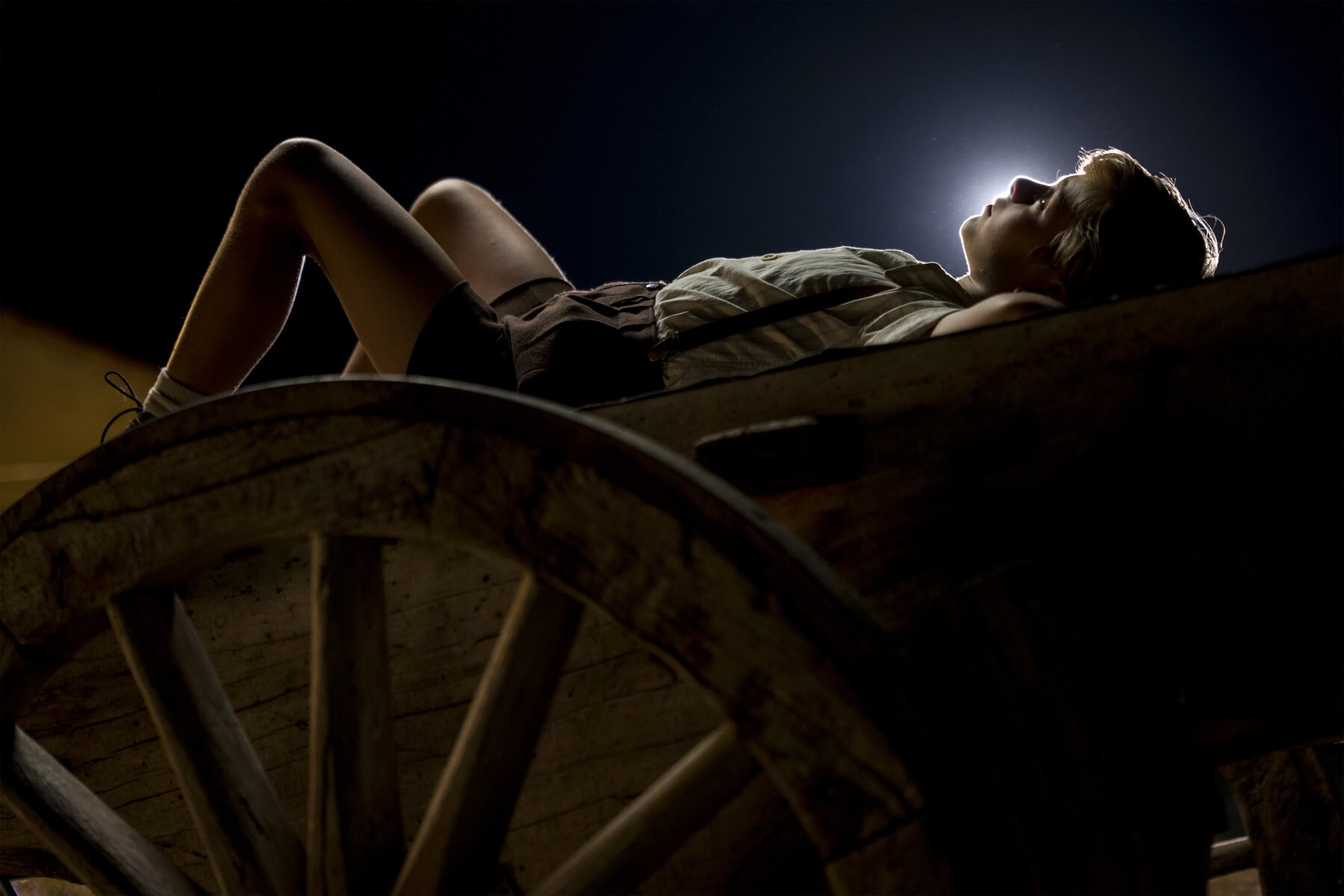
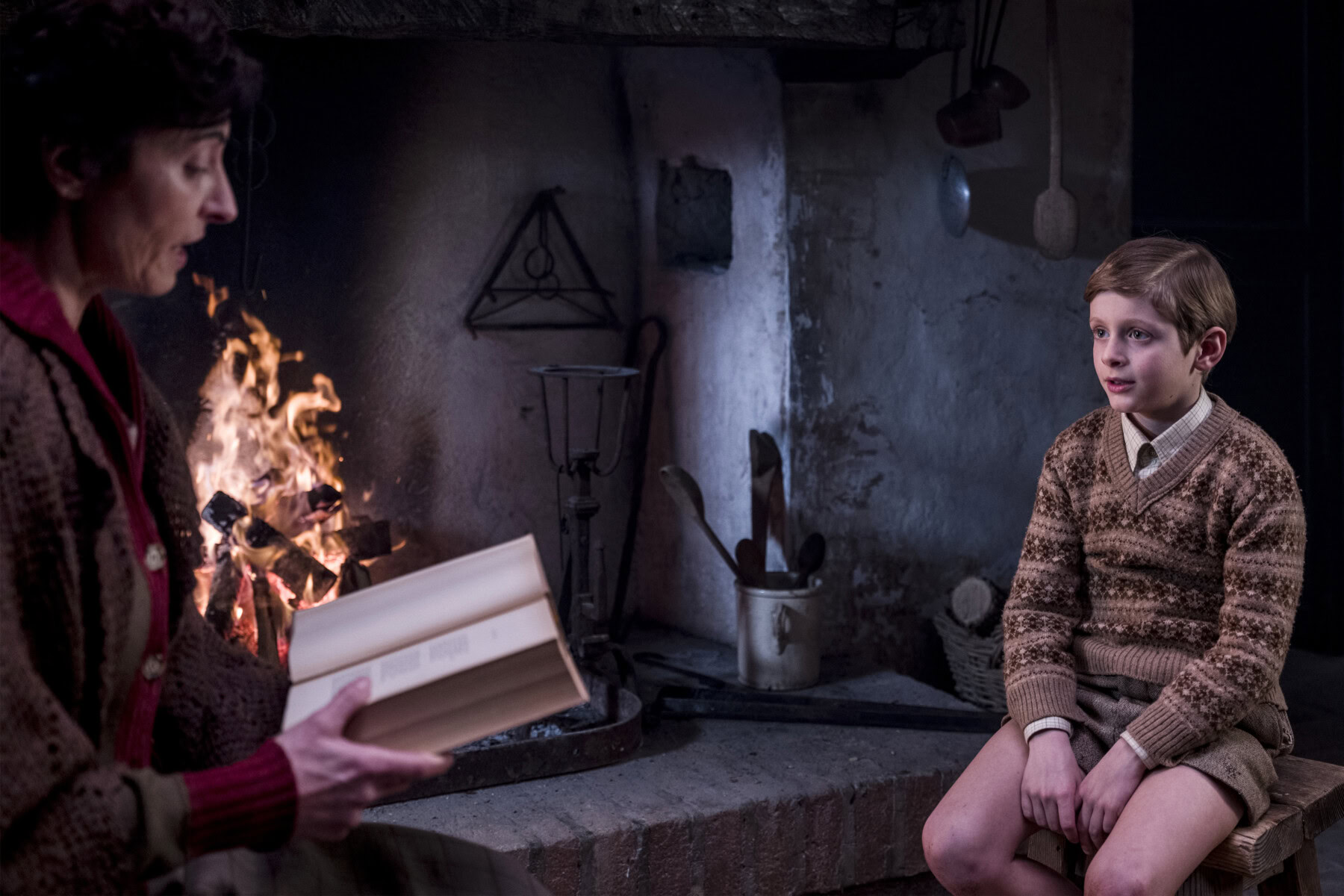
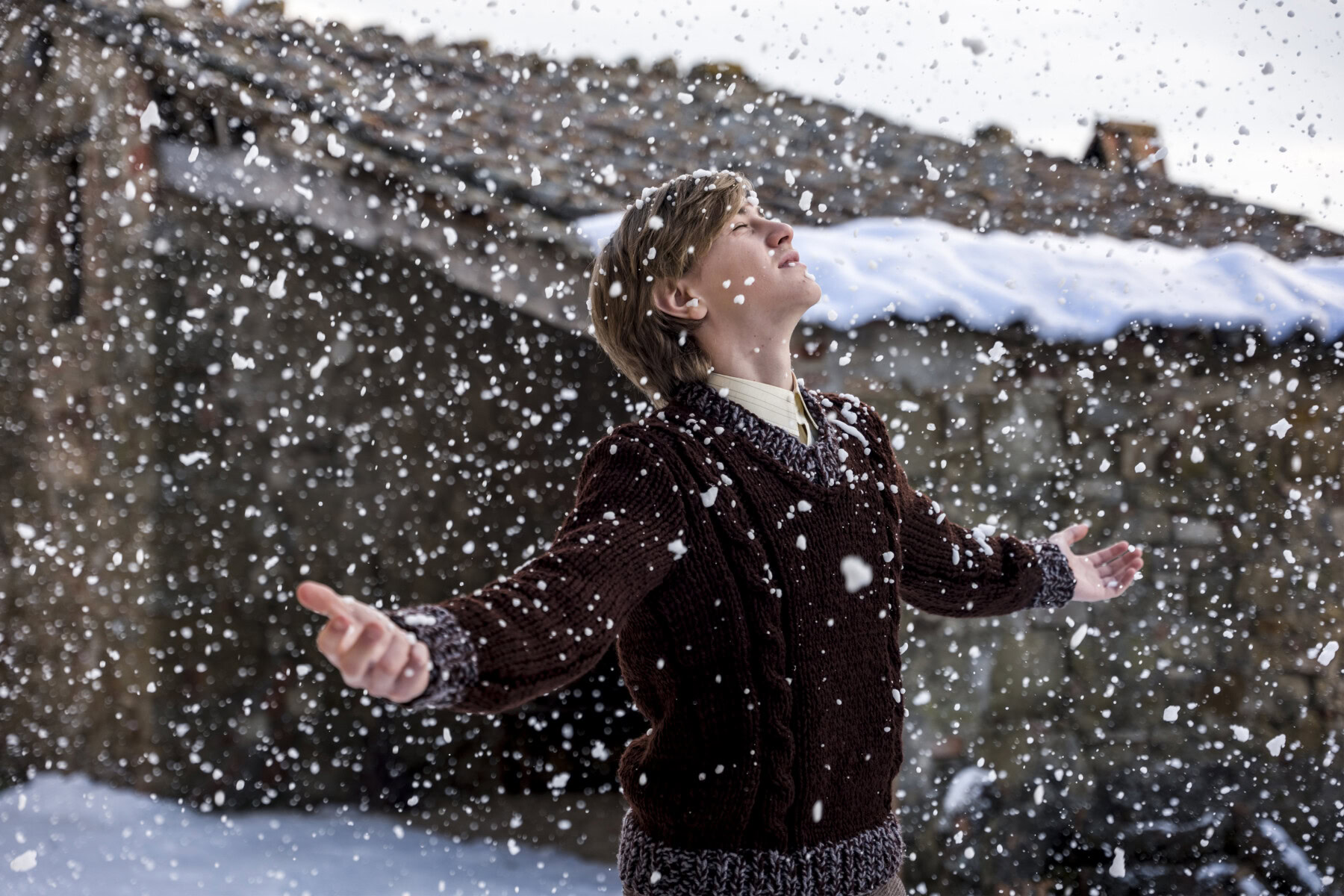
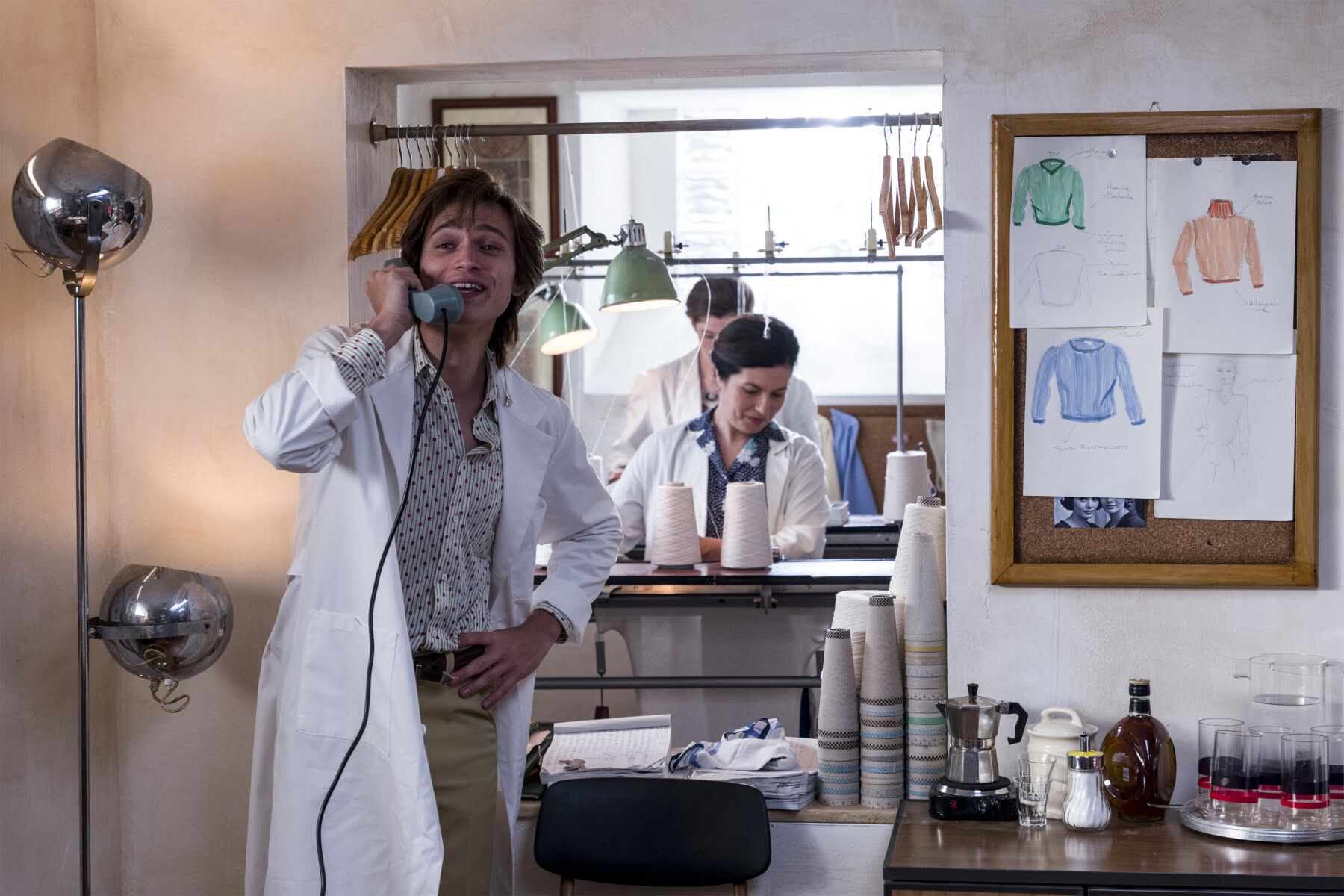
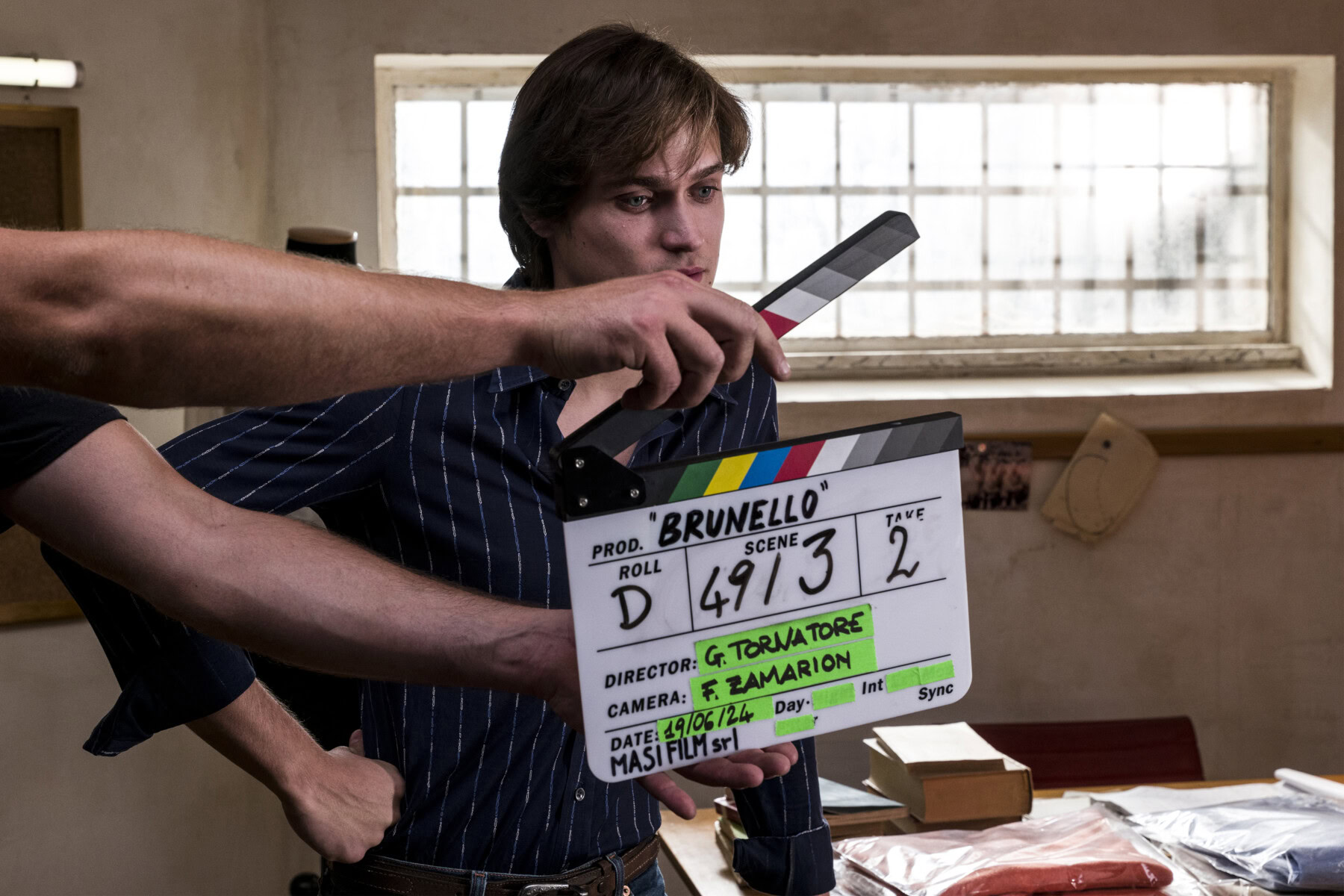
Young Cucinelli was a star gazing dreamer and playful prankster who enjoyed a prolonged misspent youth in local bar, where his circle of friends included a local sex worker and a former inmate of a mental asylum and the money he won at cards went towards eating out, going dancing and a handsome camel coat.
He started his company in 1978, aged 25, and went on to build his cashmere brand into a global luxury super power which prides itself on paying its staff well and gives a percentage of its profits to charity each year to fund cultural and humanitarian projects. This act was inspired by his father’s habit of giving the first sheaf of wheat from every harvest back to the community.
Alongside its uplifting message we also see Cucinelli’s eccentricities. The movie shows him as an adolescent burying a pair of brand new green cords in the garden. In fact, he dislikes green so much that his design staff must rebrand it sage gray or army khaki to have any hope get it past him.




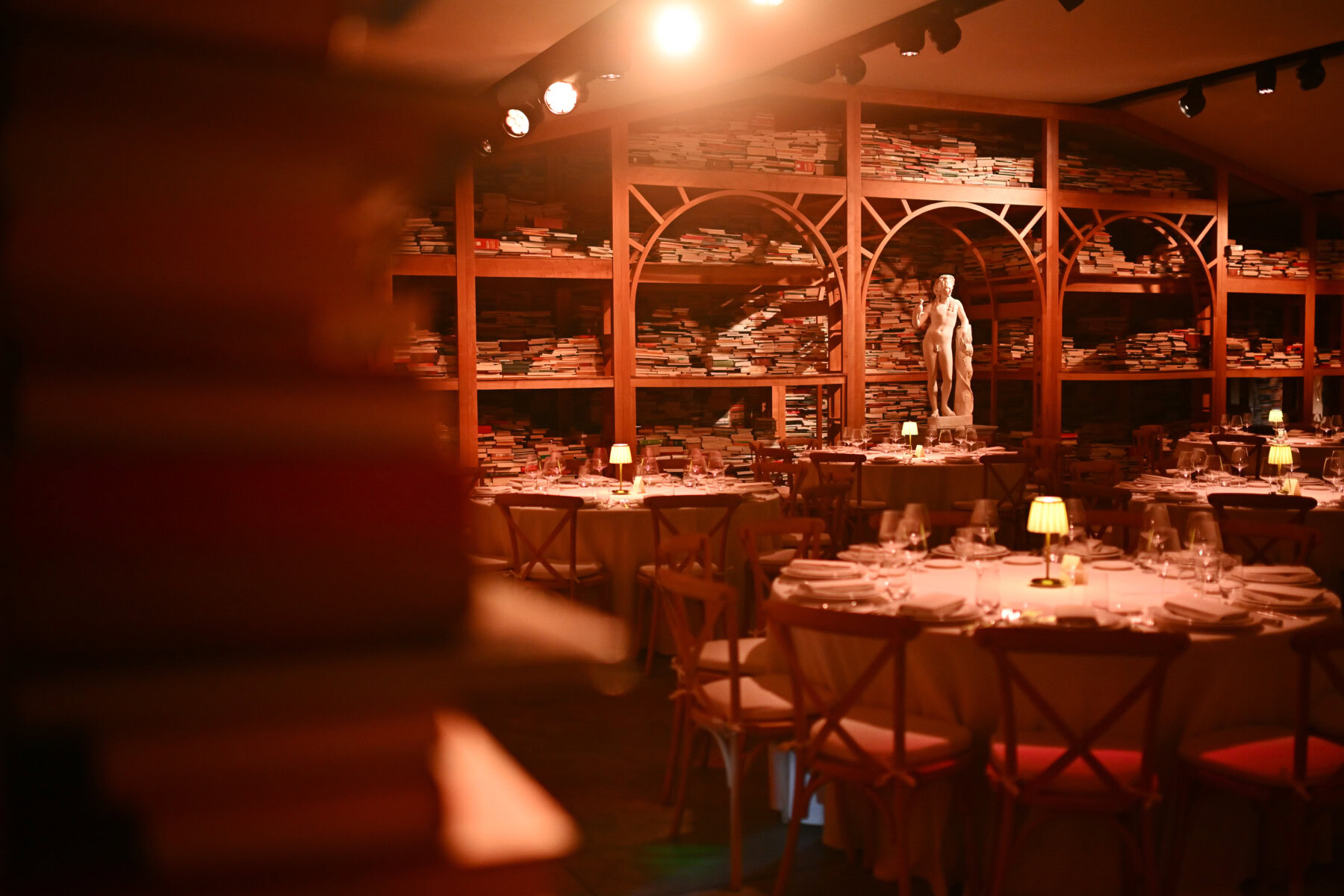
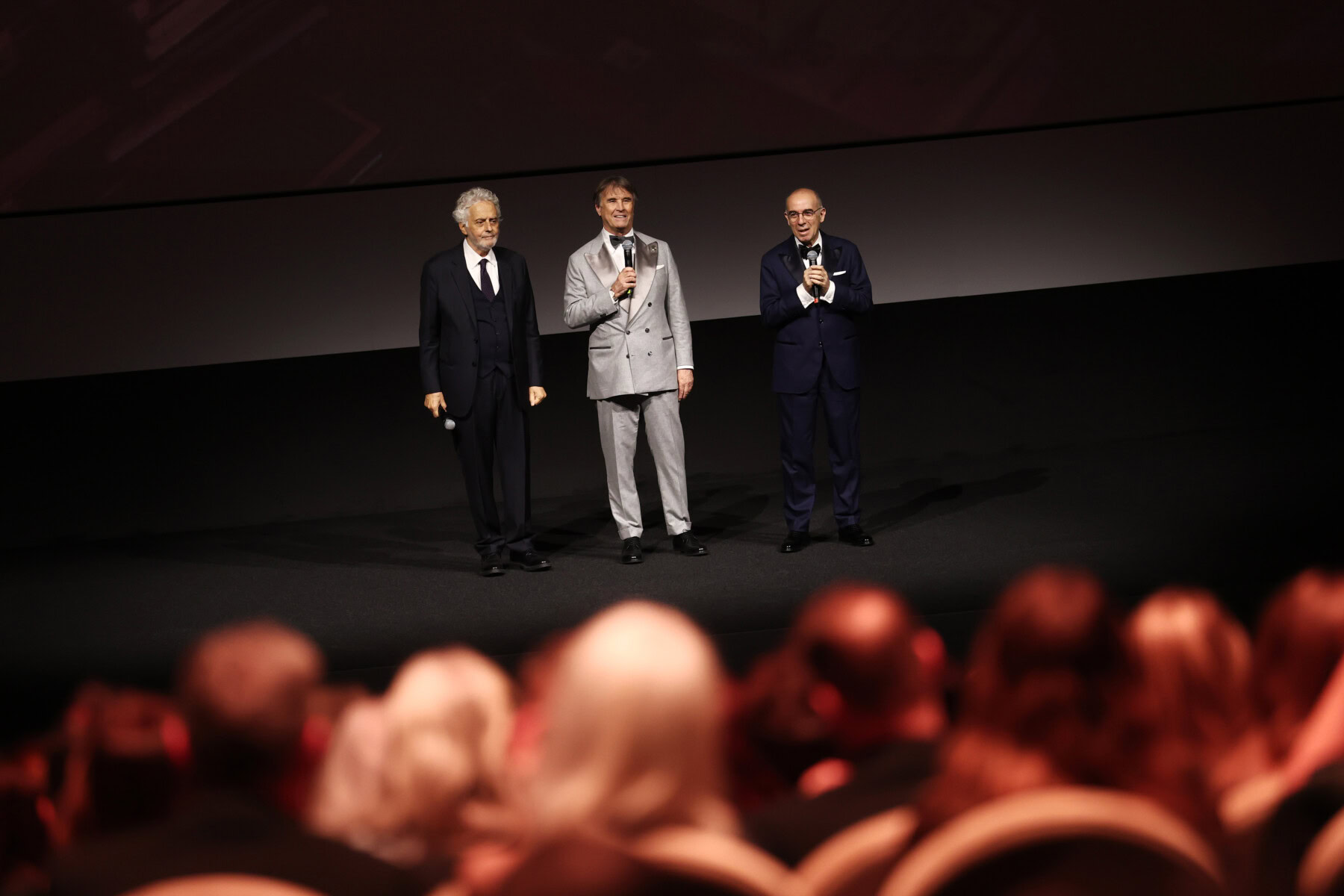
The film shows his single mindedness as well as his impulsiveness. “If something comes to my mind and I have an idea, I do it. It is done,” says Cucinelli. For example, After buying all the derelict factories in the valley below his home village of Solomeo, he demolished them and turned the landscape back into vineyards and a park. But when one old house spoiled the view of the valley from Solomeo, Cucinelli had it moved, brick by brick a few hundred meters to the side.
Aided by a score composed by the Oscar-winning Nicola Piovani, Tornatore brings genuine emotion to the Cucinelli story, tenderly depicting his relationship with his father, whose maltreatment as a factory worker inspired Cucinelli to put human dignity at the heart of his company’s work culture.
Reflecting on his remarkable life story, the humanist entrepreneur, said he hoped the film would inspire young people to dream, just as he did. The film ends with Brunello playing cards with his boyhood self. Young Brunello wins emphatically. “Good job,” says the older man.
Photography courtesy of Brunello Cucinelli.