November 20, 2026 |
It’s a quest as old as time. Well, almost. To be precise, as old as the fifth century BC, when the Ancient Greek historian Herodotus first spoke of a fountain of youth and the magical land of Macrobia, a mythical place in Northeast Africa. Its water was said to grant its people unnaturally long lives – and made their skin glossy and sleek. Stories and technology may have changed since then, but today we’re still talking about chasing youth and figuring out how to pin down its will-o’-the-wispness.
But, much as in Herodotus’s time, talk is much more about longevity these days rather than chasing unlined faces. So much so that even in Russia, Vladimir Putin has reportedly recently invested £19 billion of government money to make longevity research a priority. You want to live forever, comrade? It’s more of a do or da conundrum. Prevention is also very much the focus these days, rather than cure. So much so that Georgia Louise, a leading British facialist to the stars based in New York, where she has her own longevity clinic, says, “I’m seeing younger clients become increasingly proactive about ageing. Many people in their late twenties and thirties are thinking about prevention, collagen preservation and long-term skin health much earlier than previous generations.” There’s also been a shift in older clients who now seem “less interested in chasing youth and more interested in looking vibrant, healthy and like the best versions of themselves”.
Olga Donica, longevity innovation director at the famous Clinique La Prairie in Montreux, Switzerland, agrees. “Today, people are becoming increasingly curious about their own biology. They want to understand how they are ageing, not simply how old they are. This has driven a growing interest in advanced health assessments, biological age testing, continuous health monitoring and personalised insights that help them make the most informed decisions about their future health.”
Still, there is no one simple answer to the quest. “The idea of a single ‘fountain of youth’ has been replaced by something more complex and less marketable– the preservation of cellular function over time,” warns Dr Sophie Shotter, a leading Harley Street aesthetic practitioner and voice in the longevity space. “Skin’s ageing is driven by cumulative DNA damage, mitochondrial decline, collagen fragmentation and chronic low-grade inflammation. No single intervention meaningfully addresses all these pathways” So, what are people booking in for, and what are they willing to try, as they embark on this never-ending and complex quest?
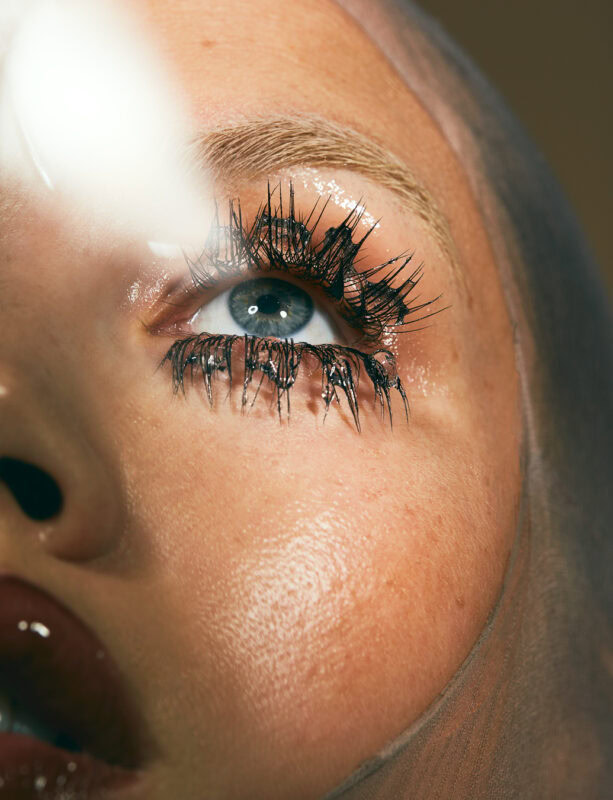
Taken from 10+ Issue 6, Isamaya Ffrench is photographed by Josie Hall and styled by Rubina Vita Marchiori, make-up by Isamaya Ffrench using Isamaya Beauty
THE INJECTABLES
Peptides
Hollywood stars have been on to this trick for years as their contra-ageing secret – the ‘trinity stack’ is much sought after by celebs and CEOs: a mix of GLP-1 for weight loss, GHS (Growth Hormone Secret agogues, which release hormones for lean mass) and TRT(Testosterone Replacement Therapy, to prevent muscle waste). Now, though, peptides are increasingly being used by mere mortals. At LondonCryo, for instance, these jabs, which are not yet in injector pen form, are becoming highly popular. Essentially, we’re talking human growth factors. “They are chains of amino acids and are like messageing signals in the body,” explains LondonCryo founder Maria Ensabella. “Your body naturally produces peptides, but as you get older, they’re not as strong or good quality.It’s about boosting the chain of communication, so you send in new peptides to get the signalling going and boost repair.
It’s all about optimising, but you could also think of it as a shift towards biohacking your skin’s ageing. We’re more open to peptides and their benefits these days thanks to the GLP-1 drugs (i.e. Ozempic et al.) going mainstream and there are many different types of peptides, depending on the results you’re looking for: a popular one people take is MOTS-c to enhance fat metabolism and boost energy, and a popular one for skin and boosting your collagen at LondonCryo is GHK-Cu. As Ensabella puts it: “I don’t want to blow my own trumpet but for someone who’s 52 years old, I look like I’m still in my early forties.” Still, some warn there are regulatory lags around governing these compounds.
NAD+
A rise in the focus on personal supplementation has seen NAD+ coming into closer focus, with many experts believing it will become increasingly important; dedicated fans already won’t go anywhere without their injectors (they’ve been known to have the pens delivered by private jet while on holiday if they’ve left them behind). So how does it work? “First, it circumnavigates your body, depending on how you’re taking it, whether it’s an IV, subcutaneous injection, oral supplements or even a spray – then, depending on where you need it that day, it goes there. So whether you have an injury from going to the gym, jet lag or a hangover, it will reduce the inflammation,” explains Maila Reeves, who is such a believer she founded Bio Atelier, an NAD+ brand that uses no filler ingredients. “And then it will cross over your cellular membrane and basically give a little electric charge to rejuvenate it.”
Hair repair
One injection (often in your bum) once a week is the new route to hair vitality. It’s a big hitter at LondonCryo and contains Biotin and Dexpanthenol to support hairgrowth and a healthy scalp. People report not just a fuller head of hair but also fuller eyebrows and, for some, even better eyelashes.
Biostimulators
You can think of them as the new alternative to fillers, but rather than injecting volume these boost your own collagen production to improve firmness and elastin overtime. “One of the biggest shifts in aesthetics is a move towards regeneration. Biostimulators, like HArmonyCA, represent this change,” says Dr Ahmed ElHoussieny, an aesthetic doctor speaking on behalf of pharma company Allergan. They “tackle signs of ageing differently, as results appear more gradually but often look more natural and longer lasting,” he says. Think plumpness but without looking over-filled and with results that last for up to two years. This ties in with the fact that, as Louise puts it, “There has been a noticeable move away from the overfilled aesthetic, with many clients seeking healthier skin, stronger tissue quality, and natural-looking results.” El Houssieny agrees: “Biostimulators have a strong link to the change in patient demand: looking like themselves but refreshed with undetectable tweaks.” The latest biostimulator to be aware of is Julaine, which is already proving very popular. But also remember that your own collagen can be boosted so much that some patients feel their face starts looking almost spade-like, in other words flat and wide, with the chin looking small, so you may want to go cautiously on your number of treatments to see how your own collagen responds.
Exosomes
Think of exosomes as the body’s internal messageing system delivering proteins, lipids and genetic material between cells to co-ordinate tissue repair and regeneration. After initial hype, exosomes, which can be delivered topically, with microneedling, by injection and even by IV, there have been questions about standardisation, regulation, sourcing and even long-term safety. Clinicians are now approaching them with evidence-led scrutiny but they still look strongly in place to be part of the future. “Exosomes are incredibly promising for enhancing skin resilience and overall health,” says Dr Munir Somji, a leading aesthetic doctor and founder of Dr MediSpa.“When formulated thoughtfully,t hese tiny messenger particle scan be a powerful addition to a modern skincare routine.” While responsible adoption is key, DrNima Mahmoodi, co-founder of the Remedi London Clinic, says“advanced biostimulatory biology offers the potential to shift aesthetic and regenerative medicine towards tissue quality and function”. Skin quality is increasingly becoming the fountain of youth’s gold standard
ESSENTIAL TECH
Heat-free
A new generation of technology gets results and helps to boost collagen but without using heat (this causes inflammation – which we don’t want). Treatments such as Rexonage3 use QMR (Quantum MolecularResonance) technology and feels like a gentle facial with the boost of collagen and elastin, which reduces redness and inflammation, and all with no thermal damage or downtime. Its anti-inflam qualities mean that it’s also deployed by physios to treat muscularand joint pain. Leading facialist and skin expertJasmina Vico understands cold power. “While many of these technologies are only now becoming widely discussed, we’ve been using low-energy cold lasers, akaphotobiomodulation, and coldplasma with no nitric oxide atmy clinic for years because we’ve always believed in working with the skin’s natural biology rather than against it.”
XERF
Even proponents of heat-free tech such as Vico still back other tech. XERF became available at Vico’s clinic this summer with new skin protocols, “which provide intelligent collagen stimulation while respecting the skin. It uses monopolar radiofrequency energy to gently heat the deeper layers of your skin and boost collagen production,” she says. First launched in South Korea, it’s pitched as a skin tightener and is the newest tech on the block. Still, as Vico says, “The future isn’t about one technology replacing another, it’s about choosing the right treatment for the right patient.”

Taken from 10+ Issue 6, Isamaya Ffrench is photographed by Josie Hall and styled by Rubina Vita Marchiori, make-up by Isamaya Ffrench using Isamaya Beauty
REGENERATIVE SCIENCE
Cell preservation
It’s a little bit Austin Powers but these days it’s about preserving your cells, not your whole body. Georgia Louise, for instance, says she is preparing to work with Acorn Biolabs to use their technology, which “allows clients to preserve cells from their own hair follicles for future regenerative applications. Essentially, it’s a stem cell platform which provides the ability to bank your own cells for potential future use and is a fascinating example of where personalised longevity medicine is going,” she says. These cells aren’t just for treating hair, they can be used for skin rejuvenation too. They can also be used topically, by injection and have potential for medical use. This is a shift towards a regenerative approach to ageing – or rather, staying young – that restores at a cellular level rather than trying to fix what’s already happened.
Supplements
“We’re moving from a cosmetic model of skincare to a physiological one. Skin is no longer being treated as an isolated surface, but as an organ that reflects systemic processes, such as inflammation, glycation, oxidative stress, hormonal signalling and nutrient status,” says Dr Sophie Shotter. “What’s changed is not the biology but our willingness to engage with it. That’s why ‘inside-out’ skincare feels like the future.” Vico agrees. The future is, she says, about “therapies supporting cellular repair – including NAD+, personalised supplementation, preventative medicine and diagnostics – will become increasingly important. The future isn’t about changing how we look; instead, it’s about helping our skin to function better for longer.”
Liposomal collagen
“Oral collagen supplementation is one of the few ‘inside-out’ approaches with a growing body of evidence, including randomised controlled trials showing improvements in skin elasticity and hydration,” says Shotter. “However, the mechanism is indirect – ingested collagen is broken down into amino acids and peptides, which may act as signalling molecules rather than being directly incorporated into dermal collagen. The effects are measurable, but are also highly dependent on dose, formulation and study design.” One that many insiders are taking is Elle Sera’s Liposomal Tripeptide Collagen, which won an Innovate UK award from the government. It works by wrapping the tripeptides inside a liposome that helps absorption by the lymphatic system and bypasses metabolism in the liver.
Creatine
“Many experts now discuss muscle as a key pillar of healthy ageing. I’ve heard it be described as the ‘organ of longevity’, as it’s strongly linked to mobility and independence later in life,” says Maz Packham, nutritional therapist and head of nutrition for W-Wellness. “This has led to a surge of interest in supplements such as protein and creatine, which have stronger evidence for supporting muscle function and physical performance than other potentially more trend-driven longevity supplements.” She recommends Meteron Labs’ liposomal creatine and APE Nutrition’s beef protein powder in Madagascan vanilla flavour.
SKINCARE
And we’re back to peptides again
“Peptides occupy an interesting middle ground between pharmacology and cosmetics,” says Shotter. “Mechanistically, they are compelling – short chains of amino acids designed to mimic molecules involved in wound healing and collagen production.” And, says Vico, “science has evolved and better formulations and delivery systems mean that they can communicate more effectively with skin cells”. That has made them a very topical option with newgen peptides that can target expression lines as well as cellular ageing. The best of the latest include Tatcha’s The Longevity Serum, SkinCeuticals’s P-Tiox anti-wrinkle serum and Medicube’s PDRN Pink Peptide Serum.
Old faithful: SPF
Despite all the tech, don’t step away from daily UV protection with a good SPF. It remains, says Shotter, “the most impactful intervention we have for preventing intrinsic ageing”. So, wear sunscreen.
And coming over the hill…
“The most interesting developments are at the intersection of dermatology, longevity science and regenerative medicine,” says Shotter. “We’re seeing early work on senolytics to target senescent cells, exosomes and polynucleotides to support tissue repair, and an increasingly sophisticated understanding of the skin microbiome. But much of this remains preclinical or at an early stage. The trajectory is towards interventions that influence cellular behaviour, but the timeline to robust and clinically validated applications is longer than the market narrative would suggest.”
So, the map towards locating that elusive fountain of youth seems to be coming more into focus, even if it’s slow and the goalposts keep moving. Still, we have time to brush up on our Greek history and maintain the long view about what youth really means.
Images taken from 10+ Issue 6, Isamaya Ffrench is photographed by Josie Hall and styled by Rubina Vita Marchiori, make-up by Isamaya Ffrench using Isamaya Beauty. Piece taken from 10 Issue 77 – Autumn Winter FUTURE, LEGACY, HERITAGE – out NOW. Order your copy here.