


Luxury fashion couldn’t be more removed from the challenges much of the globe currently faces. Mrs Prada, standing next to Raf Simons backstage after their men’s show Sunday afternoon, spoke candidly about how it can feel uncomfortable “working for a brand that sells expensive clothes” when the world itself feels like it’s on fire. The role of a designer today, she said, was to lead with “intellectual honesty” and “to do my job seriously in the best possible sustainable way”.
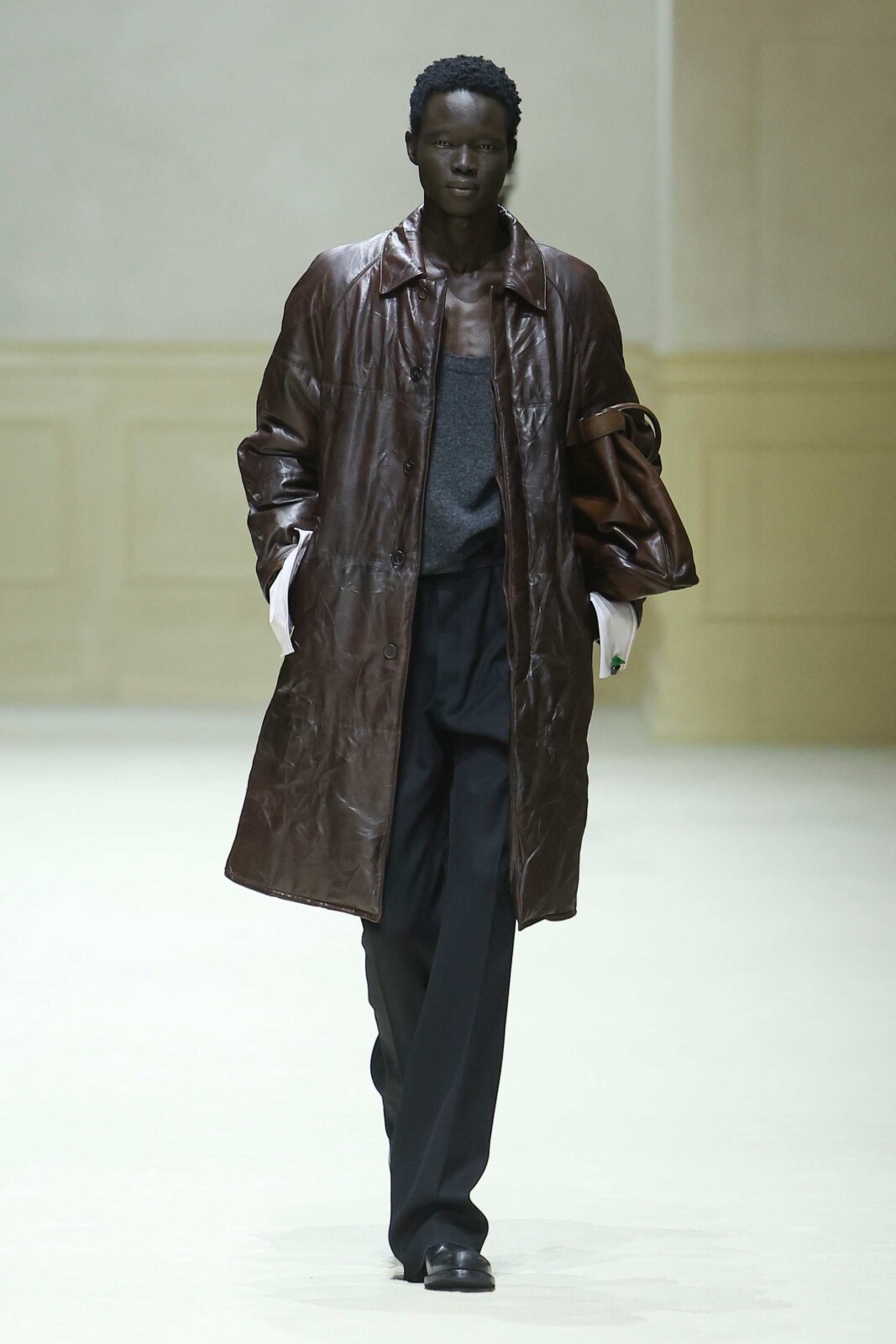
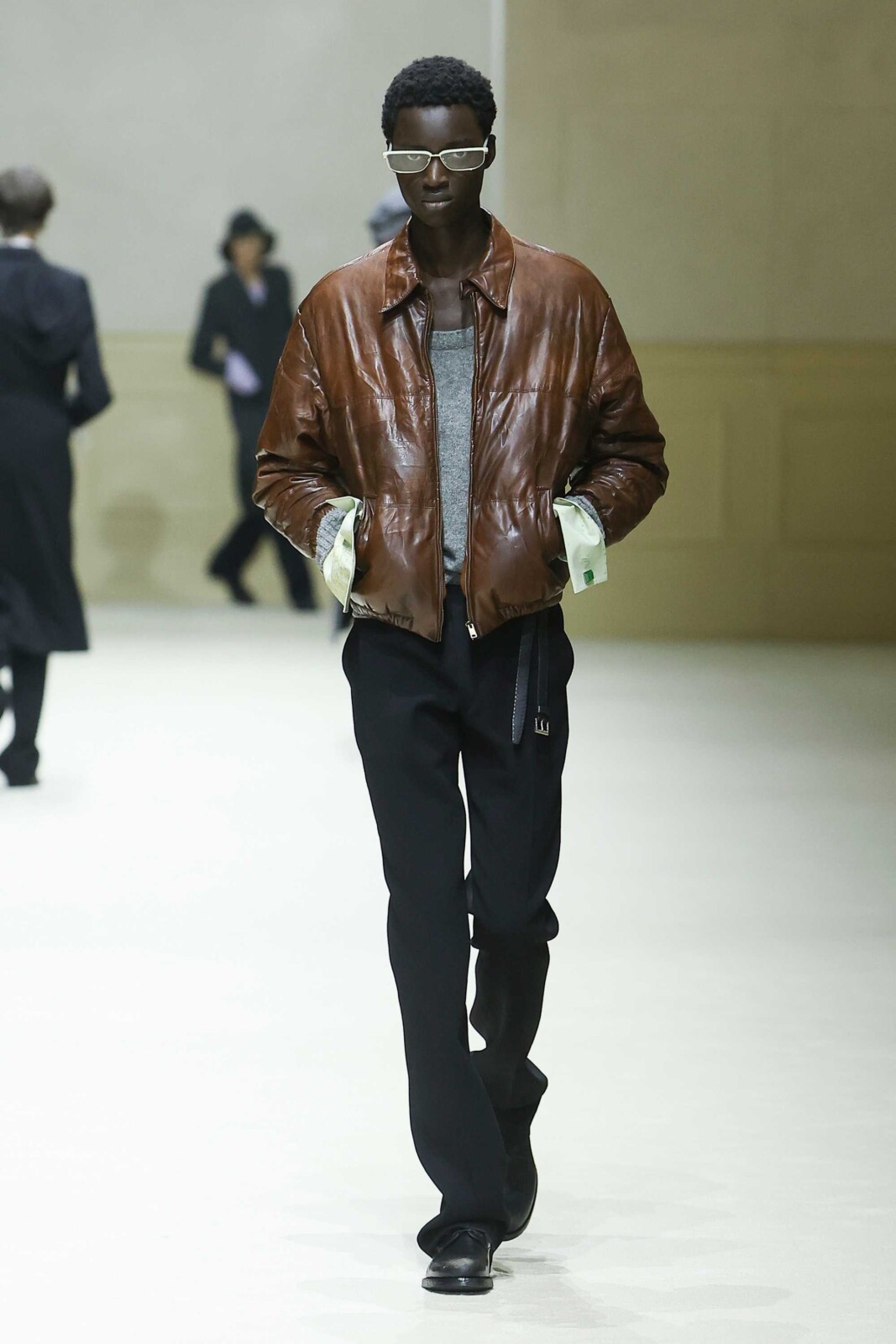
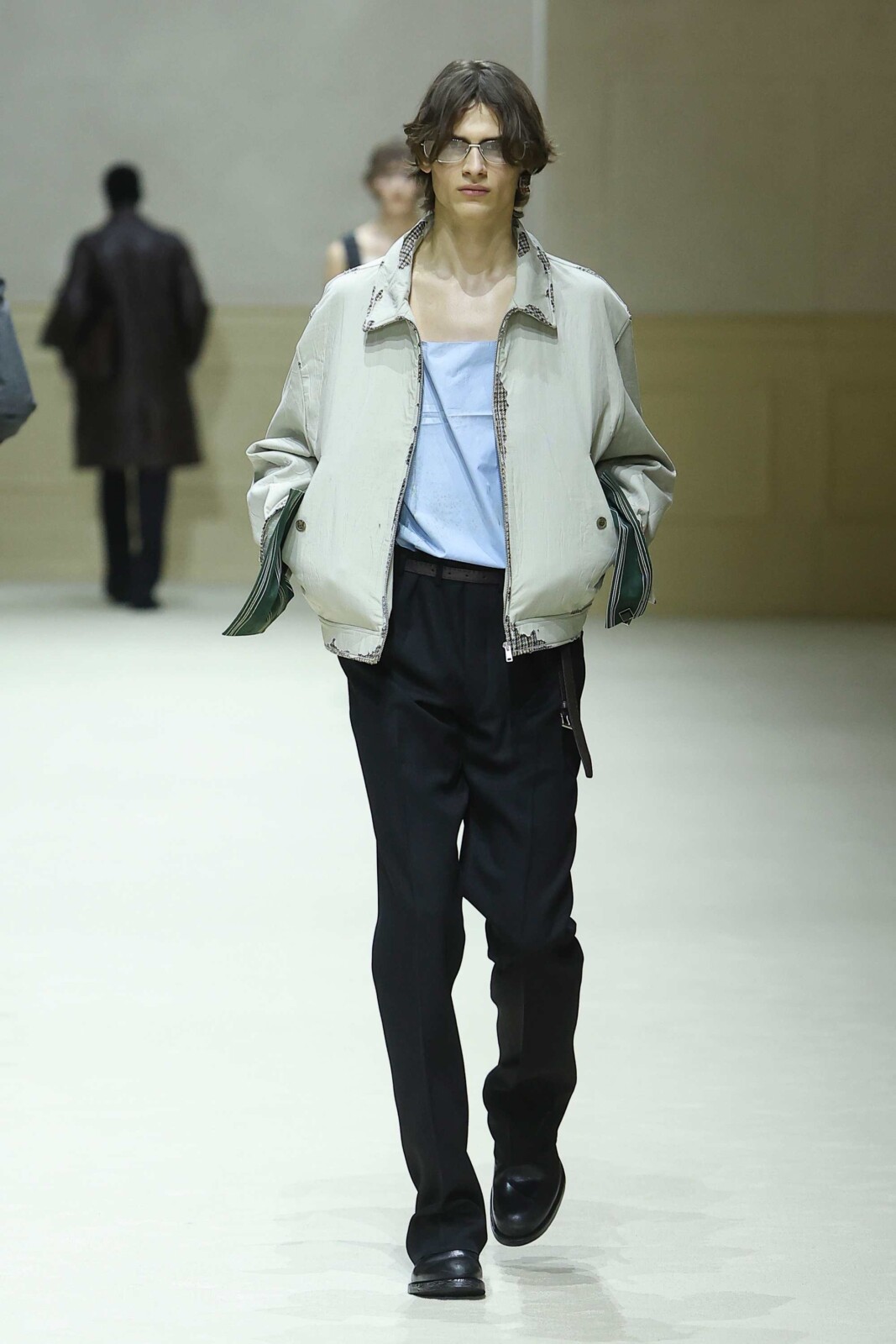
For their AW26 collection, the design duo looked back to move forward; to define “a new creative impulse”, as Simons put it, learned from codes of familiarity. It was a sentiment echoed in the show’s set, which resembled remnants of Italian palazzos ripped apart to their bare bones and pieced together again – making new from the old. Simons defined their approach as almost archeological. Staples of the man’s wardrobe were unearthed, visibly crumpled or appeared weathered. Like a Harrington jacket that looked as if it was worn so much that its checked exterior had peeled away. Or square-toed loafers and boots that were visibly battered, like their scuffs were bruises from being passed down from one generation to the next.
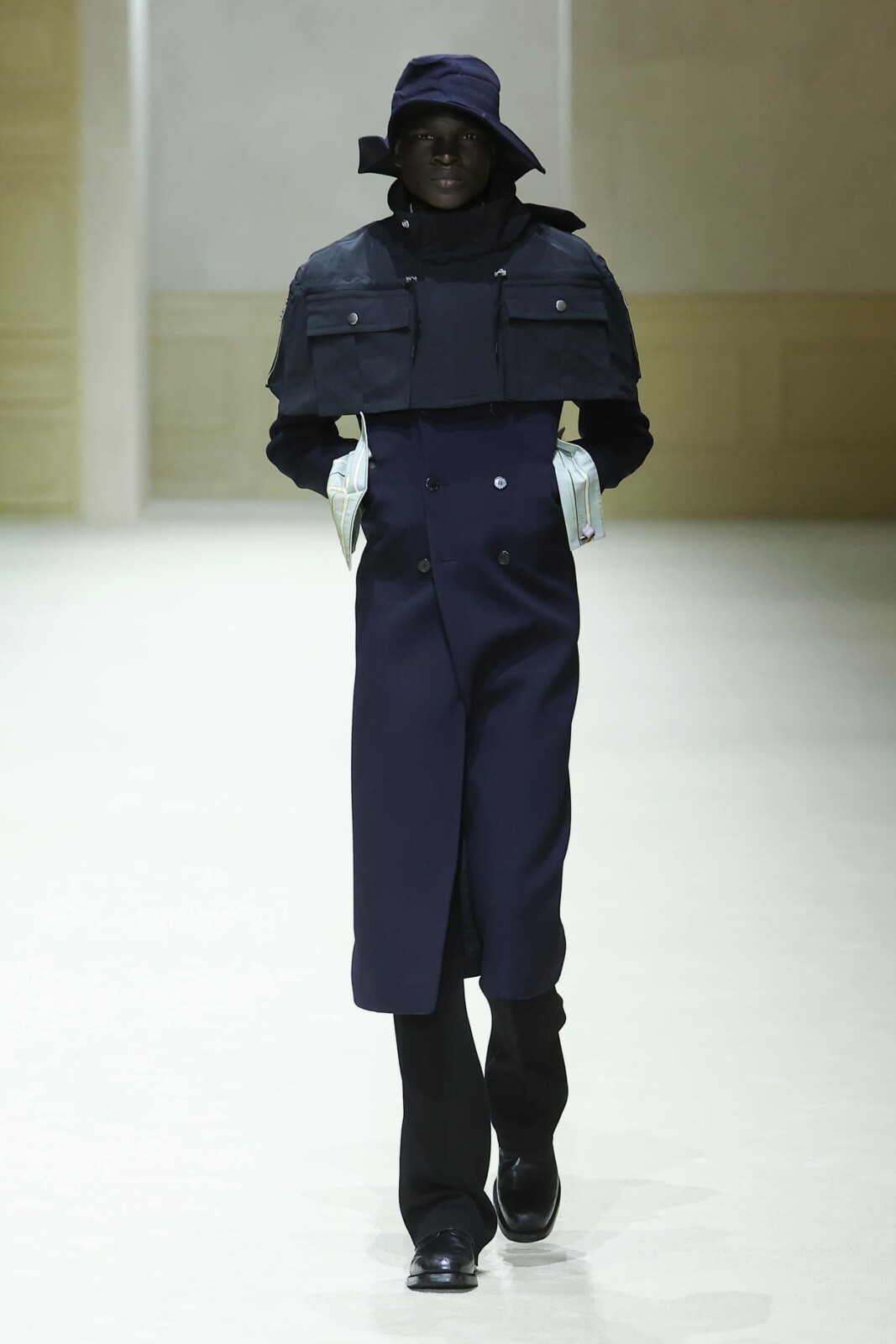
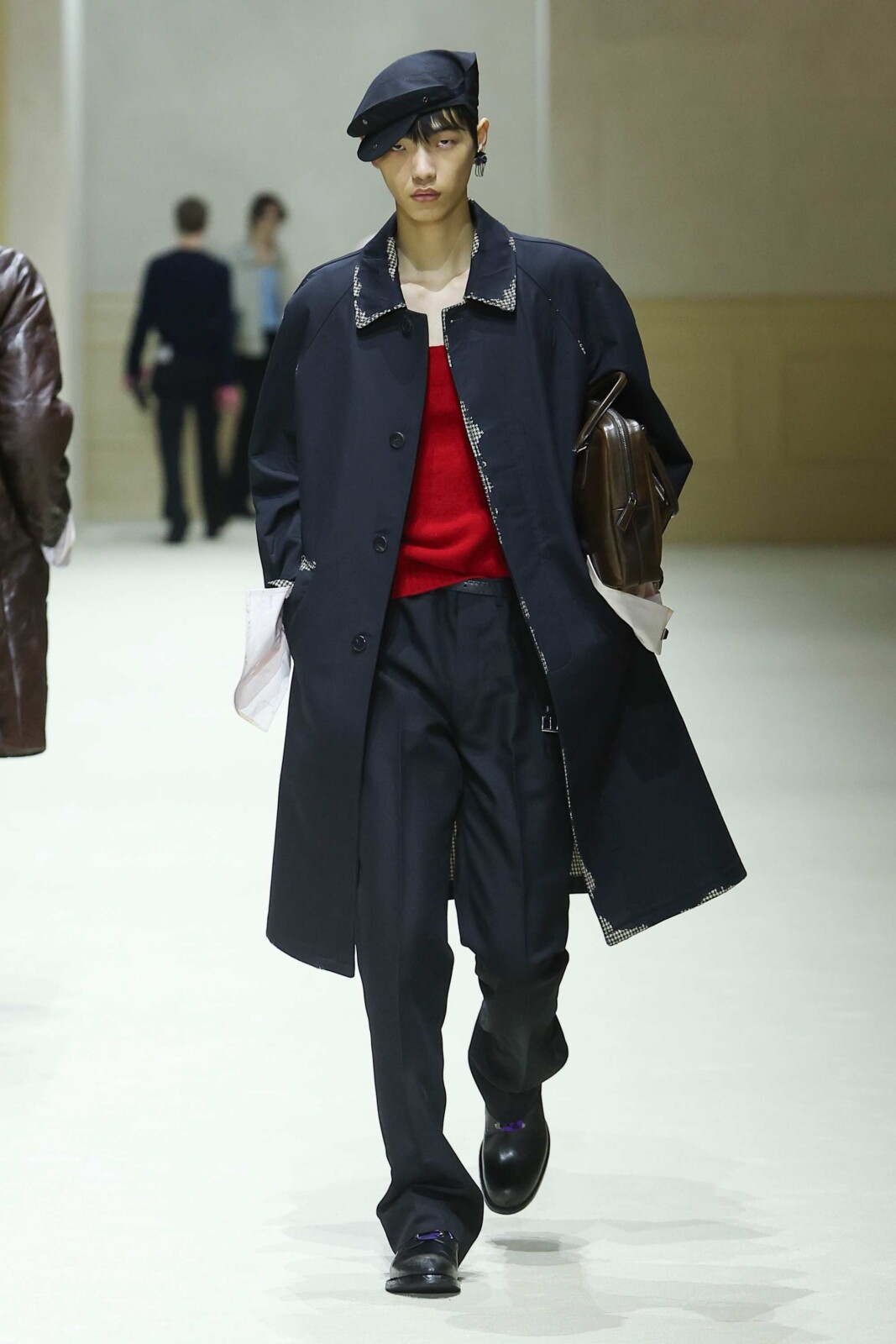
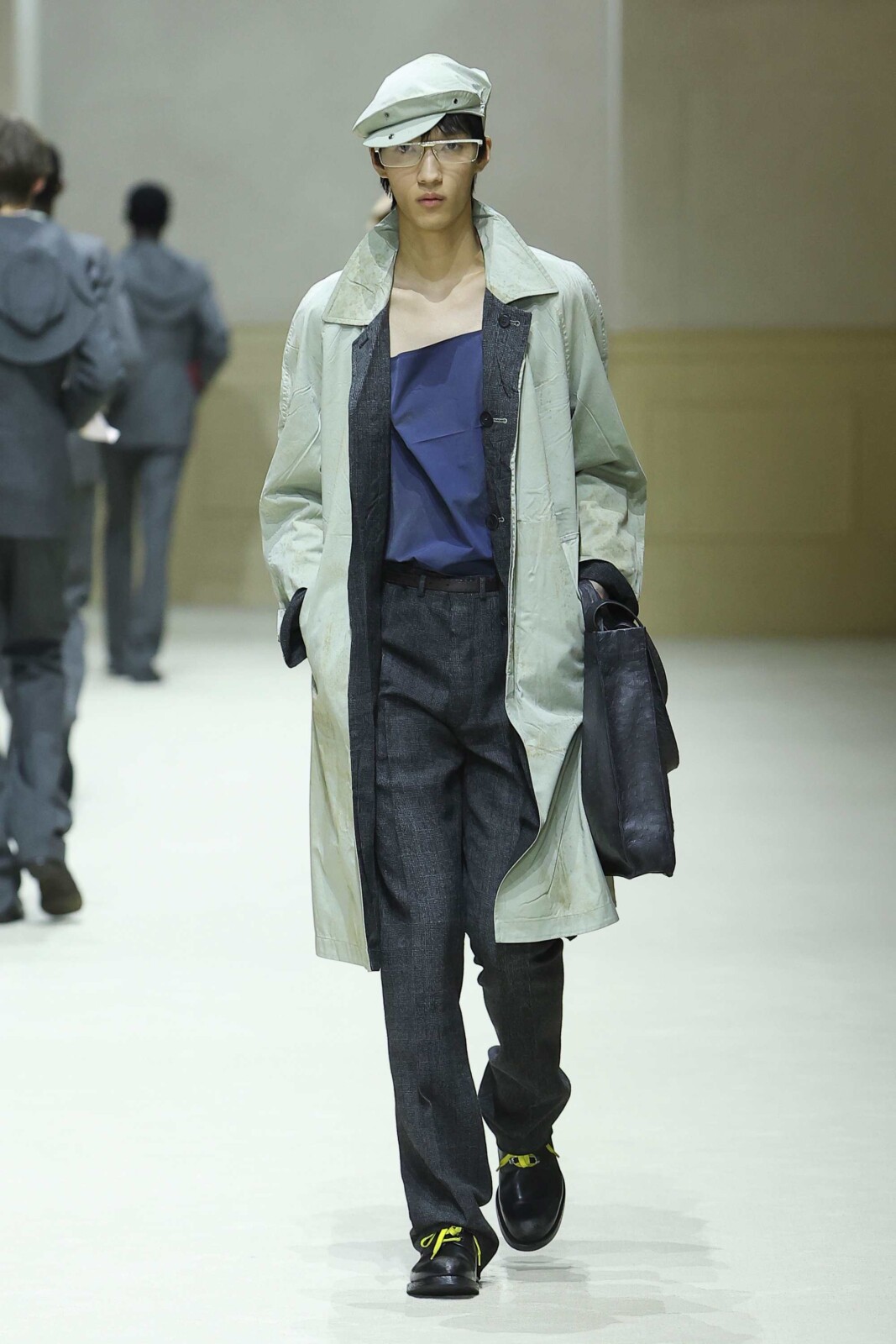
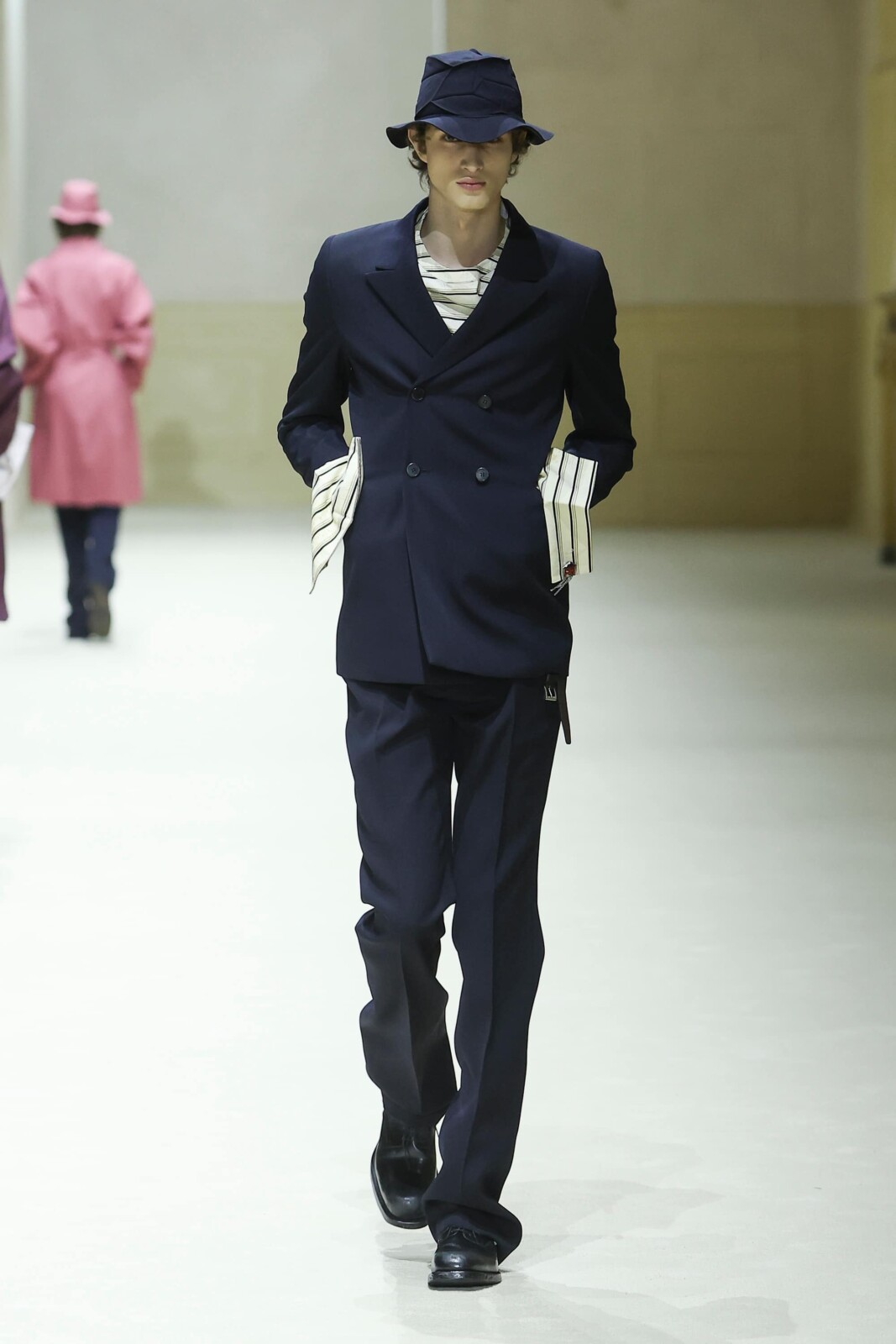
It was about respecting codes of the past but innovating them, explained the pair. Boys came in sou’westers and baker boy hats that were soft in construction, stripped of their stiffness. The hats also came pinned to the back of coats and slim tailored jackets, like a new accessory. Simons called the off-kilter pairing “a new two-piece suit”.
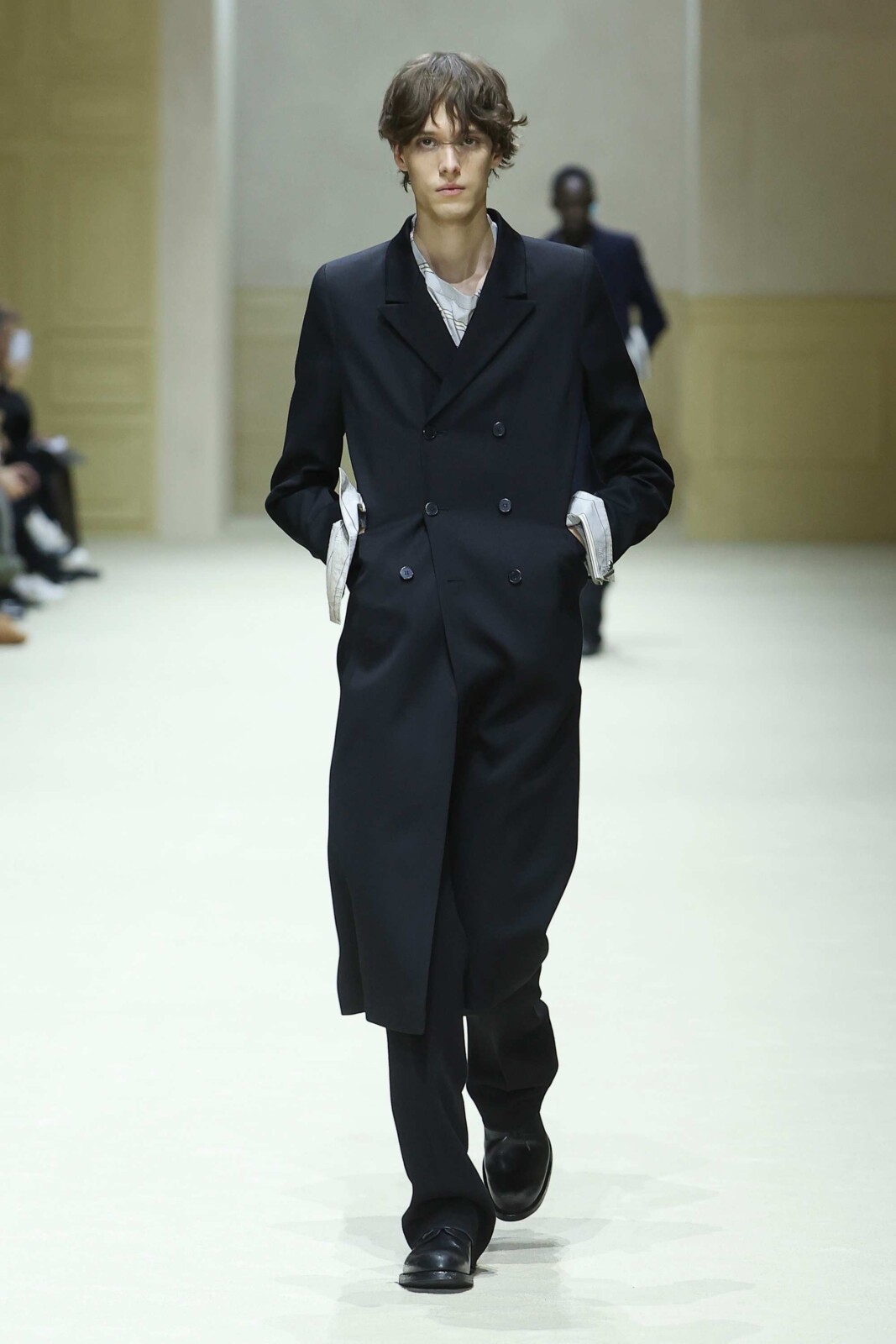
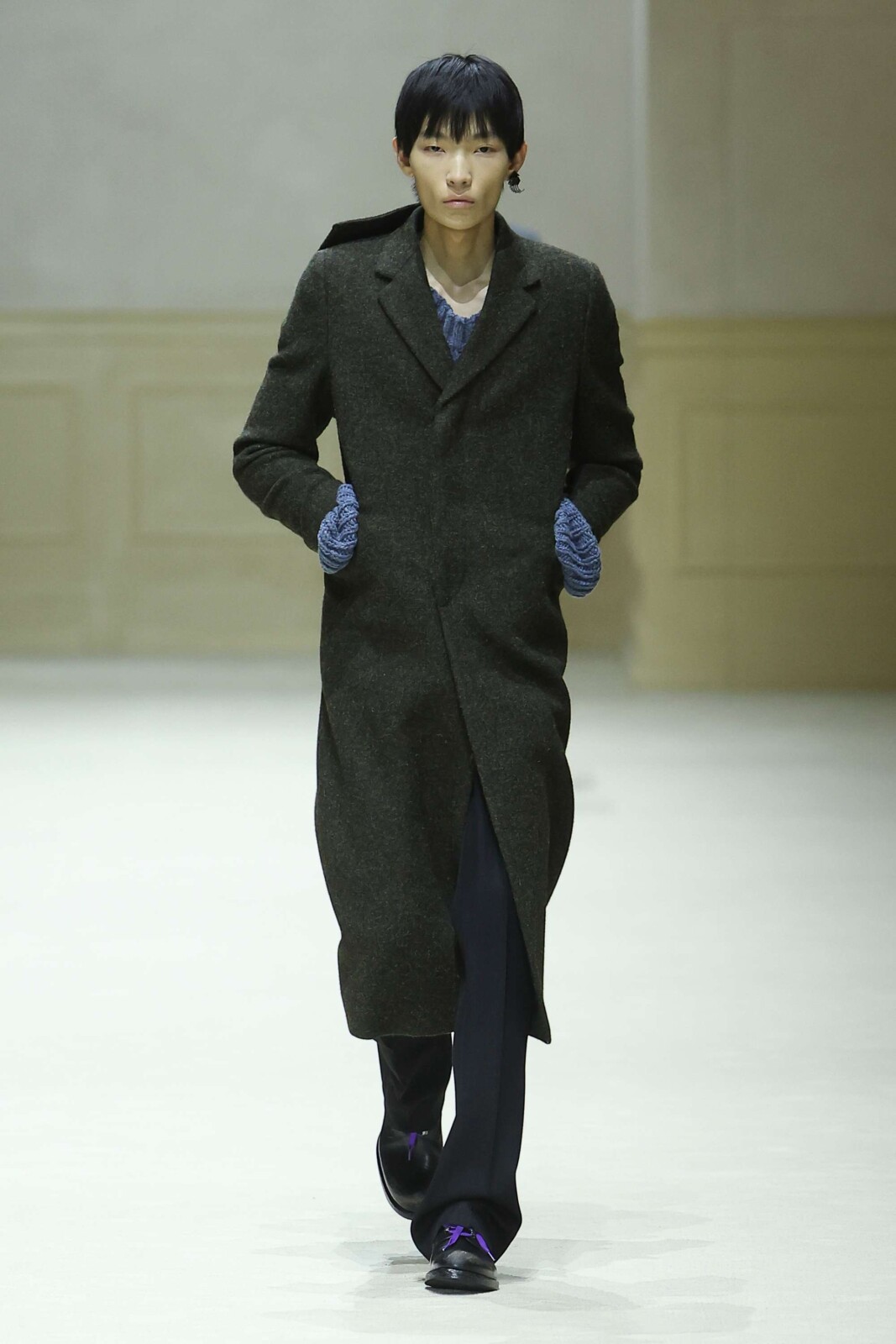
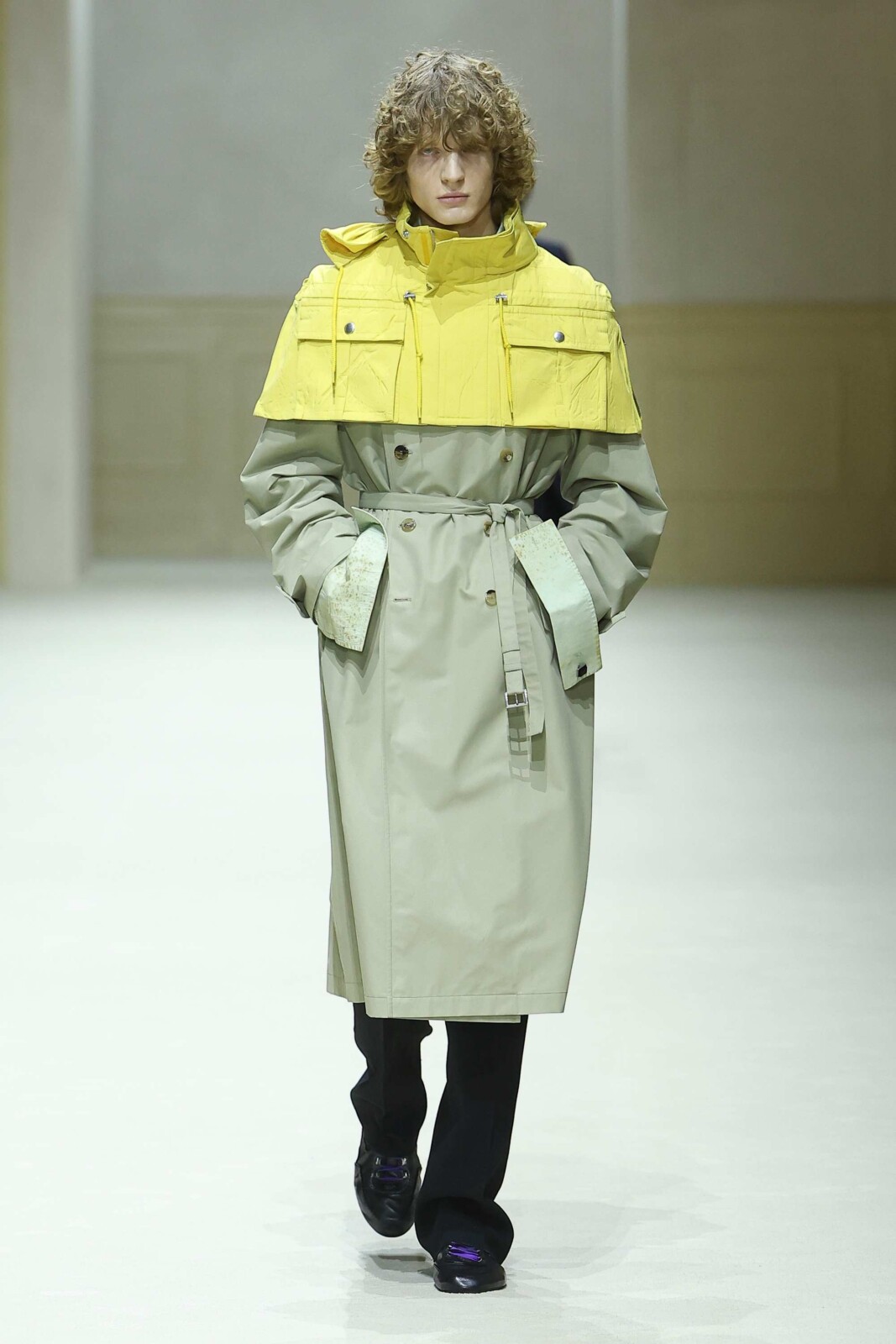
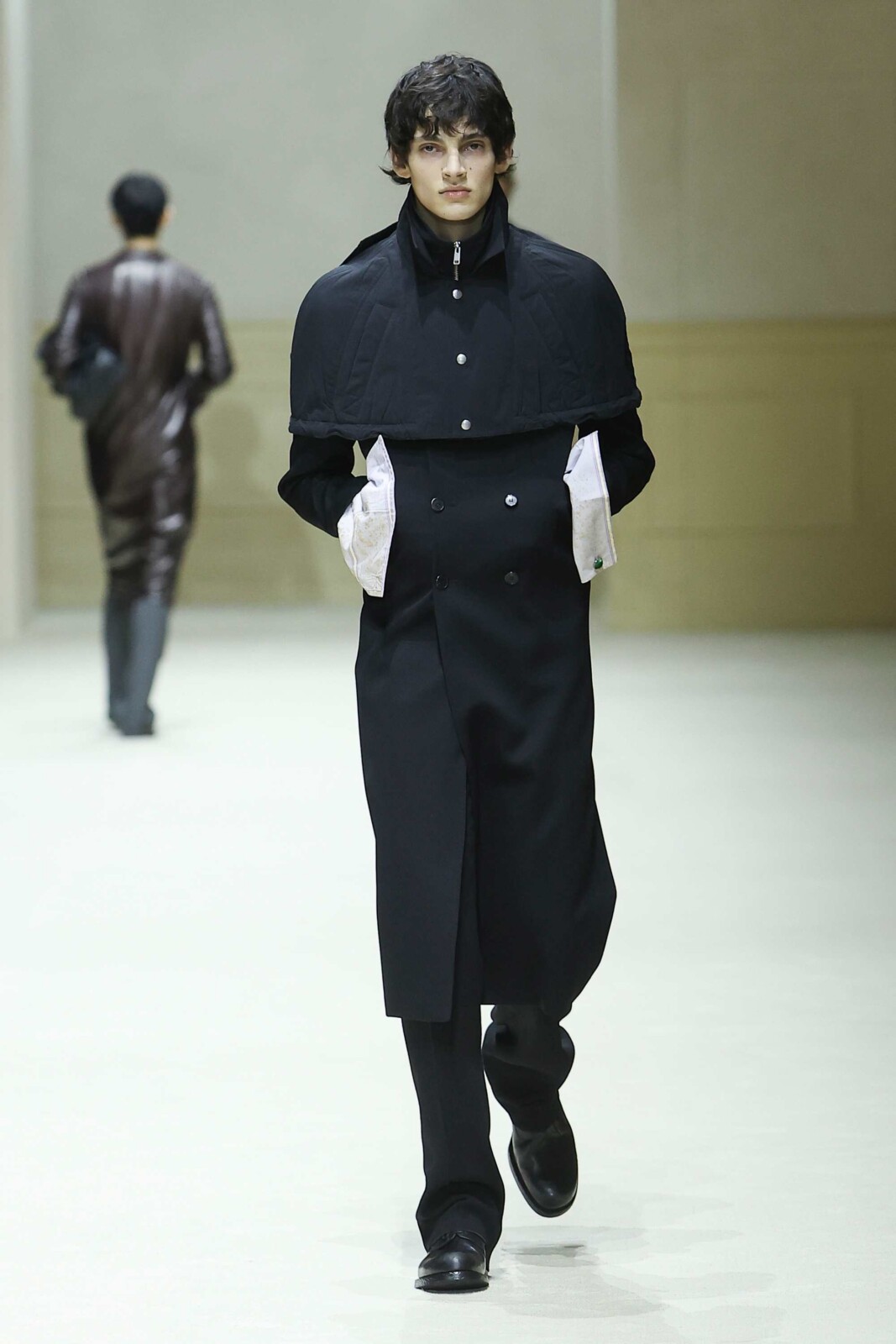
Throughout, outerwear was a focal point. Gentlemanly overcoats came with rounded shoulders, elongated past the knee and shrunken to the body, like a sartorial second skin. Wider-cut trenches were caped with brightly coloured anoraks that were sliced just below the chest; two heroes of the wardrobe fused together to become a new classic.
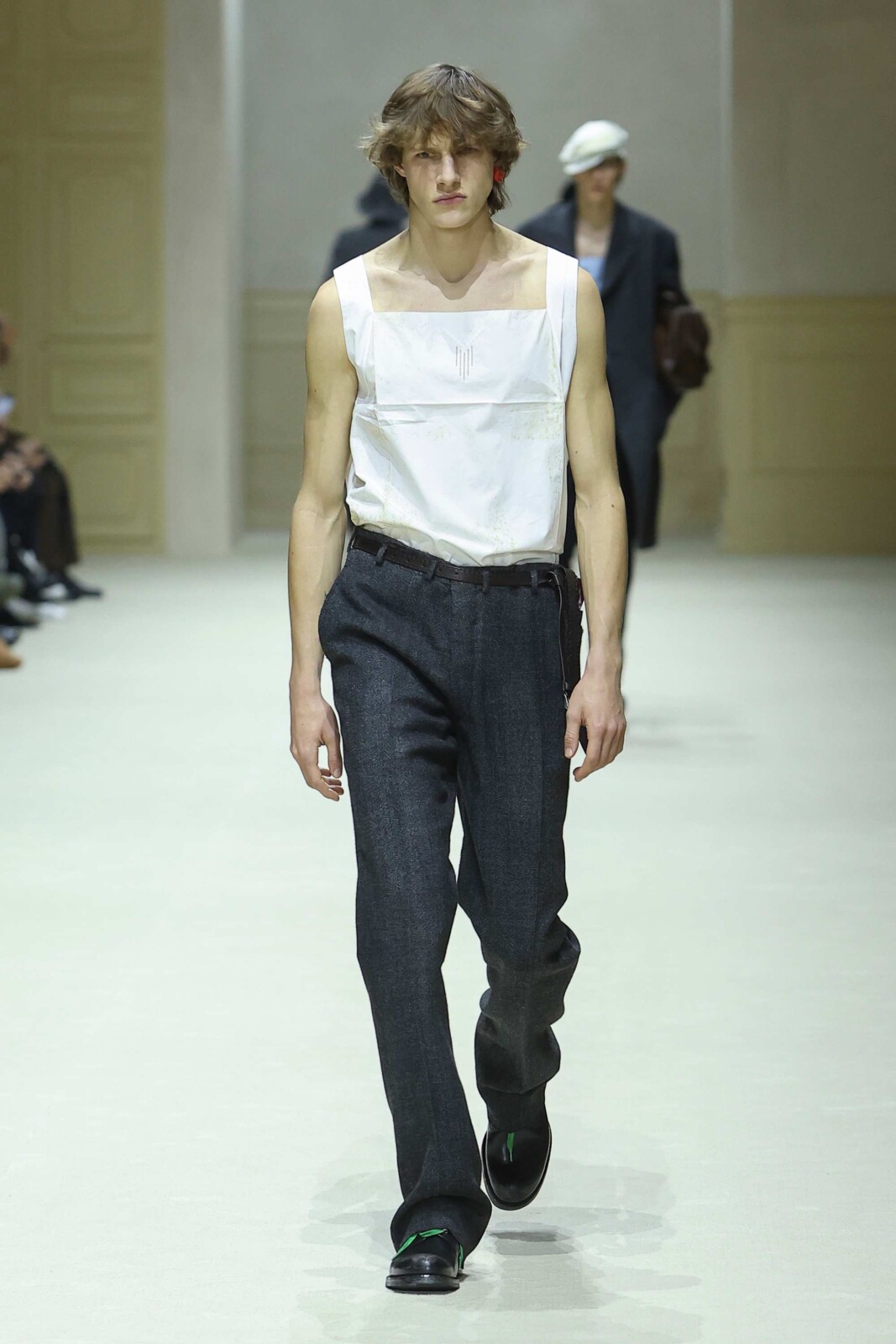
The cuffs of striped shirts crept up the arms of most looks. They looked dirtied, splotched with rust marks. Simons explained they wanted to deconstruct “symbols of power” associated with the business shirt and the corporate masculinity tied to someone that might wear one. “What if you age [the shirt], what if you give it horizontal stripes or the neck of a T-shirt,” he said. Some shirts were even picked apart and repositioned to resemble bibs. They looked tender and youthful.
As Mrs Prada put it, in the face of uncertainty, clothes should be precise and offer clarity. “There is a sense of the before, which interests us, even as we search for the new,” she said. “That is a sign of respect – you want to move on but not erase what came before. Holding an idea of beauty and changing it into something new.”
Photography courtesy of Prada